
REVIEW · HISTORICAL TOURS
Kigali: Guided Art, History, and Food Tour with Moto Ride
Kigali reveals itself one stop at a time. This three-hour outing brings together the Kigali Genocide Memorial, Niyo Art Center, street food, local markets, and moto rides, giving you a useful first look at Rwanda’s capital. I especially like the personal guiding style of Aline Murekezi, who speaks English, French, Swahili, and Kinyarwanda, and I like the way the tour connects serious history with everyday city life. The main consideration is timing: the listed stop lengths add up to nearly four hours, while the advertised duration is three.
The tour costs $25 per person, which is a fair price for a guide-led introduction to Kigali. Just remember that moto fares, food, drinks, and the optional audio guide at the memorial are extra. You also need to be comfortable walking, riding a motorcycle taxi, and moving through busy public spaces.
Key points at a glance
- A thoughtful first stop: The Kigali Genocide Memorial gives important context for understanding Rwanda and should be approached with quiet respect.
- Aline makes the experience personal: Her warm manner, language skills, and willingness to answer questions are among the tour’s strongest features.
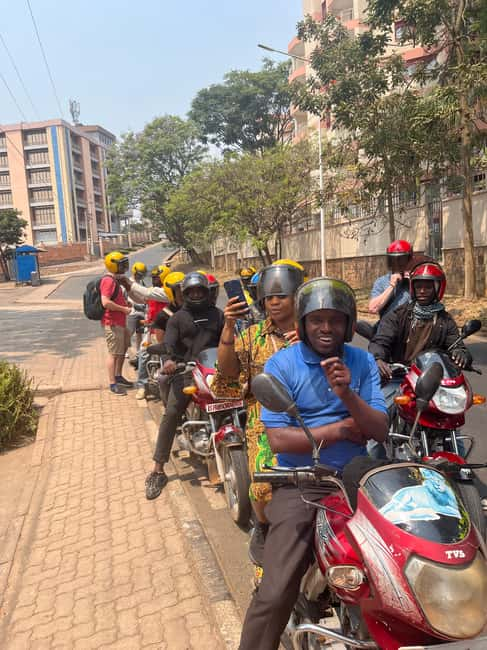
- Moto rides add practical value: You get a lively way to move around Kigali and a useful introduction to how motorcycle taxis work.
- Niyo Art Center offers a creative change of pace: The gallery shows work by Rwandan and African artists, with a café and souvenirs nearby.
- Food and markets keep the tour grounded: Biryogo and Kimironko show you ordinary city life through eating, shopping, and conversation.
- Budget carefully: Bring cash for moto rides, and expect meals and drinks to cost extra.
Why this makes a good first look at Kigali
I like tours that help you understand a city rather than simply count its sights. This one has a sensible range: memory and history at the memorial, art at Niyo, food in Biryogo, photos in the center, and shopping at Kimironko Market.
That mix matters in Kigali. You are not confined to a museum or a sightseeing vehicle. You move through several parts of the city, see how people buy and sell goods, and get a feel for the hills and streets between stops. The moto rides are part of the local experience, not just a way to save time.
Aline Murekezi receives especially strong praise for her warmth and attention to detail. She has helped solo visitors feel comfortable, answered questions well beyond the scheduled stops, and adjusted the outing around personal interests when time allowed. One art-loving participant visited two galleries instead of one, while another person with a sports injury skipped the motorbikes and still completed the main sightseeing.
That flexibility is useful, but do not assume every extra stop is guaranteed. The advertised plan is already full, and the total time may vary with traffic, walking speed, food orders, and the pace of your group.
More history tours in the world:
- Barcelona: Tapas Walking Tour with Food, Wine, and History
★ 4.8 · 4,261 reviews - Sevilla Food Tour: Tapas, Wine, History & Traditions
★ 5.0 · 3,468 reviews - Madrid Tapas & Taverns Small Group Food & History Tour
★ 5.0 · 2,664 reviews
Starting at the Kigali Genocide Memorial
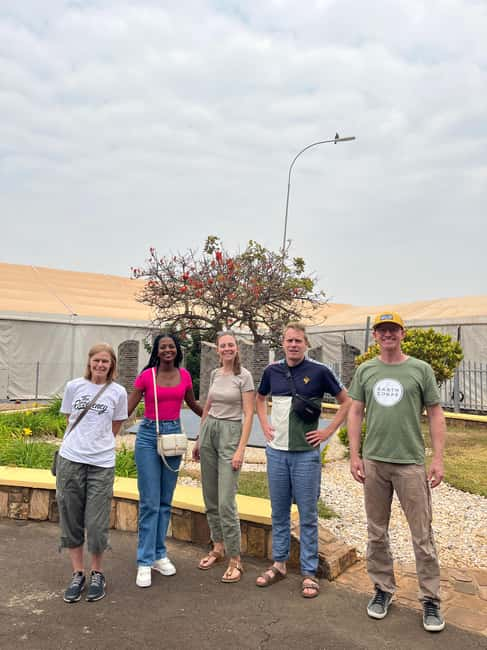
The meeting point is the main entrance to the Kigali Genocide Memorial. Look for the designated check-in room and a guide wearing a uniform with the Tourwithaline logo. The instructions also advise adding your contact details so the guide can reach you at the gates.
Allow a little care and quiet at the start. The memorial is not a casual photo stop. It explains the 1994 genocide against the Tutsi and places Rwanda’s past within a wider story of loss, remembrance, and recovery. For many people, this will be the most emotionally demanding part of the day.
The planned visit lasts about 90 minutes. That is enough time for a serious introduction, though you should not expect to absorb every display in one visit. An optional audio guide is available for an extra cost, but it is not included. Your guide provides context during the tour, while the audio guide may suit you if you prefer to move through exhibits at your own pace.
I appreciate beginning here because the later stops make more sense after this visit. Rwanda’s public life, local customs, and careful approach to remembrance are easier to understand when you have first learned some of the country’s recent past.
Dress and behave respectfully. Keep your voice low, follow memorial rules, and do not treat the grounds as an ordinary sightseeing backdrop. A camera is useful elsewhere on the tour, but this first stop calls for discretion.
Seeing Rwandan art at Niyo Art Center
The art-center visit is listed at about 20 minutes, so it is brief. Still, it provides a welcome shift in mood after the memorial. You will see artwork by Rwandan and African artists, with pieces that reflect local culture, daily life, identity, and personal expression.
Niyo Art Center is useful for anyone who wants more than a quick city checklist. Art can show parts of Rwanda that a formal historical site cannot. Colors, figures, symbols, and subject matter offer another way to think about the country and its people.
If you enjoy galleries, ask Aline for more time or tell her when you book. One person with a strong interest in art visited two galleries with her, suggesting that the experience can sometimes be adapted. You should not count on that change if the group is large or the schedule is tight, but it is worth explaining your priorities.
The center also has a café and souvenirs. A previous visitor particularly enjoyed a mango smoothie there, and the café can make this a practical refreshment stop. Food and drinks are not generally included in the $25 price, so carry cash or confirm what you want to purchase.
Taking a moto to Biryogo Car Free Food Street
The motorcycle taxi, or moto, is one of the most memorable parts of the outing. Rather than watching Kigali through a sealed vehicle window, you move through the city at street level, with the hills, traffic, and sounds much closer around you.
Moto transport is not included. Bring cash for the drivers, and ask Aline to explain the arrangement before you set off. This is particularly helpful if you are new to Kigali. One of the tour’s practical benefits is learning how to use motos and gaining a better sense of what to expect when arranging future rides on your own.
You need to be comfortable on a motorcycle. Pregnant women are advised not to join, and the experience is not suitable for children under five. Anyone with a recent injury or mobility concern should discuss alternatives in advance. A previous participant with a sports injury did not use the motorbikes and still enjoyed the tour, so the rides are important but not the only reason to book.
Biryogo Car Free Food Street is a good place to pause and eat. The setting gives you a taste of Kigali’s social life without turning the meal into a formal restaurant experience. The plan allows roughly an hour here, which should give you time to sample local food and drinks, ask questions, and watch the street activity.
Meals and drinks are not included unless specifically stated when booking. That is not a problem at this price, but you should budget for them. If you have allergies or dietary restrictions, tell the guide before ordering. The supplied details do not specify a fixed menu, so the exact food selection may depend on what is available that day.
I like this stop because food gives you an easy way to connect with a place. You can ask Aline about ingredients, eating habits, and local favorites while sharing a table or standing at a street stall. It is also a good chance to slow down after the solemn memorial and the movement of the moto ride.
A few more food tours in the world worth a look
- Hanoi: Guided Food Tour with Train Street Visit
★ 4.9 · 6,239 reviews - Naples: Street Food Walking Tour with Local Guide
★ 4.9 · 4,976 reviews - Rome: Street Food Tour with Local Guide
★ 4.8 · 4,077 reviews - Chef Guided Food Tour of Pike Place Market
★ 5.0 · 3,733 reviews
Walking to the Kigali city-center sign
After eating, the group walks to the Kigali sign in the city center for photographs. The planned photo stop lasts around 30 minutes, although the actual time may depend on the group and the schedule.
This is a simple stop, but it has real value. The sign gives you a clear souvenir photo and a recognizable marker of your time in Kigali. It also breaks up the day before the final market visit.
Wear comfortable shoes. The tour includes walking between stops, and Kigali’s hills can make even a short route feel more demanding than it looks on a map. Bring water, use sunscreen, and keep your camera ready, since the city-center walk may offer other photo opportunities along the way.
Do not expect a long guided tour of every central building or neighborhood. The sign is mainly a photo stop, not a full architectural visit. Its purpose is to give you a quick, cheerful city-center moment after the more serious and food-focused sections of the day.
Exploring Kimironko Market
The final stop is Kimironko Local Market, reached by another moto ride. This is where the tour becomes especially useful for anyone who wants to shop or understand ordinary market life.
Expect a colorful spread of goods, fresh produce, clothing, crafts, and other local products. The market can feel energetic and crowded, so keep your belongings secure and stay aware of where the group is going. You will have a chance to browse rather than simply pass through.
Aline can help explain what you are seeing and may assist with bargaining. One visitor found this particularly helpful when buying gifts and securing better prices. Bargaining is part of shopping in many markets, but it is still best to remain friendly and realistic. A good guide can help you avoid confusion without taking over every purchase.
Kimironko is also a practical place to buy souvenirs. If you want something specific, tell Aline early in the visit. The half-hour listed for the market is short, especially if you want to compare prices or shop carefully.
The tour ends here, rather than returning you to the memorial or your hotel. Plan your next step before you arrive. Hotel pickup and drop-off are not included, so you are responsible for arranging transport afterward. Since the market is the final stop, you may prefer to continue shopping, eat nearby, or arrange a moto or other ride to your next destination.
How the guide affects the experience
The guide is the heart of this tour. Aline is repeatedly praised for being friendly, professional, easy to talk with, and willing to explain places in detail. Solo participants in particular have appreciated the relaxed atmosphere and the feeling of being accompanied by someone they could ask anything.
That personal contact is more valuable than it may first appear. Kigali can be easier to understand when someone explains how to use motos, where to meet, how to approach a market, and what behavior is appropriate at the memorial. Aline has also helped people navigate meeting points, including sending directions in Kinyarwanda to assist with a motorcycle taxi.
She speaks English, French, Swahili, and Kinyarwanda. Confirm your preferred language when booking, especially if you are joining with family or friends who have different language needs.
The tour is also suitable for a small group or solo booking. Smaller groups make it easier to ask questions, adjust the pace, and spend more time on subjects that interest you. The trade-off is that the level of flexibility may depend on how many people book that departure and how closely the group needs to follow the schedule.
Price, timing, and what you really pay
At $25 per person, this is good value if you want a guide, historical context, art, food suggestions, market help, and an introduction to motos in one outing. Booking separate rides, finding the art center, and navigating the food street and market alone could take more time, particularly on your first day in Kigali.
The advertised duration is three hours, but the listed stop times total roughly three hours and 50 minutes. The figures are probably approximate, or some walking and transport time may overlap, but you should confirm the expected schedule before booking. If you have a flight, meeting, or hotel check-in afterward, leave plenty of space.
Your likely extra costs include:
- Moto fares
- Food and drinks
- The optional audio guide at the memorial
- Souvenirs and market purchases
- Transport to the starting point and away from Kimironko Market
The experience offers free cancellation up to 24 hours before departure and allows you to reserve now and pay later. Starting times depend on availability.
What to bring and who should book
Bring comfortable walking shoes, water, sunscreen, a camera, and cash. The camera is most useful at the city-center sign, art center, and market, while water and sunscreen matter during the outdoor walking and moto sections.
I would choose this tour for:
- A first visit to Kigali
- Solo visitors who want a friendly local introduction
- People interested in history and current city life
- Anyone curious about local food and markets
- Visitors who want to learn how moto taxis work
- Art lovers who can ask about a longer gallery visit
I would think twice if you dislike motorcycles, need step-free access, or want a slow, highly detailed museum visit. Wheelchair users cannot be accommodated according to the tour information, and the experience is not suitable for children under five or pregnant women.
The memorial may also feel heavy. That is not a flaw, but it is important to understand the tone of the day. This is not a light sightseeing circuit from start to finish. It asks you to give serious attention to Rwanda’s past before moving into art, food, shopping, and daily life.
Should you book the Kigali art, history, and food tour?
I would book it as an opening activity in Kigali, especially if you are staying only a short time or arriving alone. The combination of the memorial, Niyo Art Center, Biryogo food street, the city-center sign, and Kimironko Market gives you a useful map of the city in one day.
The strongest reason to choose it is Aline’s personal guiding style. She can explain the memorial with care, answer practical questions, help you use motos, and make the market less intimidating. The main caveats are the extra costs, the physically active format, and the mismatch between the three-hour headline and the longer list of scheduled stops.
Book it if you want context, conversation, and local movement, not just a series of photographs. Confirm the timing, bring cash, and tell Aline your interests in advance. That preparation should help you get the best value from this thoughtful introduction to Kigali.
FAQ
Where does the tour start?
It starts at the main entrance of the Kigali Genocide Memorial. Look for the designated check-in room and a guide wearing a uniform with the Tourwithaline logo.
Where does the tour finish?
The tour finishes at Kimironko Local Market. Hotel pickup and drop-off are not included.
How long does the tour last?
The advertised duration is three hours. The listed stop times add up to about three hours and 50 minutes, so confirm the expected schedule before booking if you have other plans.
Are moto rides included in the price?
No. Moto transport is not included, so bring cash for the drivers.
Are food and drinks included?
Meals and drinks are not included unless specifically stated. You should budget extra for food and refreshments at Biryogo Car Free Food Street and elsewhere.
Which languages are available?
The live guide can provide the tour in English, French, Swahili, or Kinyarwanda.
Who should not join this tour?
The tour is not suitable for children under five, pregnant women, or wheelchair users. Comfortable walking shoes are recommended, and you should be prepared for motorcycle rides and outdoor sections.
Just added in the world
- Private Chicago Food Tour with Deep Dish and Beef Sandwich★ 5.0 · 61 reviews
- River North Food Walking Tour★ 4.5 · 88 reviews
- Chicago’s West Side Foodie Ride Bike Tour★ 5.0 · 112 reviews
- Chicago Food Tour: Taste the City’s Most Iconic Eats★ 5.0 · 111 reviews
- Old Town Chiang Mai Food Tour with 10+ Local Dishes Tastings★ 5.0 · 21 reviews
- Go where the locals go, Eat what the locals eat! Food Tour with Local Foodies★ 5.0 · 138 reviews
- Motorbike Food Tour in Chiang Mai★ 5.0 · 54 reviews
- Food Trail Through Sowcarpet Market: A Taste of Chennai★ 5.0 · 38 reviews
Historical Tours, compared.

Tapas Walking Tour with Food, Wine, and History
Read our review →
Sevilla Food Tour: Tapas, Wine, History & Traditions
Read our review →
Madrid Tapas & Taverns Small Group Food & History Tour
Read our review →


Barcelona Tapas Walking Tour: Food, Wine & History
Read our review →
Boston Food & History: Pizza, North End & Freedom Trail
Read our review →Browse the lists this tour appears in