
REVIEW · STREET FOOD TOURS
Lima Street Food: A gastronomic adventure through the city.
Lima puts lunch on the sidewalk. I like the market-to-market route, which moves from local produce and ceviche to Chinese-Peruvian snacks, churros, and a final pisco tasting. I also like that guides such as Claudia, Chris, Michael, and Yezi add history and city context instead of simply handing you food.
The main drawback is the city transfer at the start. You meet outside Benavides Metropolitano station, then spend about 30 minutes on a public bus to central Lima. The walk itself can last close to four hours, and some foods may be unfamiliar, so this suits curious eaters with comfortable shoes more than anyone seeking a quick, polished tasting menu.
Key points at a glance
- Ceviche and tropical fruit lead the food walk: You get a direct taste of coastal Peru, along with fruits selected for flavor and variety.
- Chinatown adds a different side of Lima: The route includes Chinese-inspired street snacks and market food in central Lima.
- Chicha morada is part of the story: This purple corn drink gives you a simple, memorable introduction to a traditional Peruvian favorite.
- Pisco closes the afternoon: The final tasting takes place around Plaza Mayor, with city lights, conversation, and several Peruvian spirits.
- The guides shape the experience: Claudia, Chris, Michael, Yezi, and Yozi are praised for friendly service, clear English, and useful food and history explanations.
- The $60 price covers a lot of tasting: Food, drinks listed in the program, guidance, and a broad city walk are included, but transport to the meeting point is extra.
A street-food route through Lima’s center
This is not a tour built around one famous dish. It is a moving meal, with short stops that show how several food traditions meet in Lima.
You begin at Estación Benavides Metropolitano. From there, the group takes a bus toward the city center, a ride listed at about 30 minutes. The bus costs about $1, while a taxi from the starting area is estimated at about $7. That transfer is not included, so bring small cash or arrange your own ride.
I see the bus ride as part of the practical character of the experience. You are not collected from your hotel and delivered straight to a private dining room. You meet the guide in a public place, ride into the center, and then explore on foot. That feels more like a city orientation than a standard restaurant crawl, though it may be less comfortable if you dislike crowded public transport.
The tour is advertised at 210 minutes, but the timing can stretch to about four hours depending on group size. The planned sections include a 30-minute transfer, about 90 minutes of food and market exploration in Lima, 30 minutes in Chinatown, 30 minutes around Plaza Mayor, and roughly 45 minutes for the pisco tasting. Allow extra time after the official finish if you have a dinner reservation.
More street food tours in the world:
- Ho Chi Minh City Street Food Tour & Sightseeing By Motorbike
★ 5.0 · 9,413 reviews - Naples: Street Food Walking Tour with Local Guide
★ 4.9 · 4,976 reviews - Small Group Hanoi Street Food Tour with a Real Foodie
★ 5.0 · 4,682 reviews
Markets, fruit, and the first Lima bites
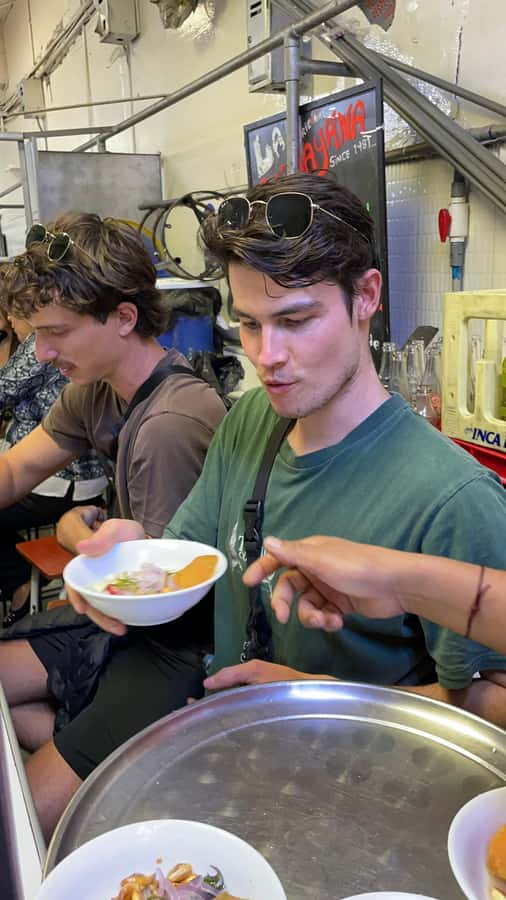
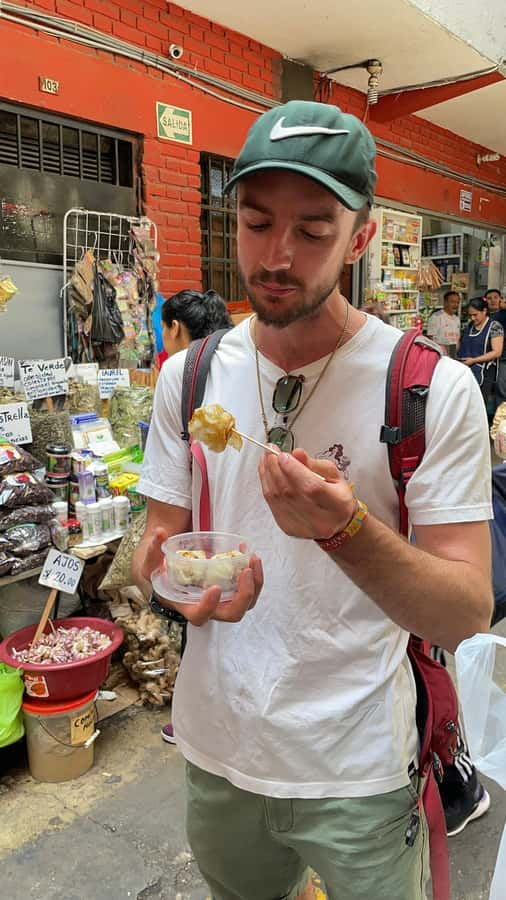
The central food walk is the heart of the experience. You visit a food market and sample a broad mix of Peruvian ingredients rather than stopping only for the most familiar dishes.
The exact order can vary, but the included foods cover ceviche, tropical fruit, stuffed olives, Andean cheese, beans, and corn seasoned in different ways. This mix matters. Ceviche gives you the sharp, fresh taste associated with Peru’s coast, while cheese, beans, corn, and olives show how much of Peruvian food depends on simple ingredients treated with care.
The fruit tasting is especially useful early in a Lima visit. You may recognize some fruit, while other varieties may be new to you. The point is not a single dramatic dish. It is learning how much flavor can come from produce sold in ordinary markets, and how local people choose, season, and eat it.
Ceviche is likely to be the most anticipated bite. It is fresh, bright, and very different from the heavier foods later in the tour. If you are unsure about unfamiliar food, this is a good place to tell your guide. The guides are there to explain what you are tasting, and the route includes many foods, so you do not need to love every single one.
That variety is one of the tour’s strengths. One person may prefer the ceviche, another the churros, and someone else may remember the fruit or seasoned corn. This is a tasting route, not a carefully controlled menu. You get the pleasure of surprise, along with the occasional bite that simply does not suit you.
Chicha morada and the taste of Peru’s past
Chicha morada is one of the most useful stops for first-time visitors. Made from purple corn, it is a traditional Peruvian drink with a color that catches your eye before you taste it.
The experience description connects the first sip with memories of Peru’s past. You do not need a long lecture to understand why the drink matters. It gives you a familiar local reference point, something you can order again during the rest of your stay.
I like this kind of inclusion because drinks are often overlooked on food tours. Chicha morada is not just a refreshment between stops. It helps you recognize a staple of Peruvian eating culture, and it offers a nonalcoholic counterpoint to the pisco served later.
You should bring water as well. The tour includes several food stops and a good deal of walking, and the supplied advice specifically recommends carrying water, sunscreen, sunglasses, and a hat.
Chinatown, where Lima changes flavor
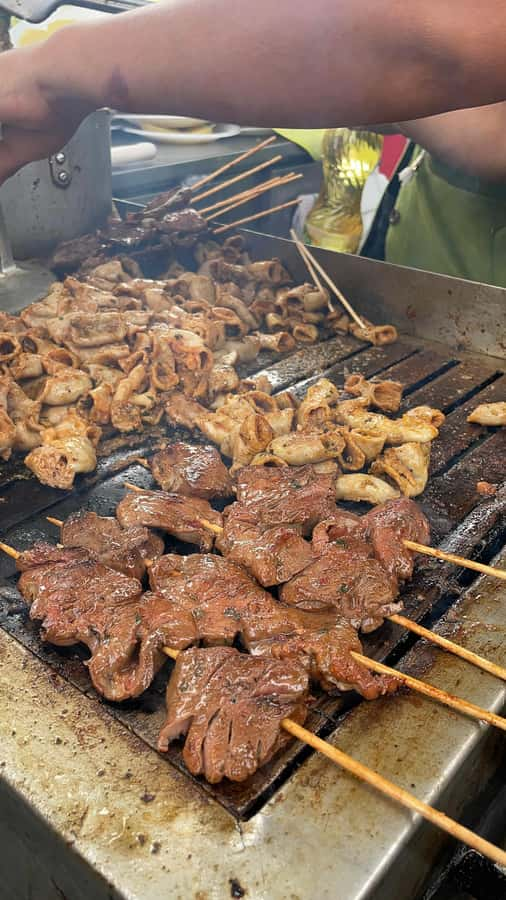
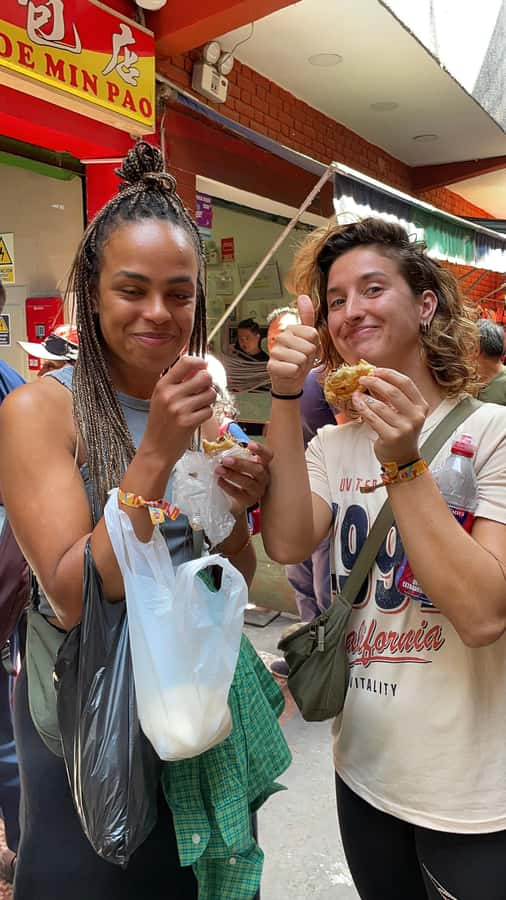
The Chinatown stop takes about 30 minutes and adds a clear change of pace. Here, you sample Chinese-inspired snacks and visit a food market in the heart of central Lima.
This part of the route is valuable because Lima’s food culture is not one straight line. Peruvian cooking includes influences from many communities, and Chinatown gives you a compact look at the Chinese-Peruvian connection. The food is still part of Lima, but the flavors and techniques shift.
Do not expect Chinatown to become a second full food tour. The scheduled time is shorter than the main market section, so this is a focused tasting stop. You may get only a few bites, but those bites help make the larger food story more complete.
The setting also keeps the tour grounded in everyday city life. You are not tasting Chinese-Peruvian food in isolation. You are seeing it within central Lima’s streets and market activity, alongside the other food traditions on the route.
A few more food tours in the world worth a look
- Private Street Food Evening Walking Tour in Ho Chi Minh City
★ 5.0 · 3,175 reviews - Top Notch Street Food Motorbike Tour In Ho Chi Minh City
★ 5.0 · 2,667 reviews - Historic Ybor City Food Walking Tour
★ 5.0 · 2,210 reviews - Private Street Food Motorbike Tour in Ho Chi Minh City
★ 5.0 · 2,180 reviews
Churros, olives, cheese, beans, and corn
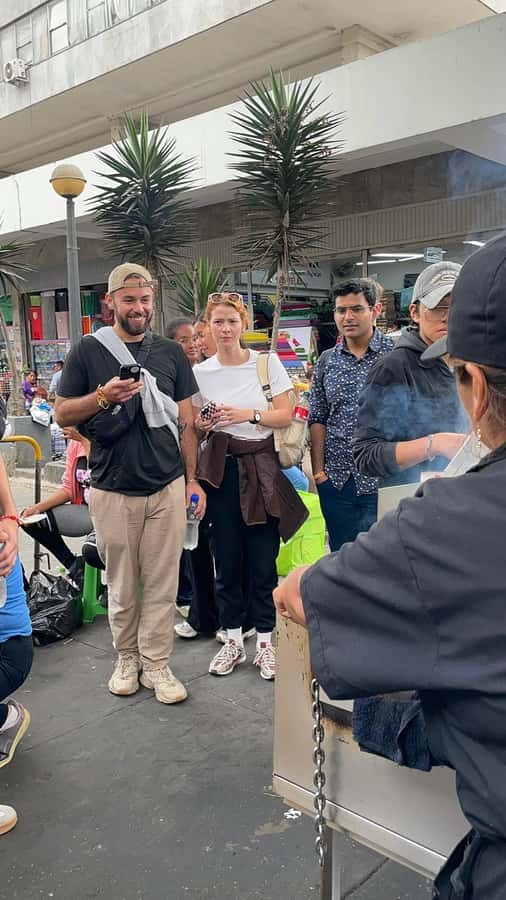
A strong feature of this tour is the range of textures. Crispy churros provide a sweet finish to the street-food portion, while stuffed olives from southern Peru bring salt and richness. Andean cheese, beans, and corn seasoned with different spices add more savory contrasts.
The churros are probably the easiest crowd-pleaser. They give you a familiar snack in a local setting, which is handy after trying sharper, saltier, or more unusual foods. I would not book the tour only for churros, but they help keep the tasting balanced.
The stuffed olives and Andean cheese are more revealing. They show that Peruvian food is not limited to seafood and potatoes, even though ceviche is an important part of the route. The beans and corn connect the tasting to ingredients with a long place in Andean and Peruvian cooking.
Because the food is served across several stops, you should avoid arriving after a large meal. At the same time, this is not a promise of unlimited food. The amount depends on the group and the individual stops, so come hungry but do not expect a full restaurant lunch in one sitting.
Plaza Mayor and the final pisco tasting
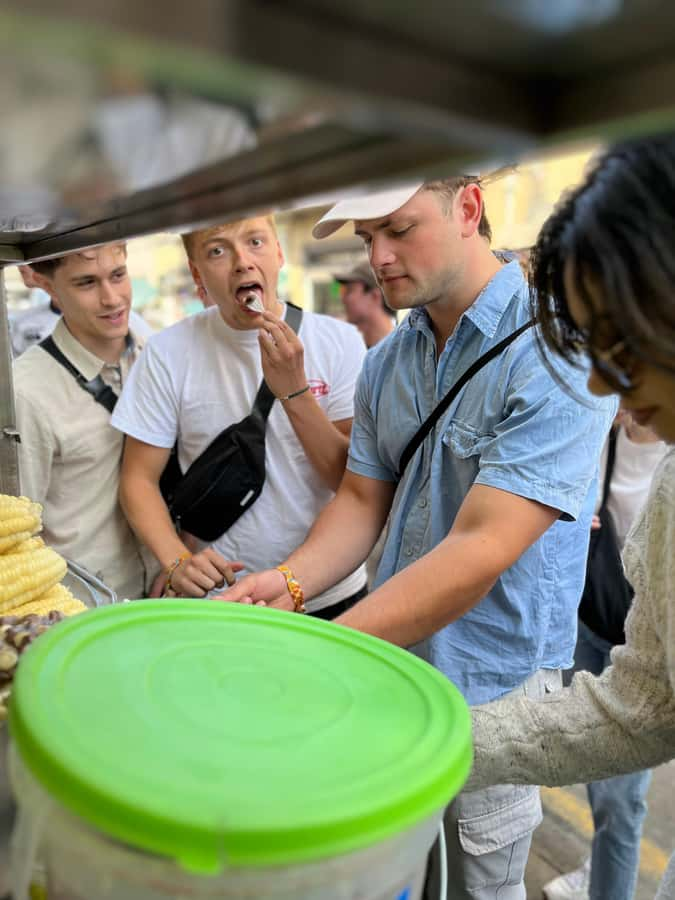
The route finishes around Plaza Mayor de Lima, with a guided walk and more food before the spirits tasting. This is a sensible ending because the square gives the tour a clear central point and places the final drinks among some of Lima’s most important city views.
The pisco tasting lasts about 45 minutes. Pisco is Peru’s best-known spirit, and this stop lets you finish with a drink that belongs to the country’s national food culture. The experience promises city lights, conversation, and Peruvian hospitality, so the mood shifts from quick street bites to a slower social finish.
You should think of this as a tasting, not a night of drinking. Additional food and drinks beyond what the tour specifies are not included. If you do not drink alcohol, check the arrangements before booking, since pisco is a major part of the final section.
The square also gives your guide room to connect food with place. Chris is praised for combining food stops with historical monuments, while Michael is described as bringing both food culture and city history into the walk. That blend makes the last section more than a glass at the end.
Guides who make the route work
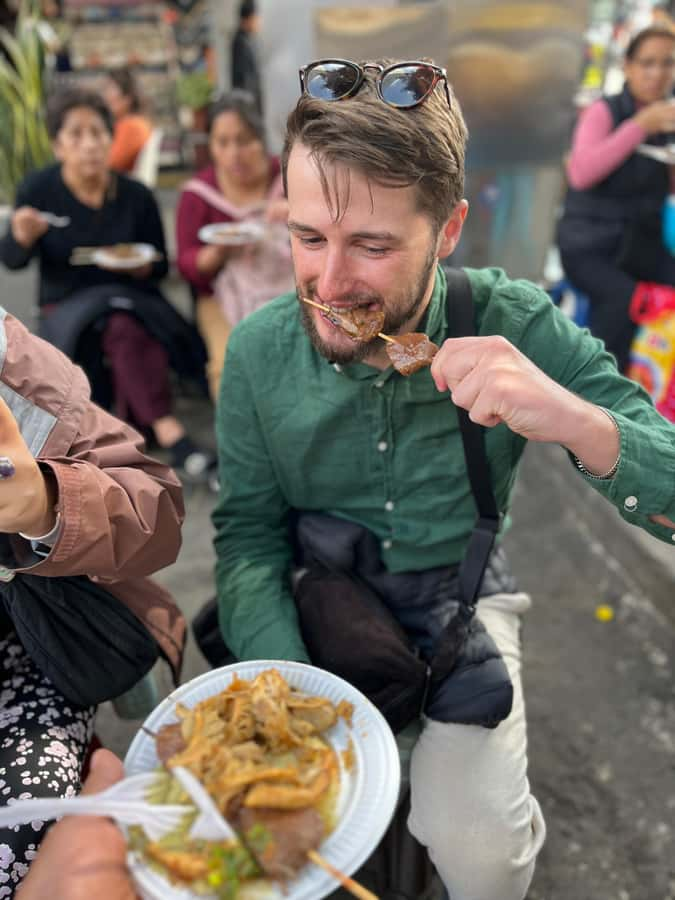
The clearest strength of this experience is the guide service. Claudia is praised for friendly manner, strong English, and detailed explanations. She has also led tours that became private because only one person booked, which gave the visitor more room to ask questions and try unfamiliar food at a personal pace.
Chris is repeatedly associated with humor, personal attention, food knowledge, and stops at historical sites. Michael is praised for clear speaking and for introducing the inner city through both food and local history. Yezi and Yozi are also singled out for friendly, well-informed guiding and a good range of tastings.
You should not assume you will receive a particular guide. Names and group sizes can change. Still, the pattern is useful: the experience depends heavily on a guide who can explain the food, manage the route, and help you feel comfortable trying items you would not have ordered alone.
There is also a fair chance of a small group or even a private outing, but that is not guaranteed. Several bookings turned into private tours simply because only one person had reserved. Treat that as a possible bonus, not part of the promise.
How much value do you get for $60?
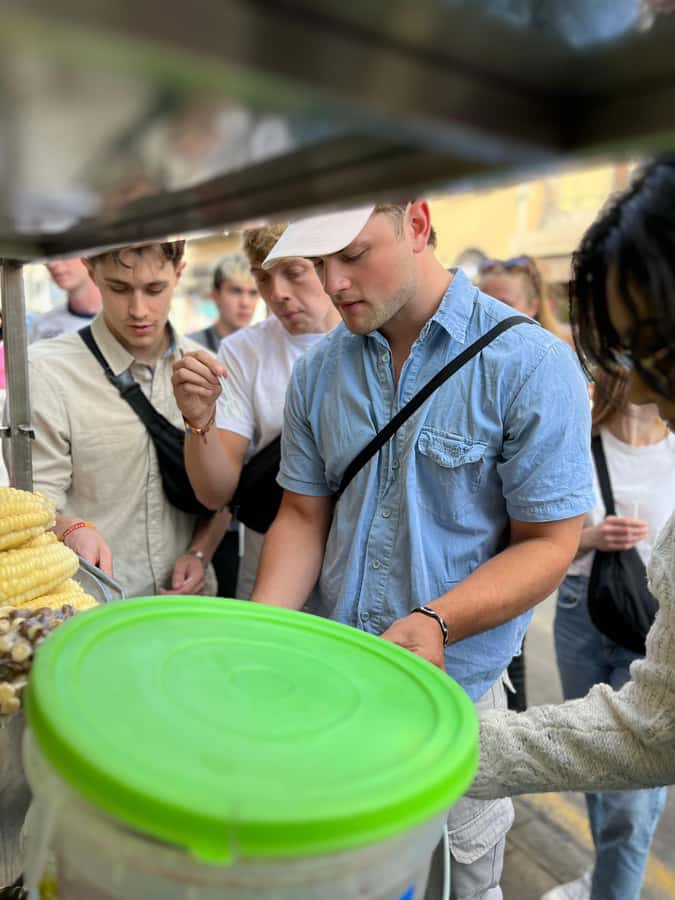
At $60 per person, the tour is not the cheapest way to eat in Lima. You could buy individual street snacks for much less. The value comes from the range, the explanations, the route through several parts of central Lima, and the confidence of having a guide choose places and foods for you.
The included tasting list is broad: fruit, ceviche, churros, Chinese snacks, chicha morada, pisco, stuffed olives, Andean cheese, beans, and corn. That is a lot of variety for one afternoon. You are also paying for the time spent walking between stops and learning how the foods connect to Lima’s culture.
The price works best for someone who wants an introduction rather than a cheap meal. If you already know Lima’s markets well and are comfortable ordering on your own, the cost may feel high. If you are new to the city, unsure where to buy street food, or interested in trying dishes you might otherwise miss, the value is stronger.
Remember to add the cost of reaching Benavides station. The public bus is about $1, while a taxi is estimated at about $7. Hotel pickup or drop-off may be arranged for an extra cost, but it is not part of the standard package.
Practical advice before you go
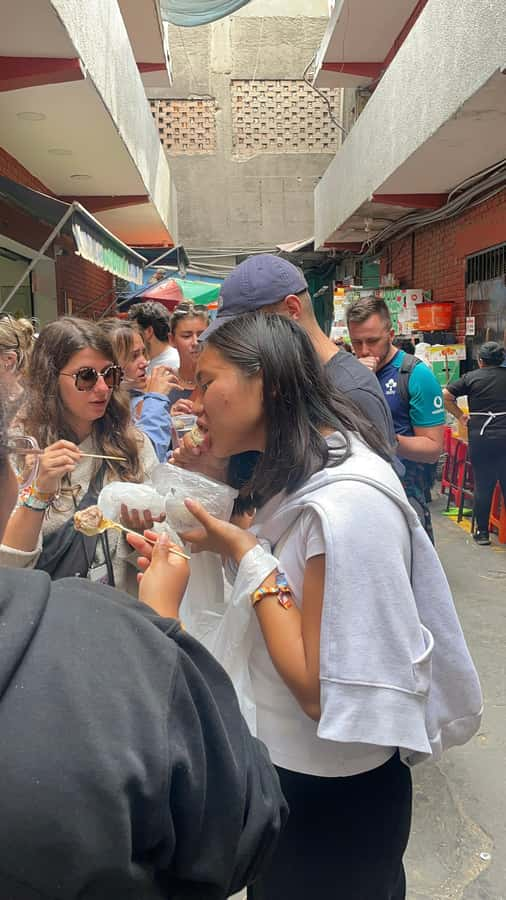
Wear comfortable shoes. The route includes a bus ride, market visits, street stops, and walking through central Lima. A hat, sunglasses, sunscreen, and a power bank are also sensible, as is carrying water and cash.
The meeting point is outside Estación Benavides Metropolitano. Confirm the exact side of the station and the guide’s contact details before leaving, since a large transit station can be confusing.
The activity is offered in English and Spanish. If you need English, state that clearly when booking. The guide names and group size are not fixed, so the language and meeting details are worth checking in advance.
The activity information includes wheelchair accessibility, but it also says it is not suitable for people with mobility impairments. Those statements do not fully agree. If you use a wheelchair or have mobility concerns, contact the provider before booking and ask about the bus, sidewalks, market entrances, and walking distance.
The tour is not suitable for unaccompanied minors, people over 95 years old, or anyone bringing weapons, sharp objects, or explosive substances. Cancellation is free up to 24 hours before the start, and you can reserve now and pay later, which helps if your Lima schedule is still changing.
Who should book this Lima food walk?
I would choose this for a first visit to Lima, especially if you want food, city orientation, and a little history in the same afternoon. It suits curious eaters who are happy to sample several small portions and accept that some will be better matches than others.
It is also a good fit if you feel unsure about street food. You have a guide beside you, a planned route, and a chance to ask what you are eating before taking a bite. The combination of market food, Chinatown, Plaza Mayor, and pisco gives you a useful first look at the city’s food culture.
I would think twice if you want a relaxed, seated meal, private hotel transport, or a predictable menu. The public bus, city walking, group timing, and unfamiliar foods are all part of the deal. You should also confirm accessibility arrangements if mobility is a concern.
Should you book Lima Street Food?
Book it if you want range and local context more than a single signature meal. For $60, you get a generous spread of Peruvian and Chinese-Peruvian tastes, plus a guide-led walk through central Lima and a pisco tasting at the end.
The strongest reason to go is the human side of the route. Guides such as Claudia, Chris, Michael, and Yezi are praised for making the food easy to approach and the city easier to understand. Add the practical cost of reaching the station, wear good shoes, and arrive ready to try a few things outside your comfort zone.
FAQ
Where does the tour start?
The meeting point is outside Estación Benavides Metropolitano. You need to make your own way there.
Where does the tour finish?
The tour finishes in Centro Histórico, after the pisco tasting around Plaza Mayor de Lima.
How long does the experience last?
The listed duration is 210 minutes, or three and a half hours. The tour may last about four hours depending on the number of people in the group.
Is transportation to the meeting point included?
No. Transportation to the starting point is not included. The bus costs about $1, while a taxi is estimated at about $7.
Is hotel pickup available?
Pickup and drop-off are not included in the standard price. They may be added for an extra cost.
What food and drinks are included?
The tasting includes tropical fruit, ceviche, Chinese-inspired snacks, churros, chicha morada, stuffed olives, Andean cheese, beans, corn with different spices, and pisco.
Are extra food and drinks included?
No. Food and drinks not specifically listed in the experience are extra.
What languages are available?
The tour is offered in English and Spanish.
Can I cancel for a refund?
Yes. You can cancel up to 24 hours in advance for a full refund.
Is the tour wheelchair accessible?
The activity information states that it is wheelchair accessible, but it also says it is not suitable for people with mobility impairments. If you need accessibility support, confirm the route and transport details with the provider before booking.
Just added in the world
- Private Chicago Food Tour with Deep Dish and Beef Sandwich★ 5.0 · 61 reviews
- River North Food Walking Tour★ 4.5 · 88 reviews
- Chicago Food Tour: Taste the City’s Most Iconic Eats★ 5.0 · 111 reviews
- Chicago’s West Side Foodie Ride Bike Tour★ 5.0 · 112 reviews
- Old Town Chiang Mai Food Tour with 10+ Local Dishes Tastings★ 5.0 · 21 reviews
- Go where the locals go, Eat what the locals eat! Food Tour with Local Foodies★ 5.0 · 138 reviews
- Motorbike Food Tour in Chiang Mai★ 5.0 · 54 reviews
- Food Trail Through Sowcarpet Market: A Taste of Chennai★ 5.0 · 38 reviews
Street Food Tours, compared.
Ho Chi Minh City Street Food Tour & Sightseeing By Motorbike
Read our review →
Small Group Hanoi Street Food Tour with a Real Foodie
Read our review →
Saigon By Night and Street Food By Motorbike | Opt: Ao Dai Riders
Read our review →
Private Street Food Tour by Motorbike/Car with Local Students
Read our review →
Cinque Terre Park Day Trip with Optional Street Food
Read our review →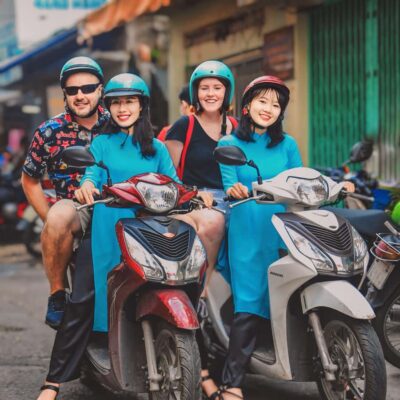
Street Food Tasting & Sightseeing Tour by Motorbike
Read our review →Browse the lists this tour appears in