
REVIEW · NEW YORK CITY FOOD TOURS
New York City: Lower East Side Food Tour
The Lower East Side eats well. This three-hour walking tour brings you to old Jewish delis, bakeries, candy shops, pickle counters, and family-run eateries while explaining how immigrant families shaped the neighborhood. I especially like the mix of historic food institutions and smaller local stops, plus the limited group size of eight.
I also like the way the tour connects each bite to the streets around it, from old tenement buildings and synagogues to newer boutiques and cafes. The main drawback is that the food can be filling, the route involves steady walking, and the stops may change, so you should not expect every named shop on every departure.
Key points at a glance
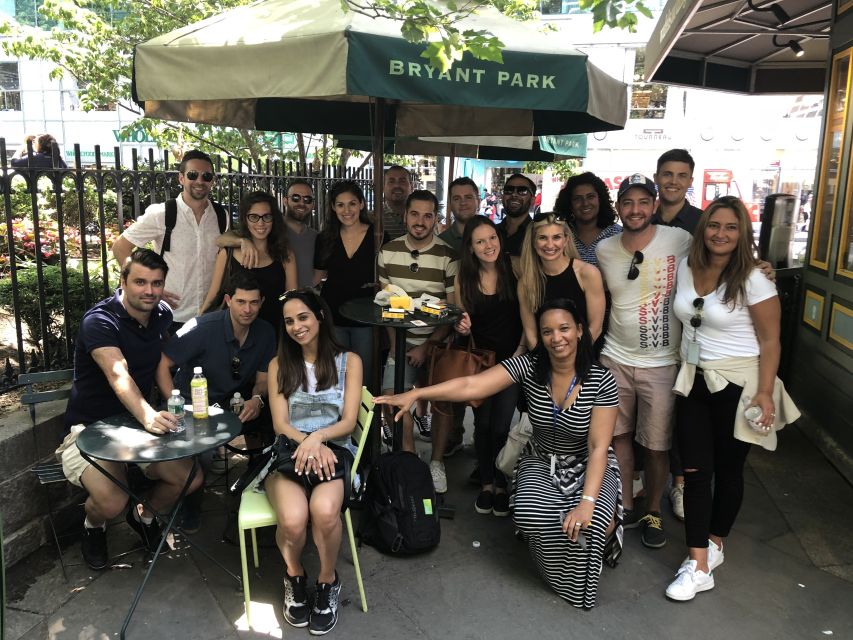
- Katz’s Delicatessen anchors the tour: Expect a substantial tasting at one of New York’s best-known Jewish delis, founded in 1888.
- The food tells the neighborhood’s story: You move from knishes and bialys to pickles, dumplings, doughnuts, and candy, showing how many cultures have shaped the Lower East Side.
- The group is capped at eight people: That makes it easier to hear the guide and ask questions inside busy shops.
- Guides add strong local context: Jack received especially warm praise for his energy and neighborhood knowledge, while Ross was noted for excellent food history.
- Come hungry and wear good shoes: Tastings can add up quickly, and this is a walking tour on city sidewalks.
- The $99 price is reasonable for a full tasting route: All food samples and one bottle of water are included, though you are paying for access and guidance as much as for the food.
Why the Lower East Side works so well for a food tour
New York has no shortage of food tours, but the Lower East Side gives you a particularly useful mix of history and flavor. This was once an immigrant and working-class neighborhood, crowded with tenement buildings and shaped by people arriving from many parts of Europe and Asia.
The area became one of New York’s main Jewish centers. Bakeries, appetizing shops, delis, synagogues, and pushcart businesses served families who often lived in tight quarters. Food was not just a pleasure here. It was a way to preserve religious customs, family recipes, and old-country habits while adapting to city life.
You will also see a newer side of the neighborhood. Trendy boutiques, cafes, and small independent shops now sit near older storefronts and religious buildings. That contrast makes the walk more interesting than a simple parade of famous restaurants.
The tour begins at 205 East Houston Street, outside Katz’s Delicatessen. This is a practical meeting place because Katz’s is easy to identify, and the F train stops nearby at Second Avenue. You can also reach the area on the B, D, F, or M trains at Broadway-Lafayette Street, then walk east along Houston Street.
A few more food tours in New York City worth a look
- New York City Mafia and Local Food Tour led by NYPD Guides
★ 5.0 · 1,197 reviews - New York City: Little Italy Italian Food Tasting Tour
★ 4.3 · 206 reviews - New York City’s Hell’s Kitchen: Walking Food Tour
★ 4.8 · 200 reviews
Katz’s Delicatessen and the opening taste of New York
Katz’s was established in 1888, making it one of the oldest and best-known stops on the route. It is famous for deli food, but the real value of visiting with a guide is that you do not simply walk in, order something, and leave without context.
You can expect a sit-down tasting here, based on the way the tour has recently operated. That is useful because it gives you a chance to pause after the opening walk, eat something substantial, and hear about the role of Jewish delis in New York life.
Do not think of this as a full restaurant lunch. You will be sampling food at several more stops, and the total amount can become surprisingly large. Pace yourself. A small bite at the first stop may feel modest, but several more tastings are waiting down the street.
Katz’s is also a busy place. A small group helps, but you should still expect noise, movement, and a crowded setting. If you prefer quiet restaurants and long meals, this part may feel hectic. If you want a direct taste of classic New York deli culture, it earns its place on the route.
Russ and Daughters brings appetizing-shop tradition
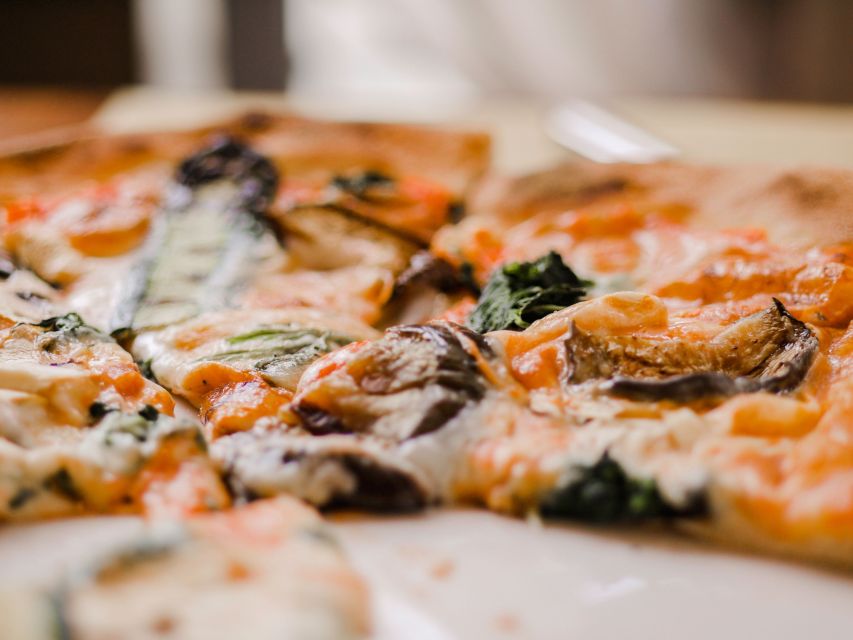
Russ and Daughters dates to 1914 and is described as New York’s premier appetizing shop. In Jewish food culture, an appetizing shop traditionally focuses on foods such as smoked fish, cream cheese, bagels, and related deli items rather than cooked meat.
The stop gives you a different food experience from Katz’s. Instead of a heavy deli plate, you get a taste of the ingredients and combinations that helped make Lower East Side Jewish food famous. It is also a good reminder that the neighborhood’s food traditions were never limited to one type of restaurant.
The shop is popular and can be crowded. You will likely spend less time here than at the sit-down stops, but the short tasting fits the rhythm of the tour. I like this kind of stop because it introduces a food tradition that many visitors might otherwise miss.
Knishes, bialys, and the old bakery trail
Yonah Schimmel’s Knish Bakery has been operating since 1910. A knish is a baked or fried pastry filled with ingredients such as potato, and it is one of the foods most closely tied to New York’s Jewish immigrant neighborhoods.
This stop offers a useful lesson in practical immigrant cooking. A knish is compact, inexpensive, filling, and easy to eat on the go. It began as everyday food, not a fancy specialty, which is exactly why it belongs on a tour focused on neighborhood life.
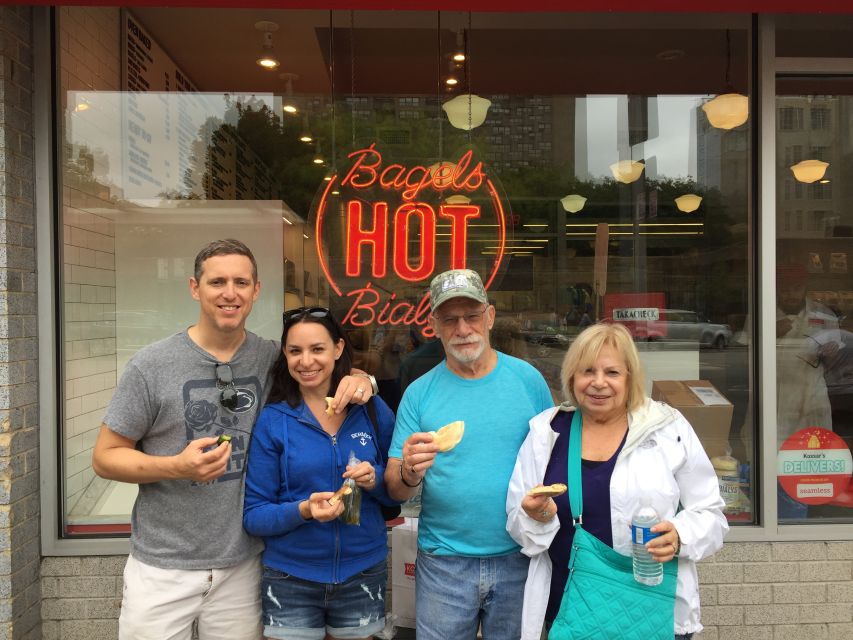
Kossar’s Bialys, founded in 1936, adds another classic bakery item. A bialy resembles a bagel in some ways, but it is baked rather than boiled and usually has a depression in the center. The difference may seem small, yet these details are part of what makes New York’s old bakery traditions worth paying attention to.
I like that the tour includes both foods. You are not simply tasting famous names. You are comparing two pieces of Jewish New York baking and learning how ordinary food can carry a long family and neighborhood story.
Same city, a different table:
- NYC: Chinatown & Little Italy Food Tour with 7 Flavorful Tastings
★ 5.0 · 2,733 reviews - Original NYC Guided Food Tour of Chinatown and Little Italy
★ 5.0 · 2,194 reviews - NYC: Greenwich Village Food Tour with 6 Locals Favorites Dishes
★ 5.0 · 1,812 reviews - Greenwich Village Walking and Food Tasting Tour
★ 5.0 · 1,572 reviews
Pickle Guys supplies a sharp change of pace
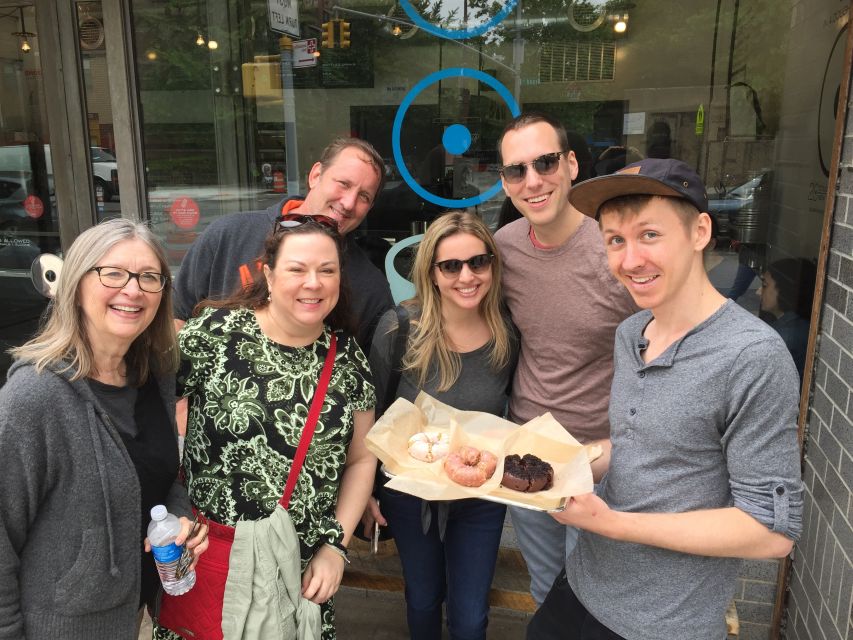
The Pickle Guys makes pickles in an old-fashioned style and offers new, half-sour, and full-sour options. This is one of the more playful stops, and the tasting gives your palate a needed break from bread, meat, and sweet foods.
A new pickle has a fresh, lightly brined flavor. A half-sour has fermented longer, while a full sour delivers a stronger salty and tangy bite. The difference is easy to notice, even if you have never thought much about pickles before.
This is also a good example of how food businesses adapt old methods for a modern audience. The shop was established in 2002, so it is not as old as Katz’s or Yonah Schimmel’s. Still, it fits the area’s tradition of specialty food shops serving both local residents and curious visitors.
You may want a sip of water after this stop. One bottle is included, but you should bring extra water if you are visiting on a warm day.
Doughnut Plant and North Dumpling widen the menu
Doughnut Plant, established in 1994, brings a newer and more experimental note to the route. The shop is known for unusual flavors and a family recipe. After several savory tastings, a doughnut gives you a clear change of direction.
The doughnut stop is not only about dessert. It shows that the Lower East Side’s food identity continues to change. Old institutions remain important, but newer businesses can make their mark with fresh ideas and distinctive recipes.
North Dumpling adds handmade northern Chinese dumplings. This is an important part of the tour because it moves beyond the neighborhood’s Jewish past and shows the continuing presence of other immigrant communities.
The contrast between a knish, a bialy, and a Chinese dumpling is one of the route’s strengths. You get to see how the same streets have supported different communities and food traditions over time. The tastings are small, but the range is broad.
A recent version of the tour included two sit-down small meals, at Katz’s and Castillo de Jagua, along with smaller tastes at Russ and Daughters, Essex Market, Kossar’s, The Pickle Guys, Doughnut Plant, North Dumpling, and Economy Candy. That route may change, but it gives you a realistic idea of the possible variety and the amount of food involved.
Economy Candy ends the walk on a sweet note
Economy Candy has served the neighborhood since 1937. Inside, candy, nuts, and dried fruit fill the space from floor to ceiling. It is a fun final stop because the shop feels different from the bakeries and delis.
You can expect an assortment of sweet tastes rather than a formal dessert course. The store is also worth seeing as a piece of neighborhood retail history. Small specialty shops like this help explain how a local street can serve generations of residents.
If you have children with you, this will likely be one of the most popular stops. Adults who remember old-fashioned candy shops may enjoy it just as much. The only practical problem is temptation. You may leave with more candy than you intended to buy, though purchases beyond the included tasting are not part of the tour price.
The walking route and what you will see between bites
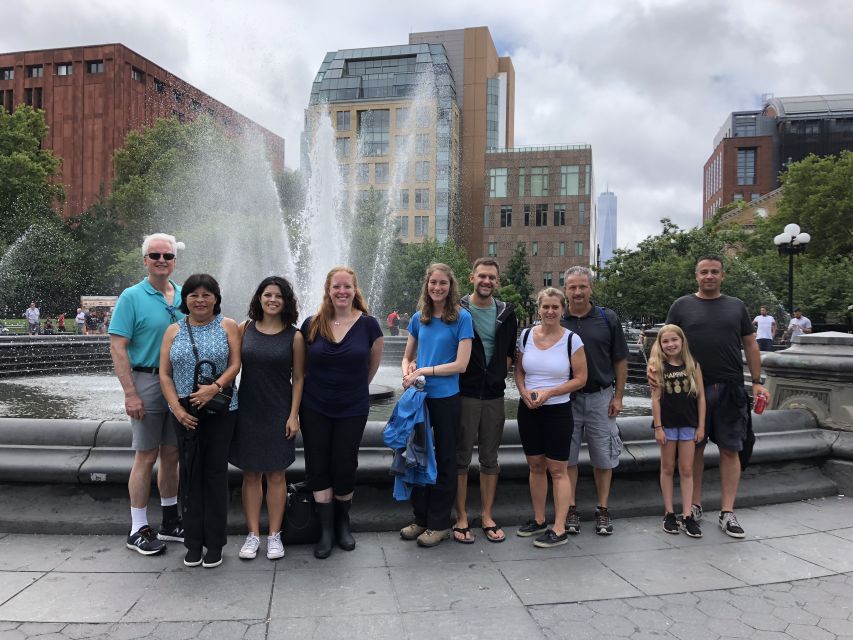
Food is the main attraction, but you are also walking through the Lower East Side’s streets and learning how the neighborhood developed. The guide points out historic tenement buildings that once housed poor immigrant families, as well as synagogues tied to the area’s Jewish past.
Tenements help put the food stops in context. When many families lived in small apartments and worked long hours, nearby bakeries, delis, pickle shops, and markets mattered. These businesses supplied familiar foods, offered meeting places, and helped people maintain customs far from their countries of origin.
You will also pass mom-and-pop shops, boutiques, and cafes. The route is not a museum visit, and the neighborhood is not frozen in time. That is part of its appeal. You see old buildings and long-running businesses alongside newer stores and restaurants.
Comfortable shoes are essential. The tour lasts three hours and takes place on city sidewalks, with time spent standing inside shops and moving between stops. Large bags and luggage are not allowed, so arrive with only what you need.
Guides Jack and Ross shape the experience
The guide makes a major difference on a food tour. Jack was praised for being engaged, entertaining, and familiar with the neighborhood. He also handled a schedule change for one group affected by a flight delay and poor weather, which suggests a helpful attitude when plans go wrong.
Ross was singled out for giving strong historical background, especially about the food traditions of the Lower East Side. That kind of explanation is what separates this tour from simply following a list of restaurants.
Because the group is limited to eight people, you should have a better chance to hear the guide in noisy shops and ask questions without competing with a large crowd. The small size also makes it easier to stay together on crowded sidewalks.
The tour is offered in English. If you want a private experience in another language, this is not the right choice based on the information available.
Is $99 a fair price?
At $99 per person, this is not a cheap way to eat lunch. You are paying for a three-hour route, a guide, several tastings, two possible small sit-down meals, and one bottle of water.
The value improves if you plan to visit several of these businesses anyway. A guide saves you the work of choosing what to order, explains why each place matters, and helps you fit many food traditions into one morning or afternoon.
The price is less attractive if you mainly want a large meal at one deli. You could spend less by ordering one dish on your own, but you would lose the neighborhood context and the range of stops.
I would schedule this tour early in your New York visit. You can use the guide’s food suggestions for later meals, and you will understand the Lower East Side better when you return on your own.
Dietary needs, timing, and practical limits
Tell the operator a couple of days before the tour if you have a dietary restriction, including vegetarian needs, diabetes, or a food allergy. Substitutions can usually be arranged, but they are not guaranteed at every stop.
People with diabetes should note that the experience is specifically listed as unsuitable for them. The route includes bread, pastries, candy, doughnuts, and other foods that may be difficult to manage.
The tour may also be challenging if you have trouble walking or standing for three hours, though no detailed accessibility information is provided. The safest approach is to ask before booking if you need mobility assistance or particular seating arrangements.
Free cancellation is available up to 24 hours before the start time, and you can reserve now and pay later. Starting times vary, so check availability before building the rest of your day around it.
Who should book the Lower East Side food tour?
I would recommend it to first-time visitors who want a guided introduction to Lower East Side food and history. It also suits repeat visitors who have walked past Katz’s, Economy Candy, or the old bakeries but never knew what to order or why the businesses mattered.
It is a strong choice for couples, small families, and food-focused groups who enjoy trying many small portions. The limit of eight people is a real benefit for anyone who dislikes large tour groups.
I would be more cautious if you need a strict diet, dislike pickles or sweets, want a quiet meal, or are looking for a full restaurant lunch. The food is varied, but the pace is active and the route can be filling.
Should you book it?
Book this tour if you want more than a deli sandwich. For $99, you get a guided walk through one of New York’s most layered neighborhoods, with tastings that cover Jewish deli food, bakeries, pickles, Chinese dumplings, doughnuts, and candy.
The best reason to go is the combination of food and place. Jack and Ross have shown that the guide can add real value through local stories and food history, while the small group keeps the experience personal.
Skip it if you are counting every dollar, have serious dietary restrictions, or prefer choosing one restaurant and lingering there. For most curious eaters with comfortable shoes and a healthy appetite, this is a practical and enjoyable way to get your bearings in the Lower East Side.
FAQ
How long does the Lower East Side food tour last?
The tour lasts three hours.
How much does the tour cost?
The price is $99 per person.
Where does the tour meet?
It meets outside Katz’s Delicatessen at 205 East Houston Street in New York, New York 10002.
How do I reach the meeting point by subway?
The closest stop is Second Avenue on the F train. You can also take the B, D, F, or M trains to Broadway-Lafayette Street and walk east along East Houston Street.
What food is included?
All food tastings and one bottle of water are included. Possible stops include Katz’s Delicatessen, Russ and Daughters, Yonah Schimmel’s Knish Bakery, Kossar’s Bialys, The Pickle Guys, Doughnut Plant, North Dumpling, and Economy Candy. Stops can change.
Is the tour offered in English?
Yes. The tour is offered in English with a live guide.
Can dietary restrictions be accommodated?
Tell the operator a couple of days before the tour about dietary restrictions such as vegetarian needs, diabetes, or allergies. A food tasting can usually be substituted, but the experience is listed as unsuitable for people with diabetes.
What should I bring?
Wear comfortable shoes or sneakers. Pets, luggage, and large bags are not allowed.
Just added in New York City
- NYC: Taste the American Dream a Lower East Side Food Tour★ 4.8 · 307 reviews
- NYC: Chelsea Market, Meatpacking, High Line Food Tour★ 4.8 · 123 reviews
- NYC: Greenwich Village Food Tour with 6 Authentic Tastings★ 4.9 · 108 reviews
- NYC: Chinatown & Little Italy Food Tour with 8 Tastings★ 4.9 · 256 reviews
- NYC: Greenwich Village Food Tour★ 4.9 · 23 reviews
- New York City: Little Italy Italian Food Tasting Tour★ 4.3 · 206 reviews
- NYC: Long Island Sommelier-Guided Wine Tasting Tour★ 4.8 · 27 reviews
- NYC: Christmas Eve Gourmet Brunch or Dinner Harbor Cruise★ 4.6 · 31 reviews
City Tours, compared.
Ho Chi Minh City Street Food Tour & Sightseeing By Motorbike
Read our review →
Private Street Food Evening Walking Tour in Ho Chi Minh City
Read our review →
Top Notch Street Food Motorbike Tour In Ho Chi Minh City
Read our review →
Private Street Food Motorbike Tour in Ho Chi Minh City
Read our review →
Super Niche Walking Street Food Tour in Ho Chi Minh City
Read our review →
Old Quebec City Food Tour with 10+ Autentic Local Tastings
Read our review →Browse the lists this tour appears in