
REVIEW · NEW DELHI FOOD TOURS
Old Delhi: 3-hour Street Food Tour
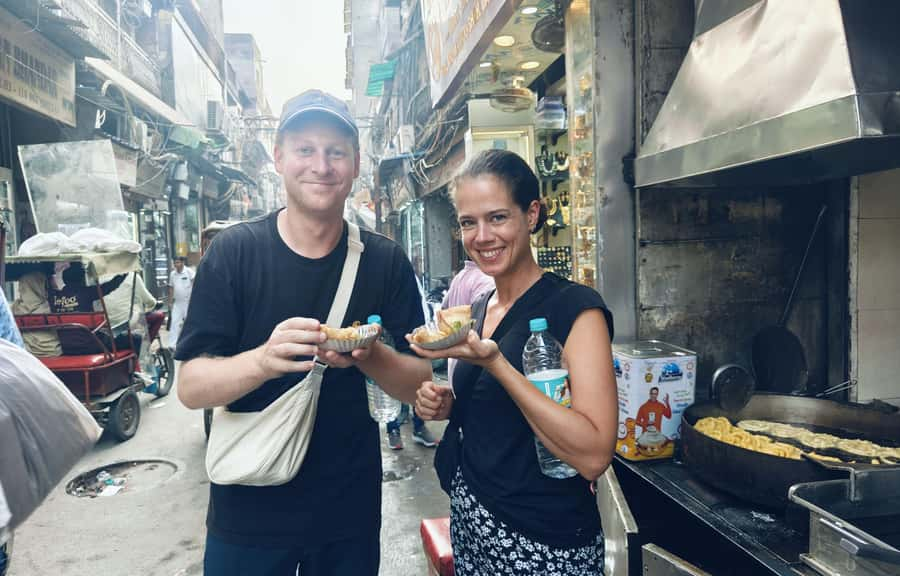
Old Delhi tastes better on foot. This three-hour food walk threads through Chandni Chowk, Parathewali Galli, the spice market, and old religious sites while serving more than ten vegetarian snacks and drinks. I like the mix of eating and local context, especially the stop at Gurudwara Sis Ganj and the short rickshaw ride through the narrow lanes.
I also like that the tour uses the metro, so you get a small taste of how Delhi moves instead of sitting in a private car the whole time. The main drawback is the $51 price, which is high for a street-food outing in India, and the food is heavy on dairy, so it is not suitable for vegans or people with lactose intolerance.
Key points to know
- Start with the metro at 3 p.m.: Meet outside United Coffee House in Connaught Place, then ride with your guide into Old Delhi.
- Ten or more vegetarian tastings: Expect jalebi, samosa, raj kachori, stuffed paratha, chaat, chole bhatura, lassi, rabri-faluda, and kulfi.
- A 150-year-old food lane: Parathewali Galli is the setting for stuffed flatbreads with fillings such as cheese, cashews, chilli, and lemon.
- Gurudwara Sis Ganj adds context: You learn about Sikh community kitchen service before the food walk gathers speed.
- The spice market is a sensory stop: The wholesale market is filled with sacks and scents from across India.
- Small groups work best here: Bookings allow up to 12 people, but the meeting-point option needs at least two participants.
Why this Old Delhi food tour works
Old Delhi can feel like a lot at once. Scooters slip past, shopkeepers call from doorways, pedestrians squeeze through lanes, and food stalls compete for your attention. A guide gives the outing a clear shape, which matters when you are trying to eat, watch traffic, and keep track of where you are.
This tour is not only a meal broken into small portions. It is a quick introduction to several parts of Old Delhi life: Sikh hospitality, market trade, religious buildings, historic food shops, and transport. I like that the experience does not keep you inside a restaurant. You move from one bite to the next and see how the city works around the food.
The 3 p.m. start is useful. It gives you time to reach Connaught Place and means you should not eat much beforehand. Katie’s advice is practical here: arrive hungry. Even small samples add up quickly when you are eating fried bread, chickpeas, yogurt, sweets, fruit, and ice cream in one afternoon.
The tour has a 4.6 rating from 37 reviews, with repeated praise for the guides, food, and Old Delhi orientation. Several guides received special praise, including Isha, Suraj, Kiran, Deepak, Naha, and others. That tells you something important: the person leading the walk can shape the experience. A good guide helps with traffic, hawkers, religious etiquette, timing, and explanations that would be easy to miss alone.
More Street Food Tours in India
- Mumbai: Street Food and Night Markets Tour
★ 4.9 · 719 reviews - Old Delhi Street Food Tour
★ 5.0 · 497 reviews - Delhi: Old Delhi Street Food Tour with Rickshaw Ride
★ 4.9 · 403 reviews
Meeting in Connaught Place and riding into Old Delhi
The meeting point is outside United Coffee House in Connaught Place at 3 p.m. If you arrive by metro, use Gate 4 of Rajiv Chowk station. The tour then begins with a metro ride toward Old Delhi.
I like this start because the transport is part of the city lesson. You are not simply dropped into the old quarter by car. You see the contrast between central Delhi and Old Delhi, then arrive ready to walk and eat.
The meeting-point option requires at least two participants. The maximum booking size is 12 people, so the group should remain manageable, though the lanes themselves can feel crowded. If you want a private outing, choose the pickup and drop-off option. That option includes a private air-conditioned car to and from your hotel, with the metro and tuk-tuk rides included as part of the tour plan.
The tour ends back at the meeting point. Keep this in mind when planning dinner or an evening activity. You are not being taken back to your hotel unless you choose the hotel pickup and drop-off option.
Gurudwara Sis Ganj and the meaning of community service
The first stop in Old Delhi is Gurudwara Sis Ganj, a Sikh place of worship with an important historic connection. The focus here is the community kitchen service, known as langar.
This is one of the strongest parts of the outing because it gives you a useful cultural starting point before the snacks begin. Sikh community kitchens serve food as an act of service, and the guide explains how the practice connects faith, equality, and hospitality. You are not just looking at a religious building from the outside. You receive some context for what you are seeing.
Dress and behavior matter at any place of worship. The tour information does not list specific clothing rules, so follow your guide’s instructions at the site. Take a moment to listen before rushing toward the next tasting. The food is the headline, but this stop helps explain the generous, communal spirit that appears again and again in Delhi’s food culture.
Jalebi and samosa at a century-old shop
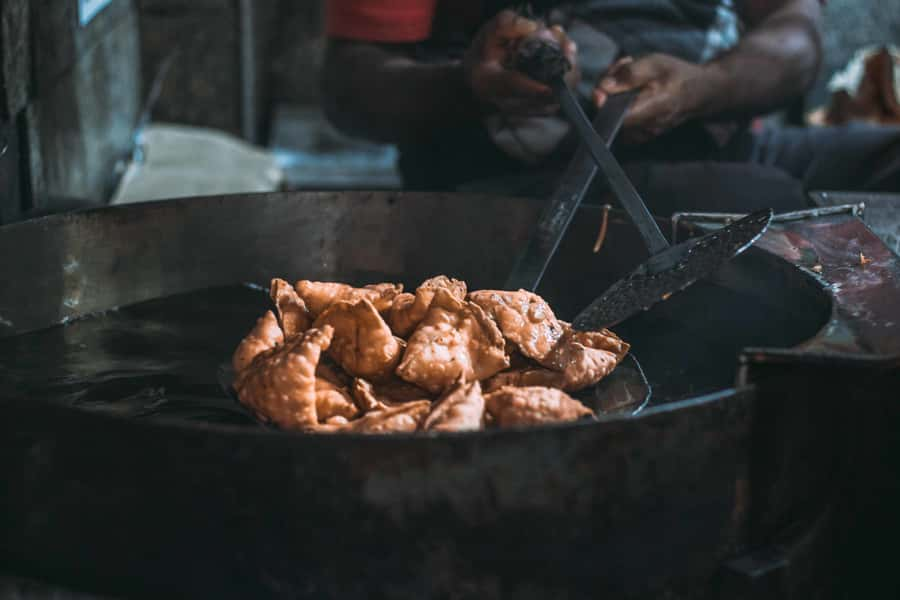
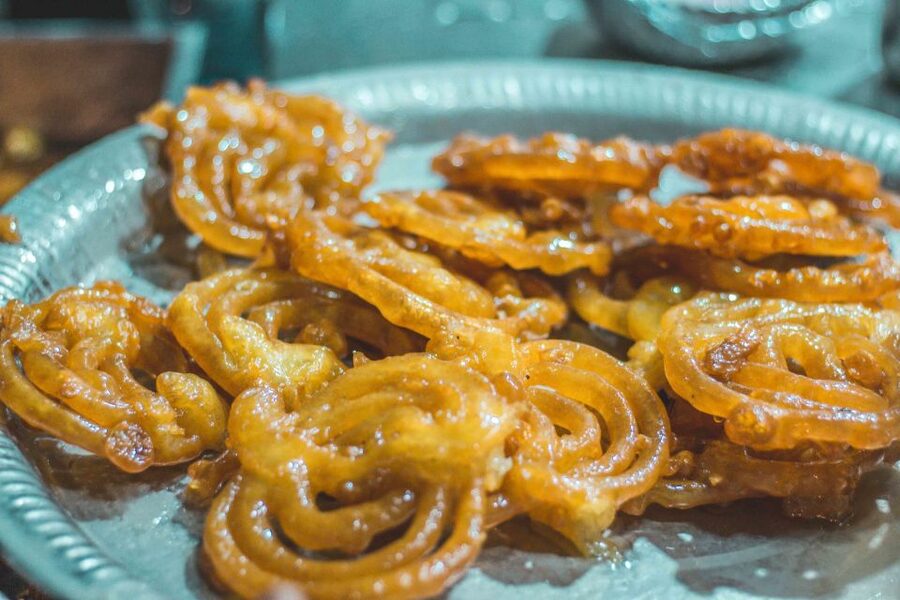
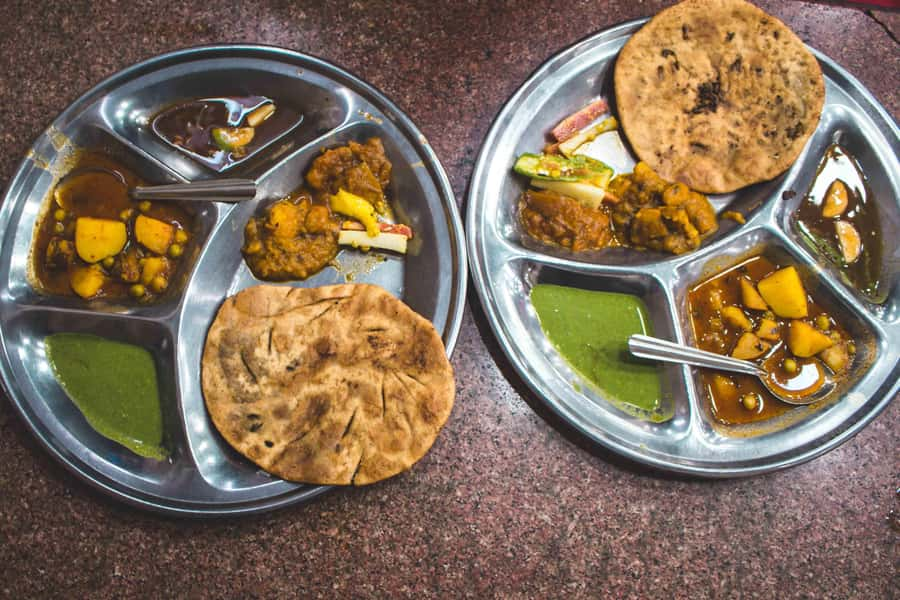
The first food stop brings two familiar Indian snacks: jalebi and samosa. The jalebi is a deep-fried sweet made from corn flour and sugar syrup. It is crisp, sticky, and very sweet. The samosa is a fried triangular pastry filled with potatoes.
These are simple foods, but they make a good opening course. The flavors are direct, and you can begin to understand the balance that runs through the rest of the walk: spice, sweetness, sourness, yogurt, fried pastry, and cooling drinks.
The shop is described as 100 years old, which gives the stop a sense of continuity. You are eating food from a place that has served generations, rather than sampling a modern restaurant’s version of street food. One particularly strong detail from the feedback is the praise for the samosa, described as the best one experienced in India. That is personal taste, of course, but it suggests the samosa is not a throwaway sample.
Because the tour includes many dishes, take smaller bites at this stage. The sweets and fried foods arrive early, while heavier items such as chole bhatura and stuffed paratha come later.
Same city, a different table:
- The Great Indian Food Tour: Old Delhi Food and Heritage Walk
★ 5.0 · 1,698 reviews - Delhi Food Walk: Rickshaw Ride, Street Eats & Market Tour
★ 5.0 · 401 reviews - Old Delhi Food Tour: A Night Time Feast
★ 5.0 · 326 reviews - Jaipur Bazaar & Food Walking Tour
★ 5.0 · 281 reviews
Raj kachori, fruit chaat, and the famous paratha lane
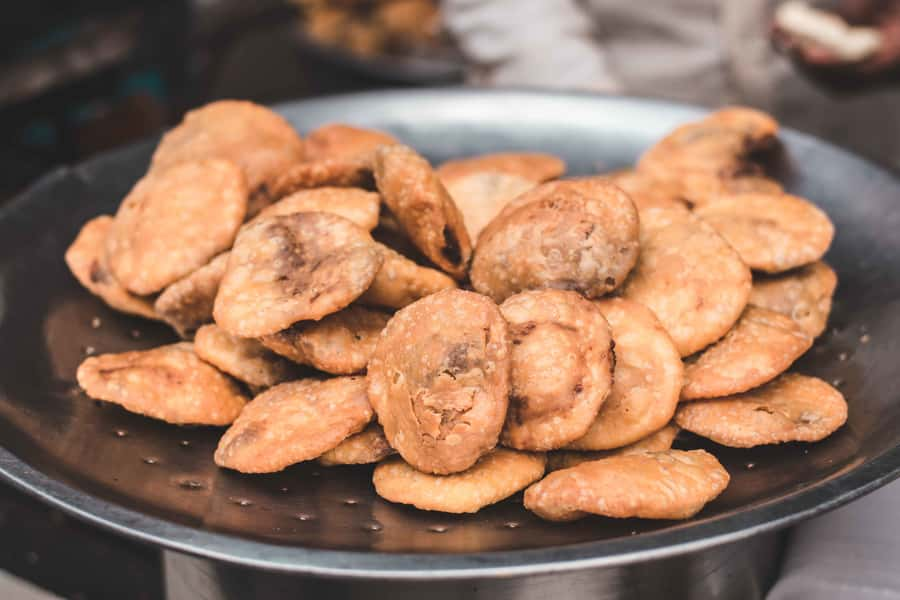
Next comes raj kachori, a crisp edible bowl filled with fresh yogurt and sweet and sour sauces. It is more complex than the opening snacks. You get crunch from the shell, cooling dairy, and sharp, sweet flavors in the same mouthful.
Then the walk moves toward Parathewali Galli, the celebrated lane associated with stuffed parathas. The eatery here is said to be about 150 years old. These are not plain flatbreads. Fillings can include cheese, cashews, chilli, and lemon, giving you a chance to compare savory, nutty, spicy, and tangy combinations.
This is one of the tour’s most distinctive stops. Paratha is common across northern India, but tasting several fillings in a historic food lane gives the dish more meaning. You can see how a familiar everyday bread becomes the center of a food tradition.
The challenge is volume. Fried bread is filling, and this is still only partway through the route. I would treat each portion as a tasting rather than a full meal. If you try to finish everything at every stop, the final sweets and drinks may become difficult.
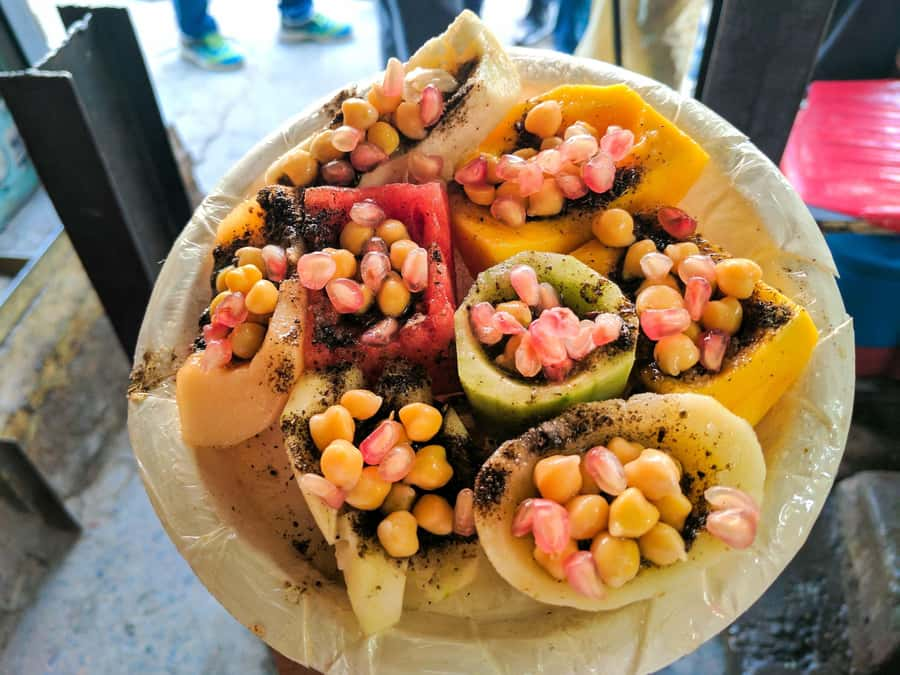
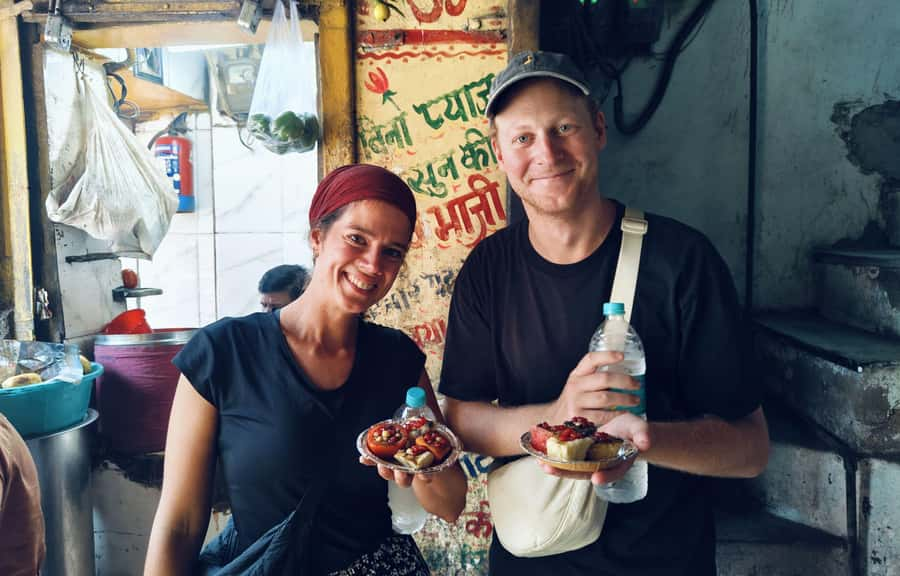
Kulia ki chaat follows. This dish uses fruit bowls filled with chickpeas and masala. It is a useful change from the fried foods because the fruit brings freshness while the chickpeas add substance. The unique fruit sandwich also gives the route an element of surprise. It is not the sort of dish most people would know to seek out without a local guide.
A rickshaw ride through Chandni Chowk
At some point, you take a tuk-tuk or rickshaw through the old lanes. This is more than a convenient transfer. The narrow streets can be hard to navigate on foot, and the ride gives you a brief, lively look at the area without requiring you to make every turn yourself.
The rickshaw portion is also one reason the tour works well for a first visit. Mark specifically enjoyed both the metro and rickshaw rides, along with the guide’s explanations of the area, architecture, and history. That combination gives the afternoon a stronger sense of place than a simple list of food stalls.
Still, expect close quarters and traffic. This is not a calm sightseeing ride. Keep bags secure and pay attention to personal belongings. Pickpocketing is a stated concern in the crowded area, so use a zipped bag and avoid carrying valuables loosely.
The spice market: sacks, scents, and wholesale trade
The route then reaches the spice market, described as Asia’s largest wholesale spice market. Even if you are not buying anything, this is an important stop because it shows the commercial side of Old Delhi.
You can expect the market to engage your nose before your eyes. Whole spices, ground powders, and sacks of goods create a different atmosphere from the sweet shops and snack counters. The guide can help explain what you are seeing and how the market fits into Delhi’s food trade.
This is a good point to slow down. The tour is short, and three hours can pass quickly when you are moving between stops. If you want detailed shopping time, this may not be the right format. The market visit is part of a guided food route, not a long buying session.
The spice market also helps you understand why Delhi’s street food has such strong flavor. Many of the dishes depend on mixtures of spice, sour sauces, chilli, yogurt, and herbs. Seeing the raw ingredients in wholesale form gives the tasting menu a practical connection to the city around you.
Rabri-faluda, chole bhatura, and a cold lassi
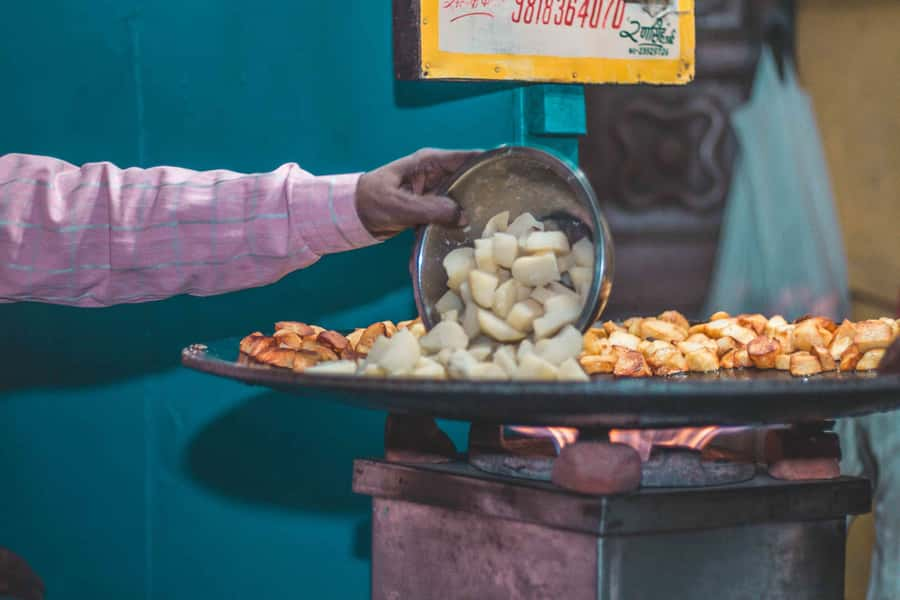
Later in the walk, the food becomes heavier again. Rabri-faluda combines sweet rabri with thin rice noodles. It is cool, creamy, and sweet, with a texture that differs from the earlier crunchy snacks.
Chole bhatura follows, pairing chickpea curry with fried bread. This is hearty food, and it may be the point when you realize just how much you have eaten. The dish offers a more filling example of northern Indian cooking than the small chaat portions.
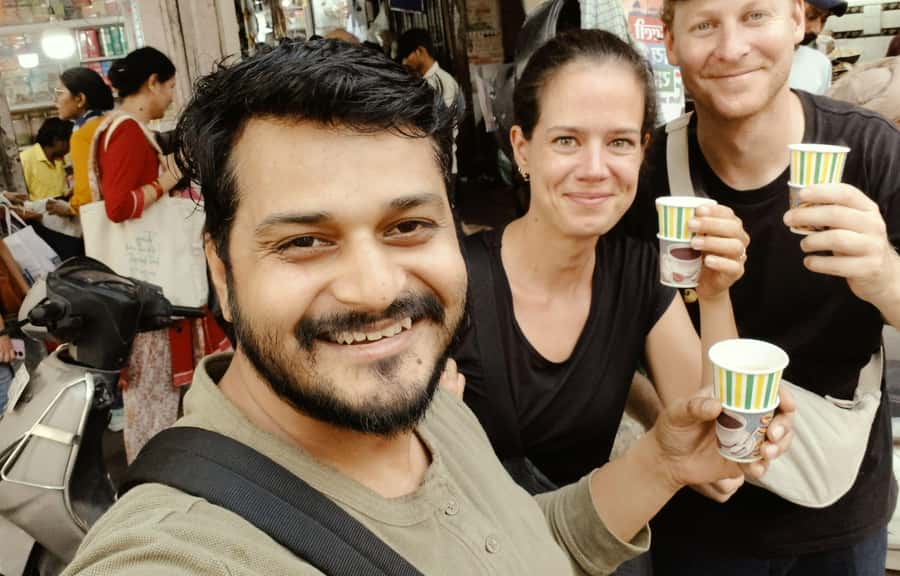
A chilled glass of lassi provides relief. Lassi is sweetened yogurt, and the cold drink can be welcome after walking through crowded lanes and eating spicy foods. It also confirms the tour’s limitation for people who avoid dairy. Yogurt appears in several items, including raj kachori, lassi, and likely other preparations, while cheese and rabri are also part of the menu.
The tour offers only vegetarian food. That suits many visitors, but it is not designed for vegans, and it is not suitable for people with lactose intolerance. If you have an allergy or dietary restriction, tell the guide in advance. The information provided does not promise substitutions, so do not assume a replacement will be available.
Kulfi and the final sweet stop
The final tasting is kulfi, an Indian ice cream offered in more than 50 flavors. It is a fitting end because it is cold, sweet, and different from standard ice cream in texture and flavor.
The tour information also mentions seasonal specials, so the exact menu can vary. That is a plus if you like food experiences that reflect what is available at the time, though it means you should not expect every item to be identical on every date.
By this point, you have sampled sweets, fried snacks, fruit, chickpeas, flatbreads, yogurt drinks, noodles, and frozen desserts. The value is in the range. You are not paying only for one famous dish. You are paying for a structured way to try foods that would be hard to identify, order, and pace on your own.
Is $51 a fair price?
At $51 per person, this is not a budget street-food crawl. You could spend far less on individual snacks in Delhi. The price makes more sense if you value the guide, included transport, cultural explanations, food tastings, and the reduced stress of navigating Old Delhi.
The included food and drinks cover the planned menu, along with metro and tuk-tuk rides to and from the meeting point. You also receive one free Polaroid picture per booking. Bottled water and any extra food or drink are not included.
I would call the price fair for a first-time visitor who wants a guided introduction and does not want to plan every stop. It is less attractive for an experienced Delhi eater who already knows Chandni Chowk and can manage the area independently. The strongest value comes from the combination of access and guidance, not from the food quantity alone.
Who should book this experience?
I would recommend it most strongly to first-time visitors to Delhi, people who enjoy trying many small dishes, and anyone who wants food tied to local culture. The route gives you a useful first look at Old Delhi without asking you to solve the area’s transport and navigation challenges alone.
It is also a good fit for curious eaters who prefer vegetarian food. You should arrive ready for strong flavors, fried dishes, sweets, dairy, and a fair amount of walking.
I would hesitate if you are vegan, lactose intolerant, uncomfortable in crowded places, or looking for a quiet sit-down meal. The tour is active, social, and food-heavy. Comfortable walking shoes are a must, and you need to watch your belongings.
Guides make a real difference. Isha received especially warm praise for her clear English, care around traffic and hawkers, and explanations at religious sites. Suraj, Kiran, Deepak, Naha, and other guides were also praised for their food and area knowledge. You cannot guarantee a particular guide unless the operator confirms it, but the repeated focus on guide quality is encouraging.
Should you book the Old Delhi food walk?
Book it if you want a well-organized first taste of Old Delhi, especially if you value context as much as food. The best parts are the old shops, Parathewali Galli, the Sikh community kitchen explanation, the spice market, and the easy mix of metro, walking, and rickshaw travel.
Skip it if $51 feels too high for street food or if dairy-heavy vegetarian dishes do not suit you. For everyone else, the tour offers a practical way to eat widely, learn the basic layout of Old Delhi, and leave with a much better idea of what to try next.
FAQ
How long does the Old Delhi street food tour last?
The experience lasts three hours.
Where does the tour begin?
It begins outside United Coffee House in Connaught Place at 3 p.m. If you arrive by metro, exit Rajiv Chowk station through Gate 4.
Where does the tour end?
The activity ends back at the original meeting point.
Is hotel pickup available?
Hotel pickup and drop-off are available if you choose that option. It uses a private air-conditioned car.
What type of food is served?
The tour serves vegetarian food only, including jalebi, samosa, raj kachori, stuffed paratha, kulia ki chaat, fruit sandwich, rabri-faluda, chole bhatura, lassi, and kulfi.
Is the tour suitable for vegans?
No. The tour is not suitable for vegans.
Is the tour suitable for people with lactose intolerance?
No. The tour is not suitable for people with lactose intolerance because several items contain dairy.
How many people can join a booking?
A maximum of 12 people is allowed per booking. The meeting-point option requires at least two participants.
What should I bring or keep in mind?
Wear comfortable walking shoes, protect your belongings in the crowded streets, and tell your guide about allergies or dietary restrictions in advance. Bottled water is not included.
More 3-Hour Experiences in India
- Award-Winning Geneva Chocolate &Old Town Tour with Boat Ride (3h)
★ 5.0 · 3,721 reviews - Eat Like a Local: Venice 3-Hour Small-Group Food Tasting Tour
★ 5.0 · 3,137 reviews - Porto: 3-Hour Food Tour
★ 4.9 · 807 reviews - Shanghai: 3-Hour Local Food Tasting Tour
★ 4.9 · 806 reviews
Just added in India
- Food Trail Through Sowcarpet Market: A Taste of Chennai★ 5.0 · 38 reviews
- Sowcarpet Street Food Walking Tour in Chennai with guide★ 5.0 · 83 reviews
- Street Food walking tour in Bangalore with a food evangelist★ 5.0 · 83 reviews
- Filter Kaapi: A food walk by tourism ministry approved company★ 5.0 · 26 reviews
- Amritsar Food Walk With Hidden Gems★ 5.0 · 59 reviews
- Flavours of Agra Food walk★ 5.0 · 25 reviews
- The Great Indian Food Tour: Old Delhi Food and Heritage Walk★ 5.0 · 106 reviews
- Old Delhi Street Food Tour★ 4.8 · 40 reviews
Street Food Tours, compared.
Ho Chi Minh City Street Food Tour & Sightseeing By Motorbike
Read our review →
Small Group Hanoi Street Food Tour with a Real Foodie
Read our review →
Saigon By Night and Street Food By Motorbike | Opt: Ao Dai Riders
Read our review →
Private Street Food Tour by Motorbike/Car with Local Students
Read our review →
Cinque Terre Park Day Trip with Optional Street Food
Read our review →
Street Food Tasting & Sightseeing Tour by Motorbike
Read our review →Browse the lists this tour appears in