
REVIEW · DUBAI FOOD TOURS
Dubai: Old Town Walking Tour with Abra Cruise & Street Food
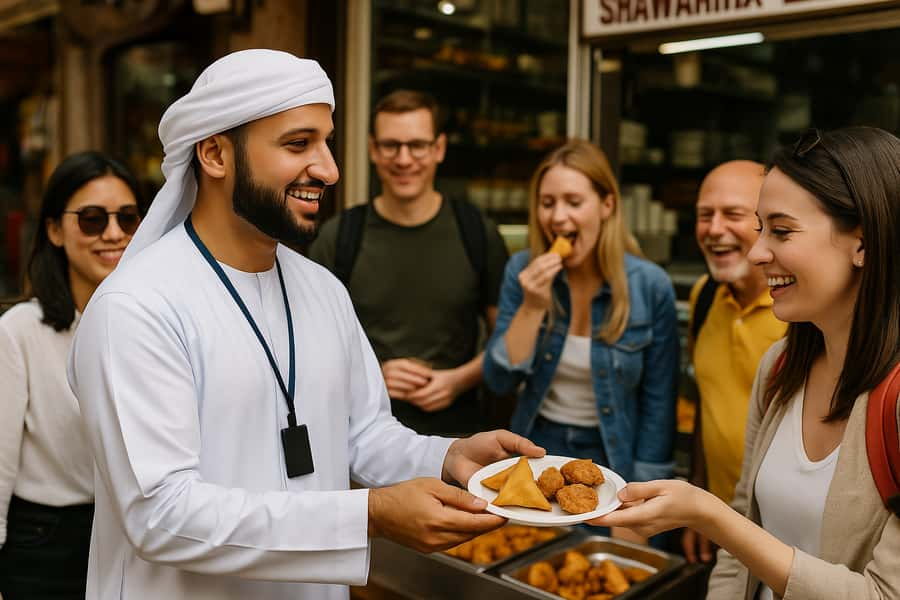
Old Dubai tells its story one alley at a time. This $26 tour pairs a walk through Al Fahidi with Arabic coffee, street food, souks, and a traditional abra ride across Dubai Creek. I like the small-group feel and the way local guides such as Muhammad Bilal and Abdulla bring history down to street level. I also like that the price includes the boat ride, snacks, water, and camel milk chocolate.
The main drawback is the amount of walking on warm, hard streets, with no hotel transfer unless you choose the private option. The tour is not suitable for wheelchair users, people with mobility impairments, or children under two. Still, for a first look at traditional Dubai, it offers good value and a welcome break from malls and glass towers.
Key things to know before you book
- Al Fahidi gives you Dubai’s older face: Wind towers, courtyards, museums, galleries, and remnants of the old city wall replace the skyscraper view.
- The abra ride is part of the price: You cross Dubai Creek on a traditional water taxi rather than simply looking at the water from shore.
- Food and drinks are included: Expect Arabic coffee, street food, bottled water, and camel milk chocolate.
- The guides are the heart of the tour: Muhammad Bilal, Muhammad, Mohammed, and Abdulla receive especially warm praise for clear explanations, kindness, and shopping help.
- The meeting point is easy to reach: Start in front of Wokyo Noodle Bar at Al Seef, near Sharaf DG Metro Station on the Green Line.
- Come ready to walk and haggle: Wear comfortable shoes, leave large bags and strollers behind, and bring sun protection.
Why this $26 tour works for first-time Dubai visitors
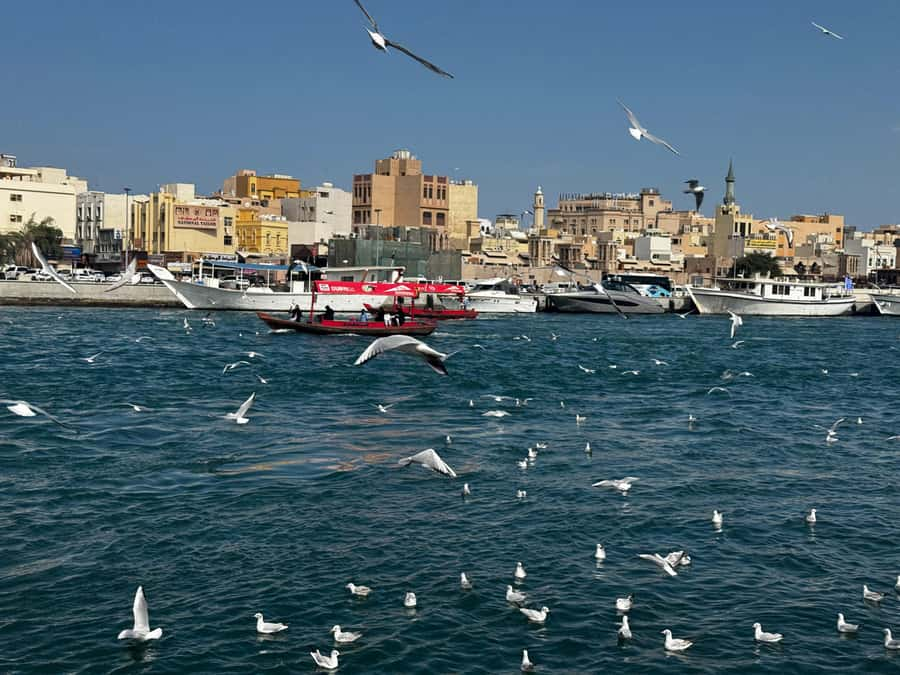
Dubai can feel like a city built for highways, air conditioning, and shopping centers. This tour gives you a different starting point. Instead of racing between famous modern buildings, you spend time in the older districts around Dubai Creek, where trade, boats, homes, religious buildings, and markets shaped the city.
At $26 per person, the value is strong if you want a guided introduction. You are paying for a local guide, the abra crossing, Arabic coffee, street food, water, and camel milk chocolate. A private version is available, while the regular option lets you share the walk with a small group.
I would not book this simply as a shopping trip. The souks are part of the route, but the better reason to go is context. A guide can explain why the old houses look as they do, how wind towers helped cool rooms, and how the creek connected Dubai with regional trade. You can walk through the same lanes alone, but you will miss much of the meaning.
The strongest part of the experience is the guide. Muhammad Bilal is repeatedly praised for combining history, culture, humor, and practical help. Abdulla and other guides receive similar praise for being friendly and clear. One useful feature is their help in the souks. You still need to make your own buying decisions, but a guide can make bargaining feel less awkward and help you avoid wandering into a confusing sales pitch.
More street food tours in Dubai:
- Dubai: Old Town, Souks, Street Food, Guided Tour & Abra Ride
★ 5.0 · 1,664 reviews - Old Dubai: Premium Guided Tour with Street Food & Abra Ride
★ 4.9 · 416 reviews - Dubai Top Highlights: Frame Entry, Souks, Abra & Street Food
★ 4.8 · 344 reviews
Meeting the guide at Al Seef
The tour begins in front of Wokyo Noodle Bar in Al Seef. This is a practical meeting point beside Dubai Creek, and it is easy to reach by taxi, Uber, or metro. From Sharaf DG Metro Station on the Green Line, you walk a few minutes to Al Seef.
I would arrive at least 10 minutes early. Al Seef is a busy area with restaurants and waterfront paths, so giving yourself extra time makes the start calmer. Show the location to your driver as Wokyo Noodle Bar, Al Seef, rather than relying on a vague request for Old Dubai.
The tour ends back at the same meeting point. That makes planning easier if you want dinner, a drink, or another walk along the creek afterward. Hotel pickup and drop-off are not included with the standard option, so factor in your own transport.
Al Fahidi, where the old city feels close
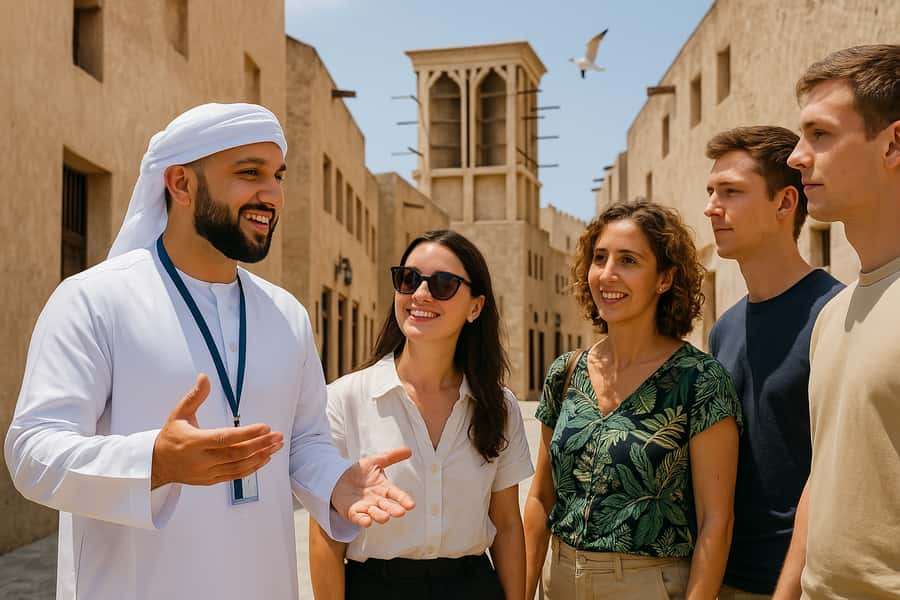
The walk begins in the Al Fahidi District, one of the most atmospheric parts of the route. Here you see traditional Arabian-style buildings with narrow passages, courtyards, and wind towers. Many buildings now house museums, art galleries, and cultural spaces, including a coffee museum.
The wind towers are more than decoration. They are a useful reminder that Dubai’s older architecture responded to the heat with design rather than machinery. The towers helped direct air into rooms, while the shaded lanes reduced exposure to the sun. Your guide can help you notice details that are easy to pass without a second thought.
I like this opening because it puts Dubai’s rapid growth into perspective. The city’s modern towers are famous, but the older district shows the modest scale from which the modern emirate developed. The buildings are not presented as a complete preserved village. They are part of a working cultural district, with museums, galleries, cafés, and visitors moving through the lanes.
That also means you should keep your expectations realistic. This is not an untouched historic quarter. Some buildings have been restored or repurposed, and the walk is designed for explanation as much as sightseeing. For me, that is a strength, as long as you come for a guided cultural visit rather than a silent archaeological site.
The Old Mosque and the wall from around 1800
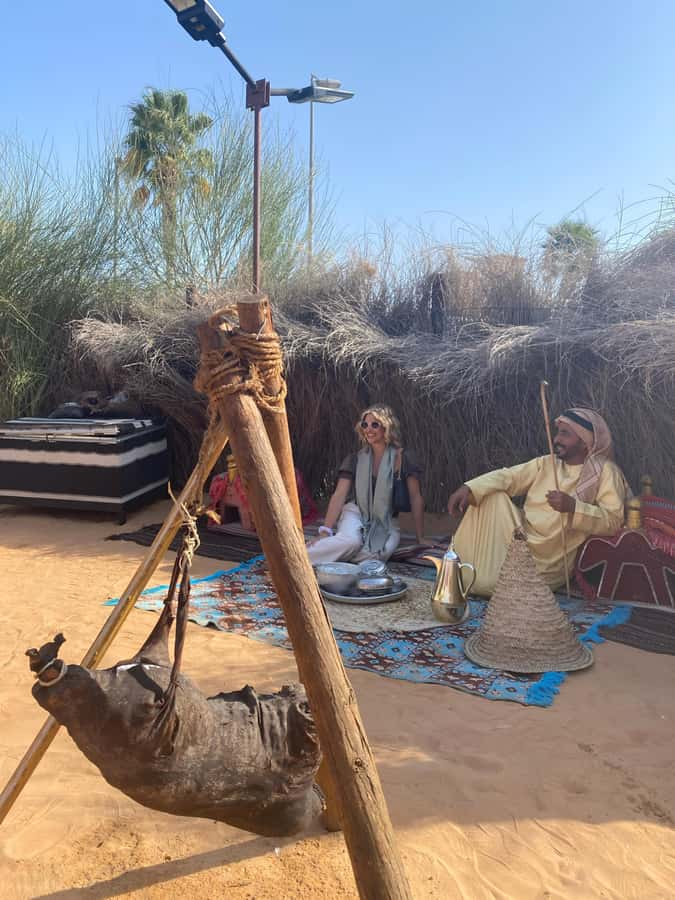
The route passes the Old Mosque, where you can admire architecture tied to Dubai’s religious and community life. The stop is brief in the larger flow of the tour, but it helps show that Old Dubai was not only a marketplace. Homes, places of worship, and trade all sat close together.
You also see remnants of the old wall built around 1800 AD. It is an easy detail to overlook because it does not have the scale of a grand European fortification. Its value is in what it reveals: Dubai once had a smaller, more defined settlement, and the creekside city needed boundaries and protection.
I appreciate stops like this because they keep the story grounded. Instead of hearing only dates and names, you see physical traces in the streets. Ask questions if you are curious about how the wall related to the older settlement, since the guides are praised for responding thoughtfully and explaining the wider history of the UAE.
A few more food tours in Dubai worth a look
- Dubai: Luxury Dinner Buffet at Gastronomy Atlantis The Royal
★ 4.7 · 1,395 reviews - Dubai: Premium Old Town, Street Food, Souks & Boat Ride Tour
★ 4.9 · 262 reviews - Dubai: City Highlights Tour with Blue Mosque & Street Food
★ 4.6 · 247 reviews - Dubai.Discover Old town,Markets,street food,Abra &Museums
★ 4.9 · 181 reviews
The Dubai Museum and the Emirati story
The Dubai Museum is included in the route, with relics and artifacts that present earlier Emirati life. The museum gives the tour a useful change of pace. After walking among buildings and streets, you get a chance to focus on objects and displays that help explain work, trade, daily routines, and local customs.
Museum visits can vary depending on access and operating conditions, so I would treat this as an important planned stop rather than the sole reason to book the tour. The real value comes from the guide’s explanation of what you are seeing. An artifact by itself may be interesting. A local account of how it fits into Emirati life makes it easier to remember.
This is also a good place to ask about the contrast between older customs and the present-day United Arab Emirates. The guides are praised for helping people understand the country’s culture and way of life, not just pointing out buildings. That broad explanation is one reason this tour works well early in a Dubai visit.
Textile Souk, color, trade, and careful shopping
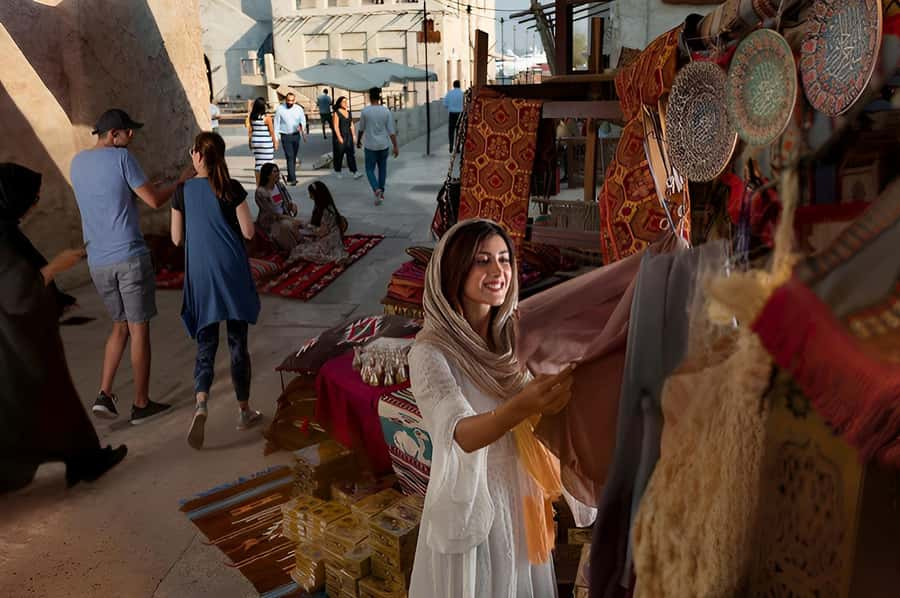
Next comes the Textile Souk, where shops display fabrics in many colors and patterns. The market adds a more commercial edge to the walk. You are not only looking at old buildings now. You are moving through a place where merchants want your attention and where bargaining is part of the experience.
The guide can help you understand the rhythm of the market and may steer you toward vendors they know. Several people praised the practical shopping advice and help getting better prices. That does not mean every price is automatically a bargain. You should still compare, ask politely, and buy only what you actually want.
I find a guided market visit less stressful than entering the souks alone. A friendly local presence can make it easier to ask questions, leave a shop without buying, or try bargaining without feeling lost. If you dislike sales pressure, tell your guide early. You can enjoy the colors and displays without treating the stop as a shopping obligation.
Crossing Dubai Creek by abra
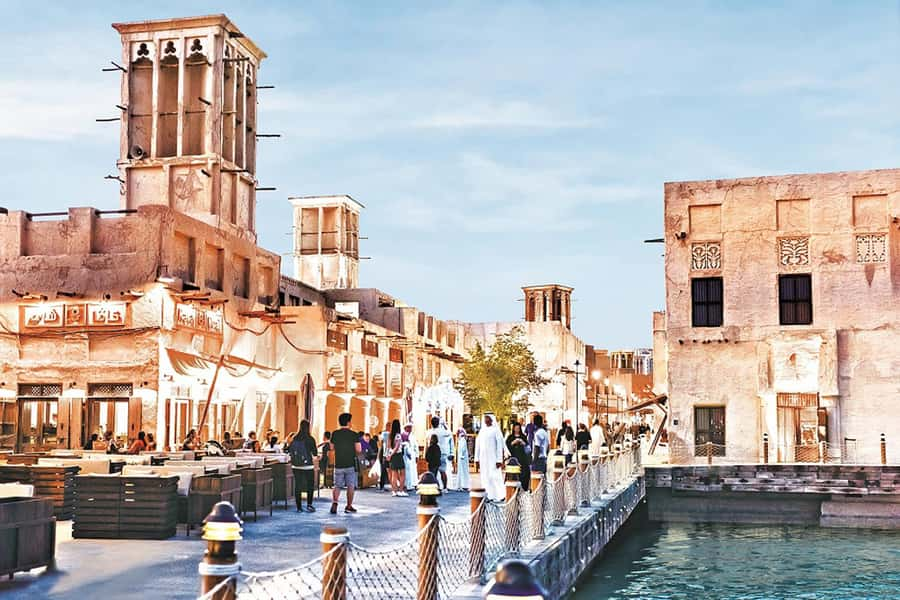
The abra ride is the tour’s most memorable change in scenery. You board a traditional water taxi and cross Dubai Creek to the Deira side. It is a short ride, but it gives you a new view of the city and links the two historic market areas in a way that feels natural.
I like that the boat trip is included rather than offered as an optional extra. You are not simply being driven between attractions. The creek crossing is part of the story. Water helped shape Dubai’s trade, and the abra gives you a direct sense of that connection.
Do not expect a long cruise with commentary, reserved seating, or a sightseeing vessel. This is transport across the creek, with views of the water and the buildings along its edges. That simplicity is the point. It is an ordinary local-style crossing placed inside a guided walk.
Gold Souk, where the market becomes a spectacle
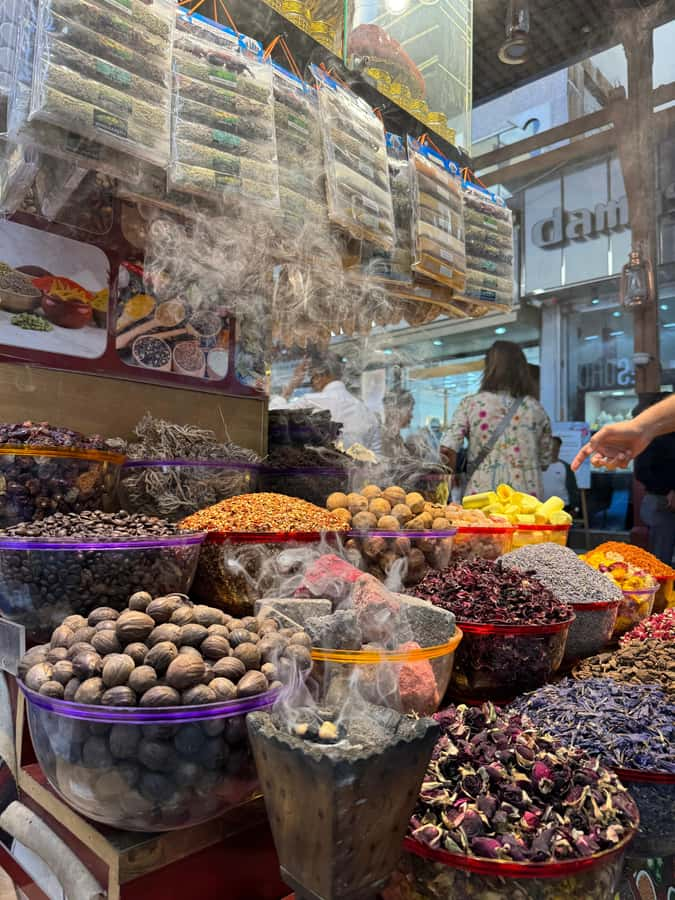
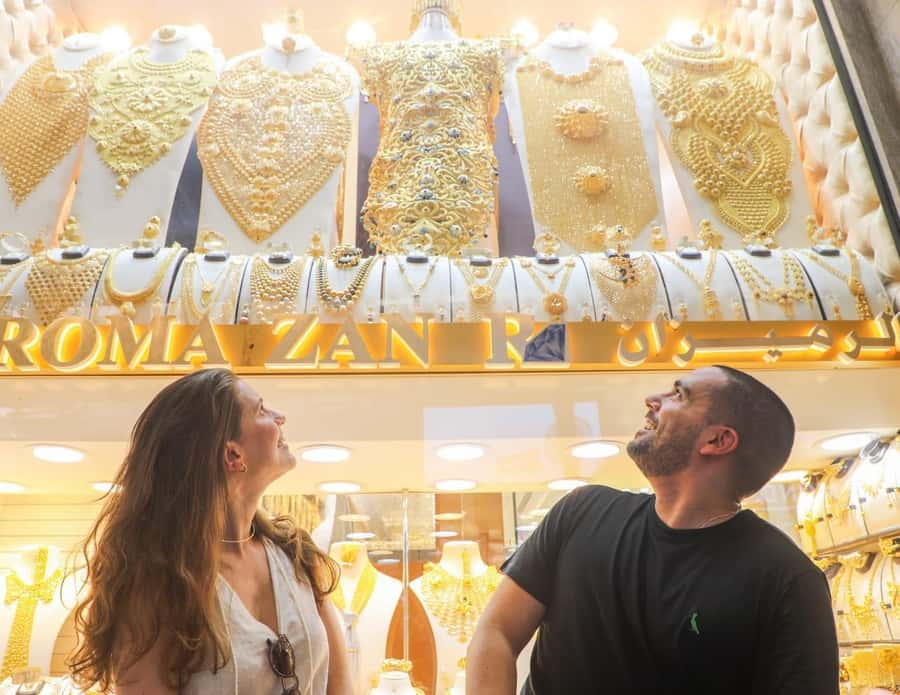
On the other side of the creek, the tour visits the Gold Souk, one of the world’s largest gold retail markets. Even if you have no plan to buy jewelry, the displays are worth seeing. Shop windows are packed with gold pieces, and the concentration of jewelry makes this market unlike a typical shopping street.
The guide’s help matters here. You can learn how to look, compare, and handle the sales approach without feeling that you must make a purchase. If you do shop, agree on what you want, check the price carefully, and remember that the guide’s assistance is advice, not a guarantee of the best possible deal.
This stop may be less appealing if you have no interest in retail markets. Still, it provides a useful look at Dubai’s commercial culture. The Gold Souk is not just a collection of pretty windows. It shows how trade and luxury fit into the city’s public identity.
Spice Market and the included tastes
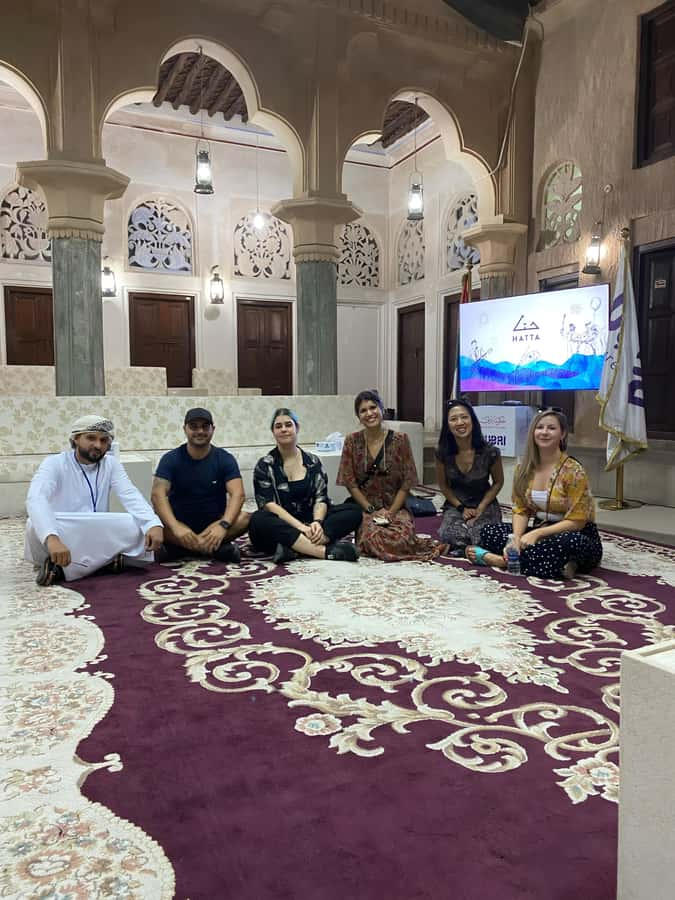
The final market stop focuses on spices and Middle Eastern flavors. You can meet local vendors, smell the products, and learn how the market presents ingredients used in the region. The sensory side of the visit makes it more engaging than a standard architectural walk.
Street food is included, along with Arabic coffee, water, and camel milk chocolate. These small tastings help break up the walking and give the tour a more personal feel. The food is not meant to replace a full meal, so I would plan another meal afterward if you have a large appetite.
The camel milk chocolate is a particularly local touch. It gives you something familiar in an unfamiliar form, while Arabic coffee offers a simple introduction to an important part of hospitality in the region. If you have allergies or dietary limits, ask the provider before booking because the supplied information does not give a full food menu.
How the guides shape the experience
The guide can make or break a walking tour, and this one receives unusually strong praise for that reason. Muhammad Bilal is described as friendly, entertaining, attentive, and clear. Muhammad and Mohammed are also praised for explaining culture and history in a way that helps you understand more than the sights alone. Abdulla is singled out for making the visit interesting and welcoming.
The tone seems personal rather than heavily commercial. You get a small-group setting, direct answers to questions, and help navigating markets. One evening option runs from 5 to 8 p.m., which can be appealing if you want to avoid the harshest part of the afternoon. Exact departure choices should be checked when booking.
A private option is available if you want more control over pace and questions. The shared format is likely the better value for most people at $26. I would choose private only if you are traveling with a group, need a more flexible pace, or want the guide’s attention focused on a particular interest.
Walking conditions, clothing, and practical limits
Wear comfortable shoes. The tour is on foot through historic districts and market streets, and the combination of walking, heat, and uneven surfaces can be tiring. Sunglasses, a sun hat, and light, comfortable clothing are sensible choices.
Large bags and luggage are not allowed, and baby strollers are not suitable. This matters if you are heading straight to the airport or hotel after the tour. Leave bulky items elsewhere and carry only what you need.
The tour is not suitable for children under two, wheelchair users, or people with mobility impairments. If you have any mobility concern, ask before booking rather than assuming that a short-looking walk will be easy. The route includes markets and an abra crossing, so access can be limited.
The languages offered are English and Spanish. Cancellation is flexible up to 24 hours before the start for a full refund, and you can reserve now and pay later. Those terms are useful if your Dubai schedule is still changing.
Who should book this Old Dubai walk?
I would recommend it to first-time visitors who want history, food, and local neighborhoods in one outing. It is also a good choice if you have already seen the Burj Khalifa, malls, and modern hotel districts and want a different side of the emirate.
The tour suits curious shoppers, couples, solo visitors, and small groups who enjoy asking questions. It is especially useful for anyone who feels uncertain about entering the souks alone. The guide can provide a sense of direction and make bargaining feel more manageable.
I would skip it if you dislike walking, strongly avoid market sales pressure, or want a formal museum tour with long periods indoors. It is also not the right fit if you need wheelchair access or hotel transportation included in the base price.
Should you book it?
Yes, if you want a friendly, affordable introduction to Old Dubai rather than another polished modern attraction. The combination of Al Fahidi architecture, the Old Mosque, the old wall, museum artifacts, Textile Souk, abra ride, Gold Souk, spice market, and included tastings covers a lot for $26.
Book it with comfortable shoes, an open mind, and realistic shopping expectations. The strongest reason to go is not any single sight. It is the chance to connect the streets, creek, markets, and culture with a local guide who can explain what you are seeing. For many visitors, that makes this one of the better-value ways to spend an evening in Dubai.
FAQ
Where does the Old Dubai walking tour begin?
It begins in front of Wokyo Noodle Bar in Al Seef. The nearest metro station is Sharaf DG Metro Station on the Green Line, a few minutes away on foot.
Does the tour include an abra ride?
Yes. The price includes a traditional abra water taxi trip across Dubai Creek.
What food and drinks are included?
Arabic coffee, street food, water, and camel milk chocolate are included.
Is hotel pickup included?
Hotel pickup and drop-off are not included unless you select the private option.
What should I bring?
Bring comfortable shoes, sunglasses, a sun hat, and comfortable clothing. Large bags, luggage, and baby strollers are not allowed.
Is the tour suitable for wheelchair users?
No. The tour is not suitable for wheelchair users or people with mobility impairments.
Can I cancel for a refund?
Yes. You can cancel up to 24 hours before the tour for a full refund.
Just added in Dubai
- Old Dubai Historic Guided Tour: Creek, Street Food & Souks★ 4.9 · 156 reviews
- Old Dubai: Premium Guided Tour with Street Food & Abra Ride★ 4.9 · 416 reviews
- Old Dubai Guided Tour With Photographer: Souks & Street Food★ 4.9 · 74 reviews
- Dubai.Discover Old town,Markets,street food,Abra &Museums★ 4.9 · 181 reviews
- Dubai: Private Food Tour – 10 Tastings with Locals★ 4.8 · 61 reviews
- Dubai Private Top Attractions, Premium Vehicle & Street Food★ 5.0 · 24 reviews
- Dubai Top Highlights: Frame Entry, Souks, Abra & Street Food★ 4.8 · 344 reviews
- Dubai: Premium Old Town, Street Food, Souks & Boat Ride Tour★ 4.9 · 262 reviews
Street Food Tours, compared.
Ho Chi Minh City Street Food Tour & Sightseeing By Motorbike
Read our review →
Small Group Hanoi Street Food Tour with a Real Foodie
Read our review →
Saigon By Night and Street Food By Motorbike | Opt: Ao Dai Riders
Read our review →
Private Street Food Tour by Motorbike/Car with Local Students
Read our review →
Cinque Terre Park Day Trip with Optional Street Food
Read our review →
Street Food Tasting & Sightseeing Tour by Motorbike
Read our review →Browse the lists this tour appears in