
REVIEW · PORTO FOOD TOURS
Wine Tasting with Tapas Walking Tour in Porto
Porto tastes better on foot. This two to three hour outing links a port cellar in Gaia with a walk through Ribeira and a second wine stop, giving you two port samples, Vinho Verde, Douro wines, and local snacks in one compact experience. I like the useful mix of wine and city orientation, and I like that guides such as Ana, Emma, Rita, Daniela, and Goncal Monteiro have earned praise for their warmth and city knowledge. The main concern is the food: tapas can mean a single cod croquette rather than a full spread.
I also like the route’s variety. You cross between Gaia and Porto, see the riverfront, and hear stories about port production, British influence, and Porto’s past without committing to a full-day wine excursion. But the walking can be longer and hillier than the description suggests, and the second tasting may feel more like a casual bar stop than a proper wine lesson.
Key points at a glance
- Two port pours at Quinta dos Corvos: The first stop is the strongest wine-focused part, with a port cellar visit and two samples.
- A cross-river Porto walk: You move between Gaia and Porto, through Ribeira and its narrow cobbled streets.
- Three additional Portuguese wines: The later tasting features Vinho Verde and wines from the Douro Valley.
- Tapas expectations need adjusting: Food may be a small petisco, sometimes only one codfish cake per person.
- Friendly guides make a difference: Ana, Emma, Rita, Daniela, Kat, Alex, Alessia, and Goncal Monteiro have all been praised for their personal approach and city stories.
- A good first-day orientation: The route combines wine, river views, local history, and practical sightseeing in about two to three hours.
Starting at the river and crossing to Gaia
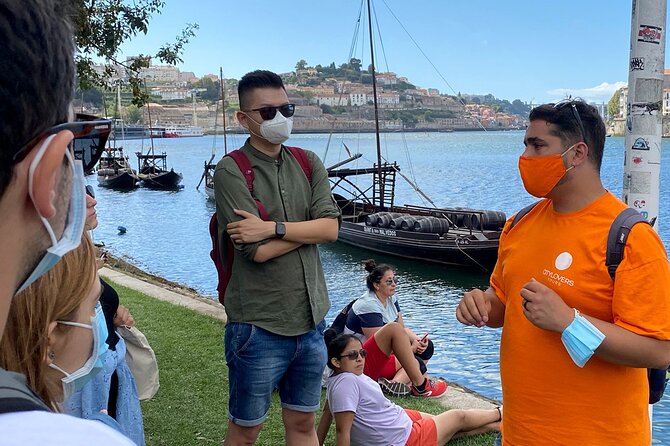
The meeting point is at Pilares da Ponte Pênsil in Porto’s Ribeira district, close to the lower level of the Dom Luís I Bridge. That location puts you right beside one of Porto’s most recognizable views, but it also means you should allow time to find the exact starting spot in the crowded riverfront area.
The route begins by heading toward Gaia, across the Douro River. Gaia is where many of Porto’s famous port houses have their cellars, and this crossing gives the tour a useful bit of geography. Porto occupies the north bank, while Vila Nova de Gaia sits across the water. The two places feel connected, but they are separate municipalities with different views and wine traditions.
The walk is not just a transfer between tastings. Guides have used the route to explain Porto’s past, port production, British involvement in the wine trade, and the people who shaped the city. When the group is small, this part can be especially pleasant. Emma, Ana, Rita, Daniela, and Goncal Monteiro are among the guides praised for keeping conversation warm and answering questions along the way.
Still, this is a walking tour, not a gentle stroll. One account describes a long walk with uphill sections, and another says the group covered plenty of ground with limited commentary during some stretches. If hills are difficult for you, take that seriously. Comfortable shoes are essential, and you should not schedule this immediately after a tiring arrival by train.
More Wine Tours in Portugal
- From Porto: 2 Wine Regions, Farm-to-Table Lunch & Boat
★ 4.9 · 5,724 reviews - Porto Food & Wine Tasting Tour with Lunch or Dinner Option
★ 5.0 · 2,303 reviews - Porto: Wine Tasting with Tapas Walking Tour
★ 4.4 · 1,541 reviews
What happens at Quinta dos Corvos
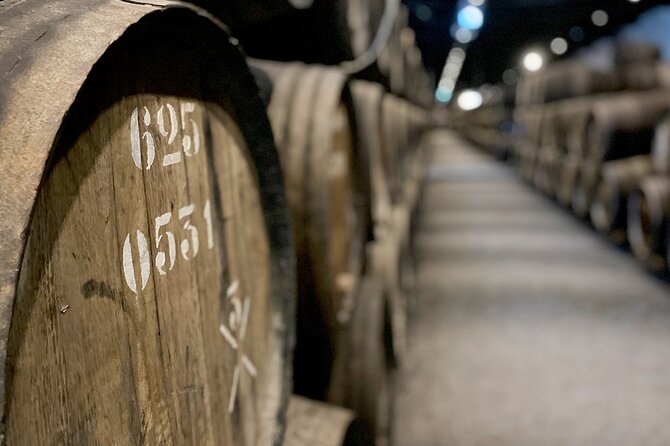
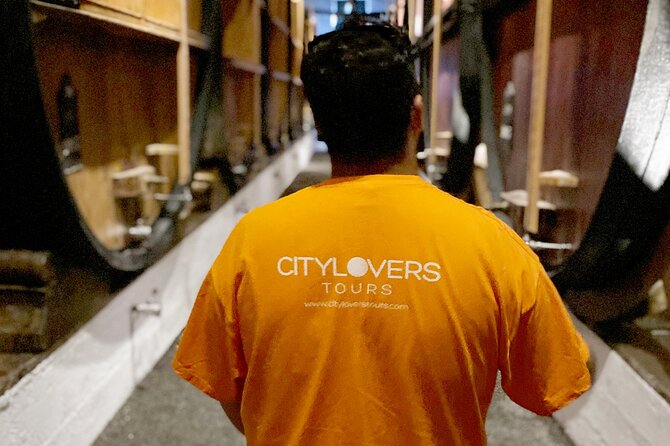
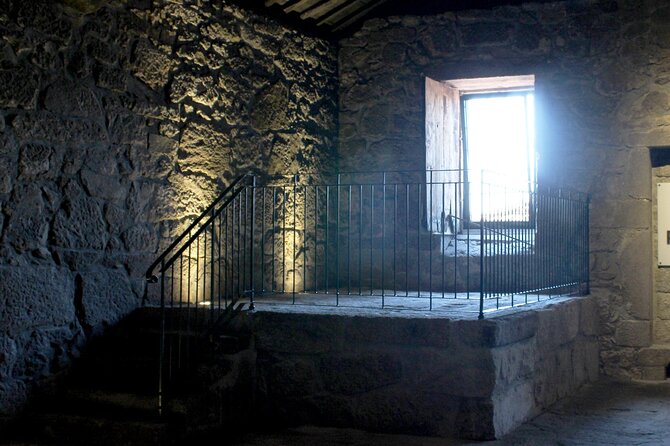
The first stop is Quinta dos Corvos, a port wine cellar in Gaia. You spend about one hour and 15 minutes here, making it the longest and most structured part of the experience.
This is where the tour earns its wine credentials. You taste two port samples, described in one account as a seven-year-old white port and an eight-year-old tawny port. That gives you a useful contrast between two styles. White port can be lighter and fresher, while tawny port has spent time developing a deeper, nuttier character. The tasting is paired with an explanation of port production and the role of the cellar.
The cellar visit has been the most consistently praised part of the route. It offers more than a glass set on a bar counter. You get a sense of why Gaia is central to the port trade and how the drink moved from the Douro Valley toward export markets. Several guides have been praised for making this section friendly and easy to follow.
There is one practical wrinkle. A few accounts describe the first stop as focused on selling bottles, or say the visit felt brief. That is not unusual in a commercial cellar, and you should expect the option to buy wine. If you want a long technical lesson about vineyards, aging, and winemaking, this short visit will probably feel limited. If you want a clear introduction to port with two pours, it is a useful start.
The first stop also helps you understand why port is not simply sweet red wine. The white and tawny samples show that the category has range. Ask your guide how the wines differ, what foods suit them, and how the aging terms work. The quality of the explanation can depend on the guide and the size of the group, so speak up if you want more detail.
Walking through Ribeira’s old streets
After the cellar, the route returns toward Porto and continues through Ribeira for roughly 30 minutes. This is the sightseeing heart of the tour.
Ribeira is best enjoyed slowly. The path takes you through narrow cobbled streets, past old buildings, and along the Douro waterfront. The area is picturesque, but the stones can be uneven and the route may involve stairs or slopes. Keep your attention on the ground as well as the architecture, especially after tasting wine.
The city stories add value when the guide keeps talking. You may hear about Porto’s wine culture, local life, and the way the river shaped the city’s trade. Guides such as Alex and Emma have been praised for giving useful historical context while walking, while other accounts describe stretches with little explanation. This difference matters. The tour is at its best when the guide turns the walk into a connected story rather than simply leading the group from one bar to the next.
Group size can shape the experience. The stated maximum is 30 people, though some departures have been much smaller, including one group of four and another private-feeling group of six. A small group makes it easier to hear, ask questions, and keep pace on the hills. A larger group may take longer to move through busy streets and cramped tasting rooms.
I would treat this portion as a pleasant orientation, not a full guided tour of Porto. You will see important parts of the city and hear useful background, but the route is built around wine stops. If your main goal is detailed architecture or local history, choose a dedicated Porto walking tour instead.
The Wine Chalet Portugal tasting
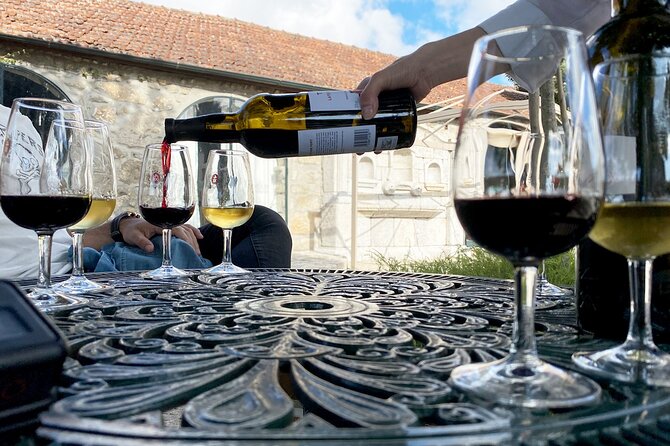
The final stop is Wine Chalet Portugal at Rua Nova da Alfândega 65, near Porto’s historic center. You spend about an hour here, tasting Vinho Verde and wines from the Douro Valley with Portuguese petiscos.
On paper, this is a smart counterpoint to the port cellar. Port is fortified wine, while Vinho Verde and Douro table wines show another side of Portugal’s wine culture. The combination lets you compare different regions and styles in one sitting. Some accounts describe two port pours followed by one green wine and three non-fortified wines, although the exact selection may vary.
The wine quality and explanation at this stop appear less consistent. A good guide can connect the bottles to Portuguese regions and explain what makes Vinho Verde different from Douro wine. At other departures, the tasting has felt casual, with wine served in a bar and little information about the bottles. If you want to learn, ask what you are drinking, where it comes from, and why it was selected.
The setting may also be noisier than the cellar. One account describes loud music, and another found the room cramped for a larger group. That does not ruin the tasting, but it can make conversation difficult. A small group should have a more comfortable experience than a full departure.
More tapas tours in Porto:
- Barcelona: Tapas Walking Tour with Food, Wine, and History
★ 4.8 · 4,261 reviews - Madrid Tapas & Wine Tasting Walking Tour – Small Group Local Bars
★ 5.0 · 3,644 reviews - Sevilla Food Tour: Tapas, Wine, History & Traditions
★ 5.0 · 3,468 reviews - Madrid Tapas & Taverns Small Group Food & History Tour
★ 5.0 · 2,664 reviews
The tapas question: snack, not meal
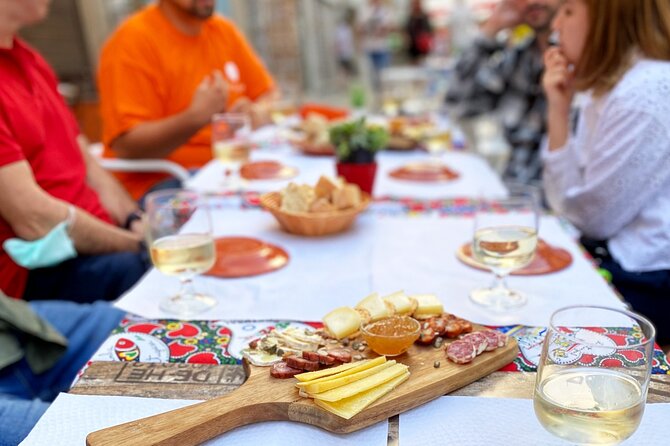
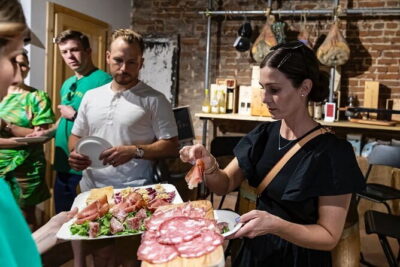
This is the point where you need to set your expectations. The experience includes snacks and traditional Portuguese petiscos, but the portions can be very small.
Some departures have included codfish croquettes and olives. Others appear to have served one codfish cake per person. One account described two kinds of tapas, but that may have been connected to a small group or a particular departure. You should not arrive expecting a table full of petiscos.
The food is best understood as a bite with the wine, not lunch or dinner. Eat beforehand, especially if you are sensitive to alcohol or plan to walk uphill. The phrase wine and tapas suggests a more generous meal than the experience always provides, and that mismatch is the most common source of disappointment.
There is still value in sampling a Portuguese snack with local wine. A codfish croquette is a familiar Portuguese bite, and olives pair naturally with wine. Just do not book this as your main food experience in Porto.
Guide quality makes or breaks the route
The strongest praise goes to the individual guides. Ana is described as funny, personable, and well informed, with one group saying she stayed after the scheduled finish to chat. Emma is praised for her city stories and friendly style. Rita is described as kind and well prepared, while Daniela is noted for her energy and clear explanations.
Kat reportedly stayed beyond the allocated time, and Goncal Monteiro helped a late-arriving participant find the group and reach the first tasting. Alessia has also been praised for her energy and good humor. These details matter because the route itself is fairly simple. A guide who adds context, watches the group, and answers questions can turn a basic tasting into a memorable afternoon.
The reverse is also true. A guide who says little during the walk leaves you with a long transfer between two wine stops. Because the tour may have up to 30 participants, you should stay near the guide and ask questions early. If you are at the back of the group, street noise and distance can make the commentary hard to hear.
The experience is offered in English, and the minimum age is 18. Most people can take part, but the hills, cobbles, and walking distance make this a poor fit for anyone who needs a fully level route.
Is $54.31 a fair price?
At $54.31 per person, the price covers the guide, drinks, wine tastings, snacks, and the cellar visit. It also saves you the trouble of arranging a port house and a separate wine bar while finding your way between Porto and Gaia.
The value depends on what you want from the afternoon. If you want a short introduction to Porto, two port samples, several table wines, and a guide who brings the city to life, the price can be reasonable. You are paying for the route, the organization, the tastings, and the local context, not just the liquid in the glasses.
The value weakens if your main goal is food or serious wine instruction. One codfish cake and a few small bites do not replace a meal. Nor should you expect a detailed sommelier session at both stops. Some accounts describe the second wines as poor or overpriced compared with bottles found in local shops, while others enjoyed the selection. That mixed experience makes the guide and the particular departure important.
The tour is often reserved well in advance, with an average booking lead time of about 72 days. That suggests you should not wait until the last minute during a busy Porto visit. At the same time, confirm the start time carefully. There have been scheduling changes and last-minute cancellations, including a departure canceled because a wine venue was closed and another canceled because Sunday service was no longer running.
Free cancellation is available up to 24 hours before the start time. If the operator cancels because the minimum number of participants is not reached, you are offered another date or experience, or a full refund.
Who should book this Porto wine walk?
I would choose this tour for a first visit to Porto when you want several things in a single afternoon. It gives you a quick sense of Gaia, Ribeira, port, Vinho Verde, Douro wine, and the riverfront. It also works well for people who enjoy meeting others, since the group format brings together visitors from different places.
It suits you best if you:
- Like walking between stops and can manage hills and cobblestones.
- Want an introduction to Portuguese wine rather than a technical course.
- Prefer a planned route with tastings included.
- Are happy with small snacks instead of a full meal.
- Value a friendly guide and city stories.
- Are 18 or older and comfortable with alcohol tastings.
I would choose another experience if you want a substantial food tour, a slow tasting at several serious wineries, or a detailed Porto history walk. I would also avoid booking it when hungry or when you have limited mobility.
Should you book it?
Book this experience if you want a convenient introduction to Porto’s wine culture and do not mind that the walking and guiding may be as important as the tastings. The Quinta dos Corvos visit, the two port samples, and a strong guide can make the afternoon well worth the price.
Go in with modest expectations about the tapas and the second wine stop. Eat first, wear sturdy shoes, keep your group small if possible, and confirm the departure time. If you want one compact route that links Gaia, Ribeira, port, and Portuguese table wine, this is a sensible choice. If you want a full meal or serious wine education, spend your money elsewhere.
FAQ
How long does the wine tasting walking tour last?
The experience lasts approximately two to three hours.
Where does the tour start?
It starts at Pilares da Ponte Pênsil in Ribeira, Porto, near the Dom Luís I Bridge.
Where does the tour finish?
It ends at Wine Chalet Portugal, Rua Nova da Alfândega 65, Loja 2, Porto.
Which wines are included?
The experience includes two port wine samples at Quinta dos Corvos, followed by Vinho Verde and wines from the Douro Valley at Wine Chalet Portugal. Accounts of the tasting describe three additional table wines.
Is food included?
Yes. Snacks or Portuguese petiscos are included, but portions can be small. The food may include a codfish croquette and olives, and some departures may offer more than one type of snack.
Is the tour suitable for people who do not drink alcohol?
The provided tour details do not state that nonalcoholic alternatives are available. The experience is built around wine and port tastings.
What is the minimum age?
The minimum age is 18.
Can I cancel for a full refund?
Yes, if you cancel at least 24 hours before the local start time. Changes or cancellations made less than 24 hours before the start time are not accepted for a refund.
More wine tours in Porto
- Authentic Food and Wine Tour in Porto by Food Lover Tour
★ 5.0 · 1,057 reviews - Porto: Delicious Food and Wine Walking Tour
★ 4.8 · 977 reviews - 4-Hour Traditional Portuguese Food & Wine Tour in Porto
★ 4.5 · 507 reviews - Porto: Food & Wine Tasting Walking Tour with Port Wine Cave
★ 5.0 · 34 reviews
Just added in Porto
- Eat Porto Like a Local: The Ultimate Full-Meal Food Tour★ 5.0 · 97 reviews
- Porto: Evening Local Food Crawl with Drink Pairings★ 4.9 · 395 reviews
- Porto: Food Tour with Tastings★ 4.6 · 145 reviews
- Porto: Private Food Tour – 10 Tastings with Locals★ 4.7 · 165 reviews
- Porto: Private Walking Food Tour with Tastings★ 4.7 · 44 reviews
- Porto: Authentic Portuguese Food Tour with 5+ Local Tastings★ 4.9 · 34 reviews
- Porto: Food & Wine Tasting Walking Tour with Port Wine Cave★ 5.0 · 34 reviews
- 4-Hour Traditional Portuguese Food & Wine Tour in Porto★ 4.5 · 507 reviews
Wine Tours, compared.

Winner 2025 Undiscovered Lisbon Food & Wine Tour by Eating Europe
Read our review →
Winner 2025 Florence Sunset Food & Wine Tour by Eating Europe
Read our review →
Authentic Parisian Gourmet Food Tour with 10 Local Dishes & Wines
Read our review →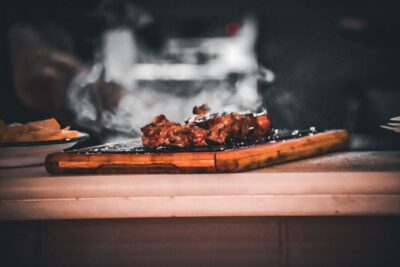
Tapas Walking Tour with Food, Wine, and History
Read our review →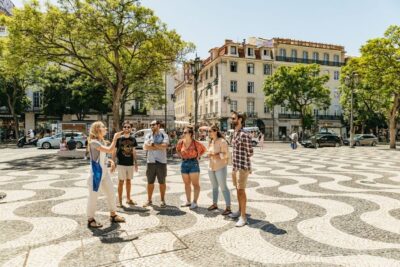
Lisbon Small-Group Portuguese Food and Wine Tour
Read our review →
Browse the lists this tour appears in