
REVIEW · PARMA FOOD TOURS
From Parma: Parmigiano and Parma Ham Guided Food Tour
Parma tastes better at the source. This five-hour outing takes you from a working Parmigiano Reggiano caseificio to a Parma Ham producer, with production rooms, aging cellars, and generous tastings along the way. I like the close look at how these foods are made, and I like that local guides such as Pietro, Matteo, Mattia, and George explain the work in clear, lively English. The main drawback is that the tastings can feel a little brief, especially if you prefer to linger over food and wine.
The tour also removes a tricky bit of Parma logistics. Pickup and return are included from the NH hotel by Parma station, making the countryside factories easier to reach without a car. Just arrive early: the van leaves after 10 minutes, and the route is not suitable for wheelchair users or people with mobility impairments.
Key points at a glance
- Cheese making in real time: Watch whey separation, shaping, salting, aging, hammer testing, and fire branding at a working Parmigiano Reggiano factory.
- Three aged cheese tastings: Compare three ages of Parmigiano with a glass of local sparkling Malvasia.
- Parma Ham from meat to crown: Follow the cold processing, selection, salting, refrigeration, aging, and battitura stages.
- A 24-month finish: Taste aged Parma Ham with breadsticks and local wine from the Parma hills.
- Useful station pickup: Meet at the NH hotel beside Parma station, then return there after the five-hour visit.
- Strong guiding: Guides including Pietro, Matteo, Mattia, and George have been praised for making technical production steps easy to follow.
Why Parma’s two famous foods belong together
Parma gives you two very different food stories in one morning or afternoon. Parmigiano Reggiano is made from milk, heat, time, and strict testing. Parma Ham begins with fresh meat, then depends on careful trimming, salt, air, and patient aging.
That contrast makes this more useful than a simple tasting stop. You do not just sample finished products. You see the rooms and methods that shape flavor, then taste the result while the details are still fresh in your mind.
I especially like the focus on production rather than a shop visit. The cheese factory lets you watch the work close up, while the ham stop explains what happens before the familiar slices reach a plate. You also meet the people connected with these products, which gives the outing a more personal feel than a generic food demonstration.
The day is not built around long meals. Tastings are part of the learning, not a leisurely restaurant course. One particularly useful point from the experience is that the cheese stop can be the stronger of the two for visitors who want to watch active production. At the ham facility, the working area may not always be fully open, though you still see and hear about the process from start to finish.
More cheese tastings in Italy:
- Sorrento: Farm Tour with Cheese Tasting & Pizza Making Class
★ 5.0 · 503 reviews - Palermo: 2-Hour Sicilian Cheese and Wine Tasting Tour
★ 4.8 · 52 reviews - Private Montmartre Food Tour with Wine, Cheese & Pastries
★ 5.0 · 1,027 reviews
Meeting the van at Parma station
The meeting point is the NH hotel at Parma station. Use the north exit, marked Falcone/Borsellino, and walk to the NH hotel on the right. The van waits in the bus parking area in front.
This arrangement is handy if you are staying in central Parma or arriving by train. You do not need to arrange a taxi to a distant factory, and the tour ends at the same place. Still, treat the pickup time seriously. After 10 minutes, the vehicle leaves for the first stop. Parma station can be confusing if you come out of the wrong exit, so allow extra time to find the hotel.
The ride is part of the practical value of the experience. These producers are outside the city, and visiting both by public transport would be awkward. A private vehicle also keeps the day within five hours, including travel between the two sites.
The exact starting time depends on the date you choose. Check availability before planning lunch, a train connection, or another activity in Parma. The stated price is $134.81 per person, and that includes transport, guiding, both factory visits, cheese, ham, and two wine servings. For someone without a car, that is a fair package because it combines several costs and saves you the trouble of arranging rural transport.
The Parmigiano Reggiano caseificio
The cheese visit begins with the production of Parmigiano Reggiano at a traditional caseificio. This is the part I would prioritize if you are fascinated by craft and process.
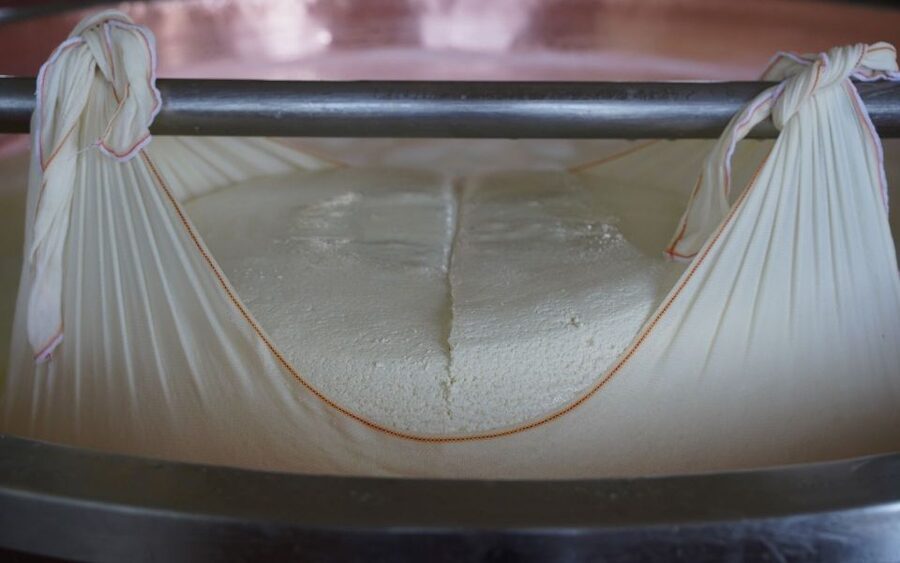
You learn how the milk is worked, how the whey is separated, and how the curds are shaped into the large wheels associated with the cheese. The sequence matters. Parmigiano is not made by simply pressing curds into a mold and leaving them alone. Heat, timing, shaping, salting, and aging all affect the final character.
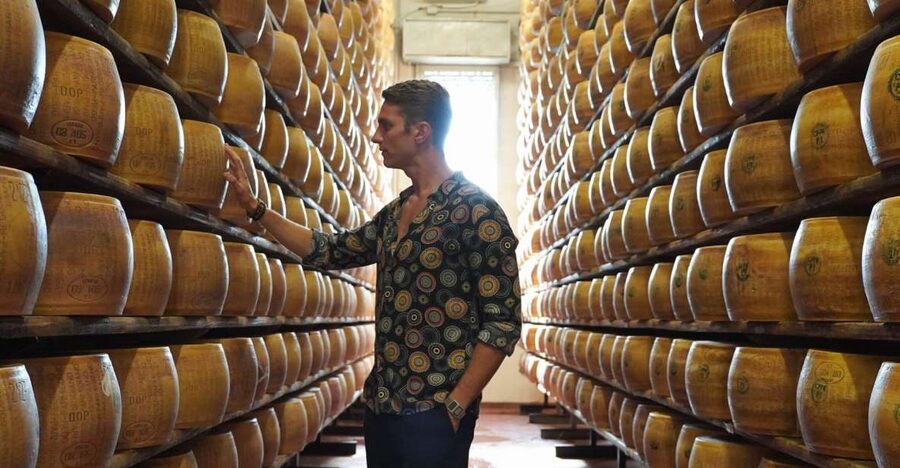
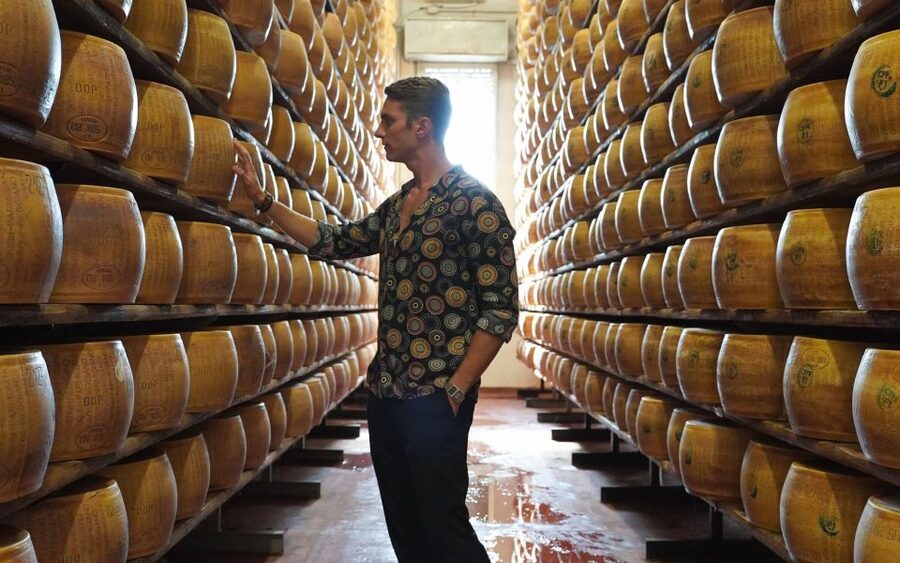
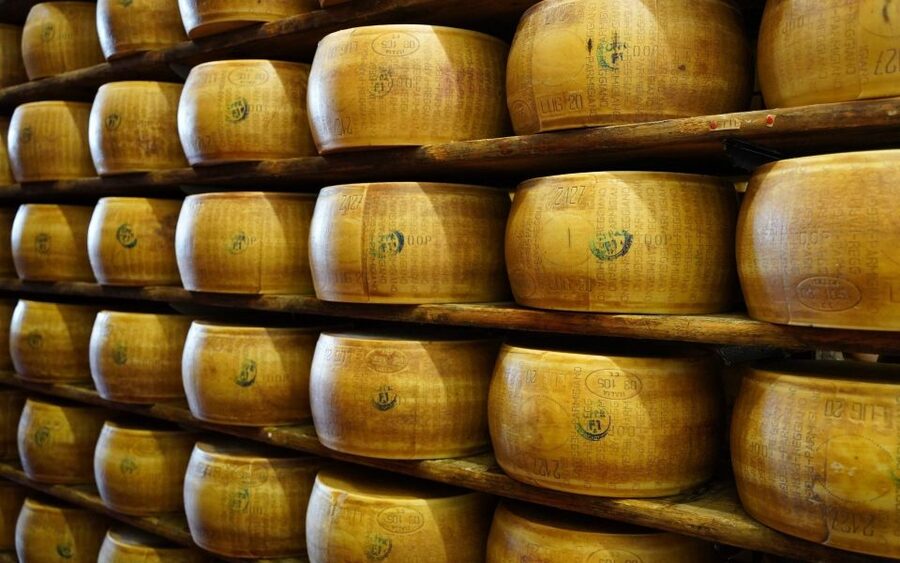
The route includes the shaping and salting rooms. These spaces help explain why the cheese takes its familiar form and why the outside of each wheel matters. You then enter the aging area, where rows of wheels rest for long periods. Seeing thousands of cheeses aging together gives you a better sense of the scale and patience behind a product that is often treated as a quick topping for pasta.
Your guide explains the official checks carried out by the Consorzio. One memorable detail is the hammer test. A specialist taps the wheel and listens for signs of faults. If the cheese passes, it receives the familiar fire branding. That mark is not just decoration. It signals that the wheel has met the required standards for Parmigiano Reggiano.
Guides such as Pietro and Mattia have been praised for making these steps easy to understand. That matters because cheese production can quickly become a blur of technical terms. A good explanation connects each room to the taste you will soon notice in the sample.
Three ages of cheese with sparkling Malvasia
The cheese tasting includes three aged Parmigiano samples. This is a smart way to understand aging without needing a long lecture. You can compare how texture and flavor change as the cheese spends more time resting.
The exact ages of the three pieces are not specified, so do not expect a fixed comparison such as 12, 24, and 36 months unless your guide gives those details on the day. What you can expect is a guided look at aged cheese and a chance to notice differences in firmness and flavor.
The tasting comes with a glass of local sparkling Malvasia. That pairing keeps the stop connected to Emilia-Romagna rather than treating the cheese as an isolated product. It also gives you a light, regional drink before the ham portion of the tour.
Give yourself permission to pay attention here. Notice how the cheese breaks, how long the flavor stays, and how the wine changes the finish. This is a tasting, not an all-you-can-eat breakfast, but the three samples provide enough material for a useful comparison.
A few more food tours in Italy worth a look
- Naples: Street Food Walking Tour with Local Guide
★ 4.9 · 4,976 reviews - Rome: Street Food Tour with Local Guide
★ 4.8 · 4,077 reviews - Rome: Guided Food Walking Tour with Wine in Trastevere
★ 4.9 · 3,105 reviews - Venice: Street Food Tour with a Local Guide and Tastings
★ 4.8 · 2,613 reviews
From fresh meat to aged Parma Ham
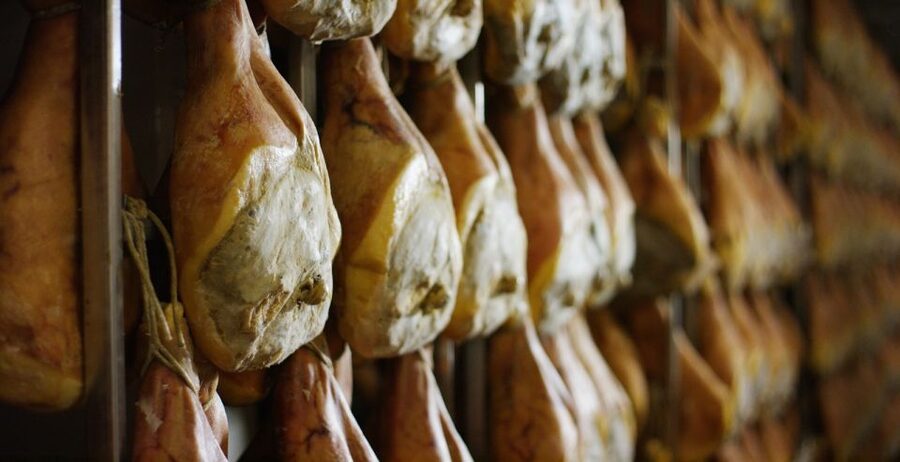
The second production visit follows Parma Ham from the cold phase onward. You begin with an explanation of the product’s background, then see how fresh meat is processed and selected.
The selection stage is central. The producer chooses the finest cuts before salting and refrigeration begin. These early decisions shape the quality of the final ham, so this stop helps you understand why protected regional foods depend on strict standards long before they are sliced.
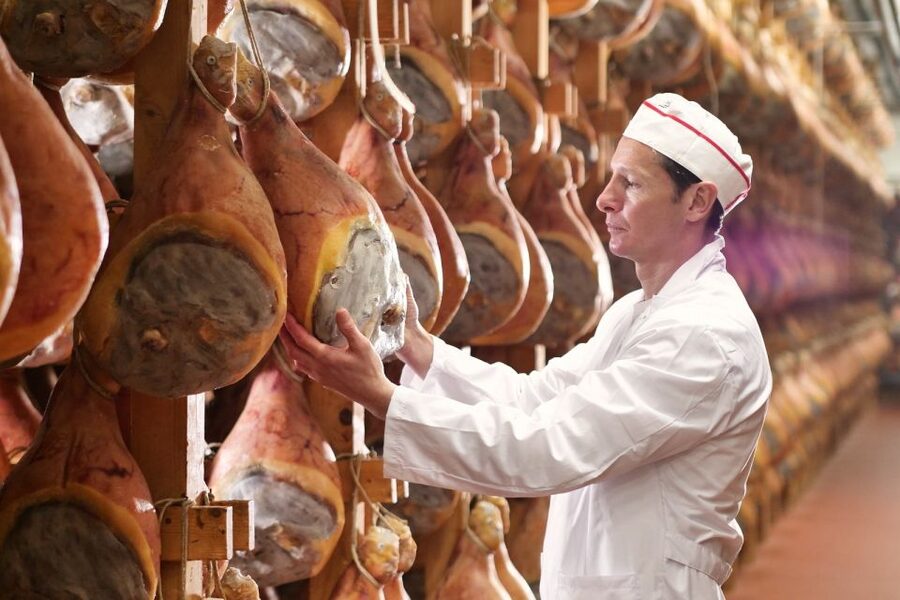
The cold rooms show a side of ham production that is easy to miss in a delicatessen. The meat must be handled and stored carefully before the long aging period. After that, the route moves to the aging rooms, where the aroma becomes part of the experience. You learn how time, air, and treatment change the meat.
One distinctive step is called battitura. The ham is checked by tapping it, with the sound helping indicate whether it has developed properly. The process leads to the coveted crown marking associated with Parma Ham. As with the cheese hammer test, this turns quality control into something you can actually see and understand.
The ham factory may not always have every work area open for viewing. If the cold phase is operating, you can watch more of the active production. If it is not, the visit still covers the process and lets you see the aging side. That variation is worth keeping in mind if you want a fully active factory floor rather than a guided explanation.
A 24-month ham tasting
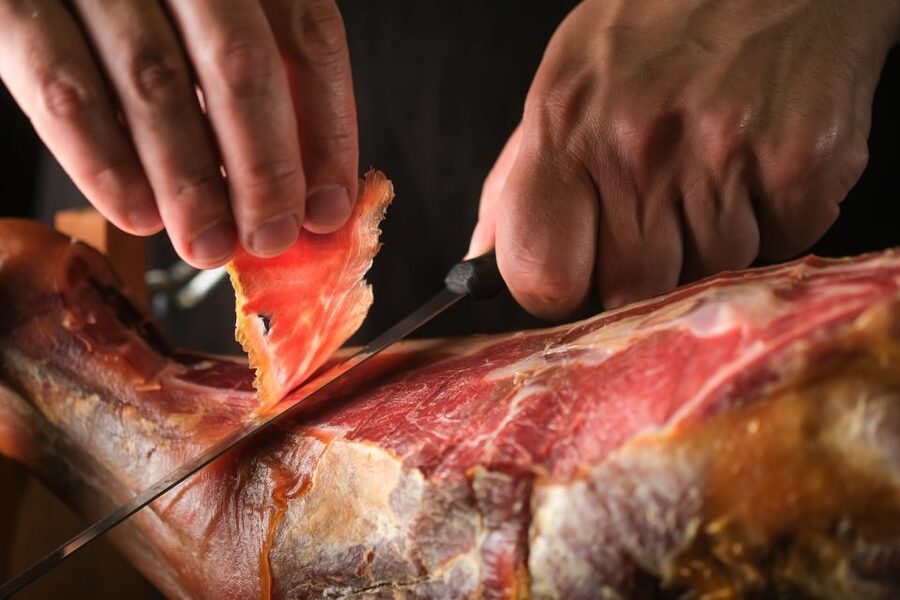
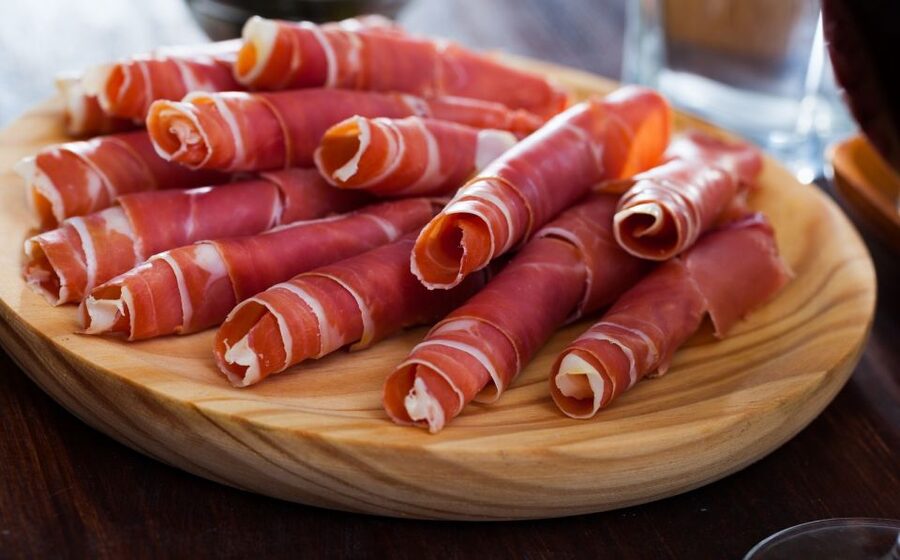
The final food stop focuses on 24-month-aged Parma Ham. It is served with breadsticks and a glass of local wine from the hills of Parma.
The two-year aging period gives the tasting a clear point of reference. You are not sampling an unspecified slice from a counter. You are tasting a product identified by its age, after learning how it was selected, salted, refrigerated, and aged.
The breadsticks keep the tasting simple and practical. They provide something crisp beside the soft ham, while the wine brings the regional connection back to the table. The amount of time available for tasting may feel short if you want to sit and chat. One useful tip is to listen closely during the explanation, then focus on the taste rather than expecting a full meal.
This is not a substitute for lunch. The tour includes samples rather than a large spread, so plan another meal afterward. The guide may also offer suggestions for where to eat and what to see in Parma, which is useful if this is your first day in the city.
The guides make the difference
The guide is important here because the factories alone do not tell the whole story. You need someone to explain why a wheel is tested with a hammer, what the fire brand means, and how the battitura check fits into ham production.
Pietro has been praised for his passion at the cheese stop. Matteo is noted for explaining both Parmigiano Reggiano and Parma Ham in a way that is easy to follow. Mattia has also been appreciated for sharing ideas about lunch and other things to see in Parma. George brought a lighter, more entertaining approach for one group.
The tour is offered in English and Italian, and headsets are included so you can hear the guide clearly. That is especially useful inside production areas, where machinery, hard surfaces, and distance can make ordinary conversation difficult.
Because the guides vary, the style may not be exactly the same on every departure. The consistent strength is the subject knowledge and the practical way the production stages are explained. If you enjoy asking questions, this is a good setting for it.
Is $134.81 a fair price?
At $134.81 per person, this is not a bargain food walk. It is also more than a basic market tasting. The price covers five hours, return transport from Parma, two factory visits, three aged cheese samples, Parma Ham, breadsticks, a glass of local wine, and sparkling Malvasia.
The value is strongest if you do not have a car. Reaching two rural producers independently could take much more time and require separate transport planning. You also get access to working production sites and a guide who connects each step to the food on your plate.
The value is less clear if you mainly want a long lunch or large portions. This is an educational factory visit with tastings, not a full-day food feast. I would book it for the access and explanation, not simply for the amount of food.
A free cancellation option up to 24 hours ahead and reserve-now, pay-later booking make it easier to fit into a changing Italy itinerary. Those policies are useful, but the real question is whether you care about seeing how Parma’s signature products are made.
Who should book this Parma food tour?
I would recommend it to first-time visitors who want a focused introduction to Emilia-Romagna food. It works especially well for couples, families with older children, and anyone curious about traditional production rather than only restaurant dishes.
It also suits visitors staying in Parma for a short time. In five hours, you see two major local products and return to the same city meeting point. You can then spend the rest of the day exploring Parma or following the guide’s food suggestions.
You may want to skip it if you dislike factory settings, have difficulty standing or walking through production areas, or need wheelchair access. Closed-toe, comfortable shoes are required, and pets, luggage, and large bags are not allowed.
The tour is also less suitable if your main goal is a relaxed, drawn-out tasting. The cheese and ham samples are meaningful, but the schedule keeps moving. Think of it as a working food lesson with tasting breaks.
Should you book it?
Book this tour if you want to understand why Parmigiano Reggiano and Parma Ham are more than famous names. The cheese factory is particularly rewarding, with its shaping rooms, aging wheels, hammer test, and fire branding. The ham visit adds a second production story and ends with a clearly defined 24-month tasting.
I would choose it for the transport alone if you are in Parma without a car. Just arrive early at the NH hotel, wear closed shoes, leave large bags behind, and keep lunch plans flexible after the five-hour outing. If you want factory access, clear explanations, and a practical taste of Parma’s food traditions, the price is justified.
FAQ
How long does the Parmigiano and Parma Ham tour last?
The activity lasts five hours, including the visits, tastings, transportation, and return to the meeting point.
Where does the tour begin?
It begins at the NH hotel beside Parma station. Use the north exit, Falcone/Borsellino, and find the hotel on the right. The van waits in the bus parking area in front.
Where does the tour end?
The tour ends back at the NH hotel meeting point.
What languages are available?
The tour is offered in English and Italian.
What food and drinks are included?
You receive three aged Parmigiano Reggiano tastings, a Parma Ham tasting, one glass of local wine, and one glass of sparkling Malvasia. Breadsticks are served with the ham.
Will I see Parmigiano Reggiano being made?
Yes. The visit covers whey separation, shaping, salting, aging, hammer testing, and the fire branding process.
How old is the Parma Ham served during the tasting?
The included Parma Ham tasting features ham aged for 24 months.
What should I wear or bring?
Wear comfortable, closed-toe shoes. Pets, luggage, and large bags are not allowed.
Is the tour suitable for wheelchair users?
No. The activity is not suitable for wheelchair users or people with mobility impairments.
Can I cancel the booking?
You can cancel up to 24 hours before the activity for a full refund. Reserve-now, pay-later booking is also available.
Just added in Italy
- Street food tour of Catania by night★ 4.5 · 31 reviews
- Private tour of Etna and Winery Visit with Food and Wine Tasting from Taormina★ 5.0 · 221 reviews
- Catania Sicilian Street Food Tour: Small Group by Do Eat Better★ 5.0 · 293 reviews
- Mt Etna and Wine tasting tour from Catania★ 5.0 · 282 reviews
- Small-Group Food and Wine Tour from Cagliari★ 5.0 · 237 reviews
- Cagliari: A Full Meal Sardinian Food Tour with Do Eat Better★ 5.0 · 265 reviews
- Bologna Food & Wine tour with a local Chef★ 3.0 · 30 reviews
- Taste Bolzano: Food Tour with Full Meal by Do Eat Better★ 5.0 · 21 reviews
Cheese and Charcuterie Tastings, compared.
Private Montmartre Food Tour with Wine, Cheese & Pastries
Read our review →
Paris Le Marais Food Tour With 10+ Tastings, Cheese, Wine & More
Read our review →
Zaanse Schans and Cheese Tasting Guided Tour from Amsterdam
Read our review →
Ultimate London Cheese Crawl : Guided Food Tour
Read our review →
Le Marais Walking Food Tour with Cheese, Wine & Pastries
Read our review →Browse the lists this tour appears in