
REVIEW · BANGKOK FOOD TOURS
Bangkok: Talad Noi Hidden Gems & Street Food Adventure
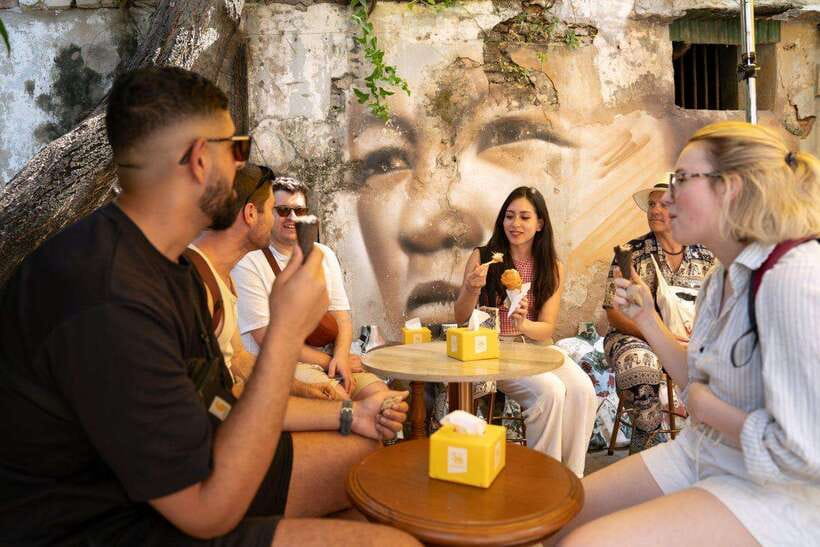
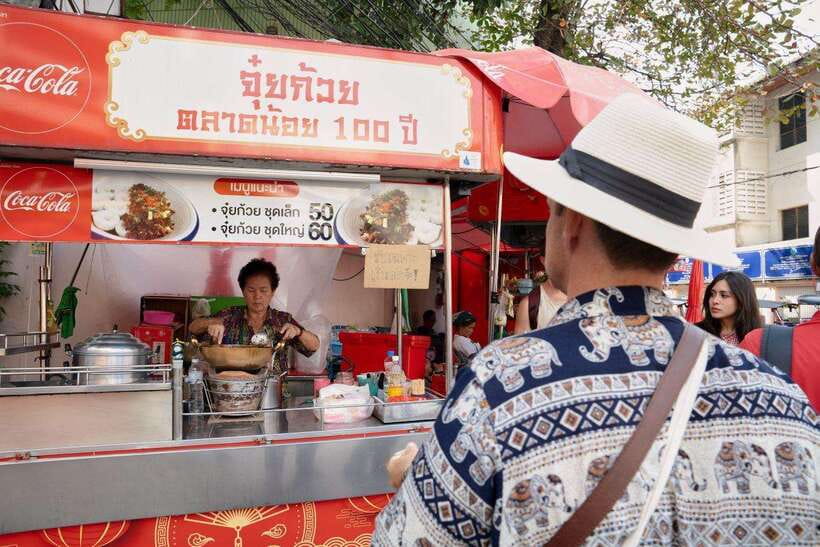
Come hungry and wear comfortable shoes. This Talad Noi walk brings together Thai-Chinese food, old religious sites, street art, and a riverside café stop in a compact 2-kilometre route. I especially like the chance to try local bites such as turnip cake, chwee kueh, duck noodle soup, and Pad Thai Uncle Pom, while the small group of up to 12 keeps the outing personal. The visit to Holy Rosary Church, built in 1787, is another strong point.
The main thing to watch is the tour’s food-first character. If you expect a long Chinatown sightseeing tour with a few snacks, you may find the history section a little light. One German visitor felt the walk did not go far enough into old Chinatown, while another had an excellent private-style outing with guide Nana and praised her friendly manner and clear English. Plan on roughly 150 to 270 minutes, depending on the schedule and pace.
Key Things to Know Before You Go
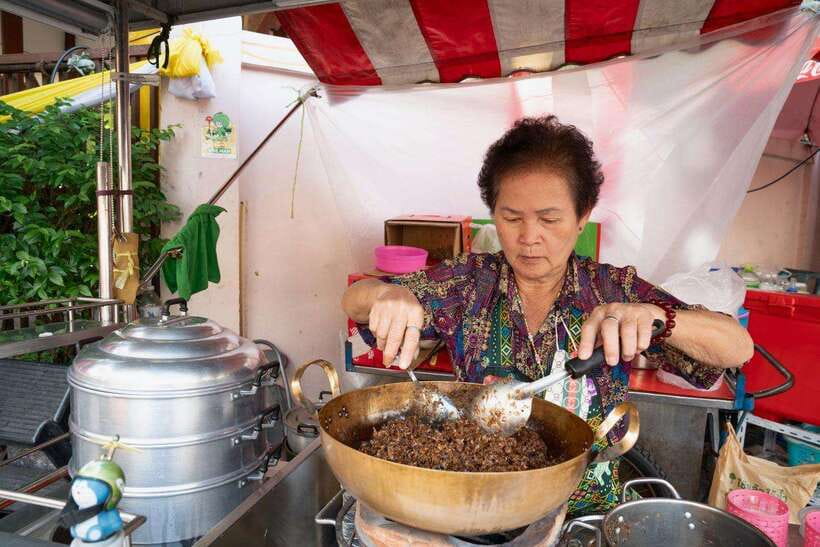
- The food is the main event: You sample Thai and Chinese dishes, including turnip cake, chwee kueh, Chao Tha duck noodles, and Pad Thai Uncle Pom.
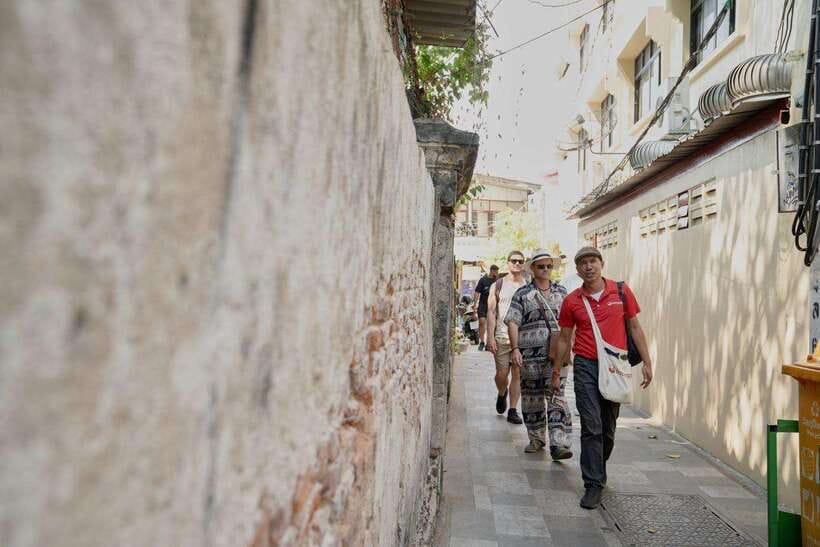
- The route covers 2 kilometres: It is a manageable walk, but narrow lanes, warm weather, and frequent stops make sensible footwear useful.
- Holy Rosary Church dates to 1787: This quiet Catholic landmark adds a surprising European and Portuguese-Chinese thread to Talad Noi.
- Chow Sue Kong Shrine is about 200 years old: Look for its detailed architecture and learn how it fits into the neighborhood’s Chinese traditions.
- Groups are limited to 12 people: A private option is also available, useful if you want more time for questions or food preferences.
- The walk ends near Si Phraya: You begin at River City Bangkok, then finish after crossing toward Bangkok’s Chinatown.
Why Talad Noi Makes a Good Food Walk
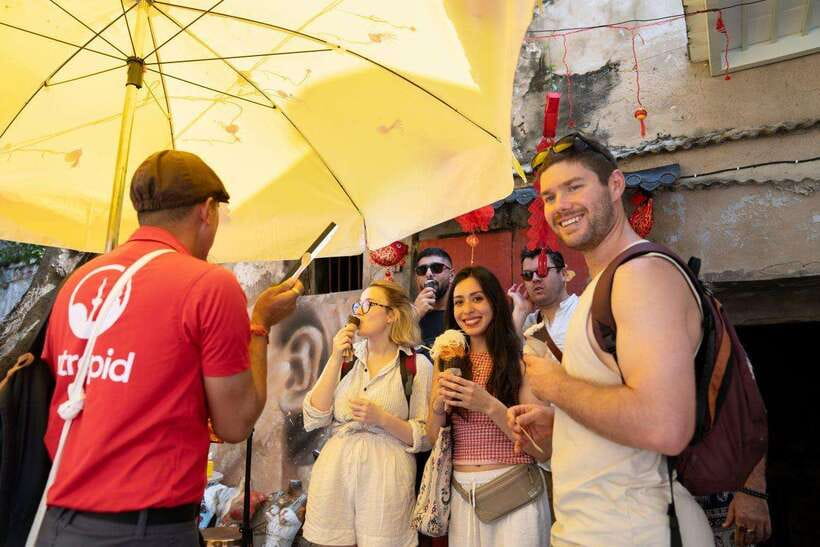
Talad Noi is a useful introduction to Bangkok because it does not present just one version of the city. Within a short walk, you move among Chinese traditions, Thai street food, Christian heritage, riverside cafés, shrines, old lanes, and newer street art.
I like this mix because the route gives your feet and appetite equal work. You are not simply moving from one famous sight to another. You are tasting small local dishes while your guide explains why the area looks and eats the way it does.
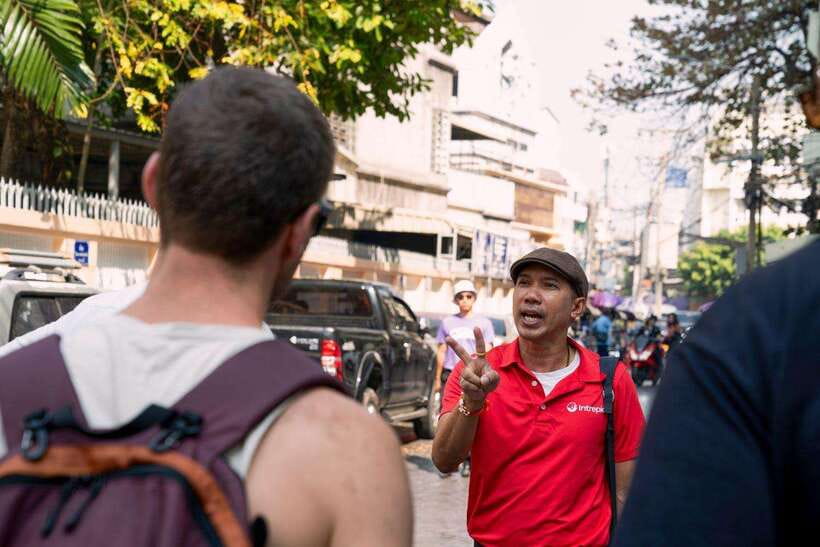
The tour is led in English by a local guide. Previous outings have included guides named PK, Bebe, and Nana. PK received especially warm praise for combining cultural explanations with food stops, while Bebe was described as an excellent companion during a private-feeling visit. These details matter because a neighborhood walk depends heavily on the person leading it.
The group limit of 12 is also a real advantage. You can ask about ingredients, religious buildings, or the area’s Chinese and Thai connections without shouting over a large crowd. If only a few people book on your date, you may receive even more individual attention.
More Street Food Tours in Bangkok
- Bangkok: Michelin Guide Street Food Tour by Tuk Tuk
★ 4.4 · 1,274 reviews - Bangkok Tuk-Tuk Tour by Night with Chinatown Street Food Meal
★ 5.0 · 635 reviews - Bangkok: E-Scooter Night Tour with Local Street Food
★ 4.8 · 488 reviews
Starting at River City Bangkok
The meeting point is River City Gate 1, in front of Starbucks on the first floor. This gives you a clear indoor landmark, which is helpful in a city where street addresses can be less useful than recognizable buildings.
From there, the walk heads into Talad Noi. The route is about 2 kilometres, but the total outing lasts between 150 and 270 minutes. That time range reflects the food tastings, guided stops, café visit, and pace of the group rather than a long-distance hike.
I would avoid eating a full meal before meeting the guide. One person arrived expecting a Chinatown sightseeing walk with a few snacks and ate beforehand, then realized the activity was mainly a food tour. You should arrive hungry enough to sample several items, though it is sensible not to arrive completely empty if you are sensitive to spice or unfamiliar ingredients.
Exploring Talad Noi’s Narrow Lanes
Talad Noi is best seen slowly. The lanes are part of the experience, and the short distance allows time to pause rather than rush from one stop to the next.
You can expect a mix of older buildings, local businesses, painted walls, and signs of the neighborhood’s Chinese roots. Street art adds a younger layer to the setting. It is not the sort of polished attraction where every corner has been prepared for visitors. That is part of its appeal, but it also means the walk can feel less orderly than a standard city sightseeing route.
Your guide provides the context that turns these details into a story. Without explanation, a shrine, church, or painted wall may simply look like another photo stop. With the guide, you get a better sense of how Thai and Chinese customs share space in this part of Bangkok.
The food tastings also help you understand the neighborhood. You are not just sampling random snacks. The selection reflects the Chinese influence on local cooking and the way those traditions have become part of Bangkok’s everyday food culture.
Holy Rosary Church and Talad Noi’s Christian Past
Holy Rosary Church is one of the most unusual stops on the route. Built in 1787, it provides a sharp contrast with the Chinese shrine and Thai-style food stalls around it.
The church visit is valuable because it broadens your picture of Bangkok’s past. Talad Noi is often associated with Chinese communities and old commercial streets, but the church shows that the area has long included different religious and cultural groups.
You should think of this as a guided visit rather than a major cathedral tour. The attraction is its age, location, and place in the neighborhood, not a long list of grand interiors or large-scale displays. Your guide’s explanation is what makes the stop worthwhile.
For me, this is one of the strongest parts of the outing because it breaks up the food stops with a quiet cultural pause. It also gives the walk a better rhythm: eat, walk, listen, then look closely at a building that has been part of the area for centuries.
More Street Food Tours in Thailand
- Bangkok Tuk-Tuk by Night with Chinatown Street Food Meal
★ 4.6 · 263 reviews - Bangkok: Chinatown Food Tour with Michelin Food Stalls
★ 4.8 · 226 reviews - Night Street Food Tour of Bangkok’s Chinatown
★ 5.0 · 173 reviews - Bangkok Street Food Variety Cultures Local Tasty
★ 5.0 · 100 reviews
Chow Sue Kong Shrine’s Detailed Architecture
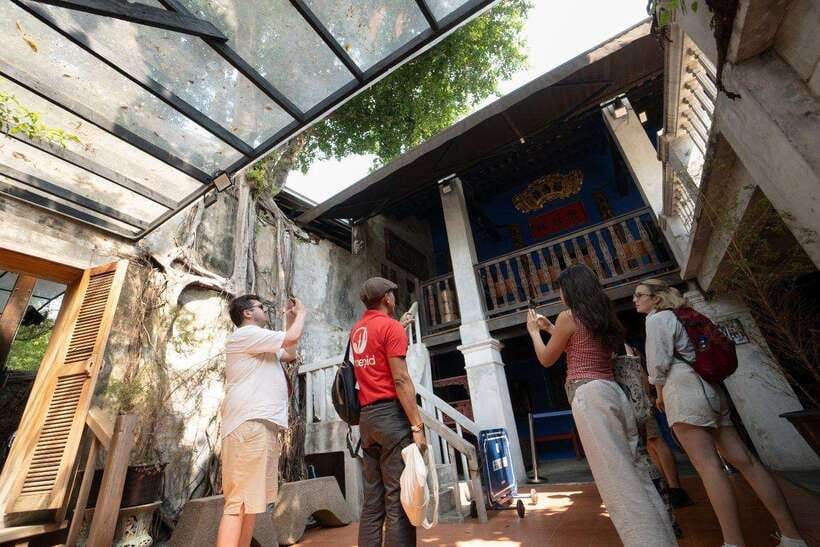
The next major cultural stop is Chow Sue Kong Shrine, also known as 順興宮清水祖師爺. The shrine is about 200 years old and offers a clear look at Chinese religious traditions in Bangkok.
Your guide explains the site while you examine its architecture and details. The visit is not just a quick photo opportunity. It helps explain why Chinese shrines remain important in neighborhoods shaped by migration, trade, family networks, and food businesses.
This stop works especially well after Holy Rosary Church. The two places are very different, yet they sit within the same short urban route. You get a sense of Talad Noi as a layered community rather than a place defined by one faith or one national identity.
The limitation is that the tour cannot provide an exhaustive study of every building or tradition in the area. If you want a specialist religious history tour, you may find the explanations too brief. For a first look at Talad Noi, though, the shrine adds real substance.
Street Art and a Riverside Café Pause
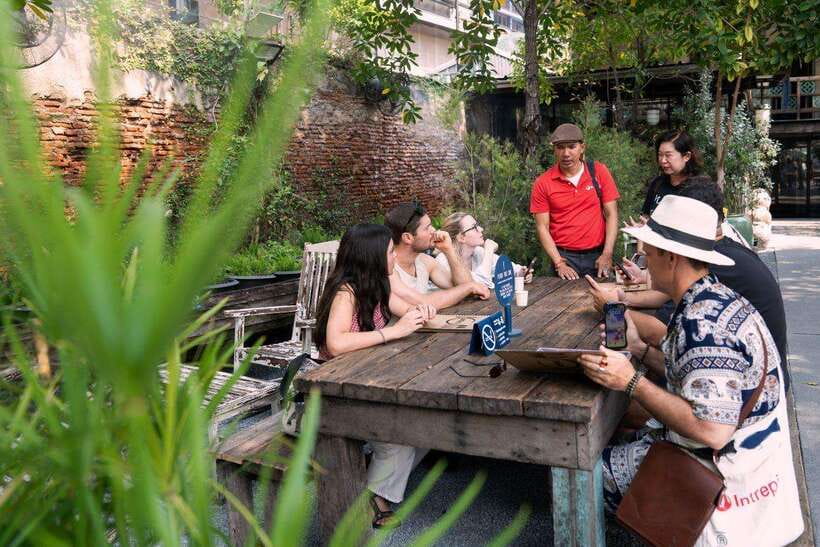
The walk includes colorful street art and a stop at Hong Sieng Kong, a riverside café setting. This is where the outing shifts from formal history to a slower, more modern side of Talad Noi.
A café break is welcome in Bangkok’s heat. Drinks may include coffee, tea, or boba tea, and the pause gives you time to sit, talk with your guide, and take in the riverfront atmosphere.
The café is not included as a reason to expect a long meal or a luxury dining stop. Its value is the pause itself. After walking through narrow lanes and sampling several foods, a drink and a seat help keep the pace comfortable.
The street art adds another useful contrast. Old shrines and churches tell one story, while painted walls show how the neighborhood has found room for newer forms of expression. You should bring a camera, but do not let photographs replace the guide’s explanations. The art is part of the setting, not the sole focus of the tour.
What You Eat Along the Way
This tour suits you best if you enjoy trying several small portions instead of sitting down for one large meal. The included food samples can include:
- Turnip cake, a Chinese dim sum dish
- Chwee kueh, steamed rice cakes served with preserved radish
- Chao Tha duck noodle soup
- Pad Thai Uncle Pom
- Drinks such as coffee, tea, or boba tea
Turnip cake and chwee kueh are especially useful introductions to the Chinese side of the local food scene. Their textures and flavors may be unfamiliar, which is exactly why a guide helps. You can ask what you are eating rather than guessing from appearance.
The duck noodle soup and Pad Thai offer a different balance. They connect the Chinese influence with familiar Thai street food, showing how the area’s food culture is not divided into neat categories.
I would not book this outing if you want a carefully controlled tasting menu. Street food can be casual, and the precise food stops may vary. The information promises samples of these local dishes, but it does not guarantee that every item will be served on every departure.
Vegetarian requests can be accommodated if you provide the information at least 24 hours before the tour. Other dietary requirements are not supported, so you should contact the operator before booking if you have allergies or restrictions.
Crossing Toward Bangkok’s Chinatown
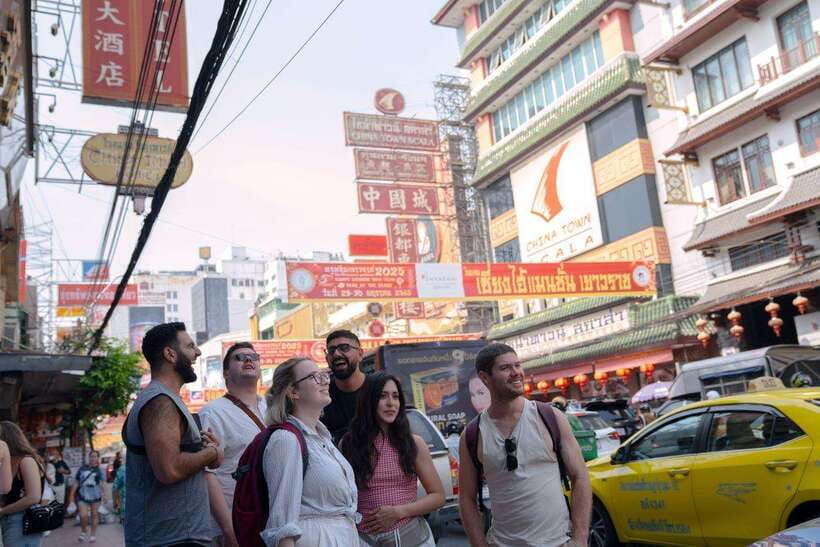
The route eventually leads toward Bangkok’s Chinatown, where older buildings and newer businesses meet. This section gives you a taste of Chinatown’s atmosphere, but you should set your expectations correctly.
The walk is not designed as a full Chinatown tour. One person who enjoyed the outing still felt it could have gone farther into old Chinatown and that the historical discussion was somewhat surface-level. That is a fair caution.
The Chinatown portion works as a final connection rather than the main attraction. You see how Talad Noi relates to the larger Chinese quarter, but most of your time is spent in and around Talad Noi itself.
If your main goal is Chinatown temples, markets, and a longer study of Chinese Bangkok, choose a tour built specifically around Chinatown. If you want Talad Noi food and a short introduction to the nearby district, this route gives you enough context without making the day too long.
How Much Value Do You Get for $41?
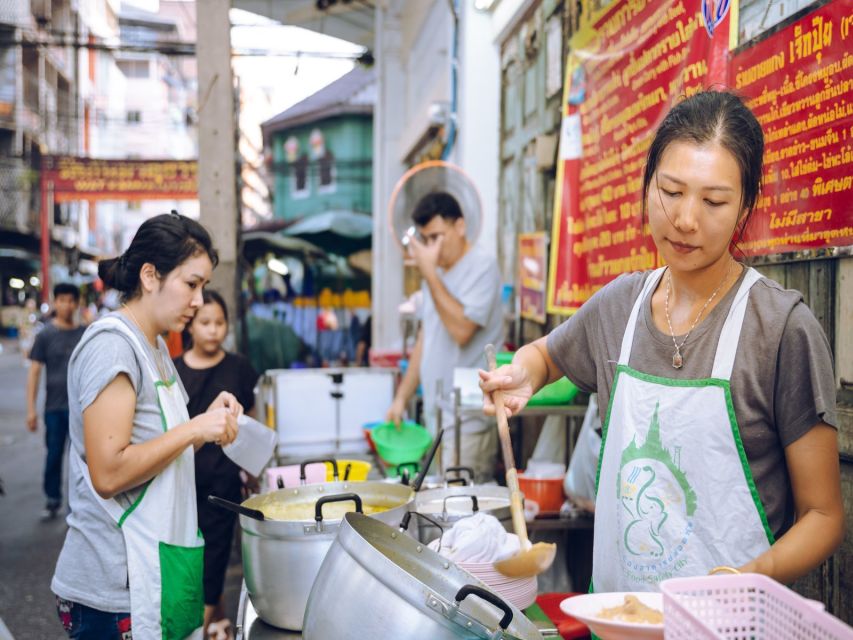
At $41 per person, the price is reasonable if you make full use of the food samples, drinks, guide, and cultural stops. You are paying for more than a walk. The fee covers a local English-speaking guide, multiple tastings, the Holy Rosary Church visit, the Chow Sue Kong Shrine visit, and the structure that links them together.
The value depends on your appetite and expectations. If you eat very little, buy extra drinks, or want a long formal history lecture, the price may feel less attractive. Additional food and drink are not included, so bring some extra cash if you want to order more.
The small group helps justify the cost. A maximum of 12 people allows for questions and a more flexible pace. A private group option is available if you want the guide’s attention focused entirely on your party.
The operator also describes the tour as carbon neutral and is a B Corp certified company. That does not change the food or sightseeing, but it may matter to you if responsible tourism is part of your booking decision.
Who Should Book This Walk?
I would recommend it to first-time visitors who want an easy introduction to Bangkok’s local food and neighborhood culture. It is also a good fit if you prefer a compact walking route over a full-day excursion.
Food lovers should get the most from it, especially those curious about Chinese-influenced snacks and Thai street dishes. The guide can make unfamiliar items easier to understand, and the small group gives you space to ask about ingredients.
You should also consider it if you like contrasting sights. Holy Rosary Church, Chow Sue Kong Shrine, street art, a riverside café, and Chinatown create a varied half-day without long transfers between locations.
This is less suitable for children under 8, who are specifically excluded from the activity. It may also be a poor match if you dislike street food, have dietary requirements beyond vegetarian food, or want an in-depth Chinatown history tour.
Wear comfortable walking shoes and dress for Bangkok’s heat. The distance is modest, but you will be on your feet for much of the outing.
Should You Book the Talad Noi Food Adventure?
Book this tour if you want a friendly, food-led walk through a less polished side of Bangkok, with enough history to give the streets meaning. The strongest features are the local dishes, the small group, the church and shrine pairing, and the chance to speak directly with a guide such as PK, Bebe, or Nana.
Do not book it expecting a full Chinatown study. The historical explanations may feel brief, and the Chinatown portion is more of a final connection than a full district tour.
For $41, I think the outing offers good value for an afternoon or morning, especially if you arrive hungry and enjoy trying several small dishes. The 4.6 rating from 29 bookings fits the experience: most people receive warm guiding, good food, and an interesting neighborhood walk, while the main limitation is the relatively light treatment of old Chinatown.
FAQ
Where does the tour begin?
It begins at River City Gate 1, in front of Starbucks on the first floor of River City Bangkok.
Where does the tour finish?
The walk finishes at Si Phraya.
How long does the tour last?
The stated duration is between 150 and 270 minutes, depending on the available departure and the pace of the outing.
How far do you walk?
The route covers about 2 kilometres, or 1.2 miles, through Talad Noi and toward Chinatown.
What food is included?
Included samples can include turnip cake, chwee kueh, Chao Tha duck noodle soup, and Pad Thai Uncle Pom. Drinks may include coffee, tea, or boba tea.
Is the tour suitable for vegetarians?
Vegetarian food can be arranged if you provide the request at least 24 hours before the tour date.
Can other dietary requirements be accommodated?
The activity states that dietary requirements other than vegetarian food cannot be accommodated.
Is the tour suitable for young children?
Children under 8 are not suitable for this activity.
Is a private tour available?
Yes. The activity is offered as a small-group tour with up to 12 people, and a private group option is also available.
More hidden gem food tours in Bangkok
- Bangkok Hidden Gems: Talad Noi, Chinatown & Street Food Tour
★ 4.5 · 53 reviews - Alicante: Secret Flavors Food Tour
★ 4.8 · 1,514 reviews - Southern & Secret Walking Food Tour
★ 4.5 · 1,413 reviews - Edinburgh Food Tour with Scotch, Haggis, a Secret Dish & More
★ 5.0 · 1,172 reviews
Just added in Bangkok
- Bangkok Tuk Tuk Food Tour By Night★ 5.0 · 198 reviews
- Bangkok 3-in-1 Tour: Longtail Boat,TukTuk & Street Food Adventure★ 5.0 · 73 reviews
- Train & Floating Market Food Adventure + Scenic train ride★ 5.0 · 102 reviews
- Private Tuktuk Authentic Food Tour (Chinatown-Flower Market)★ 5.0 · 75 reviews
- 4-Hour Hidden Bangkok TukTuk Street Food Guided Tour★ 5.0 · 23 reviews
- Authentic Street Food Tour in China Town Bangkok★ 5.0 · 25 reviews
- Timeless Thonburi Canal and Food Tour★ 5.0 · 31 reviews
- Must-Try: Hidden Bangkok Bike and Food Tour★ 5.0 · 455 reviews
Street Food Tours, compared.
Ho Chi Minh City Street Food Tour & Sightseeing By Motorbike
Read our review →
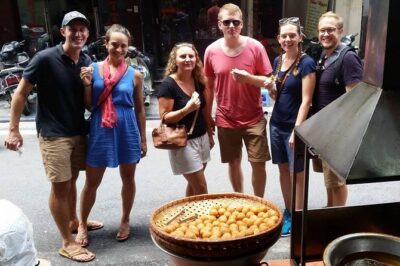
Small Group Hanoi Street Food Tour with a Real Foodie
Read our review →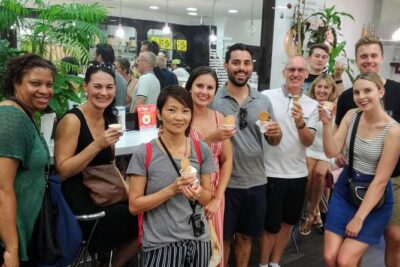
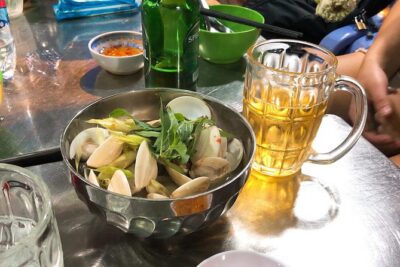
Saigon By Night and Street Food By Motorbike | Opt: Ao Dai Riders
Read our review →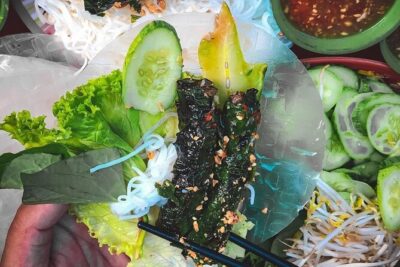
Private Street Food Tour by Motorbike/Car with Local Students
Read our review →
Cinque Terre Park Day Trip with Optional Street Food
Read our review →
Street Food Tasting & Sightseeing Tour by Motorbike
Read our review →Browse the lists this tour appears in