
REVIEW · INDIA FOOD TOURS
Bengali Nights Kolkata Food Tour with 13+ Tastings
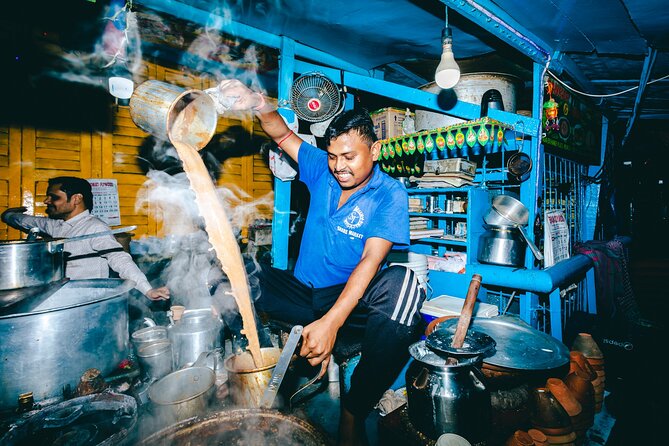
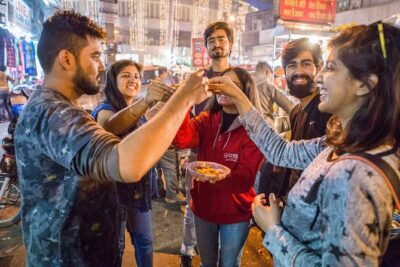
Kolkata eats after dark. I like the way this four-hour tour pairs 13-plus Bengali tastings with old neighborhoods, local transport, and stories about Calcutta’s past. I also like the small group, capped at eight, which gives guide Avik room to explain what is on your plate and help you move through unfamiliar streets.
The main drawback is the menu’s heavy focus on meat, fish, prawns, dairy, and street snacks. Vegetarians, people with lactose intolerance, and anyone with food allergies will miss several dishes, and no full alternatives are promised. Come hungry, wear comfortable shoes, and expect a busy evening rather than a gentle restaurant crawl.
Key points at a glance
- 13-plus tastings: Expect mutton kosha, prawns, fish, fritters, salads, sherbet, Bengali sweets, coffee, and more.
- North Kolkata by local transport: The route uses the metro, an old rickshaw, and other local transport, including a tram according to the tour details.
- Avik’s city stories: The guide connects each dish with old Calcutta, local customs, and the neighborhoods you pass through.
- Small group of up to eight: This makes it easier to ask questions and keep together in crowded streets.
- College Street finale: The evening ends among bookshops, students, and the faded charm of a traditional coffee house.
- Good value at $40: Food, bottled water, transport used during the tour, taxes, and guiding are included.
Why this Kolkata food tour feels different
Many city food tours move from one restaurant to the next by car. This one makes the route part of the meal. You begin at Esplanade Metro Station, then use the city’s public transport and your own feet to reach old food shops and neighborhood streets that many first-time visitors would not find alone.
That matters in Kolkata. Food here is not only a list of dishes. It is tied to family kitchens, old businesses, student life, community neighborhoods, and the city’s long relationship with British-era Calcutta. Avik uses those connections to give each stop some context instead of simply handing you a plate and naming it.
The tour lasts about four hours and is limited to eight people. That is a useful size for this kind of outing. You can hear the guide in a cramped eatery, ask how to eat an unfamiliar dish, and avoid the slow-moving feel of a large group.
The evening has earned a 4.8 rating from 70 customer ratings, with particular praise for Avik’s warmth, city knowledge, and ability to make the food feel connected to Kolkata. The strongest theme is clear: this is as much a neighborhood and transport tour as it is a meal.
A few more food tours in India worth a look
- The Great Indian Food Tour: Old Delhi Food and Heritage Walk
★ 5.0 · 1,698 reviews - Mumbai: Street Food and Night Markets Tour
★ 4.9 · 719 reviews - Old Delhi Street Food Tour
★ 5.0 · 497 reviews
Meeting Avik at Esplanade Metro Station
Your meeting point is Exit Gate 4 of Esplanade Metro Station, at street level on S.N. Banerjee Road. The address is Esplanade Metro Gate 4, 1 S.N. Banerjee Road, New Market Area, Dharmatala, Taltala, Kolkata.
Give yourself extra time to find the correct exit. Esplanade is served by the Blue and Green metro lines, and the station area has plenty of movement around it. The metro is the sensible way to arrive during busy periods, since it avoids road traffic and the uncertainty of finding a taxi.
If you use Uber, download the app before leaving your hotel and make sure your phone has data. You can connect a card or pay with cash. A local SIM can be bought at the airport, and an international eSIM service is another option. These details sound small, but a reliable phone connection makes the meeting point much less stressful.
Once you meet Avik, the tour gets moving quickly. You catch the metro toward a district that sees fewer foreign visitors, and the first tasting arrives from a local street vendor. The route is not built around grand monuments. It is built around ordinary Kolkata, which is exactly the point.
The first tastes: lassi and century-old mutton kosha
The opening drink is a local lassi. It gives you an immediate taste of the city’s street-food culture before the heavier dishes begin. If you are sensitive to dairy, this is an early warning that the menu may not suit you.
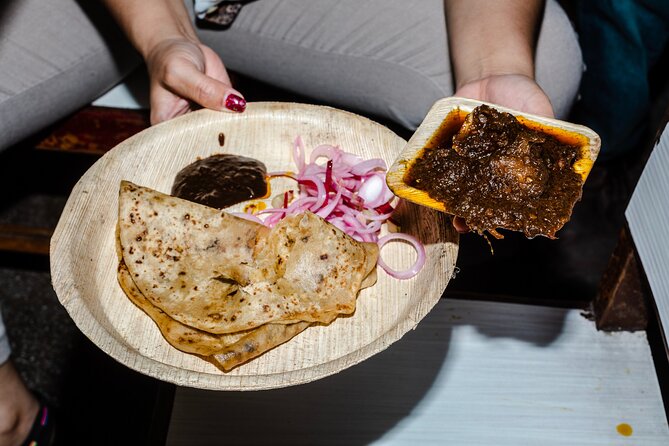
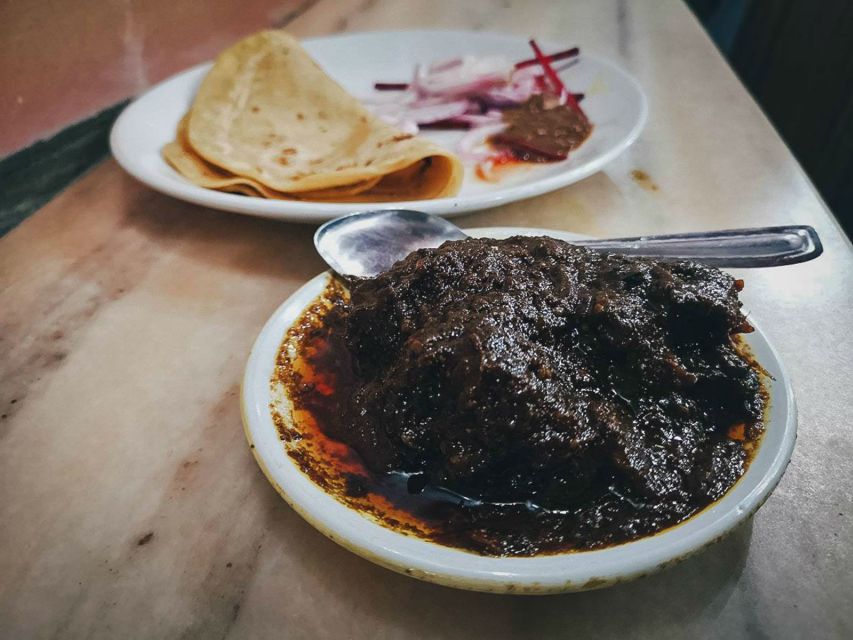
The next stop is a tiny establishment known for mutton kosha, a slow-cooked Bengali mutton curry. The shop has reportedly been preparing its version for more than a century. You eat in a compact local setting while Avik explains stories from old Calcutta and places the dish in the wider food culture of Bengal.
Mutton kosha is a useful introduction to Bengali cooking because it is powerful without being simply hot for the sake of heat. The meat, sauce, and cooking time matter as much as the spice. The portion at a tasting stop is designed to leave room for what comes next, but the cumulative effect of the evening is substantial.
Several people have specifically praised the mutton kosha, so I would treat it as one of the stops to watch for. You do not need to know the right way to eat it in advance. Avik helps with that, and part of the fun is learning how a local meal is approached rather than trying to act like an expert.
Prawns, banana leaf fish, and Kolkata’s old seafood kitchens
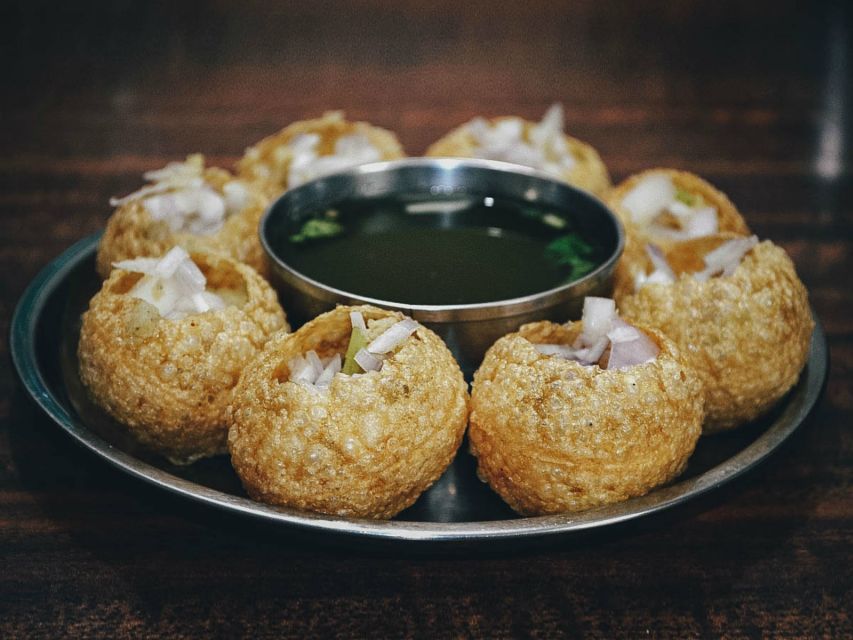
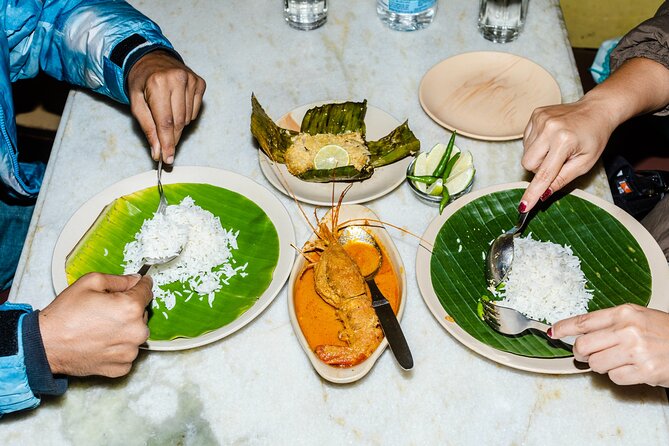
The seafood section brings two very different dishes. One is prawns covered in a chingri coconut cream sauce. The other is a curried fish mousse steamed in a banana leaf.
The banana leaf preparation is especially useful for understanding how Bengali food can be fragrant and delicate alongside the richer curries. Steaming the fish in a leaf also makes the dish feel tied to home-style cooking, even though you are tasting it in a celebrated local restaurant.
The prawn dish brings a creamier, fuller flavor. Seafood is a major reason to choose this tour, but it also explains why people with allergies need to skip it. The organizers say the tour is not suitable for people with food allergies, and there is no promise of substitutions.
The restaurants are part of the story. You are not simply sampling generic Bengali food selected for tourists. Avik points out places with long local reputations and explains how the eateries fit into Kolkata’s food life. That background gives the dishes more meaning and helps you understand why a modest-looking shop may matter to the neighborhood.
Same city, a different table:
- Delhi: Old Delhi Street Food Tour with Rickshaw Ride
★ 4.9 · 403 reviews - Delhi Food Walk: Rickshaw Ride, Street Eats & Market Tour
★ 5.0 · 401 reviews - Old Delhi Food Tour: A Night Time Feast
★ 5.0 · 326 reviews - Jaipur Bazaar & Food Walking Tour
★ 5.0 · 281 reviews
An old rickshaw ride and the famous prawn kabiraji
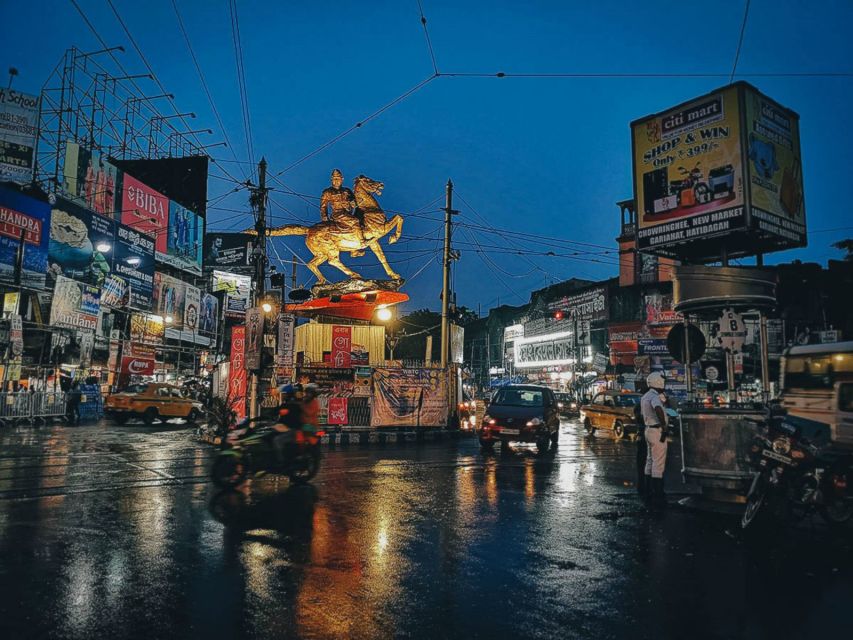
After the seafood stops, you climb aboard one of Kolkata’s old wooden rickshaws. The tour describes these carts as surviving in Kolkata when they have disappeared from the rest of India. The ride is short, but it changes the pace and gives you a direct view of the streets.
Do not expect a long sightseeing circuit from the rickshaw. Its value is in the experience of using a traditional form of local transport and seeing how the city moves between food stops. The combination of metro, rickshaw, tram, bus, and taxi mentioned across the tour details and customer accounts makes the evening feel like a small lesson in urban Kolkata.
Next comes a prawn kabiraji at a legendary kitchen founded by a Scot in the 19th century. The dish is another example of Kolkata’s layered food culture. Colonial-era influences, Bengali ingredients, and local cooking traditions meet in a snack that would be easy to miss without someone leading you to the right counter.
This is also where the tour’s portion planning matters. You taste several dishes rather than receiving one large plate, but the food is still plentiful. Several people finished the evening feeling completely full, so do not eat a large meal beforehand.
Quiet lanes, onion bhajis, and gram salads
Kolkata can feel loud and crowded, but the walking section shifts into a calmer neighborhood. Avik takes you through backstreets, pointing out temples, older buildings, and daily local life. You are not being marched between attractions. You are walking through a part of the city where people live, work, worship, and shop.
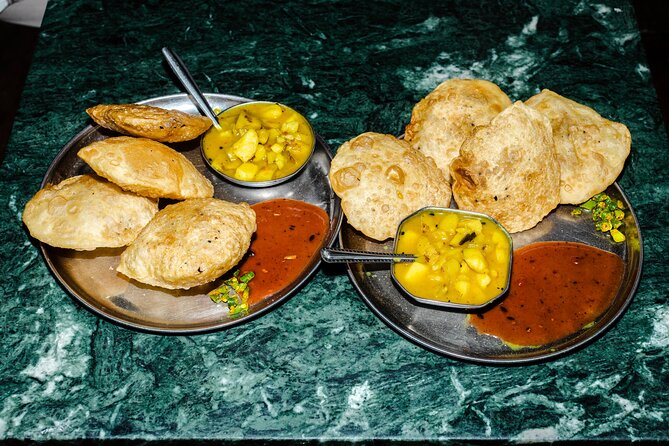
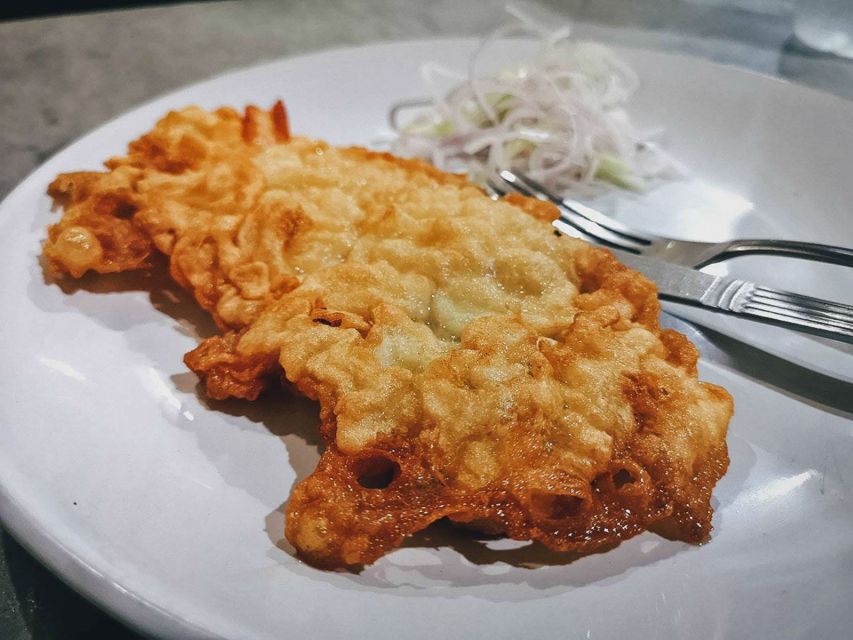
The food continues along the way. One stop features the city’s famous onion bhajis, crisp and savory fritters that make sense as a street snack. Another offers a zingy gram salad made with herbs and pulses. These dishes provide a useful contrast to the meat, fish, and creamier foods earlier in the evening.
This walking section is one of the tour’s strongest features for anyone who wants more than a restaurant list. You get to see how food stalls fit into a neighborhood and how small details can reveal the city’s past. One customer even recalled an old gaslamp bracket, the sort of detail easy to pass without a local guide pointing it out.
The streets may be uneven, and the tour operates in all weather. Comfortable shoes are important, and an umbrella is sensible if rain is possible. Kolkata’s monsoon conditions can turn a pleasant walk into a wet one quickly.
College Street, sherbet, and Bengali sweets
The route then reaches College Street, one of Kolkata’s best-known student districts. Booksellers line the area, and university students pass by after lectures. The mood shifts again, from old neighborhood lanes to a place shaped by reading, debate, and academic life.
You stop at a local cafe for a coconut sherbet drink. One customer especially enjoyed the paan sherbet, so the drink portion may be one of the more surprising parts of the menu. It is also a welcome change after the savory foods.
A nearby sweet shop supplies Bengali desserts. The exact selection can vary, but the purpose is clear: Bengali food is not only about fish curry and meat. Sweets have an important place in local eating habits, and this stop gives you room to sample that side of the cuisine without committing to a full box of dessert.
If you have a strong dislike of dairy, this section may be difficult. Bengali sweets often use milk-based ingredients, and the tour specifically warns that people with lactose intolerance will lose two or three tastings. The organizers do not provide a full alternative menu.
The final coffee at a historic College Street cafe
The evening finishes in the faded grandeur of an old colonial coffee house. Ceiling fans turn overhead, students debate nearby, and waiters wear traditional clothing. This is a quieter ending than the early street-food stops, giving you time to sit, drink coffee, and talk with Avik.
The cafe matters because it shows another side of Kolkata’s food culture. Here, eating and drinking are tied to conversation and public life. You are not just trying one last item. You are watching a social space where students and locals gather to argue, think, and linger.
This final stop also helps the four-hour route feel balanced. There is enough walking and transport to keep the evening varied, but the coffee gives you a chance to slow down before returning to your hotel. Avik has helped arrange a taxi for some customers at the end, but hotel pickup and drop-off are not included, so plan your return independently.
What $40 includes, and what it does not
At $40 per person, the price is strong if you value variety and local guiding. You receive a 15-taster menu across multiple locations, bottled water, transport used during the tour, local taxes, and an English-speaking guide. You are also paying for the route design, which takes you to places you might not identify on your own.
The value is better than comparing the price with the cost of a single restaurant meal. You are sampling food from several kitchens, moving through different districts, and receiving historical and cultural context throughout the evening. The transport adds another layer rather than functioning only as a way to get from point A to point B.
Alcohol is not included. Hotel pickup and drop-off are also excluded. You can reserve now and pay later, and cancellation is free up to 24 hours in advance, which is useful if your Kolkata plans are still changing.
Who should book this food tour?
I would choose this tour if you want to understand Kolkata through small eateries, old transport, local streets, and food stories. It suits adventurous eaters who enjoy trying dishes they might not order alone and who do not mind eating in compact, informal places.
It is also a good choice for a first visit. The route gives you a practical introduction to several districts and helps you get comfortable with Kolkata’s metro and street life. Avik’s style is repeatedly described as warm, patient, direct, and passionate about his city.
I would not choose it if you need a vegetarian menu, avoid dairy, have food allergies, or prefer a polished restaurant setting. The tour operates rain or shine, includes plenty of walking, and involves public transport. That is part of its appeal, but it is not the right format for everyone.
Should you book Bengali Nights Kolkata Food Tour?
Book it if you want a full evening rather than a succession of tastings. The strongest reason to go is the combination of food and place: mutton kosha in an old local joint, seafood in respected Kolkata kitchens, a rickshaw ride, quiet neighborhood lanes, College Street, and coffee among student debates.
At $40, the tour offers good value for an English-speaking visitor who wants local guidance and a broad menu. Arrive early at Esplanade Gate 4, eat lightly beforehand, bring water-resistant clothing if rain is possible, and tell the guide about serious dietary restrictions before booking.
FAQ
How long does the Bengali Nights Kolkata Food Tour last?
The tour lasts four hours.
Where does the tour meet?
It meets outside Exit Gate 4 of Esplanade Metro Station, at street level on S.N. Banerjee Road in Kolkata.
How many people can join the tour?
The small group is limited to eight participants.
What language is the tour conducted in?
The tour is conducted in English with a live guide.
How many foods and drinks are included?
The tour includes 13-plus tastings, described in the inclusions as a 15-taster menu across multiple locations.
Is the tour suitable for vegetarians?
It is not well suited to vegetarians. Vegetarians may receive two or three fewer tastings, and alternatives are not available at every stop.
Can people with lactose intolerance or food allergies join?
The tour is not suitable for people with lactose intolerance or food allergies. Several dishes contain dairy, and there are no complete alternatives for every stop.
Is hotel pickup included?
No. Hotel pickup and drop-off are not included. You are responsible for reaching Esplanade Metro Station and arranging your return after the tour.
Just added in India
- Food Trail Through Sowcarpet Market: A Taste of Chennai★ 5.0 · 38 reviews
- Sowcarpet Street Food Walking Tour in Chennai with guide★ 5.0 · 83 reviews
- Street Food walking tour in Bangalore with a food evangelist★ 5.0 · 83 reviews
- Filter Kaapi: A food walk by tourism ministry approved company★ 5.0 · 26 reviews
- Amritsar Food Walk With Hidden Gems★ 5.0 · 59 reviews
- Flavours of Agra Food walk★ 5.0 · 25 reviews
- The Great Indian Food Tour: Old Delhi Food and Heritage Walk★ 5.0 · 106 reviews
- Old Delhi Street Food Tour★ 4.8 · 40 reviews
India Food Tours, compared.
The Great Indian Food Tour: Old Delhi Food and Heritage Walk
Read our review →
Delhi Food Walk: Rickshaw Ride, Street Eats & Market Tour
Read our review →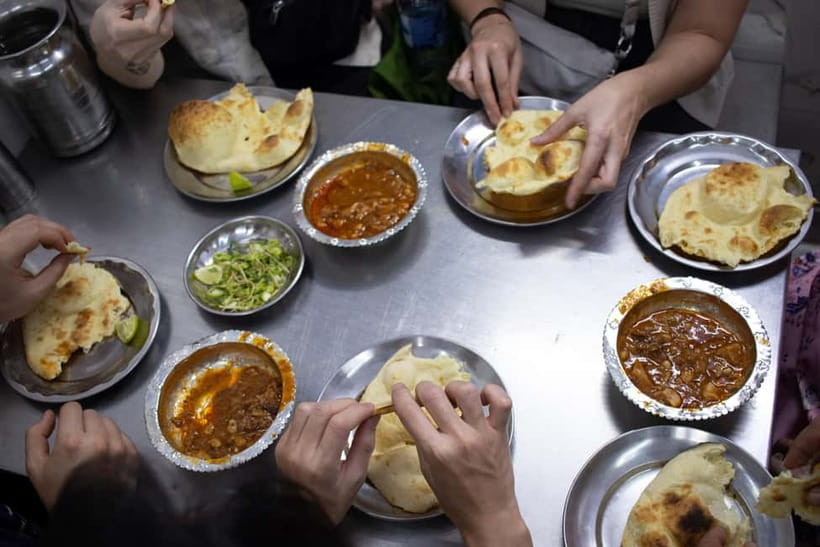

Browse the lists this tour appears in