
REVIEW · BARCELONA FOOD TOURS
Best of Barcelona: Sagrada Família, Gaudí & Candy Tasting Tour!
Barcelona’s best details sit above eye level. This 2.5-hour walking tour links the outside of the Sagrada Família with the grand façades of Passeig de Gràcia, while adding Catalan sweets and chocolate along the way. I like the small maximum of 10 people, which leaves room for questions, and I like that the tour goes beyond Gaudí to architects such as Puig i Cadafalch, Codina, and Sagnier. The main drawback is important: the Sagrada Família interior is not included.
The tour costs $23.63 per person and ends at Plaça de Catalunya, making it a useful first-day orientation walk. Guides including Francisco, Anastasiia, Nanna, Alfonso, and Transit have been praised for clear explanations, patience, city tips, and help with practical matters such as metro tickets and restaurant choices. Just confirm the meeting point at Av. de Gaudí, 1, since confusion over the address has caused at least one missed tour.
Key points to know before booking
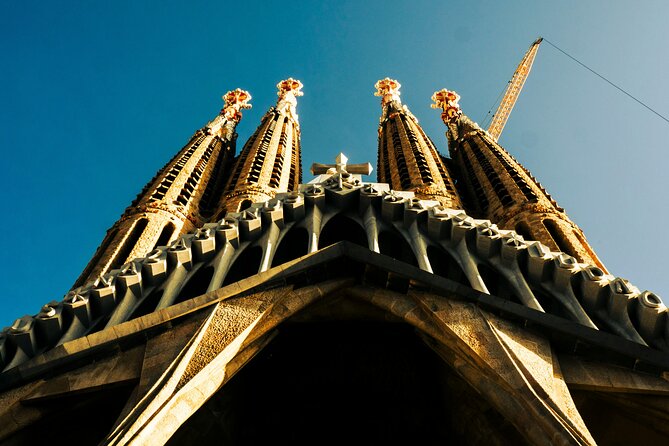
- The Sagrada Família visit is outside only: You learn about Gaudí’s design, symbols, and construction, but you do not enter the basilica.
- The tour connects two major areas: It begins near the Sagrada Família and finishes at Plaça de Catalunya after walking through the Eixample.
- Passeig de Gràcia becomes an open-air architecture lesson: Casa Batlló, Casa Amatller, La Pedrera, Casa Malagrida, Casa Rocamora, and Casas Pascual i Pons all appear along the route.
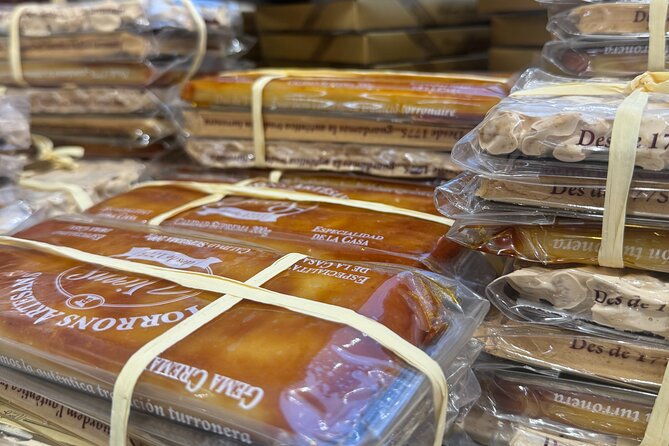
- The sweets are part of the appeal: You taste Spanish sweets and Catalan chocolates, including treats linked to Casa Amatller.
- Small groups help with questions: The maximum is 10 people, and the strongest guide feedback centers on patient, personal explanations.
- Morning and afternoon times are available: You can fit the walk around other Barcelona plans, including a separate timed visit inside the Sagrada Família.
Why the outside-only Sagrada Família stop still matters
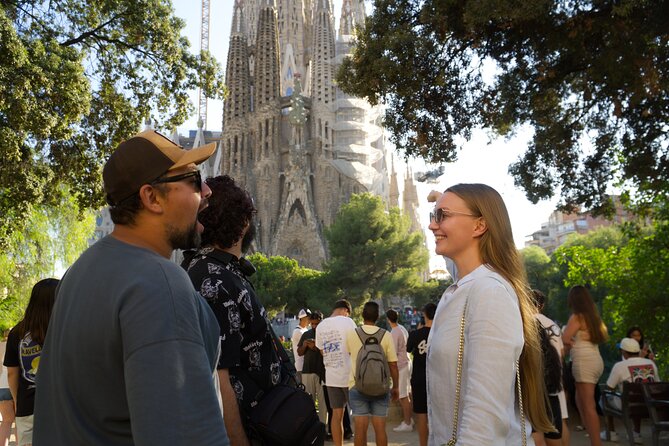
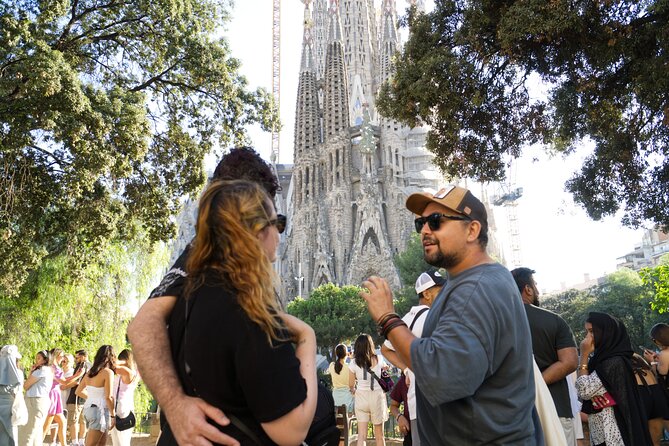
The tour starts at Av. de Gaudí, 1, near the Sagrada Família. The first 40 minutes focus on the exterior of Antoni Gaudí’s famous basilica, so you have time to look closely rather than simply snap a quick photograph and move on.
A good guide can point out how the building’s façades, towers, carvings, and religious symbols work together. Francisco has received especially warm praise for explaining architectural details and religious meaning in a way that brings the building to life. Anastasiia has also been praised for making the basilica understandable while adding useful advice about visiting Barcelona more generally.
This is a valuable introduction if you plan to buy a separate entry ticket. You will have a better sense of what to look for inside, from Gaudí’s approach to light and structure to the larger religious ideas expressed through the design.
But do not overlook the fine print. The admission ticket is not included, and the tour does not take you inside. Several people have misunderstood this point, so treat the exterior visit as an architectural talk beside the basilica, not as a Sagrada Família entry tour.
That distinction also affects the price. At $23.63, the tour is inexpensive for a small-group guided walk, especially if you want context for the buildings. It is not a substitute for an official interior visit, which you must arrange separately.
A few more food tours in Barcelona worth a look
- Barcelona: Tapas Walking Tour with Food, Wine, and History
★ 4.8 · 4,261 reviews - Barcelona: Food Walking Tour with Tapas and Wine
★ 4.9 · 2,180 reviews - Barcelona Tapas Walking Tour: Food, Wine & History
★ 4.5 · 1,928 reviews
Walking the Eixample from Gaudí to Passeig de Gràcia
After the Sagrada Família, the route moves toward Passeig de Gràcia, one of Barcelona’s grandest avenues. This is where the tour becomes more than a Gaudí highlights walk.
The Eixample was planned with broad streets and distinctive blocks, and Passeig de Gràcia became a showcase for wealthy families who commissioned fashionable modernist homes. Your guide helps you compare the architects rather than treating every ornate façade as simply another Gaudí building.
The walking pace is intended to be relaxed. One family described the walk as easygoing, with frequent stops for explanations and questions. That rhythm makes the tour a good choice on your first day, when you want to get your bearings without spending hours inside a museum.
You should still wear comfortable shoes. The tour covers several stops over roughly two and a half hours, and the route includes city streets rather than a single enclosed site. The meeting point and end point are not the same, so plan your day around finishing at Plaça de Catalunya.
La Pedrera and the first taste of Barcelona’s sweet side
La Pedrera, also called Casa Milà, receives an exterior visit of about 20 minutes. Its sculptural stone façade and unusual rooftop forms make it one of Gaudí’s most recognizable works.
The outside stop gives you a chance to hear about the building’s design without paying for interior admission. If you want to see the courtyards, apartment interiors, and rooftop, you need a separate ticket. The tour is best for visitors who want a guided look at several buildings, not a full visit to each one.
The route then includes a local shop and a taste of Spanish sweets. The exact amount can feel modest, so keep your expectations sensible. This is a sampling during a walking tour, not a long food tour with a series of full portions.
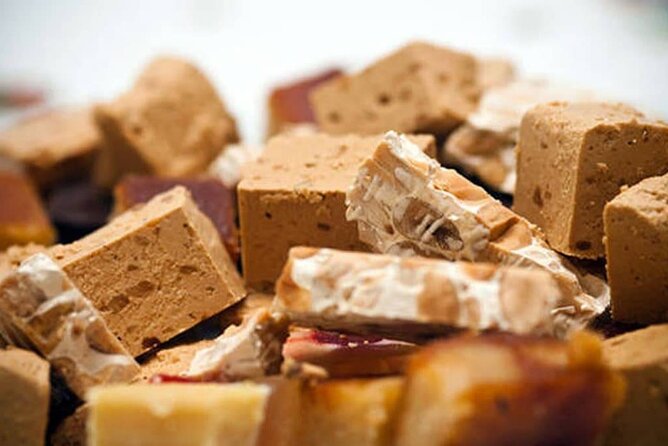
That said, the sweets add a welcome change of pace. The tasting has included traditional turrón, a Spanish nougat, and chocolate treats. For families, especially those with teenagers, the food stop can keep the architecture lesson from feeling too serious.
Casa Batlló and the modernist rivalry
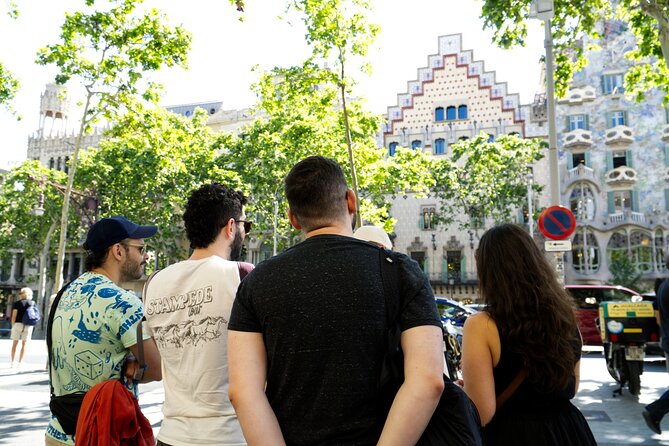
Casa Batlló appears as another exterior stop, with about 20 minutes to examine the façade and hear the story behind Gaudí’s design. Its flowing shapes, unusual colors, and fantasy-like details make it an easy favorite for first-time visitors.
The guide’s role matters here. Without context, Casa Batlló can look like a beautiful collection of odd shapes. With a good explanation, you can begin to see how Gaudí used natural forms, symbolism, texture, and light to create a building that feels unlike its neighbors.
Casa Batlló is also part of the larger architectural conversation on Passeig de Gràcia. The pleasure comes from comparing it with the buildings around it, not only from admiring it in isolation.
Again, this is an outside visit. Admission to Casa Batlló is not included, so anyone wanting the interior rooms, stairway, or other paid areas must make separate arrangements.
Same city, a different table:
- Barcelona Gothic Quarter Tapas & Taverns Food & Wine Tour
★ 5.0 · 1,470 reviews - Barcelona Food Tour: Tapas, Paella, Sangria & 8+ Local Tastings
★ 5.0 · 1,275 reviews - Barcelona Tapas Crawl Tour
★ 5.0 · 1,189 reviews - Barcelona: Guided Food Walking Tour with Tapas and Wine
★ 5.0 · 848 reviews
Casa Amatller and the chocolate tasting
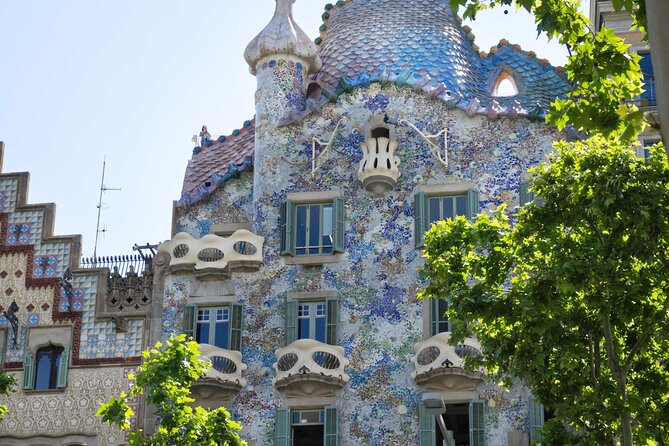
Casa Amatller is one of the more useful stops because it widens your view of Catalan modernism. Designed by Josep Puig i Cadafalch, the building has a distinctive stepped roof and richly decorated façade that feels very different from Gaudí’s work.
The stop lasts about 15 minutes and includes a chocolate tasting. Casa Amatller has a long connection with chocolate production, and this part of the tour makes the building feel connected to daily life, business, and local taste rather than just architecture.
The tasting is one of the tour’s most appealing touches, but it is not a sit-down confectionery visit. You receive small samples, and one comment described the portion as limited. Another response indicated that a second chocolate tasting may be offered at the specialty shop, so the exact experience can vary depending on timing and participation.
I like the idea because it gives you a reason to pay attention to Casa Amatller beyond its façade. You are not only looking at decorative details. You are also connecting the building with a Catalan food tradition that has lasted for generations.
The Mansana de la Discordia and Barcelona’s architectural contest
The block around Casa Batlló and Casa Amatller is known as La Mansana de la Discordia, or the Block of Discord. Several major modernist buildings sit close together, each with a very different personality.
This is one of the strongest sections of the walk. In a short distance, you can compare Gaudí’s Casa Batlló with Casa Amatller and the nearby work of Lluís Domènech i Montaner. The ornate details, mosaics, and stained glass show how Barcelona’s architects competed for attention along the same fashionable avenue.
The name suggests rivalry, and the buildings make that rivalry easy to understand. You do not need to enter each one to appreciate the contrast. A guide can help you spot how rooflines, windows, decoration, and color separate one architect from another.
For architecture fans, this comparison may be more useful than a quick tour focused only on Gaudí. For casual sightseers, it gives structure to a street that might otherwise become a blur of elaborate façades.
Four lesser-known façades after the major icons
The later stops include Casa Malagrida, Casa Rocamora, and Casas Pascual i Pons. Each receives about 15 minutes, allowing the guide to point out details that many people would pass without noticing.
Casa Malagrida is presented through its elegant curves and decorative design. Casa Rocamora has a more mysterious, ornate character, while Casas Pascual i Pons adds another example of the creativity found along Passeig de Gràcia.
These buildings are not as famous as the Sagrada Família or Casa Batlló. That is precisely their value. Once you have spent time with Barcelona’s headline sights, it is rewarding to see how much architectural character continues down the avenue.
The route also introduces work by architects beyond Gaudí, including Sagnier and Codina. This makes the tour a better fit for anyone who wants a wider look at Catalan modernism rather than a single-artist lecture.
The descriptions of some buildings may be brief, depending on the group and the guide. Still, the small size helps. Francisco has been praised for taking time with questions, while Anastasiia has been praised for providing broader advice about what to see, when to book, and how to get around.
What the guides add to the experience
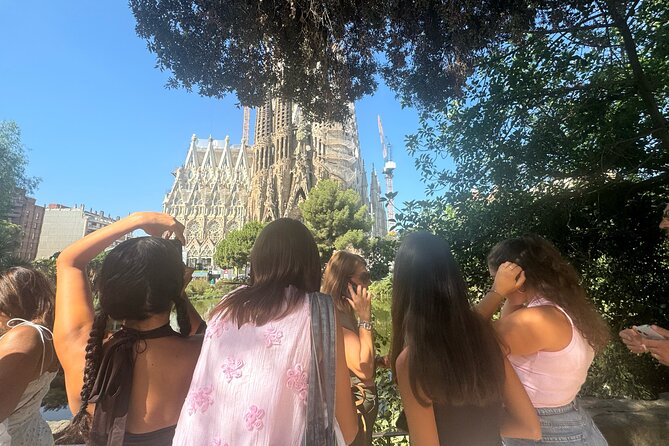
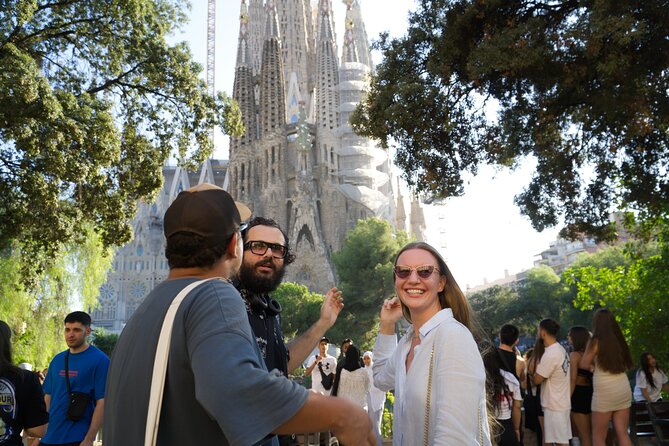
The strongest part of this tour is the human element. Francisco is repeatedly praised for his command of Barcelona’s architecture, history, and culture. He has also been described as friendly, patient, organized, and willing to answer questions without rushing the group.
Anastasiia receives similar praise for her welcoming manner and practical city advice. She has helped explain metro choices, suggested restaurants, discussed family-friendly places, and offered tips on booking the Sagrada Família. Nanna has been appreciated for keeping a comfortable pace and staying in touch with people who were running late.
Guide assignments can change, so you should not assume you will receive a particular person. Still, the pattern is clear: the tour works best when the guide turns the walk into a conversation rather than reciting facts at each stop.
A small group of no more than 10 people supports that style. You can ask why one building differs from another, pause for a photograph, or request help with your next Barcelona plan. Most people can participate, and service animals are allowed.
Timing, transport, and meeting point details
The tour lasts about two hours and 30 minutes and is offered in English. Morning and afternoon departures give you useful flexibility, especially if you want to pair the walk with a separately booked Sagrada Família interior visit.
The starting point is Av. de Gaudí, 1, in the Eixample near the basilica. The tour ends at Plaça de Catalunya, a central point for continuing on foot or using public transport. A metro ticket is not included, although one guide has incorporated metro guidance into the broader city orientation.
Be precise with the meeting address. The Sagrada Família itself is not the starting point, and a taxi driver once dropped a couple at the basilica instead of the stated meeting location. They were unable to join after the tour began. Check the map in your confirmation and allow extra time to find Av. de Gaudí, 1.
Confirmation is provided at booking. The tour needs good weather and a minimum number of participants. If poor weather or low enrollment forces cancellation, you can receive a different date or a full refund.
Free cancellation is available up to 24 hours before the start time. Changes or cancellations inside that window are not refunded, so do not wait until the last day if your plans are uncertain.
Who should book this Barcelona walking tour?
I would recommend it to first-time Barcelona visitors who want a useful introduction to Gaudí and the Eixample without committing to a long museum visit. It also suits families, couples, and solo visitors who like asking questions and tasting a few local sweets along the way.
The tour is especially good for people who want to understand the difference between Gaudí and other Catalan modernist architects. The price is fair for a small group, several architecture stops, an expert guide, and tastings.
I would not choose it if your main goal is to enter the Sagrada Família. Book a separate interior visit, or choose a tour that clearly includes admission. I would also avoid expecting a full food tour. The chocolate and Spanish sweets are pleasant extras, not the main event.
Should you book it?
Book this tour if you want a friendly, low-cost introduction to Barcelona’s modernist architecture, with enough time for questions and a few local treats. The best value comes from the guide’s explanations and the range of façades, not from admission to major attractions.
Skip it if you already know the Eixample well, dislike walking between exterior stops, or need guaranteed entry to the Sagrada Família. For everyone else, the relaxed pace, small group, and route from the basilica to Plaça de Catalunya make this a sensible way to spend a first morning or afternoon in Barcelona.
FAQ
Does the tour enter the Sagrada Família?
No. The Sagrada Família portion is an exterior visit only. Admission to the basilica interior is not included.
How long does the tour last?
The tour lasts approximately two hours and 30 minutes.
How much does the experience cost?
The listed price is $23.63 per person.
What language is the tour offered in?
The tour is offered in English.
Where does the tour start?
It starts at Av. de Gaudí, 1, in the Eixample area of Barcelona.
Where does the tour end?
It ends at Plaça de Catalunya.
Are food tastings included?
Yes. The tour includes chocolate tasting and Spanish sweets tasting.
How many people can join the tour?
The maximum group size is 10 people.
Can I cancel for a full refund?
Yes, if you cancel at least 24 hours before the experience start time. Cancellations made less than 24 hours before the start are not refunded.
Just added in Barcelona
- Food & Drink Private Tour of Barcelona in Traditional Taverns★ 4.5 · 32 reviews
- Vidavivida Wine Journey Food and Culture Tour in Barcelona★ 5.0 · 23 reviews
- Barcelona Wine and Gourmet Tapas Tour★ 5.0 · 188 reviews
- Food & Drink Tasting Private Tour & Sagrada Familia Skip the Line★ 4.5 · 30 reviews
- Barcelona Morning Tapas Crawl by Food Tour★ 5.0 · 45 reviews
- Food and Wine Small Group Tour from Barcelona – Maximum 8 people★ 5.0 · 111 reviews
- Spanish Wine and Tapas Tour in a Local Neighborhood in Barcelona★ 5.0 · 306 reviews
- Familly friendly traditions & food tour: tailored tapas & games!★ 5.0 · 32 reviews
Barcelona Food Tours, compared.
Tapas Walking Tour with Food, Wine, and History
Read our review →
Barcelona Tapas Walking Tour: Food, Wine & History
Read our review →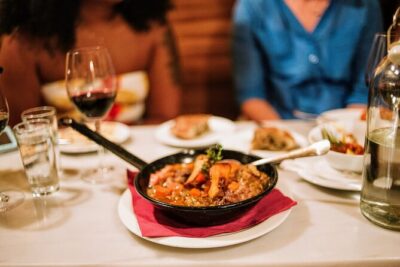
Barcelona Gothic Quarter Tapas & Taverns Food & Wine Tour
Read our review →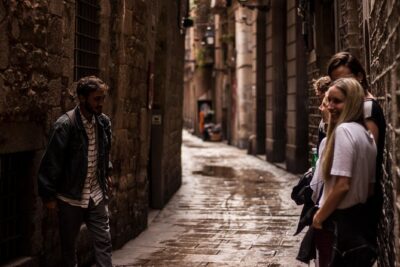
Barcelona Food Tour: Tapas, Paella, Sangria & 8+ Local Tastings
Read our review →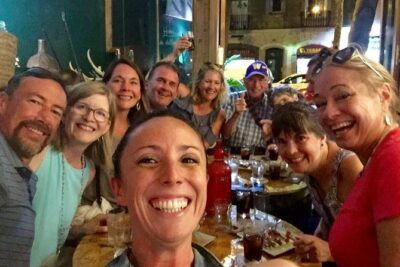
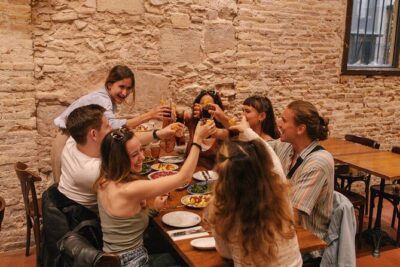

El Born Food Walking Tour with Tapas and Drinks
Read our review →Browse the lists this tour appears in