REVIEW · MEXICO CITY FOOD TOURS
Mexico City: Hidden Markets, Street Food & Salsa-Making Tour
Mexico City serves breakfast with a side of history. This five-hour outing links two local markets, classic street foods, murals, flowers, and a hands-on salsa lesson in a way that feels far removed from the usual sightseeing loop. I especially like the chance to ride the Metro with a guide and the warm connection with a family-run food business. The main drawback is the pace: nearly 6 kilometers on foot, plus public transport, can feel long in the morning.
The tour earns a strong 4.8 out of 5 from 310 ratings, with 95 percent of people recommending it. Guides such as Andrea, Axel, Viri, Alfonso, Poncho, Adriana, and Roy receive repeated praise for their warmth, English skills, and ability to explain Mexico City without turning the outing into a lecture. Still, arrive at the meeting point carefully and leave extra time for the possibility of a late cancellation, a problem reported on two occasions.
What makes this Mexico City tour special
- Murals inside a working market: See roughly 1,450 square meters of artwork connected with students of Diego Rivera, along with unusual public features such as a daycare and auditorium.
- Three markets in one stop: Mercado Jamaica combines flowers, fresh produce, and prepared food under one roof.
- Street food from morning to lunch: Try tamales, atole, tacos, huaraches, fruit, and pineapple tepache as you move through the markets.
- A real salsa lesson: Wash, cut, grill, and crush ingredients in a molcajete with help from a local family.
- A useful Metro tutorial: Your guide shows you how to ride Mexico City’s subway, which can save money and time later in your trip.
- Small-group format: The maximum group size is 12, making it easier to ask questions and keep together in crowded markets.
Start in Centro Histórico with a local guide
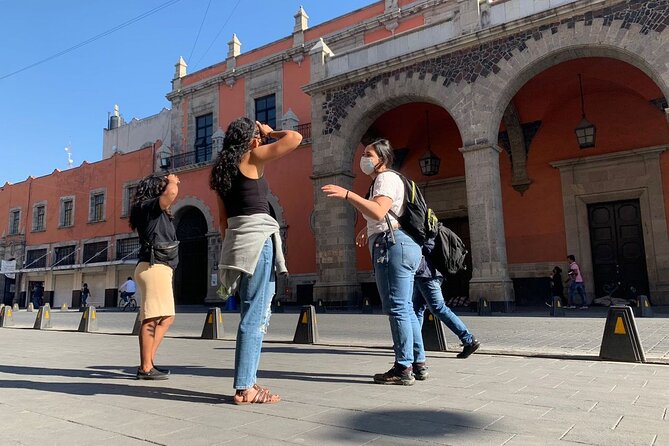
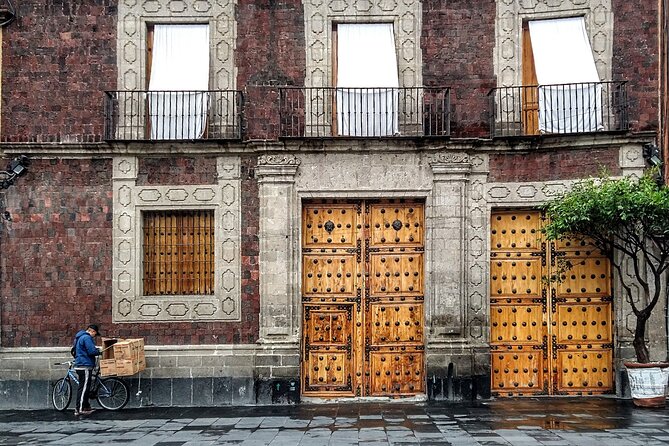
The tour begins at 8:30 a.m. at República de Guatemala 4, near the facade of Hostel Mundo Joven in Centro Histórico. The end point is outside Palacio de Bellas Artes on Avenida Juárez, so you finish in a central spot with easy access to more sightseeing.
The opening walk provides context for the city before you reach the markets. Guides explain how markets shaped social and political life in early 20th-century Mexico City. They also connect the first market to major cultural figures, including Frida Kahlo and Diego Rivera.
That background matters. You are not simply being led to food stalls and told what to eat. The market becomes part of the city’s story, and murals or old buildings make more sense when you know why they are there. Alfonso, Andrea, Viri, and Poncho have been especially praised for bringing this mix of architecture, art, food, and daily life together.
English is the tour language. The quality of the experience depends partly on the guide assigned that morning, but the strongest feedback repeatedly points to clear English, good humor, and a genuine connection with Mexico City. Some guides also offer practical advice for the rest of your visit, which makes this a smart choice early in your stay.
More Market Food Tours in Mexico
- Cancun Taco Tour, Local Beer and Night Market with Transportation
★ 5.0 · 816 reviews - Cancun Street Food Tour with Food Stalls, Local Market and Murals
★ 5.0 · 723 reviews - Mexican Cooking Class with Food Market Visit in Mexico City
★ 5.0 · 506 reviews
Mercado Melchor Muzquiz and the market murals
The first market is identified as Mercado Melchor Muzquiz in the schedule and also described through its connection with the Abelardo Rodríguez Market. Expect about an hour here, with no separate admission charge.
This is the art-focused part of the morning. The market is known for murals spread across about 1,450 square meters. Several works were made by students of Diego Rivera nearly a century ago, giving the place an unusual link to Mexico’s public-art tradition. You see the paintings in a functioning market rather than behind museum glass.
The building also has features you would not expect in a standard food hall, including a daycare and an auditorium. Those details help show how markets have long served as community spaces, not just places to buy ingredients.
Food begins here with tamales and atole. Tamales are filling, steamed corn dough parcels with a savory or sweet filling. Atole is a warm, thick corn-based drink, often flavored with fruit, vanilla, or other traditional ingredients. These first tastings work well in the morning, though you should not expect a large sit-down breakfast.
This stop suits anyone who likes art with a side of everyday life. It is less suited to someone seeking a polished gallery or a long, quiet look at each mural. The market remains active, and the tour keeps moving.
Taking the Metro to Mercado Jamaica
The group then uses Mexico City’s Metro. This is not just a transfer between attractions. Your guide helps you understand how to use one of the city’s main forms of transport, from finding the station to navigating the ride.
Several people have singled out the Metro as one of the most useful parts of the outing. If you are uneasy about using public transport in a large capital, this short lesson can give you confidence for later trips. It also lets you see a practical side of the city instead of moving everywhere by private vehicle.
You should keep your belongings close and bring only what you need. The tour advises leaving passports, credit cards, and other valuables at your hotel. Carry a small amount of spending cash, since you may want to buy food, fruit, flowers, or drinks along the way.
The Metro ride also means this is not a completely relaxed walking tour. You will move through stations, streets, and market aisles, often at a steady pace. Comfortable shoes are essential.
Mercado Jamaica: flowers, produce, and food
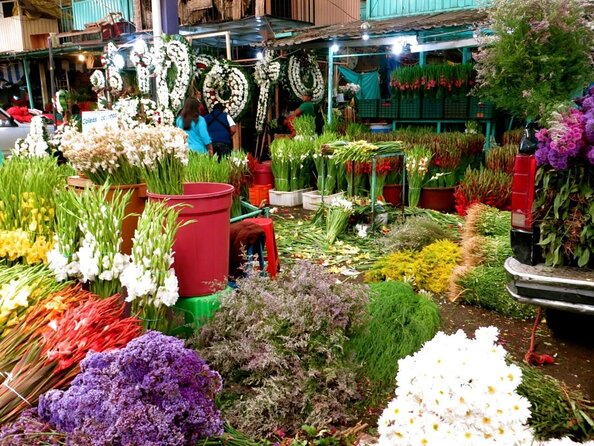
Mercado Jamaica is the larger and more food-focused stop. It combines three sections: flowers, fresh produce, and prepared food. Plan on about two hours here, though the full experience continues after the market visit.
The flower section is the visual treat. One playful activity is asking a vendor to choose flowers that match your eye color. It is a small exchange, but it gives you a reason to speak with a seller rather than simply walk past the stalls taking pictures.
The market is also a good place to see the scale of local food shopping. Stalls carry vegetables, fruit, and ingredients used in everyday Mexican cooking. Your guide explains local farming practices while you choose fresh produce for the salsa lesson.
Food tastings may include tacos, huaraches, tamales, atole, fresh fruit, coffee de olla, and pineapple tepache. Green chorizo has received special praise, and it is a useful reminder that Mexican food varies by region and preparation. Tepache is a lightly fermented pineapple drink with a sweet, fruity taste.
A huarache is a broad oval of masa topped with beans, meat, cheese, salsa, or other ingredients. It is more substantial than a small taco and becomes the perfect base for tasting the salsa you make later.
The market can feel crowded and noisy. That is part of the point, but it may challenge anyone who prefers orderly spaces or has difficulty walking for long periods. The route covers about 6 kilometers in total, and the tile floors, uneven streets, and frequent stops add to the effort.
More Street Food Tours in Mexico
- Merida Street Food Walking Tour
★ 5.0 · 417 reviews - Street Food Tour with Friends
★ 5.0 · 326 reviews - Mexico City Street Food: A Beginner’s Guide
★ 5.0 · 197 reviews - Mexico City Vegan & Vegetarian Street Food Adventure
★ 5.0 · 176 reviews
Making salsa with a Mexico City family
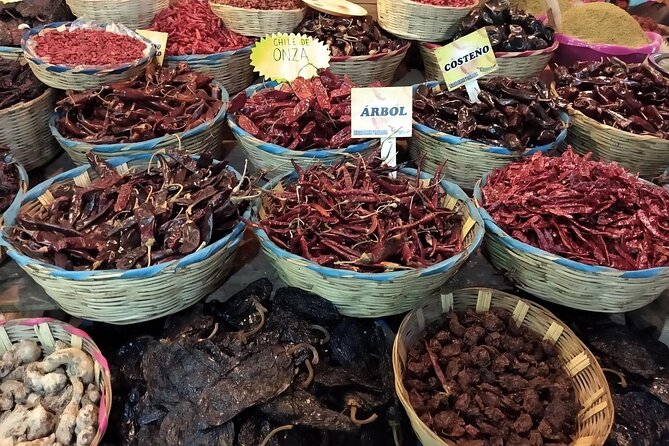
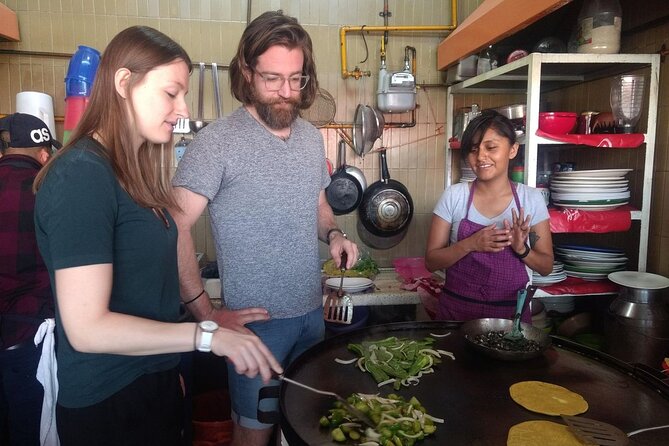
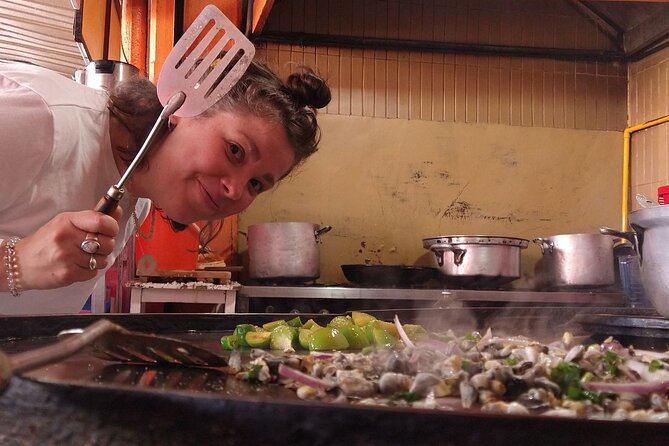
The most personal part of the tour takes place at a local family business. Using vegetables bought at the market, you wash, cut, and grill the ingredients before crushing them in a molcajete.
A molcajete is a traditional stone mortar and pestle. It takes more work than using a blender, but that is exactly why the lesson is worthwhile. You feel the texture change as the ingredients break down, and you can see how roasting affects the flavor.
The family’s patience is a recurring strength of this activity. You are not handed a bowl of salsa and sent on your way. You take part in the process, with guidance while you prepare the ingredients and adjust the result.
You then eat the salsa with a huarache. This is a satisfying finish because the food you taste is linked directly to the produce you selected and the work you did. The setting is informal and local, not a staged cooking studio.
Dietary needs can be accommodated if you give at least 24 hours’ notice. Vegetarian, gluten-free, and lactose-free requests are specifically accepted. It is still wise to explain your needs clearly when booking and again to the guide at the start.
How much food do you actually get?
Food is central to the outing, but the payment details require a little care. The experience includes tastings such as tacos, tamales, atole, and other market samples, yet the stated terms say food and drinks are not included unless specified.
That means you should bring extra pesos for purchases and ask what is covered when you book. Some descriptions of the outing present it as breakfast, lunch, and a salsa snack, while the formal inclusions are more limited. The exact number and size of tastings may also depend on the vendors visited that day.
At $69.45 per person, the price is fair if you value a small group, a local guide, public transport instruction, several tastings, and the salsa activity. It is less attractive if you mainly want a cheap food crawl. You are paying for access, explanation, and the connection with a family business, not just for a pile of snacks.
The maximum group size is 12. A smaller group makes it easier to hear the guide, ask about ingredients, and stay together in the markets. On quieter dates, the group may be much smaller, and some bookings have effectively felt like private tours.
Guide quality can shape the whole morning
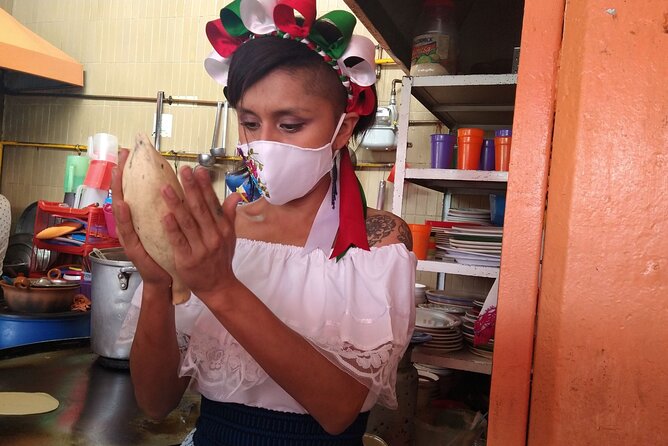
The strongest part of this experience is the human connection. Andrea has been praised for her precise English and enthusiasm for Mexico. Axel is known for making the day feel like time spent with a well-informed friend. Viri has been appreciated for her close relationships with vendors and her careful explanations of Mexican culture.
Alfonso, also called Victor in some feedback, receives particular praise for combining food with art, architecture, and Metro instruction. Poncho is noted for his warmth, humor, and patience, especially with families. Roy has handled vegetarian needs well, while Adriana has been praised for adjusting the experience to special requests.
These details matter because the tour crosses several settings in a short time. A guide who can explain a mural, order food, keep the group moving, and help you use the Metro makes the morning much easier.
There is one serious practical warning. On two occasions in November 2025, the guide did not arrive because of a last-minute cancellation, and communication with the operator was poor. The operator apologized and said the issue had been sent for review. This appears to be unusual given the high overall rating, but I would still save the confirmation, check messages before leaving, and avoid scheduling a nonrefundable activity immediately afterward.
What to wear and carry
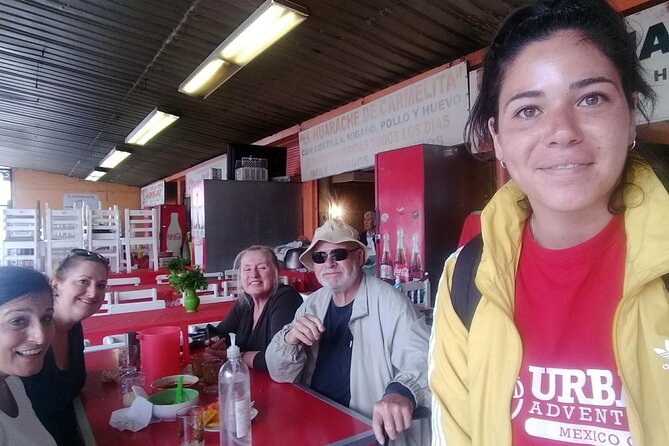
Dress for walking and local markets, not for a formal city tour. Long trousers or jeans and a T-shirt are recommended, especially because the route includes non-tourist areas.
Wear supportive walking shoes. The route covers around 6 kilometers, and the combination of streets, stations, and market aisles can be tiring even if the pace feels manageable. A bottle of water is a good idea, although water can be bought along the way.
During the rainy season from May through September, carry a raincoat or umbrella. Markets provide some cover, but the walking between stops does not.
Only bring a small camera. Large professional equipment is not considered suitable for this experience. Ask before taking close pictures of vendors or other people, and keep your phone and wallet secure in crowded areas.
Who should book this tour?
I would choose this tour for a first or second day in Mexico City. The guide helps you get oriented, introduces the Metro, and gives you practical ideas for eating and getting around on your own.
It is a good fit for:
- Solo visitors who want company without joining a huge group
- Couples who enjoy food, art, and local history together
- Families with older children who can manage a long walk
- Curious eaters who want more than restaurant dining
- Visitors interested in markets that are part of ordinary city life
I would think twice if you have limited mobility, dislike public transport, need a slow pace, or want a tour focused only on major sights. The outing involves standing, walking, moving through crowded areas, and eating foods that may be unfamiliar.
You can cancel for a full refund up to 24 hours before the start time. Changes made less than 24 hours ahead are not accepted, and the cut-off follows Mexico City local time.
Should you book the Mexico City markets and salsa tour?
Book it if you want food, art, public transport, and conversation in one morning. The murals at the first market, flowers and produce at Jamaica Market, and the molcajete lesson give the tour a clear sense of place. The strongest guides add context without making the day feel like school.
I would not book it solely for the amount of food, since the exact inclusions need clarification and extra purchases cost more. But for $69.45, the combination of two markets, tastings, a family salsa lesson, and a small group offers solid value.
Bring walking shoes, modest clothing, water, and a little cash. Confirm the meeting point, watch for operator messages, and book it early in your Mexico City stay if learning the Metro would help you. For most visitors who want to see how the city eats, shops, travels, and makes room for art, this is a very good choice.
FAQ
Where does the tour start?
It starts at 8:30 a.m. at República de Guatemala 4 in Centro Histórico, near the facade of Hostel Mundo Joven.
Where does the tour end?
It ends at the facade or entrance of Palacio de Bellas Artes on Avenida Juárez in Centro Histórico.
How long is the experience?
The tour lasts approximately five hours.
How much walking is involved?
The route covers around 6 kilometers, or about 3.7 miles, through markets and city streets.
Can dietary restrictions be accommodated?
Vegetarian, gluten-free, and lactose-free requests can be accommodated if you provide notice at least 24 hours before the tour.
Is food included in the price?
The experience includes specified tastings such as tamales, atole, tacos, and other market samples, but the stated terms say food and drinks are not included unless specified. Bring spending cash and confirm the exact inclusions when booking.
More Street Food Tours in Mexico City
- Street Food Bike Tour / Mexico is not only Tacos / All Inclusive
★ 5.0 · 170 reviews - México City: Street Food to Home Cooking Food Tour
★ 5.0 · 84 reviews - Mexico City: Vegan and Vegetarian Street Food Adventure
★ 4.8 · 65 reviews
Just added in Mexico
- CANCUN TACO TOUR – The Taco Attack – Tacos, Tequila & More★ 5.0 · 148 reviews
- All Inclusive Caribbean adventure, reef snorkeling, Food & Drinks★ 3.5 · 33 reviews
- Cancun Taco & Mexican Food Tour with Tequila Tasting★ 4.5 · 71 reviews
- Dancer Cruise Isla Mujeres Snorkel Food and Drinks Included★ 5.0 · 256 reviews
- Puerto Morelos Foodie Tour, Mexico in every bite!★ 5.0 · 241 reviews
- Cancun Authentic Taco Tour★ 5.0 · 33 reviews
- Cancun Walking Food Tour: Local Food, Markets, and Street Art.★ 5.0 · 49 reviews
- Private Starlit Chichen Itza Cave Adventure & Culinary Experience★ 5.0 · 22 reviews
Street Food Tours, compared.
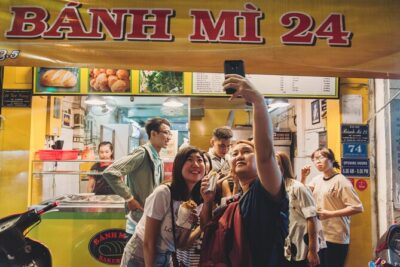
Ho Chi Minh City Street Food Tour & Sightseeing By Motorbike
Read our review →
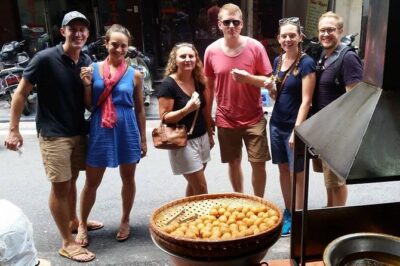
Small Group Hanoi Street Food Tour with a Real Foodie
Read our review →
Saigon By Night and Street Food By Motorbike | Opt: Ao Dai Riders
Read our review →
Private Street Food Tour by Motorbike/Car with Local Students
Read our review →
Cinque Terre Park Day Trip with Optional Street Food
Read our review →