
REVIEW · FRANCE FOOD TOURS
Montmartre 3-Hour Local Gastronomy Tour with Tastings
Small streets, serious food, and a hilltop finale. This 150-minute Montmartre food walk combines neighborhood sightseeing with tastings of bread, pastries, charcuterie, wine, and other French specialties. Instead of treating Montmartre as only an artists’ quarter, the tour shows you where local food shopping fits into daily Paris life.
I like the small group limit of eight participants, which should make it easier to hear the guide and ask questions in narrow streets and busy shops. I also like the mix of stops, from a fine-tart pastry shop to a fishmonger, charcutier, butcher, baker, and vegetable seller. The main caution is value: at $165 per person, you should expect a guided food experience rather than a full meal, and one past participant found the sweets outweighed the cheese and drinks.
- A pastry-first opening: The tour begins at a shop known for fine tarts, giving you an early taste of French baking.
- Local food merchants: Stops include a fishmonger, charcutier, butcher, baker, and vegetable seller.
- A small group of eight: The limited size suits questions, tastings, and walking through Montmartre’s compact streets.
- Guide Luis: Luis Jorge earned praise for his explanations of Montmartre, food, wine, and architecture.
- Food and neighborhood context: You hear about Haussmannian architecture, traditional products, and Montmartre’s bohemian past as you walk.
- Flexible booking: You can cancel up to 24 hours before the tour for a full refund and reserve without paying immediately.
Starting at Place Blanche in Montmartre
Your meeting point is in front of Starbucks at 5 Place Blanche, near Blanche Metro station on Line 2. This puts you at the lower edge of Montmartre, a useful starting point because the walk gradually takes you toward the butte, the hill at the heart of the neighborhood.
I recommend arriving with enough time to find the exact meeting spot. Place Blanche is a busy Paris junction, and the tour provider asks you to meet at the Starbucks rather than simply at the Metro entrance.
From here, the experience is built around walking. You are not being driven between food shops, so comfortable shoes matter. The streets can be small, sloped, and uneven as the route rises toward Montmartre’s upper streets.
The guide speaks English, French, or Japanese. That language choice is valuable in a food tour because the vocabulary can get specific quickly. You may want to ask how a sausage is made, how a wine should be tasted, or why a particular pastry is associated with French daily life.
Fine Tarts First, Then the Food Shops
The first stop is a pastry shop specializing in fine tarts. This is a smart opening because French pastry is an easy introduction to the tour’s main idea: food here is not only something to consume, but also a marker of place, craft, and routine.
You can expect pastries to be part of the tasting selection. The information does not specify which tart or how many portions are served, so you should not arrive expecting a full pastry course. The tasting is one part of a wider walk.
The sweet emphasis matters when you decide if this tour suits you. One participant felt there were too many sweets and too little cheese, so anyone hoping for a savory-heavy food crawl should keep that in mind. If you have a strong sweet tooth, the pastry opening may be one of the most enjoyable parts.
The guide also uses food to explain French habits and traditions. That can make a simple tart more interesting than a quick bakery purchase because you get context about why certain foods remain popular across France.
A few more food tours in France worth a look
- Exclusive Food Tour in Menton -3 hours- small group
★ 4.9 · 32 reviews - Award-Winning Geneva Chocolate &Old Town Tour with Boat Ride (3h)
★ 5.0 · 3,721 reviews - Eat Like a Local: Venice 3-Hour Small-Group Food Tasting Tour
★ 5.0 · 3,137 reviews
Meeting the Fishmonger, Charcutier, and Butcher
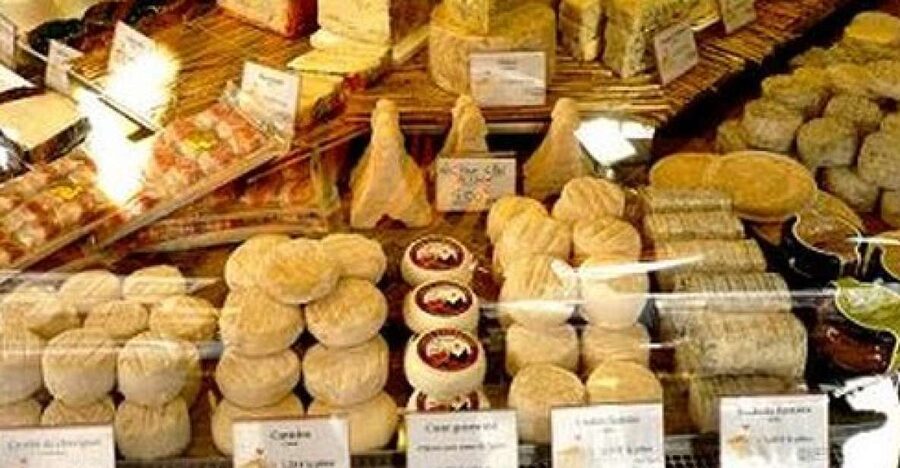
The route continues through food shops that serve as everyday neighborhood stops. You visit a fishmonger, a charcutier, a butcher, a baker, and a vegetable seller. Even if each shop does not provide a separate tasting, the range gives you a clearer picture of how French food shopping works.
A charcutier specializes in prepared meats, so this is where you may encounter the tour’s charcuterie tasting. The included food is described as charcutier specialties, along with bread, wine, and pastries.
The butcher and fishmonger add useful contrast. They help show that French gastronomy is not limited to restaurants or famous pastry counters. It also lives in the shops where people buy ingredients for ordinary meals.
The vegetable seller brings another practical piece to the route. Together, these stops create a food map of the neighborhood: meat, seafood, produce, baked goods, and prepared specialties. I appreciate this approach because it connects sightseeing with the way residents actually shop.
You should keep your expectations measured. The tour is not advertised as a visit where you select and eat a complete plate from every merchant. It is a guided walk with selected tastings and food-focused explanations.
Bread, Charcuterie, Wine, and Pastries
The listed tastings include charcuterie specialties, bread, wine, and pastries. That combination gives the tour a classic French shape. Bread can provide the base, charcuterie the savory element, pastries the sweet finish, and wine the drink that ties the tasting together.
The wine portion deserves a small note of caution. Wine is included in the stated tasting details, but one participant reported that no wine, coffee, or other drink was offered during their experience. Since tastings can vary, I would confirm the current serving plan if wine is important to you.
The same applies to cheese. Cheese is mentioned among the traditional products you may discover, but one participant described receiving only a small bite of cheese. I would not book this tour expecting a dedicated cheese tasting.
A later tasting stop took place at the LAB shop of Edouard, where the group sampled wine, charcuterie, honey, and Comté. This sounds like a pleasant way to finish the food portion, especially if you enjoy talking directly with a shop host. It also suggests that the final stop may offer a wider savory spread than the pastry opening.
Still, the precise food selection can change. Shops may have different stock, and the tour description does not promise exact brands, portions, vintages, or pastry types.
Montmartre’s Streets and Haussmannian Architecture
Food is the main reason to book, but the walk also gives you a guided introduction to Montmartre. The neighborhood is known for its bohemian atmosphere, small lanes, artistic associations, and climb toward the butte.
As you move through the streets, the guide discusses the area’s appeal and its place in Paris. One guide, Luis, was praised for explaining Montmartre as well as Haussmannian architecture, bakeries, and wine. That combination is useful because it keeps the tour from becoming a simple list of snacks.
You also hear about traditional products that have been part of French daily life for centuries. The best part of this format is the connection between what you see and what you taste. A bakery is not just a shopfront, and a narrow street is not just a route to the next stop. The guide uses both to explain how the neighborhood developed.
Montmartre is also a place where the walking itself matters. The route winds toward the hill, so you see more than one polished tourist square. The tradeoff is that this is not a flat stroll. If hills or long periods on your feet are difficult, take the route’s climb into account.
Same city, a different table:
- Bateaux Parisiens Seine River Gourmet Dinner & Sightseeing Cruise
★ 4.5 · 6,930 reviews - Authentic Parisian Gourmet Food Tour with 10 Local Dishes & Wines
★ 5.0 · 4,754 reviews - Bateaux Parisiens Seine River Gourmet Lunch & Sightseeing Cruise
★ 4.5 · 2,680 reviews - Montmartre Hill French Gourmet Food and Wine Tasting Walking Tour
★ 5.0 · 2,588 reviews
A Small Group Makes the Tasting Easier
The group is limited to eight participants. That is a strong feature for this kind of activity. A guide can usually speak to a small circle without shouting, and you have more room to ask about the products or the neighborhood.
A group of eight also fits better inside small food shops. You are less likely to feel like part of a large crowd blocking a counter. For a tour that visits several local merchants, this makes the experience more personal and less mechanical.
Guide quality matters here. Luis and Luis Jorge received especially warm praise for being friendly, punctual, and clear. One participant noted that Luis adjusted the tour to partly rainy weather, which shows useful flexibility. The guide also explained how to taste wine and shared lesser-known connections between food and Montmartre.
That said, the experience depends heavily on the individual guide and the day’s conditions. A thoughtful guide can turn a short tasting into a memorable neighborhood lesson. A less engaging guide would leave you with fewer benefits beyond the food itself.
Is $165 a Fair Price?
At $165 per person, this is a costly two-and-a-half-hour activity. On a simple time calculation, you are paying about $66 per hour, before considering the food itself. That puts the tour in the premium category for a walking experience.
The price can make sense if you value a small group, a multilingual guide, access to selected shops, and explanations you would not get by wandering alone. You are paying for organization and interpretation as much as for the bread, meat, pastries, or wine.
The price feels less attractive if you mainly want a large meal. The tour is not designed as lunch or dinner, and the tastings may be modest. The criticism about too many sweets, little cheese, and missing drinks is important for anyone comparing this with a restaurant meal or a larger food crawl.
I would also compare the cost with your plans for Montmartre. If you already have a separate guided visit to the neighborhood, this food tour may repeat some of the area’s history. If you have not planned any Montmartre visit, it combines two activities in one: neighborhood orientation and food sampling.
Weather, Walking, and Timing
The tour lasts 150 minutes, although it is described in some places as a three-hour experience. In practical terms, plan for two and a half hours, with a little extra time around the meeting point and after the final tasting.
You will be outdoors for much of the activity. Rain may affect the pace and the route, though one guide adapted the walk when the weather turned partly wet. A light rain jacket is a sensible choice, and comfortable walking shoes are more useful than dress shoes.
The route heads toward the butte, so you should expect some uphill walking. The activity details do not state an accessibility rating, step-free route, or seating arrangements. If you need those features, ask the provider before booking rather than assuming the small streets will be easy.
Because the group is small and the route includes shops, late arrival could be disruptive. I would reach Place Blanche early enough to locate the Starbucks and meet the guide without rushing.
Who Will Enjoy This Montmartre Food Walk?
I think this tour suits you best if you want a guided introduction to Montmartre with food built into the route. It is especially useful for first-time Paris visitors who want neighborhood context rather than a visit focused only on major monuments.
Food-curious visitors will get the most from it. You can taste familiar products such as bread and pastries while learning about charcuterie, wine, local shopping, and French food customs.
The tour also works well for people who prefer small groups. Eight participants is a comfortable limit for questions and shop visits. The availability of English, French, and Japanese guides is another practical advantage.
I would be more cautious if you want a serious cheese tour, a full meal, or a drink at every tasting. I would also think twice if sweets are not your thing, since pastries are part of the experience and one participant found the balance too sweet.
Booking Advice and Final Verdict
At $165, this is not a bargain food walk. I would book it when the combination of a small group, guide-led neighborhood history, and selected tastings is worth more to you than quantity.
The strongest reason to choose it is the setting. You are not simply seated at a table sampling French products. You are walking through Montmartre, visiting different kinds of food merchants, and seeing how the neighborhood’s daily food culture fits into its artistic and architectural identity.
The best guides appear to add real value. Luis, also identified as Luis Jorge, received praise for his friendliness, timing, explanations, wine guidance, and ability to adjust for rain. If you can request or confirm a particular guide, that may help, though guide assignments are not guaranteed in the available details.
Book this tour if you want a polished introduction to Montmartre and accept that the tastings are samples, not a full meal. Skip it if your priority is generous portions, extensive cheese, or guaranteed drinks at every stop. Free cancellation up to 24 hours before the start gives you some flexibility, and reserve-now-pay-later booking can help if your Paris schedule is still changing.
FAQ
How long does the Montmartre gastronomy tour last?
The tour lasts 150 minutes, or two and a half hours. It is also described as a three-hour guided walk in the experience information.
Where does the tour meet?
You meet the guide in front of Starbucks at 5 Place Blanche, 75018 Paris. The nearest Metro station is Blanche on Line 2.
What food is included?
The listed tastings include charcuterie specialties, bread, wine, and pastries. Cheese, honey, and Comté were also included during one tasting at the LAB shop of Edouard, but exact products and portions can vary.
Does the tour include wine?
Wine is included in the stated tasting details. However, one participant reported that no wine or other drink was offered, so confirm the current arrangement if wine is important to you.
Does the tour include a full meal?
No. It is a guided walking tour with tastings rather than a full lunch or dinner.
Which food shops do you visit?
The route includes a pastry shop, fishmonger, charcutier, butcher, baker, and vegetable seller. The tour also includes favorite neighborhood shops and boutiques selected by the guide.
How many people are in the group?
The group is limited to eight participants.
Which languages are available?
The tour is offered in English, French, and Japanese.
Is the tour suitable for someone who dislikes sweets?
Pastries are part of the experience, and the tour begins at a pastry shop specializing in fine tarts. If you prefer savory food, note that one participant found the tasting selection too focused on sweets.
Can I cancel the booking?
You can cancel up to 24 hours before the tour for a full refund. The activity also offers reserve-now-pay-later booking.
Just added in France
- Cannes Ooh La La Croissant Tasting Tour★ 5.0 · 30 reviews
- Taste Cannes – A Full French Riviera Food Tour by Do Eat Better★ 5.0 · 63 reviews
- Saint-Émilion day tour: village visit, Châteaux and lunch★ 5.0 · 121 reviews
- Bordeaux wines tasting workshop including Food & Wine pairings★ 5.0 · 31 reviews
- Historical Center, Bordeaux Food Tour★ 5.0 · 33 reviews
- NO DIET CLUB – Unique food tour in Bordeaux !★ 5.0 · 201 reviews
- Bordeaux Food and Wine Tour : Authentic Artisanal Flavors★ 5.0 · 62 reviews
- Chateau du Taillan and Park including Wine Tasting Tour★ 5.0 · 40 reviews
3-Hour Experiences, compared.
Award-Winning Geneva Chocolate &Old Town Tour with Boat Ride (3h)
Read our review →
Eat Like a Local: Venice 3-Hour Small-Group Food Tasting Tour
Read our review →
Browse the lists this tour appears in