
REVIEW · BUDAPEST FOOD TOURS
Palace District Evening Culinary, Wine, and History Walk
Come hungry, leave happily full. This four-hour evening walk combines Hungarian food and wine with the handsome architecture of Budapest’s Palace District, then carries on toward Astoria through lively streets and old cafés. I especially like the progressive-dinner format and the small-group setting, which make it easier to ask questions and enjoy the city at a relaxed pace. The main caution is that dietary restrictions may be difficult to accommodate, and the price is high unless you plan to make this your main dinner and evening activity.
Key points at a glance
- Six food and drink settings: Start with wine, cheese, and charcuterie, then continue through a bakery, courtyard bar, bistro, and traditional coffeehouse.
- A real dinner, not just nibbles: The tastings include gulyás, appetizers, drinks, and dessert, so you should not eat beforehand.
- Palace District focus: Explore Budapest’s VIII district, where old palaces now share the streets with universities, bars, and neighborhood restaurants.
- Strong guide-led experience: Guides such as Angela, Andrea, Barbara, Elza, George, Lila, and Lelah have been praised for balancing food, wine, humor, and local stories.
- Small-group atmosphere: The usual format allows up to eight people, with larger parties handled privately.
- Useful central route: Meet at Tasting Table Cellar on Bródy Sándor utca at 5 p.m. and finish near Astoria around 9 p.m.
Why this Budapest food walk works so well
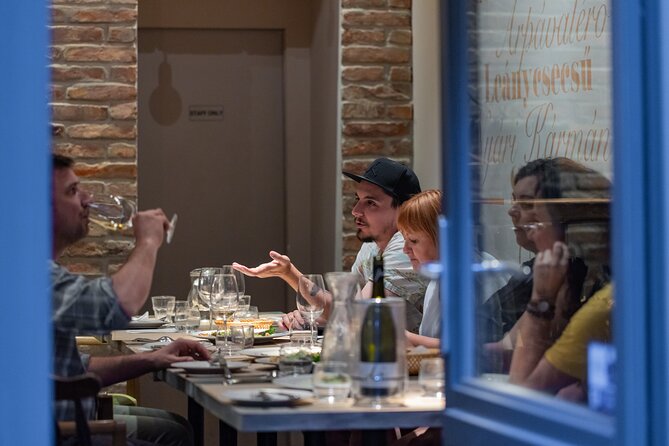
I like food tours that show you how a city eats rather than simply handing you a plate. This one has a clear rhythm: wine and introductions first, several savory stops in the middle, then coffee and pastry to finish. You are not parked in one restaurant for four hours. You move through the Palace District, stopping often for food, conversation, photographs, and questions.
That format also gives the evening some shape. You begin with an introduction to Hungarian wine, then build toward heartier dishes. By the time you reach the old coffeehouse, you have sampled enough to call it dinner. The experience feels more like a progressive meal than a standard walking tour.
The neighborhood is a good choice. Budapest’s Palace District, or Palota Negyed, sits in District VIII and is known for grand 19th-century buildings. Their façades reflect the city’s growth from the 1800s onward, while the universities bring a younger local population to the area. You get architecture and urban life without spending the whole evening on monuments.
The tour has earned a 4.9 rating from 55 reviews, with 96 percent of customers recommending it. That high score makes sense when you look at what people praise most: the food quantity, the guides, the variety of stops, and the way the evening combines eating with useful local context.
More wine tours in Budapest:
- Budapest Centre Food Tour with 10+ Tastings, Wine & Street Food
★ 5.0 · 810 reviews - From Budapest: Etyek Wine Tasting Tour with 3-Course Meal
★ 4.8 · 557 reviews - Budapest Food Tour: Market to Tavern with 14+ Tasters & Wines
★ 5.0 · 434 reviews
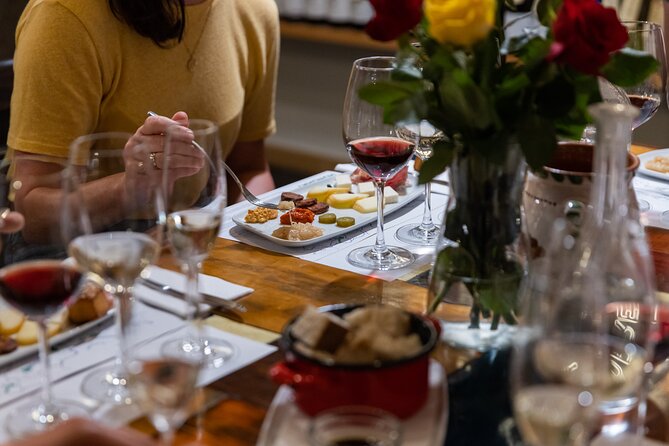
Starting with Hungarian wine at Tasting Table Cellar
Meet at Tasting Table Cellar, operated by Taste Hungary, at Bródy Sándor utca 9. The start time is 5 p.m., and the meeting point is central enough to reach by public transportation.
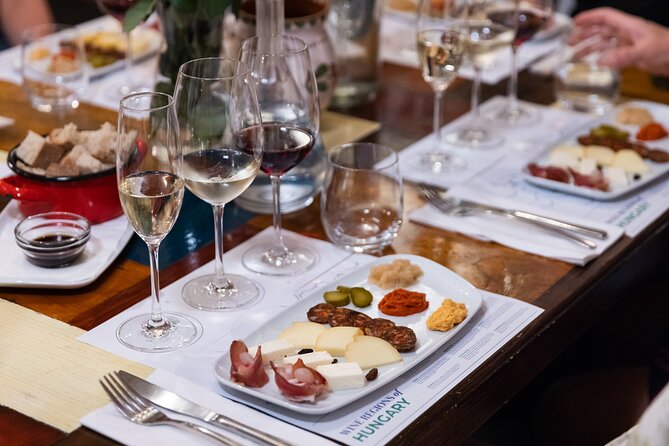
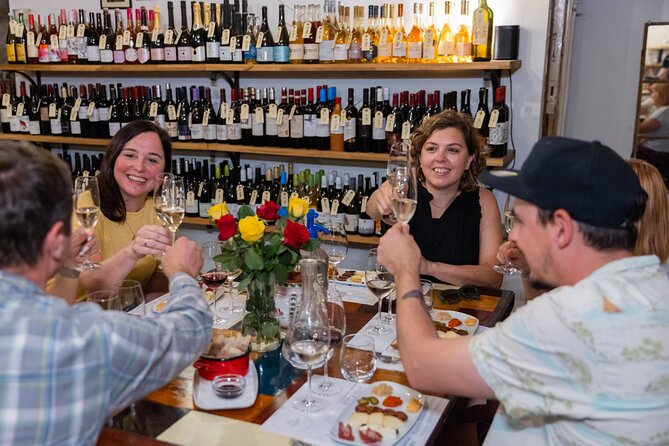
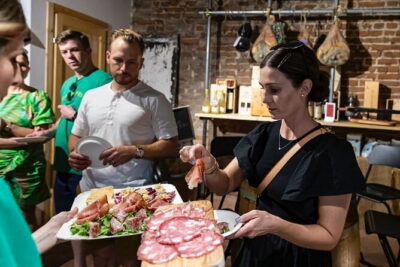
The opening tasting sets up the rest of the night. A sommelier introduces three Hungarian wines, along with local cheese and charcuterie. You receive an introduction to the country’s wine regions and drinking traditions before heading out into the neighborhood.
This is one of the strongest parts of the experience because it gives the food a useful frame. Hungarian wine can be unfamiliar to many visitors, and the tasting helps you understand what you are drinking instead of treating wine as a simple extra. One past participant especially enjoyed the red wine, while another appreciated receiving a map and an overview of the wine regions.
The cheese and cured meats are more than a token snack. They serve as the first course, and they also give you something to eat before the tour moves on. Still, do not mistake this stop for dinner. The best advice is simple: eat lightly at lunch and save your appetite.
Walking through the Palace District after dark
After the cellar, your guide leads you through the Palace District. The walk is not just a transfer between restaurants. Along the way, you hear about the area’s old palaces, changing social life, architecture, and connection to Budapest’s wider story.
I like this balance because the food has more meaning when you know where you are eating. A neighborhood bistro, a courtyard bar, and an old café tell you something different about the city than a major attraction does. You see how old buildings have been reused and how university life has helped keep the district active.
The history is delivered in small portions as you walk, which is usually the right approach after a wine tasting. Several guides have been praised for knowing when to explain and when to let the evening breathe. One person felt there was slightly too much city history, so if you want a tour focused almost entirely on food, keep that in mind.
The route also includes plenty of time for photos and questions. That matters in a small group. You can ask about a dish, a building, a wine region, or a restaurant without trying to speak over a large crowd.
Bakery traditions dating to 1870
One food stop takes you to a family bakery that has been in business since 1870. The exact tasting can vary, but the appeal is clear: this is a chance to sample something from a long-running local food tradition rather than a polished restaurant designed only for tourists.
A bakery stop also gives the meal some texture. You have wine and charcuterie first, then move into baked food before the heavier savory courses. If you enjoy learning how everyday food fits into a city’s identity, this part should be especially rewarding.
Do not expect a full bakery meal here. Think of it as one course in a long evening. The tour’s value comes from the combination of modest tastings at several places, not from one enormous serving at any single stop.
More history tours in Budapest:
- Barcelona: Tapas Walking Tour with Food, Wine, and History
★ 4.8 · 4,261 reviews - Sevilla Food Tour: Tapas, Wine, History & Traditions
★ 5.0 · 3,468 reviews - Madrid Tapas & Taverns Small Group Food & History Tour
★ 5.0 · 2,664 reviews - Historic Ybor City Food Walking Tour
★ 5.0 · 2,210 reviews
Pálinka in a Budapest courtyard bar
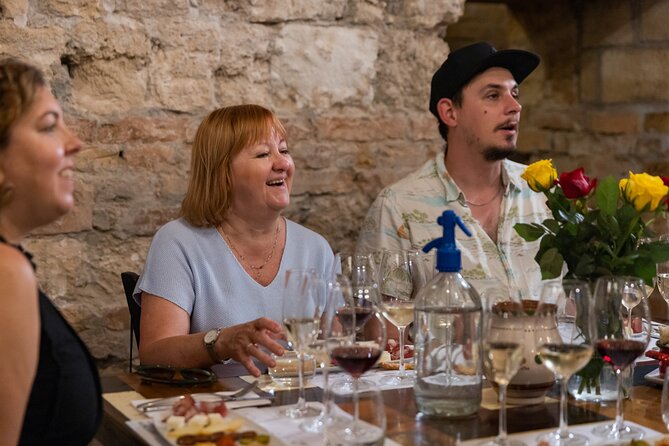
Later, you try pálinka in a courtyard bar. This traditional fruit brandy is an important part of Hungarian drinking culture, and the setting adds something to the tasting. Rather than sampling it in a formal tasting room, you experience it in the kind of casual social space that helps explain Budapest’s bar culture.
The courtyard stop is also where the tour shifts from food history toward present-day city life. Your guide may explain the idea behind ruin bars and the character of the Jewish Quarter, details that appeared in one particularly full evening route. These bars are part of Budapest’s modern identity, but they also sit among older buildings and neighborhoods with complicated pasts.
Pálinka is strong, so this is not a drink to rush. The tasting is a cultural sample, not a challenge. If you do not drink alcohol, tell the company when booking and ask what can be arranged, since the published information does not promise a full nonalcoholic substitute.
Gulyás and a proper savory meal
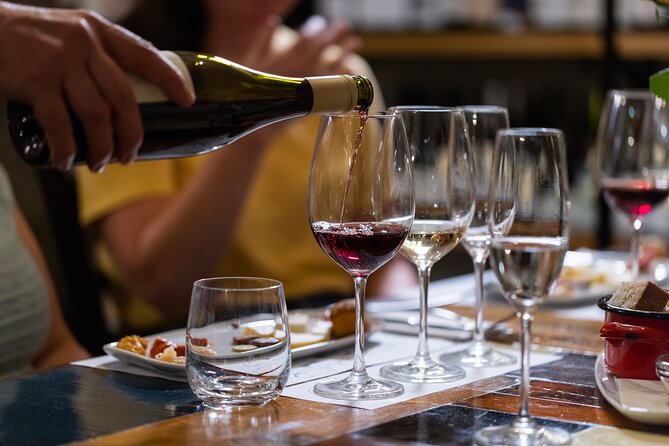
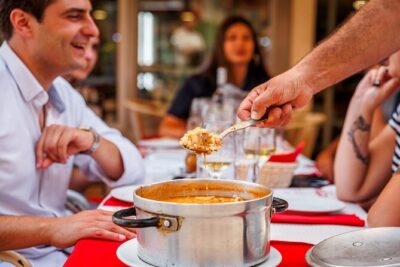
The heart of the evening comes at a neighborhood bistro, where you can expect gulyás and other appetizers, followed by a more substantial main course. Gulyás is often translated as goulash, but the Hungarian version is commonly a soup or stew with a deep paprika character. It is warm, filling, and an excellent dish for a cool Budapest evening.
Several people singled out the gulyás as the food highlight. One person called it the best goulash soup in the city, while another described the full evening as a progressive five-course dinner. The praise is understandable: this is the point where the tour moves beyond sampling and begins to feel like a real meal.
The menu can include a choice of main dishes, according to one detailed account, and wine is paired with the courses. Exact dishes may change, so you should not book this expecting one fixed menu. The strength is variety and local style, not menu certainty.
This is also where the $145 price begins to make more sense. You are paying for a four-hour guided experience, several generous food and drink tastings, a sommelier-led wine introduction, and a dinner spread across multiple venues. It is still expensive compared with simply ordering dinner in Budapest, but it is more reasonable if you would otherwise pay for a separate food tour, wine tasting, and evening walk.
Dessert and coffee in an old café
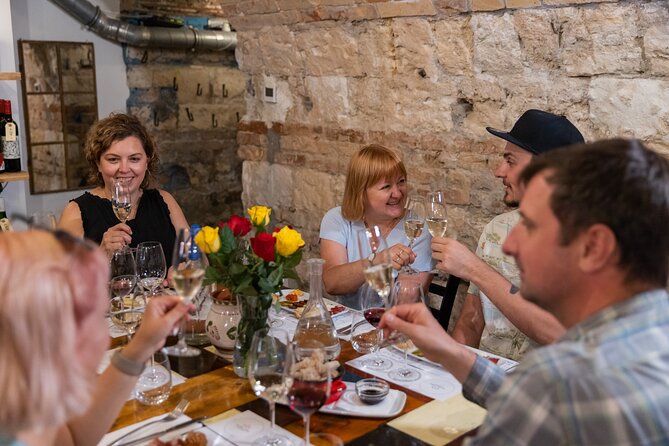
The evening finishes at an old coffeehouse with traditional Hungarian pastries and coffee. This is a smart ending. After wine, brandy, soup, savory dishes, and a main course, you want something slower and sweeter rather than another busy stop.
The café also gives you a final look at Budapest’s café culture. One person described the dessert stop as a particular highlight, and several accounts praised the pastries. You may find this part especially appealing if you like European café traditions and want a proper ending to dinner.
The finish is near Astoria, at 1053 Budapest. That makes the route practical for continuing into central Pest or returning to your accommodation by public transportation. Since the tour runs approximately from 5 to 9 p.m., you should not plan a theater booking or another timed attraction immediately afterward.
What the guides add to the evening
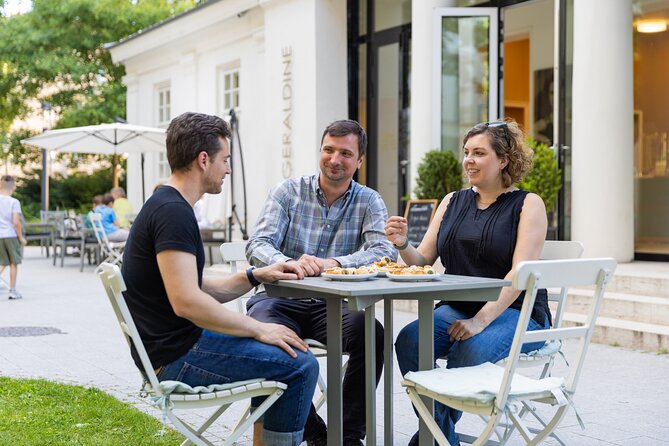
The guide can make or break a food walk, and this experience appears to depend heavily on that human element. Angela was praised for her command of food, wine, and local history. Andrea received especially strong comments for being a warm host and companion. Barbara was described as fun and well informed, while Elza was praised for her personable approach and broad grasp of regional cuisine.
George received some of the most memorable praise. He was described as funny, patient, and generous with restaurant advice. He also took time with an 83-year-old member of one group and a person with back problems, keeping the pace manageable while sharing stories about food and culture.
That does not mean every guide will have the same personality. It does mean the operator has a strong reputation for selecting guides who can connect the dishes to the city. I would ask for a preferred guide only if the company confirms availability, since the published details do not guarantee a specific person.
The best guides on this kind of walk avoid two common problems: a lecture that overwhelms the meal, or a food crawl with no context. The strongest comments describe a middle ground, with enough history to make the streets meaningful but not so much that dinner disappears.
Group size, walking, and dietary limits
The tour is advertised as a small-group experience, normally with a minimum of two and a maximum of eight people. Larger groups receive private tours. Another published limit allows up to 16 participants overall, so confirm the group size for your date if that matters to you.
A small group is valuable here because you visit several venues and move through ordinary neighborhood streets. Eight people is still manageable, while 16 would feel less intimate. The tour includes many opportunities for questions, so a smaller booking should give you more direct time with the guide.
You should be comfortable walking between stops for four hours, although the supplied information does not give a total distance or a detailed accessibility description. Most people can participate, and service animals are allowed. If mobility is a concern, contact the operator before booking and explain your needs.
Dietary restrictions require extra care. Vegetarian choices, allergies, and religious dietary rules may be difficult because local food customs and the fixed route limit substitutions. The company tries to help, but it does not guarantee suitable options in every case. If food restrictions are central to your decision, get a clear answer before paying.
Is $145 a good value?
At $145 per person, this is not a bargain dinner. Budapest offers less expensive meals, and you could visit a wine bar and restaurant independently for less money.
The comparison is not quite fair, though. This price includes a sommelier-led tasting, local cheese and charcuterie, food at several venues, gulyás, drinks, pálinka, dessert, coffee, a four-hour guide, and a neighborhood history walk. You are also buying convenience. Someone else has chosen the stops, organized the progression, and translated the food culture into English.
I would consider it good value for a first evening in Budapest if you want one organized experience that covers dinner and orientation. It is less attractive if you prefer long meals in one restaurant, need a tightly controlled diet, or already know the city’s food scene well.
The food quantity is generous. Multiple people advised not eating before the tour, and one account described a full-size entrée in addition to the opening tastings and later courses. Treat this as your main evening meal.
Who should book this walk?
I would recommend it most strongly to first-time visitors who want a friendly introduction to Hungarian food and central Pest. It also suits couples, solo visitors who prefer company, and small groups looking for a structured night out.
Food-focused visitors will appreciate the number of stops, while history fans will enjoy the Palace District architecture and stories about Budapest’s past and present. The format works particularly well for anyone who wants restaurant recommendations afterward, since the guides can point you toward other eating and drinking spots.
I would be more cautious if you dislike alcohol, have strict dietary requirements, want a purely historical tour, or prefer to avoid walking after dinner. The route has a clear food focus, but wine and pálinka are built into the evening, and history remains part of the experience.
Final call: book it if dinner and discovery belong together
Book this Palace District walk if you want a full Hungarian dinner spread across local venues, with wine, pálinka, architecture, and conversation folded into the meal. The strongest reasons are the generous portions, the variety of settings, and the guides’ ability to connect food with Budapest’s streets.
Skip it if $145 feels too high for dinner, or if you need guaranteed substitutes for every dish. For most curious first-time visitors, though, this is a practical and enjoyable way to get oriented, eat well, and leave with a better sense of how Budapest drinks, cooks, and socializes.
FAQ
Where does the Palace District food walk start?
The tour starts at Tasting Table Cellar by Taste Hungary, at Bródy Sándor utca 9, Budapest 1088.
What time does the tour begin and end?
It starts at 5 p.m. and lasts about four hours, usually ending around 9 p.m.
Where does the tour finish?
The stated end point is Astoria in central Budapest, at 1053 Budapest.
How many people can join the tour?
The usual small-group format has a minimum of two and a maximum of eight people. Larger groups can receive private tours, and an overall maximum of 16 participants is also listed.
Is enough food included for dinner?
Yes. The tour includes wine, cheese, charcuterie, bakery food, pálinka, gulyás, appetizers, a main meal, dessert, and coffee. You should not eat dinner before joining.
Can dietary restrictions be accommodated?
The operator tries to accommodate vegetarian diets, allergies, and religious dietary restrictions, but options may be limited and cannot be guaranteed in every case.
More evening experiences in Budapest
- Budapest Ruin Bars Evening Walking Tour with Drinks & Street Food
★ 5.0 · 104 reviews - Budapest Ruin Bars Evening Walking Tour with Drinks & Snacks
★ 5.0 · 25 reviews - Winner 2025 Florence Sunset Food & Wine Tour by Eating Europe
★ 5.0 · 5,015 reviews - Saigon By Night and Street Food By Motorbike | Opt: Ao Dai Riders
★ 5.0 · 4,066 reviews
Just added in Budapest
- The Award-Winning Private Food Tour of Budapest: 6 or 10 Tastings★ 4.5 · 185 reviews
- Budapest Food Tasting Tour with Nelli & her local guides★ 5.0 · 190 reviews
- Budapest Ruin Bars Evening Walking Tour with Drinks & Snacks★ 5.0 · 25 reviews
- Budapest Food Tour in Obuda with 8+ Tastings of Hidden Food Gems★ 5.0 · 94 reviews
- Small-Group Culinary Walking Tour in Budapest★ 5.0 · 148 reviews
- Budapest Ruin Bars Evening Walking Tour with Drinks & Street Food★ 5.0 · 104 reviews
- Food and Wine Tasting in Budapest City Center with Sommelier★ 5.0 · 57 reviews
- Budapest Food Tour: Market to Tavern with 14+ Tasters & Wines★ 5.0 · 434 reviews
Wine Tours, compared.

Winner 2025 Undiscovered Lisbon Food & Wine Tour by Eating Europe
Read our review →
Winner 2025 Florence Sunset Food & Wine Tour by Eating Europe
Read our review →
Authentic Parisian Gourmet Food Tour with 10 Local Dishes & Wines
Read our review →
Tapas Walking Tour with Food, Wine, and History
Read our review →
Lisbon Small-Group Portuguese Food and Wine Tour
Read our review →
Browse the lists this tour appears in