
REVIEW · WINE TOURS
Traditions in Bucharest: Village Museum and Wine Tasting Tour
Romanian traditions come alive in one afternoon. I like the way this private tour pairs the Dimitrie Gusti National Village Museum with a relaxed tasting of Romanian wine, and I also like the hotel pickup, which removes Bucharest traffic and navigation from the day. The main consideration is price: at $148.19 per person, it is not a budget outing, especially for solo visitors or couples.
The five-hour format works well if you want cultural context rather than a quick photo stop. Guides such as Mihai Vataselu, Michael, and Emma have been praised for clear English, warm conversation, and strong knowledge of Romanian architecture, politics, food, and regional traditions. I would allow extra time afterward if you want to continue sampling wine or walk toward Old Town.
Key points to know before booking
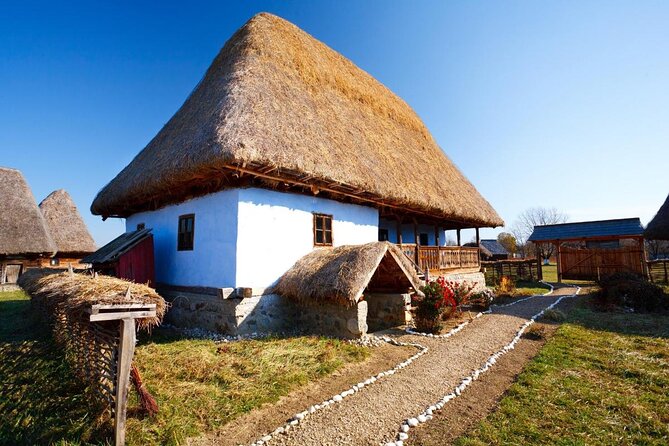
- The Village Museum covers Romania in miniature: You see homes, churches, mills, barns, and other structures from regions including Moldavia, Wallachia, Transylvania, and the Danube Delta.
- Your guide adds the meaning: The buildings are more than old houses. You learn why roofs, materials, layouts, carvings, and religious details differed from one region to another.
- The wine tasting is part lesson, part meal: Three glasses per person come with Romanian cheese and charcuterie, including traditional meats and smoked sausage.
- Hotel pickup is included inside Bucharest: A private, air-conditioned vehicle makes this easier than arranging taxis between several stops.
- The tour ends near the Romanian Athenaeum: You finish at a wine bar on Calea Victoriei, close to the Athenaeum and roughly 15 minutes from Old Town.
- It is a private outing with little walking: Your group travels alone, and the walking distance is generally less than a mile.
Why this Bucharest pairing works so well
Bucharest can be hard to read at street level. Its grand avenues, communist-era buildings, old churches, and modern cafes do not always explain how Romania’s regions fit together. This tour gives you a useful cultural frame through architecture, craft, food, and wine.
I especially like the order. The Village Museum gives you a visual introduction to rural Romania. The craft shop lets you see traditional objects in a more commercial setting. Then the wine bar moves the conversation toward agriculture, regional identity, and the pleasures of the table.
The private format matters. You are not trying to keep up with a large group while crossing an open-air museum. You can ask about a particular church, request a slower pace, or spend more time on the buildings that interest you. One guide even adjusted the visit for gentle walkers, helping the group see more without turning the outing into a march.
The tour is offered in English and includes a licensed private guide. Several guide names appear in the tour’s feedback, especially Mihai Vataselu, Michael, and Emma. Mihai receives especially strong praise for storytelling and for connecting architecture with daily life, Romanian politics, food, and wine. That matters here because the museum can otherwise feel like a collection of attractive old buildings without a clear story.
More wine tours in the world:
- Winner 2025 Undiscovered Lisbon Food & Wine Tour by Eating Europe
★ 5.0 · 6,390 reviews - Winner 2025 Florence Sunset Food & Wine Tour by Eating Europe
★ 5.0 · 5,015 reviews - Authentic Parisian Gourmet Food Tour with 10 Local Dishes & Wines
★ 5.0 · 4,754 reviews
The Village Museum: Romania’s regions in one open-air setting
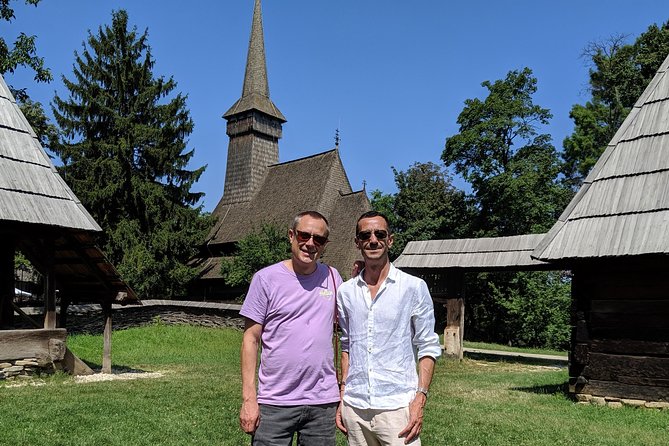
The first stop takes about two hours at the Dimitrie Gusti National Village Museum. It is an open-air reconstruction of a traditional Romanian village, with buildings gathered from the country’s historic provinces and dating as far back as the 17th century.
The appeal is variety. You might see steep-roofed peasant houses, thatched barns, log cabins, watermills, windmills, oil presses, road crucifixes, and wooden churches. The architecture changes as the regions change. Houses from the Danube Delta have their own practical forms, while Moldavian and Wallachian homes show a different balance of simplicity and decoration. Transylvanian buildings are known here for their carved wooden facades.
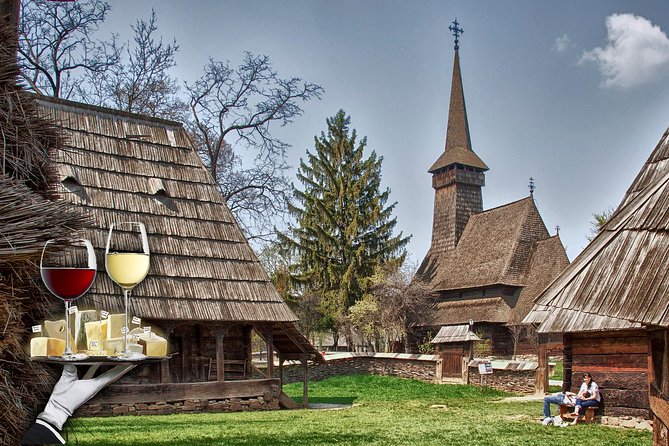
I would pay close attention to the churches. One particularly praised part of the museum is the old wooden churches and their painted decoration. They offer more than a pretty photograph. They show how religious life, local craftsmanship, and available materials came together in rural communities.
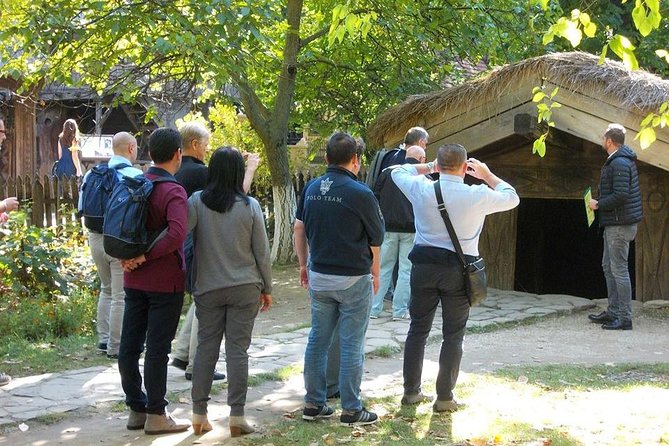
A private guide helps you connect those details. Mihai has used printed maps and photographs to show where structures came from, which is useful when several regional styles appear within a short walk. You can ask why one house has a particular roof shape, why another uses timber, or how a building suited local weather and work.
The museum is also a good place to understand social history without sitting in a lecture hall. A house tells you about family size, storage, cooking, heating, work, and status. A mill or oil press hints at the local economy. A roadside cross shows how faith appeared in ordinary village life.
There is a small practical drawback. The museum is outdoors, so your comfort depends on the weather. The stated walking amount is less than one mile, but the visit still involves moving between buildings on foot. If you walk slowly, tell your guide at the start. The private format makes that request easier.
Admission is included, so you do not need to manage another ticket during the visit. The two-hour stop is long enough for explanation without making the museum feel like an all-day commitment.
The handmade craft shop on Calea Victoriei
The second stop lasts about 30 minutes at a local art and craft shop. Everything is handmade, and this is a useful bridge between rural traditions and souvenirs you can actually take home.
Look for the traditional Romanian blouse called the ie, painted glass icons, Moldavian Easter eggs, Horezu pottery from Wallachia, and wooden masks associated with Transylvania. The shop also carries books, traditional sweets, Dracula-themed items, and small trinkets.
I like this stop because it gives you a quick visual guide to Romanian craft traditions. The painted eggs and Horezu pottery are not just generic folk decorations. Their regional labels help you remember that Romania is made up of distinct cultural areas, each with its own patterns and techniques.
This is also the most commercial part of the outing. The admission is free, but purchases are not included. You can browse without treating the stop as a major shopping mission. If you are looking for gifts, this is the obvious time to compare the handmade items with the lighter souvenirs.
The half-hour timing is sensible. It adds context without taking time away from the museum or wine tasting. If shopping does not interest you, it is brief enough not to become a burden.
Romanian wine at a historic Old Town bar
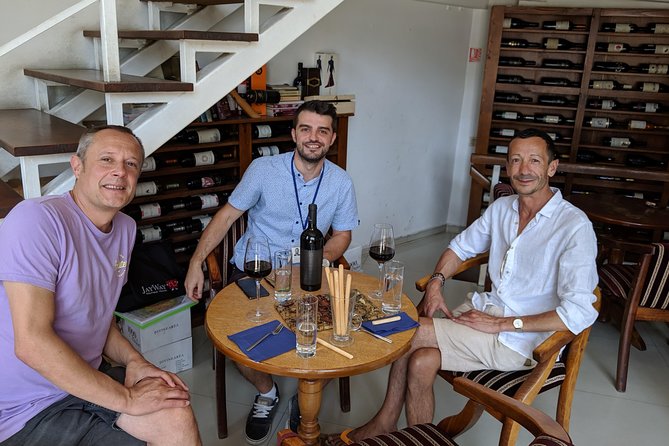
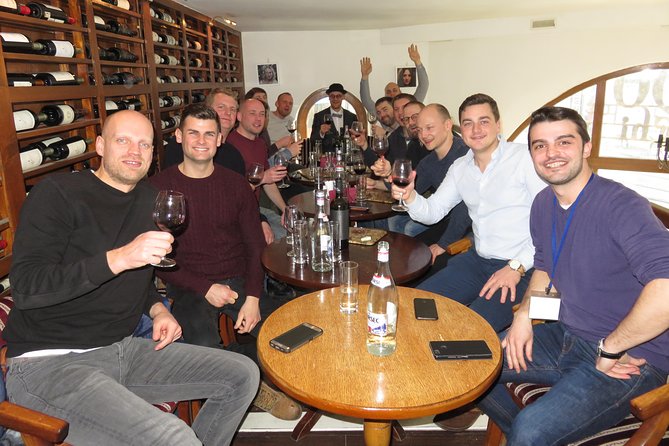
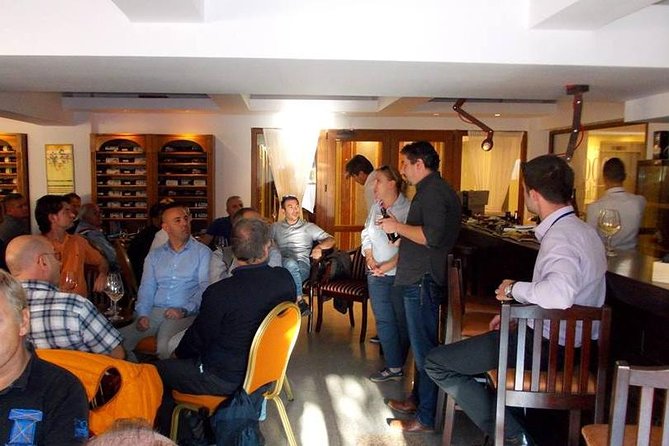
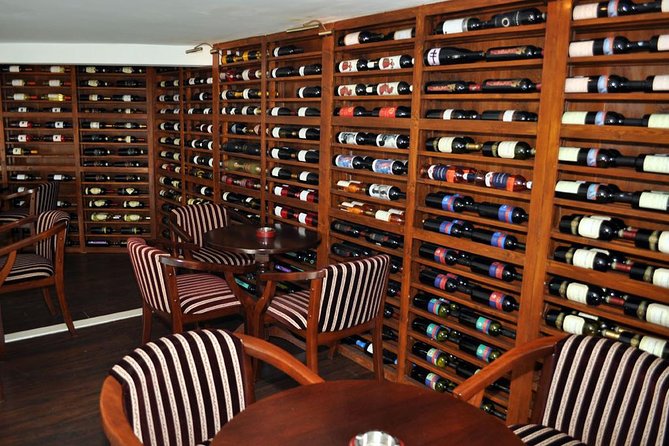
The final stop lasts about two hours at a local wine bar near the center of Bucharest. The tasting includes three wine glasses per person and a plate of traditional cheese and charcuterie.
Romania has more than 2,000 years of wine-making tradition and is one of the world’s major wine-producing countries. The tasting focuses on the Dealu Mare region, often regarded as Romania’s best-known wine area, and introduces grape varieties such as Feteasca Neagra and Negru de Dragasani.
That regional focus makes the tasting more useful than simply ordering a glass of something labeled Romanian. You get a basic lesson in local grapes and the character of a wine-growing area. Your guide can explain the background while you taste, which gives the information a practical anchor.
The food matters, too. Cheese, cured meats, and sausage turn the tasting into a light meal rather than three isolated sips. One account describes a plate of meats and cheeses, while another singles out smoked sausage. The exact selection may vary, but the included food is designed to accompany the wine.
The tasting is not limited to serious wine experts. If you usually drink wine casually, the format remains approachable. You can ask simple questions about grape varieties, sweetness, or regional production without needing technical knowledge.
There is one detail worth noting: the included description specifies three glasses per person, while one account describes four wines. I would plan on three and regard any additional sample as a bonus rather than something guaranteed.
After the included tasting, you can stay at the wine bar at your own expense. You can also ask for directions to your accommodation or walk toward the Old Town area. The ending is convenient because the bar is on historic Calea Victoriei, only a few minutes from the Romanian Athenaeum and about 15 minutes from Old Town.
More museum visits in the world:
- Munich: Beer and Food Tour with Dinner & Oktoberfest Museum
★ 4.7 · 1,086 reviews - Dubai.Discover Old town,Markets,street food,Abra &Museums
★ 4.9 · 181 reviews - Takua Pa: Food Market, Tsunami Museum, Temple, & Old Town
★ 4.9 · 165 reviews - Olive Oil Museum: Extravirgin school – Food & wine tasting
★ 5.0 · 39 reviews
Private transport and pickup make the day easier
Free hotel or accommodation pickup is offered anywhere within Bucharest city limits. You provide the exact hotel name or address, and the guide meets you in the lobby beside reception.
This is more valuable than it may sound. Bucharest traffic can be heavy and unpredictable, and the tour combines a museum outside the central sightseeing core with a wine bar downtown. A private, air-conditioned vehicle keeps the route simple and gives you a comfortable place between stops.
The tour begins from the Romanian Athenaeum if you do not use pickup. The published meeting and return point is the Athenaeum, though the actual tour finishes at the wine bar nearby. From there, you can continue on foot toward the Athenaeum or Old Town.
Most people can take part, and only a small amount of walking is involved. The tour is private, so only your own group participates. That makes it a strong choice for families, couples, or friends who want to ask many questions without holding up strangers.
Families should note that the museum and wine bar have both worked well for groups with children. Children will not participate in the alcohol tasting, and the minimum drinking age is 18. The included food may still make the final stop pleasant for a mixed-age group.
Is $148.19 per person good value?
The price is high compared with a self-guided museum visit and a separate wine purchase. But this is not simply admission plus drinks. The fee includes a licensed private guide, private transportation, hotel pickup, Village Museum admission, three wine glasses, and cheese and charcuterie.
For two people, the total cost becomes significant. For a family or larger private group, group discounts may improve the value. The biggest benefit is saved time and added interpretation. You are not researching regional architecture in advance, finding transport to the museum, or guessing which Romanian wines to order at the bar.
I see the strongest value for first-time visitors who want an introduction to Romania beyond Bucharest’s central streets. If you already know Romanian architecture and wine well, you may find the price harder to justify. If you want a comfortable half-day with conversation, transport, and a meal-like tasting built in, the package is easier to defend.
The tour is often booked about 146 days ahead. That does not guarantee that every date sells out, but it suggests you should reserve early if your Bucharest schedule is fixed.
What the guide can add to your day
The guide is the part you cannot reproduce easily on your own. The museum’s buildings are attractive, but the real payoff comes from learning where they came from and how people used them.
Mihai Vataselu is praised for combining strong English with humor and clear storytelling. He has helped people understand rural life, Romanian history, politics, architecture, and wine in one afternoon. Michael is also praised for enthusiasm and for adapting the route for people who walk gently. Emma is noted for making the museum visit personal, including a family connection to Romania.
Good guiding is especially useful at the wine bar. Instead of treating the tasting as a standard tourist stop, the guide can connect the grape varieties to Romanian regions and explain why food and wine belong in a cultural tour.
The level of conversation may vary by guide, but the private arrangement gives you room to shape it. If you are curious about Transylvania, rural life, church art, Romanian food, or modern Bucharest, say so early.
Who should book this tour?
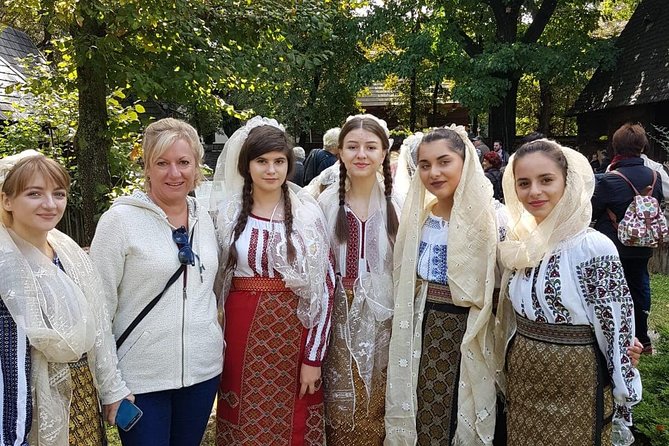
I would recommend it to a first-time Bucharest visitor who wants a broad introduction to Romanian culture in half a day. It suits couples, families, and small groups who value comfort and conversation more than the lowest possible price.
It is also a good first-day activity. The museum helps you understand regional Romania before you continue to Transylvania or other parts of the country, and the guide can offer useful context for the rest of your trip.
You may want another plan if you dislike wine, have no interest in traditional architecture, or prefer to explore independently at a slow and unstructured pace. The craft shop may also feel unnecessary if you are avoiding shopping stops.
For everyone else, I think this is a smart, well-shaped introduction. You get old houses, carved wood, painted churches, handmade objects, local wine, and a central finish, all without spending the day solving transport problems.
FAQ
How long does the tour last?
The tour lasts approximately five hours.
Is hotel pickup included?
Yes. Free pickup is available from hotels or accommodations anywhere within Bucharest city limits. The guide meets you in the lobby beside the reception desk.
Where does the tour begin?
The listed meeting point is the Romanian Athenaeum at Strada Benjamin Franklin 1-3 in Bucharest.
Where does the tour end?
The tour ends at the wine bar on historic Calea Victoriei, a few minutes from the Romanian Athenaeum and about 15 minutes from the Old Town area.
Is the Village Museum entrance included?
Yes. The Village Museum admission fee is included in the tour price.
How many wines are included?
Three wine glasses per person are included, along with a cheese and charcuterie plate.
What Romanian wine regions and grapes may be discussed?
The tasting focuses on Dealu Mare and may introduce Romanian varieties such as Feteasca Neagra and Negru de Dragasani.
Is this a private tour?
Yes. Only your own group participates, and transportation is provided in a private, air-conditioned vehicle.
Can children join the tour?
Most people can participate, and the Village Museum and wine bar are described as family-friendly. The minimum drinking age is 18.
Should you book Traditions in Bucharest?
Book this tour if you want an easy, guided introduction to Romania’s regional architecture, handmade crafts, and wine culture. The strongest reasons are the private transport, the flexible guide-led museum visit, and the thoughtful finish with local wine and food.
Skip it if $148.19 feels too steep for a half-day or if you would rather choose your own museum and wine bar. For first-time visitors who want context and convenience, I think the combination earns its price, especially when shared by a small group and booked early.
Just added in the world
- Copenhagen Private Culinary Food Tour with 6 Tastings of Classics★ 5.0 · 42 reviews
- Copenhagen Private Food Walking Tour with 6 or 10 Tastings★ 4.5 · 177 reviews
- Copenhagen Food & Drink Private Tour: Scandinavia Delight Tasting★ 5.0 · 236 reviews
- Copenhagen Modern Food Tour★ 5.0 · 32 reviews
- 3-hour Culinary Bike Tour in English★ 5.0 · 235 reviews
- Copenhagen Best of Danish Pastry Tasting Tour★ 5.0 · 30 reviews
- Classic 3-Hour Food Tour in Colorado Springs★ 5.0 · 408 reviews
- COLOMBO PRIVATE CITY TOUR WITH street food( All inclusive )★ 4.0 · 40 reviews
Wine Tours, compared.
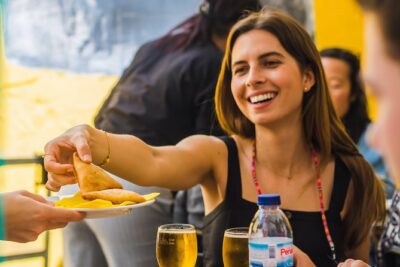
Winner 2025 Undiscovered Lisbon Food & Wine Tour by Eating Europe
Read our review →
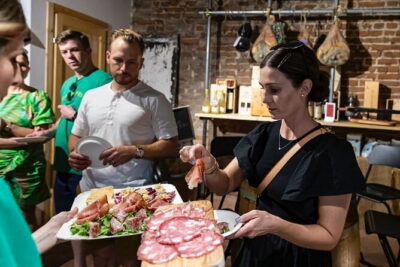
Winner 2025 Florence Sunset Food & Wine Tour by Eating Europe
Read our review →
Authentic Parisian Gourmet Food Tour with 10 Local Dishes & Wines
Read our review →
Tapas Walking Tour with Food, Wine, and History
Read our review →
Lisbon Small-Group Portuguese Food and Wine Tour
Read our review →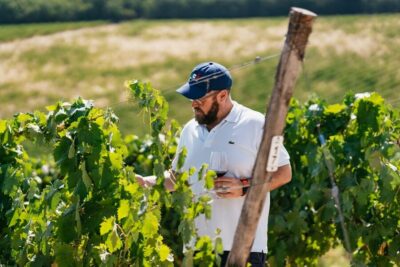
Browse the lists this tour appears in