REVIEW · TOURS
Muscat: Omani Food Tour with Shuwa & Halwa
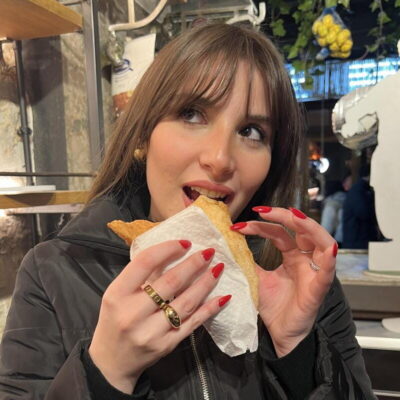
Come hungry, because Muscat feeds you twice. This 150-minute food tour gives you a generous introduction to Oman through five food stops, with shuwa, halwa, and mishkak at the center. I like the range, from slow-cooked meat to Zanzibar-style snacks, and I like that hotel pickup and drop-off are included.
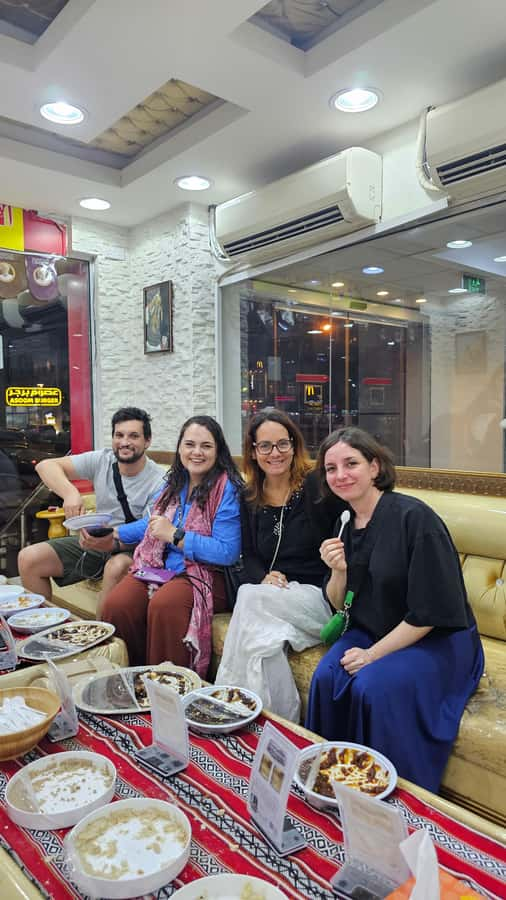
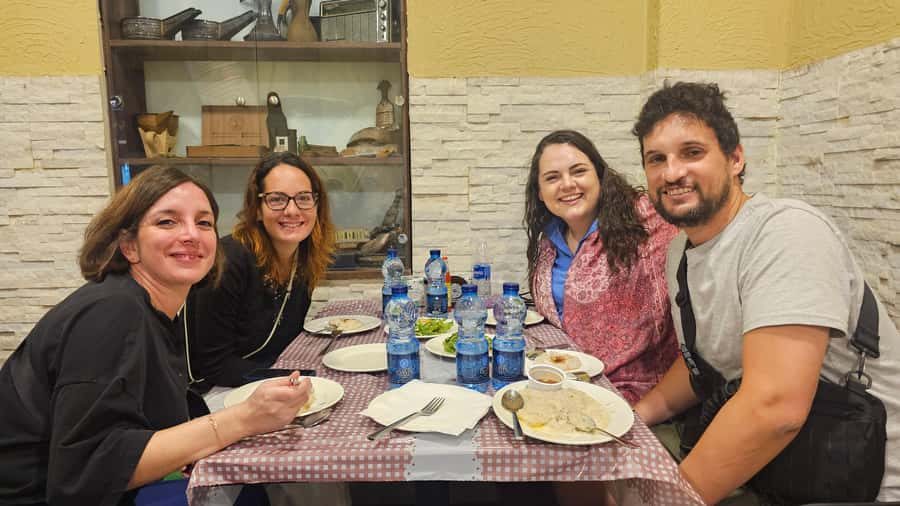
The small groups, limited to six people, make it easier to ask questions and chat with guides such as Hisham, Yousef, Hanieh, and Amin. The main drawback is simple: there is a lot of food in a short time, so this is not ideal if you eat very lightly or have food allergies.
Key points to know before you book
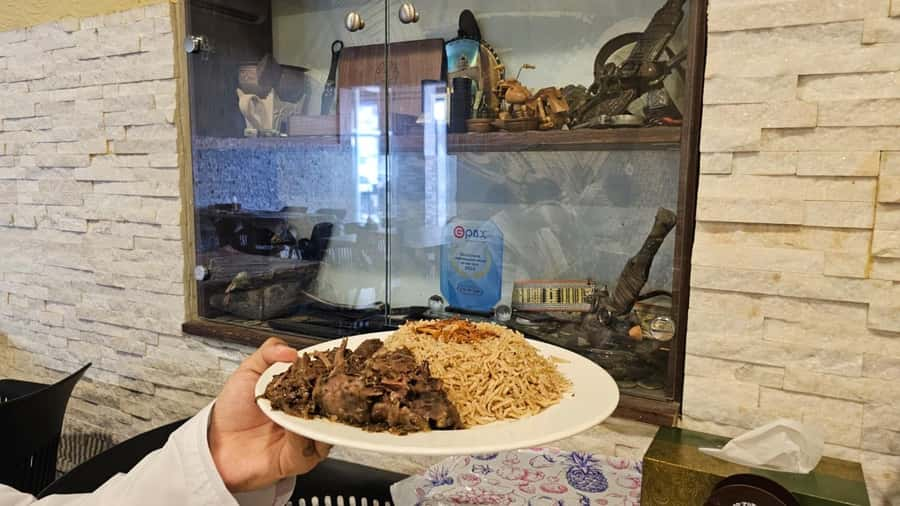
- Shuwa is the main event: Meat or chicken is wrapped in banana leaves, seasoned, buried underground for 8 to 24 hours, and described as being fermented for more than 40 days before cooking.
- Five stops add real variety: You will move from a full rice and meat dish to sweets, East African snacks, bread, tea, and grilled skewers.
- The food comes with cultural context: Guides explain ingredients, preparation, family customs, and the links between Oman and Zanzibar.
- Small groups keep it personal: The tour accepts no more than six participants, and private arrangements may also be possible.
- Come with an empty stomach: Portions are generous, and the meal is designed to leave you very well fed.
- Fish or salad can replace meat or chicken: Tell the operator in advance if that suits you better.
Why this Muscat food tour works so well
Muscat can be hard to read through food alone. Restaurants may offer familiar Middle Eastern dishes, while the most meaningful local foods are tied to family gatherings, celebrations, regional trade, and daily habits. This experience gives you a guided route through several parts of Omani cooking instead of asking you to guess from a menu.
I like the way the tour mixes food with conversation. Hisham and Yousef are often praised for explaining how dishes are prepared, where they came from, and how they fit into Omani life. You may also see short videos showing food being made for family celebrations, which gives the dishes more meaning than a quick sample at a restaurant.
The format is also useful on your first night in Oman. You get a list of foods to recognize for the rest of your trip, plus a chance to ask broader questions about customs, daily life, and places to visit. Several guides have also helped with general Muscat recommendations along the way.
The group size matters. With up to six people, you are not lost in a large crowd, and the guide can spend more time explaining unfamiliar dishes. Solo visitors can also find the setup easy, since the food and shared vehicle create natural conversation without requiring you to arrange a private tour.
A few more food tours in the world worth a look
- Reykjavik Food Walk – Local Foodie Adventure in Iceland
★ 5.0 · 18,952 reviews - Ho Chi Minh City Street Food Tour & Sightseeing By Motorbike
★ 5.0 · 9,413 reviews - Tokyo: Shinjuku Food Tour (13 Dishes at 4 Local Eateries)
★ 5.0 · 6,603 reviews
Stop one: shuwa, Oman’s slow-cooked centerpiece
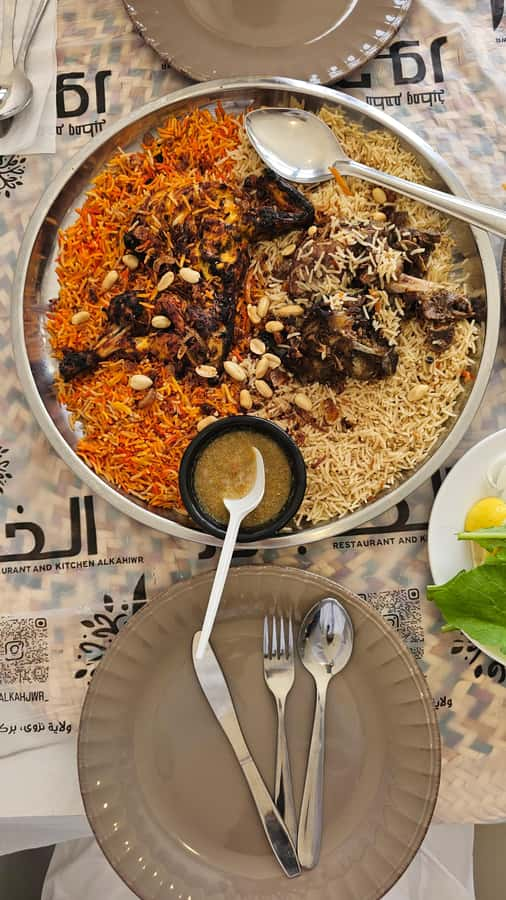
The meal begins with shuwa, the dish most likely to define this experience. It is usually made with meat or chicken, wrapped in banana leaves and combined with spices. The package is buried underground and cooked for between eight and 24 hours.
The preparation described for this tour also includes fermentation for more than 40 days. That long process helps explain why shuwa is connected with major family events and special occasions rather than a quick weekday meal. You are not just tasting roasted meat. You are tasting a dish that takes planning, labor, and patience.
Shuwa is served with qabuli, rice cooked with meat spices. The rice gives you a softer, fragrant partner for the meat, while the slow cooking produces a tender texture and a concentrated flavor. I would give this course your full attention, even if you already think you know Middle Eastern grilled meat.
One practical point: this is a substantial opening course, not a small appetizer. Since the tour continues through several more stops, pace yourself. You can sample everything without trying to finish every portion at once.
Stop two: halwa and coffee after the main dish
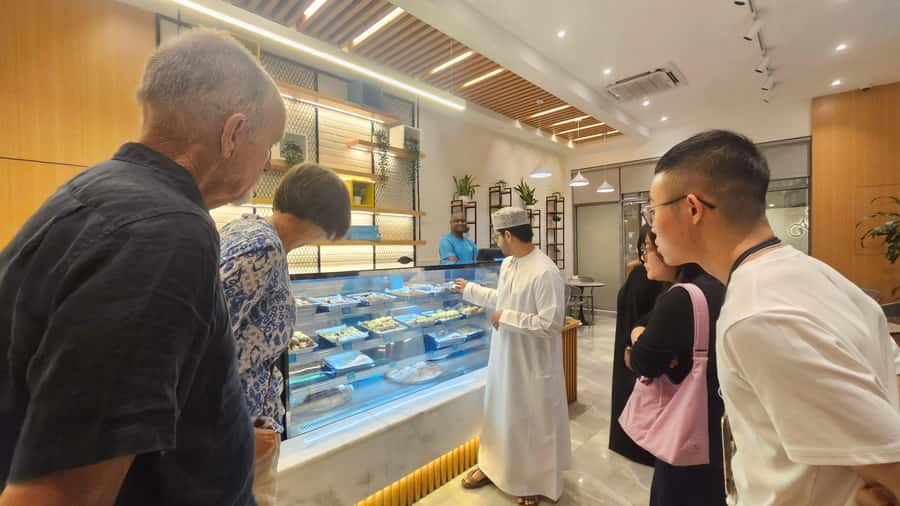
Omani halwa follows the savory food. This is a dense, sweet preparation made with ingredients including nuts, honey, saffron, ghee, and cardamom, along with additional secret ingredients.
The texture and flavor are quite different from Western pudding or cake. Expect sweetness, spice, richness, and the occasional crunch of nuts. Saffron gives it a distinctive perfume, while ghee makes it feel especially filling after the shuwa and rice.
Coffee provides the traditional companion. The point is not only to clean your palate. Coffee and halwa have a social role in Oman, and the guide can explain how these foods fit into hospitality and gatherings.
I would not save yourself for dessert here. The halwa is worth trying while it is presented, but it is one part of a much larger tasting route. If you prefer less sweetness, take a small portion and focus on the saffron and cardamom notes.
Stop three: Zanzibar snacks and Oman’s East African links
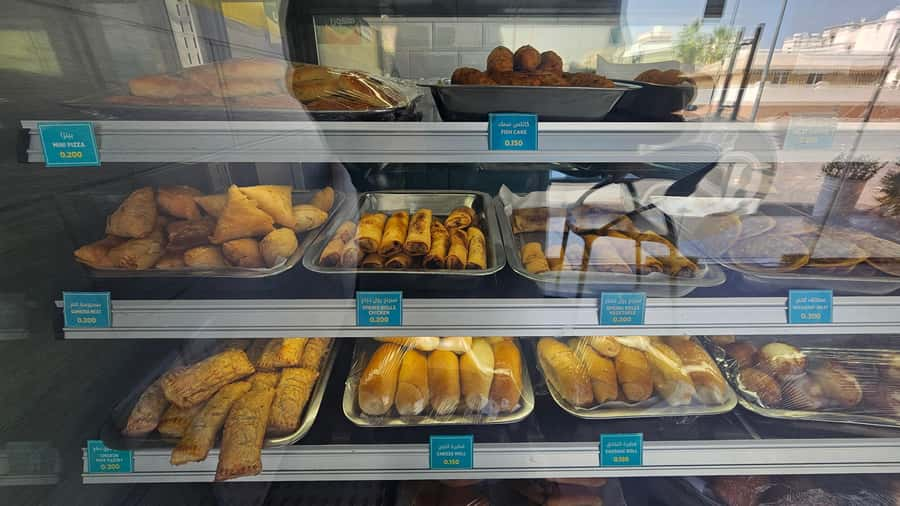
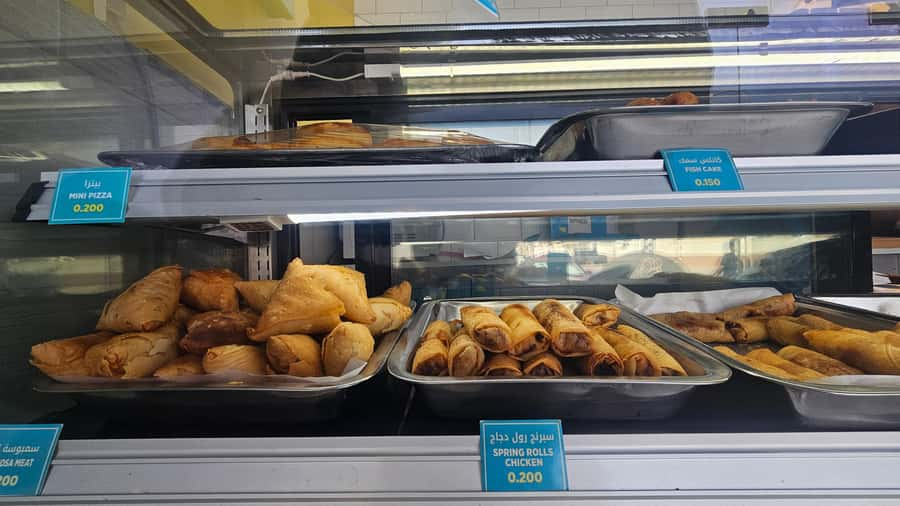
The tour then shifts direction with light foods connected to East Africa, especially Zanzibar. Oman’s long connections with East Africa show up clearly in these snacks, making this one of the most interesting parts of the route for anyone who wants more than a standard Gulf food experience.
You may try samosas, mandazi, kachori, and katlisi. These are easy foods to share, and the variety gives you several textures and spice levels in one stop. Mandazi brings a sweeter, dough-based note, while samosas and kachori add crisp pastry and savory filling.
This section also gives the guide a natural way to talk about movement across the Indian Ocean. You can ask how Omani food changed through contact with Zanzibar and other regions. The result is a meal that feels connected to trade and family ties, not boxed into a single national style.
I especially like this stop for first-time visitors who may assume Omani food means only rice and meat. It shows how the cuisine has absorbed outside influences while keeping a clear local identity.
Same city, a different table:
- Winner 2025 Undiscovered Lisbon Food & Wine Tour by Eating Europe
★ 5.0 · 6,390 reviews - Hanoi: Guided Food Tour with Train Street Visit
★ 4.9 · 6,239 reviews - New Orleans Food Walking Tour of the French Quarter with Small-Group Option
★ 5.0 · 6,118 reviews - Winner 2025 Rome Twilight Trastevere Food Tour by Eating Europe
★ 5.0 · 5,157 reviews
Stop four: Omani bread with sweet and savory toppings
Next comes Omani bread with a series of possible flavors. These can include cheese, honey, date juice, eggs, potatoes, or thyme.
This is a simple-sounding course, but it gives you a useful look at everyday eating. You can compare sweet and savory combinations and see how the same bread changes with different toppings. Cheese and eggs make it more filling, while honey, date juice, and thyme move the taste in different directions.
The bread also helps break up the heavier dishes. After shuwa, qabuli, and halwa, a small piece with a new topping gives you a fresh taste without sending you straight into another full plate.
Ask your guide which combinations are most traditional or most popular. The exact toppings served may vary, so it is best to treat this as a tasting of several possibilities rather than a fixed bread course with every option guaranteed.
Stop five: spiced tea, karak, and the local rhythm of eating
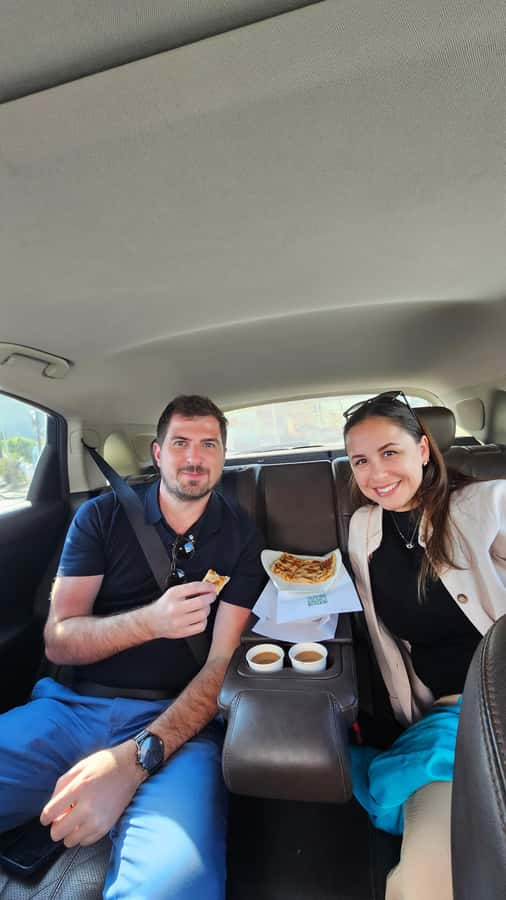
Tea is mixed with spices such as ginger, saffron, cardamom, cinnamon, and milk. Some visitors specifically enjoy the karak tea, and the experience may include the Omani habit of ordering and drinking karak in the car.
That small detail is useful because it shows food culture in motion. You are not always sitting at a formal table with a planned sequence of courses. Sometimes a hot, sweet, milky tea is part of an ordinary stop while moving around the city.
Ginger gives the drink warmth, while cardamom and cinnamon make it fragrant. Saffron adds another layer. If you like spiced chai, you will probably enjoy this part. If you prefer unsweetened drinks, ask what is available before the tea is prepared.
Coffee with rose water is also part of the experience. It offers a lighter floral note beside the stronger spices in the tea and provides another example of how drinks carry social meaning in Oman.
The final savory bite: mishkak from the grill
The final featured dish is mishkak, pieces of meat, chicken, or squid grilled on skewers. It is served with a tamarind-like sauce and traditional Omani spices.
After the slow-cooked shuwa, mishkak gives you a sharper contrast. The grilled pieces have a more direct smoky flavor, and the sauce adds sourness and sweetness. If you choose squid, you get a seafood version with a different texture from the meat and chicken choices.
This is a good finishing course because it brings back the grill after several softer foods. It also shows that Omani food is not only about large rice dishes. Skewered food, eaten in a more casual way, is part of the city’s food scene too.
Vegetarians can replace meat or chicken with fish or salad according to the tour information. If you have a serious allergy, this experience is not suitable, and you should not rely on a last-minute substitution to make it safe.
What the five-stop route tells you about Oman
The tour’s value is in the contrasts. Shuwa points to long preparation and family occasions. Halwa and coffee show hospitality. Zanzibar snacks connect Oman with East Africa. Bread and karak bring in everyday habits. Mishkak returns you to the grill and street-level eating.
I also like that the guides bring their own family stories into the explanations. Yousef, Hisham, and the other guides are praised for showing videos of preparation and answering questions beyond the food itself. That personal layer can make a dish easier to remember than a list of ingredients.
Some tours give you samples and a short speech. This one seems better suited to people who want a conversation. Guides have taken time to discuss Omani culture, family celebrations, history, and daily life, and some have even made small detours, such as a mosque visit, when time and the group allowed.
Those extras are not guaranteed parts of the fixed schedule, so I would treat them as welcome additions rather than promises. The core experience is the food route.
Price, timing, and what the $77 covers
At $77 per person, the price is reasonable if you value transport, a small group, and enough food to replace an evening meal. The package includes hotel pickup and drop-off, shuwa, halwa with coffee, East African snacks, Omani bread, spiced tea, and mishkak.
You are paying for more than separate plates. The cost also covers the guide’s time, explanations, driving between stops, and the chance to visit several types of local food places without arranging each one yourself. For a solo visitor, that can be better value than ordering many unfamiliar dishes alone.
The advertised duration is 150 minutes, but some groups have stayed out longer when people ate slowly and talked. I would keep your schedule flexible rather than booking a tight evening connection afterward.
Fresh juices and personal expenses are not included. Alcohol is not allowed in the vehicle, and smoking, pets, and alcoholic drinks in the vehicle are not permitted.
Pickup is included if your hotel falls within the service area. If your accommodation is outside that area or is not listed, choose the Royal Opera House as the meeting point and make your own way there. Be ready in the hotel lobby at the agreed time.
Who should book this experience?
I would recommend it to first-time visitors to Muscat, solo food lovers, couples, and small groups who want a friendly introduction to Omani food without spending days researching restaurants.
It also suits people who enjoy asking questions. Guides such as Hisham, Yousef, Hanieh, and Amin are praised for their warmth and clear explanations, so the social side is a real part of the experience.
You should think twice if you eat very little, dislike shared tasting formats, or have food allergies. The portions are generous, and the tour includes many ingredients, including nuts, dairy, meat, chicken, seafood, spices, and sweeteners.
It is wheelchair accessible, but the route includes several food stops and vehicle transfers. If you have specific mobility needs, confirm the details at booking so the operator can advise you properly.
Should you book the Muscat Omani food tour?
Book it if you want a filling, friendly first look at Oman rather than a single restaurant meal. The mix of shuwa, halwa, Zanzibar snacks, Omani bread, spiced tea, and mishkak gives you a clear sense of how varied the cuisine can be.
I would book it early in your Muscat stay. You will learn what to look for on later menus, and the pickup makes the first evening easier. Just arrive hungry, avoid scheduling another large dinner, and tell the operator ahead of time about any dietary needs.
For $77, the strongest value is the combination of food, transport, small-group attention, and cultural explanation. If that sounds better than simply sitting down for one meal, this is a smart way to begin eating your way through Oman.
FAQ
How long does the Omani food tour last?
The listed duration is 150 minutes, or two and a half hours. Some groups may spend longer if they eat slowly and continue chatting.
What foods are included?
The experience includes Omani shuwa, Omani halwa with coffee, East African snacks, Omani bread with different flavors, spiced tea, and mishkak.
What is shuwa?
Shuwa is meat or chicken wrapped in banana leaves and spices, then buried underground and cooked for between 8 and 24 hours. The preparation described for this experience also includes fermentation for more than 40 days.
Is hotel pickup included?
Yes. Hotel pickup and drop-off are included when your accommodation is within the pickup area.
What if my hotel is not in the pickup area?
Choose the Royal Opera House as the meeting point and arrive there independently.
Is the tour suitable for vegetarians?
Meat or chicken can be replaced with fish or salad, according to the activity information. Tell the operator about your preference in advance.
Is the tour suitable for people with food allergies?
No. The experience is listed as unsuitable for people with food allergies because many different ingredients are served.
How many people are in each group?
The tour is limited to six participants, making it a small-group experience.
Is the tour wheelchair accessible?
Yes, the activity is listed as wheelchair accessible. You should still share any specific mobility requirements when booking.
Just added in the world
- Copenhagen Private Culinary Food Tour with 6 Tastings of Classics★ 5.0 · 42 reviews
- Copenhagen Private Food Walking Tour with 6 or 10 Tastings★ 4.5 · 177 reviews
- Copenhagen Food & Drink Private Tour: Scandinavia Delight Tasting★ 5.0 · 236 reviews
- Copenhagen Modern Food Tour★ 5.0 · 32 reviews
- 3-hour Culinary Bike Tour in English★ 5.0 · 235 reviews
- Copenhagen Best of Danish Pastry Tasting Tour★ 5.0 · 30 reviews
- Classic 3-Hour Food Tour in Colorado Springs★ 5.0 · 408 reviews
- The 10 Tastings of Colombo With Locals: Private Street Food Tour★ 4.5 · 71 reviews
Tours, compared.

Ho Chi Minh City Street Food Tour & Sightseeing By Motorbike
Read our review →
Shinjuku Food Tour (13 Dishes at 4 Local Eateries)
Read our review →
Winner 2025 Undiscovered Lisbon Food & Wine Tour by Eating Europe
Read our review →
New Orleans Food Walking Tour of the French Quarter with Small-Group Option
Read our review →
Winner 2025 Rome Twilight Trastevere Food Tour by Eating Europe
Read our review →
Winner 2025 Florence Sunset Food & Wine Tour by Eating Europe
Read our review →