REVIEW · ITALY FOOD TOURS
Alberobello: Gastronomic Walking Tour
Trulli and fresh burrata make a fine pairing. This two-hour walk gives you a friendly introduction to Alberobello, combining the town’s cone-roofed homes with stops for focaccia, burrata, and homemade ice cream. I especially like the small group of up to 10 people and the chance to enter Angelo’s trullo, said to be the oldest in Alberobello.
I also like how the tour connects food with local life rather than treating Alberobello as a collection of photo stops. Guides such as Lorenzo and Emanuela have been praised for their personal connection to the town, including family ties and warm relationships with local shopkeepers. The main consideration is that the food element is tasting-sized, not a full meal, and the word gastronomic may promise more culinary depth than the two-hour route can deliver.
Key points to know before booking
- You visit both famous trulli districts: The route covers Aia Piccola and Rione Monti, giving you two different views of Alberobello’s traditional housing.
- Three local tastings are included: Expect focaccia from a bakery, burrata from a specialty food stop, and homemade ice cream served inside a trullo.
- Angelo’s trullo adds a special stop: You enter one of the oldest homes in town rather than seeing the cone roofs only from the street.
- The guide shapes the experience: Antonio, Lorenzo, and Emanuela are named guides connected with this tour, and personal local knowledge is one of its strongest features.
- It is short and easy to fit into a day: The walk lasts two hours and returns to Via Indipendenza, 4.
- The food is part of a town tour: Book it for culture, conversation, and tastings together, not for an extended cooking lesson or multi-course meal.
Why Alberobello works so well on foot
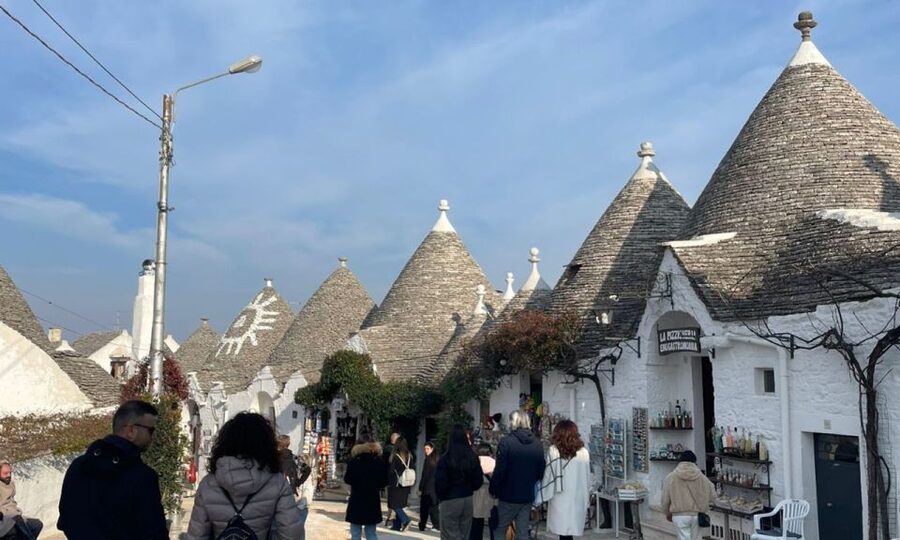
Alberobello is best understood at walking speed. Its famous trulli are small, whitewashed stone dwellings with conical roofs, packed into lanes and neighborhoods that feel very different from the broad squares of many Italian towns.
This tour starts at Via Indipendenza, 4, in front of the Terra Mossa restaurant. From there, you set off with a live guide in English or Italian. The route is not built around a bus or a long transfer, so you spend the time where you want to be: among the houses, alleys, viewpoints, and food shops of the town center.
The walking format matters because the details are close to the ground. You can look at the stonework, doorway shapes, roof symbols, and compact layout of the homes without rushing past them behind glass. You also have a better chance to ask questions as the town opens up around you.
The tour’s historical frame reaches back to the Messapian peoples, who lived in central Apulia from the eighth century until the arrival of the Romans. You will not get a full academic course in ancient Apulian history in two hours, but the guide helps place the trulli in a much longer story than the usual postcard image suggests.
A few more food tours in Italy worth a look
- Winner 2025 Rome Twilight Trastevere Food Tour by Eating Europe
★ 5.0 · 5,157 reviews - Winner 2025 Florence Sunset Food & Wine Tour by Eating Europe
★ 5.0 · 5,015 reviews - Naples: Street Food Walking Tour with Local Guide
★ 4.9 · 4,976 reviews
Entering Angelo’s trullo
One of the most distinctive moments comes early in the route, when you enter Angelo’s trullo, described as the oldest in Alberobello. That visit gives the homes some scale and texture.
From outside, trulli can look almost toy-like, with neat white walls and pointed gray roofs. Inside, the low, rounded rooms show how different the buildings are from ordinary houses. Space is limited, and the design feels practical as much as picturesque.
This stop is valuable because it turns an architectural symbol into a lived space. You are not simply collecting another photograph. You are seeing how a trullo functions from within, which makes the later walk through the two main districts easier to understand.
The available details do not specify the length of the interior visit or whether every room is open, so think of it as a focused stop rather than a museum tour. The guide’s explanation is likely the main attraction.
Focaccia at Giuseppe’s bakery
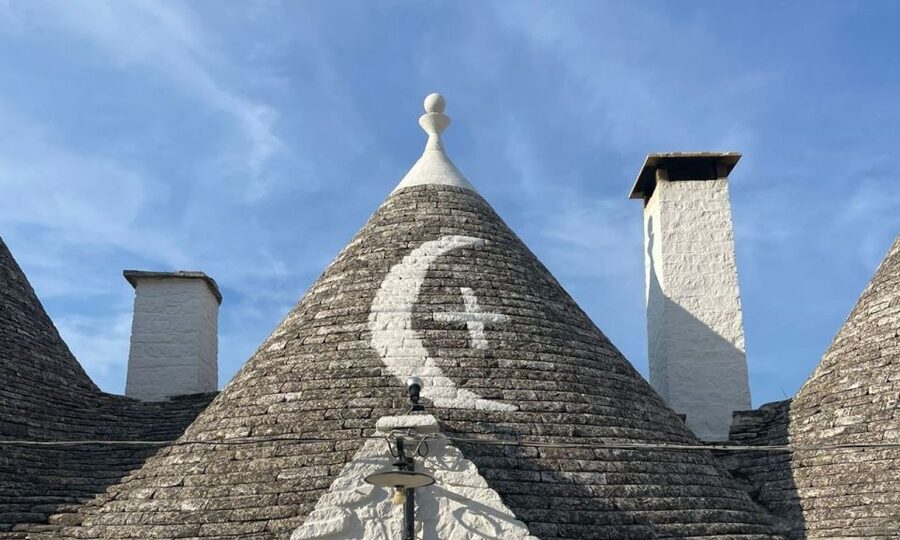
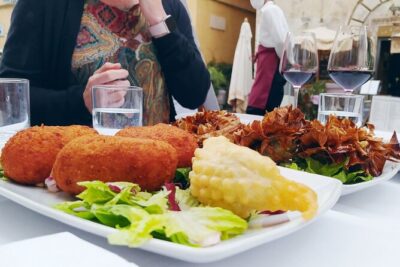
The first food break takes place at Giuseppe’s bakery, where you receive a piece of freshly baked local focaccia. It is a sensible choice for a walking tour: portable, filling enough to keep you going, and strongly tied to everyday food in Apulia.
I like this stop because it avoids the polished restaurant setting. A bakery gives you a direct taste of the town’s ordinary food culture. The appeal is not a long explanation of ingredients. It is the warm, simple pleasure of eating bread made nearby while continuing through the old streets.
The portion is a tasting, so do not arrive expecting lunch. If you are hungry, plan another meal before or after the tour. The food is included, along with water, but the tour description does not specify additional drinks at the bakery.
One review described the food as delicious but suggested that calling the experience gastronomic might stretch the term. That is fair. The focaccia is a very good part of the outing, but this is not a market tour with several courses, producer visits, or a cooking demonstration.
The Belvedere Terrace and Aia Piccola
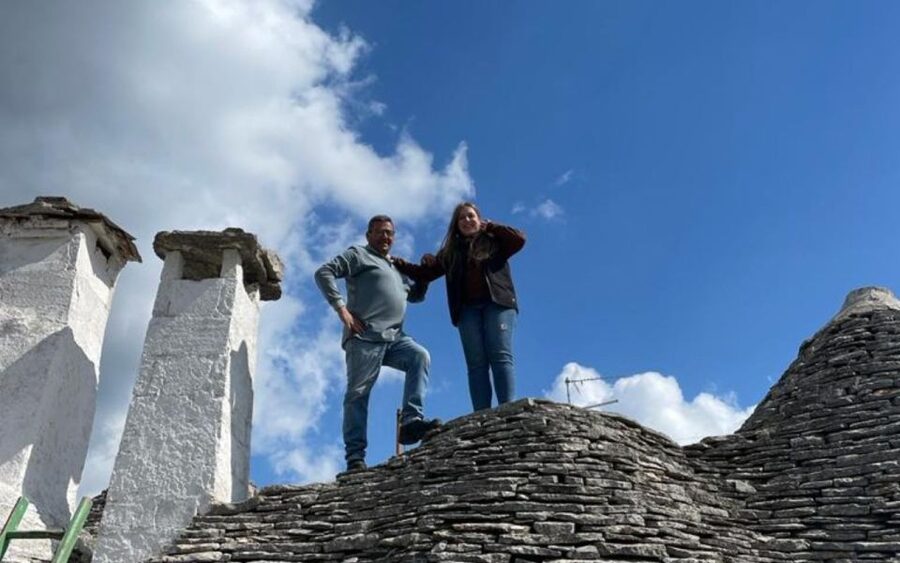
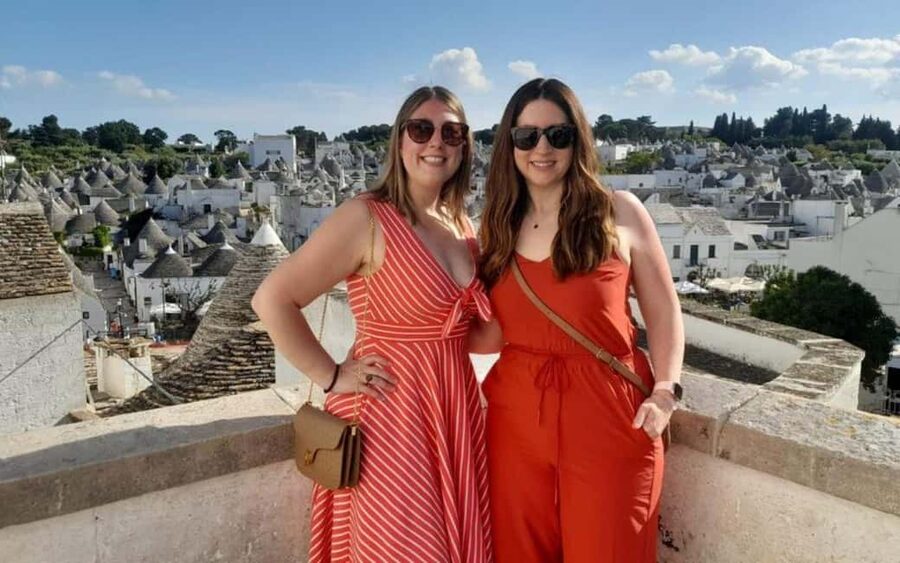
After the bakery stop, the walk continues to the Belvedere Terrace. This is one of the useful orientation points on the route, giving you a broad look over Alberobello’s characteristic roofs and the clustered town below.
The view helps explain the town better than a narrow alley can. From above, the repeated conical roofs become a pattern, while from street level you notice individual doors, signs, and small lanes. I would keep your camera ready here, but also listen to the guide’s explanation. The view is more useful when you know which parts of Alberobello you are seeing.
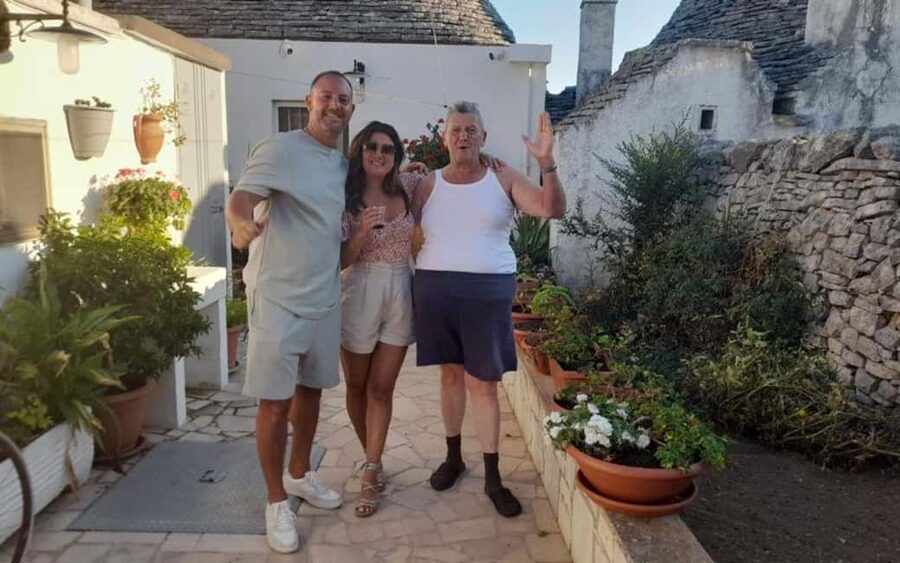
The route then reaches Aia Piccola, one of the two districts included in the walk. Aia Piccola is associated with a quieter residential feel, and it gives you a chance to see trulli as homes rather than only as shops selling souvenirs.
That distinction is important. Alberobello’s most photographed streets can feel commercial, especially when many day visitors arrive. Aia Piccola helps balance that image. You get a better sense of the town’s domestic side, even though the tour remains within the central historic area.
The guide is a major part of what makes this section work. Emanuela has been praised for her family’s long connection to the area and for knowing local people along the route. One particularly personal account included a quick garden visit with a neighbor. That kind of moment cannot be guaranteed, but it shows the benefit of a local guide who is comfortable introducing the place as a community, not just a monument.
Same city, a different table:
- Rome: Street Food Tour with Local Guide
★ 4.8 · 4,077 reviews - From Florence: Small Group Wine Tasting Tour to Tuscany
★ 4.9 · 3,902 reviews - Florence: Cinque Terre Park Day Trip with Optional Street Food
★ 4.5 · 3,593 reviews - Rome Food Tour: Unlimited Tastings with Fine Wine & Barolo
★ 5.0 · 3,365 reviews
Burrata near the trullo-shaped church
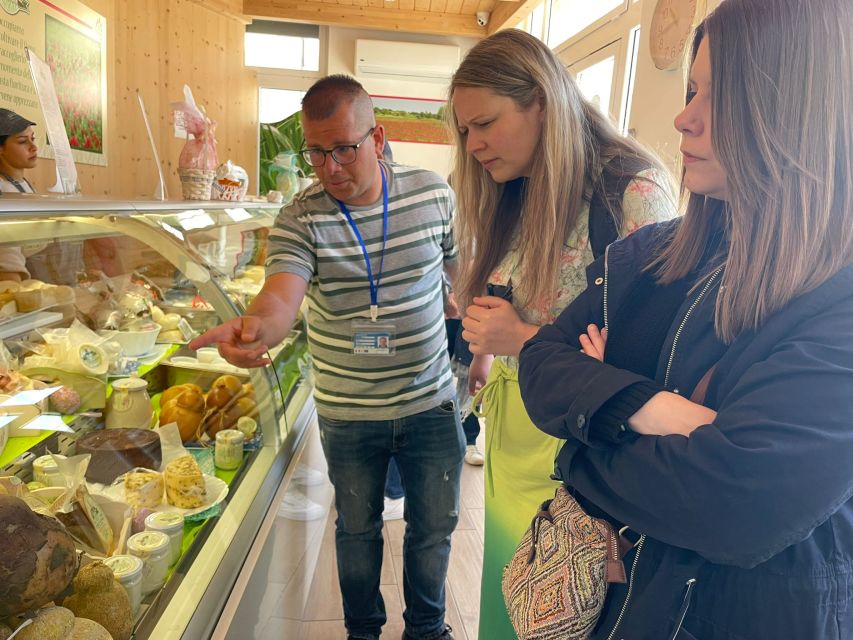
The second food stop takes place near the characteristic church of Sant’Antonio, a church built in the shape of a trullo. Before reaching it, you walk through more lanes in the old town and see the way the traditional architecture continues beyond a single postcard street.
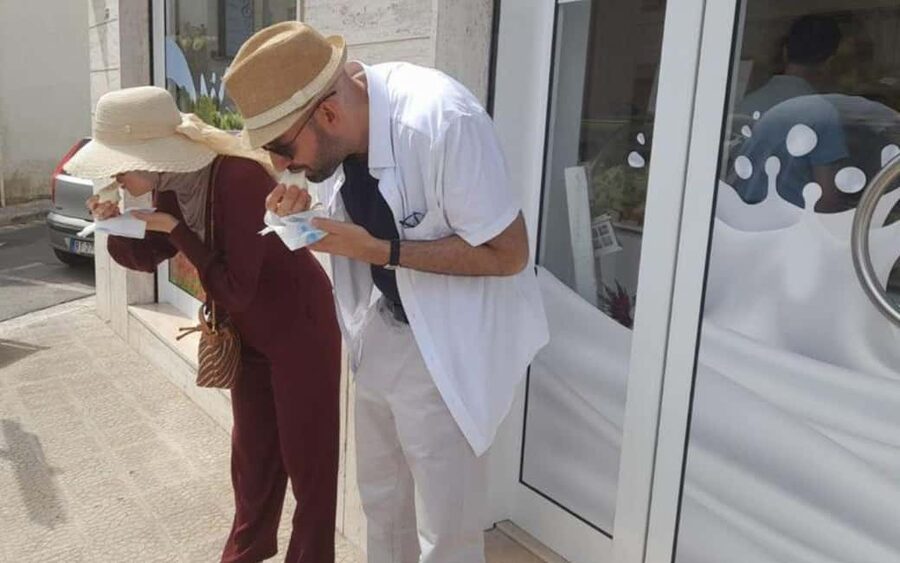
At a local specialty shop or cheese stop, you taste burrata. This is likely to be the most memorable bite for many people. Burrata looks like a ball of fresh cheese, but the inside is soft and creamy, with a texture that makes it very different from firmer cheeses.
The portion is again a sample, not a cheese course. Still, it is an effective way to introduce a signature Apulian food. If you have never tried fresh burrata in its home region, this stop gives you a useful reference point for later meals.
The setting also adds value. You are not only eating cheese in an anonymous venue. You are connecting the taste to the local shops and food habits of Alberobello. Several people who enjoyed the tour placed the burrata among the highlights, with one saying it alone would be enough reason to return.
The tour information lists water as the included drink. Some descriptions of the experience also refer to wine, but you should not assume wine is part of every departure. If having an alcoholic drink matters to you, confirm it when booking.
Rione Monti and Sant’Antonio
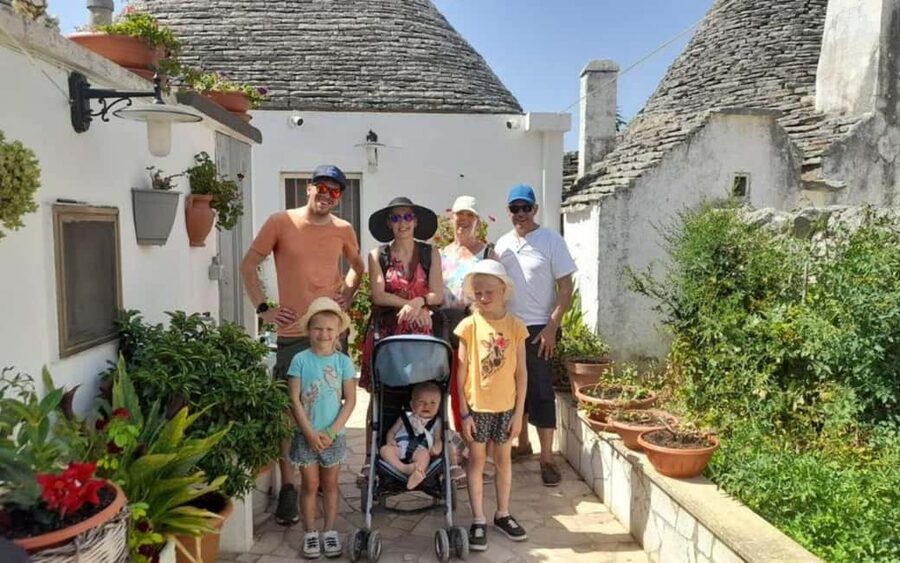
Rione Monti gives you the busier and more recognizable side of Alberobello. This district contains many of the postcard-style trulli, lining slopes and lanes in a dense group that makes the town instantly recognizable.
The contrast with Aia Piccola is one of the best reasons to take the full walk. In Aia Piccola, you focus more on the feel of a residential quarter. In Rione Monti, you see the public face of Alberobello, where architecture, shops, and sightseeing come together.
That public face can be crowded at popular times. The tour does not promise an empty-street experience, so you should expect other people in the main lanes. The small group helps you stay connected to the guide, but it cannot remove the crowds from a busy town.
The route continues toward Sant’Antonio, the trullo-shaped church. Its design shows how the local building style was used for a public religious building, not only for homes. It is a fitting endpoint for the architecture portion of the walk because it brings the trullo form into a larger civic setting.
The guides have received especially strong praise for making these places meaningful. Lorenzo, in particular, has been credited with explaining the history and cultural importance of Alberobello in clear English. A good guide matters here because the buildings can blur together if you only see them as repeating shapes.
Homemade ice cream inside a trullo
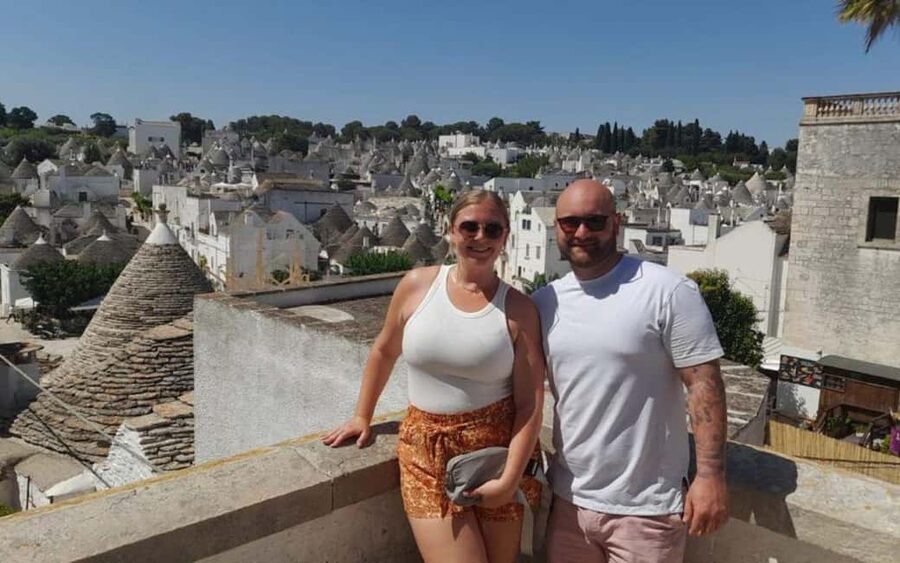
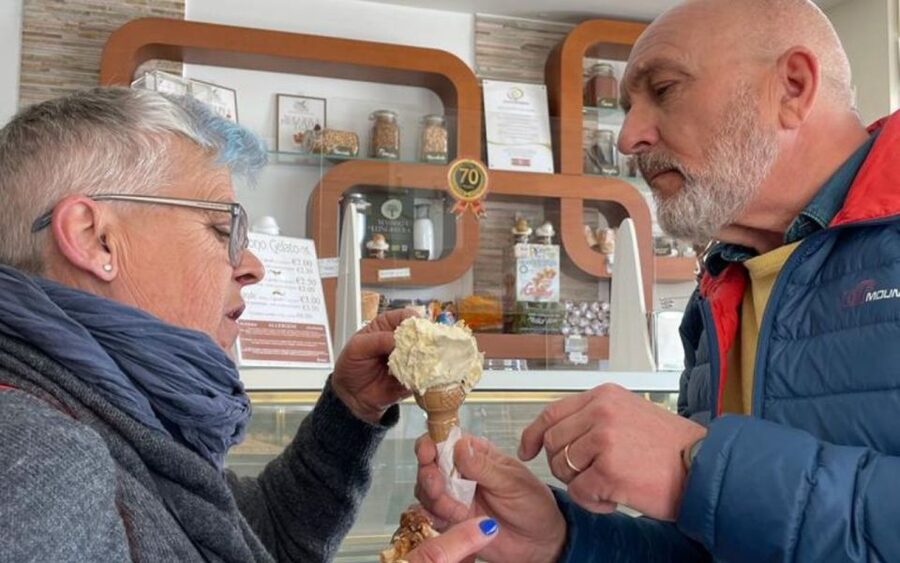
The final tasting is homemade ice cream in a small ice cream shop inside a trullo. It is a cheerful finish and a good match for a walk through Apulia, particularly in warm weather.
The setting is part of the pleasure. You are eating dessert in one of the same unusual structures you have been studying, so the final stop brings together the food and architecture themes. The ice cream is described as homemade and prepared with care, rather than as a generic scoop from a standard chain.
This is also a practical ending. After walking through Aia Piccola, Rione Monti, the Belvedere Terrace, and the central lanes, a cold dessert gives the tour a natural pause before you return to Via Indipendenza, 4.
The tour does not state which flavors are offered, so you should expect the selection to vary. The stop is a tasting, not a dessert workshop. Still, it is one of the more distinctive details of the route because the venue itself is part of Alberobello’s identity.
What the two-hour format really gives you
Two hours is enough for an introduction, not enough for a full study of Alberobello. You get a guided look at both major districts, several architectural stops, and three food tastings without giving up an entire morning or afternoon.
I see the short length as a strength for several types of visitors. If Alberobello is one stop on a wider Apulia itinerary, this tour helps you get your bearings quickly. If you have only a limited amount of time in town, it covers the essential sights while adding food and local conversation.
The limit is pace. You will not have time for long visits at every site, extensive shopping, or a detailed tasting of regional products. The food portions are designed to keep the walk moving, so plan a separate meal if you want a full lunch.
The small-group limit of 10 participants is another plus. It should make it easier to hear the guide and ask questions than on a large coach excursion. On quieter departures, the group might even feel close to a private walk. One booking ended up as a private tour, though that depends on the number of people scheduled for your date.
Guides who make the difference
The strongest part of this experience is the guide. The route itself is attractive, but the difference between a pleasant walk and a memorable one comes from the person explaining the town.
Antonio is listed as the professional guide for the experience. Lorenzo has led several highly praised outings and has been described as personable, clear in English, and deeply attached to Alberobello. Emanuela has also been singled out for her family connection to the area, local friendships, and willingness to answer questions.
You may not receive the same guide on every date, so it is best to think of these names as examples of the local style rather than a guarantee. The repeated pattern is clear, though: the guides are valued for warmth, local stories, and a sense that Alberobello is a lived-in town.
That personal approach suits people who enjoy conversation. If you want a strictly scripted architectural lecture with exact timings at every stop, the relaxed format may feel loose. If you like asking why a neighborhood looks different, where locals eat, or how the town changed, it should suit you well.
Is the $81 price good value?
At $81 per person, this is not the cheapest way to see Alberobello. The price makes more sense when you count the guide, the two-hour walking route, the focaccia, burrata, ice cream, and water together.
You are paying for access to local context as much as for the food. A self-guided visit can show you the trulli, but it will not take you into Angelo’s trullo, connect the districts in a clear sequence, or introduce you to the people behind the bakery and cheese stops.
The value is strongest if you already want a guided walk and would otherwise buy several small snacks on your own. It is weaker if you mainly want a large meal or a formal food class. The tour gives you tastes rather than a feast, and the culinary side remains fairly simple.
For a first visit, I think the combination is sensible. You get a cultural introduction, a few local foods, and practical orientation in one compact outing. Repeat visitors may prefer a more specialized food experience, assuming one is available on their dates.
Who should book this walk?
I would recommend it to first-time visitors who want to understand Alberobello quickly without spending half a day on a formal excursion. It also suits couples, small families, and solo visitors who enjoy meeting a local guide and eating small portions along the way.
Food-focused visitors should set their expectations correctly. You will taste three appealing local products, but you will not tour a series of farms, compare several cheeses, or sit down to a multi-course meal.
The walk may be less suitable if you have difficulty with a two-hour stroll, although the supplied details do not give a full accessibility assessment. It is also worth noting that transfers are not included, so you need to make your own way to the meeting point and back from the end point, which is the same Via Indipendenza address.
The tour is available in English and Italian. Free cancellation is offered up to 24 hours before the start, and you can reserve now and pay later, useful if your Apulia plans are still shifting.
Should you book the Alberobello food tour?
Book it if you want a friendly introduction to Alberobello with real local food, especially if this is your first time seeing the trulli. The combination of Aia Piccola, Rione Monti, Angelo’s trullo, the Belvedere Terrace, Sant’Antonio, focaccia, burrata, and ice cream gives you a lot in two hours.
Skip it if you want an all-out culinary event. The tastings are modest, and the tour’s greatest strength is the guide’s local insight, not a long list of dishes.
For most visitors, I think the $81 price is fair when the guide is good and the group stays small. Lorenzo and Emanuela have set a high standard in the available feedback, while Antonio is named as the regular professional guide. If you value stories, neighborhood contrasts, and a few delicious pauses more than a full meal, this is a practical way to meet Alberobello.
FAQ
Where does the Alberobello gastronomic walking tour start?
The meeting point is Via Indipendenza, 4, in front of the Terra Mossa restaurant.
How long does the tour last?
The tour lasts two hours.
Which languages are available?
The live guide is available in English and Italian.
What food is included?
The tour includes focaccia, burrata, and homemade ice cream. Water is also included.
Which parts of Alberobello are visited?
The route includes Aia Piccola, Rione Monti, the Belvedere Terrace, the central trulli area, Angelo’s trullo, and the trullo-shaped church of Sant’Antonio.
How many people can join the group?
The group is limited to 10 participants.
Are transfers included?
No. Transfers are not included, so you must arrange your own transportation to and from the meeting point.
Just added in Italy
- Street food tour of Catania by night★ 4.5 · 31 reviews
- Private tour of Etna and Winery Visit with Food and Wine Tasting from Taormina★ 5.0 · 221 reviews
- Mt Etna and Wine tasting tour from Catania★ 5.0 · 282 reviews
- Catania Sicilian Street Food Tour: Small Group by Do Eat Better★ 5.0 · 293 reviews
- Small-Group Food and Wine Tour from Cagliari★ 5.0 · 237 reviews
- Cagliari: A Full Meal Sardinian Food Tour with Do Eat Better★ 5.0 · 265 reviews
- Bologna Food & Wine tour with a local Chef★ 3.0 · 30 reviews
- Taste Bolzano: Food Tour with Full Meal by Do Eat Better★ 5.0 · 21 reviews
Italy Food Tours, compared.
Winner 2025 Rome Twilight Trastevere Food Tour by Eating Europe
Read our review →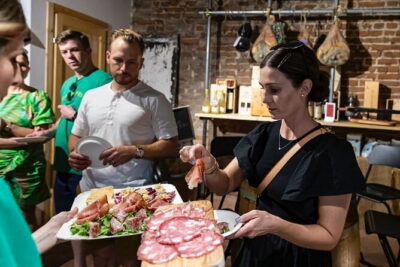
Winner 2025 Florence Sunset Food & Wine Tour by Eating Europe
Read our review →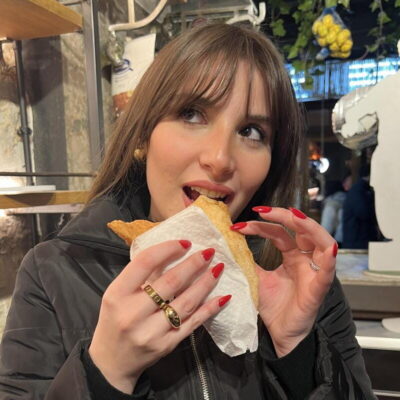
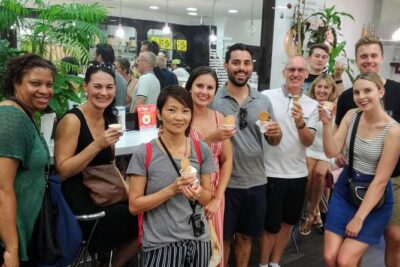
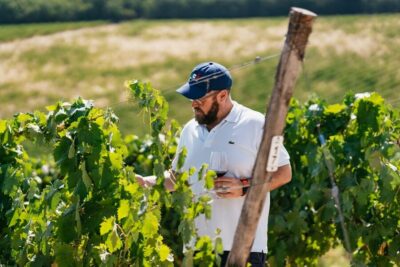
Cinque Terre Park Day Trip with Optional Street Food
Read our review →
Rome Food Tour: Unlimited Tastings with Fine Wine & Barolo
Read our review →