
REVIEW · ROME FOOD TOURS
Rome Food Tour: Campo de’ Fiori, Ghetto, Trastevere Winner 2024
Rome is best understood one bite at a time. This 3.5-hour walk links Campo de’ Fiori, the Jewish Ghetto, and Trastevere, pairing Roman food with stories about local neighborhoods, traditions, and daily life. I like the generous format: 15 tastings at five food stops, plus three wine tastings, is enough to replace a meal.
I also like the small group of up to 12 people, which gives guides such as Natalia, Clelia, Luca, Lisa, and Anastasia room to answer questions and share restaurant tips. The main drawback is that this is a serious amount of walking and food, with cobblestones, changing terrain, and several rich dishes. People with severe allergies, vegan diets, or reduced mobility need to read the restrictions carefully before booking.
Key points at a glance
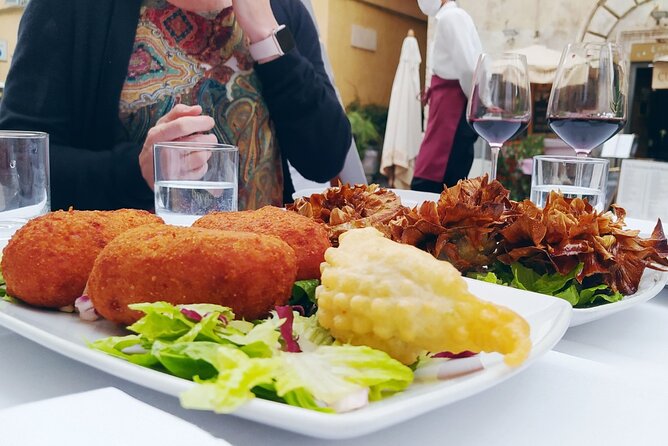
- Fifteen tastings in five locations: Expect pizza, cured meats, cheeses, fried Roman specialties, two pasta dishes, wine, and gelato.
- Three central neighborhoods: The route connects Campo de’ Fiori, the Jewish Ghetto, Tiber Island, and Trastevere.
- Morning market visit: The market portion applies to morning departures, except Sunday mornings.
- Local family businesses: Stops include Ancient Pizzicheria Ruggeri, Norcineria Viola dal 1890, and Antico Forno Roscioli.
- Small-group format: The maximum group size is 12, so the experience feels more personal than a large coach tour.
- A filling half-day: You should arrive hungry. Several portions are substantial, especially the pasta and fried dishes.
What this Roman food tour is really like
This is not a quick street-food stroll with one bite at each corner. It is a walking meal spread across central Rome, with enough history and neighborhood context to make the food easier to understand.
You begin in Piazza Farnese, meeting at Via dei Baullari near the newspaper stand. From there, the route moves through markets, old food shops, bakeries, restaurants, bridges, and narrow streets. The tour ends in Trastevere at Fiordiluna, with artisan gelato as the final course.
The advertised price is $88.28 per person. That is not cheap for a walking tour, but the value depends on how you use it. You receive 15 food tastings, three wine tastings, a full pasta experience, a fried specialty, a local guide, a small group, and a guidebook and cookbook. If you count it as a substantial lunch or dinner with several tastings around Rome, the price is easier to justify.
The tour is offered in English and lasts about three and a half hours. It can run in all weather, so comfortable shoes and suitable clothing matter. Rain has not stopped the food, but it can make Rome’s stones slippery and the walking less comfortable.
A few more food tours in Rome worth a look
- Winner 2025 Rome Twilight Trastevere Food Tour by Eating Europe
★ 5.0 · 5,157 reviews - Rome: Street Food Tour with Local Guide
★ 4.8 · 4,077 reviews - Rome Food Tour: Unlimited Tastings with Fine Wine & Barolo
★ 5.0 · 3,365 reviews
Campo de’ Fiori begins with the market
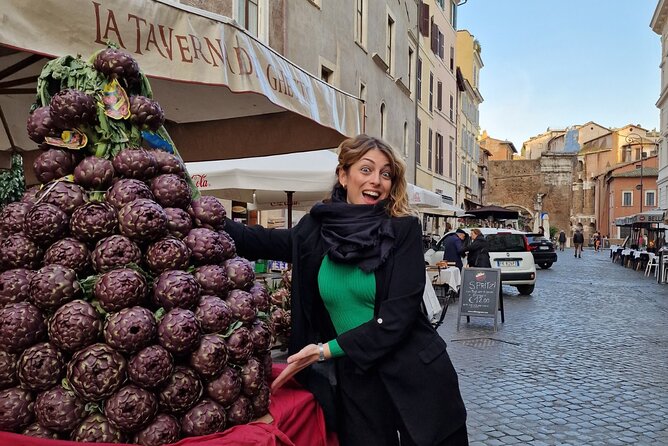
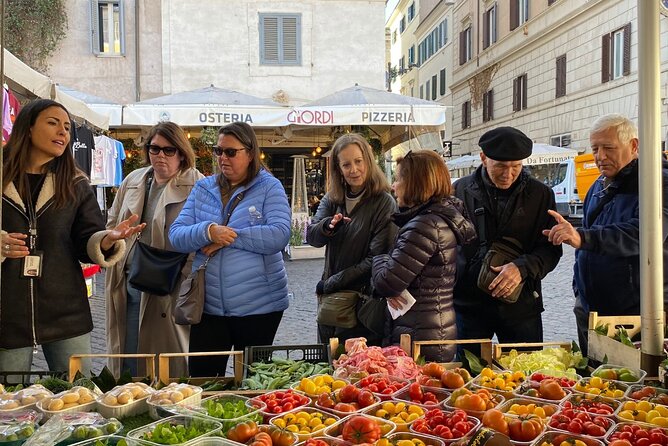
The morning version starts at Campo de’ Fiori, one of Rome’s best-known food markets. The market visit lasts about 20 minutes and focuses on seasonal produce, including vegetables, meats, cheeses, and other local products.
I like this opening because it gives you a useful frame for the rest of the tour. Roman cooking is closely tied to what is available at the right time of year. Seeing the ingredients before tasting the finished dishes helps you understand why a recipe may change from one season to another.
The market is not included on afternoon departures or Sunday morning tours. In those cases, you have free time to browse local shops instead. That is an important booking detail if the market is one of your main reasons for joining.
Near the statue of Giordano Bruno, your guide adds a short lesson about the Inquisition and its connection to food traditions in Campo de’ Fiori. This is typical of the tour’s method: a little history, then something to eat. The historical talks are brief, which keeps the experience from turning into a formal lecture.
Old shops and Roman pizza
The next stretch introduces you to food businesses with long local connections. At Ancient Pizzicheria Ruggeri, you meet the Ruggeri family and taste specialties from this old grocery shop.
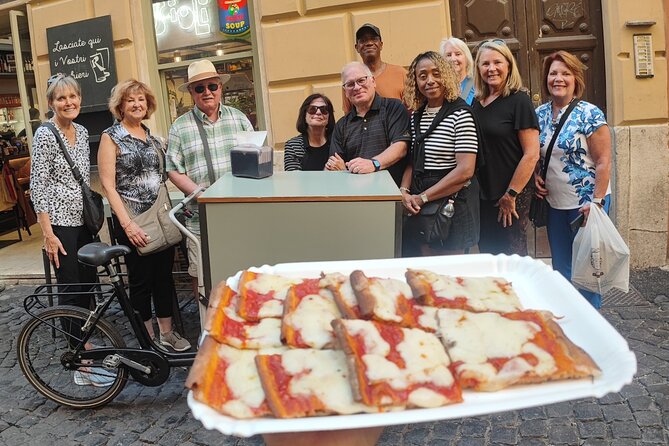
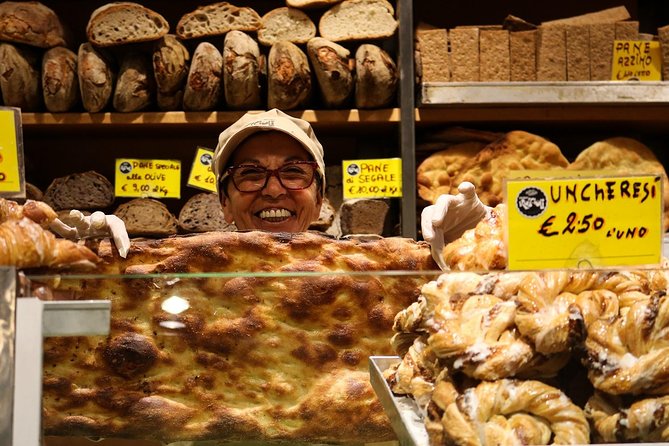
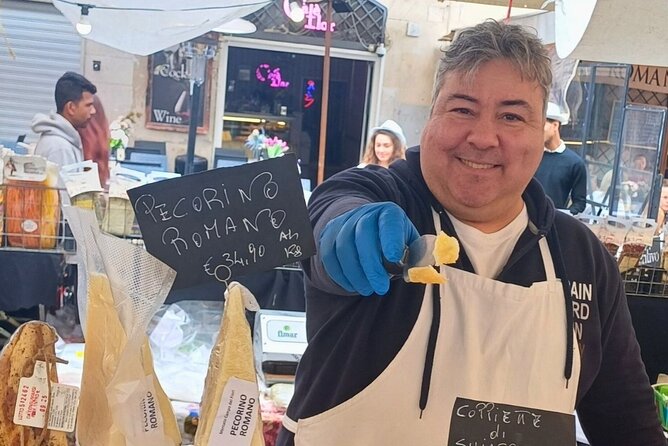
The emphasis here is on ordinary Roman food culture rather than polished restaurant service. You may sample combinations of cured meat, cheese, and bread, including Roman salami, pecorino Romano, buffalo mozzarella, pizza bianca with mortadella, and pizza rossa.
At Norcineria Viola dal 1890, hanging guanciale, salami, and prosciutto are part of the scene. It is a useful stop for understanding the cured meats that appear in Roman cooking. Guanciale, made from pork jowl, is especially important in dishes such as amatriciana and carbonara, though carbonara is not listed among the pasta tastings on this tour.
The route then reaches Antico Forno Roscioli, described as Rome’s oldest bakery, for Roman-style pizza. The sample menu includes pizza bianca and pizza rossa. Pizza in Rome is often thinner and crisper than the soft, raised style associated with Naples, so this stop gives you a clear point of comparison.
The portions across these early stops may look modest one by one. Added together, they begin to form a real meal. Pace yourself, especially if you are taking a morning tour and plan to eat again later.
The Jewish Ghetto brings food and memory together
From Campo de’ Fiori, you walk toward the former Jewish Quarter, around Piazza della Cinque Scole. This area has vintage shops, art studios, food stores, and old religious and civic landmarks.
The walking itself is part of the appeal. You are not simply being taken from restaurant to restaurant by vehicle. The route shows how close these neighborhoods are, while also giving each district a different feel.
The tour passes Rome’s oldest synagogue before heading toward Tiber Island. The synagogue is seen from outside, and the stop is short, but the setting adds weight to the neighborhood visit. Your guide also explains how local food traditions connect with the area’s past.
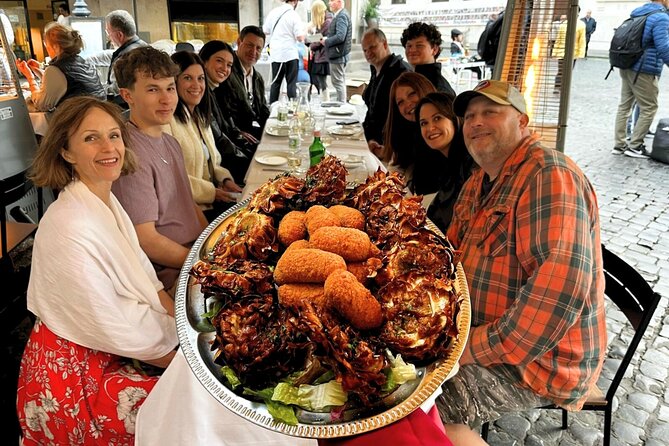
At Il Portico di Ottavia, you stop for fried Roman specialties. Depending on the season and availability, this can include a fried artichoke or zucchini flower. Supplì and codfish are also part of the food description, and the sample menu lists supplì, fried artichoke, or fried zucchini flower.
Seasonality matters here. One recent experience did not include fried artichokes, and the tour provider explained that zucchini flowers may replace them in summer. Artichokes are associated with the Roman Jewish tradition, but they are best at certain times of year, generally between December and April. If you have your heart set on carciofi alla giudia, ask what is expected during your dates.
This is one place where the tour’s flexibility is sensible, but it can also create a gap between your expectations and what appears on the plate. The advertised menu is a guide, not a guarantee of every item.
Same city, a different table:
- Rome: Guided Food Walking Tour with Wine in Trastevere
★ 4.9 · 3,105 reviews - Rome: Trastevere Food tour with Free-Flowing Fine Wine
★ 5.0 · 2,853 reviews - Rome: Trastevere & Campo de Fiori Street Food Walking Tour
★ 4.9 · 2,768 reviews - Rome Street Food Tour with Local Guide
★ 5.0 · 2,361 reviews
Tiber Island and the pasta course
The route crosses Ponte Fabricio to Isola Tiberina, Rome’s only island. The bridge walk takes only a few minutes, but it breaks up the food stops and gives you a different view of the river and central Rome.
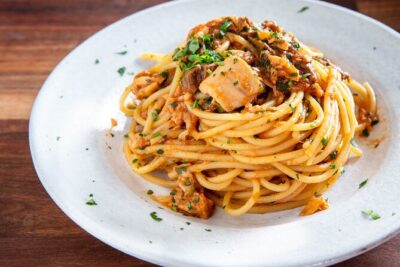
The island is followed by a pasta and wine experience. At Ristorante Sette Oche in Altalena, you sit down for a special pasta tasting paired with wine. The sample menu lists cacio e pepe and amatriciana as the main dishes.
These are two excellent examples of Roman cooking because both depend on a short ingredient list and careful technique. Cacio e pepe uses cheese and black pepper to make a creamy sauce without cream. Amatriciana combines tomato with guanciale and pecorino. The tour gives you a chance to taste them in a social setting rather than simply hearing their names in a food talk.
The portions are generous enough that this is more than a token sample. You may want to keep breakfast light if you take the morning departure. The full tour is designed to be filling, and several people found there was no need for another meal afterward.
One caveat is that food quality can vary slightly by day and personal taste. Most of the available feedback is strongly positive, but one food-focused participant found the artichokes greasy, the cacio e pepe too heavy with sauce, and the wine disappointing. That is a useful reminder that even a well-planned tasting is not a guarantee that every dish will suit you.
Trastevere finishes with more food
After Tiber Island, you walk into Trastevere, known here for its nightlife, narrow lanes, and local restaurants. The area is one of Rome’s most enjoyable places to wander, but the tour gives you a reason to look beyond the main streets and restaurant signs.
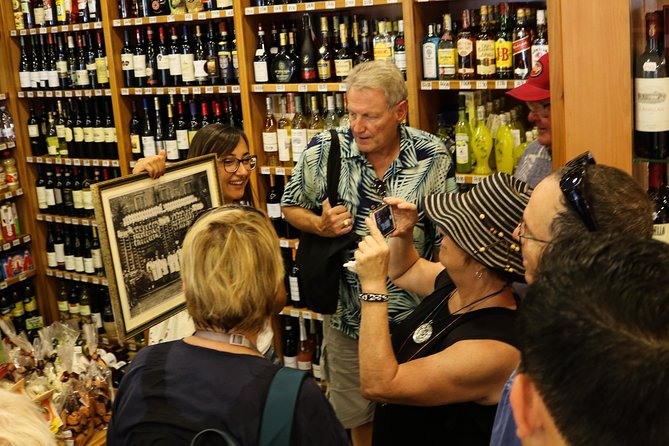
At Ercoli Trastevere, the tasting includes cacio e pepe with an appetizer and wine, surrounded by shelves of food and bottles. The stop is described as one of the provider’s regular locations, and it adds another restaurant setting to the route.
There is a slight overlap in the menu because cacio e pepe appears in the pasta portion and again in the Trastevere stop. That can be a positive if you love the dish, but less exciting if you hoped every tasting would be completely different. You also get more wine and small savory items, so the second pasta serving is part of a larger progression rather than a standalone plate.
The route also includes a visit to a shop known for suspended salami and prosciutto. It is a memorable visual detail, and it reinforces the tour’s interest in old-style food shops rather than only restaurants.
Finally, Fiordiluna provides gelato. The shop is associated with Eugenio Morrone, described as the 2020 gold medal winner for the world’s best gelato. The exact flavor selection is not specified, but the sample menu lists artisan gelato. For many people, this is the ideal ending: cold, sweet, and a little lighter after the savory courses.
The tour ends on Via della Lungaretta in Trastevere, near the Basilica of Santa Maria in Trastevere, which you see from outside. That location is handy for continuing an evening in the neighborhood.
The guides are a major part of the value
The food is the reason to book, but the guide often determines how much you take away. The strongest feedback repeatedly praises the guides for mixing Roman history, cooking knowledge, personal warmth, and practical restaurant advice.
Natalia is praised for keeping arrangements organized at each stop and for sharing historical details between tastings. Clelia is described as friendly and helpful, with good advice for the rest of a Rome visit. Lisa is singled out for cooking knowledge and for pointing people toward local places they might otherwise miss.
Anastasia is praised for her enthusiasm and for connecting Roman and Italian food with other cultures. Luca is described as a native Roman who added useful historical context. Andy handled a rainy outing with good humor, while Silvia and Eleanora also received praise for their energy and explanations.
Guide quality can never be guaranteed in advance, since staff assignments change. Still, the repeated pattern is encouraging: this is not just food placed in front of you. The guide is expected to explain what you are eating, why it matters, and how it fits the neighborhood.
The group limit of 12 helps. Smaller groups make it easier to ask about ingredients, compare opinions, and hear the guide in busy streets or crowded shops. Occasionally, a departure may be even smaller, which can make conversation feel almost private.
Walking, timing, and food restrictions
You should be reasonably comfortable walking for three and a half hours. The route includes cobblestones, bridges, narrow streets, and varied terrain. One useful piece of advice is simple: wear shoes you can walk in for several hours, not the shoes that merely look good in your Rome photos.
The tour runs in all weather. Bring clothing for the forecast, and remember that rain can affect market conditions and outdoor walking even when the food stops continue.
Vegetarian and dairy-free options are available if requested at booking. Special food needs should be sent ahead of time. The tasting menu may contain milk, eggs, soy, mustard, nuts, and gluten.
This is not a good choice for vegans. People with dangerous allergies, including severe nut, bean, soy, or other food allergies, cannot participate according to the stated restrictions. People with celiac disease or other serious medical food concerns should contact the provider about a private option rather than assume the group menu can be changed safely.
People with reduced mobility are also advised to ask about a private tour. The route’s cobblestones, steps, bridges, and shop entrances may make the standard group departure difficult.
Who should book this tour?
I would choose this experience if you want a broad introduction to Roman food and do not want to spend your first days guessing which shops and restaurants are worth your time.
It suits first-time visitors, food-focused couples, families with older children, and anyone who enjoys history in small portions. Taking it early in your stay can be useful because the guides often share eating suggestions for the rest of your visit.
It may be less suitable if you prefer a slow, seated meal, dislike rich food, or want total control over every dish. The route is active, the menu is substantial, and several samples involve dairy, gluten, meat, or fried foods.
The short street-food option should not be confused with this full tour. It does not include the Jewish Ghetto, pasta, or the fried artichoke specialty. If those are the reasons you are interested, choose the longer experience.
Should you book the Campo de’ Fiori, Ghetto, and Trastevere tour?
Yes, if you arrive hungry and want food, neighborhood walking, and Roman stories in one well-packed morning or afternoon.
The strongest reasons are the small group, the range of family-run food stops, the full pasta course, and the guides’ practical local advice. The main cautions are the high food volume, uneven suitability for strict diets, and the amount of walking over old streets.
At $88.28, this is best viewed as a large meal with a guided introduction to several central districts, not merely a snack tour. If you want to taste Roman pizza, supplì, cured meats, pecorino, cacio e pepe, amatriciana, wine, and gelato without planning each stop yourself, it offers solid value. Book at least 24 hours ahead if your plans may change, since cancellations within 24 hours are not refunded.
FAQ
How long does the Rome food tour last?
The tour lasts approximately 3 hours and 30 minutes.
How many food tastings are included?
The full tour includes 15 food samples at five locations, along with three wine tastings.
What neighborhoods does the tour visit?
The route covers Campo de’ Fiori, the Jewish Ghetto, Tiber Island, and Trastevere.
Is the Campo de’ Fiori market included on every departure?
No. The market visit is included on the morning tour, except on Sunday mornings. Afternoon tours and Sunday morning departures offer free time to browse local shops instead.
What food might be served?
The sample menu includes pizza bianca with mortadella, pizza rossa, supplì, fried artichoke or zucchini flower, Roman salami, buffalo mozzarella, pecorino Romano, cacio e pepe, amatriciana, and artisan gelato.
Are vegetarian or dairy-free options available?
Yes. Vegetarian and dairy-free options are available, but you must advise the provider when booking.
Is the tour suitable for vegans or people with serious food allergies?
No. The tour is not recommended for vegans, and people with dangerous food allergies or serious celiac disease should contact the provider about a private option.
Where does the tour start and finish?
The tour starts at Via dei Baullari, 106, near Piazza Farnese, and ends at Via della Lungaretta, 12, in Trastevere.
Just added in Rome
- Rome: 3-Hour Guided Food Tour with Tastings★ 4.9 · 41 reviews
- Rome: Trionfale and Prati Food and Wine Tasting Tour★ 4.8 · 115 reviews
- Rome: Vegan Street Food Tour with Local Guide★ 5.0 · 37 reviews
- Rome: Trastevere & Tiber Island Street Food Tour at Sunset★ 4.9 · 71 reviews
- Rome Trastevere Walking Food Tour★ 4.8 · 97 reviews
- Rome: Vatican Street Food and Wine Tour with Farmers Market★ 5.0 · 37 reviews
- Rome: Trastevere Food Walking Tour with Beer and Wine★ 4.9 · 71 reviews
- Rome: Trastevere Quarter Street Food Tour with Sightseeing★ 4.9 · 21 reviews
Rome Food Tours, compared.
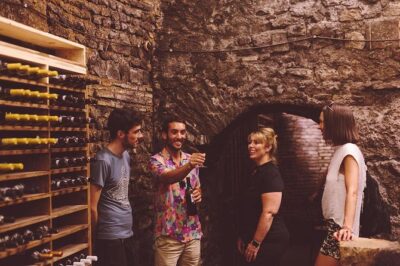
Winner 2025 Rome Twilight Trastevere Food Tour by Eating Europe
Read our review →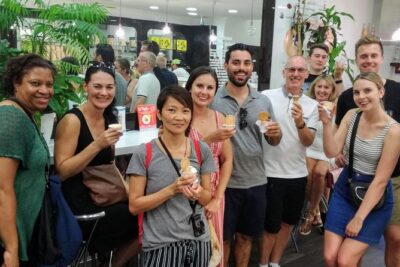
Rome Food Tour: Unlimited Tastings with Fine Wine & Barolo
Read our review →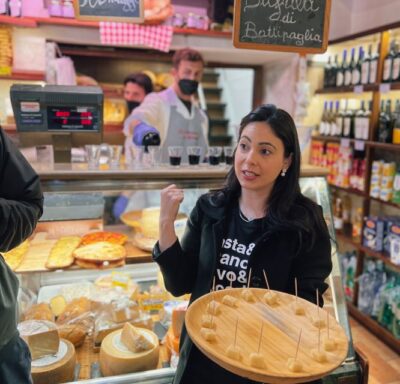
Guided Food Walking Tour with Wine in Trastevere
Read our review →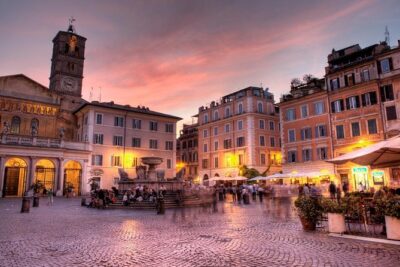
Trastevere Food tour with Free-Flowing Fine Wine
Read our review →
Trastevere & Campo de Fiori Street Food Walking Tour
Read our review →
Browse the lists this tour appears in