

REVIEW · BUDAPEST FOOD TOURS
Central Budapest Food Walking Tour with Drinks Included
Four stops can teach you Budapest by supper. This three-hour walk links Hungarian food with the city’s Jewish heritage, District 7, ruin bars, and elegant Andrassy Avenue. I especially like the small-group format, capped at 15 people, and the fact that the price includes four food stops plus three alcoholic drinks. The main caution is simple: you will walk a fair distance, and the route can sometimes double back.
The food is generous, not just a parade of tiny samples. Guides such as Eszti, Laura, Peter, Nika, Kitti, and Agnes are praised for explaining the dishes clearly and offering useful advice for the rest of your stay. I also like that vegetarian and alcohol-free choices are available. But this tour cannot handle vegan or gluten-free diets, so check that carefully before booking.
Key points to know before booking
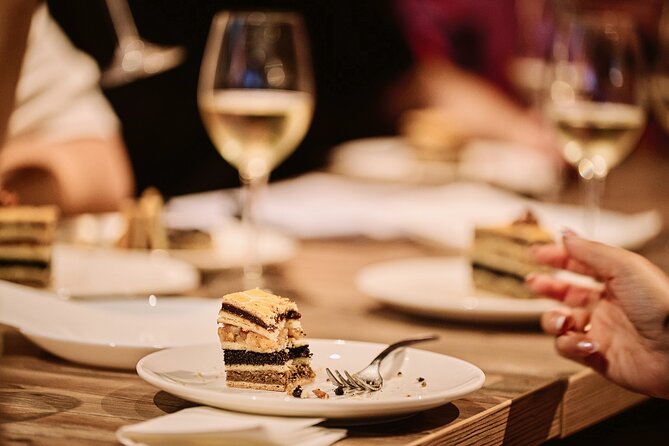
- A meal disguised as a walking tour: Four Hungarian eateries provide enough food that you should arrive hungry.
- District 7 sets the scene: The route begins near the Budapest Orthodox Synagogue and explores the old Jewish Quarter.
- Drinks are part of the price: Expect three alcoholic drinks, including wine, beer, and shots, with nonalcoholic alternatives available.
- Guides make the difference: Eszti, Peter, Laura, Nika, Kitti, and Agnes receive repeated praise for warmth, clear explanations, and restaurant tips.
- Plan for steady walking: One person found some doubling back between nearby stops, so comfortable shoes matter.
- Best for curious eaters: The tour suits first-time visitors who want a broad introduction rather than a single specialty meal.
Starting beside the Budapest Orthodox Synagogue
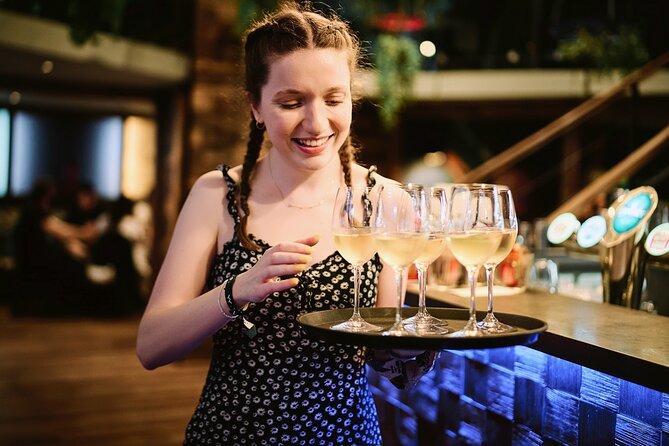
The tour begins at the Budapest Orthodox Synagogue on Kazinczy Street, at 29 to 31 Kazinczy u. This is a useful meeting point because the walk starts with context, not simply a plate being pushed across a table.
Your guide gives a brief introduction to the synagogue and to the Jewish influence on Hungarian cooking. That connection matters. Hungarian food is not a sealed national category. It has been shaped by different communities, customs, and centuries of change, and the first stop gives you a way to understand the dishes that follow.
The admission ticket is free, so this part is an exterior and orientation stop rather than a separate paid attraction. The value comes from the explanation. A good guide can point out why Jewish traditions matter to Budapest’s food culture, then carry that idea into the tastings.
This is also where the small-group setup helps. With no more than 15 people, you have a fair chance to ask about ingredients, local habits, and the city’s past. Guides Eszti and Laura are especially praised for making history easy to follow, while Peter is noted for sending participants a list of foods and places afterward.
More food walking tours in Budapest:
- Budapest Food Walking Tour: Eat, Sip & Explore Like a Local
★ 4.8 · 1,027 reviews - Budapest Guided Food Walking Tour with Drinks Included
★ 4.8 · 472 reviews - Small-Group Culinary Walking Tour in Budapest
★ 5.0 · 148 reviews
Walking through District 7 and its Jewish food traditions
From the synagogue, the group moves through Budapest’s Jewish Quarter, also known as District 7. This is one of the most useful sections for getting your bearings in central Budapest. The neighborhood carries a serious past, yet today it is also known for restaurants, nightlife, and ruin bars.
The tour does not treat the area as a backdrop for photographs alone. Your guide explains the link between the neighborhood and Hungarian cooking, then leads you to street food and sit-down tastings. One stop may involve eating without utensils, which is a small but memorable change from the usual restaurant routine.
The ruin bar element is not guaranteed as a full bar visit, but the route includes the area and some people have appreciated seeing one along the way. That makes the tour more than a meal crawl. You get a look at a part of Budapest where old buildings, nightlife, food, and local memory sit close together.
There is also a practical advantage here. Several participants found the eateries close to places they had already passed, yet they would not have noticed them alone. This is exactly where a walking food tour earns its keep. You are shown how to look at the street, not just where to sit down.
The only real route complaint is that the walking can feel inefficient in places. One person noted doubling back to two venues that were close to each other, and another advised bringing good walking shoes. That is not a serious problem for most people, but you should not treat this as a mostly seated dinner.
The first tastes: soup, street food, and local habits
The sample menu usually begins with soup. Goulash soup is sometimes served, though the menu can change. It is worth noting that the food selection is not presented as fixed, so you should see the listed dishes as examples rather than promises.
Goulash soup received especially warm praise, with one person calling it spectacular and another describing it as the highlight. The tour may also include lángos with sour cream and cheese, a filling street food that gives you a quick taste of a much-loved Hungarian style of eating.
The group then moves toward more substantial food. You might try pörkölt with nokedli, a pork stew served with egg dumplings, or another Hungarian stew. Chicken paprikash is also listed as a possible main course. These are not dainty portions. More than one person said the food was generous, and one guide specifically advised arriving hungry.
The changing menu is worth keeping in mind. If you have your heart set on goulash soup, somlói cake, or paprikash, you may not receive every one of them. The advantage is variety and flexibility for the restaurants. The tradeoff is less certainty than you get with a fixed tasting menu.
As you eat, the guide explains where the food fits into Hungarian culture and how people commonly enjoy it. That is more useful than memorizing dish names. You learn what to order later, what may be shared, and which flavors belong to everyday Hungarian cooking.
Four eateries and a dinner-sized amount of food
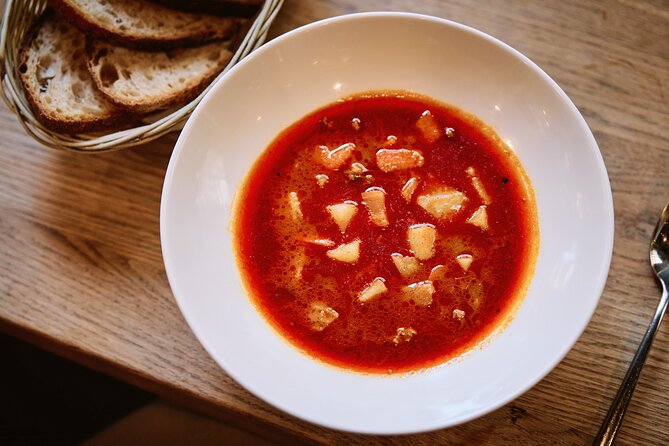
The price includes food tastings at four Hungarian eateries. In practice, the stops build from starter to main course to dessert, with drinks placed along the way. This makes the experience feel closer to dinner than to a quick sample walk.
The main course is usually the point where people realize how much food is coming. Hungarian stews, dumplings, and paprikash are hearty dishes. If you eat a large lunch, you may struggle by the final stop. I would keep the afternoon light and leave room for dessert.
The sit-down breaks are useful after the walking sections. One person praised the pace because there was enough time to sit while tasting, and another said the guide did not hurry anyone through the meal. That balance matters. A food tour can become tiring when every stop is rushed, but this one generally allows conversation and questions.
You are not only paying for food. The price also covers the preplanned route, organized entry into the eateries, a set menu structure, and the guide’s local explanations. At $83.45 per person, it is not the cheapest way to eat in Budapest, but it can be good value if you would otherwise pay for several meals and a separate history walk.
The value is strongest on your first or second day in the city. You get an introduction to dishes, neighborhoods, and places to return to. It is less suitable if your main goal is a bargain dinner or if you prefer choosing every dish yourself.
A few more food tours in Budapest worth a look
- Budapest Centre Food Tour with 10+ Tastings, Wine & Street Food
★ 5.0 · 810 reviews - From Budapest: Etyek Wine Tasting Tour with 3-Course Meal
★ 4.8 · 557 reviews - Budapest Food Tour: Market to Tavern with 14+ Tasters & Wines
★ 5.0 · 434 reviews - Budapest Culinary & Wine Walk
★ 5.0 · 397 reviews
Beer, wine, pálinka, and Tokaji dessert wine
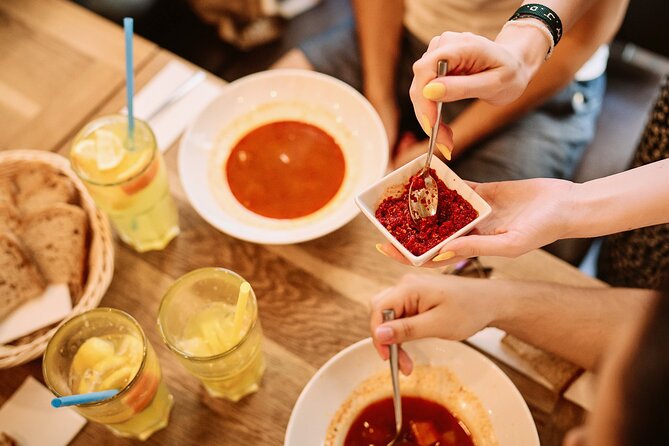
Three alcoholic drinks are included. The selection can include local beer, wine, a small shot of pálinka, and Tokaji dessert wine. The exact combination may vary, but the experience is designed to show how drinks fit alongside Hungarian food.
Pálinka is a strong fruit brandy, so the small serving is plenty for many people. Tokaji Aszú, a sweet wine from Hungary, may accompany dessert. Some menus list it with somlói cake, flódni, or Rákóczi túrós, all possible sweet finishes.
The drink portion adds real value for adults who want a rounded introduction to Hungarian eating. You are not simply sampling food. You are also learning which drinks may appear at the beginning, alongside a main course, or with dessert.
You do not need to drink alcohol to join the tour. Alcohol-free options are available, and the guide asks about preferences and allergies. Only people aged 18 and over are served alcohol. If you are in a mixed group, this arrangement lets drinkers and nondrinkers take part together.
Ending on Andrassy Avenue with something sweet
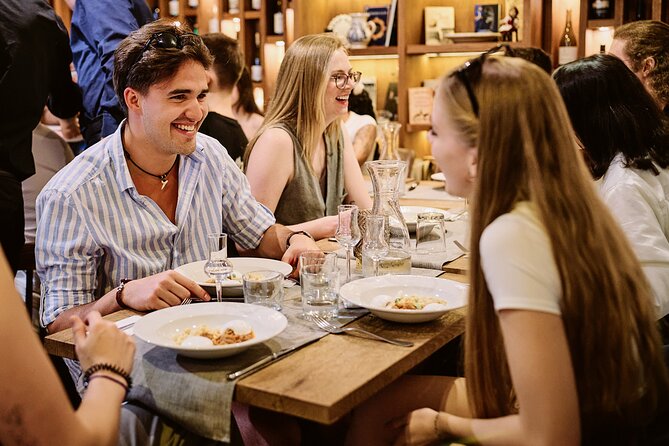
The final section leads toward Andrassy Avenue, Budapest’s grander and more polished side. After the older streets of District 7, this change of setting gives the route a useful contrast. You see a more upscale part of the city while stopping at atmospheric restaurants for classic Hungarian dishes.
Dessert provides the finish. Possible choices include somlói, flódni, or Rákóczi túrós. Somlói is a soft, layered dessert, while flódni reflects the Jewish influence that frames the tour from the beginning. Rákóczi túrós is based on sweet curd cheese. The exact dessert depends on the day and the venues.
This final stop also gives you a chance to ask for practical evening advice. Guides are repeatedly praised for suggestions about where to eat and what to see after the tour. Laura, Eszti, Nika, Peter, and Kitti are all singled out for offering useful recommendations, not just reciting prepared information.
The tour ends back at the meeting point. That is convenient for returning to your hotel or continuing into central Budapest, though you should allow time to walk back with the group rather than assuming the last tasting is the endpoint.
The guides are the heart of the experience
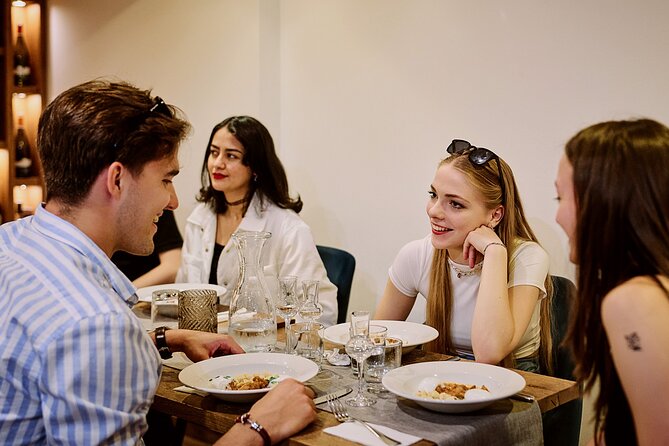
The strongest part of this tour is the human element. Eszti is praised for her energy, humor, and ability to keep a group comfortable without forcing conversation. One detailed account also noted that she watched the group carefully, included quieter people, and kept the walk moving without making it feel stiff.
Peter is described as friendly and attentive, with strong recommendations for other places to eat. He also followed up with a list of the dishes and restaurants, which is helpful when you are trying to remember everything after several tastings.
Laura is praised for clear English, strong stories, and practical advice. Nika receives credit for explaining food traditions, asking about allergies, and allowing people to eat at a relaxed pace. Kitti is often described as energetic and fun, while Agnes is praised for being warm, funny, and welcoming.
The actual guide will shape the evening, of course. Still, the repeated pattern is encouraging: the guides do more than lead from door to door. They answer questions, watch the pace, and help you use the tour as a starting point for the rest of your Budapest visit.
Walking, group size, and useful planning advice
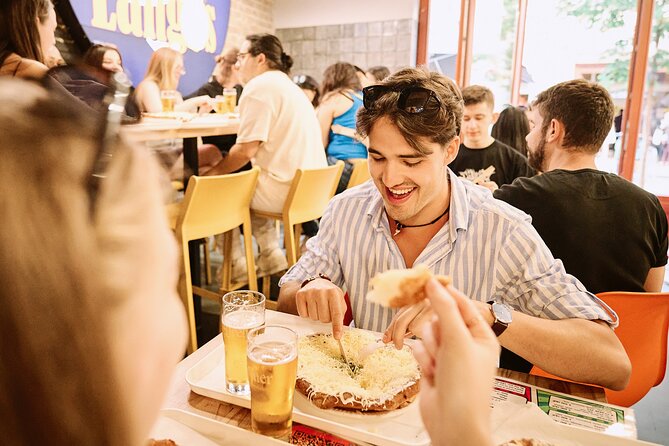
The advertised duration is about three hours. That is long enough for a full food introduction without taking your entire evening, but the route includes steady walking between tastings. Wear shoes that can handle city streets, and do not schedule a demanding activity immediately afterward.
The group limit is 15 people. Some groups are smaller, and one particularly personal experience had only three people plus the guide. A larger group can still work well, but it may take more patience to ask questions at every stop.
The tour is offered in English and confirmation arrives when you book. The meeting point is near public transportation, and most people can participate. No separate accessibility details are provided, so if you have mobility concerns, ask the operator before reserving.
Vegetarian and alcohol-free options are available. Gluten-free and vegan diets cannot be accommodated. This is the most important food restriction to understand before paying. If you have allergies, tell the guide at the start, since one guide was specifically praised for checking this.
Free cancellation is available up to 24 hours before the start time for a full refund. Cancellations or changes inside that 24-hour window are not refunded or accepted.
Who should book this Budapest food walk?
I would recommend it most strongly to first-time visitors, couples, small groups of friends, and solo visitors who want an easy way to meet people over a meal. It is also a good first-day activity because the guides can point you toward restaurants and sights for the days ahead.
You should book it if you want to taste several Hungarian staples without researching every address yourself. The combination of District 7, Jewish food traditions, ruin bar streets, Hungarian drinks, and Andrassy Avenue gives you a broader picture than a single restaurant meal.
I would be more cautious if you need a strict gluten-free or vegan menu, dislike walking, or want a guaranteed list of exact dishes. The route can change, and the food is filling. You will need to accept some flexibility.
Is the Central Budapest Food Walking Tour worth it?
At $83.45, this is a fair value for a three-hour evening that includes four eateries, substantial food, three drinks, and a small-group guide. The 4.9 rating from 109 reviews and 99 percent recommendation fit the experience’s main strengths: friendly guides, generous portions, traditional food, and useful local advice.
Book it early if your dates are fixed, since it is commonly reserved about 25 days ahead. Choose it for context and variety, not just for the cheapest possible dinner. If you want to understand Budapest through its food, meet a lively guide, and leave with a list of places to try next, this tour is a strong choice.
FAQ
Where does the Central Budapest Food Walking Tour begin?
It begins at the Budapest Orthodox Synagogue, located at Kazinczy u. 29 to 31 in Budapest’s District 7.
Where does the tour end?
The tour ends back at the original meeting point.
How long does the food tour last?
The experience lasts approximately three hours.
How many people can join the tour?
The maximum group size is 15 people.
Are drinks included?
Yes. Three alcoholic drinks are included, with examples including wine, beer, and shots. Alcohol-free options are available, and alcohol is served only to people aged 18 and over.
Can the tour accommodate special diets?
Vegetarian and alcohol-free options are available. The tour cannot accommodate vegan or gluten-free diets.
Just added in Budapest
- The Award-Winning Private Food Tour of Budapest: 6 or 10 Tastings★ 4.5 · 185 reviews
- Budapest Food Tasting Tour with Nelli & her local guides★ 5.0 · 190 reviews
- Budapest Ruin Bars Evening Walking Tour with Drinks & Snacks★ 5.0 · 25 reviews
- Budapest Ruin Bars Evening Walking Tour with Drinks & Street Food★ 5.0 · 104 reviews
- Budapest Food Tour in Obuda with 8+ Tastings of Hidden Food Gems★ 5.0 · 94 reviews
- Small-Group Culinary Walking Tour in Budapest★ 5.0 · 148 reviews
- Food and Wine Tasting in Budapest City Center with Sommelier★ 5.0 · 57 reviews
- Budapest Food Tour: Market to Tavern with 14+ Tasters & Wines★ 5.0 · 434 reviews
Food Walking Tours, compared.
Reykjavik Food Walk – Local Foodie Adventure in Iceland
Read our review →
New Orleans Food Walking Tour of the French Quarter with Small-Group Option
Read our review →
Savannah First Squares Culinary & Cultural Walking Food Tour
Read our review →
Guided Food Walking Tour with Wine in Trastevere
Read our review →
Trastevere & Campo de Fiori Street Food Walking Tour
Read our review →Browse the lists this tour appears in