
REVIEW · CHARLESTON FOOD TOURS
Charleston’s Historic Downtown Food Tour
Come hungry, leave better informed. This walking tour joins Charleston’s food traditions with its streets, markets, and waterfront landmarks, giving you a useful first look at the city while serving enough food for lunch. I especially like the four restaurant tastings and the way dishes are tied to French, African, Gullah Geechee, and pirate-era influences. The small group, capped at 15 people, also makes it easier to hear the guide and ask questions.
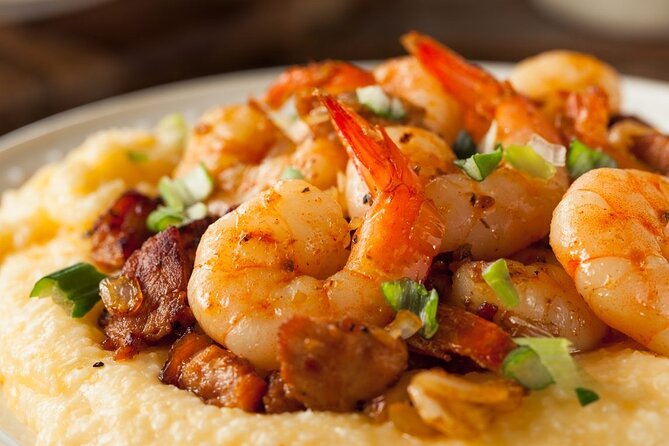
The main caution is that the schedule may feel rushed. Some departures finish in about two hours rather than the advertised two and a half, and the tour does not currently appear to include the shrimp and grits shown in older promotional material. At $110, you are paying for a guided meal and local context, not a leisurely restaurant crawl.
Four things to know before booking
- She-crab soup is often a highlight: This Charleston specialty gets an explanation of its local roots and has been one of the best-liked tastings.
- The food is served at four restaurants: You receive enough samples to make up a full lunch, with sit-down stops rather than only bites handed out on the sidewalk.
- The history is part of the meal: French cooking, African ingredients, Low Country foodways, slavery and the slave trade, and piracy all enter the conversation.
- The walk connects major sights: Rainbow Row, Pineapple Fountain, the Old Exchange and Provost Dungeon, and Charleston City Market provide the setting.
- Allow more time than the official duration suggests: The tour is listed at about two hours and thirty minutes, but some departures have ended closer to two hours.
- The food menu can change: Do not book this expecting shrimp and grits unless the operator confirms that dish for your date.
What you are paying for at $110
At $110, this is not a cheap way to grab lunch. It is a combined food tasting, history lesson, and downtown orientation. You receive food at four restaurant stops, a guide, and access to venues where the group can move past ordinary waiting lines. Alcohol is not included, but you can buy a cocktail or another drink at the restaurants if time allows.
The value depends on how you like to eat while sightseeing. If you want a proper meal and a clear introduction to Charleston’s food culture, the price can make sense. A full lunch in four settings, plus a walking tour and local interpretation, is more useful than simply ordering one dish and trying to decode its background on your own.
I would not choose this tour only for the promise of a particular menu item. The included foods can change, and one recurring point of disappointment has been the missing shrimp and grits. The better reason to book is the overall selection, which has included she-crab soup, Carolina Gold rice, a rice and chicken dish, pulled pork, and dessert.
The food portions are intended to add up to lunch, not to four full restaurant meals. That distinction matters. You should arrive ready to eat, but do not expect to sit down for a long, separate entrée at every stop.
More history tours in Charleston:
- Tastes Through Time – Charleston’s Best Food & History Tour
★ 4.5 · 95 reviews - Charleston: Historic Downtown Food Tour
★ 4.7 · 67 reviews - Barcelona: Tapas Walking Tour with Food, Wine, and History
★ 4.8 · 4,261 reviews
Starting near East Bay Street
The meeting point is 195 E Bay St, in the heart of central Charleston. The tour ends back at the same place, which is handy if you are planning the walk as a first-day activity and want to continue sightseeing from a familiar spot afterward.
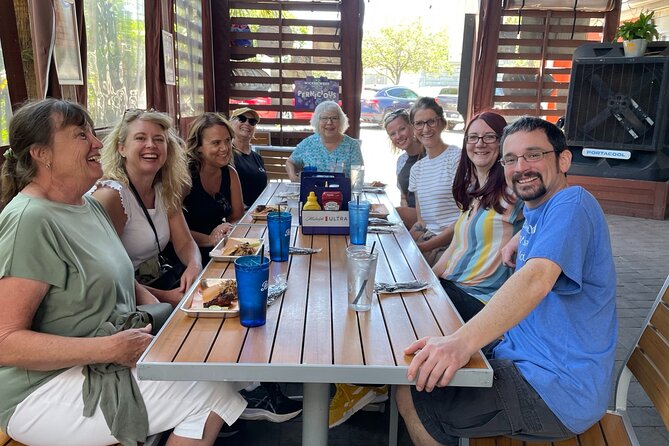
The group size is limited to 15. That is small enough for a more personal experience, though the quality of the tour will still depend on the guide leading your departure. Page and Paige have earned especially warm praise for their friendly delivery and command of Charleston’s past. Jeff has also been noted for adding a strong historical angle.
Because this is a walking tour, wear comfortable shoes and plan for outdoor time. The experience requires good weather, and the route includes open streets and stops at public landmarks. Service animals are allowed, public transportation is nearby, and most people can participate.
A mobile ticket keeps the start simple. I would arrive early, since food tours work best when the whole group can begin together. The route is not described as strenuous, but Charleston’s historic streets can be uneven, and the tour moves at a steady pace.
Rainbow Row and the French table
The first public sight is Rainbow Row, the bright line of historic houses near the waterfront. You pass by rather than enter, so this is a short orientation stop rather than a house tour. The guide uses it to explain French influence on Charleston cooking and the dishes that French culture brought into local food traditions.
This is a smart opening because it places cuisine inside the city’s larger colonial story. You are not just hearing that Charleston has French connections. You are also being asked to notice how outside cultures changed what appeared on local tables.
The stop lasts about 15 minutes. That gives you enough time for a focused talk and photographs, but not a long architectural discussion. If your main goal is to study Rainbow Row in detail, return later on your own. On this tour, it works as a visual starting point before the food begins in earnest.
You may also find that the first explanation helps you listen differently at later restaurant stops. Sauces, cooking methods, and ingredients become part of a larger story instead of a list of regional dishes.
Pineapple Fountain and Southern welcome
The route continues to Pineapple Fountain, a familiar Charleston symbol associated with Southern hospitality. The stop is planned for about 20 minutes, and the guide connects the landmark with the way welcome and cooking have been linked in South Carolina.
This part may be more interpretive than culinary. There is not a separate dish listed for the fountain itself, but the conversation helps frame Charleston food as something shared through homes, restaurants, and public life. The pineapple symbol gives the guide a recognizable object around which to discuss local customs.
I like this sort of stop because it breaks up the eating. Four restaurant visits in a short period could otherwise feel like a parade of plates. A public landmark gives you time to walk, listen, and reset your appetite.
The drawback is weather. In sunshine, Pineapple Fountain can be a pleasant pause. In rain or strong heat, standing outdoors may be less comfortable. Since the activity can be canceled for poor weather, check the forecast and keep your plans flexible.
A few more food tours in Charleston worth a look
- Charleston French Quarter or Brunch Food Tour with 7+ Tastings
★ 5.0 · 1,853 reviews - Downtown Charleston Food Tour
★ 4.5 · 1,376 reviews - Savor the Flavors of Charleston Walking Food Tour
★ 4.5 · 881 reviews - Charleston Brunch Food Tour: Biscuits, Shrimps, Grits and More
★ 5.0 · 239 reviews
The Old Exchange, pirates, and what reached the plate
At the Old Exchange and Provost Dungeon, the story shifts toward pirates and privateering in the early 1700s. The guide explains how these activities affected Charleston and its diet.
This is one of the tour’s more unusual connections. Many food tours stop at restaurants and talk about recipes. This one also asks how commerce, conflict, and the movement of people and goods shaped what locals could eat. The pirate material gives the history a lively hook without separating it from the food.
The planned stop lasts about 15 minutes. You pass the site rather than receive a detailed dungeon visit, so do not book this as an attraction admission. Its role is context. The guide uses the building and its past to explain a part of Charleston’s food story.
This is also a good point to ask questions. Guides such as Page and Jeff have been praised for handling historical subjects with patience, including slavery and the slave trade. That discussion is important here. Charleston’s cuisine cannot be explained honestly through hospitality and imported ingredients alone. African labor, African food knowledge, and the forced movement of people are central to the city’s past.
If you prefer a tour that avoids difficult history, this may not be the right choice. If you want a more complete account of how Charleston developed, the direct treatment is a strength.
Charleston City Market and African food traditions
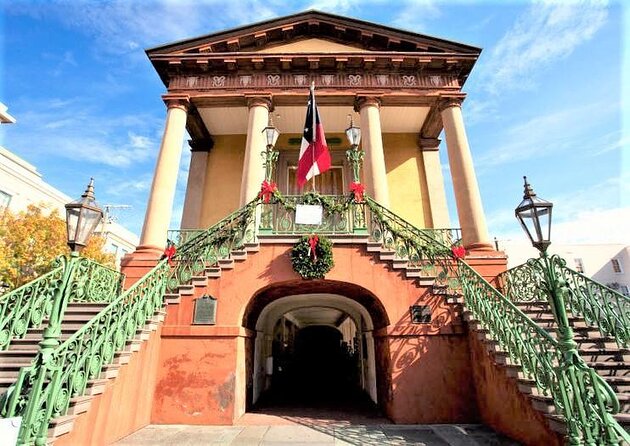
The Charleston City Market provides the longest public landmark stop, at about 20 minutes. Here, the guide focuses on African contributions to local cuisine and on ingredients introduced or popularized through African foodways.
This is where the tour’s food and history meet most clearly. Dishes such as rice-based preparations and Low Country cooking make more sense when you understand the people, crops, techniques, and traditions behind them. The discussion may also touch on Gullah Geechee culture, which has played a major role in shaping the region’s food identity.
You should expect interpretation rather than a separate market shopping session. The tour does not promise time to browse every stall or purchase crafts. If you want to explore the market at length, plan another visit before or after the tour.
The market stop also helps explain why the food is not simply Southern food in a broad national sense. Charleston’s cooking reflects several influences layered together: French techniques, African ingredients and methods, local Low Country products, and the effects of trade and seafaring.
The four restaurant tastings
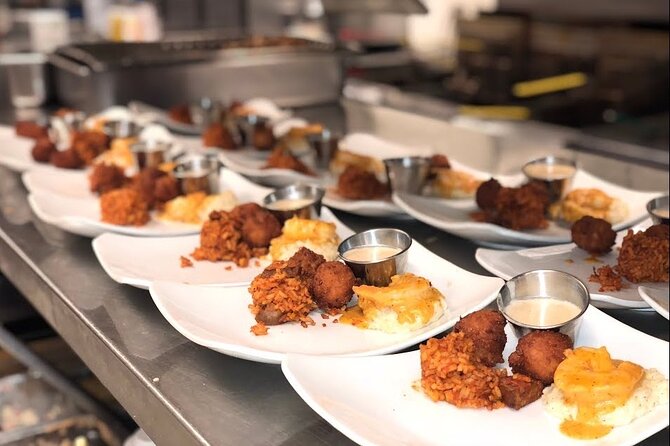
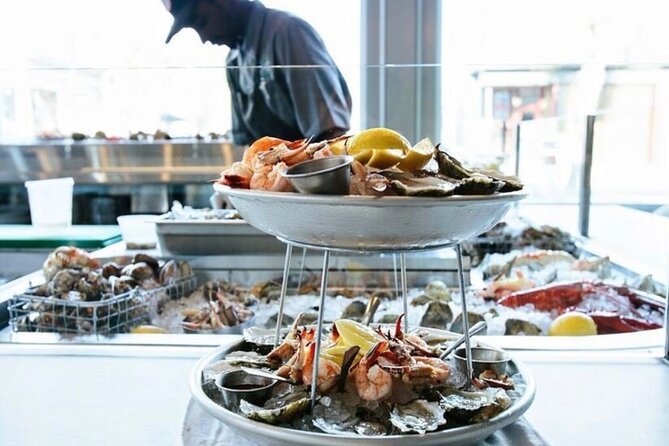
The meal is spread across four restaurant stops, with sit-down access and enough food to serve as lunch. The exact dishes can change, but the tastings described with this experience have included several useful examples of Charleston cooking.
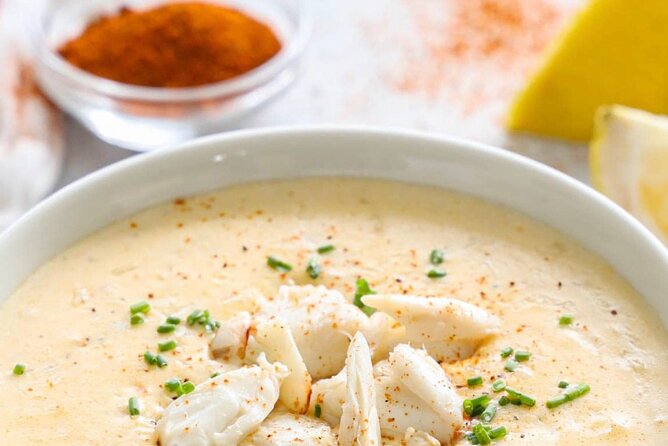
She-crab soup
She-crab soup is often the favorite tasting. It is strongly associated with Charleston, and the guide explains its local background while you eat. For many people, this is the dish that best justifies booking a food tour rather than taking a regular sightseeing walk.
The soup also demonstrates the tour’s method. You taste first, then hear why the dish matters. That keeps the history connected to something on your spoon rather than turning the tour into a lecture between restaurants.
Carolina Gold rice and rice dishes
Carolina Gold rice and a rice-and-chicken dish have appeared among the tastings. Rice is an important part of Low Country cooking, and it offers a direct way to understand the African influence discussed at the market.
The portions are described as sensible, which is useful on a tour with several stops. You get a sample large enough to understand the dish without filling up before the next restaurant.
Pulled pork
A pulled pork slider has also been included. It gives you a familiar Southern flavor in a small format and keeps the pace moving. If you are hoping for a formal barbecue meal, adjust your expectations. This is a tasting portion, not a long afternoon at a barbecue restaurant.
Dessert
Dessert finishes the food sequence. It has received particularly warm praise, and it gives the tour a clear ending after the savory dishes. Since the menu is not fixed in the information provided, you should treat dessert as part of the planned meal but not expect a particular sweet.
The food can be excellent, though not every departure will land equally well for every palate. One guide’s food selection was described as ordinary even while the historical presentation was praised. That is a useful warning: the guide and the setting may be more consistent than any one dish.
Why the guide makes or breaks the experience
The strongest part of this tour is the guide’s ability to connect food with place. Page has been praised for explaining Low Country and Gullah Geechee culture in a clear, welcoming way. Paige has been described as friendly and well informed about Charleston. Jeff has added American history and local context to the walk.
Those comments point to what you should want from the experience: not just facts, but a guide who can explain why a dish belongs in Charleston. The best departures appear to allow questions and make space for conversation, even while keeping the group on schedule.
The guide also needs to handle slavery and the slave trade with care. This subject is not an optional footnote in Charleston. A tour that discusses African ingredients without acknowledging the people who brought and developed those traditions would give you only half the story.
The pace can limit the conversation. One departure was described as eat and walk, with little time to linger over a drink. If you like long meals, generous pauses, and unhurried photographs, this format may feel brisk.
Timing, weather, and the pace of the walk
The official duration is approximately two hours and thirty minutes, but you should leave room for variation. Some tours have taken closer to two hours. That difference matters if you plan another timed activity afterward.
I would not schedule a tour beginning immediately after this one. The advertised end time may not match the actual finish, and the route can move faster or slower depending on the restaurants, the group, and the guide.
The experience requires good weather. A rainy day can make the public stops and walking less pleasant, even though the restaurant portions are indoors. Free cancellation is available up to 24 hours before the start time. Cancellations inside that window are not refunded, and changes are not accepted within 24 hours. If poor weather cancels the tour, you are offered another date or a full refund.
The route includes chances for a restroom break, which is worth noting on a food tour with several stops. Still, drink purchases are optional and alcohol is extra, so keep the meal moving if you choose to order a cocktail.
Who should book this Charleston food walk?
I would recommend it to a first-time Charleston visitor who wants an efficient introduction to downtown food and history. It also suits couples, families with older children, and solo visitors who enjoy sharing a table with a small group.
It is a good fit if you want:
- A full lunch made from several regional tastings
- Food linked to French and African influences
- A guide who discusses slavery and the slave trade honestly
- A short walking route through major downtown sights
- A small group instead of a large coach excursion
- A first-day orientation to Charleston
I would be more cautious if you have strict dietary needs, since the provided information does not list accommodations for particular diets. I would also skip it if you want shrimp and grits specifically, unless you confirm the current menu before paying.
Families with children ages seven and older can receive food as part of the tour. Children ages zero through six may attend, but food is not included in their ticket. That makes the experience less practical for very young children, especially given the steady walking and sit-down timing.
Should you book it?
Book this tour if you want Charleston’s food explained rather than simply eaten. The combination of she-crab soup, rice dishes, pulled pork, dessert, public landmarks, and direct discussion of African influence gives you a useful introduction to the city.
Do not book it as a relaxed restaurant afternoon or as a guaranteed shrimp and grits tasting. The schedule can be shorter than advertised, the pace can be quick, and the menu may change.
At $110, I see the value in the guide, the four restaurant stops, and the amount of food. For a first visit, it can help you decide which Charleston dishes deserve a return meal. Just keep your afternoon open, check the weather, and arrive ready for both lunch and an honest look at the forces that shaped the city’s cooking.
FAQ
How long does Charleston’s Historic Downtown Food Tour last?
The tour is advertised at approximately two hours and thirty minutes. Some departures have ended closer to two hours, so avoid scheduling another timed activity immediately afterward.
What food is included?
Food tastings are included at four different restaurant stops, with enough samples intended to make up a full lunch. Dishes can vary, but examples include she-crab soup, Carolina Gold rice, a rice and chicken dish, pulled pork, and dessert.
Are shrimp and grits included?
You should not assume that shrimp and grits are included. The dish has appeared in older promotional material, but it has not been served on some departures. Confirm the current menu if this dish is important to you.
Is alcohol included?
No. Alcoholic beverages are not included, but you may purchase alcohol at the restaurant stops if you wish.
Where does the tour start and finish?
The tour starts at 195 E Bay St in Charleston, South Carolina, and ends back at the meeting point.
Can children join the tour?
Children ages zero through six can attend, but their food is not included. Most people can participate, service animals are allowed, and the experience is near public transportation.
Just added in Charleston
- Charleston’s Savor the Flavors of Upper King Street Walking Food Tour★ 4.5 · 130 reviews
- Private Charleston Walking Food Tour at the French Quarter★ 5.0 · 201 reviews
- Tastes Through Time – Charleston’s Best Food & History Tour★ 4.5 · 95 reviews
- Charleston Private Brunch Tour: Biscuits, Shrimps, Grits and More★ 5.0 · 48 reviews
- Charleston Farm-to-Table Food Tour and Chef’s Challenge★ 5.0 · 110 reviews
- Charleston Upper King Street Food Tour★ 4.5 · 200 reviews
- Charleston Brunch Food Tour: Biscuits, Shrimps, Grits and More★ 5.0 · 239 reviews
- Charleston: Small Group Food Tour – Savor the Flavors★ 4.7 · 169 reviews
Historical Tours, compared.
Tapas Walking Tour with Food, Wine, and History
Read our review →
Sevilla Food Tour: Tapas, Wine, History & Traditions
Read our review →
Madrid Tapas & Taverns Small Group Food & History Tour
Read our review →
Barcelona Tapas Walking Tour: Food, Wine & History
Read our review →
Boston Food & History: Pizza, North End & Freedom Trail
Read our review →Browse the lists this tour appears in