
REVIEW · NEW DELHI FOOD TOURS
Delhi: Old Delhi’s Street Food, Temples & Spice Market Tour
Old Delhi rewards the curious eater. This three-hour tour brings you from the Red Fort Metro station into temple courtyards, food lanes, Chandni Chowk, and Khari Baoli, with guide JD explaining what you are seeing as you go. I like the careful choice of tried-and-tested food stalls, and I especially like the visit to the Sikh gurdwara kitchen, where thousands eat for free each day. The main drawback is the pace: you cover a lot of ground, often on foot, so this is not a gentle sightseeing stroll.
I also like that the tour gives Old Delhi a human face. You are not simply pointed toward monuments and sent on your way. You learn about ingredients, religious customs, local prices, and ways to negotiate. The meeting point at Gate No. 1 of Lal Quila Metro Station is practical, but first-time visitors without mobile data may want to arrange contact details before arriving.
Key points at a glance
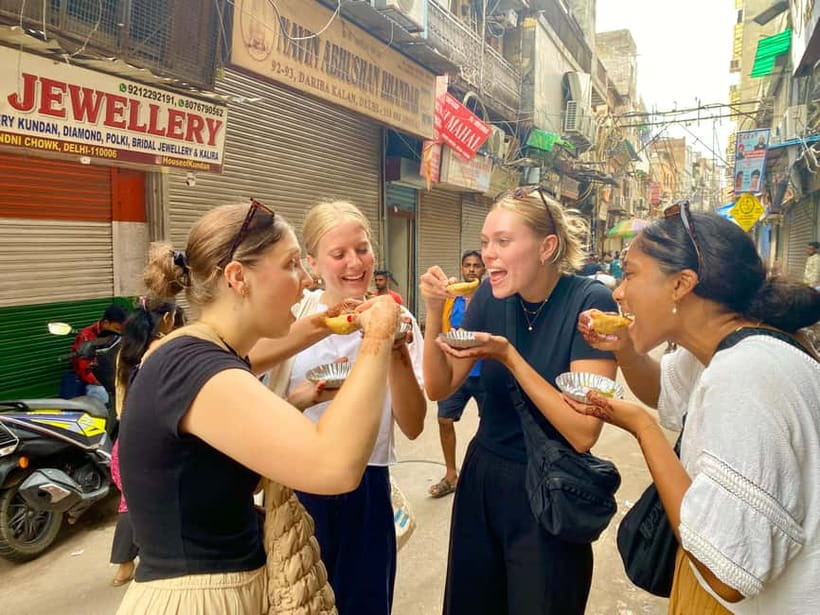
- Safe food tasting: Try a range of Indian snacks, sweets, drinks, and savory dishes at stalls selected by JD.
- Gurdwara kitchen visit: See a community kitchen that feeds more than 15,000 people for free each day, and you may help prepare chapati.
- Khari Baoli spice market: Walk through the famous spice district and reach upper floors for wide views over the market.
- Religious variety: Visit a Jain temple and Sikh gurdwara, and see a 370-year-old mosque from outside.
- Old Delhi by rickshaw: Use a cycle rickshaw to move through crowded market lanes that can be difficult to manage alone.
- Good first-day choice: The food, temples, and practical advice make this a useful introduction to Delhi for first-time visitors.
Why three hours works well in Old Delhi
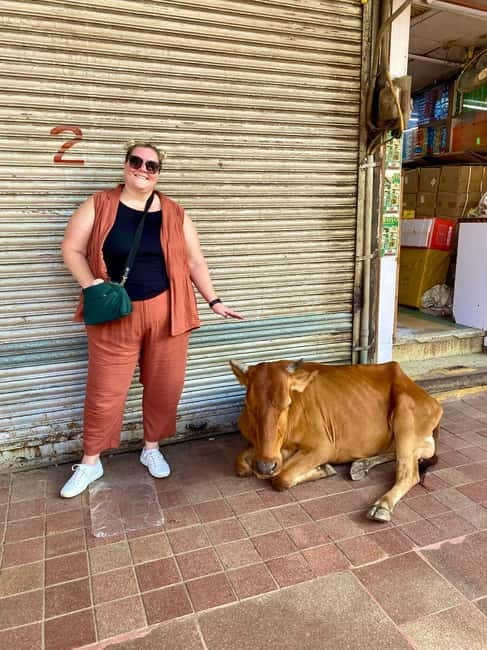
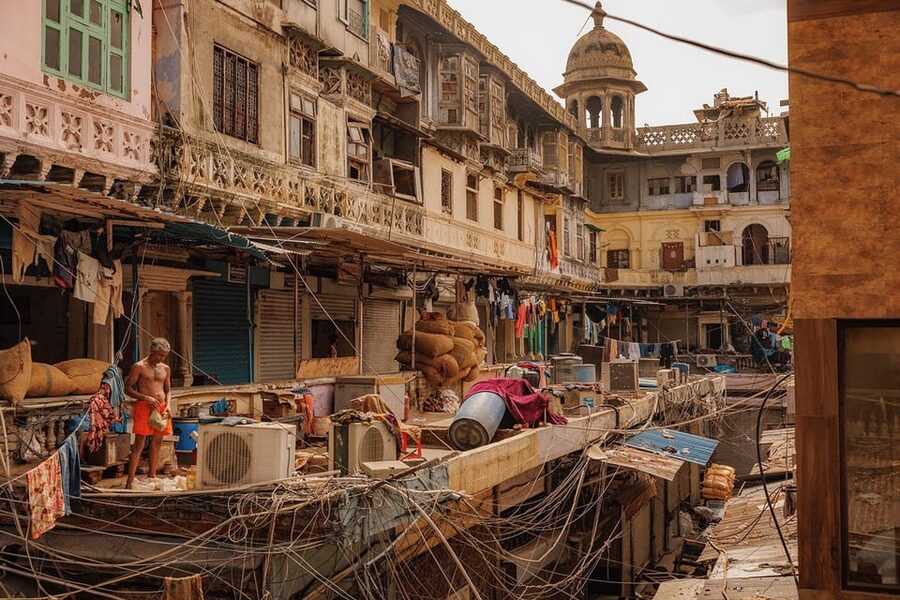
Old Delhi can feel like several cities pressed into one crowded quarter. A food lane may open beside a shrine, a spice warehouse, a jewelry shop, or a centuries-old building. In three hours, you cannot examine everything, but you can get a strong first taste of the area without spending a full day trying to find your way.
This tour works because the stops alternate. You walk, eat, visit a place of worship, ride a rickshaw, and continue through the market. That change of pace matters in Old Delhi. Three hours of walking and food alone could become tiring, while three hours of monuments might miss the point of the neighborhood.
The route begins at Lal Quila Metro Station, near the Red Fort. You finish back at the same station after walking through Chandni Chowk and Khari Baoli. The arrangement is useful if you are arriving by metro or plan to continue sightseeing from the Red Fort area.
You should still expect a lively, crowded setting. The tour is designed to show you Old Delhi as it functions day to day, not as a quiet museum district. Wear shoes that can handle uneven streets, and be ready for noise, traffic, strong smells, and sudden changes in pace.
More Market Food Tours in India
- Mumbai: Street Food and Night Markets Tour
★ 4.9 · 719 reviews - Delhi Food Walk: Rickshaw Ride, Street Eats & Market Tour
★ 5.0 · 401 reviews - Jaipur Bazaar & Food Walking Tour
★ 5.0 · 281 reviews
Starting at Lal Quila Metro Station
The meeting point is Gate No. 1 of Lal Quila Metro Station. The supplied map pin is 28.656378, 77.236511. If you arrive at Gate No. 4, it is across from Gate No. 1, and you can use the underpass to cross.
This detail is worth taking seriously. One person had trouble finding the guide after arriving without Wi-Fi, although JD and the group waited and helped with contact. I would save the meeting point, guide details, and booking information before leaving your hotel. Arriving a few minutes early should make the beginning easier.
The Red Fort is part of the setting, but the tour views it from outside rather than taking you through the monument. That is useful to know if you hoped for a full Red Fort visit. You can always return later with a separate ticket and more time.
Jain temple traditions at Sri Digambar Jain Lal Mandir
The first named stop is Sri Digambar Jain Lal Mandir, where the guided visit lasts about 16 minutes. This gives you an early look at Jain religious practice before the food and market crowds take over.
The visit is short, but that is not a weakness if you treat it as an introduction. JD explains the temple and its place in Old Delhi, helping you notice details you might otherwise pass without understanding. The tour also makes clear that religious sites require respectful behavior, not just quick photographs.
Temple etiquette is important here. You may need to remove your shoes and socks and walk barefoot. Wear clothing that covers your shoulders and knees. Shorts are not suitable for men or women, and a scarf or stole is useful. If you do not have one, the tour information says you can get one at the temple.
Bring hand sanitizer, tissues, or wet wipes. A napkin is also useful around food stalls. A mask is optional, but the tour suggests an N95 or N99, especially for the spice market.
Chandni Chowk, where food and commerce collide
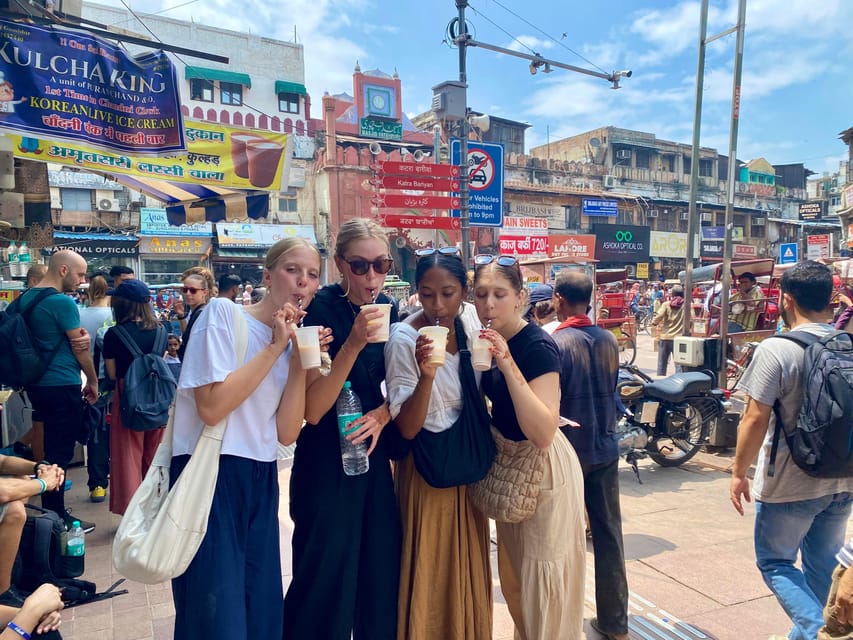
From the Jain temple, the route continues toward Chandni Chowk, with a walk of roughly nine minutes before the food tastings begin. Chandni Chowk is not a single attraction so much as a working market district. Shops, carts, delivery traffic, pedestrians, and religious buildings share the same tight space.
This is where a local guide earns the fee. You can easily lose time or confidence in Old Delhi by stopping randomly at the first stall you see. JD chooses food sellers he has tried and tested, then explains ingredients and background rather than handing you a plate without context.
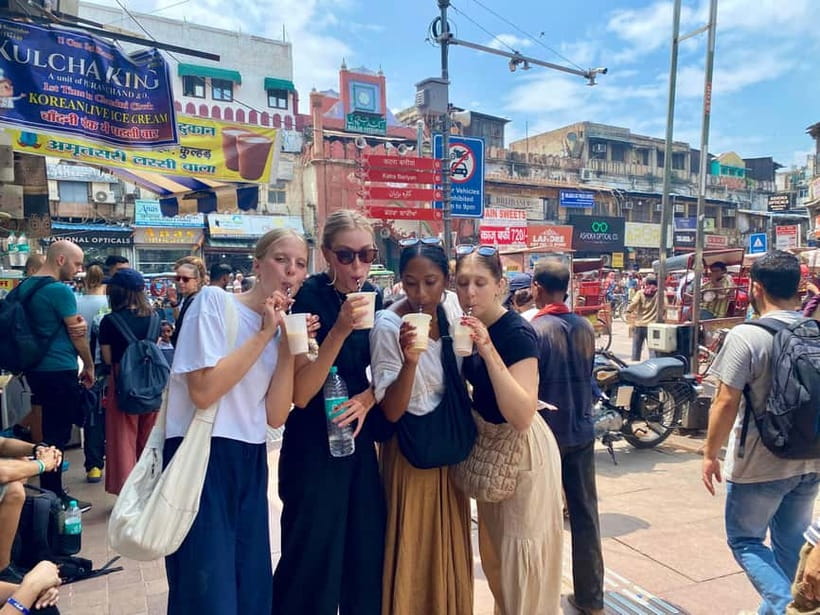
The tasting selection includes different kinds of Indian street food, with sweet, savory, and mildly spicy items represented. Drinks such as lassi, tea, and water are included. One particularly praised detail is the lassi, which one visitor described as the best they had in India.
The all-inclusive food element is helpful. You do not need to keep calculating small payments as you sample dishes, and you can focus on flavor and conversation. Still, tell JD about allergies, strong dislikes, or dietary limits before eating. The information confirms a broad food selection, but it does not promise a special dietary menu.
I like the way the food is used as a doorway into local life. You learn about the stall, the dish, and the ingredients, but also about how people eat in Delhi. The tour is not simply a checklist of snacks.
More Street Food Tours in India
- Old Delhi Street Food Tour
★ 5.0 · 497 reviews - Delhi: Old Delhi Street Food Tour with Rickshaw Ride
★ 4.9 · 403 reviews - Mumbai Street Food Tour
★ 5.0 · 269 reviews - Heritage Walk & Street Food Tasting in Jaipur
★ 5.0 · 158 reviews
A Sikh gurdwara and its enormous community kitchen
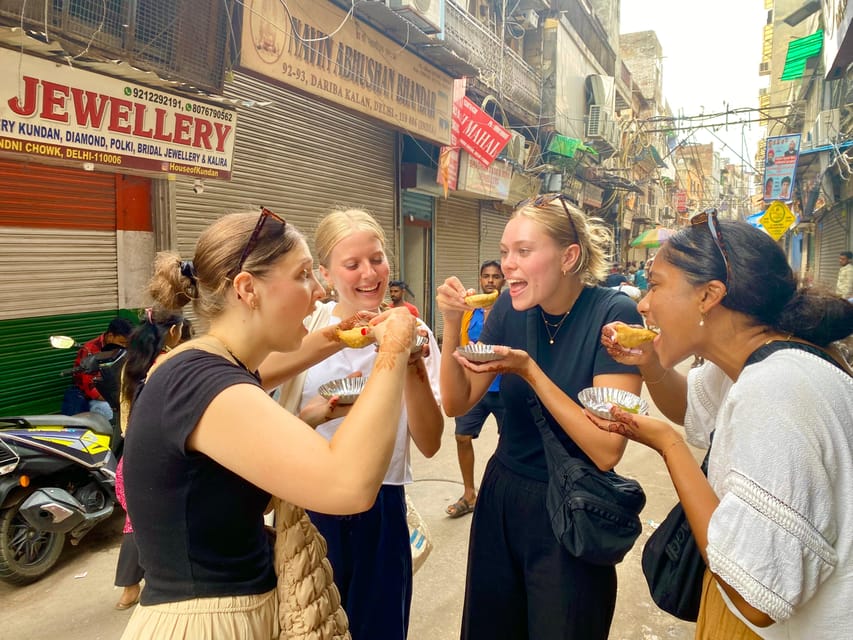
The visit to the Sikh gurdwara is one of the strongest parts of the experience. The tour includes time at the historic temple and its mega kitchen, where more than 15,000 people eat for free every day.
This stop gives you something a monument cannot. You see organized service in action, with volunteers helping prepare and distribute food for worshippers and non-worshippers. The kitchen is not presented as a show for tourists. It is a working part of the religious community.
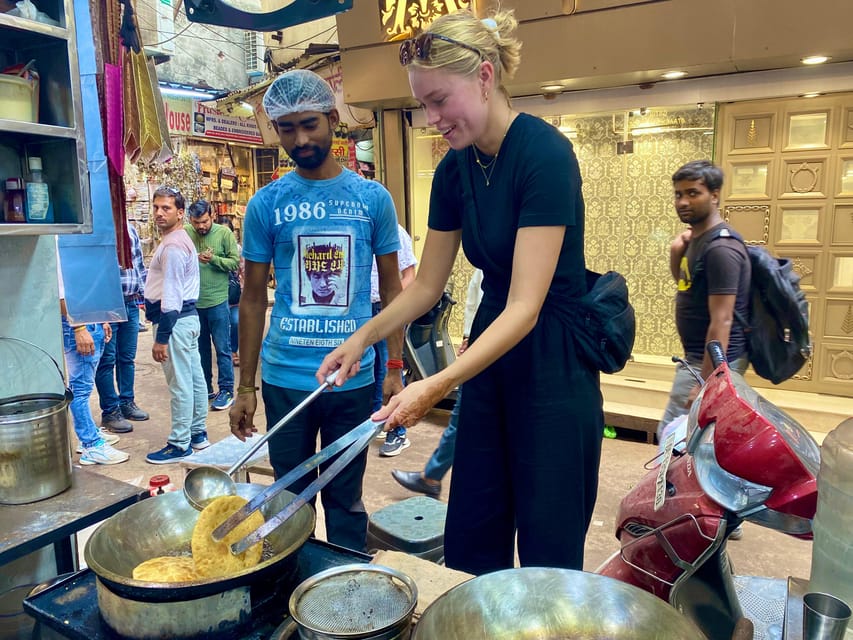
You may even help make chapati. That small task can make the visit more memorable because it turns observation into participation. JD also explains that some volunteers return several times a week to help cook.
The gurdwara requires respectful conduct. Dress conservatively, follow instructions about head covering, and be prepared to remove your shoes and socks. You should expect to walk barefoot inside the temple area. The tour information specifically advises bringing a scarf or stole.
For me, this is the kind of stop that gives the tour weight. The food tastings are fun, but the kitchen shows generosity as a daily practice. It also helps explain why religious spaces matter so much in the life of Old Delhi.
The rickshaw ride through market traffic
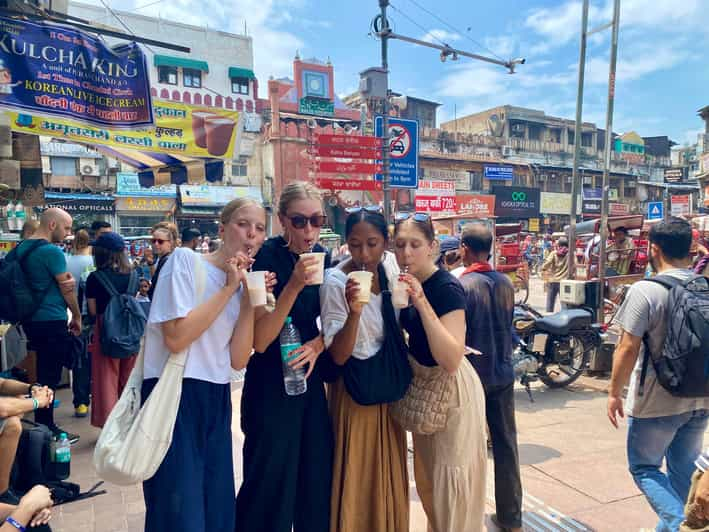
At some point, you take a rickshaw through the crowded Old Delhi market. This is not a scenic carriage ride. It is a practical way to move through lanes where pedestrians, bicycles, shops, and traffic compete for space.
The ride also gives your feet a break. The route includes substantial walking, including a stated walk of about 28 minutes toward Khari Baoli, so the rickshaw is more than a photo opportunity. It helps the group cover ground during a short tour.
You should keep your belongings secure and hold your camera carefully. The lanes are crowded, and the ride may feel chaotic. That is part of the experience, but anyone who dislikes close traffic or tight spaces should know what to expect.
JD’s role matters here. Several people appreciated how easily he guided the group through busy areas, especially on a first day in India. A local guide can help you stay focused on the sights instead of worrying about every turn.
Khari Baoli and the smell of spices
The tour heads to Khari Baoli, described as Asia’s largest spice market. The market is a sensory stop in the most literal way. Bags, sacks, powders, and strong aromas fill the area, and the air may make you sneeze or cough.
That reaction is normal in this setting. Bring tissues, water, and, if you are sensitive to dust or spice particles, consider the optional mask suggested for the tour. This is not a polished food hall. It is a working market, and its rough edges are part of what makes it interesting.
One of the best details is the chance to see the spice market from the second and third floors of a building. The higher view gives you a better sense of the scale and activity below. It also creates one of the tour’s most useful photo stops.
The route includes a secret spice mansion and an excellent rooftop view of the area. The wording is intentionally mysterious, but the practical point is clear: you get access to viewpoints and spaces you might not locate while wandering alone.
JD also gives advice on buying spices, negotiating, and saving money in India. That advice can be more useful than a quick shopping stop. If you plan to take spices home, ask about prices, packaging, and how to avoid paying too much. Personal shopping is not included, so bring money only if you want to buy something.
The mosque, Red Fort, and Old Delhi’s layered past
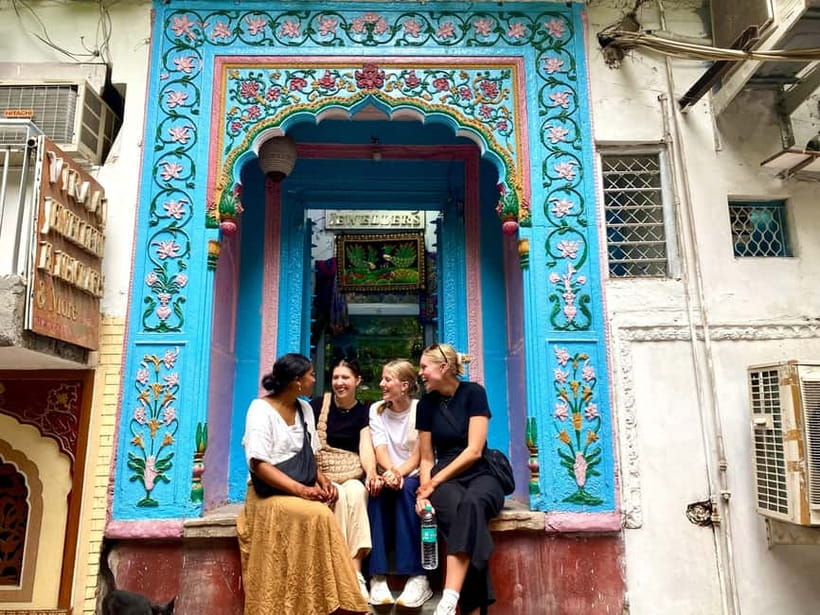
The experience also includes a view of a 370-year-old mosque, described as the second largest mosque of its kind, as well as an exterior view of the Red Fort. These stops help place the food streets within Delhi’s long political and religious story.
The mosque visit appears to be an outside look rather than a full interior tour, so you should not expect extended time there. The same applies to the Red Fort. These are context stops, useful for seeing how major landmarks sit beside ordinary markets and food stalls.
That mix is one of the route’s strengths. You are not moved from one isolated attraction to another. The monuments, temples, food sellers, spice traders, and working kitchens all appear within the same short outing.
What the $42 price includes
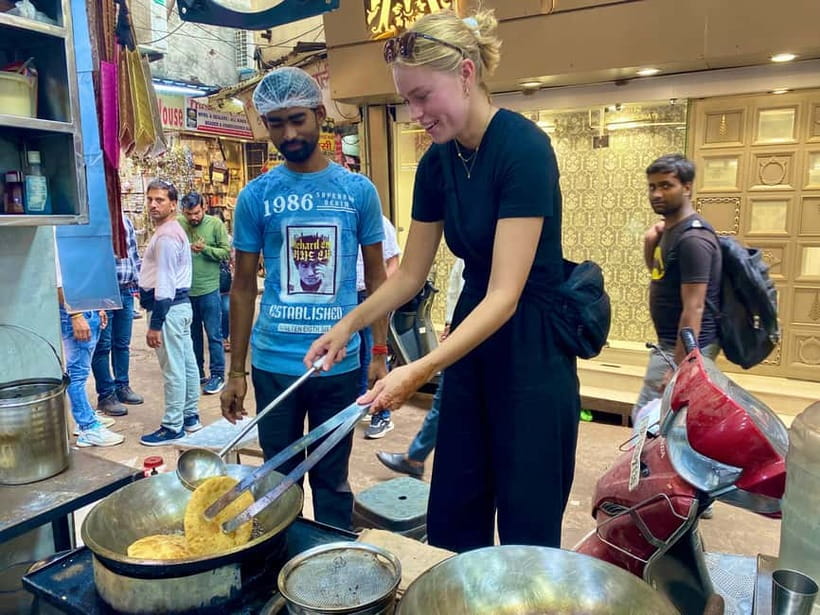
At $42 per person, the tour is a good value if you plan to eat several dishes and use the included transport. The price covers the guide fee, all food tastings, drinks such as lassi, tea, and water, and the rickshaw ride.
It does not cover shopping, metro tickets, Uber rides, personal snacks, insurance, medical costs, or services not specifically promised. That is standard, but the distinction matters. The tour is all-inclusive for the planned experience, not for every expense you might have during the day.
The strongest value comes from combining several costs and decisions into one short session. You receive a local escort, food choices selected for safety, religious-site explanations, a rickshaw ride, and access to market viewpoints. If you tried to reproduce the same route alone, you might spend less on individual food items, but you would lose the guide’s context and the confidence of knowing where to stop.
The group size is not specified. One past group had five people including JD, but you should not assume every departure will be that small. If a compact group matters to you, ask before booking.
Who will enjoy this tour most
This is a strong fit for first-time visitors to Delhi, especially if you want a managed introduction to Old Delhi’s food and religious life. Several people used it on their first day and found it helped soften the shock of the city’s noise, crowds, and unfamiliar customs.
Solo visitors may also appreciate the structure. JD is repeatedly described as friendly, funny, and reassuring, and one solo woman felt safe and well looked after during the tour. That does not remove the need for normal urban awareness, but it can make the market easier to handle.
Food-focused visitors should enjoy the range of tastings and the attention to ingredients. Photographers will like the rooftop spice-market views and the changing scenes in Chandni Chowk. You may also get photos taken by JD, a small but welcome service if you are traveling alone.
This is less suitable if you want a slow, detailed visit inside each monument. It is also a poor match for anyone who cannot walk comfortably, dislikes barefoot temple visits, or wants to avoid crowded streets and strong spice smells. Babies under one year and people over 95 are listed as not suitable.
Practical advice before you go
Wear comfortable shoes for the streets, but remember that you may need to remove them and your socks at the temples. Long pants, a long-sleeved shirt, and a headscarf or stole are sensible choices.
Carry tissues, wet wipes, hand sanitizer, and water. Keep your phone and wallet secure in crowded areas. Alcohol and drugs are not allowed.
The tour is offered in English and Hindi. You can cancel up to 24 hours before the start for a full refund, and the reserve-now, pay-later option lets you keep plans flexible. Starting times vary, so check availability when booking.
Should you book it?
I would book this tour if you want Old Delhi explained through food, faith, and everyday work rather than through monuments alone. The gurdwara kitchen, Khari Baoli viewpoints, tested food stops, and rickshaw ride give the three hours real variety.
Book it early in your Delhi stay if you want help getting comfortable with the city. Skip it if you prefer to wander independently, need a slow pace, or want long interior visits at major monuments. For most curious first-time visitors, the $42 fee buys a useful introduction, plenty to eat, and a much clearer sense of how Old Delhi fits together.
FAQ
Where does the Old Delhi tour begin?
The meeting point is Gate No. 1 at Lal Quila, or Red Fort, Metro Station in Old Delhi. If you are at Gate No. 4, cross to Gate No. 1 using the underpass.
How long does the tour last?
The tour lasts three hours. Starting times depend on availability.
What food and drinks are included?
All planned food tastings are included, along with drinks such as lassi, tea, and water.
Is the rickshaw ride included?
Yes. The rickshaw ride and guide fee are included in the price.
Which languages does the guide speak?
The tour is offered with a live guide in English or Hindi.
What should I wear to the temples?
Wear conservative clothing, including long pants and a long-sleeved shirt. Shorts are not suitable. You may need to remove your shoes and socks and walk barefoot, and a scarf or stole is recommended.
Can I cancel the booking?
Yes. You can cancel up to 24 hours in advance for a full refund. You can also reserve now and pay later.
More Shopping Tours in India
- Agra: Street Food Walking Tour, Spice Market, & Tuk-tuk Ride
★ 4.9 · 102 reviews - Mumbai Street Food Tour with Evening Bazaar Walk
★ 4.9 · 79 reviews - Food Trail Through Sowcarpet Market: A Taste of Chennai
★ 5.0 · 38 reviews - Agra: Sadar Bazar Food Market Night Walking Tour by Tuk-Tuk
★ 4.9 · 25 reviews
Just added in India
- Food Trail Through Sowcarpet Market: A Taste of Chennai★ 5.0 · 38 reviews
- Sowcarpet Street Food Walking Tour in Chennai with guide★ 5.0 · 83 reviews
- Street Food walking tour in Bangalore with a food evangelist★ 5.0 · 83 reviews
- Filter Kaapi: A food walk by tourism ministry approved company★ 5.0 · 26 reviews
- Amritsar Food Walk With Hidden Gems★ 5.0 · 59 reviews
- Flavours of Agra Food walk★ 5.0 · 25 reviews
- The Great Indian Food Tour: Old Delhi Food and Heritage Walk★ 5.0 · 106 reviews
- Old Delhi Street Food Tour★ 4.8 · 40 reviews
Street Food Tours, compared.
Ho Chi Minh City Street Food Tour & Sightseeing By Motorbike
Read our review →
Small Group Hanoi Street Food Tour with a Real Foodie
Read our review →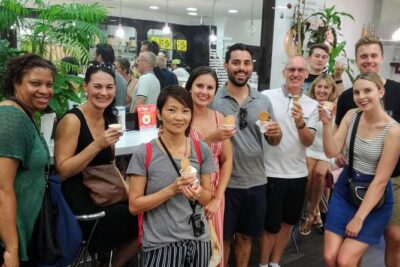
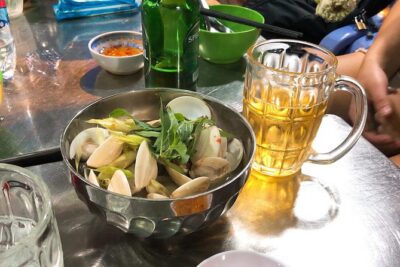
Saigon By Night and Street Food By Motorbike | Opt: Ao Dai Riders
Read our review →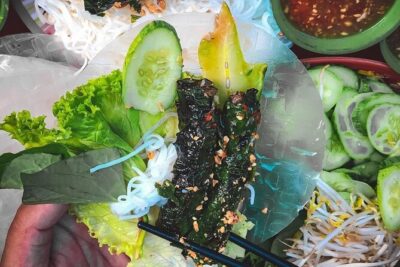
Private Street Food Tour by Motorbike/Car with Local Students
Read our review →
Cinque Terre Park Day Trip with Optional Street Food
Read our review →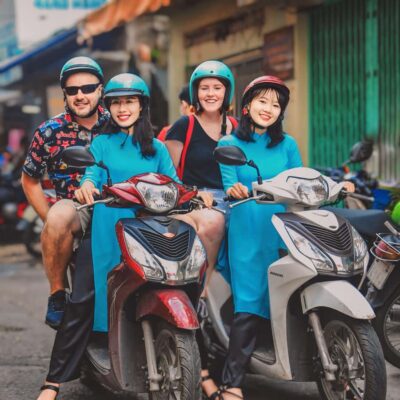
Street Food Tasting & Sightseeing Tour by Motorbike
Read our review →Browse the lists this tour appears in