REVIEW · PRIVATE
Discover Bucharest: Private Highlights and Traditional Food Tour
Bucharest tells its story on foot. This private four-hour tour links Revolution Square, Calea Victoriei, Old Town, and Palace Square with a three-course Romanian meal, giving you both the city’s grand monuments and its everyday flavor. I like the personal format and the chance to ask direct questions, especially with guides such as Elena, Dana, Andrea, or Andrei, who have earned praise for clear English and warm local insight. I also like that the food is part of the experience, not an afterthought. The main consideration is the walking: expect several kilometers, and Bucharest weather can turn a pleasant outing into a chilly or hot one.
You meet at 11 a.m. by the equestrian statue of King Carol I and finish at Piața Unirii. The $143.61 price per person makes the most sense for couples, families, or small groups that value a private guide and a substantial meal. It is less compelling if you mainly want quick photo stops or prefer to explore independently.
Key points to know before booking
- King Carol I statue to Piața Unirii: The route crosses Bucharest’s central story, from royal Romania to communism and today’s city.
- A private walking format: Your guide can adjust the pace, answer your questions, and tailor food choices to your interests.
- Romanian classics for lunch: Expect a three-course meal with a drink, and look for mici, sarmale, soups, and papanasi.
- Old Town beyond the main lanes: The walk can include passages, an old caravanserai, small shops, and details you could easily miss alone.
- Palace of the Parliament context: You see the building from outside and learn how entire historic neighborhoods were cleared for it.
- Good first-day timing: The 11 a.m. start leaves you with an afternoon in Bucharest and useful restaurant tips for later.
Why this four-hour walk works as a first look at Bucharest
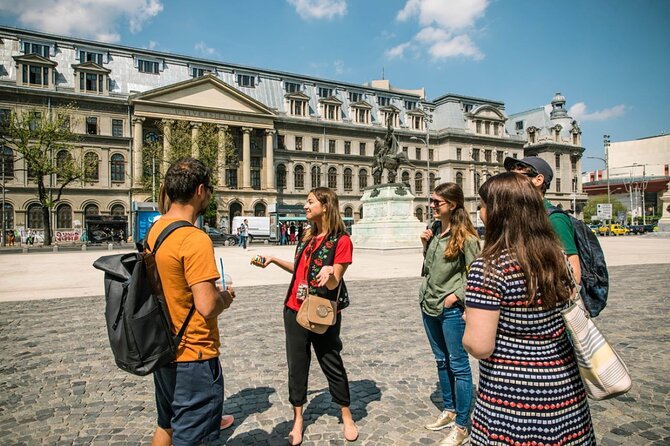
Bucharest is not a city you understand from one postcard view. Its center mixes royal monuments, French-inspired avenues, Orthodox churches, Ottoman-era traces, narrow Old Town passages, and the huge concrete legacy of Nicolae Ceaușescu’s communist rule.
That mixture is the real reason to book this outing. You are not simply ticking off buildings. You are moving through the changes that shaped the city, with a local guide explaining why one street looks elegant, another feels worn, and a third seems to have been dropped into place from a different century.
The private setup matters. If you want to ask why a statue has a particular pose, how Bucharest changed after communism, or what locals actually eat, you do not need to wait for a group to move along. Past guides have included Elena, Dana Toma, Andrea, Andra, Constantin, Cristina, Emma, Mircea, and Andrei. The names may vary by date, but the strongest descriptions point to guides who bring patience, humor, and personal stories rather than delivering a stiff lecture.
I would place this tour near the start of a Bucharest stay. The 11 a.m. departure gives you enough morning time to reach the meeting point without a frantic breakfast, and the finish at Piața Unirii puts you in a useful central area for continuing on foot or using public transportation.
More private experiences in the world:
- Private Street Food Tour by Motorbike/Car with Local Students
★ 5.0 · 3,950 reviews - Private Street Food Evening Walking Tour in Ho Chi Minh City
★ 5.0 · 3,175 reviews - Private Street Food Motorbike Tour in Ho Chi Minh City
★ 5.0 · 2,180 reviews
Starting at King Carol I and Revolution Square
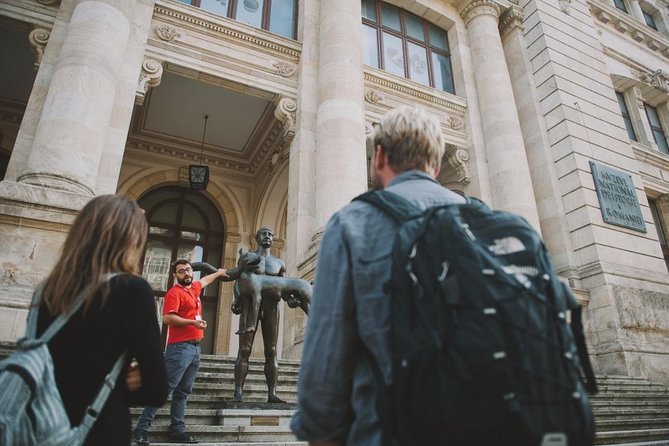
The meeting point is the equestrian statue of King Carol I in Sector 1, beside Revolution Square. This is a fitting place to begin because the square carries several layers of Romanian public life.
Your guide can explain the royal period, the city’s French architectural influence, and the political events that made Revolution Square internationally known. The horse statue itself offers a small detail that rewards attention: the position of the horse’s tail is tied to a local monument story. Details like this give the tour a human scale before the route turns toward bigger subjects.
The starting area also helps you see how Bucharest’s image can shift within a few steps. Formal buildings and wide avenues sit near traces of conflict and political upheaval. I appreciate tours that use one square to establish a timeline instead of treating each monument as an isolated object.
Do not expect a museum visit here. The value is the explanation offered while you walk and look. If your interest is mainly in going inside major buildings, this tour may feel light on interiors. Its strength is the city street itself.
Calea Victoriei and the Orthodox church
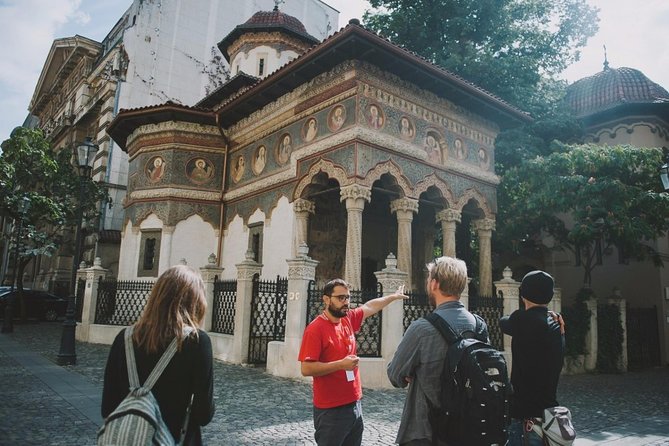
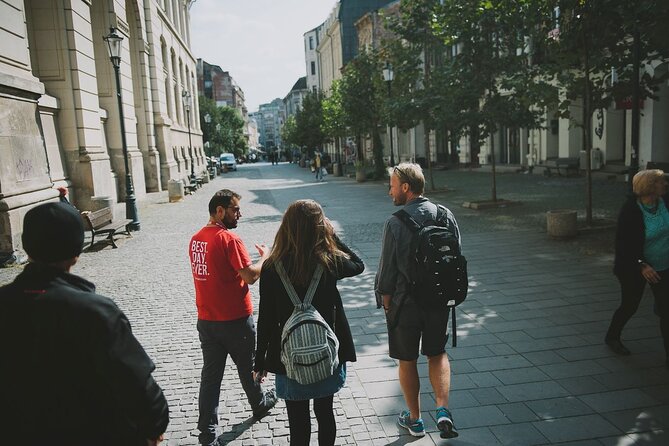
From the square, the route takes you along Calea Victoriei, one of Bucharest’s oldest and most attractive avenues. It is lined with important buildings and gives you a useful introduction to the city’s royal, aristocratic, and cultural side.
One stop is an 18th-century Eastern Orthodox church located on the avenue. The church adds a quieter note to the route. Its age and religious character help balance the grander monuments, while the guide can place Orthodox traditions within the wider story of Romania.
Calea Victoriei is also a good setting for discussing French influence. Bucharest is sometimes called Little Paris, a nickname linked to its architecture and 19th-century cultural connections. The tour does not reduce the city to that label. Instead, it shows how French-inspired design became one layer in a place also shaped by Ottoman pressure, local traditions, monarchy, communism, and modern change.
The street is not just scenery. It is a lesson in how cities borrow ideas and then make them their own. Look up as you walk, but also watch your footing. You are on a city walk, not a coach tour, and the route continues through streets where the pavement may not feel perfectly even.
Old Town streets, passages, and local details
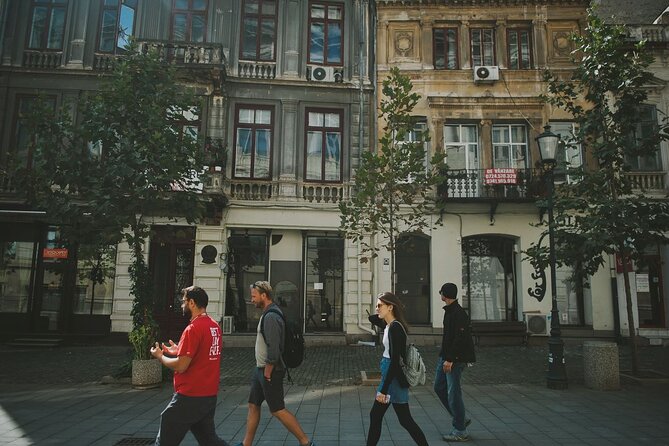
The Old Town section is likely the most relaxed part of the outing. You turn into meandering streets in the historic heart of Bucharest, moving from major avenues into narrower lanes and passages.
This is where a private guide can add real value. A guide named Dana Toma, for example, has been praised for pointing out small shops and allowing time for browsing. That included a tiny hat shop where the maker was present and a jewelry shop featuring handmade work by Roma artisans. These stops are not promised on every departure, but they show the kind of unplanned local detail that can make a private walk feel personal.
The route may also include an old caravanserai, a reminder of the commercial world that connected Bucharest with Ottoman trade. The city’s past was not only palaces and political speeches. Merchants, craftspeople, religious communities, and ordinary residents shaped these streets too.
Your guide can connect the Old Town to Ottoman rule, French aristocratic influence, and modern Romanian life. That broad span is one of the tour’s best features. You get context for the buildings, but you also hear what it is like to live in Bucharest now.
The main drawback is that Old Town can be lively and crowded at times, though the exact conditions depend on the day. The tour is still on foot, so you should wear practical shoes. Families can join, and children under six are free, but younger children may find several hours of walking tiring.
A few more food tours in the world worth a look
- Reykjavik Food Walk – Local Foodie Adventure in Iceland
★ 5.0 · 18,952 reviews - Ho Chi Minh City Street Food Tour & Sightseeing By Motorbike
★ 5.0 · 9,413 reviews - Tokyo: Shinjuku Food Tour (13 Dishes at 4 Local Eateries)
★ 5.0 · 6,603 reviews - Winner 2025 Undiscovered Lisbon Food & Wine Tour by Eating Europe
★ 5.0 · 6,390 reviews
Communist Bucharest and the Palace of the Parliament
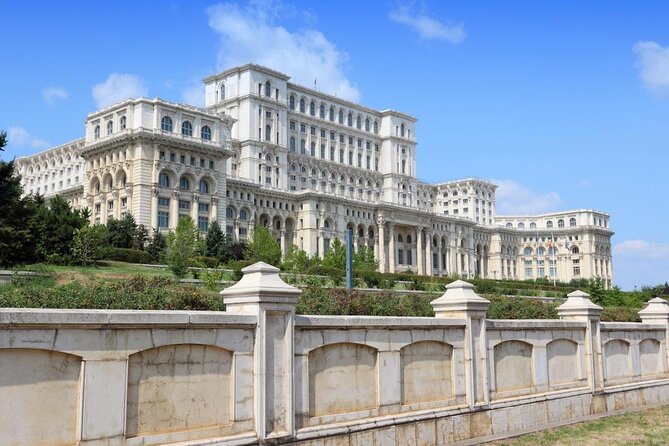
The political story grows larger as the route reaches another major square and the Palace of the Parliament. This is the tour’s strongest architectural shock.
The building is the world’s second-largest administrative building after the Pentagon. Its scale is the point. It was created as part of Ceaușescu’s grand redevelopment plan, and its construction required the destruction of historic neighborhoods. Entire communities were displaced to make room for this megalomaniac complex.
The guide’s explanation is more important than the photo stop. From the outside, you see a vast government structure. With context, you also see the cost of the project: demolished homes, erased streets, and the force of a dictatorship imposed on the capital.
The route goes behind the colossal buildings to see remnants of an earlier era. That contrast is useful. You are not left with the easy idea that old Bucharest disappeared completely. Some fragments remain, and the guide can help you understand what survived and what did not.
Do not book this experience expecting an interior tour of the Palace of the Parliament. The supplied plan describes an exterior look and a discussion of the surrounding destruction. If entering the building is your main goal, you will need to arrange that separately.
The Romanian meal: mici, sarmale, soup, and papanasi
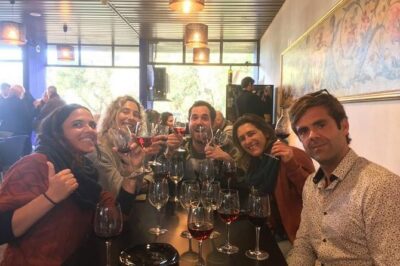
The food is not a token snack. You receive a three-course traditional Romanian meal at a charming restaurant, along with Romanian wine, local beer, or a soft drink.
The exact restaurant can vary, but Caru’ cu Bere has been used on this type of route. It is a historic restaurant with a lively setting and traditional dishes. The menu may allow choices rather than forcing everyone into the same fixed plate, which is a major advantage for curious eaters and families with different tastes.
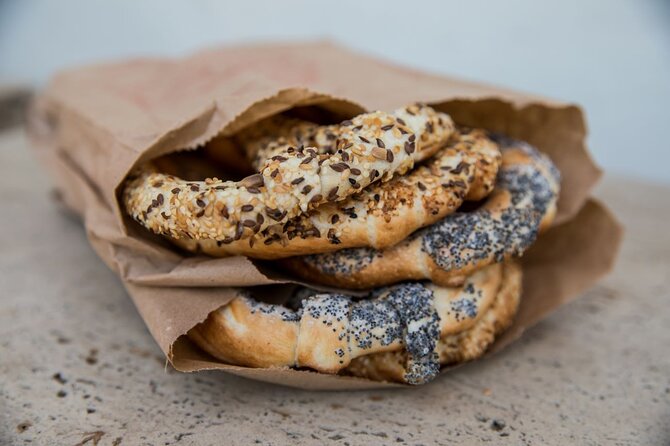
You might choose mici, pronounced meesh, the small grilled rolls of seasoned mixed meat. Sarmale, meat-filled cabbage rolls, offer a more substantial taste of home-style Romanian cooking. Soups, meat dishes, and dessert may also feature, depending on the menu and arrangements that day.
Save room for papanasi. This rich Romanian dessert is repeatedly singled out as a highlight, and it is the sort of dish worth ordering even if you think you are too full. The meal can be generous, so arrive hungry. Additional food and drinks beyond the included meal are not covered.
The dining portion gives you time to ask questions without walking. Guides have helped guests switch to other traditional dishes when they had already tried a particular plate, which is useful if you have dietary preferences or want to compare foods. Still, do not assume every substitution is guaranteed. Tell the guide early what you like or cannot eat.
Food also turns the history into something tangible. You are not only hearing about Romania’s past. You are tasting dishes that remain part of everyday culture. That makes the lunch worth more than a standard tour stop.
What the private format is really worth
At $143.61 per person, this is not a budget walking tour. The price needs to be judged against what is included: about four hours with an English-speaking local guide, a private experience for your group, a full three-course meal, and a drink.
For two people, the cost buys privacy and flexibility. You can ask more questions, walk at your own speed, and spend extra time on subjects that matter to you. For a family or small group, the private format can be easier than joining strangers with different interests and energy levels.
The value is weaker if you are comfortable reading about Bucharest on your own and only want to see the outside of a few buildings. You could spend far less on independent sightseeing and a restaurant meal. In that case, the tour’s price pays mainly for interpretation, local recommendations, and convenience.
The company describes the experience as carbon neutral and operates as a B Corp certified business committed to using tourism for social good. That will not change the route or meal, but it may matter if you prefer a company with stated environmental and social aims.
Pace, weather, and practical planning
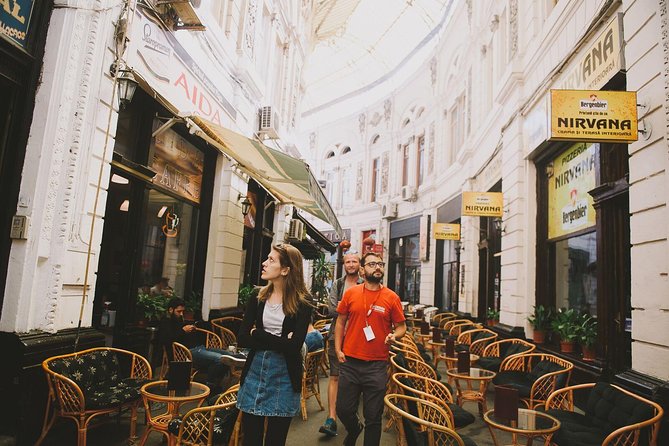
The tour lasts about four hours and includes substantial walking. One past outing covered several kilometers, while another took place during snow and strong wind. The guide adjusted the pace and even helped find gloves for a guest who was not used to winter weather.
That suggests a flexible approach, but you should still dress for the forecast. Bucharest can be sunny and chilly, or hot enough to make a long walk uncomfortable. Comfortable shoes are essential, and a small bottle of water is sensible, especially if you plan to continue exploring after lunch.
The tour is offered in English and uses a mobile ticket. It is near public transportation, and most people can take part. Service animals are allowed. Since the end point is Piața Unirii rather than the starting statue, you should not plan on returning to the meeting point as part of the tour.
The activity is child-friendly, with children under six admitted free. The private setting is helpful for families because the guide can avoid pushing the group at an unsuitable pace. Still, the meal and walking time mean that very young children may need patience and breaks.
Free cancellation is available up to 24 hours before the local start time. Changes or cancellations inside that window are not accepted for a refund, so check your plans before the deadline.
Should you book this Bucharest tour?
Book it if you want a friendly introduction to Bucharest that combines monuments, political history, Old Town details, and a proper Romanian meal. It is especially useful on your first day or two, when a local guide can give you a mental map and suggest bars, restaurants, and further sights.
I would choose it for couples, families, food-minded visitors, and anyone who prefers conversation to a large scheduled group. The strongest guides appear to make the experience personal, and the private format lets you focus on the subjects you care about.
Skip it if you dislike walking, need extensive indoor sightseeing, or mainly want a low-cost orientation. The Palace of the Parliament is viewed from outside, and the route can be tiring in poor weather.
For the right visitor, the appeal is simple: you walk through Bucharest’s contradictions, then sit down to eat them in the most pleasant possible way. The city’s grand avenue, old lanes, communist monument, and hearty food all fit into one well-shaped morning and afternoon.
FAQ
How long does the Bucharest food and history tour last?
The tour lasts approximately four hours.
Where does the tour start?
It starts at 11 a.m. by the Equestrian Statue of King Carol I in Sector 1, Bucharest.
Where does the tour finish?
The tour ends at Piața Unirii in Bucharest.
Is this a private tour?
Yes. Only your own group participates.
What food and drink are included?
A three-course traditional Romanian meal is included, along with Romanian wine, locally brewed beer, or a soft drink.
Is the tour suitable for children?
Yes. It is child-friendly, and children under six can join free of charge.
Can I cancel for a full refund?
Yes. You can cancel at least 24 hours before the local start time for a full refund. Cancellations or changes made less than 24 hours before the start are not accepted for a refund.
Just added in the world
- Private Chicago Food Tour with Deep Dish and Beef Sandwich★ 5.0 · 61 reviews
- River North Food Walking Tour★ 4.5 · 88 reviews
- Chicago Food Tour: Taste the City’s Most Iconic Eats★ 5.0 · 111 reviews
- Chicago’s West Side Foodie Ride Bike Tour★ 5.0 · 112 reviews
- Old Town Chiang Mai Food Tour with 10+ Local Dishes Tastings★ 5.0 · 21 reviews
- Go where the locals go, Eat what the locals eat! Food Tour with Local Foodies★ 5.0 · 138 reviews
- Motorbike Food Tour in Chiang Mai★ 5.0 · 54 reviews
- Food Trail Through Sowcarpet Market: A Taste of Chennai★ 5.0 · 38 reviews
Private, compared.
Private Street Food Tour by Motorbike/Car with Local Students
Read our review →
Private Street Food Evening Walking Tour in Ho Chi Minh City
Read our review →
Private Street Food Motorbike Tour in Ho Chi Minh City
Read our review →
Lisbon Exclusive PRIVATE Food Tour with 6 or 10 Tastings
Read our review →
Private Hanoi Street Food Walking Tour With Real Foodie
Read our review →
Private Montmartre Food Tour with Wine, Cheese & Pastries
Read our review →
The Award-Winning PRIVATE Food Tour: 10 Tastings of 3 Cultures
Read our review →