
REVIEW · MOROCCO FOOD TOURS
Discovery of Moroccan Culinary Heritage, History and Secrets
Food can explain a country faster than a map. This Marrakech experience combines a Moroccan cooking class with the Moroccan Culinary Arts Museum, so you get both practical kitchen time and a look at the customs behind the food. I like the beautiful riad setting and the chance to learn from a traditional cook, called a Dada. The main caution is that the advertised timing and language arrangements need checking before you book.
The class covers bread, spices, salads, tajine, couscous, tea, and other kitchen basics in a teaching kitchen with 34 stations. I also like that the meal you prepare is part of the experience, not just a demonstration. Still, French or English instruction may depend on the group and staffing, and one customer booked in English but received the class in French.
Key points at a glance
- A traditional Dada leads the cooking: You learn the practical tricks of seasoning, baking, and cooking Moroccan dishes.
- The class takes place in a restored riad: The building itself is one of the strongest parts of the experience, with a courtyard, Moroccan living room, museum displays, and terrace.
- You visit a neighborhood bread oven and herbalist: This connects the recipes to the local places where bread and spices are part of daily life.
- You cook several dishes, not just one: Past classes have included two Moroccan salads, a chicken tajine, and dessert, though the exact menu can change.
- The meal is served after class: Lunch, bottled water, and coffee or tea are listed as included, while Moroccan wine is optional and alcohol costs extra.
- The group can be as large as 34 people: The dedicated stations help, but this is not an intimate private lesson.
A restored riad near Bahia Palace
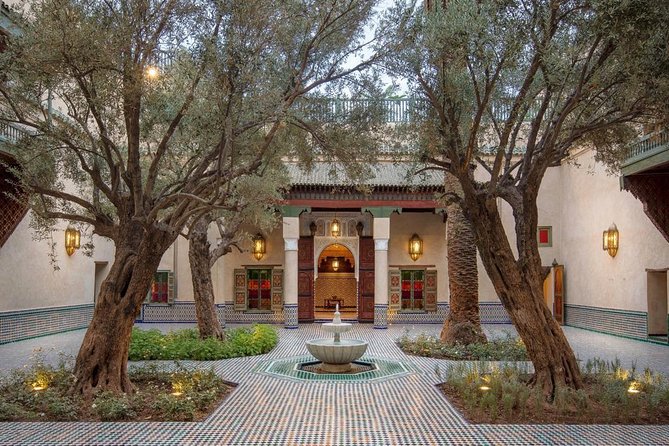
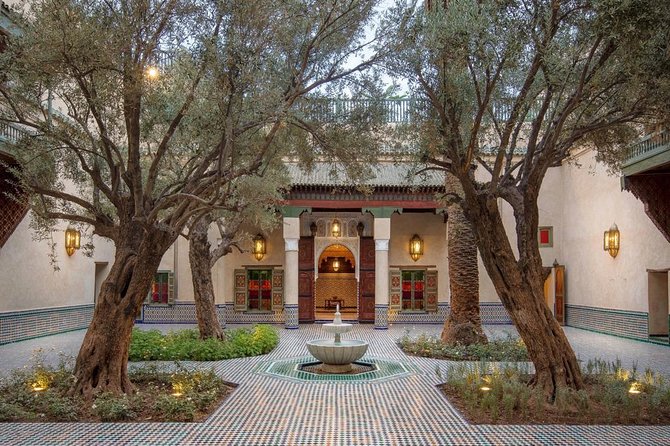
The meeting point is the Moroccan Culinary Arts Museum on Rue Riad Zitoun el Jdid, close to Bahia Palace in Marrakech’s old city. The building is a former residence connected with Bahia Palace, and its restored rooms provide a memorable setting before you even reach the kitchen.
You enter through a reception area and move into a traditional Moroccan house with a courtyard, displays, a living room, and a terrace. Several people have found the architecture more impressive than the museum exhibits. That is useful to know. You are paying for an experience inside a beautiful historic building, but the museum portion may feel fairly light if you want a major collection of rare objects.
The location also gives you a practical choice. You can pair this activity with Bahia Palace, since the two are only a short walk apart. If Bahia feels too crowded, the culinary museum can offer a calmer change of pace. Some visitors have found the courtyard notably quiet compared with nearby attractions.
The museum explains Moroccan food through photographs, videos, utensils, dining furniture, serving pieces, and information about local preparation methods. You might see how bread, pastilla, tajine, tangia, salads, and other foods fit into Moroccan cooking. It is less a formal art museum than an introduction to the way food is prepared, served, and shared.
More history tours in Morocco:
- Barcelona: Tapas Walking Tour with Food, Wine, and History
★ 4.8 · 4,261 reviews - Sevilla Food Tour: Tapas, Wine, History & Traditions
★ 5.0 · 3,468 reviews - Madrid Tapas & Taverns Small Group Food & History Tour
★ 5.0 · 2,664 reviews
Meeting the Dada in the teaching kitchen
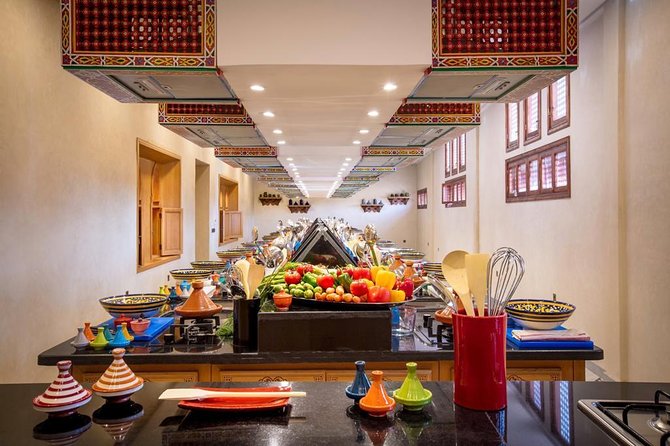
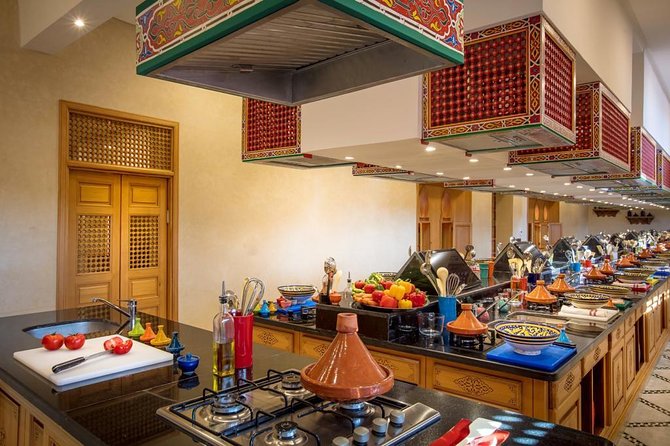
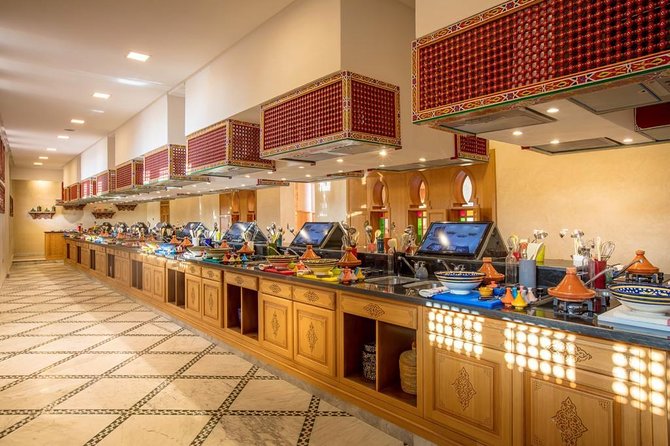
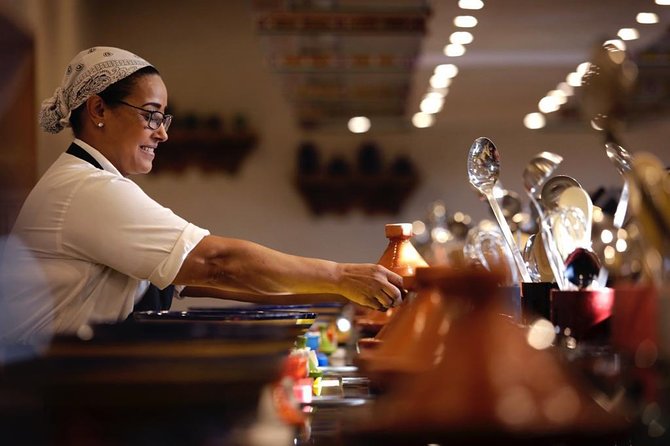
The cooking portion takes place upstairs, where the riad has 34 kitchen stations. That number tells you two things. First, the kitchen was designed for teaching, with each participant able to take part rather than simply watch. Second, the class may feel like a group activity instead of a quiet lesson around a family stove.
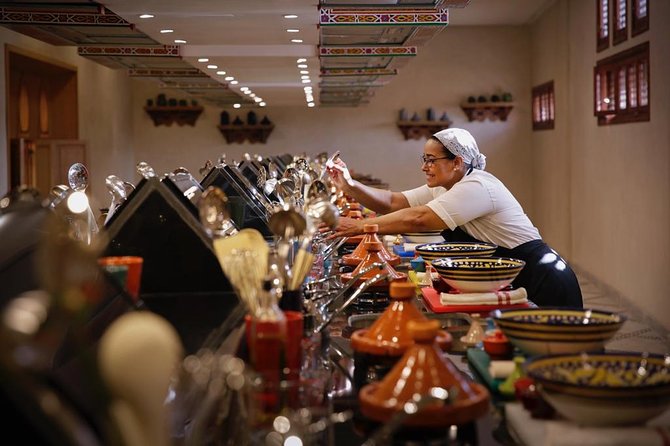
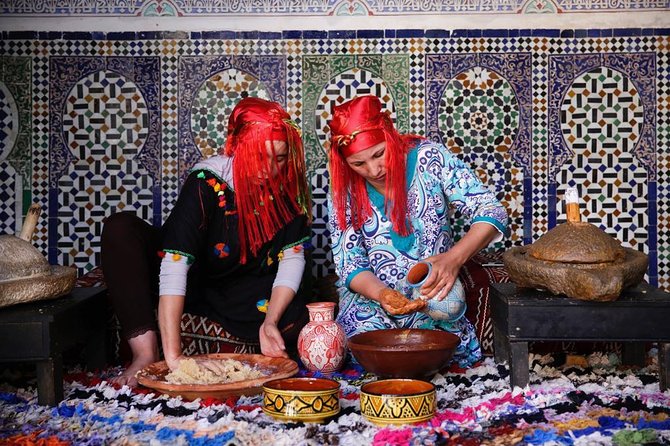
A Dada, the traditional Moroccan cook who teaches the class, demonstrates how to measure spices and build flavor. The useful part is not just learning that a dish contains cumin, paprika, saffron, ginger, or herbs. You also see how much to use, when to add it, and how Moroccan cooks balance sweet, savory, fragrant, and earthy flavors.
That hands-on format suits people who want to recreate the meal at home. It is also friendly to beginners. One class included a participant who described herself as a poor cook and still had a good time, with verbal and hands-on help from the teacher and assistants.
The instructors have taught mixed groups in English and French, including couples, families, and groups of Italian friends. A 12-year-old joined one class with a grandparent, so the activity can work well for older children who enjoy food and simple kitchen tasks. You should still confirm the teaching language at booking, especially if clear English instruction matters to you.
Bread, spices, and the neighborhood connection
The class includes a demonstration of Moroccan bread making, followed by a visit to a local bread oven and an herbalist in the district. This is one of the most useful parts of the program because it takes the lesson out of the polished kitchen.
Bread has a central place in Moroccan meals, and seeing the oven gives you a better sense of how an everyday staple is made and handled. The herbalist visit adds context to the spice lesson. Instead of seeing jars on a classroom shelf, you connect the ingredients with a real neighborhood source.
The available information does not give a fixed list of herbs or specify exactly how long these visits last. Expect a short introduction rather than a full market tour. The activity remains centered on cooking, not on shopping or sightseeing.
What you may cook during the class
The exact menu is not fixed in the information provided, but past classes have included two Moroccan salads, a tajine, and dessert. Another description mentions chicken tajine and typical Moroccan dishes. The program also highlights couscous and other cooking secrets, so you should ask what your session will prepare if a particular dish matters to you.
The menu matters because Moroccan food is far more varied than the familiar tajine served in tourist restaurants. Salads may include cooked vegetables, herbs, spices, and preserved flavors. Tajine teaches you about slow cooking and the way a conical clay pot keeps food moist. Couscous brings different techniques, textures, and serving customs.
You are not simply handed a plate at the end. You help make the dishes, then sit down to eat them. That makes the lunch more rewarding, especially if you want to remember the process rather than only the taste.
The kitchen has professional-grade equipment and is arranged for instruction. That should make the steps easier to follow than a demonstration in a busy restaurant. Yet a large class can still mean waiting for help, particularly when several people need attention at once.
A few more food tours in Morocco worth a look
- Marrakech: Street Food Tour with a Local Guide
★ 4.9 · 3,119 reviews - Marrakech: Street Food Tour by Night
★ 4.8 · 2,838 reviews - Authentic Moroccan Food Tour in Marrakech with Dinner
★ 5.0 · 1,423 reviews - Marrakech: Jemma El Fnaa Food Tour with Dinner
★ 4.7 · 394 reviews
Tea, terrace dining, and optional Moroccan wine
After cooking, you take part in a Moroccan tea ceremony. Tea is not just a drink here. The ceremony gives the meal a social rhythm and introduces a familiar part of Moroccan hospitality.
The prepared dishes are served on the terrace, where you can eat in the riad setting. Lunch, bottled water, and coffee or tea are listed as included. However, one customer reported being charged for water and not being offered tea or coffee, so I would confirm the inclusions when you arrive rather than assume every item will appear automatically.
Moroccan wine is available as an optional discovery, but alcoholic beverages are not included in the advertised price. If you want the wine pairing, budget extra and check the cost before ordering. If you do not drink, the tea ceremony and prepared meal remain the heart of the experience.
The terrace meal also changes the pace of the activity. You move from instruction and chopping to sitting down together, which gives you time to compare the finished dishes and enjoy the setting. Do not expect a long restaurant lunch. The whole activity is listed as approximately two hours, although it is also described elsewhere as a half-day class.
Is the $69.79 price fair?
At $69.79 per person, this is more expensive than a simple museum ticket or a casual meal in Marrakech. The value depends on how much of the full program you receive.
You are paying for several parts at once: museum access, a guided food introduction, the bread and herbalist visits, hands-on cooking, the tea ceremony, lunch, and use of a purpose-built kitchen. If you take part in the full class and eat the dishes you prepared, the price is reasonable for a structured food experience in a restored riad.
The value is weaker if you expected an extensive museum or a private cooking lesson. The museum displays are informative but may not satisfy someone looking for a large collection. And with a maximum of 34 participants, the atmosphere can be social and organized rather than personal.
For a food-focused first visit to Marrakech, I consider the price defensible because the class gives you skills and context. For someone who only wants to see the building, a museum admission and tasting option may be enough, if available separately. Older information has listed standalone museum prices in Moroccan dirhams, but those amounts may no longer apply, so check current pricing directly.
Language, group size, and practical details
The experience offers a French or English interpreter for the introduction and class. Because one English booking was reportedly conducted in French, language is the most important practical point to confirm in advance.
The maximum group size is 34. That sounds large, but the 34 stations are meant to match the capacity. You should still expect other people around you and possible delays when the instructor moves between stations.
The activity begins and ends at the Moroccan Culinary Arts Museum. It is near public transportation, and service animals are allowed. No hotel pickup is listed, so plan to reach Rue Riad Zitoun el Jdid on your own.
Confirmation is normally sent at booking, but reservations made within one day of the start time are confirmed as soon as possible and depend on space. Free cancellation is available up to 24 hours before the start. Cancellations or changes made inside that 24-hour window are not refunded.
Names at the museum can help you feel oriented. Younes has been identified as a welcoming reception contact, and Yasmina is listed as the general manager. Staff hospitality is a recurring strength of the experience, with tea and a friendly welcome often setting the tone.
Who should book this cooking experience?
I would choose this for you if food is one of the main reasons you came to Morocco. It is also a good fit for couples, families with older children, and first-time visitors who want an introduction to local dishes without spending a full day outside Marrakech.
The class is especially useful if you like to learn by doing. You will remember the seasoning and cooking steps better after preparing the food yourself. It also gives you a clearer idea of the difference between dishes that can look similar on a restaurant menu, such as tajine and tangia.
I would be more cautious if you want a small, private class, a long market visit, or a detailed academic museum tour. The displays may feel modest, and the large maximum group size can reduce personal attention. Also confirm the language, duration, and included drinks before paying.
Should you book the Moroccan Culinary Arts Museum class?
Book it if you want a hands-on introduction to Moroccan food in a beautiful riad, with a meal at the end and enough cultural context to make the recipes meaningful. The bread oven, herbalist visit, tea ceremony, and terrace dining give the class more range than a standard kitchen lesson.
Skip it if you only want a quick museum stop or a private chef experience. For everyone else, the combination of food, architecture, and practical instruction makes this a worthwhile Marrakech activity, provided you confirm the session language and what is included on your date.
FAQ
Where does the experience start and end?
It starts and ends at the Moroccan Culinary Arts Museum on Rue Riad Zitoun el Jdid, Marrakesh 40000, Morocco.
How long does the experience last?
The tour is listed as approximately two hours. Other information describes it as a half-day cooking class, so confirm the expected duration when booking.
What food can I expect to prepare?
The class may include Moroccan salads, tajine, couscous, dessert, and other traditional dishes. Past sessions have included two salads, chicken tajine, and dessert.
Is lunch included?
Yes. Lunch is listed as included, along with bottled water and coffee or tea.
Are alcoholic drinks included?
No. Alcoholic beverages are not included. Moroccan wine may be available as an optional extra.
Is the class offered in English?
The experience offers a French or English interpreter. Because language arrangements can vary, confirm that your session will be taught in English if needed.
How many people can join?
The maximum group size is 34 people, and the kitchen has 34 teaching stations.
Are service animals allowed?
Yes. Service animals are allowed, and the museum is near public transportation.
What is the cancellation policy?
You can cancel up to 24 hours before the start time for a full refund. Cancellations or changes made less than 24 hours before the experience are not refunded.
Just added in Morocco
- Casablanca Food Tour★ 5.0 · 60 reviews
- Casablanca Food Tour – Moroccan Street Food Tour★ 5.0 · 86 reviews
- Authentic Food Tour in Agadir – Eat Like A Local★ 5.0 · 117 reviews
- Tangier: Food Walking Tour★ 4.9 · 43 reviews
- Rabat: Walking Food Tour★ 4.9 · 48 reviews
- Marrakech Night Street Food Tour / Taste The Real Marrakech★ 4.9 · 200 reviews
- Marrakech: Medina Stories Food Tour with 15+ Tastings★ 5.0 · 141 reviews
- Marrakesh: Guided Street Food Tasting by Locals★ 4.6 · 47 reviews
Historical Tours, compared.
Tapas Walking Tour with Food, Wine, and History
Read our review →
Sevilla Food Tour: Tapas, Wine, History & Traditions
Read our review →
Madrid Tapas & Taverns Small Group Food & History Tour
Read our review →
Barcelona Tapas Walking Tour: Food, Wine & History
Read our review →
Boston Food & History: Pizza, North End & Freedom Trail
Read our review →Browse the lists this tour appears in