
REVIEW · MOROCCO FOOD TOURS
Marrakech: Street Food Tour with a Local Guide
Come hungry, leave happily stuffed. This three-hour Marrakech street food tour combines 10 to 12 local tastings with a walking route through the Medina, Mellah, Kasbah, and souks. I like the way it takes you beyond the obvious tourist stalls, and I like that food, drinks, and all tastings are included in the $34 price.
The guides, including Abdul, Abdoo, Ahmed, Mariam, and Miriam, are praised for explaining dishes, customs, and everyday life in clear, friendly terms. The main drawback is the sheer amount of food: portions can be full-sized, not token samples, so you really should arrive hungry. Evening groups may also encounter crowded lanes, scooter noise, and a cool spell after sunset.
What makes this food tour worth your time
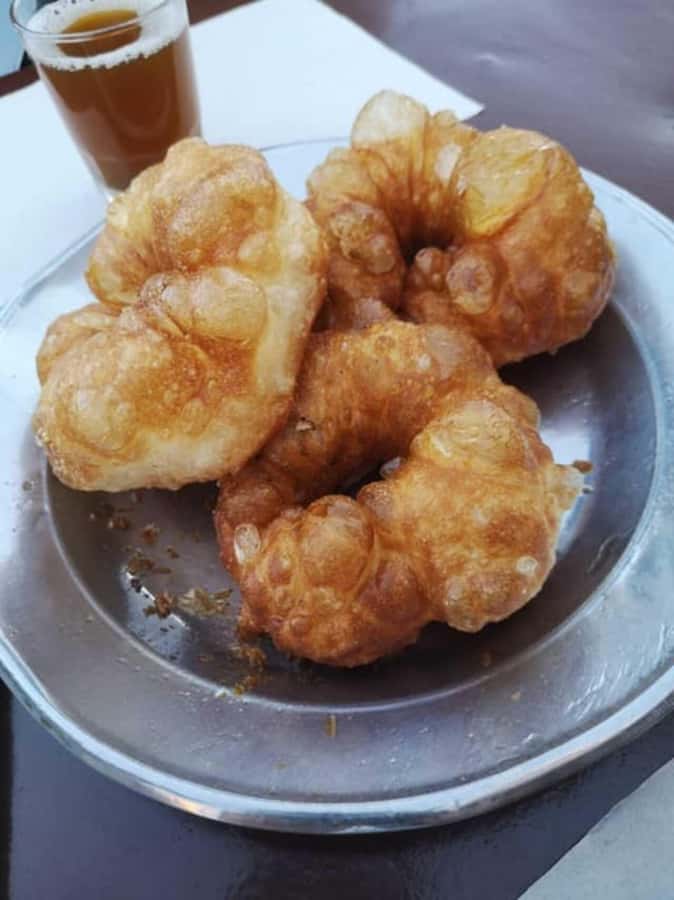
- You taste a dozen Moroccan specialties: Expect a changing mix of msemen, harcha, harira, chebakia, grilled meat, sardine balls, fruit juice, nuts, and more.
- The route uses local eating spots: You walk through areas where residents live and eat, including Riad Zitoun Jdid, Mellah, Kasbah, and Souk Semmarine.
- It works well as a first Marrakech activity: The route helps you get your bearings in the Medina while showing you what to order later.
- Your guide handles the unfamiliar food: Guides explain ingredients, spice levels, customs, and suitable alternatives if you report allergies.
- The price covers the eating: At $34 per person, the included food and drinks make this unusually strong value if you enjoy generous portions.
- You can choose the mood: Shared groups offer company and a lower-cost social feel, while a private tour gives you more personal attention.
Starting at Café Argana in Jemaa el Fnaa
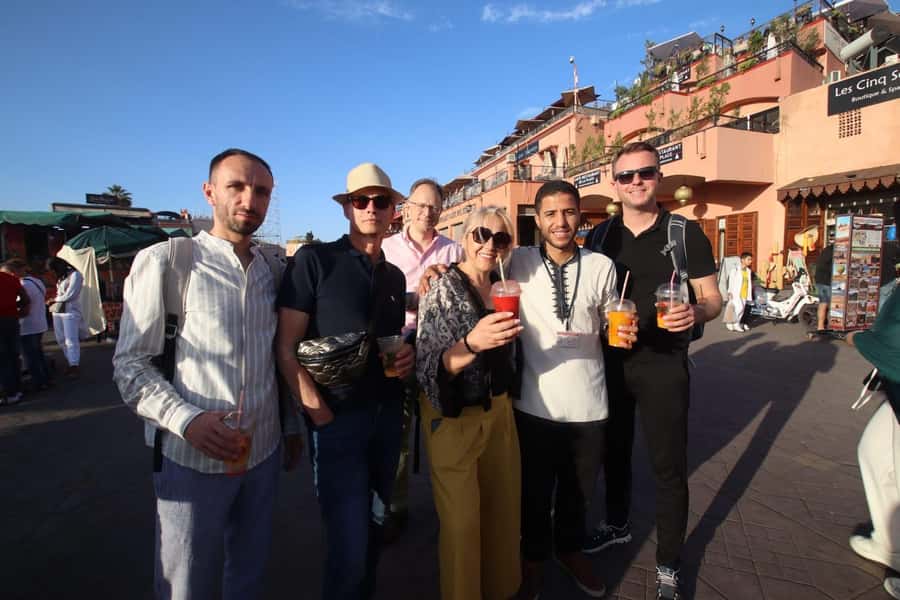
The meeting point is Café Argana, in the center of Marrakech’s Jemaa el Fnaa square. Look for the café’s green symbol, juice sellers nearby, and a large ice cream sculpture in front. The guide waits outside with an official guiding card and checks your name against the booking list.
That clear meeting point matters. Jemaa el Fnaa can feel confusing at first, especially once the square fills with food stands, performers, sellers, and pedestrians. Arrive with enough time to locate the café rather than cutting it close.
The tour begins with a short explanation of the route. From there, you walk between food stops rather than riding in a vehicle. That makes the experience useful beyond the meals because you begin to understand how the Medina connects its main squares, neighborhoods, markets, and historic quarters.
You should wear comfortable shoes. Three hours on foot, with repeated stops and crowded passages, is not the time for hard soles or new sandals.
More street food tours in Morocco:
- Marrakech: Street Food Tour by Night
★ 4.8 · 2,838 reviews - Marrakech Night Street Food Tour / Taste The Real Marrakech
★ 4.9 · 200 reviews - Casablanca Food Tour – Moroccan Street Food Tour
★ 5.0 · 86 reviews
Jemaa el Fnaa: a gentle opening with tea
The first listed stop is Jemaa el Fnaa, where you spend about 25 minutes walking and taking part in a tea ceremony. This gives the guide a chance to introduce Moroccan food customs before the tasting pace picks up.
Mint tea is more than a drink here. It is part of social life and hospitality, and the ceremony offers a simple way to understand that food in Morocco is tied to welcome, conversation, and daily routines. Your guide can also set expectations for the dishes ahead.
The square is an exciting place to begin, but it is also the most public and tourist-facing part of the route. The tour becomes more local in feel once it leaves this central meeting area. Keep an eye on your guide as the group moves through the crowds.
Riad Zitoun Jdid: sweet dishes and street food
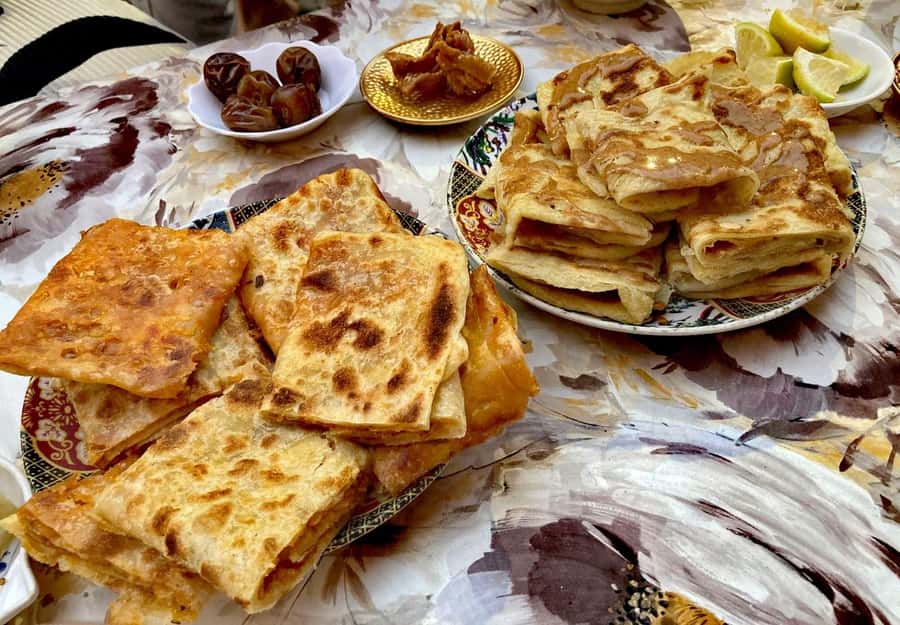
The next stop takes you into Riad Zitoun Jdid for dessert, street food, and a tasting session. The advertised menu can include msemen and harcha, two Moroccan pancake-style foods, as well as sweets such as chebakia.
Msemen is a layered Moroccan pancake that may be served plain or with other ingredients. Harcha is made with semolina and has a different texture. Trying both side by side helps you notice that Moroccan breakfast and snack foods are not limited to the familiar tagine or couscous.
Chebakia brings a sweet contrast. It is often associated with brunch and special occasions, and its dense, honeyed character can be filling early in the tour. This is one reason to resist eating a full meal beforehand.
Riad Zitoun Jdid is also a useful transition from the main square into smaller streets. You are not simply sitting down for a restaurant meal. You are walking, stopping, tasting, and watching the neighborhood operate around you.
Mellah: food, photographs, and a different neighborhood view
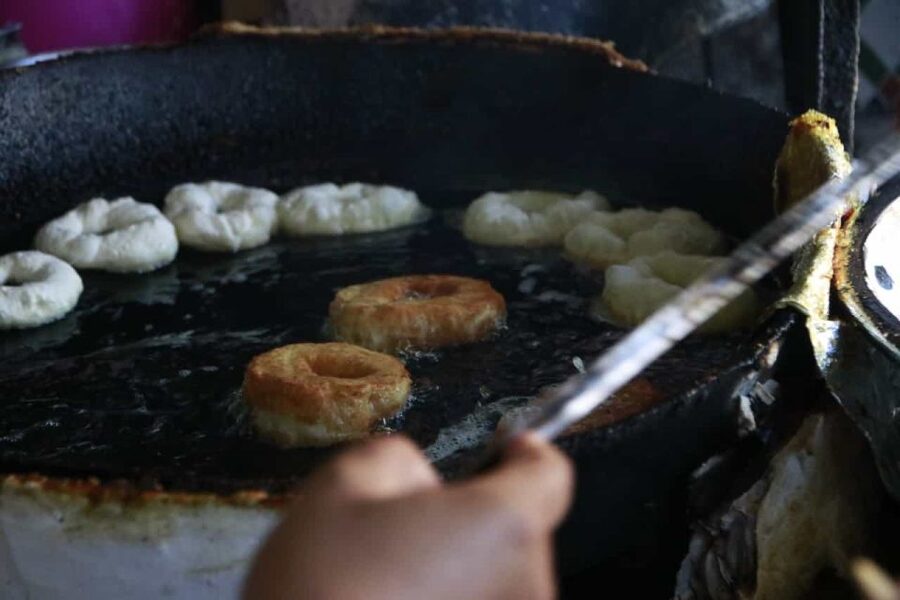
The route continues to Mellah, the former Jewish quarter, for a photo stop, snacks, and more food. This section gives the tour a cultural layer that a simple market tasting would miss.
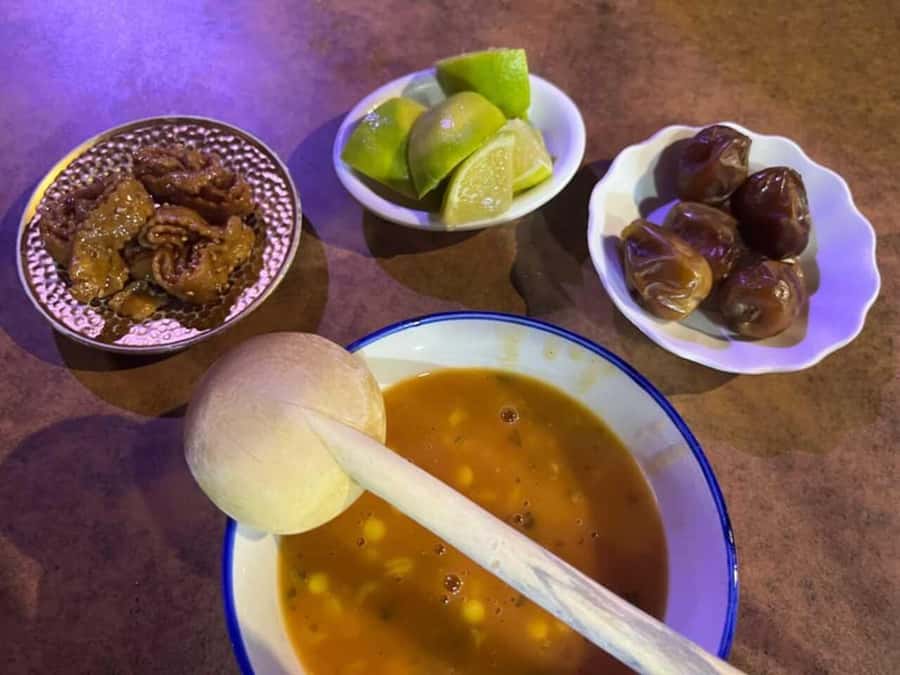
One possible tasting here is harira, Morocco’s famous soup. It is commonly prepared with vegetables and can be served as a substantial, warming dish. Sweet treats may appear alongside it, creating the kind of sweet and savory combination that can seem unusual until you try it.
The Mellah stop is also where the guide’s explanations matter most. You can ask about the food, the quarter, and the customs connected with eating. Several guides are praised for discussing Moroccan daily life as well as the dishes, which makes the tour feel like a neighborhood walk with meals attached.
This area can become crowded at a food stop. If tight spaces bother you, stay close to the guide and leave room for other customers. The groups are expected to keep together, and the guides make an effort to wait for anyone who falls behind.
More food tours with locals in Morocco:
- Authentic Food Tour in Agadir – Eat Like A Local
★ 5.0 · 117 reviews - Naples: Street Food Walking Tour with Local Guide
★ 4.9 · 4,976 reviews - Rome: Street Food Tour with Local Guide
★ 4.8 · 4,077 reviews - Eat Like a Local: Venice 3-Hour Small-Group Food Tasting Tour
★ 5.0 · 3,137 reviews
Kasbah: local snacks and grilled food
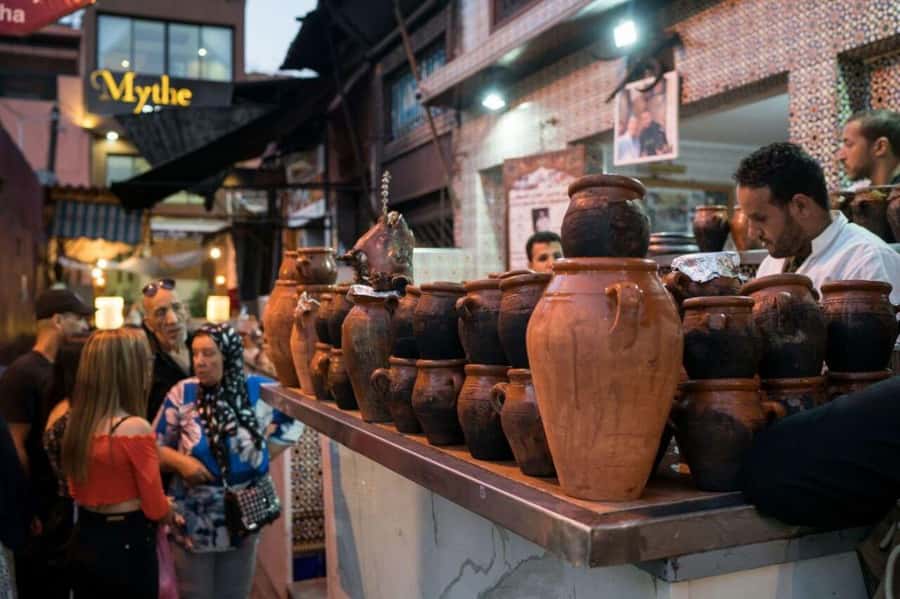
In the Kasbah, the focus returns to street food, local snacks, and regional dishes. Depending on the time and the available foods, you might try chwa, grilled beef or chicken, or sardil mechoui, sardine balls cooked over coals.
These are useful dishes for a first-time visitor because they show the range of Moroccan street eating. The food is not all pastry and soup. You also get grilled meat, fish, bread, vegetables, fruit, and hot drinks.
Another possible stop is khobzaa, bread filled with eggs and vegetables. The dish is straightforward, filling, and closer to an everyday meal than a special-occasion plate. Maklla, described as Moroccan chakchouka, offers another savory option built around cooked vegetables and eggs.
At this point, the tour may feel less like sampling and more like dinner. That is good news for value, but not for anyone who has eaten recently. Several people finish the tour unable to manage another bite, so plan your day around it.
Souk Semmarine: the final market stretch
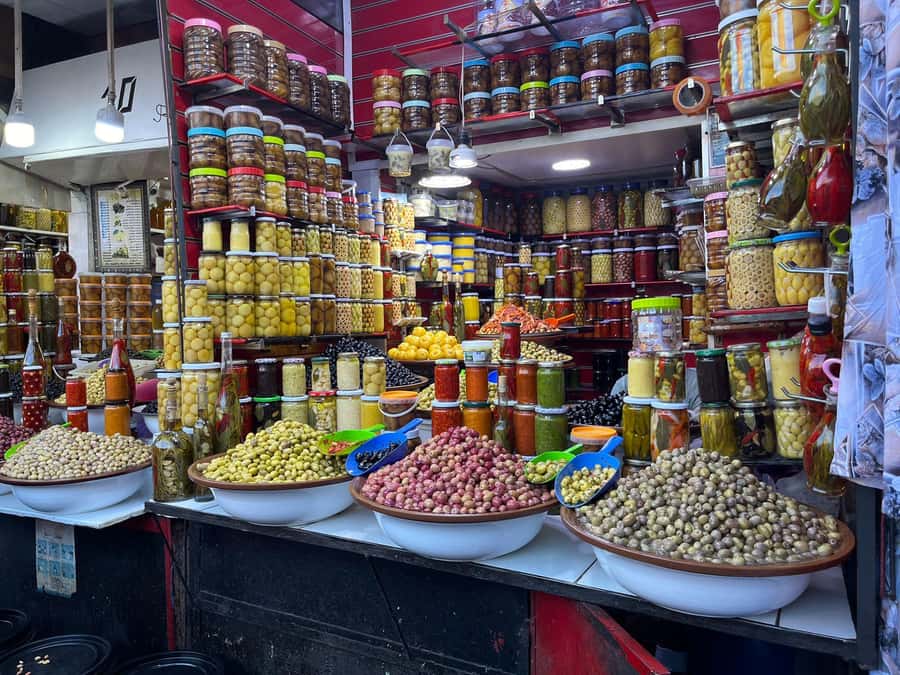
The final major stop is Souk Semmarine, where you have time for a break, a market visit, shopping, and more food. The souk is a good place to put the tasting into context because you see ingredients and finished foods within the same market world.
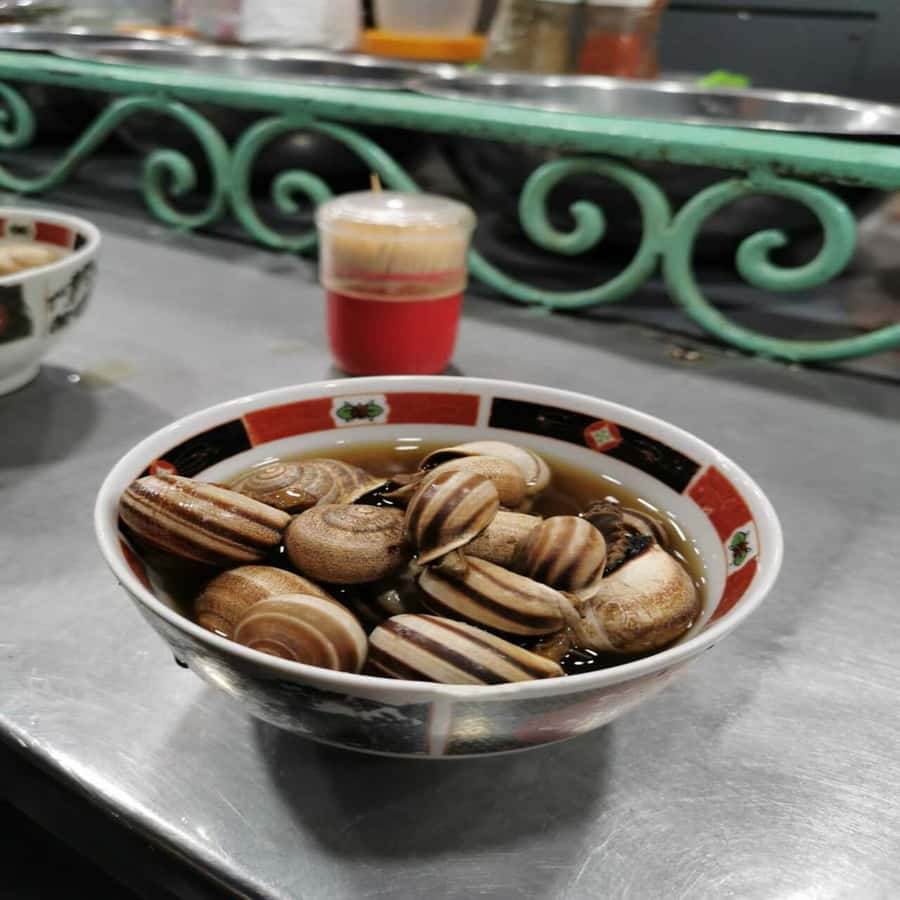
Possible additions include raïb, a Moroccan frozen yogurt, fresh fruit juice called assir, nuts, and berbouche, a snail soup. These are foods many first-time visitors might not order without guidance. A local guide explains what you are looking at and helps make the decision less intimidating.
Snail soup will not appeal to everyone, but it is exactly the sort of specialty that makes this tour more useful than a standard restaurant meal. You can try a small amount, ask questions, and decide what you think without having to order an entire serving on your own.
The souk can also be the noisiest part of the route. Scooters and foot traffic may interrupt conversations. You need to stay alert, listen when the guide gives directions, and keep track of the group.
The route returns to Café Argana after roughly three hours. Since hotel pickup and drop-off are not included, you arrange your own way to the café. Transportation to or from the meeting point may be possible for an added charge if you call ahead.
What you may eat during the three hours
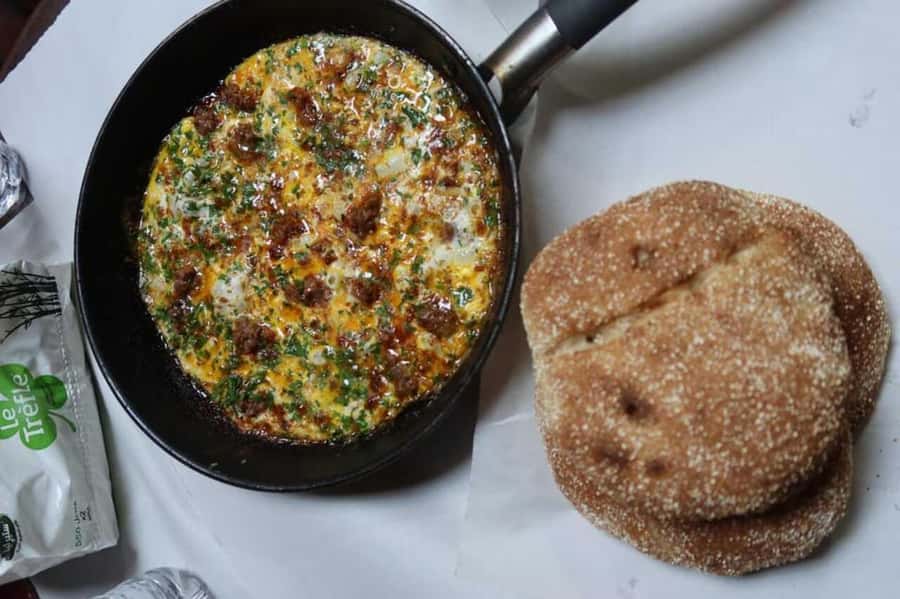
The exact selection depends on the time of day and food availability. Morning and afternoon offerings are not always the same, so think of the following as a likely range rather than a fixed menu:
- Msemen and harcha, Moroccan pancakes
- Harira, a well-known vegetarian Moroccan soup
- Chebakia, a sweet pastry
- Khoudenjal, a hot herbal infusion
- Khobzaa, bread with eggs and vegetables
- Raïb, Moroccan frozen yogurt
- Chwa, grilled beef or chicken
- Berbouche, snail soup
- Sardil mechoui, sardine balls cooked over coals
- Maklla, a Moroccan version of chakchouka
- Assir, fresh fruit juice
- Nuts and other local snacks
The strongest feature is the range. You move from pancakes to soup, sweets to grilled food, fish to fruit juice. The portions are also more generous than many people expect from a tasting tour.
Tell the guide about allergies before the food begins. The tour information says alternatives will be offered where possible, but you should not wait until a dish is in front of you. Alcohol is not included, and alcohol and drugs are not allowed.
The guide can make or break the experience
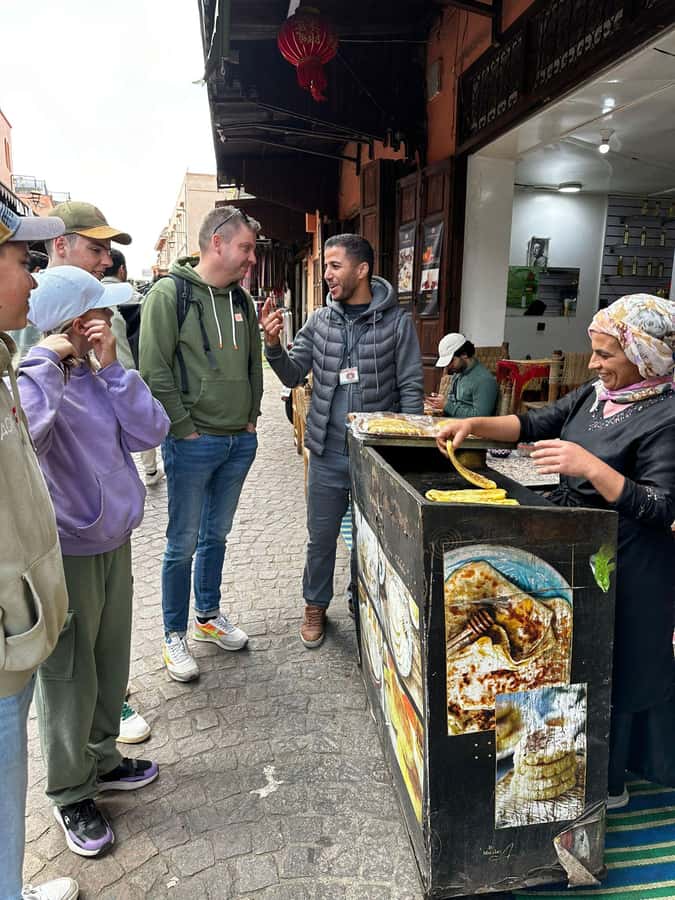
The food is important, but the guide determines how much you get from it. Abdul and Abdoo are repeatedly praised for explaining food origins, local customs, and the city’s neighborhoods. Mariam, Miriam, and Ahmed are also noted for friendly pacing, clear explanations, and keeping the group together.
That range of guide names suggests that the exact personality of your tour will vary. The common thread is attentive hosting. Guides answer questions, explain which foods are spicy, watch for allergies, and help people feel at ease in crowded parts of the Medina.
I especially like the orientation value. You learn not only what to eat, but also what certain foods cost and where to find them later. Some people save locations during the walk and return to buy dates, nuts, olives, drinks, or another serving of a favorite dish.
A brief delay can happen if guide arrangements change. One group joined Mariam after the original guide did not arrive, and the replacement guide handled the outing well. It is a reminder to allow a little flexibility at the start.
Shared group or private tour?
A shared group is likely the better choice if you want to meet other people and keep the cost low. It also suits solo visitors who would rather not eat and walk alone.
The group format has tradeoffs. You may wait while everyone receives food, and a crowded stall can feel tight. Conversation with the guide may be harder when scooters or market noise pass by.
A private tour gives you more personal attention. It may be worth choosing if you have food allergies, a strong interest in Moroccan cooking, or a preference for setting your own pace. The food and drinks remain included, but confirm the exact private-tour price when booking.
Is $34 good value?
At $34 per person, this is strong value if you actually want to eat a full spread of Moroccan food. The price includes the walking tour, guide, drinks, and all tastings, so you do not need to keep opening your wallet at each stall.
The value is not just the number of dishes. A guide leads you to places you might pass without stopping, explains what you are eating, and helps you return to the Medina later with more confidence. The tour can also replace one substantial meal.
You should still judge the price against your appetite and interests. If you prefer a slow restaurant dinner with one or two carefully chosen dishes, this may feel rushed and excessive. If you enjoy trying many small specialties, it is a bargain.
Who should book this experience?
I would choose this tour early in a Marrakech visit. It gives you a practical introduction to the Medina, helps you learn basic food names, and shows you which areas you may want to revisit.
It suits adventurous eaters, first-time visitors, solo visitors, couples, and anyone who likes local snacks more than formal dining. It is also useful for people who feel nervous about ordering from unfamiliar stalls.
You should think twice if you dislike walking, get uncomfortable in crowds, or need a strictly controlled menu. The route includes market noise, narrow passages, and foods that may be unfamiliar. The supplied details also conflict on mobility: the activity information says it is wheelchair accessible, yet another note says it is not suitable for wheelchair users. Confirm the current route and access arrangements before booking.
The experience is also listed as unsuitable for people over 70. That may relate to the walking, crowds, or pace, so older participants should ask about the route before paying.
Final verdict: book it if you want dinner with local guidance
Book this Marrakech street food tour if you want a generous meal, a useful Medina orientation, and direct help choosing foods you might otherwise skip. The strongest reasons are the number of tastings, the included drinks, the $34 price, and guides who explain both food and culture.
I would not book it for a quiet evening or a polished restaurant setting. You may deal with crowds, scooter noise, a short wait, or more food than you can comfortably finish.
For most first visits, though, this is a smart introduction. Arrive very hungry, wear comfortable shoes, tell the guide about allergies, and keep an eye on the route. You will likely leave full, better oriented, and ready to order more confidently during the rest of your time in Marrakech.
FAQ
How long does the Marrakech street food tour last?
The tour lasts about three hours, including walking between neighborhoods and food stops.
How much does the food tour cost?
The listed price is $34 per person.
Are food and drinks included?
Yes. Food, drinks, and all tastings are included in the tour price.
How many foods will I taste?
You can expect to sample between 10 and 12 specialty foods, although the selection depends on the time of day and food preferences.
Where does the tour meet?
The meeting point is Café Argana, in Jemaa el Fnaa square. Look for the green café symbol, nearby juice sellers, and the large ice cream sculpture.
Which languages does the guide speak?
Guides are available in English, German, Dutch, and Arabic.
Can I choose a private tour?
Yes. You can choose between a shared group tour and a private tour.
Is hotel pickup included?
No. Hotel pickup and drop-off are not included. Transportation to and from the meeting point may be arranged for an extra charge if requested ahead of time.
What should I bring?
Bring comfortable shoes. Tell the guide about any allergies before the tour so alternatives can be considered.
Just added in Morocco
- Casablanca Food Tour★ 5.0 · 60 reviews
- Casablanca Food Tour – Moroccan Street Food Tour★ 5.0 · 86 reviews
- Discovery of Moroccan Culinary Heritage, History and Secrets★ 4.5 · 48 reviews
- Authentic Food Tour in Agadir – Eat Like A Local★ 5.0 · 117 reviews
- Tangier: Food Walking Tour★ 4.9 · 43 reviews
- Rabat: Walking Food Tour★ 4.9 · 48 reviews
- Marrakech Night Street Food Tour / Taste The Real Marrakech★ 4.9 · 200 reviews
- Marrakech: Medina Stories Food Tour with 15+ Tastings★ 5.0 · 141 reviews
Street Food Tours, compared.
Ho Chi Minh City Street Food Tour & Sightseeing By Motorbike
Read our review →
Small Group Hanoi Street Food Tour with a Real Foodie
Read our review →
Saigon By Night and Street Food By Motorbike | Opt: Ao Dai Riders
Read our review →
Private Street Food Tour by Motorbike/Car with Local Students
Read our review →
Cinque Terre Park Day Trip with Optional Street Food
Read our review →
Street Food Tasting & Sightseeing Tour by Motorbike
Read our review →Browse the lists this tour appears in