
REVIEW · SEOUL FOOD TOURS
Seoul: Palace, Temple and Market Guided Foodie Tour at Night
Seoul looks different after dark. This four-hour walking tour links Changgyeonggung Palace, Jogyesa Temple, and Gwangjang Market in one well-planned evening, with history, lantern-lit streets, Korean snacks, and a proper market meal along the way. I especially like the palace visit at night and the chance to taste several foods rather than settle for one restaurant dish.
The guides also earn strong praise for making the route feel personal. Mia, Kim, Jay, Inha, Thomas, Mindi, and J are all singled out for clear storytelling, patience, humor, and care with the group. The main caution is simple: this is a walking tour with a moderate amount of time on your feet, and Seoul can feel quite cold after sunset.
Key points at a glance
- Night entry at Changgyeonggung Palace: See a Joseon-era royal site under lights, with an hour for guided sightseeing and photos.
- Four included food experiences: Try assorted jeon fritters, makgeolli, chopped live octopus, and market snacks at Gwangjang Market.
- A useful Jongno route: Connect Daehangno, the palace, Gwangjang Market, Pocha Street, Ikseondong Hanok Village, and Jogyesa Temple without arranging several separate visits.
- Lanterns at Jogyesa Temple: Spend about 30 minutes in a calm Buddhist setting after the noise of the market.
- Good value at $60: Entrance fees, a guide, market tastings, rice wine, fritters, and octopus are included.
- Flexible food choices: Vegetarian and halal options are available if you request them when booking, and eating the octopus is optional.
Why this Seoul night tour works
Many Seoul sightseeing routes force you to choose between palaces, old neighborhoods, temples, and food. This one makes a broad sweep through central Jongno in four hours. You begin at Hyehwa Station, walk through the Daehangno area, visit Changgyeonggung Palace, eat at Gwangjang Market, then continue through Jongno 3-ga, Ikseondong, and Jogyesa Temple.
That variety is the tour’s best feature. You get royal architecture, local street food, Buddhist culture, preserved hanok houses, and evening city life in one outing. It is not a slow, detailed study of any one place. Instead, it gives you a strong first look at several parts of Seoul that can be difficult to connect on your own.
I particularly like the order. The palace comes before dinner, so the group starts with architecture and history while everyone is still fresh. The market then supplies the evening meal and plenty of conversation. The final temple stop offers a quieter finish, which is welcome after the noise and crowds around the food stalls.
At $60 per person, the price is reasonable if you value guidance and food sampling. You are not paying only for a walk. The cost includes entrance fees, an English or Korean-speaking guide, makgeolli, assorted jeon, chopped live octopus, and other Gwangjang Market tastings. If you already know the palace and market well, you may find it cheaper to explore alone. For a first evening in Jongno, the combination is useful.
More market food tours in the world:
- Chef Guided Food Tour of Pike Place Market
★ 5.0 · 3,733 reviews - Tokyo Tsukiji Fish Market Food and Culture Walking Tour
★ 5.0 · 3,184 reviews - London Bridge & Borough Market Food Tour with 7 Authentic Dishes
★ 5.0 · 1,972 reviews
Starting at Hyehwa Station and Daehangno
The meeting point is outside Exit 4 of Hyehwa Station. Look for the guide holding a Tripper sign. This is a practical starting place because the route begins near Daehangno, Seoul’s arts and theater district.
You pass through Daehak-ro rather than spending a long time on a formal stop. That short introduction helps place the evening in context. You are moving from a lively arts area toward one of the city’s former royal compounds, then on to food streets and traditional neighborhoods.
The guide matters here. Several guides receive praise for keeping the group together, answering questions, and sharing local stories instead of reciting only dates. Mia is repeatedly praised for her patience, humor, and clear explanations. Kim is noted for her enthusiasm for Korean culture and her ability to explain Seoul’s past in a short period. Jay is praised for being friendly and accommodating, including helping a late-arriving participant join the group.
Arrive ready to walk. The activity is wheelchair accessible, but the route still involves a moderate amount of walking, including roughly 10 minutes on foot between the palace and market and another 15 minutes between later stops. Comfortable shoes are more important than fashionable ones.
Changgyeonggung Palace under the night lights
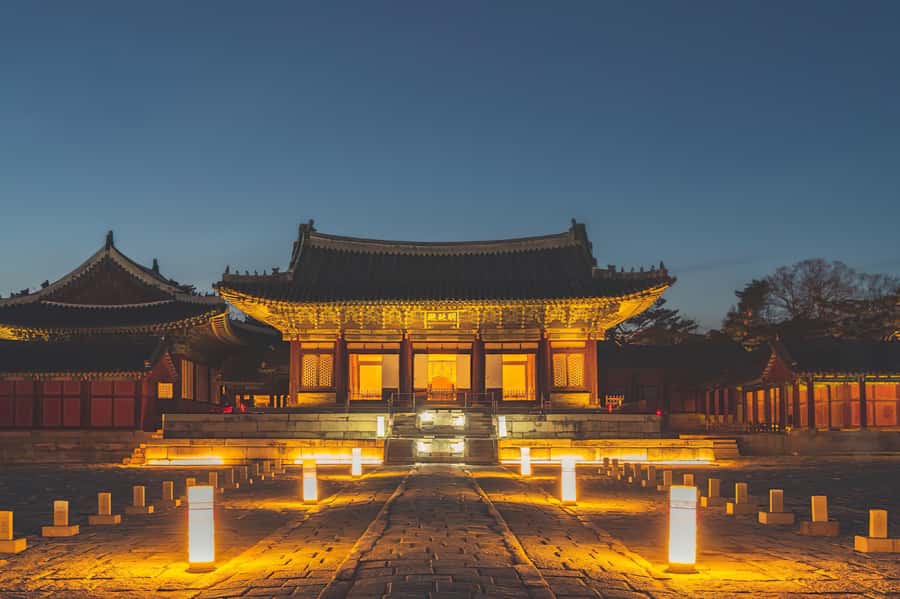
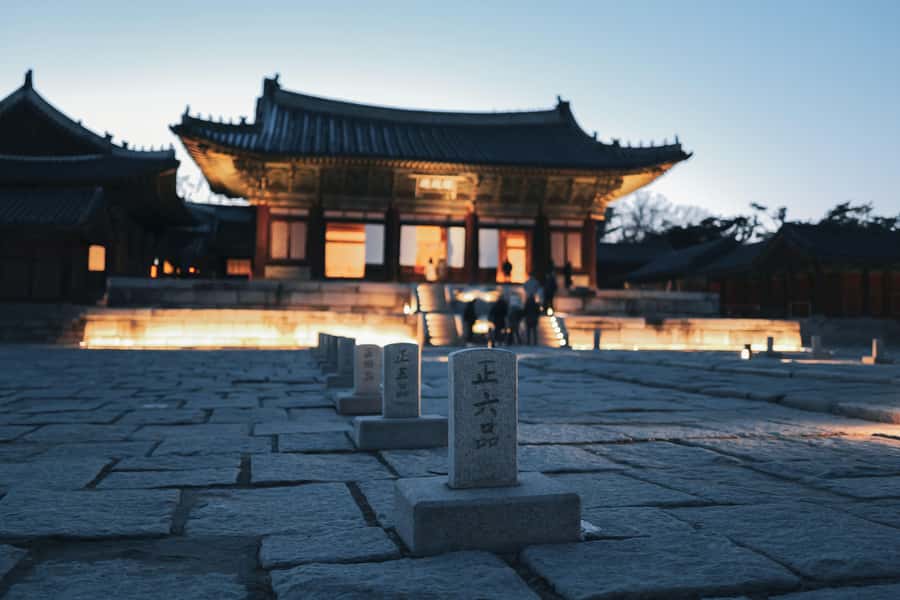
The palace visit lasts about an hour and is the historical center of the evening. Changgyeonggung is a Joseon Dynasty royal palace, and its courtyards, buildings, and gardens take on a different mood at night. Lighting picks out the architecture while the dark sky creates a quieter setting than a daytime visit.
The guide explains the palace’s role and the meaning of its major features. This is where the tour earns much of its value. A palace can look beautiful without explanation, but a good guide helps you understand why the site matters and how it fits into Korea’s royal past.
You should expect a guided visit with time for photographs, not a free hour to wander anywhere you like. The group follows a planned route, and the guide keeps the schedule moving so there is enough time for the market and temple later. That is a fair trade for seeing several places in one night, though visitors who want long periods for photography may prefer a separate palace visit.
The evening setting also brings a practical issue. Temperature drops after sunset, and one person specifically noted that the tour became cold and rainy. Bring an extra layer, especially outside the warmer months. The palace grounds are a fine place for photos, but you will enjoy them more if you are not distracted by cold hands and wet shoes.
Gwangjang Market and the included food
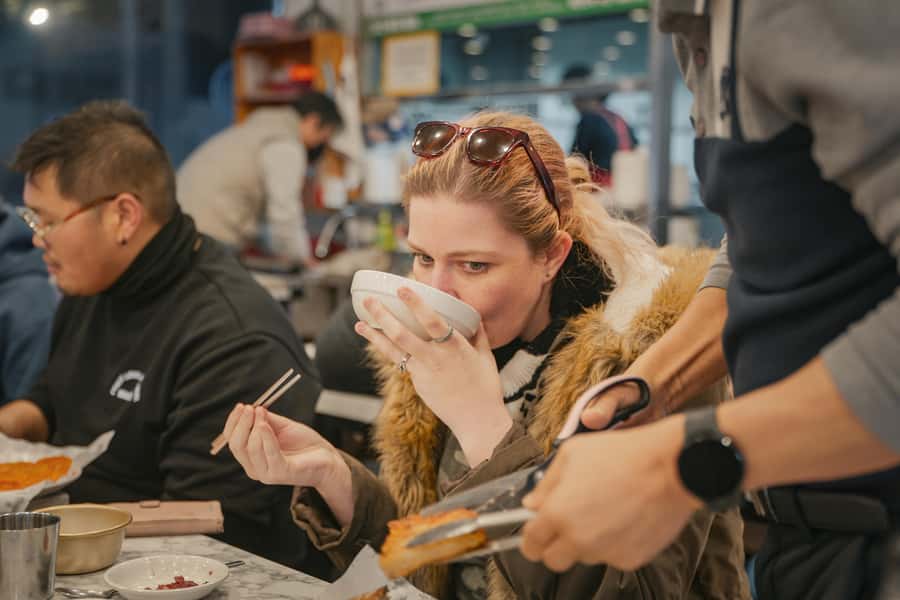
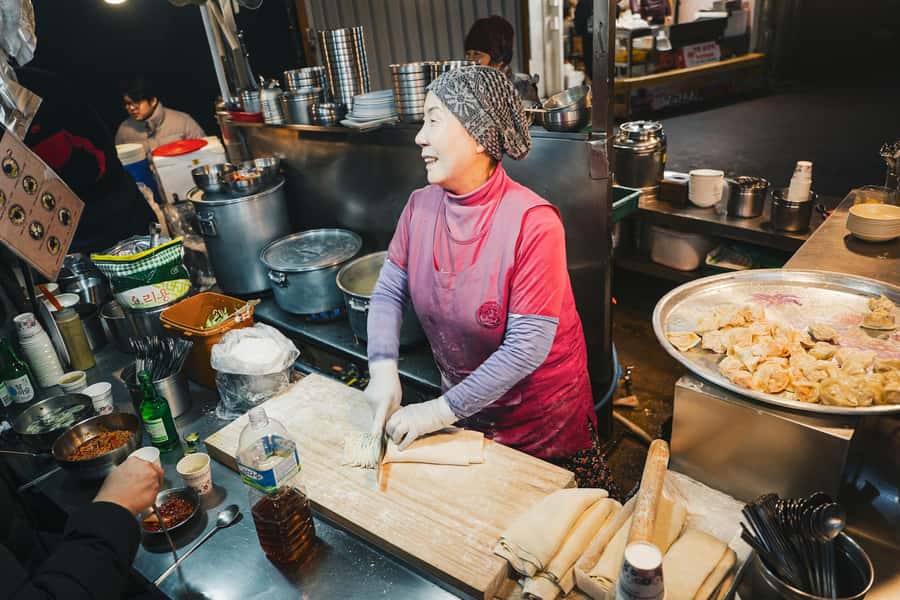
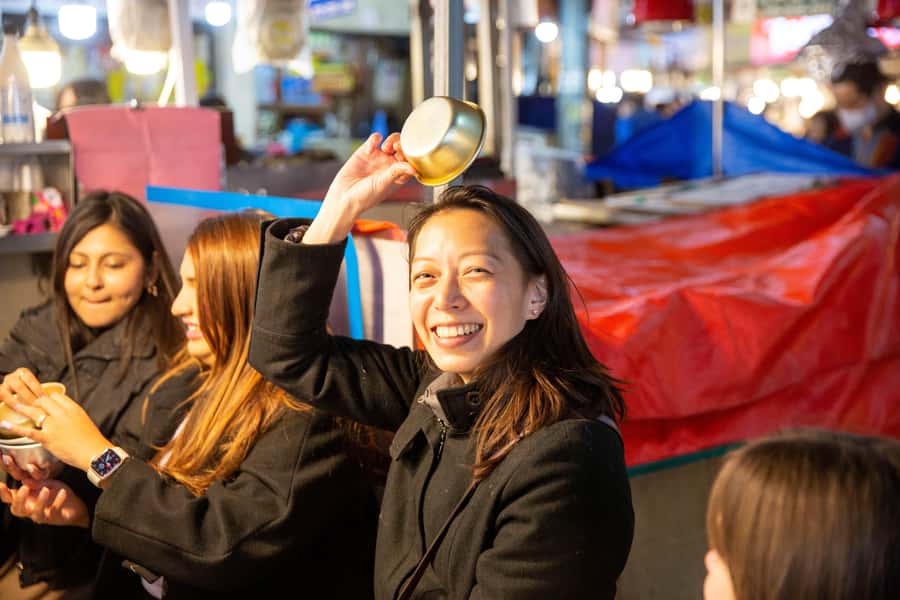
After the palace, the group walks about 10 minutes to Gwangjang Market. This is the tour’s main food stop and lasts around an hour. You receive a guided introduction to the food area, followed by tastings that turn the market into dinner rather than a quick photo stop.
The included items are:
- Makgeolli, a traditional Korean rice wine
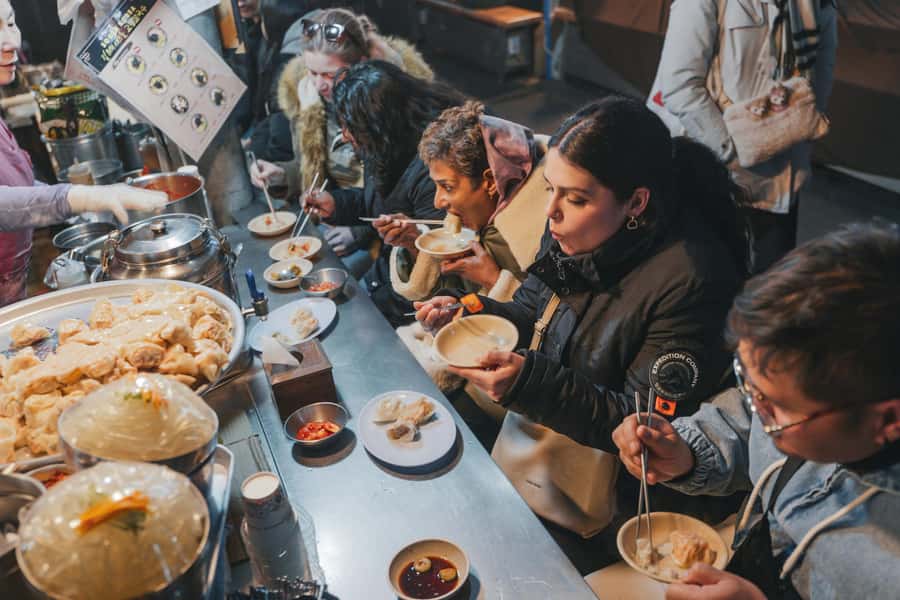
- Assorted jeon fritters, such as kimchi, tofu, and meat versions
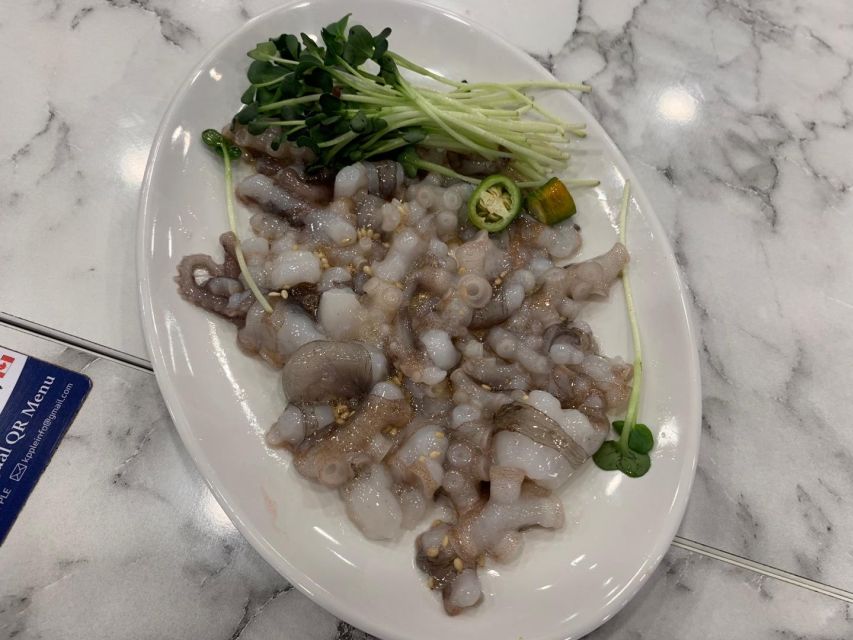
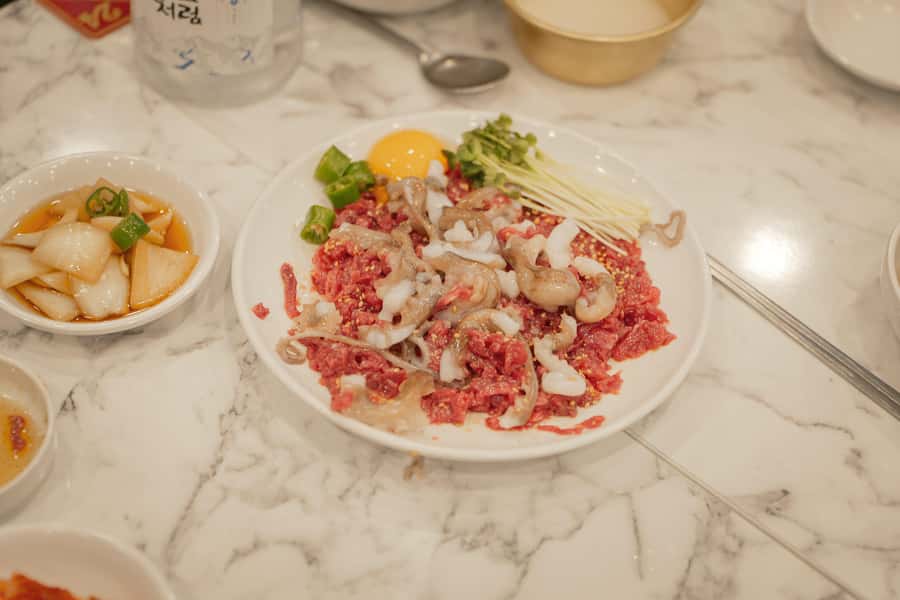
- Chopped live octopus
- Additional local snacks and street food
- Kkwabaegi, a twisted Korean doughnut, with help skipping the line
The jeon is a particularly useful introduction for first-time visitors. These Korean fritters are familiar enough to enjoy easily, but varied enough to show how one basic style can change with kimchi, tofu, or meat. Sharing several kinds also lets you compare flavors instead of ordering one large portion by guesswork.
Makgeolli adds a traditional drink to the meal. It is included, so you can try it without committing to a full bottle at a restaurant. If you do not drink alcohol, ask about the food options when booking and let the guide know your needs.
The live octopus is the most adventurous item. It is chopped before serving, and the tasting is entirely optional. You can try a small amount, as one participant did, or decline it without missing the rest of the meal. This is important because not everyone will be comfortable with the texture or idea, and the tour does not treat it as a test of courage.
Kkwabaegi gives the food stop a sweet finish. These twisted doughnuts are a popular market snack, and the guide’s local knowledge helps the group avoid wasting time in line. You get a better sense of the market when the tasting includes both savory food and something sweet.
Gwangjang Market can be crowded and noisy. That is part of its appeal, but it also means you should stay close to the guide and expect limited personal space. The tour is designed for sampling, not a long, relaxed restaurant dinner. If you want a large meal or a quiet table, plan an additional meal later.
A few more food tours in the world worth a look
- Pike Place Market Tasting Tour
★ 5.0 · 1,696 reviews - Small Group Cooking Class & Market Food Tour in Florence
★ 5.0 · 1,574 reviews - Nishiki Market Brunch Walking Tour (7 Tastings + Brunch)
★ 5.0 · 1,355 reviews - Bologna Food & Market Tour with 6 Tastings, Pasta, Wines & More
★ 5.0 · 1,328 reviews
Jongno 3-ga and Pocha Street after dinner
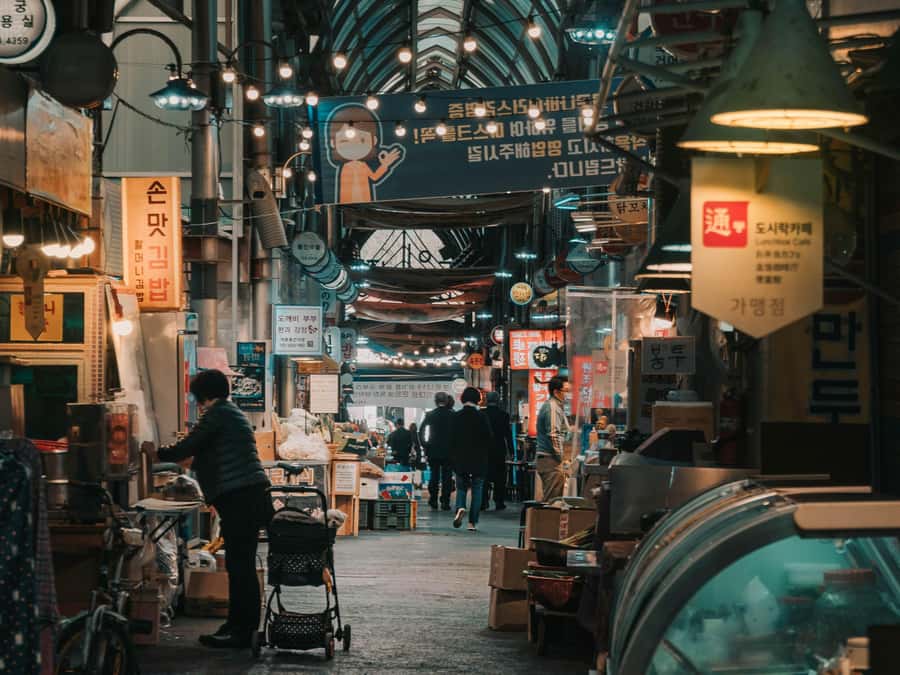
The route continues on foot to Jongno 3-ga Pocha Street for about 15 minutes of guided sightseeing. This is a short stop, but it gives you a look at a different side of Seoul’s evening culture.
A pocha is associated with casual drinking and street-side food stalls. Here, the guide helps you understand the atmosphere rather than simply pointing out another landmark. After the formal palace and the market meal, this section shows how people use the city at night.
Do not expect a long food session here. The main tastings happen at Gwangjang Market, and Pocha Street is a brief look at the neighborhood. That distinction helps set expectations. You are seeing several districts in one night, not spending an hour at every one.
Ikseondong Hanok Village in a short walk-through
Ikseondong Hanok Village receives about 15 minutes, including a photo stop and guided walk-through. Its preserved traditional houses provide a change of scale after the open palace grounds and crowded market.
The short visit is enough to notice the contrast between old-style homes and the surrounding modern city. It also gives you a useful orientation to one of the central neighborhoods many first-time visitors want to see.
Again, this is an overview rather than a detailed neighborhood tour. If Ikseondong is high on your list, return during daylight or plan another evening there. On this route, the value comes from seeing it as part of a larger story about Jongno’s old and new sides.
Jogyesa Temple and its lantern-lit calm
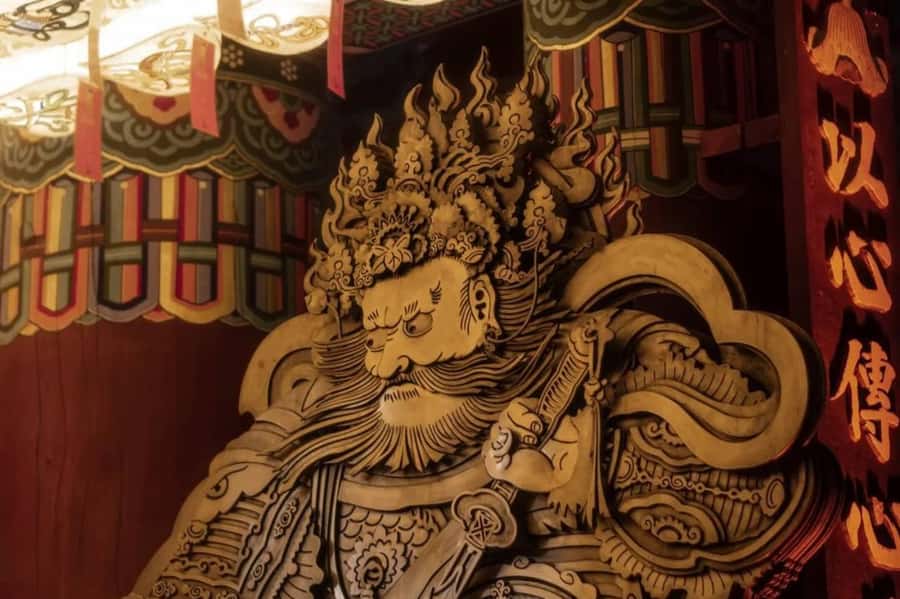
The final major stop is Jogyesa Temple, with about 30 minutes for a visit and guided explanation. Lanterns illuminate the temple grounds, creating a peaceful contrast with Gwangjang Market and Pocha Street.
This is more than a quick exterior photo. The guide explains Buddhist ideas and the temple’s place in Korean culture. Mia was praised for taking extra time to discuss Buddhism, which is useful because temple details can otherwise be easy to miss. You may notice the shift in mood as the route moves from food and street noise to quiet sacred grounds.
The timing works well. A temple can feel especially atmospheric at night, when the lanterns draw your attention to the grounds and buildings. You should be respectful while visiting, keep your voice down, and follow any guidance from the tour leader.
The activity ends back at the original meeting point. That makes the route easier to manage than a one-way tour, especially if you need to retrieve belongings or have dinner plans nearby.
The guides are a major part of the value
The strongest pattern in the feedback is the quality of the guides. Mia receives the most repeated praise, with direct comments about her historical explanations, warmth, patience, humor, and ability to keep the outing enjoyable in poor weather. Kim is praised for strong English and for sharing local stories and cultural background. Jay, Inha, J, Thomas, and Mindi also receive positive comments for friendliness, organization, and clear information.
This matters because the itinerary covers a lot. Without a good guide, the palace, market, hanok village, and temple could feel like unrelated stops. The guide provides the thread connecting royal Seoul, modern street life, food traditions, and Buddhist practice.
The tour is delivered in English or Korean. English ability is specifically praised for several guides, though the exact guide depends on the departure. You should expect a group experience rather than a private guide, with the pace shaped by the whole party.
Who should book this experience
I would choose this tour for a first or second visit to Seoul, especially if you want a fast introduction to Jongno without planning every subway ride and meal yourself. It suits people who enjoy walking, trying unfamiliar foods, and hearing the story behind places rather than collecting quick photos.
It is also a good choice for solo visitors who want an organized evening and for couples or friends who would like several tastings in one night. The price becomes more attractive if you would otherwise pay separately for palace admission, food samples, drinks, and a guided walk.
You may want another plan if you dislike group pacing, cannot walk for several hours, or want a long sit-down dinner. The route is full, and four hours can feel short at each stop. Food allergies, vegetarian needs, and halal requirements should be stated when booking so suitable arrangements can be made.
Meet at Hyehwa Station Exit 4, not at your hotel. Hotel pickup and drop-off are not included. Cancellation is free up to 24 hours before the activity, and the reserve-now, pay-later option gives you some flexibility when your Seoul schedule is still changing.
Should you book the palace, temple, and market tour?
Book it if you want one well-paced evening covering several sides of Seoul: royal buildings, Korean street food, a traditional drink, old neighborhoods, and a Buddhist temple. The guides receive unusually consistent praise, and the included tastings make $60 a fair price for a four-hour introduction.
Skip it if you prefer to explore slowly or cannot manage a moderate walking route. For most first-time visitors who want history and food in equal measure, this is a smart way to spend an evening, with the optional octopus and the lantern-lit palace adding memorable details without forcing you into anything you do not want to eat or see.
FAQ
Where does the tour start?
It starts outside Hyehwa Station Exit 4 in Hyehwa-dong, Seoul. Meet the guide holding a Tripper sign.
Where does the tour end?
The activity ends back at the original meeting point.
How long does the tour last?
The tour lasts four hours. Starting times vary, so check availability when booking.
What food and drinks are included?
Included tastings are Gwangjang Market street food, makgeolli, assorted jeon fritters, and chopped live octopus. Other local snacks may also be included during the market visit.
Is eating the live octopus required?
No. Trying the chopped live octopus is optional.
Are vegetarian and halal options available?
Yes. Vegetarian and halal options are available if you specify your needs when booking.
Is the tour wheelchair accessible?
Yes, the activity is listed as wheelchair accessible. The route also involves a moderate amount of walking, so consider your comfort and physical fitness before booking.
More evening experiences in the world
- Winner 2025 Florence Sunset Food & Wine Tour by Eating Europe
★ 5.0 · 5,015 reviews - Saigon By Night and Street Food By Motorbike | Opt: Ao Dai Riders
★ 5.0 · 4,066 reviews - Private Street Food Evening Walking Tour in Ho Chi Minh City
★ 5.0 · 3,175 reviews - Marrakech: Street Food Tour by Night
★ 4.8 · 2,838 reviews
Just added in the world
- Private Chicago Food Tour with Deep Dish and Beef Sandwich★ 5.0 · 61 reviews
- River North Food Walking Tour★ 4.5 · 88 reviews
- Chicago Food Tour: Taste the City’s Most Iconic Eats★ 5.0 · 111 reviews
- Chicago’s West Side Foodie Ride Bike Tour★ 5.0 · 112 reviews
- Motorbike Food Tour in Chiang Mai★ 5.0 · 54 reviews
- Old Town Chiang Mai Food Tour with 10+ Local Dishes Tastings★ 5.0 · 21 reviews
- Go where the locals go, Eat what the locals eat! Food Tour with Local Foodies★ 5.0 · 138 reviews
- Food Trail Through Sowcarpet Market: A Taste of Chennai★ 5.0 · 38 reviews
Market Food Tours, compared.
Tokyo Tsukiji Fish Market Food and Culture Walking Tour
Read our review →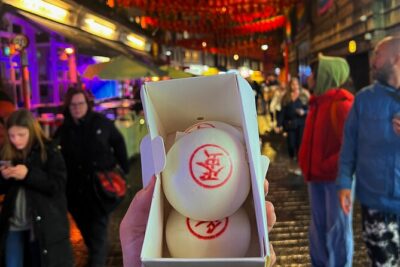
London Bridge & Borough Market Food Tour with 7 Authentic Dishes
Read our review →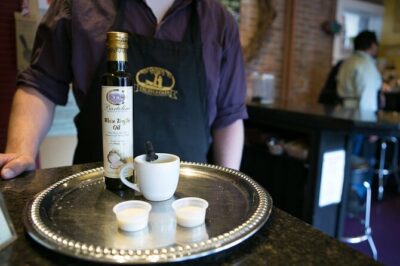
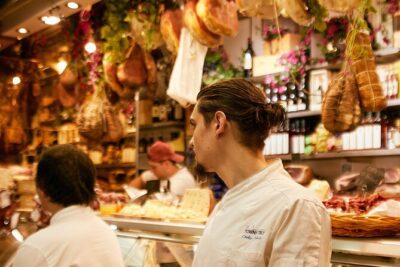
Small Group Cooking Class & Market Food Tour in Florence
Read our review →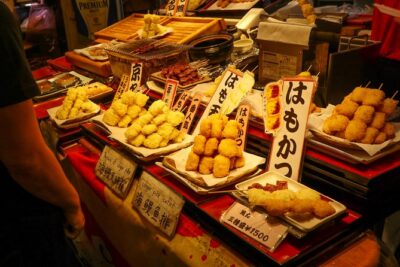
Nishiki Market Brunch Walking Tour (7 Tastings + Brunch)
Read our review →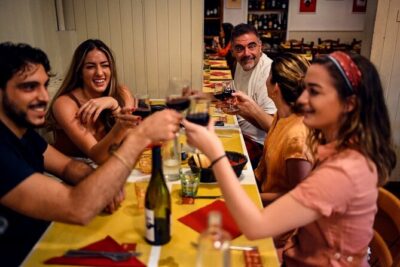
Bologna Food & Market Tour with 6 Tastings, Pasta, Wines & More
Read our review →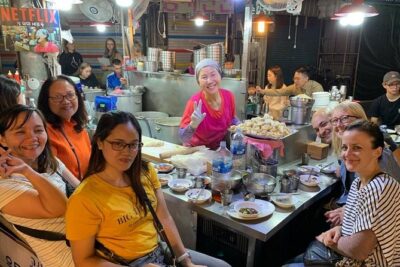
Browse the lists this tour appears in