
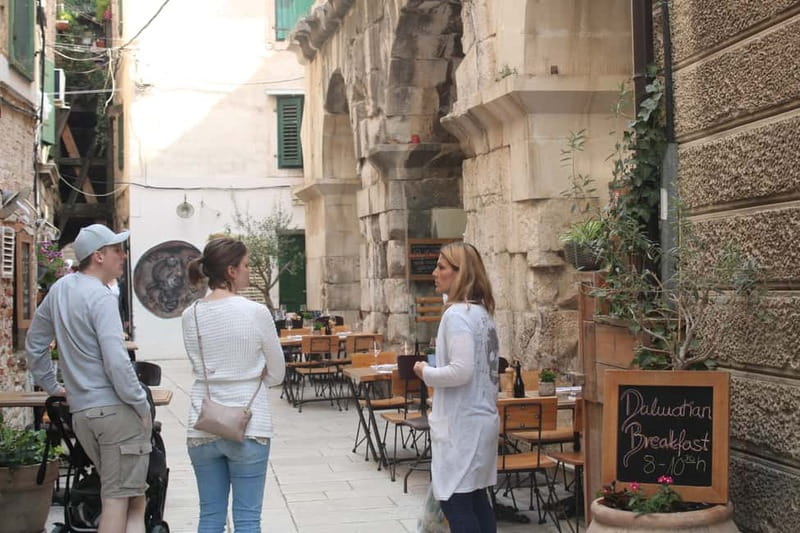
REVIEW · SPLIT FOOD TOURS
Split: Small Group Food Tour with Private Option
Come hungry, leave with a better feel for Split. This $58 small-group food tour mixes Diocletian’s Palace, market tastings, local sweets, and Dalmatian food customs in a compact 90-minute visit. I especially like the stop at the Green Market, where food is tied to daily life, and the chance to try specialties such as soparnik, prosciutto, rafiol cake, and salted anchovies.
The strongest part is the local guiding. Guides including Marta, Antonia, Jakov, Tonka, and Slavko have been praised for making the food and stories personal, often linking dishes to Split life and family traditions. The main caution is timing: the listed stops can feel tightly packed, and the amount of food may not feel equal to a full meal for everyone, despite several people leaving quite full.
Key points to know before booking
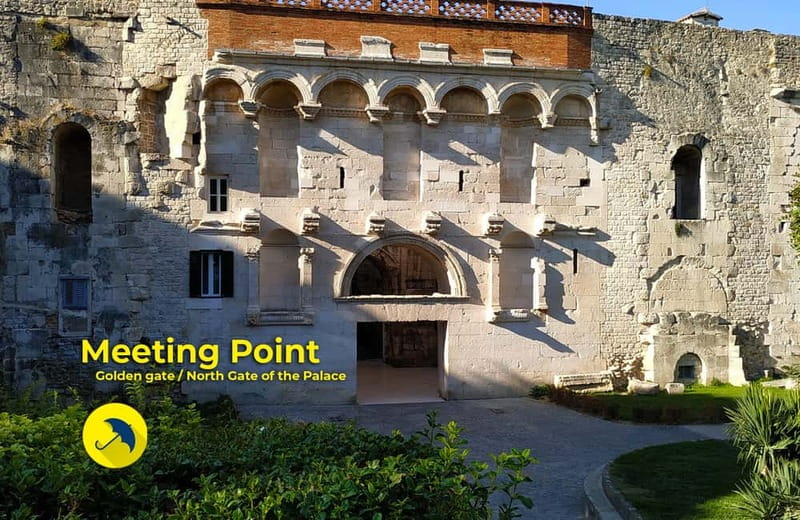
- Start at the Golden Gate: Meet by the northern entrance to Diocletian’s Palace and look for the blue umbrella.
- Taste across Split’s food scene: The route includes the Green Market, Fish Market, a chocolate shop, an old bakery, cafés, bars, and restaurant-style tastings.
- Expect both sweet and salty bites: Soparnik, prosciutto, salted anchovies, arancini, chocolate, and rafiol cake give you a broad taste of Dalmatia.
- The guide matters: Local guides such as Marta, Antonia, Jakov, and Slavko have been praised for history, food knowledge, humor, and warm conversation.
- Plan for walking and market crowds: This is not suitable for wheelchair users, and cash is useful for optional market purchases.
- Choose private for a more personal outing: Private and small-group formats are available, with the private option best suited to families or groups wanting more direct attention.
Why this short Split food tour works
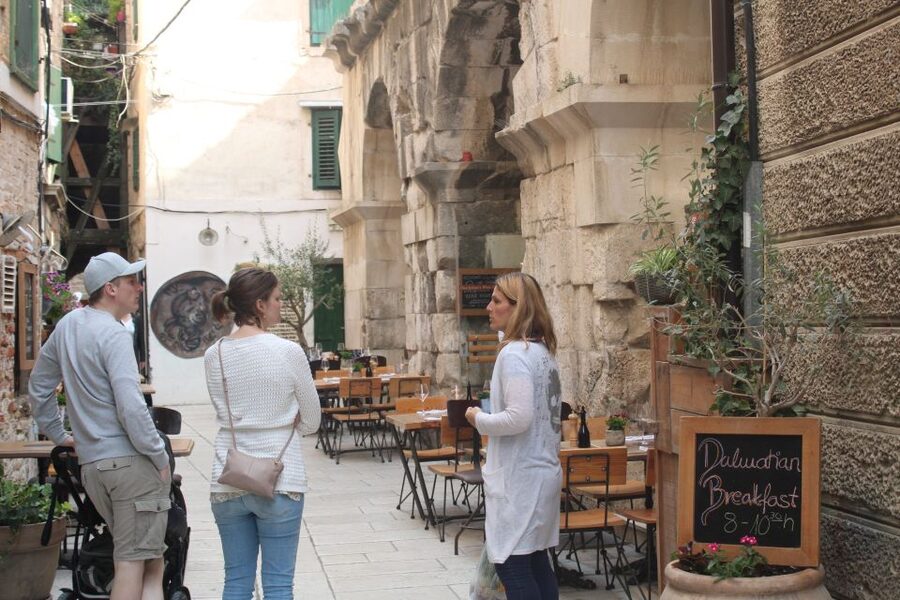
Split is easiest to understand when you connect its stones with its food. Diocletian’s Palace is not a sealed-off monument. People live, shop, work, eat, and meet inside and around its ancient streets. A food tour gives you a reason to look beyond the Roman columns and notice how the city actually functions.
I like this experience because it does not treat cuisine as a string of unrelated samples. The guide explains how market shopping, family recipes, fish, cured meat, pastries, wine, and sweets fit into Dalmatian life. You get a little sightseeing, a little local history, and several small chances to taste something you might otherwise pass by.
The route also gives you useful orientation on your first day in Split. You begin at the Golden Gate, walk through the palace area, visit the two main markets, and return to the same starting point. Afterward, you should have a better sense of where to shop and which local foods deserve another try.
Still, the 90-minute length requires realistic expectations. The experience is a tasting walk, not a long sit-down lunch. Some people find the samples plentiful enough to skip lunch, while others may want more substantial portions. The exact pace and amount can depend on the guide, group, and market conditions.
More private experiences in Croatia:
- Split: Private Food Tasting Tour
★ 4.9 · 36 reviews - Private Street Food Tour by Motorbike/Car with Local Students
★ 5.0 · 3,950 reviews - Private Street Food Evening Walking Tour in Ho Chi Minh City
★ 5.0 · 3,175 reviews
Starting beneath the Golden Gate
The meeting point is the Golden Gate, at the northern entrance to Diocletian’s Palace. Look for a blue umbrella. This is a sensible place to begin because the gate puts you directly into Split’s old center, with the palace streets close at hand.
Your guide leads the group through the old town while explaining the connection between the Roman palace and modern Split. The setting does much of the work here. You are not simply walking from one restaurant to another. You are eating within a city center shaped by nearly 2,000 years of building, rebuilding, and everyday use.
The small-group format should make it easier to ask questions. Past guides have included Marta, Antonia, Jakov, Tonka, Tanja, Darko, and Slavko. Several were praised for using personal stories and childhood memories to explain local customs. That kind of detail is more useful than a memorized list of dates.
First tastes at a local café
The café stop is brief, listed at about 15 minutes. This is where the tour begins to explain how Dalmatian food balances sweet, salty, simple, and fresh flavors.
One featured bite is arancini, almonds covered in sugar. It is a small sweet, but a good introduction to the tour’s approach: familiar ingredients presented in a local way. You may also receive a glass of local wine during the tasting of soparnik, depending on how the route is arranged that day.
Soparnik is one of the most important foods on the tour. This thin savory pie is associated with the Dalmatian region and is protected as part of Croatia’s recognized cultural food heritage. The guide explains its ingredients, preparation, and place in local cooking rather than leaving you to guess what is on the plate.
I appreciate that the tour does not rush straight to flashy restaurant dishes. Soparnik is humble food, and that is precisely why it helps you understand the area. Ask your guide how it is traditionally prepared and when people eat it.
The Green Market and Split’s daily shopping
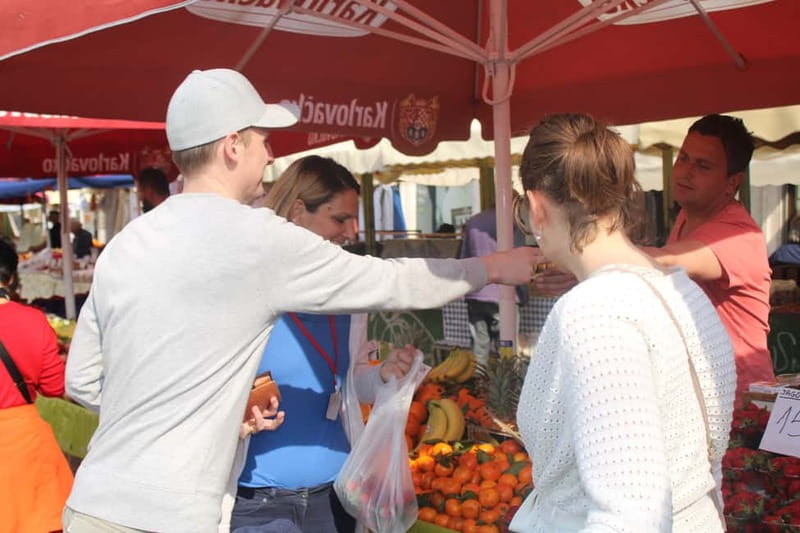
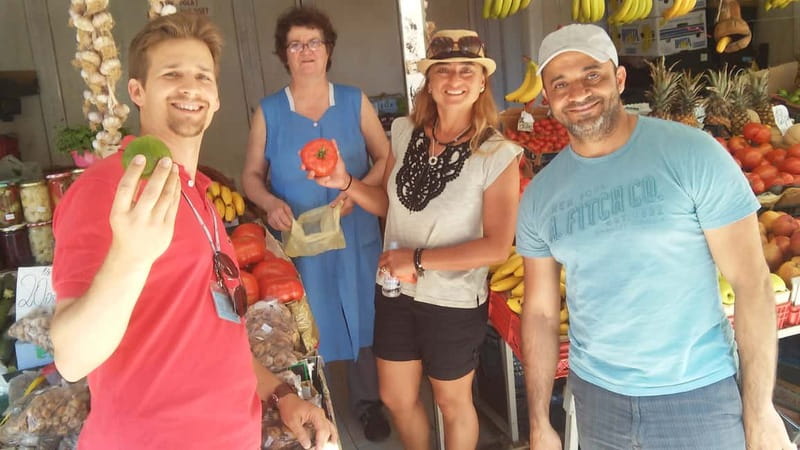
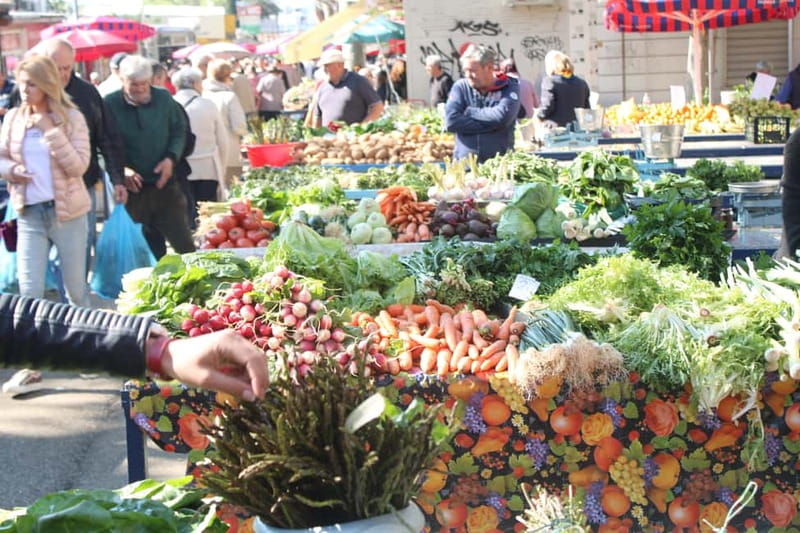
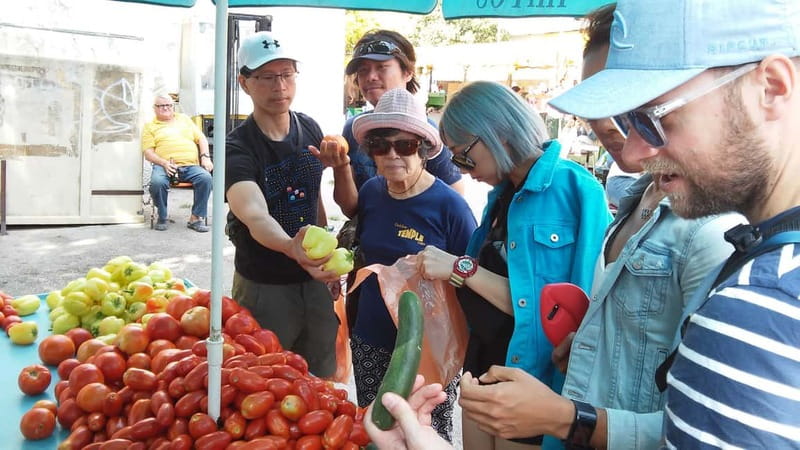
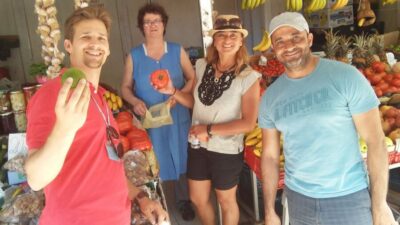
The Green Market, known locally as Pazar, is one of the most useful stops. You see the produce side of Split’s food culture, and the guide can help you understand what is seasonal, local, or especially connected to Dalmatian cooking.
The market portion is listed at about 30 minutes. That is enough time to look around and taste several items, but it is not a leisurely shopping expedition. You may also see sellers explaining how foods are prepared. Slavko, a Split native, has been praised for introducing people to market sellers and talking through local favorites.
This is a good place to ask questions about olive oil, figs, almonds, vegetables, and traditional pantry foods. Previous tours have included bread, olive oil, and fresh fruit among the tastings. The exact selection may change, since markets are working places rather than fixed museum displays.
Bring cash. Extra purchases at the markets are not included, but you may want to buy something for later. The guide can help you make sense of what you are seeing, which is particularly useful if you are unsure about prices, ingredients, or how a product is normally eaten.
A few more food tours in Croatia worth a look
- Split: Blue Lagoon and 3 Island Cruise with Food and Drinks
★ 4.8 · 1,969 reviews - Split: Blue Lagoon, Borkko Beach & Šolta with Food & Drinks
★ 4.5 · 759 reviews - Dubrovnik Food and Drink Walking Tour with a Local Guide
★ 5.0 · 654 reviews - Krka Waterfalls, Food & Wine Tasting, Boat Ride & Zadar Old Town
★ 5.0 · 420 reviews
Prosciutto, palace streets, and the city between bites
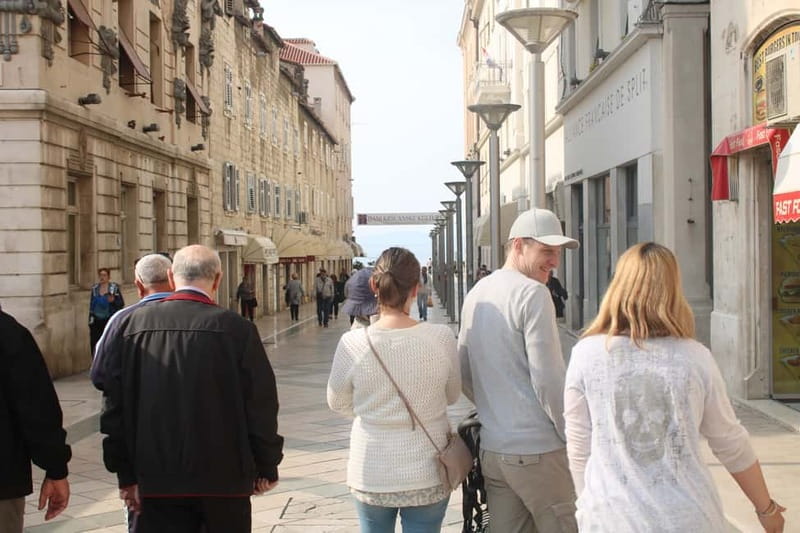
As you leave the market, the food continues through the old streets. Prosciutto gives the tour a salty, cured-meat stop and shows another side of Dalmatian eating.
This part is also where the history and food blend most naturally. You walk through the palace while hearing about Split’s customs and local lifestyle. The guide may point out places that are easy to miss when you are focused only on major monuments.
Do not expect a full palace sightseeing tour in 90 minutes. The historical commentary supports the food route rather than replacing a dedicated Diocletian’s Palace tour. If you want detailed Roman archaeology, book a separate history walk. If you want enough background to understand the streets around you, this tour should suit you well.
The chocolate shop with a Guinness record
The chocolate stop adds a modern, playful note. The shop is associated with a Guinness record for the largest chocolate bar in the world, and you get a tasting there.
This is not the most traditional stop, but it helps keep the tour varied. After savory market foods and cured meat, chocolate changes the pace. Families and anyone with a sweet tooth will likely enjoy this part, while serious food historians may find it less central to Dalmatian cuisine.
The advantage is variety. You are not sampling only seafood or only market produce. You get a wider picture of how Split’s food experience includes old recipes, local products, bakeries, cafés, and newer specialty shops.
Rafiol cake at Split’s oldest bakery
The bakery visit is another sweet stop, featuring rafiol cake. It is listed as one of the oldest bakeries in Split, giving the tasting a useful connection to the city’s long food traditions.
Rafiol is especially helpful for understanding that Croatian desserts are not limited to the familiar coastal clichés. The guide explains the dish and its place in local cooking, which gives the tasting more meaning than simply picking up a pastry and moving on.
The timing is again short, about 15 minutes. If you have dietary restrictions, ask the operator before booking because the supplied information does not specify alternatives or an ingredient list. That is also sensible for the chocolate, bakery, and market tastings.
Peškarija, Split’s historic Fish Market
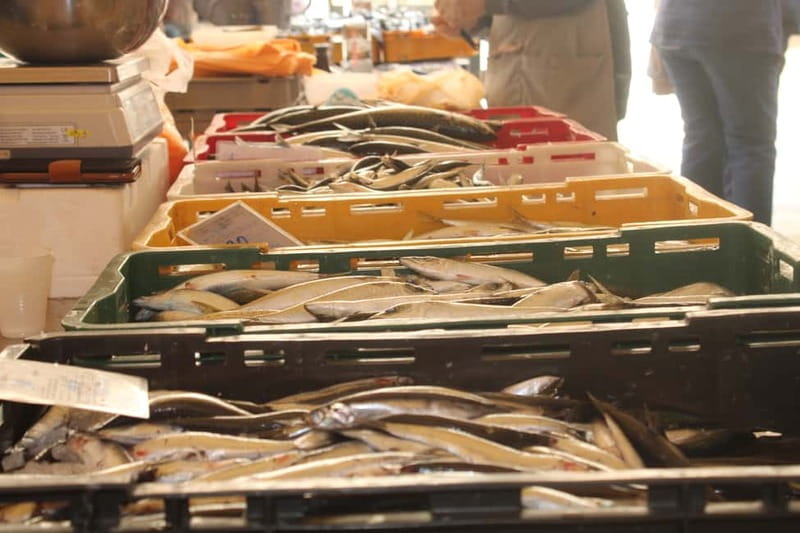
The Fish Market, or Peškarija, is one of the most distinctive stops. It is described as the second-oldest fish market in Europe, with original benches more than 120 years old.
That setting gives the tour a strong sense of place. The guide explains how to look at the market and how to eat salted anchovies, a traditional part of marenda, the Dalmatian midmorning meal. For many visitors, this is the moment when the tour moves from general sightseeing into local food customs.
Salted anchovies can be an acquired taste. They are sharp, salty, and not designed as a neutral snack. Go with an open mind, and take a small bite rather than expecting something mild. If you enjoy seafood, this may be one of the most memorable tastings.
Past guiding has been particularly useful at the fish market. Tanja, for example, was praised for explaining the varieties, species, and local specialties. That guidance matters because a fish market can be confusing if you do not know what you are looking at.
Final drinks and restaurant-style tastings
The final café, bar, or restaurant stops give the group time to keep tasting and talk about what you have eaten. The supplied route lists a local bar and a local restaurant, each at about 15 minutes, though the total listed stop times add up to longer than the advertised 90-minute duration.
That mismatch is worth noting. The tour is sold as 90 minutes, so the route may be adjusted, the stops may overlap, or the timing may vary by day. Ask when booking if you need to meet a ship, catch a bus, or keep a strict schedule.
Some older versions of the experience included market shopping followed by a meal prepared from selected ingredients. More recent descriptions focus on several tastings across roughly seven locations. Do not book expecting a guaranteed full cooked lunch unless the operator confirms that format for your date.
The food can still add up. Jane wrote that no lunch was needed afterward, and Benjamin said the variety left him full. Other feedback found the price somewhat high compared with food tours elsewhere, especially when judging the amount of food alone. I would value this as a guided cultural walk with food, not as a bargain meal replacement.
What the guides add to the experience
The guide is the deciding factor here. Antonia has been praised for being friendly, engaging, and able to explain both local foods and their origins. Marta has earned especially warm praise for answering questions, sharing personal connections, and making sure the group stayed involved.
Jakov and Slavko bring a strong local connection as men raised in Split, while Tanja and Tonka have been praised for energy, humor, and clear explanations. The names and guide assignments can change, so you cannot select a particular person based on these examples.
What you can reasonably expect is an English-speaking licensed guide who leads the route and explains local stories, recipes, markets, and customs. If you enjoy asking questions, this format should reward you. If you prefer to eat quietly and move at your own pace, a guided tasting may feel more structured than you want.
Price, group size, and practical value
At $58 per person, the tour is not the cheapest way to sample Split. The price covers the guide, the cultural and historical walk, and the included tastings at the markets, chocolate shop, bakery, and local food stops. Optional market purchases cost extra.
I think the price is fair if you care about context and orientation. The guide saves you from guessing what to buy at the markets and helps you understand why soparnik, anchovies, prosciutto, and rafiol matter. You are also paying for a short introduction to the palace and the city’s food habits.
The value is weaker if your main goal is quantity. A few people may consider the food too limited for the price, while others may find the combination generous enough to replace lunch. Your appetite, the day’s tastings, and the guide’s route all affect that judgment.
The private option is useful for families, couples, or small groups with their own questions and pace. A regular small group should offer a more social experience and may be the better choice if you want to meet other people while keeping the tour fairly focused.
Who should book this experience?
I would recommend it to first-time visitors who want a quick introduction to Split, especially if you enjoy local markets and traditional food. It is also a good first-morning activity because it gives you practical ideas for what to eat and buy during the rest of your stay.
Food-curious visitors will get the most from it. You try both sweet and savory items, hear about recipes, and visit places that show how locals shop and eat. The tour also works well for people who want history without spending several hours in a formal lecture.
I would be more cautious if you need wheelchair access, dislike fish or salty foods, have strict dietary needs, or want a guaranteed sit-down meal. The route includes markets and old-town streets, and the tour is not suitable for wheelchair users. Cash is recommended, especially if you want to buy extra food.
Free cancellation is available up to 24 hours before the start, and you can reserve without paying immediately. Check the available start time carefully, since the duration is short and the route begins and ends at the Golden Gate.
Should you book the Split food tour?
Yes, if you want a compact, friendly introduction to Split through food rather than monuments alone. The best reasons to book are the Green Market, Peškarija, the local specialties, and the chance to have a guide explain what you are tasting.
Choose the private option if your group wants a slower, more personal conversation. Choose the small-group version if you want the same basic route at a social pace. Just keep your expectations in line with the $58 price: this is a guided food and culture walk with multiple tastings, not a long restaurant lunch.
FAQ
How long does the Split food tour last?
The advertised duration is 90 minutes. The route includes several short tastings and market visits, though the listed stop times add up to more than 90 minutes, so the exact pacing may vary.
Where does the tour start?
It starts at the Golden Gate, by the northern entrance to Diocletian’s Palace. Look for a blue umbrella.
Where does the tour finish?
The tour returns to the Golden Gate.
What language is the tour conducted in?
The live tour is conducted in English by a local licensed English-speaking guide.
Is this a private tour?
You can choose between a private tour and a small-group format when booking.
What food might I taste?
The experience may include arancini, soparnik, prosciutto, salted anchovies, chocolate, rafiol cake, bread, olive oil, pastries, and other local specialties.
Does the tour include visits to Split’s markets?
Yes. It includes the Green Market, also called Pazar, and Split’s Fish Market, known locally as Peškarija.
Are extra market purchases included?
No. Optional purchases at the markets are extra, so bring cash if you want to buy food.
Is the tour suitable for wheelchair users?
No. The activity is listed as not suitable for wheelchair users.
Can I cancel for a refund?
You can cancel up to 24 hours in advance for a full refund. The activity also offers reserve now and pay later booking.
Just added in Croatia
- Split: Food Tasting Walking Tour★ 4.9 · 102 reviews
- Split: Private Food Tasting Tour★ 4.9 · 36 reviews
- Korcula: Buggy Safari with Local Food and Wine Tasting★ 5.0 · 97 reviews
- Pelješac Full-Day Wine and Food Tour from Dubrovnik★ 5.0 · 72 reviews
- From Split: Krka Waterfalls with Wine & Cheese Tasting Tour★ 4.6 · 33 reviews
- Zagreb: Food Tour with Tastings★ 4.9 · 153 reviews
- Dubrovnik: Oyster, Mussles, and Wine Tasting Tour in Ston★ 5.0 · 77 reviews
- Krka Waterfalls, Food & Wine Tasting, Boat Ride & Zadar Old Town★ 5.0 · 420 reviews
Split Food Tours, compared.
Blue Lagoon and 3 Island Cruise with Food and Drinks
Read our review →
Blue Lagoon, Borkko Beach & Šolta with Food & Drinks
Read our review →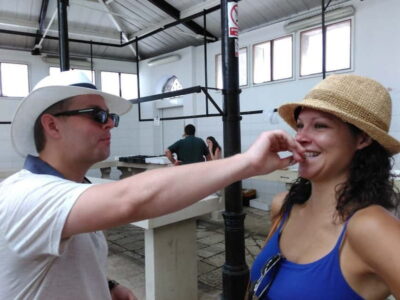
Browse the lists this tour appears in