
REVIEW · FOOD WALKING TOURS
The Original Cebu City Historical and Food Walking Tour
Cebu tastes better on foot. This four-hour evening walk links major landmarks with local food stops, giving you a useful first look at the city beyond its beaches. I like the mix of old Cebu landmarks and street-level eating, and I like that guides such as Kyle, Phillip, Lorelie, and Necian have been praised for being friendly, patient, and easy to talk with. The main drawback is value: at $69.99, this is not a cheap walking tour, especially if the route finishes early or some food stops and interiors are unavailable.
The 4 p.m. start is well chosen for Cebu’s heat. You begin at Ayala Terraces and finish near Freedom Park in Carbon, so this is not a loop back to your hotel. You should also expect some public transportation, including a possible jeepney ride, rather than a private vehicle.
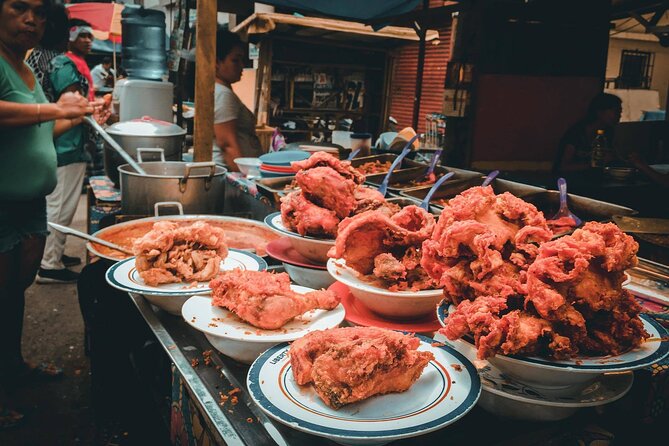
I would treat the food as a chance to try local specialties, not as a restaurant crawl built around familiar dishes. Lechon, tuslob buwa, balut, durian, drinks, and other small bites may appear, but the exact selection can change. Come curious, flexible, and ready to walk.
Key points before you book
- A 4 p.m. start helps with Cebu’s heat: The late afternoon timing is more comfortable than a midday city walk, though Cebu’s weather can still change quickly.
- The route connects six notable sites: You visit the Heritage of Cebu Monument, Yap-Sandiego Ancestral House, Santo Niño Basilica, Carbon Market, Magellan’s Cross, and Cebu Metropolitan Cathedral.
- Food is local rather than polished: You may try lechon, tuslob buwa, balut, durian, drinks, and other street foods. Not every item appears on every outing.
- A jeepney ride may be part of the fun: Several participants enjoyed using local public transport, but this is not a private transport tour.
- The guides are a major part of the experience: Kyle, Phillip, Philip, Lorelie, Lorilie, and Necian have all been singled out for warmth, care, and clear explanations.
- You arrange your own ride home: The tour ends at Freedom Park in Carbon, not at your hotel.
What the $69.99 price really buys you
At $69.99 per person, the price is high by Cebu walking-tour standards. You are paying for a guide, a planned route, food stops, and entrance fees rather than simply tagging along behind someone through the old city.
That can be worthwhile if you have only one evening in Cebu. You avoid spending hours deciding how to connect the historic sites, and you get help ordering or trying foods that may feel intimidating on your own. The guide also adds context to places that can otherwise look like quick photo stops.
Still, the value depends on how fully the four hours are used. One outing lasted around two and a half hours, while another ran for about three and a half. The operator explains that walking speed can affect the total time, and arriving late can mean missing a substantial part of the experience.
For that reason, I would not book this expecting a tightly timed, museum-style program with every stop guaranteed in full. I would book it as a guided introduction to Cebu, where the price pays for local help, food access, and reduced planning.
More food walking tours in the world:
- Reykjavik Food Walk – Local Foodie Adventure in Iceland
★ 5.0 · 18,952 reviews - New Orleans Food Walking Tour of the French Quarter with Small-Group Option
★ 5.0 · 6,118 reviews - Naples: Street Food Walking Tour with Local Guide
★ 4.9 · 4,976 reviews
Starting at Ayala Terraces at 4 p.m.
The meeting point is Ayala Terraces, at Biliran Road in Cebu City. Confirmation is provided when you book, and the area is near public transportation.
The 4 p.m. departure gives you a practical start to an evening in the city. Cebu can be hot and humid, so beginning later makes walking easier. You should still wear light clothing and comfortable shoes because the route combines pavement, markets, public areas, and stops where you may stand for a while.
The group can include up to 20 people. That is small enough for a guide to answer questions, but it is not a private experience. If you want plenty of personal conversation, arriving early and staying close to the guide will help.
Traffic is an important part of Cebu planning. One guide waited for participants delayed by a road accident, but you should not rely on that happening every time. Leaving your hotel early is wise, particularly if you are crossing the city.
The Heritage of Cebu Monument sets the scene
The first listed stop is the Heritage of Cebu Monument, with about 30 minutes scheduled and admission included.
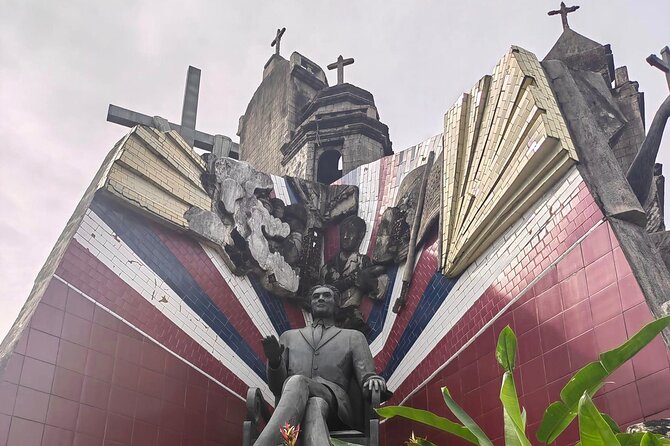
The monument is a large sculptural tableau showing major moments and figures connected with Cebu and Philippine history. Its scenes include the Battle of Mactan, the inauguration of Sergio Osmeña as president, and the canonization of Pedro Calungsod.
This is a useful opening because it gives your guide several themes to explain before you move through the older districts. You get a quick visual outline of Cebu’s Spanish, Filipino, and religious past rather than receiving a long lecture in a museum room.
Do not expect a quiet or slow art visit. Thirty minutes is enough to look closely, take photographs, and hear the main story, but not enough for every figure and event. The quality of this stop depends heavily on how clearly your guide connects the scenes to the city around you.
Yap-Sandiego Ancestral House feels personal
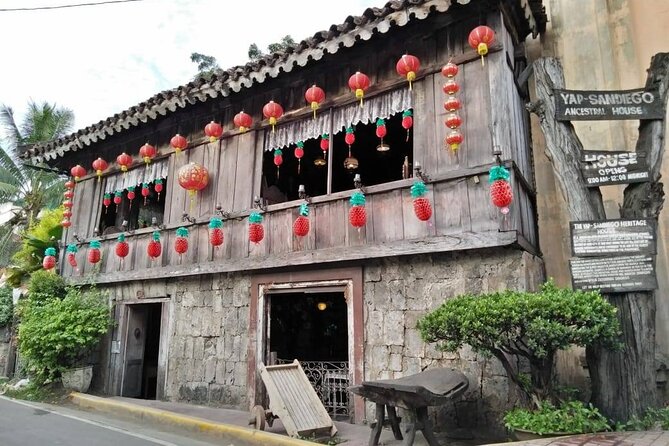
The Yap-Sandiego Ancestral House is one of the strongest stops on the route. Built around 1680 from wood and coral stone, it is considered one of the country’s oldest residential homes.
Its design reflects Spanish and Chinese influences, which makes it especially useful for understanding how Cebu’s early urban culture developed. Unlike a monument that presents national events, this house gives you a more intimate sense of domestic life.
About 30 minutes is planned here, and admission is included. You can expect an atmospheric visit rather than a large formal museum. The old structure, furnishings, and construction details provide the kind of texture that a quick walk past a church cannot offer.
This stop also shows why a guide helps. Without explanation, an old house can be attractive but hard to place in time. With context, the coral stone, timber, and mixed architectural influences become part of a bigger Cebu story.
More history tours in the world:
- Barcelona: Tapas Walking Tour with Food, Wine, and History
★ 4.8 · 4,261 reviews - Sevilla Food Tour: Tapas, Wine, History & Traditions
★ 5.0 · 3,468 reviews - Madrid Tapas & Taverns Small Group Food & History Tour
★ 5.0 · 2,664 reviews - Historic Ybor City Food Walking Tour
★ 5.0 · 2,210 reviews
Santo Niño Basilica connects faith and city life
The Basilica Minore del Santo Niño de Cebu is one of Cebu’s key religious sites. Founded in 1565 by Fray Andrés de Urdaneta, it is associated with the Santo Niño, or Holy Child, and occupies an important place in Cebu’s Catholic tradition.
The basilica sits close to Magellan’s Cross, so these two stops work naturally together. You can see how religious history, Spanish contact, local devotion, and modern city life meet in one compact area.
The published schedule allows around 30 minutes, with admission included. That does not necessarily mean you will have an uninterrupted interior visit. Services, crowds, or Sunday activity can make access more limited. In some outings, the churches were viewed from outside rather than entered.
I would keep expectations clear: this is a guided city walk with historic visits, not a dedicated church tour. Dress respectfully and be ready for the possibility that your guide focuses on the exterior, plaza, or surrounding story.
Carbon Market is the tour’s most local stretch
Carbon Market is where the experience shifts from monuments to everyday Cebu. The market takes its name from carbón, the Spanish word for coal, because the area was near a coal depot connected with the old Cebu Railway.
This is also one of the best places to understand why the tour is not simply a sightseeing circuit. You are moving through a working market area, with food, transport, vendors, and ordinary city routines close at hand. The route can feel more immediate here than at the formal landmarks.
The food stops are a major reason to pay attention in this section. Depending on the day and the exact route, you might try small portions of local dishes, lechon, tuslob buwa, balut, durian, or drinks. One of the most memorable food experiences described was tuslob buwa, a Cebuano dish often eaten with hanging rice, while lechon received particular praise.
The food is not designed to suit every palate. Some dishes may be unfamiliar, strongly flavored, or less polished than what you would receive in a hotel restaurant. Vegetarian choices are not clearly described, so you should ask before booking if your diet is strict.
The market may also be affected by holidays or closures. If a particular food area is shut, the experience can feel less complete, especially because the price assumes several food stops.
Magellan’s Cross is brief but important
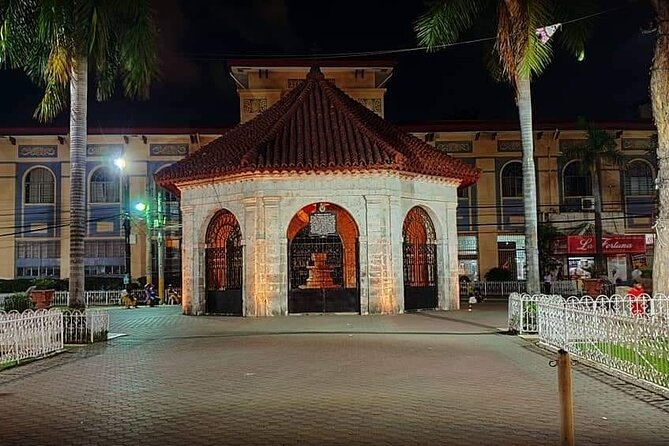
Magellan’s Cross stands in a stone pavilion beside the Santo Niño Basilica at Plaza Sugbo. The cross is traditionally linked with the arrival of Portuguese explorer Ferdinand Magellan’s expedition and the planting of Christianity in Cebu.
This is a short stop, but it matters because it ties the city’s religious landmarks to the first Spanish-era contact. Your guide can help explain why the site is important and how its meaning has changed over time.
The pavilion itself does not require a long visit. Around 30 minutes is generous if the group is also discussing the basilica and nearby plaza. Think of it as a focused history stop, not a major attraction that fills an hour.
Cebu Metropolitan Cathedral completes the historic core
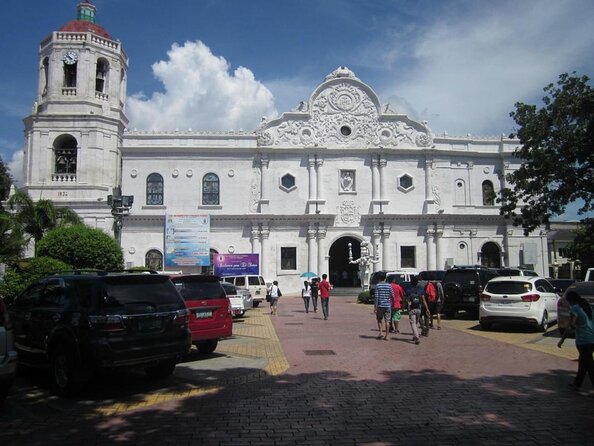
The Cebu Metropolitan Cathedral, officially the Metropolitan Cathedral and Parish of Saint Vitalis and of the Immaculate Conception, adds another layer to the city’s religious story.
Much of the cathedral was destroyed during World War II and later rebuilt. That history gives the building a different character from the older sites. You are not just seeing an early colonial church, but a place shaped by war, repair, and continued use.
Again, the listed stop lasts about 30 minutes. Interior access can depend on services and local conditions, so do not assume the schedule guarantees a full indoor visit. A guide can still make the stop useful by explaining the cathedral’s past and its place in Cebu’s historic center.
The churches are close enough in the program that some people may find the religious focus repetitive. I see the benefit if you want Cebu’s Spanish and Catholic background, but less so if you mainly want markets and food.
How the food portion really works
The title promises both history and food, but the balance may lean toward history with snack and drink stops. That is an important distinction.
Some outings included food at four places, while the operator describes three food stops as part of the experience. The portions seem intended for tasting rather than a single large dinner. You may leave pleasantly full, but you should not assume a formal multi-course meal.
The best approach is to let the guide explain what you are eating before you decide. Guides have encouraged people to try foods first and learn the name afterward, which can make the experience playful rather than intimidating. You can also ask questions about ingredients and preparation.
Balut is mentioned as something some participants enjoyed, but it was not present on every outing. The same applies to other specific items. The food route is shaped by opening hours, holidays, availability, and the guide’s chosen stops.
If you are adventurous, this is a strong part of the tour. If you prefer familiar meals or need guaranteed ingredients, the food portion may feel uncertain. I would eat a light snack beforehand, especially if you are unsure how adventurous you will be.
Jeepneys add real local flavor, with a tradeoff
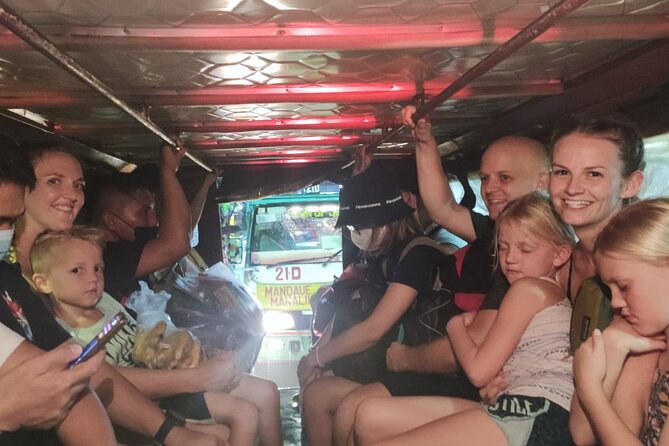
A jeepney ride can be one of the most enjoyable parts of the evening. It gives you a short taste of how people move around Cebu and adds a practical lesson about local transport. Several participants particularly liked this part because it was something they had not yet tried independently.
The tradeoff is comfort and control. A jeepney is public transportation, not a reserved tour vehicle. You may be walking between stops, boarding local transport, and adjusting to city traffic. One critical response objected to not having private transportation, while others considered the jeepney a highlight.
This difference comes down to expectations. If you want an authentic city outing, the ride adds character. If you want air conditioning, direct transfers, and a vehicle waiting at every site, this is the wrong format.
Guides make the difference
The strongest part of this experience is the human element. Kyle is repeatedly praised for his English, enthusiasm, kindness, and ability to help people feel safe trying unfamiliar food. Phillip and Philip are described as friendly, attentive, and well informed about Cebu. Lorelie and Lorilie are praised for organization, food knowledge, and creating a welcoming group mood. Necian is described as conversational and informative.
The guide’s job is not only to point out buildings. It is to explain jeepneys, food customs, local places, and the meaning behind the historic sites. That is what turns a list of stops into a usable introduction to Cebu.
Guide quality can vary, of course, and names are not guaranteed. Still, the consistent pattern is encouraging: the guide is a central part of the value, not an afterthought.
Timing, weather, and getting home
The tour is scheduled for about four hours, but the real length can vary. A fast-moving group may finish sooner, while traffic, food queues, weather, or longer conversations can extend the outing.
Rain is a practical concern. The experience requires good weather, and a weather cancellation offers either another date or a full refund. Cebu’s evening rain can also affect market visits and food stops even when the tour goes ahead.
The final stop is Freedom Park in Carbon. Your return to the hotel is not included, so you need to arrange a taxi or ride-hailing service yourself. This detail matters more than it may seem after several hours of walking and eating. Check the route home before departure, especially if your hotel is far from central Cebu.
The booking is non-refundable and cannot be changed for personal reasons. If the minimum group size is not met, the operator offers another date or experience, or a full refund.
Who should book this Cebu walk?
I would recommend this tour to a first-time Cebu visitor with one free evening and an interest in local food, public transport, and history. It is also a good choice for solo visitors who want help navigating central Cebu and would rather not test unfamiliar street food alone.
It suits people who enjoy conversation, short historic stops, and trying small portions of food. You will get more from it if you ask questions and tell the guide what you are willing to eat.
I would hesitate if you want a private vehicle, a guaranteed four-hour duration, a fully planned dinner, or confirmed entry into every church. The $69.99 price also deserves careful thought if you can comfortably visit these sites independently and do not need a guide.
Should you book it?
Book it if you want a fast, friendly introduction to Cebu that combines major landmarks with food you may not try alone. The route, jeepney experience, and guides such as Kyle or Phillip can make your first evening much easier and more interesting.
Skip it if your priority is a long market visit, a guaranteed list of dishes, or private transportation. For the right person, the value is in the local guidance and confidence it gives you, not in the number of monuments checked off.
FAQ
How long does the Cebu City Historical and Food Walking Tour last?
It is advertised as approximately four hours, beginning at 4 p.m. The actual duration can vary depending on walking speed, traffic, food stops, weather, and time spent at each site.
Where does the tour begin?
The meeting point is Ayala Terraces at 8W94+H97, Biliran Road, Cebu City, 6000 Cebu, Philippines.
Where does the tour end?
The tour ends at Freedom Park in Carbon, Cebu City. You are responsible for arranging transportation from there to your hotel or next destination.
What historic sites are visited?
The route includes the Heritage of Cebu Monument, Yap-Sandiego Ancestral House, Basilica Minore del Santo Niño de Cebu, Carbon Market, Magellan’s Cross, and Cebu Metropolitan Cathedral.
Is food included?
Yes. The experience includes food stops and drinks, along with entrance fees for the listed attractions. Exact dishes can vary, and specific foods such as balut may not appear on every outing.
Is transportation included?
The tour can include public transportation such as a jeepney, but it does not provide a private vehicle or transportation back to your hotel.
How many people can join the tour?
The maximum group size is 20 people. Confirmation is provided at booking, and the tour requires a minimum number of participants to operate.
Just added in the world
- Copenhagen Private Culinary Food Tour with 6 Tastings of Classics★ 5.0 · 42 reviews
- Copenhagen Private Food Walking Tour with 6 or 10 Tastings★ 4.5 · 177 reviews
- Copenhagen Food & Drink Private Tour: Scandinavia Delight Tasting★ 5.0 · 236 reviews
- Copenhagen Modern Food Tour★ 5.0 · 32 reviews
- 3-hour Culinary Bike Tour in English★ 5.0 · 235 reviews
- Copenhagen Best of Danish Pastry Tasting Tour★ 5.0 · 30 reviews
- Classic 3-Hour Food Tour in Colorado Springs★ 5.0 · 408 reviews
- COLOMBO PRIVATE CITY TOUR WITH street food( All inclusive )★ 4.0 · 40 reviews
Food Walking Tours, compared.
Reykjavik Food Walk – Local Foodie Adventure in Iceland
Read our review →
New Orleans Food Walking Tour of the French Quarter with Small-Group Option
Read our review →
Savannah First Squares Culinary & Cultural Walking Food Tour
Read our review →
Guided Food Walking Tour with Wine in Trastevere
Read our review →
Trastevere & Campo de Fiori Street Food Walking Tour
Read our review →Browse the lists this tour appears in