REVIEW · STREET FOOD TOURS
The Valletta Street Food and Culture Walking Tour
Come hungry, leave with a better sense of Malta. This three-hour walk through Valletta combines local snacks, traditional dishes, and city history in a way that helps you understand how Malta’s many influences ended up on one plate. I especially like the small group size of up to 16 people and the fact that the tour finishes in central Valletta, leaving your afternoon free.
The food is generous, not decorative. You try pastizzi, ftira, Kinnie, Maltese coffee, sweets, a local platter, Cisk lager, and a traditional dish that may be rabbit or ravioli. I also like the relaxed pace and the use of headphones, which several guides have used so you can hear clearly without crowding around them. The main drawback is that the tour is not suitable for vegans or people with gluten intolerance, and the walking includes steps.
Key points to know before booking
- Pastizzi begins the morning: This flaky Maltese pastry, filled with peas or another savory filling, is the first taste and a useful introduction to everyday local food.
- The food replaces lunch for many people: Portions are substantial, so eat only a light breakfast before the 9:30 am start.
- History comes with every stop: Castille Square, Auberge d’Italie, Merchant Street, and other landmarks provide the setting for stories about Malta’s culture and past.
- You get more than snacks: The final restaurant stop includes a local platter, beer, and a traditional dish such as rabbit or ravioli.
- A good first morning in Valletta: The tour lasts about three hours and ends near St. George’s Square, giving you time to visit museums, churches, or other sights afterward.
- Dietary limits matter: Vegan and gluten-free diets are not recommended, though you should still tell the provider about any dietary needs.
Starting at the New Parliament Building
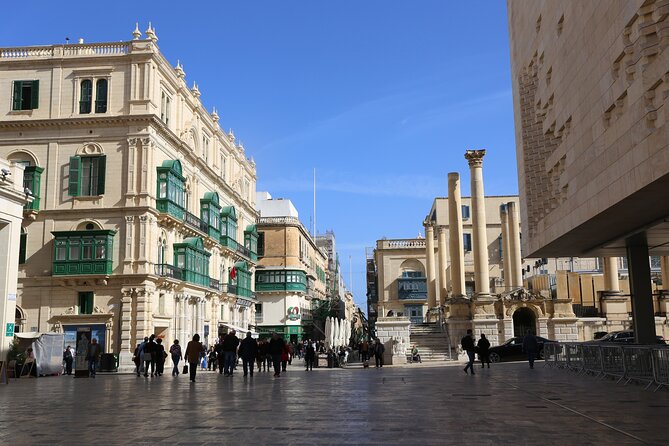
The tour begins at 9:30 am in front of the New Parliament Building on Republic Street, at the entrance to Valletta. This is a practical meeting point because it is easy to identify, and you begin inside the city rather than spending part of the morning searching for a tucked-away café or shop.
After introductions, your guide sets the scene for Valletta and Malta. The strongest guides, including Ernest, Marisa, Nadine, Charlotte, Mariella, and John, have made the opening more than a simple orientation. They connect the city’s buildings and streets with the food you are about to eat.
That connection is the main reason to choose this tour instead of a food crawl with little explanation. Maltese food reflects the island’s position in the Mediterranean and its long contact with different cultures. You are not just handed a pastry. You get some context for why these foods matter and how they fit into daily life.
The group can include different generations, and the pace is generally easy. Still, Valletta is not flat in every direction. Expect steps and some uphill or downhill walking. Wear shoes that can handle old city streets, and do not treat this as a seated tasting.
More street food tours in the world:
- Ho Chi Minh City Street Food Tour & Sightseeing By Motorbike
★ 5.0 · 9,413 reviews - Naples: Street Food Walking Tour with Local Guide
★ 4.9 · 4,976 reviews - Small Group Hanoi Street Food Tour with a Real Foodie
★ 5.0 · 4,682 reviews
Pastizzi: the right first taste of Valletta
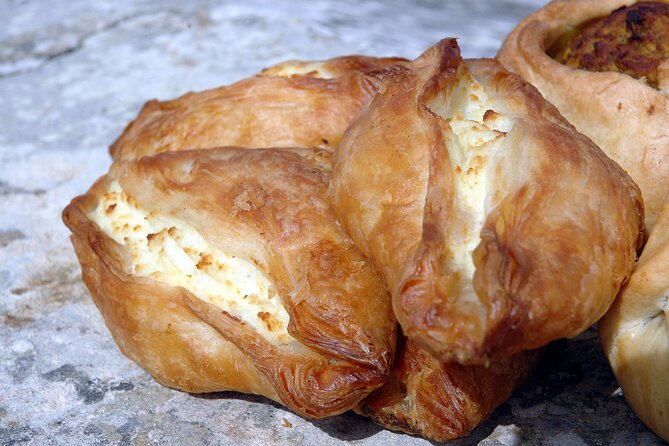
The first food is pastizzi, one of Malta’s best-known street foods. It is a small, inexpensive pastry with a crisp exterior and a savory filling. Peas are one familiar option, and one tasting included a pastizz filled with mushy peas.
Pastizzi works well as the first stop because it is simple, local, and tied to ordinary Maltese eating habits. It is not a formal restaurant dish. You can understand quite a bit about a place from what people grab for a quick bite, and pastizzi gives you that everyday angle early in the morning.
Your guide explains the food as you eat, then the group continues through Valletta. One practical point came up more than once: some people preferred receiving the explanation before the food was handed out, rather than trying to listen while eating. If you like to know what you are tasting first, stay close to the guide and listen before taking your first bite.
Castille Square and Auberge d’Italie
The next part moves through some of Valletta’s central landmarks, including Castille Square and Auberge d’Italie. The scheduled time here is about 40 minutes, enough for a short walk, several historical stops, and more food without turning the morning into a lecture.
This is where the tour’s two subjects begin to fit together. Valletta’s architecture tells you about power, trade, religion, defense, and the people who passed through Malta. The food tells a parallel story in a more casual way. Your guide explains how customs and ingredients were shaped by Malta’s location and past.
The quality of this section depends heavily on the guide. John was praised for a relaxed pace while still fitting in a great deal of information. Ernest has also been particularly effective at explaining how Maltese culture affects food today. Marisa has used personal family stories to make the past feel closer and less like a list of dates.
The tour is licensed and led by a local guide, but the tone is not stiff. You should expect interpretation rather than a fixed script delivered without room for questions. One caution: one guide was criticized for presenting strongly negative opinions about the Knights. If you prefer history presented without much personal judgment, keep that in mind. The tour remains useful, but the tone can vary with the person leading your group.
Merchant Street, ftira, and Kinnie
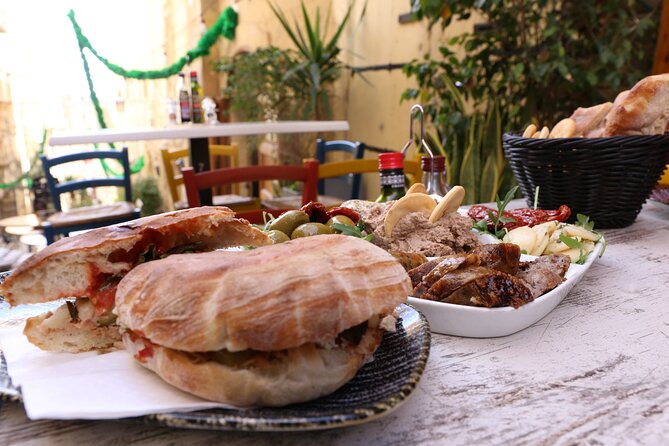
Merchant Street provides the setting for another substantial stop. Here, the walk combines old Valletta streets with ftira, a Maltese flatbread filled with Mediterranean ingredients. It is served with Kinnie, Malta’s distinctive soft drink.
Ftira is one of the more filling foods on the route. Depending on the preparation, the bread and fillings can feel closer to a light meal than a sample. Kinnie adds a distinctly local note and is worth trying even if you normally skip soft drinks. It is one of the items that helps the tour feel connected to Malta rather than like a generic Mediterranean food walk.
The 40-minute stop gives you time to eat and look around. That matters because Valletta can feel compressed if you rush from one landmark to the next. Here, you get a chance to notice the streets and buildings while your guide explains the area.
A small detail can make a big difference: headphones have been used on this tour. They allow you to keep walking or stand slightly apart from the group while still hearing the guide. That is especially helpful on a narrow street, where 16 people gathered around one speaker can quickly become a noisy knot.
A few more food tours in the world worth a look
- Reykjavik Food Walk – Local Foodie Adventure in Iceland
★ 5.0 · 18,952 reviews - Tokyo: Shinjuku Food Tour (13 Dishes at 4 Local Eateries)
★ 5.0 · 6,603 reviews - Winner 2025 Undiscovered Lisbon Food & Wine Tour by Eating Europe
★ 5.0 · 6,390 reviews - Hanoi: Guided Food Tour with Train Street Visit
★ 4.9 · 6,239 reviews
Maltese coffee and a sweet finish
The fourth stop focuses on Maltese coffee, a spiced drink with its own local style. You also sample mqaret, a date-based sweet made with cinnamon and orange blossom water, or another seasonal treat.
Mqaret gives the sweet course a strong local identity. Dates, spice, and orange blossom create a different profile from the cakes and pastries found on many European food walks. If the exact sweet changes, that is because the food selection can vary from day to day.
The order of the stops may not always feel perfect to every person. One tasting placed dessert before the final savory course, and that guest would have preferred saving the sweet until the end. It is a minor point, but worth knowing if you like a traditional meal sequence.
The coffee stop also adds cultural detail rather than simply another item to consume. You learn about the local blend and how spiced coffee fits into Maltese tradition. This is one of the tour’s better examples of food acting as a doorway into daily customs.
The final restaurant meal
The tour ends at a local restaurant in Valletta with a platter of small dishes, Cisk lager, and one traditional Maltese preparation. Depending on the day, the main item may be rabbit or ravioli. Other dishes can vary, so your guide explains the menu during the tour.
This final stop is why you should avoid a large breakfast. The morning has already included several tastings, and the platter can push the total well beyond snack size. Several people finished feeling full enough to skip lunch.
Rabbit is a particularly useful dish to try here if it is available. It is one of Malta’s traditional foods, and this is a more meaningful place to sample it than ordering a random international meal near the waterfront. One tasting included a modern rabbit terrine, while another included braised rabbit. The exact preparation is not guaranteed, but the point is to give you a proper local dish after the street food.
Cisk lager is included with the platter. If you do not drink alcohol, tell the provider about your needs before the tour, though the supplied information does not specify a nonalcoholic replacement. The local drink Kinnie is also included earlier in the route.
The restaurant finish gives the morning a satisfying shape. You begin with inexpensive street food and end with a sit-down taste of more formal Maltese cooking. It is a useful contrast, especially if you are new to the island.
What the three-hour schedule feels like
The advertised duration is about three hours, though some groups have taken around three and a half hours. That is a good length for this kind of activity. You have enough time to eat slowly, hear the guide, and walk between stops without giving up the entire day.
I would book it near the beginning of your Malta stay. You get an early introduction to Valletta, a list of foods to seek out later, and a basic framework for understanding the city. Since the tour ends near St. George’s Square in the center, you can continue with your own plans afterward.
The finish point is close to amenities and the main square. From there, you can visit another sight, find coffee, return to your accommodation, or continue exploring Valletta on foot. The tour does not include entrance fees to museums or churches, so budget separately if you plan to visit those places.
The group maximum is 16 people. That is small enough for questions and easier listening, though it is not a private walk. If you want one-on-one attention or a completely flexible schedule, a private tour would suit you better. For keeping the cost down, this group format makes sense.
Is $66.51 a fair price?
At $66.51 per person, this is not the cheapest way to eat in Valletta. You could buy pastizzi, bread, drinks, and other inexpensive foods for less if you already knew where to go.
The value comes from the combination. You receive a licensed guide, several local specialties, Kinnie, beer, a restaurant platter, a traditional dish, and three hours of walking commentary. You also avoid the work of finding suitable stops and figuring out what to order.
For me, the price is easier to justify if you want both food and orientation. A simple food tasting would not need to cost this much, but a guided city walk with a filling range of dishes is a different product. Since the food often replaces lunch, the practical cost is lower than the ticket price alone suggests.
The tour has a 4.9 rating from 711 ratings, with 97 percent recommending it. Those figures point to a reliably strong experience, though they should not hide the two real cautions: diets are restricted, and the guide’s style can shape the historical commentary.
Who should book this Valletta food walk?
I would choose this tour if you want:
- A first look at Valletta and Maltese food in one morning
- A relaxed group experience rather than a private guide
- Enough food to replace lunch
- Historical and cultural context with your tastings
- A central finish and an open afternoon
- A chance to try foods you might not order alone, such as rabbit or mqaret
It is also a good fit for solo visitors who want a structured start to their Valletta stay, couples who enjoy food with some history, and families with older children who can manage city walking and several tasting stops.
Children aged five and under can join free, but no food is provided for nonpaying children. That makes the arrangement less useful for a young child who will need their own meal. Service animals are allowed, public transportation is nearby, and most people can take part, but the steps and food restrictions still deserve attention.
Should you book it?
Book it if you want a filling, guided introduction to Valletta rather than a quick list of snack stops. The best part is the link between food, buildings, and Maltese customs. Guides such as Ernest, Marisa, Nadine, John, and Mariella have been praised for making that connection lively and easy to follow.
Skip it if you are vegan, gluten intolerant, looking for a private tour, or mainly interested in museums and churches. For everyone else, this is a practical first morning in Valletta: easy to find, generous with food, strong on local context, and short enough to leave the rest of the day open.
Free cancellation is available up to 24 hours before the 9:30 am start for a full refund. Later cancellations and changes are not accepted, and the tour may be moved or refunded if its minimum group size is not reached.
FAQ
Where does the Valletta food tour start?
It starts at 9:30 am in front of the New Parliament Building on Republic Street, at the entrance to Valletta.
Where does the tour finish?
The tour ends in central Valletta near St. George’s Square on Republic Street, close to the main square and local amenities.
How long does the tour last?
The planned duration is about three hours. Some groups have taken around three and a half hours.
What food and drinks are included?
The tour includes local specialties such as pastizzi, ftira, Kinnie, Maltese coffee, mqaret or another seasonal sweet, a local platter, Cisk lager, and a traditional dish that may be rabbit or ravioli.
Is the tour suitable for vegans or people with gluten intolerance?
It is not recommended for people following a vegan diet or people with gluten intolerance. You should still inform the provider about any dietary needs.
Can young children join the tour?
Children up to age five can join free, but food is not provided for nonpaying children. The group can include up to 16 people, and service animals are allowed.
Just added in the world
- Private Chicago Food Tour with Deep Dish and Beef Sandwich★ 5.0 · 61 reviews
- River North Food Walking Tour★ 4.5 · 88 reviews
- Chicago Food Tour: Taste the City’s Most Iconic Eats★ 5.0 · 111 reviews
- Chicago’s West Side Foodie Ride Bike Tour★ 5.0 · 112 reviews
- Old Town Chiang Mai Food Tour with 10+ Local Dishes Tastings★ 5.0 · 21 reviews
- Go where the locals go, Eat what the locals eat! Food Tour with Local Foodies★ 5.0 · 138 reviews
- Motorbike Food Tour in Chiang Mai★ 5.0 · 54 reviews
- Food Trail Through Sowcarpet Market: A Taste of Chennai★ 5.0 · 38 reviews
Street Food Tours, compared.
Ho Chi Minh City Street Food Tour & Sightseeing By Motorbike
Read our review →
Small Group Hanoi Street Food Tour with a Real Foodie
Read our review →
Saigon By Night and Street Food By Motorbike | Opt: Ao Dai Riders
Read our review →
Private Street Food Tour by Motorbike/Car with Local Students
Read our review →
Cinque Terre Park Day Trip with Optional Street Food
Read our review →