
REVIEW · PARIS FOOD TOURS
Paris Culinary Tour: 11 Tastings & 2 Wines in Le Marais
Come hungry, leave happily full. This four-hour walk through Le Marais links 11 food tastings and two drinks with local history, family-run shops, and a look at how Paris eats today. I especially like the mix of classic French staples and newer influences from Morocco, Syria, and Jewish Paris.
The small group of up to 10 keeps the walk personal, and the guides receive unusually strong praise for their warmth and command of Parisian food culture. I also like that lunch is built in rather than treated as an afterthought. The main drawback is simple: this is a lot of food, and it is not a good fit for vegans, people with celiac disease, or anyone who has trouble walking at a moderate pace.
Key points at a glance
- Eleven tastings make this a full meal: You will try bread, pastries, chocolate, a savory crepe, pastrami, bistro food, cheese, and more.
- Le Marais provides the setting: The route combines food shops with a short walk through the Jewish quarter and Paris market culture.
- Old and new Paris meet on the plate: Traditional French food shares space with Moroccan, Syrian, Jewish, and other outside influences.
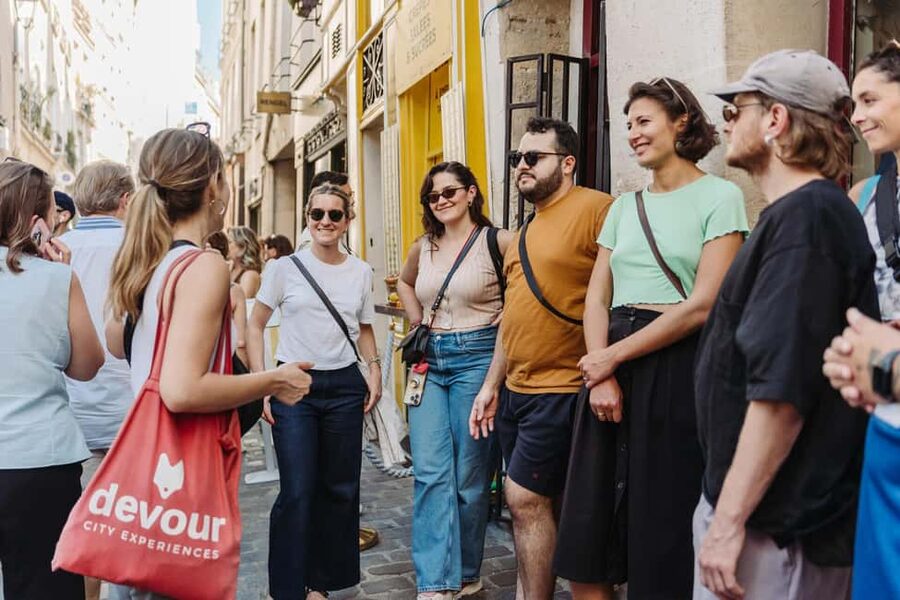
- The group stays small: A maximum of 10 people gives you a better chance to ask questions and speak with your guide.
- The finale is cheese and wine: The last two stops focus on artisan cheese and natural wine, a satisfying way to finish.
- Dietary limits matter: Vegetarian, pescatarian, non-alcoholic, and pregnancy adjustments are possible, but not every stop can offer a replacement.
Starting with Poilâne bread and a proper Parisian breakfast
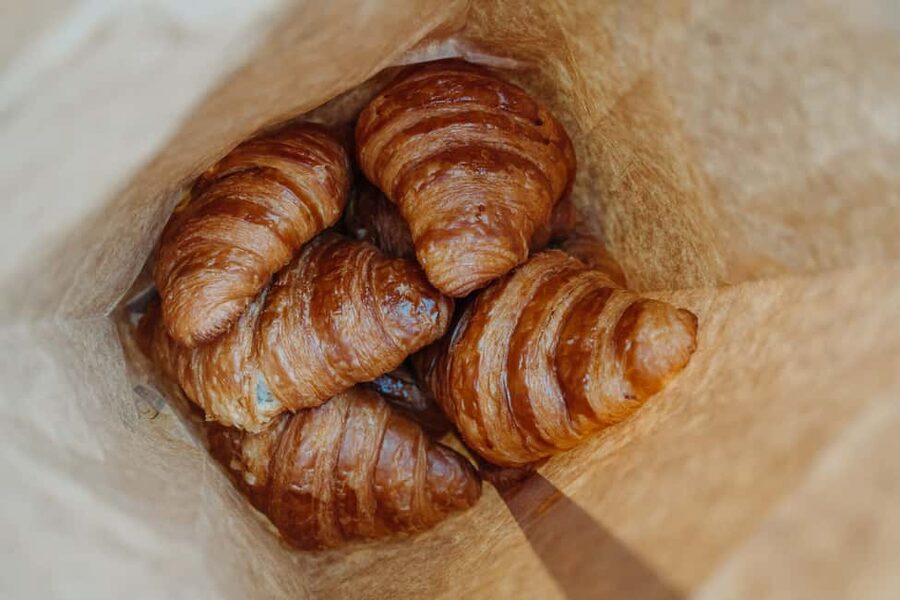
The tour begins at one of two possible meeting points, with the precise location depending on the option you book. From there, the first stop is Poilâne, a famous Paris bakery where you start with a flaky butter croissant, homemade sourdough bread, and a little background on the family business.
This is a smart opening. A croissant gives you the familiar taste many people hope to find in Paris, while the sourdough adds a more regional, craft-focused note. You also learn to pay attention to the bakery itself, not just the food in your hand.
The stop lasts about 15 minutes. You will not sit down for a long breakfast, so arrive ready to move on. That fast pace is part of the appeal, but it means you should not expect a relaxed café morning with a second coffee.
More Wine Tours in France
- Authentic Parisian Gourmet Food Tour with 10 Local Dishes & Wines
★ 5.0 · 4,754 reviews - Montmartre Hill French Gourmet Food and Wine Tasting Walking Tour
★ 5.0 · 2,588 reviews - Private Montmartre Food Tour with Wine, Cheese & Pastries
★ 5.0 · 1,027 reviews
Moroccan crepes at Paris’ oldest covered market
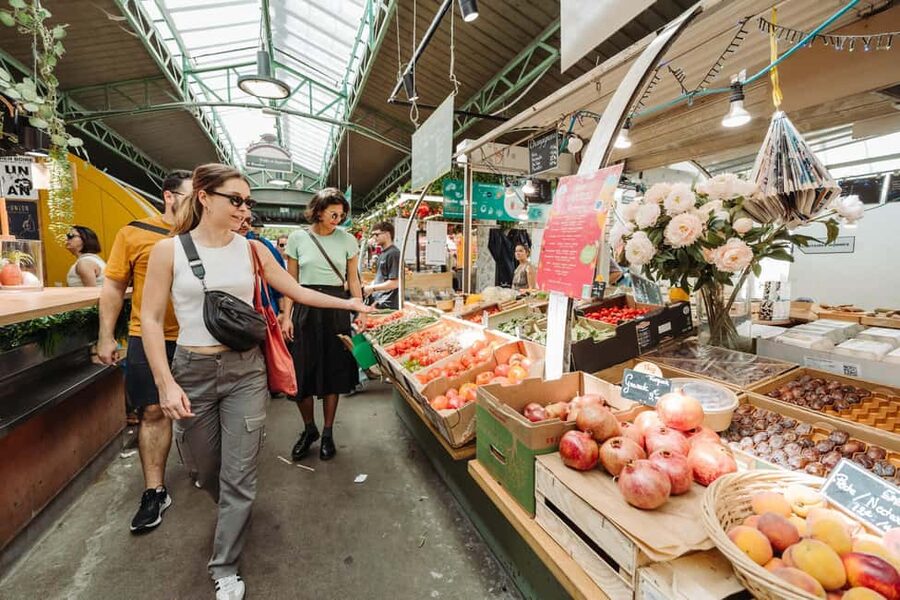
Next comes a savory Moroccan crepe at Le Traiteur Marocain, located in Paris’ oldest covered market. The crepe gives the tour an early change of direction. Instead of staying with the standard croissant, cheese, and wine version of French food, you see how North African cooking has become part of everyday Paris.
Your guide explains the crepe’s connection to French colonial history and how the dish was adapted for local tastes. That context gives the snack more weight than a quick bite from a market stall. You are not just sampling something unfamiliar. You are hearing how food moves across borders, changes in a new city, and becomes part of urban life.
Plan on about 20 minutes here. Market conditions and shop traffic can affect the rhythm, so this is not a formal sit-down meal. It is a useful reminder that Parisian food culture is broader than classic French cuisine.
Chocolate and macarons from a master chocolatier
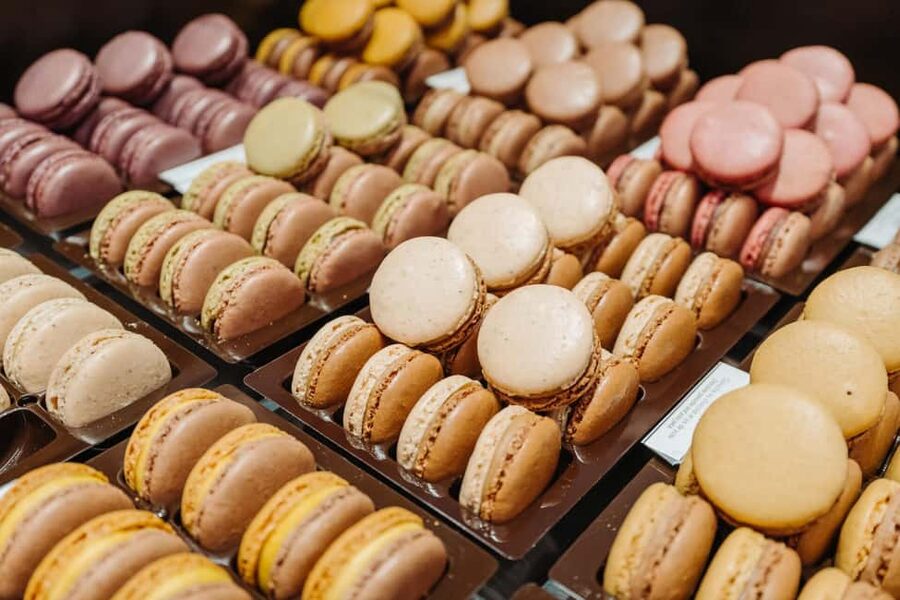
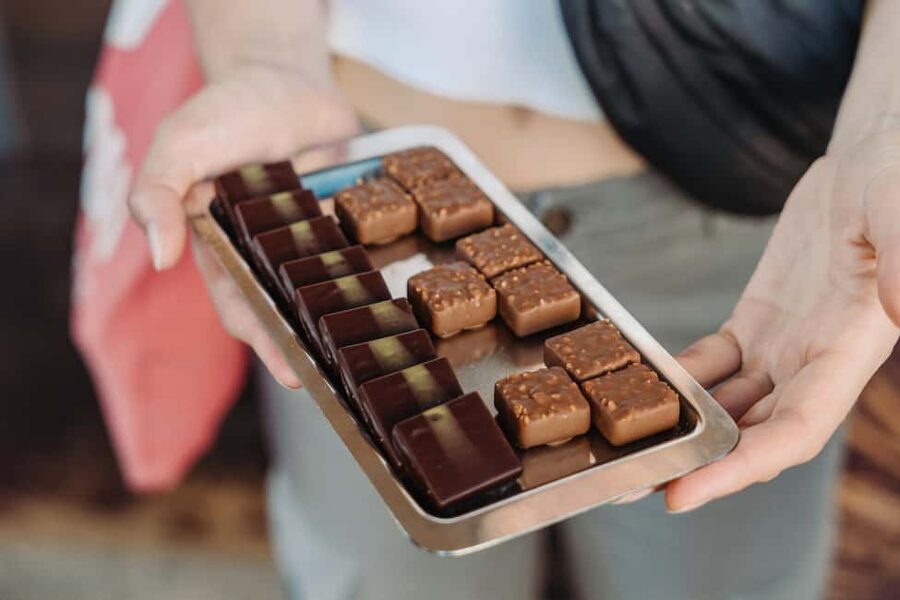
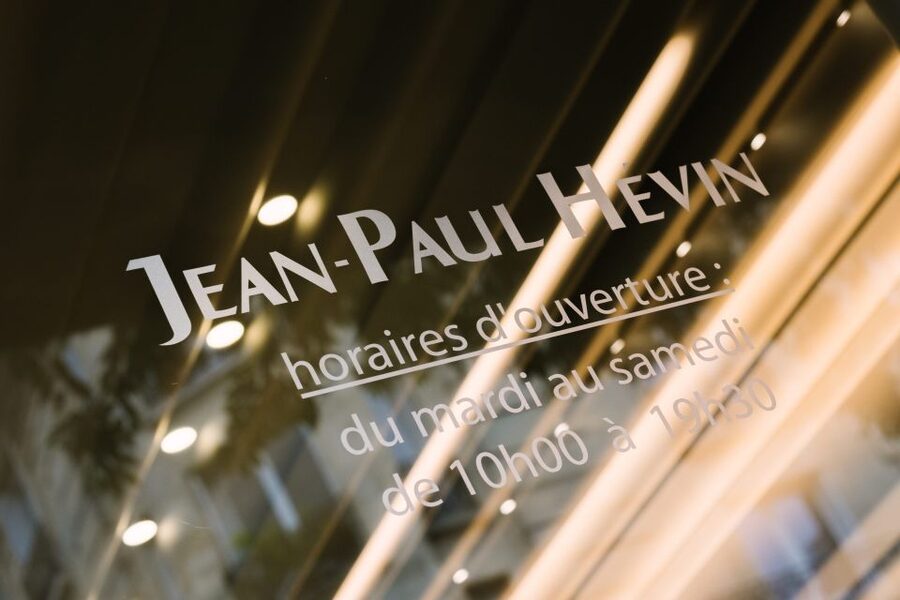
The next stop is Jean-Paul Hevin in Le Marais, where you taste chocolate and macarons. Hevin holds the title Meilleur Ouvrier de France, an honor given to top craftspeople in their field. The point is quality and technique, not simply grabbing a sweet from a tourist shop.
This 15-minute stop works well after the savory crepe. You get a sharp shift from salt and spice to smooth chocolate and delicate pastry. If you have a strong sweet tooth, this may be one of the highlights. If you prefer savory food, remember that several more substantial tastings are still ahead.
The itinerary describes 11 or more food tastings, so the exact balance can vary. You should expect a generous range rather than 11 large restaurant portions. Even so, the tour is designed to cover a full meal.
Pastrami and the Jewish quarter
The walk then enters Paris’ Jewish quarter, with a short historical explanation along the way. The tour visits Sacha Finkelsztajn, a well-known family-run bakery, for a warm pastrami sandwich.
This is one of the more useful stops for understanding Le Marais. The food and the neighborhood story are linked, and you get a glimpse of how Jewish roots remain part of the area’s identity. The sandwich also gives you a welcome savory pause after the croissant, crepe, chocolate, and macarons.
The scheduled tasting lasts only about 10 minutes. That means you should think of it as a carefully sized sample, not a full deli lunch. Still, many people consider the pastrami one of the strongest bites on the route. If you want to return later, note the shops you pass. One guide specifically encouraged people to keep track of places that looked worth another visit.
More Wine Tours in Paris
- Paris Le Marais Food Tour With 10+ Tastings, Cheese, Wine & More
★ 5.0 · 985 reviews - Paris Le Marais District Original Food and Wine Tasting Tour
★ 4.5 · 880 reviews - Paris Montmartre Food & Wine Tour with Eating Europe
★ 5.0 · 718 reviews - Paris: Le Marais District Food Tour with 10+ Tastings & Wine
★ 4.8 · 382 reviews
French bistro lunch at La Chaise au Plafond
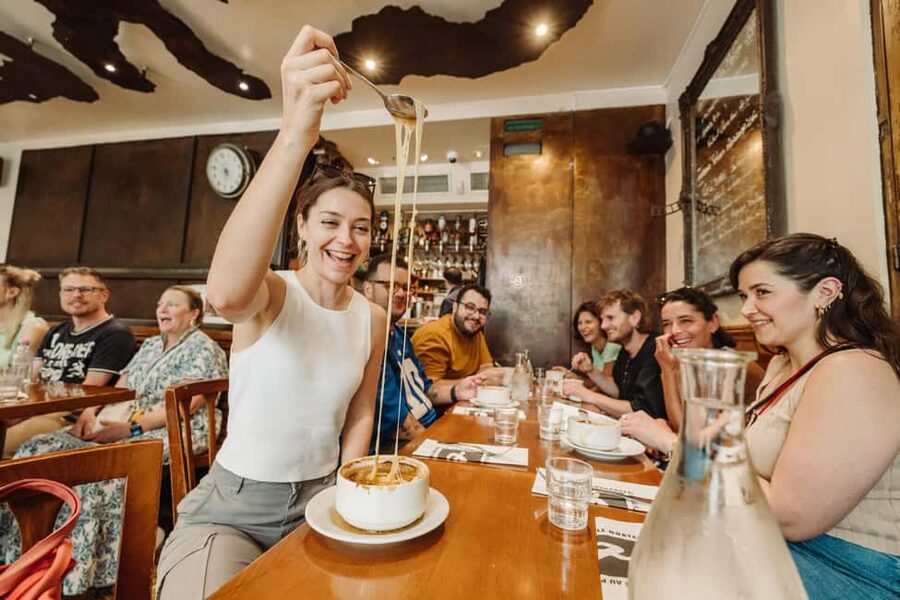
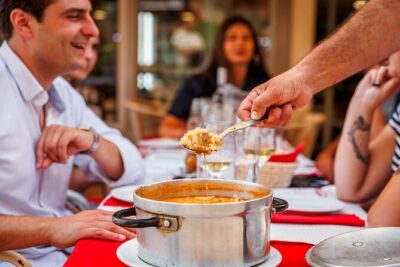
Now the tour slows down for lunch at La Chaise au Plafond, a classic French bistro. The restaurant was originally opened as a protest against fast food, which gives the meal a little extra character. You may try French onion soup or another traditional dish, while your guide explains how to order and eat in a bistro.
This is where the tour feels most like a meal rather than a tasting crawl. You sit down for about 30 minutes, learn some practical dining habits, and get a chance to catch your breath. The bistro stop also helps spread the food across the afternoon instead of making every bite a standing snack.
Do not expect a long, leisurely French lunch. Thirty minutes is enough for a focused dish and conversation, but not for the extended meal that can fill a Parisian afternoon. I see that as a fair trade. The tour still has several stops to come, and the total duration is about 210 minutes.
Syrian flavors in French pastry
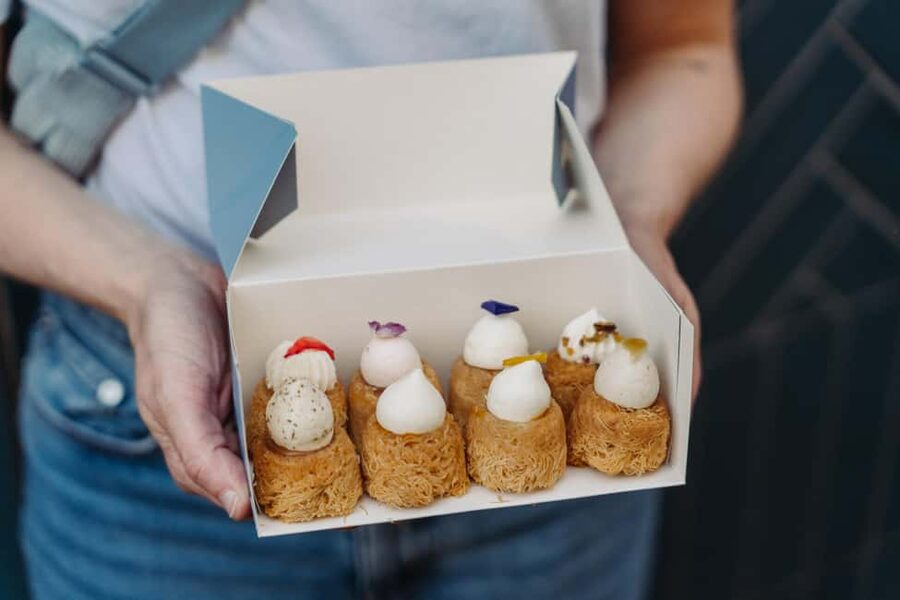
At Maison Aleph, the route turns to a French-Syrian pastry experience. The baker combines Syrian flavors with French pastry methods to create pastry nests.
This stop is valuable because it shows modern Paris without treating tradition as something fixed. French pastry technique is still central, but the flavors and ideas come from another culinary culture. You get a small, precise sweet rather than another familiar croissant or macaron.
The tasting lasts about 10 minutes. By this point, the variety is doing the work. You have moved from bakery classics to market food, chocolate, Jewish deli fare, bistro cooking, and a Syrian-French pastry. That range is the strongest reason to choose this tour over a route that stays only with famous French staples.
Artisan cheese at Fromagerie Laurent Dubois
The penultimate food stop is Fromagerie Laurent Dubois, where you try a flight of artisan cheeses. This is a good moment to slow down and compare textures and flavors. Your guide can explain how the cheeses relate to French regions and production methods, though the specific selection may change.
Cheese is not a small extra here. It is part of the structure of a French meal, and it prepares you for the final wine tasting. Several guides have been praised for explaining how food products differ by source and region, which can turn a simple cheese sample into a lesson you can use at restaurants and markets later.
If you do not eat dairy, this tour will be difficult. The experience is not recommended for people with lactose intolerance, and there is no promise of a replacement at every stop.
Two wines at La Chablisienne Cave Saint-Paul
The final stop is La Chablisienne Cave Saint-Paul at 8 Rue Saint-Paul. Here, you taste two wines and meet the owner while learning about natural wine. The tour ends at this address, so you are not left searching for a final meeting point or transport back to the start.
The wine stop lasts about 30 minutes, making it one of the longer tastings. That gives you time to compare the pours and ask questions about the style. Several guides have been praised for explaining regional wine and pairing it with the cheeses from earlier in the route.
The description identifies two drinks, while individual experiences have also included wine and champagne tastings. The exact pours can vary, so do not book this expecting a fixed bottle list. The point is the conversation and comparison, not a full wine class.
Natural wine can be a new subject for many people. If you already know a lot about wine, you may find the shop conversation more useful than the basic tasting notes. If you are new to the subject, this is a friendly introduction without the formality of a specialist course.
What the guide adds to the food
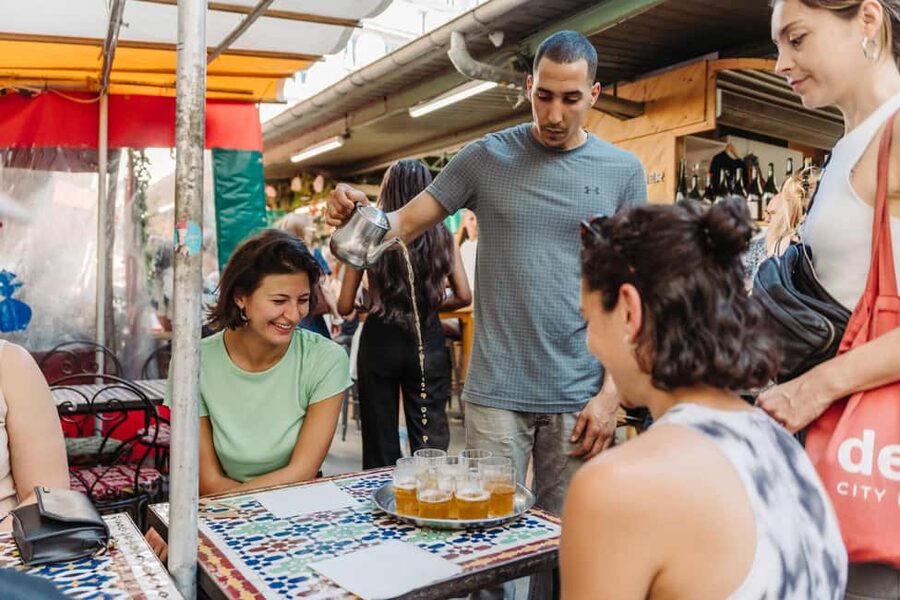
The guide is a major part of the value. The route crosses food traditions, neighborhoods, and business types, so a good guide turns separate stops into a connected story. The strongest praise goes to guides including Vanessa, Arturo, Alice, Emily, Sam, Dave, Juan, Anne Lorraine, Khoshi, and Davide.
Their strengths are consistent: friendly conversation, clear English, practical food advice, and strong knowledge of Parisian history and culinary customs. Juan, for example, was described as having grown up in the neighborhood and trained as a chef. Other guides have shared tips for later meals and pointed out connections between food, migration, and local identity.
You should not assume you will receive a particular guide. Names change by date and group. Still, the repeated emphasis on guide quality is encouraging. This is not a route where you simply collect food samples and move on.
Is $140 a fair price?
At $140 per person, the tour is not cheap. The price includes a local English-speaking guide, the walking route, 11 or more food tastings, two drinks, and a small group capped at 10 people.
I think the value is reasonable if you would otherwise pay for lunch, snacks, chocolate, cheese, wine, and a guided neighborhood walk separately. You also avoid the guesswork of choosing shops on your own. The meal is substantial enough that you should not need another full lunch afterward.
The value is weaker if you mainly want a relaxed restaurant meal or already know Le Marais well. You are paying for access, explanation, and variety, not just the amount of food. Come hungry, but do not eat a large meal beforehand.
Walking, pace, and practical limits
This is a walking tour with several short stops. You need to walk at a moderate pace without difficulty, and the route is not suitable for wheelchair users, people with mobility impairments, or strollers.
Wear comfortable shoes. The route includes market streets and neighborhood walking, and the full experience lasts three and a half hours. The food may be the headline, but your feet are part of the equation.
The tour is conducted in English. Private and small-group options are available, and the standard small group has a maximum of 10 people. Hotel pickup and drop-off are not included, so you arrange your own way to the meeting point and away from the final stop.
Dietary planning deserves care. The tour can adapt for vegetarians, pescatarians, non-alcoholic preferences, and pregnant women, but you may not receive a replacement at every stop. Anyone with allergies or restrictions should contact the operator’s Guest Experience team after booking. The route cannot safely accommodate celiac disease because of gluten cross-contamination.
Cancellation is flexible, with a full refund available when you cancel at least 24 hours ahead. You can also reserve now and pay later, which helps if your Paris schedule is still shifting.
Who should book this Le Marais food walk?
I would recommend it to first-time Paris visitors who want a strong introduction to French food without spending every meal in a formal restaurant. It also suits repeat visitors who want to see how Moroccan, Syrian, Jewish, and natural-wine traditions fit into the city’s food scene.
Families with older children may enjoy the variety, though the pace and amount of walking still matter. The group format also works well for solo visitors and couples who like meeting other food-focused people.
I would skip it if you want vegan food, need strict gluten-free preparation, dislike dairy, or prefer to choose every dish yourself. It is also not ideal for anyone who wants a slow, long lunch with lots of free time between courses.
Should you book it?
Book this tour if you want one well-organized afternoon to eat broadly, learn the story behind the food, and get practical tips for the rest of your Paris stay. The best features are the small group, the guide-led history, and the thoughtful progression from bread and pastries to savory food, cheese, and wine.
The price makes sense when you treat it as lunch, dessert, a market visit, a neighborhood walk, and a wine tasting in one package. Just arrive very hungry, wear good shoes, and tell the operator about dietary needs before the tour. If those conditions suit you, this is a strong way to get acquainted with Le Marais through the people who feed it.
FAQ
How long does the Paris Culinary Tour last?
The tour lasts 210 minutes, or about three and a half hours.
How many tastings are included?
The experience includes 11 or more food tastings and two drinks, enough to make up a full meal.
Where does the tour finish?
The tour finishes at La Chablisienne Cave Saint-Paul, 8 Rue Saint-Paul.
Is the tour conducted in English?
Yes. The live tour guide speaks English.
Can vegetarians or people who do not drink alcohol join?
The tour can adapt for vegetarians, pescatarians, non-alcoholic options, and pregnant women. A replacement is not guaranteed at every stop, so you should provide your dietary information after booking.
Is the tour suitable for wheelchair users or people with celiac disease?
No. The route is not suitable for wheelchair users, people with mobility impairments, or strollers. It is also not suitable for celiac disease because of gluten cross-contamination.
Just added in Paris
- The Official Emily in Paris Food Tour★ 4.8 · 39 reviews
- Paris: Taste of Montmartre Food & Wine Walking Tour★ 4.9 · 29 reviews
- Paris: Saint Germain des Prés Guided Foodie Walking Tour★ 4.8 · 146 reviews
- Paris: Pastries and Chocolate Walking Food Tour★ 4.8 · 57 reviews
- Paris: Guided Champagne & Food Tour in St-Germain-des-Pres★ 4.6 · 26 reviews
- Paris Le Marais Food Tour: Full Traditional French Feast★ 4.8 · 119 reviews
- Paris: Montmartre Food Tour with 10 Local Tastings & Wines★ 4.8 · 191 reviews
- Paris: Le Marais Bakery and Pastry Food Tour with Tastings★ 4.7 · 64 reviews
Wine Tours, compared.
Winner 2025 Undiscovered Lisbon Food & Wine Tour by Eating Europe
Read our review →
Winner 2025 Florence Sunset Food & Wine Tour by Eating Europe
Read our review →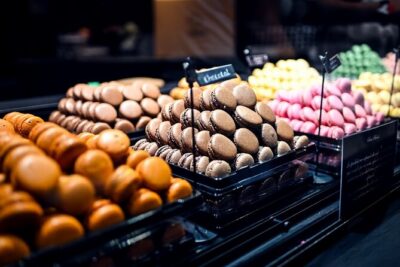
Authentic Parisian Gourmet Food Tour with 10 Local Dishes & Wines
Read our review →
Tapas Walking Tour with Food, Wine, and History
Read our review →
Lisbon Small-Group Portuguese Food and Wine Tour
Read our review →
Browse the lists this tour appears in