
REVIEW · ROME FOOD TOURS
Rome: Trastevere and Campo de Fiori Food Tour
Come hungry, leave well fed. This three-hour walk links Campo de’ Fiori and Trastevere through a string of family-run food stops, from breaded hake and local wine to supplì, pasta, porchetta, beer, and gelato. I like the way the tour uses food to explain daily Roman life, not just famous sights.
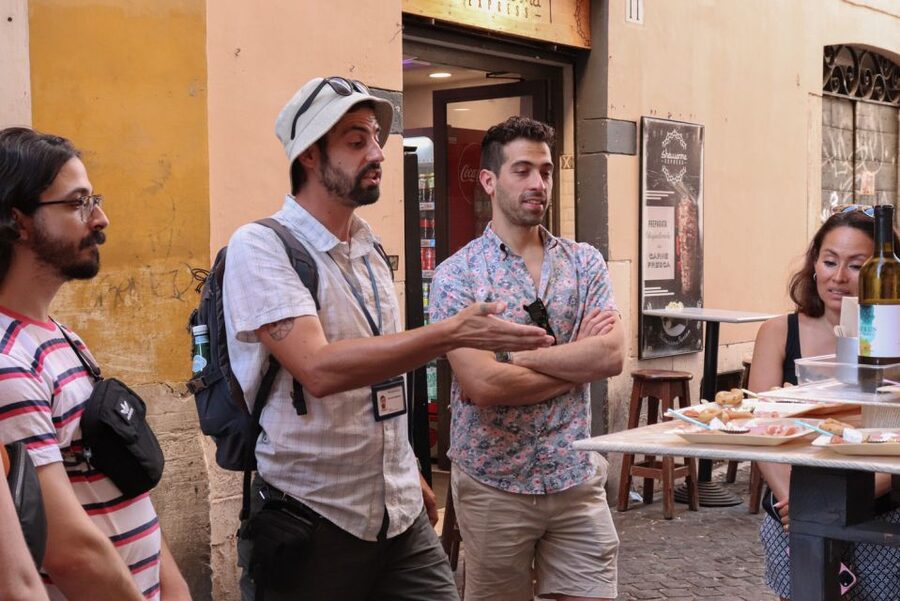
I also like the small group size, capped at 12 people, and the friendly guide style. Guides such as Marco, Anna Maria, Paola, and Valentina have helped make the experience feel relaxed and personal. The main consideration is the amount of walking and the fixed tasting route, so it may not suit you if you need a slow pace or have complicated dietary needs without giving advance notice.
Key points to know before booking
- A full meal in three hours: The tastings include enough food and drink to replace lunch or dinner, not just a few nibbles.
- Two classic neighborhoods: You walk through Campo de’ Fiori, cross the Tiber, and continue into Trastevere.
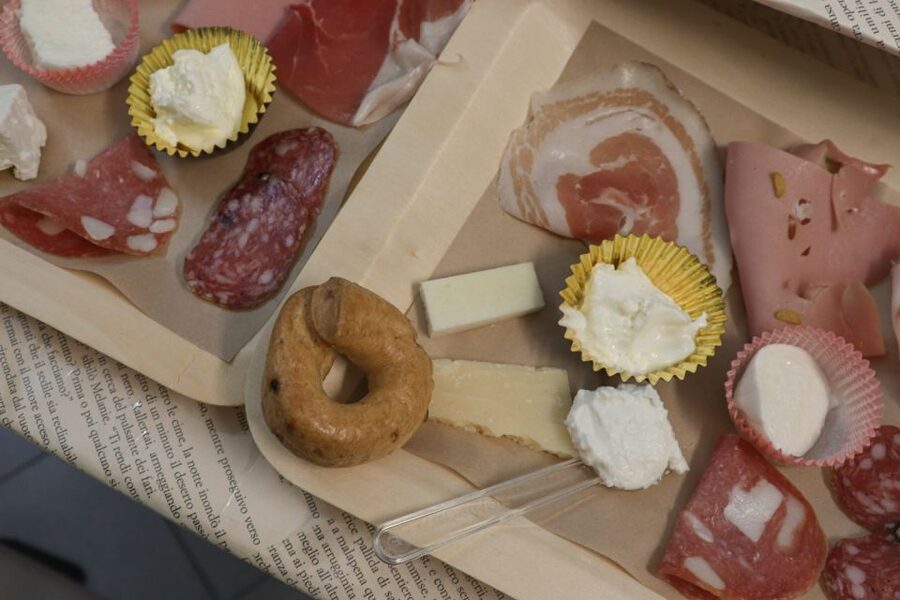
- Roman specialties on the table: Expect breaded hake, supplì, pasta, porchetta with pizza bianca, Italian beer, wine, and artisanal gelato.
- Small English-only group: The maximum is 12 people, which gives you a better chance to ask questions and keep up with the guide.
- Dietary needs require planning: Vegetarian and gluten-free options are available with prior notice, and all intolerances should be shared before the tour.
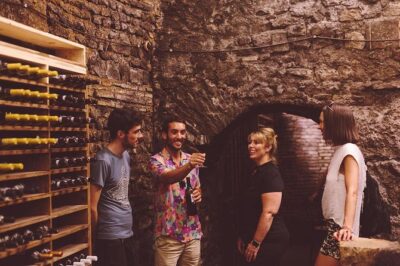
- A social experience: You eat at shared stops and meet people from different countries while learning about Rome.
Why this food walk works well in Rome
Rome can be hard to read at first. One street offers a tourist menu with familiar pasta dishes, while the next has a small shop serving something locals have eaten for generations. This tour helps you tell the difference.
The route focuses on food that has a strong connection to Roman habits. You are not simply stopping for pizza because it is easy to find. You are tasting fried fish, stuffed rice croquettes, traditional pasta, roast pork, and gelato while moving through neighborhoods with their own character.
The guide adds the useful layer. You can ask what a dish is, how it is normally eaten, or which places are worth returning to later. Marco, one of the guides, has also helped visitors with restaurant suggestions after the tour and sent a list of the stops afterward. That sort of follow-up is useful if you have several days in Rome and want to keep eating well.
The group limit of 12 matters. Food tours can become awkward when a large crowd blocks a narrow counter or waits for every plate to arrive. A small group makes it easier to hear the guide and gives the meal a more social feel without turning it into a party bus on foot.
This is an English-language experience only. Guides have been praised for answering questions clearly and explaining both food and local life. The guide changes from day to day, so you may meet Marco, Anna Maria, Paola, Valentina, or another member of the team.
A few more food tours in Rome worth a look
- Winner 2025 Rome Twilight Trastevere Food Tour by Eating Europe
★ 5.0 · 5,157 reviews - Rome: Street Food Tour with Local Guide
★ 4.8 · 4,077 reviews - Rome Food Tour: Unlimited Tastings with Fine Wine & Barolo
★ 5.0 · 3,365 reviews
Meeting at Piazza Farnese
The tour begins at Piazza Farnese, at number 42, near the corner by the pharmacy. The supplied meeting coordinates are 41.89529037475586, 12.471602439880371.
Allow a few extra minutes to find the exact corner. A square can have several entrances, and the meeting point is described by its nearby pharmacy rather than by a large tour sign. Comfortable shoes are important from the start. You will be walking through central Rome, crossing the Tiber, and moving between food stops rather than riding in a vehicle.
The first stop is Dar Filettaro a Santa Barbara. This small, well-known eatery is associated with a breaded hake fillet, served with local wine. The dish gives you a good first taste of Roman street food culture: simple, fried, direct, and best enjoyed without too much fuss.
The wine pairing makes the stop feel like part of a proper meal rather than a quick sample. Your guide can also explain why certain foods appear in everyday Roman cooking and how a casual counter-style place fits into the city’s eating habits.
Because the tastings vary with seasonal availability, the exact first plate may not be identical on every date. The food team does not promise a rigid menu, which is worth remembering if you are booking mainly for one particular dish.
Campo de’ Fiori, food, and Roman street life
Campo de’ Fiori is one of Rome’s most recognizable public squares. It is a natural place to begin learning how food, commerce, and city life overlap.
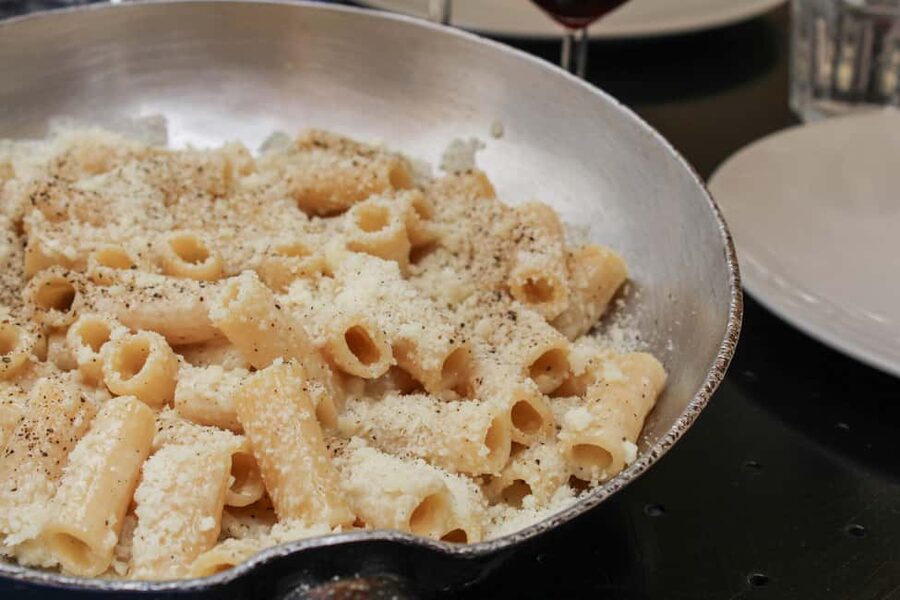
You will receive commentary as you move through the area, then continue to another local restaurant for more food. The supplied details identify this as a traditional pasta tasting, though the exact pasta can vary. That is a sensible approach in Rome, where kitchens often change dishes based on the day and available ingredients.
I like this part of the tour because pasta becomes more useful when you understand its setting. You can compare a prepared dish at a neighborhood restaurant with the fried food served at the earlier stop. The guide may also point out family-owned businesses and explain how Romans choose places to eat.
Do not expect a long sightseeing lecture here. The history is included to give the food meaning, and the main focus remains eating and walking. If you want a detailed art or architecture tour, book a separate guide for that.
Crossing the Tiber into Trastevere
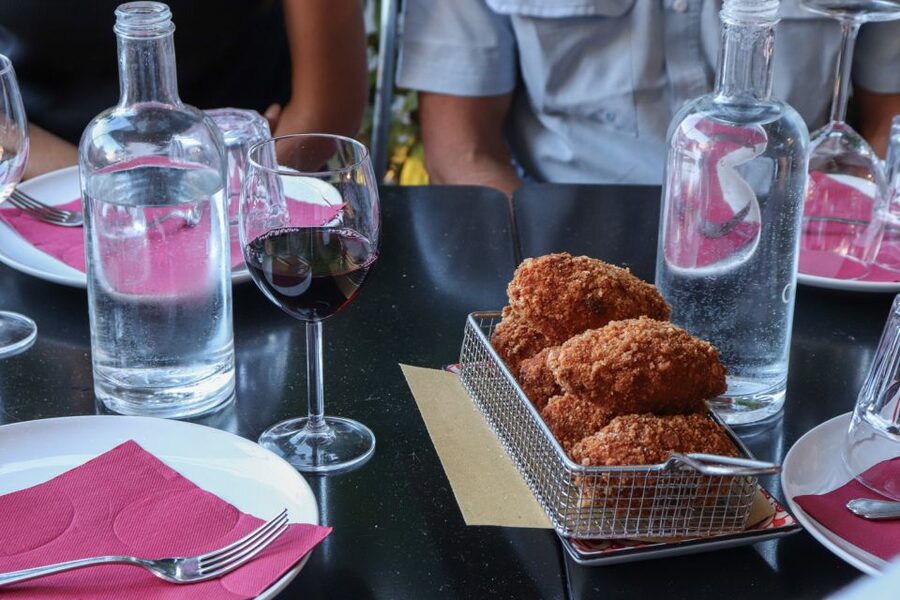
The route then crosses the Tiber River on foot. This is a short but important transition. Campo de’ Fiori and Trastevere sit close together, yet the walk gives the afternoon or evening a clear sense of movement from one part of Rome to another.
Your guide continues explaining the area as you walk. You may hear about local customs, food traditions, and how the neighborhoods fit into modern Roman life. The value here is not a grand viewpoint or a formal monument visit. It is the chance to see the city between meals, with someone who can answer questions as they arise.
Trastevere is the more food-focused half of the route. The streets can be lively, and the surfaces are not always smooth, so wear shoes that can handle several hours of walking. The tour is not suitable for oversize luggage, large bags, bikes, skateboards, or non-folding wheelchairs and strollers.
Same city, a different table:
- Rome Food Tour: Campo de’ Fiori, Ghetto, Trastevere Winner 2024
★ 5.0 · 3,205 reviews - Rome: Guided Food Walking Tour with Wine in Trastevere
★ 4.9 · 3,105 reviews - Rome: Trastevere Food tour with Free-Flowing Fine Wine
★ 5.0 · 2,853 reviews - Rome: Trastevere & Campo de Fiori Street Food Walking Tour
★ 4.9 · 2,768 reviews
Supplì and a traditional Roman restaurant
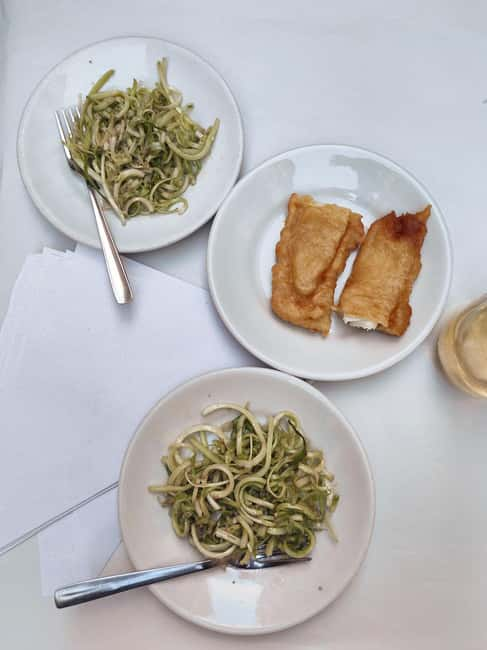
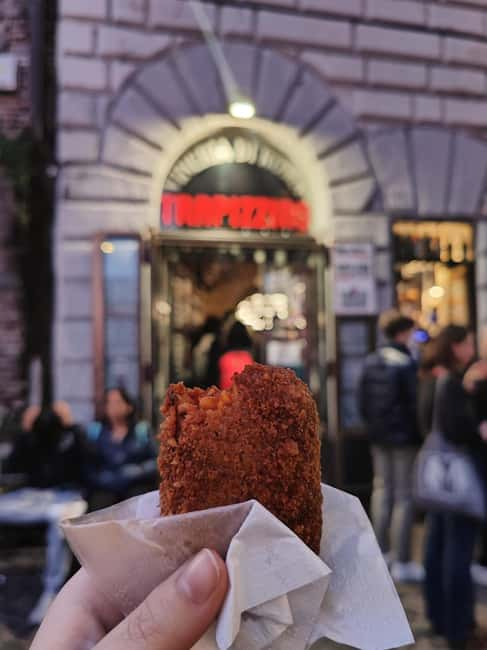
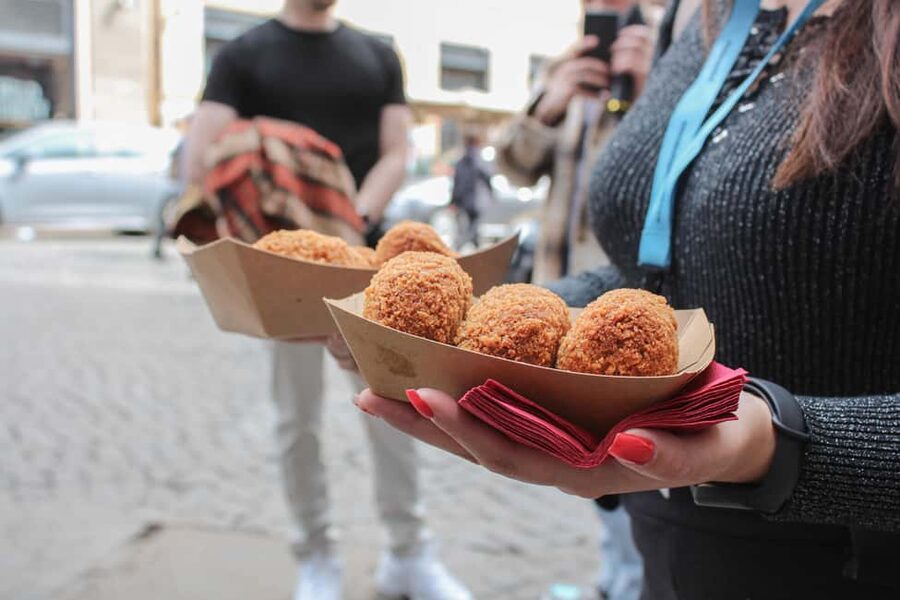
One Trastevere stop includes supplì, a fried rice croquette usually associated with Roman casual eating. It is an excellent food-tour dish because it is portable, filling, and very different from the pasta and fish served earlier.
You may then stop at a local restaurant for another tasting. The tour description points to traditional pasta here, giving you another chance to try a Roman staple in a seated food setting. The exact dishes can change, so you should treat the menu as a selection of Roman tastes rather than a guaranteed checklist.
This is where the tour’s full-meal promise becomes clear. You are not eating one bite at each location and then searching for dinner. With several savory courses, drinks, porchetta, and gelato still ahead, you should plan to arrive hungry and avoid booking a heavy meal immediately afterward.
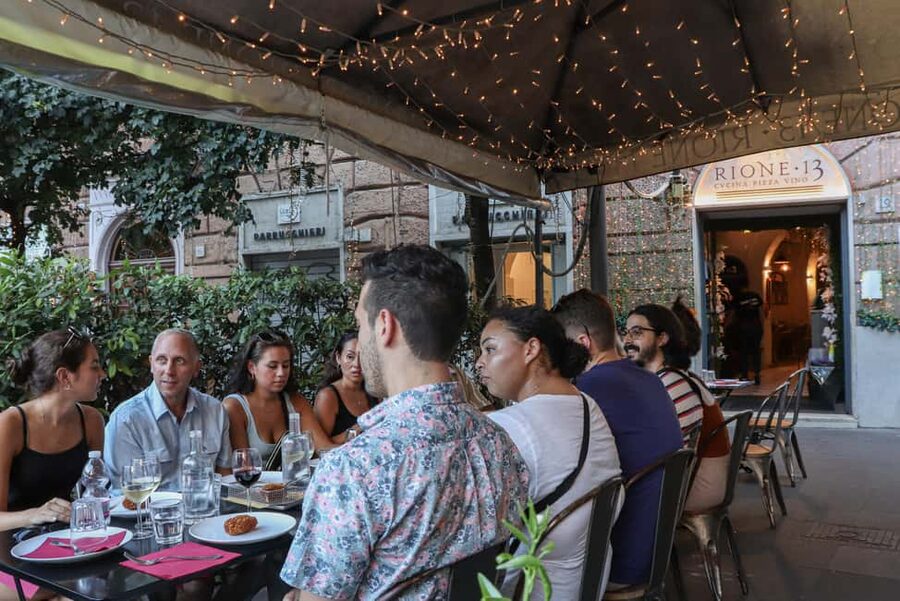
The social side also works well here. You are likely to share the stops with people from several countries, and the relaxed pace leaves room for conversation. Past groups have formed friendships during the walk, helped by the simple fact that everyone has food in front of them and a shared route through Rome.
Porchetta and pizza bianca at La Norceria di Iacozzilli
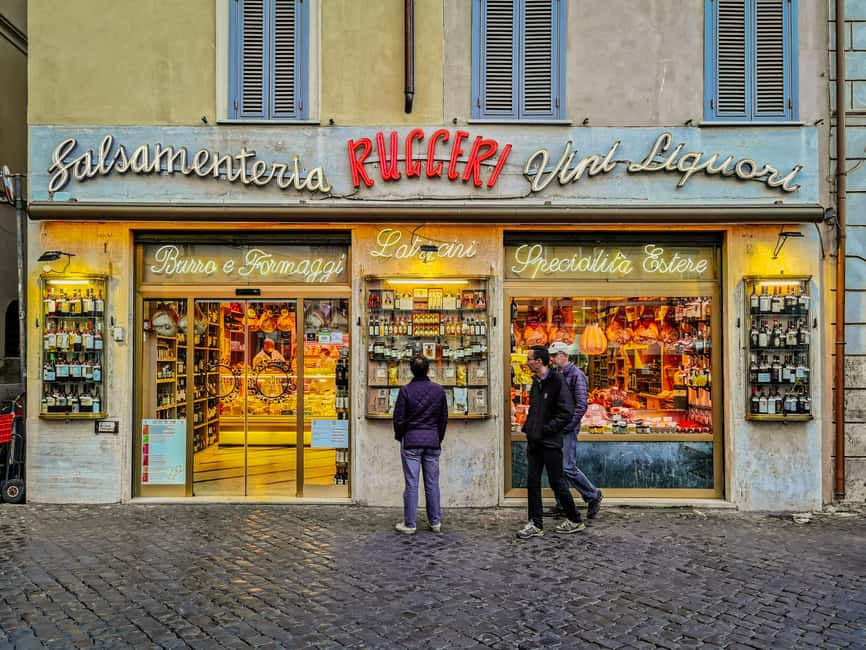
The next stop is La Norceria di Iacozzilli, presented as the home of the King of Porchetta. Here you taste roast pork with crisp pizza bianca, paired with locally brewed Italian beer.
This is one of the most distinctive combinations on the route. Porchetta is seasoned roast pork, while pizza bianca is a plain Roman-style bread with a crisp surface and soft interior. Together, they make a substantial sandwich-style tasting that feels closer to a real Roman snack than a decorative sample.
The beer changes the mood from wine with fried fish to a more casual pairing. That variety is one of the tour’s strengths. You get different textures and drinks rather than five versions of the same dish.
If you do not eat pork, tell the tour team in advance. One visitor with a partner who avoided beef and pork was given alternative foods at some stops. A fish allergy was also handled with care. That does not mean every request can be managed on the day, so advance notice is essential.
Gelato at the final café
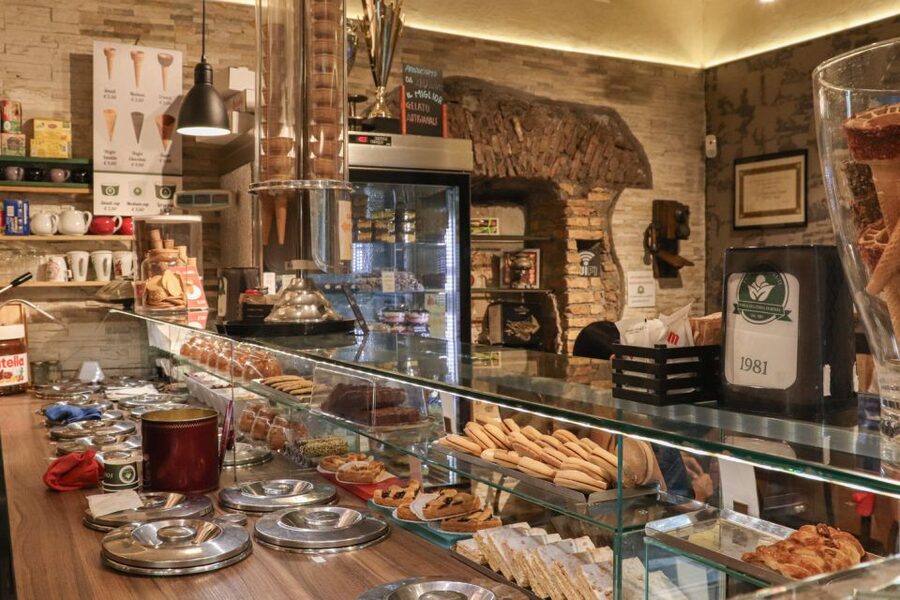
The food walk ends at a local café near Fonte della Salute, with artisanal gelato in Trastevere. The shop is known for organic flavors and a creamy texture.
Gelato is the right finish after several savory tastings. It gives you a sweet final course without adding another full restaurant stop. Since flavors and ingredients can change, ask the guide about the available choices and any ingredients that matter to you.
The ending point is Fonte della Salute, not the original meeting point. That is convenient if you plan to continue exploring Trastevere afterward. You should not assume the tour returns you to Piazza Farnese, so plan your next stop from the finish rather than the start.
What the guides add to the experience
The food matters, but the guide is the part that determines how much you take away. The strongest feedback centers on warmth, clear English, and the willingness to answer questions beyond the menu.
Anna Maria has been praised for explaining both the food and the history of the neighborhoods as a true Roman. Paola has been especially good at explaining where dishes come from, how the stops are connected, and what her own family likes to eat. Anna has been described as feeling like a Roman friend showing you around.
Marco’s approach appears especially helpful if Rome feels intimidating. He has answered questions about the city, local people, and daily life, and has stayed responsive through WhatsApp. Valentina has also been praised for fluent English and clear answers.
Guide assignments can change, so do not book solely to meet one person. The useful constant is the format: a small group, a live English-speaking guide, several food stops, and time to ask questions while you walk.
Food restrictions and practical limits
You must tell the operator about intolerances and dietary requirements before the tour. This includes lactose, gluten, vegetarian, vegan, pregnancy-related needs, and allergies.
Gluten-free and vegetarian options are available with prior notice. The tour can also arrange alternatives in some cases, but the safest plan is to provide detailed information when booking and remind the guide at the meeting point.
The experience is English only. It is not designed for large luggage, smoking, drones, bikes, skateboards, weapons, or sharp objects. Non-folding wheelchairs and strollers are not allowed, and the amount of walking may be difficult if you need frequent stops.
There is free cancellation up to 24 hours before departure, and you can reserve now and pay later. No-shows and late arrivals do not receive refunds. Since the group is small and the route moves between businesses, arriving on time is especially important.
Is the three-hour price good value?
No price is provided here, so I cannot judge the exact cost against similar tours. I can judge what you receive for the fee: a full meal, wine, beer, several food tastings, a live guide, neighborhood commentary, and a small group capped at 12.
That is more useful than a tour offering only a few samples. If you would otherwise pay separately for lunch or dinner, the value improves. The guide’s local recommendations also have value, particularly if you use the tour near the start of your visit and return to the places you liked.
The best comparison is not with a simple restaurant meal. It is with the cost of a meal plus a private food orientation and a walking introduction to two central neighborhoods. If you mainly want to eat one specialty at one famous shop, this may feel too long. If you want several Roman dishes and help choosing where to eat afterward, the format makes sense.
Who should book this Roman food tour?
I would suggest it to first-time visitors who want food and local context in the same outing. It is also a good choice for solo visitors and couples who enjoy meeting other people, since the small group creates easy conversation.
It suits anyone who wants a full lunch or dinner without planning several restaurants. Families may enjoy the informal tastings, but parents should consider the walking distance, narrow streets, and restrictions on non-folding strollers.
You should think twice if you have severe dietary restrictions, dislike eating on a fixed schedule, or want a slow sightseeing walk with long stops at monuments. The route is active and food-led. You will see the neighborhoods, but you are there mainly to taste them.
Should you book it?
Book this tour if you want Rome explained through ordinary food rather than only famous monuments. The combination of Campo de’ Fiori, the Tiber crossing, Trastevere, Roman pasta, supplì, porchetta, local drinks, and gelato gives you a broad first look at the city’s eating habits.
I would book it early in your Rome stay, then use the guide’s suggestions for later meals. Arrive on time, wear comfortable shoes, share every dietary requirement in advance, and keep your evening meal light. For a small group food walk that fills your stomach and gives you practical local advice, this is a strong choice.
FAQ
How long is the Rome food tour?
The tour lasts three hours.
What language is the tour conducted in?
The tour is conducted in English only.
Where does the tour begin?
It begins at Piazza Farnese, 42, at the corner near the pharmacy. The meeting coordinates are 41.89529037475586, 12.471602439880371.
Where does the tour finish?
The tour finishes at Fonte della Salute in Trastevere.
What food and drinks are included?
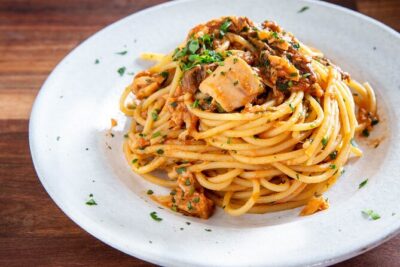
The tastings include breaded hake, local wine, supplì, traditional pasta, porchetta with pizza bianca, Italian beer, and artisanal gelato. Tastings can vary with seasonal availability.
Are vegetarian and gluten-free options available?
Yes, vegetarian and gluten-free options are available with prior notice. You should also report allergies, intolerances, vegan requirements, pregnancy-related dietary needs, or other special requirements before the tour.
Can I cancel for a refund?
You can cancel up to 24 hours in advance for a full refund. No refunds are provided for no-shows or late arrivals.
Just added in Rome
- Rome: 3-Hour Guided Food Tour with Tastings★ 4.9 · 41 reviews
- Rome: Trionfale and Prati Food and Wine Tasting Tour★ 4.8 · 115 reviews
- Rome: Vegan Street Food Tour with Local Guide★ 5.0 · 37 reviews
- Rome: Vatican Street Food and Wine Tour with Farmers Market★ 5.0 · 37 reviews
- Rome: Trastevere & Tiber Island Street Food Tour at Sunset★ 4.9 · 71 reviews
- Rome Trastevere Walking Food Tour★ 4.8 · 97 reviews
- Rome: Trastevere Food Walking Tour with Beer and Wine★ 4.9 · 71 reviews
- Rome: Trastevere Quarter Street Food Tour with Sightseeing★ 4.9 · 21 reviews
Rome Food Tours, compared.
Winner 2025 Rome Twilight Trastevere Food Tour by Eating Europe
Read our review →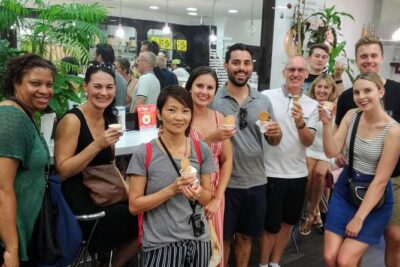
Rome Food Tour: Unlimited Tastings with Fine Wine & Barolo
Read our review →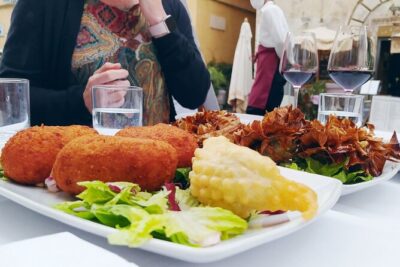
Rome Food Tour: Campo de’ Fiori, Ghetto, Trastevere Winner 2024
Read our review →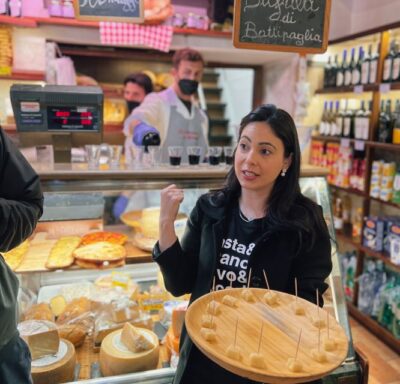
Guided Food Walking Tour with Wine in Trastevere
Read our review →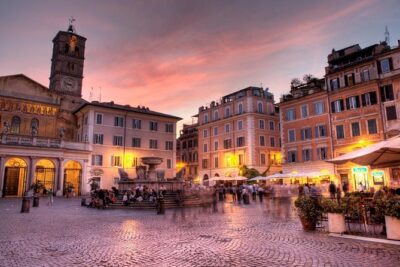
Trastevere Food tour with Free-Flowing Fine Wine
Read our review →
Trastevere & Campo de Fiori Street Food Walking Tour
Read our review →Browse the lists this tour appears in