
REVIEW · SINGAPORE FOOD TOURS
Singapore: Chinese, Indian & Arabic Quarters, Culture & Food Tour
Singapore makes a meal of its history. This 5.5-hour tour links Chinatown, Little India, and Kampong Glam through street food, neighborhood walks, and the personal stories of fourth-generation Singapore-Chinese-Peranakan guide Gerry. I especially like the small group of no more than eight and the fact that food, soft drinks, coffee, tea, water, and alcoholic drinks are included. The main drawback is that you need a hearty appetite, good walking shoes, and enough stamina for Singapore’s heat.
I also like how the tour uses hawker centres listed by UNESCO rather than treating the city as a collection of polished photo stops. You’ll see food markets, temple surroundings, clothing shops, flower garlands, old streets, and the grand Sultan Mosque. But this is not a good fit for vegetarians, people with strict dietary needs, or anyone with gluten intolerance, and strollers or personal mobility devices are not recommended.
Key points to know before booking
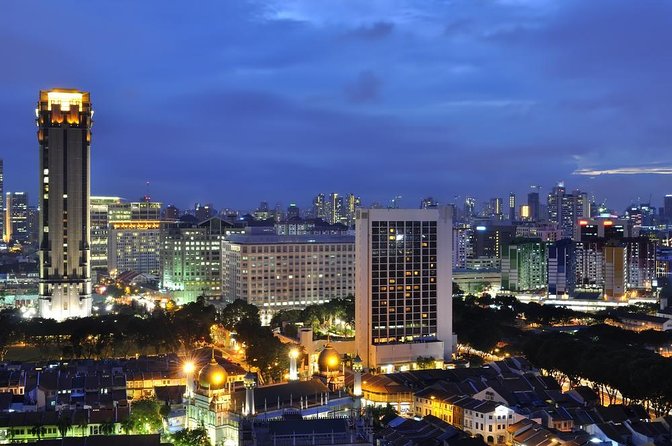
- Three cultural quarters in one morning and afternoon: Chinatown, Little India, and Kampong Glam each bring a different food tradition and story.
- A food-heavy schedule: Come without breakfast. The portions are generous, and the tastings continue long after the first stop.
- Gerry is central to the experience: His personal Singaporean background, humor, local contacts, and stories receive repeated praise.
- Expect a long walk: One account measured about 9,050 steps, despite the tour being described elsewhere as roughly 6,000 steps.
- Public transport is part of the learning: The group uses the MRT and a bus between areas, which can help you feel more confident getting around Singapore.
- Dietary limits matter: The experience is not recommended for vegetarians, people with gluten intolerance, or people with other dietary restrictions.
A food tour that also explains Singapore
Many food tours give you a dish, a name, and a quick nod toward its origin. This one aims higher. The food is the entry point, but the real subject is Singapore itself: how different communities formed neighborhoods, how hawker food became part of daily life, and how old traditions still fit inside a modern city.
That balance is the tour’s strongest feature. You are not simply eating your way from one restaurant to another. You are walking through Chinatown, Little India, and Kampong Glam while Gerry explains what you are seeing. He uses old images on an iPad to show how streets once looked, then connects those views to the buildings and businesses around you.
I like that format because it gives the food a setting. A dumpling at Chinatown Complex means more when you understand the hawker centre around it. A flower garland market in Little India becomes more memorable when you know how it fits into local religious and family life.
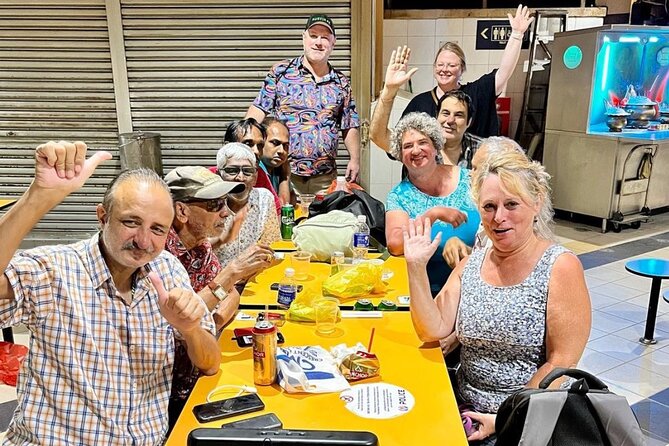
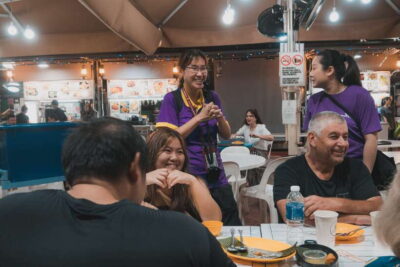
The tour is also social without being unwieldy. With a maximum of eight people, you can ask questions without shouting over a large crowd. One solo participant ended up on a private outing when the other bookings did not arrive, but you should expect a small-group experience rather than count on that arrangement.
A few more food tours in Singapore worth a look
- Small Group: Michelin and Local Hawker Food Tour with 9 tastings
★ 5.0 · 1,890 reviews - Small Group: Singapore Street Food & Night Tour with 9 tastings
★ 5.0 · 1,240 reviews - The Award-Winning PRIVATE Food Tour: 10 Tastings of 3 Cultures
★ 4.5 · 1,017 reviews
Chinatown: hawker food and early Chinese Singapore
The tour begins in Chinatown, with about 1 hour and 15 minutes devoted to the neighborhood. This first section introduces the struggles and daily life of early Chinese communities in Singapore, while also getting you into the serious business of eating.
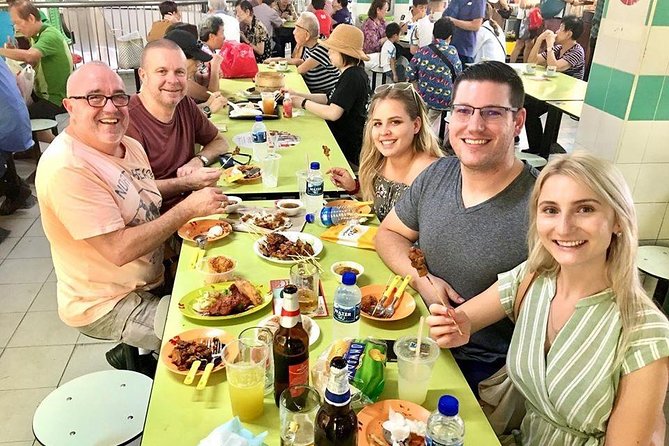
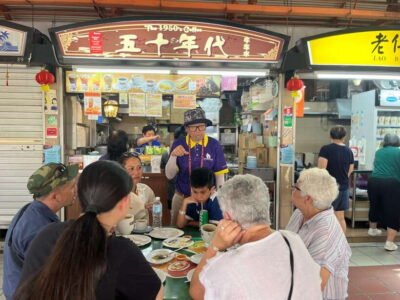
The food is served through hawker culture, not a formal tasting menu. That is important. Hawker centres are places where Singaporeans eat ordinary meals, and the tour sources food from centres recognized by UNESCO. You get a better sense of how the city eats when you see the stalls, shared tables, and working rhythm of the place.
The tasting can be substantial. One participant singled out soup dumplings at Chinatown Complex as a favorite, while other accounts refer to traditional dishes, snacks, beer, and plenty of drinks. You might find some flavors more familiar than others, but the point is to try a range rather than order only what you already know.
Gerry’s role matters especially here. He explains the food while placing it in the story of the neighborhood. He is also described as having long-standing relationships with local vendors, which can make the stop feel more personal than a simple order-and-leave visit. His habit of making sure food is not wasted adds a practical touch.
Do not fill up before reaching Chinatown. Even after this first stop, you still have two quarters and more food ahead. The most common mistake would be treating breakfast as preparation for the tour. Breakfast is already waiting for you.
Little India: color, spice, and market life
The second neighborhood receives another 1 hour and 15 minutes. Little India brings a change in mood, scenery, and flavor. You move past stalls selling fresh fruit and vegetables, flower garlands, traditional clothing, and incense, with Gerry explaining the people and customs that shaped the area.
This is where the tour feels particularly useful for first-time visitors. It is easy to walk through Little India and notice only the color and shopfronts. A guide can point out the details that give those streets meaning, from the goods on display to the way the market works.
The food here may be spicier and more intensely seasoned than what you have just eaten. You are likely to encounter generous portions and bold flavors, so pace yourself. The tour is designed around sampling several dishes, not finishing every plate as if it were a single restaurant meal.
A Saturday visit can be especially active around the wet market and vegetable market. One detailed account also included a Buddhist temple near the market, along with an explanation of the surrounding streets. The exact flow may vary, but the focus is clear: you are seeing working neighborhood life, not just landmark facades.
Little India is also a good place to ask questions. Gerry’s style is described as upbeat and open, and the tour is intended to cover both food and current issues alongside the past. That makes the experience more useful than a memorized list of dates.
Kampong Glam: Malay royalty and Sultan Mosque
The final cultural stop is Kampong Glam, Singapore’s Malay Quarter. The tour explores its older streets and explains how the area developed, including its connection to Malay royalty. This gives the day a necessary third perspective after the Chinese and Indian quarters.
The visual anchor is Sultan Mosque, whose large golden dome and broad facade make it one of the city’s most recognizable religious buildings. The tour does not treat it as an isolated photo stop. Instead, the mosque is part of a wider neighborhood story involving people, trade, religion, food, fabrics, and carpets.
The nearby streets offer a different kind of browsing from Chinatown and Little India. You might see Middle Eastern restaurants, fabric shops, and carpet sellers, with the old quarter providing a slower contrast to Singapore’s newer commercial districts.
By this point, you may be full and ready for a rest. Yet the tour still ends with more food, including an ice cream stop described as especially memorable. That final cold treat is welcome after several hours of walking and eating in Singapore’s heat.
Same city, a different table:
- Singapore: UNESCO Street Food & Cultural Experience
★ 5.0 · 524 reviews - Singapore: Guided Street Food Tour at Night
★ 4.5 · 393 reviews - Singapore: Foodie Experience Guided Tour with 5 Tastings
★ 4.7 · 291 reviews - Singapore: Private Food Tour – 10 Tastings with Locals
★ 4.7 · 194 reviews
The guide makes or breaks this experience
Gerry receives the strongest praise throughout the supplied feedback, and the reasons are specific. He is described as funny, warm, down to earth, professional, and deeply connected to Singapore’s food and neighborhoods.
His background as a fourth-generation Singapore-Chinese-Peranakan gives the tour a personal angle. He is not presenting Singapore as a neutral museum display. He is explaining a place shaped by family, migration, religion, food, and constant change.
I also like the emphasis on questions. You are encouraged to ask about history, food, current issues, and daily life. The tour works best when you take part rather than simply follow behind the guide.
The public transport segments add value, too. The group uses the MRT and a bus to move between areas. That means the tour is not only showing you three neighborhoods. It is also giving you a practical lesson in moving around Singapore, which can be useful for the rest of your stay.
One small caveat is that the tour depends heavily on the guide’s personality. Gerry is the named host in the information provided, and the praise is directed at him specifically. If he is leading your departure, his approach appears to be a major reason people rate the experience so highly.
Five and a half hours, with plenty of walking
The advertised duration is approximately 5 hours and 30 minutes, beginning at 9:00 a.m. in Chinatown and ending back at the meeting point. One account says the group started at 8:45, so it is sensible to confirm the exact meeting time before you go.
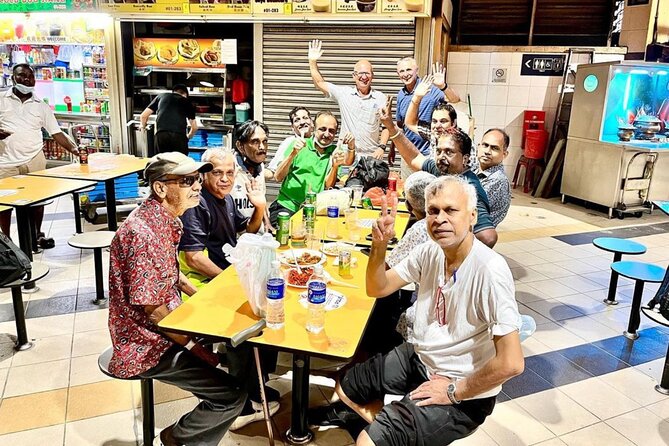
This is a walking tour with transport between districts, not a coach ride. A detailed account recorded about 9,050 steps, even though the experience was described in another place as roughly 6,000 steps. The difference tells you what you need to know: plan for a substantial amount of walking.
Wear comfortable shoes. Bring protection from the sun and prepare for heat. You will be walking through markets and streets, standing while food is served, and moving between several districts.
The tour is near public transportation, and the MRT and bus rides are part of the route. Pickup is offered, but the published meeting point is Chinatown, so check the exact pickup arrangement when booking. The activity ends at the meeting point rather than at a separate hotel drop-off.
What the $148 price includes
At $148 per person, this is not a cheap snack crawl. The value depends on how much you want from the day.
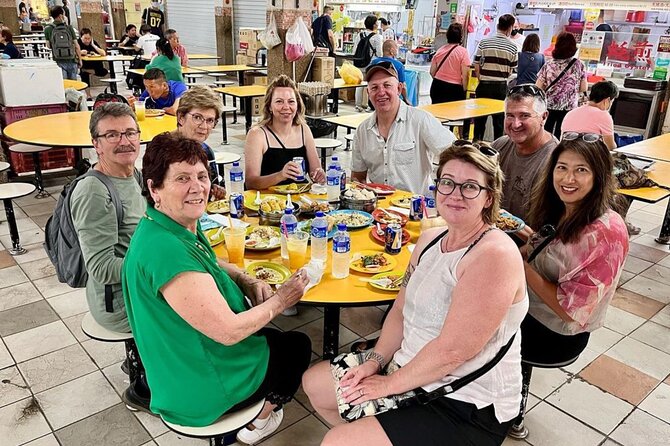
You are paying for a small group, about five and a half hours with a local host, food across three cultural districts, drinks, neighborhood interpretation, and help using public transport. Included items are lunch, dinner, snacks, coffee or tea, soda, bottled water, and alcoholic drinks.
That is a lot of food and drink for one experience. Several accounts describe the portions as generous, with one person joking that there may be too much food. If you arrive hungry and treat the tastings as several small meals, the price becomes easier to justify.
The real value is the context. You could visit Chinatown, Little India, and Kampong Glam on your own, and you could certainly eat in each area. What you would not automatically get is Gerry’s explanation of how the districts developed, his old street images, his vendor connections, or the confidence that comes from learning the MRT and bus route with someone who knows the city.
If you prefer to choose every dish yourself or eat lightly, the price may feel high. If you want one concentrated introduction to Singapore’s food and cultural quarters, the inclusion of meals and drinks makes it more reasonable.
Who should book, and who should skip it
This tour suits you if you:
- Want food and cultural background in equal measure
- Are visiting Singapore for the first time
- Enjoy trying several dishes rather than choosing one safe meal
- Like walking through markets and older neighborhoods
- Want a small group and plenty of chances to ask questions
- Appreciate beer or other alcoholic drinks being part of the outing
- Need help getting comfortable with Singapore’s MRT and buses
You should think twice if you:
- Need a vegetarian or highly restricted diet
- Have gluten intolerance
- Use a stroller or personal mobility device
- Find five or more hours of walking difficult
- Prefer a quiet, slow meal instead of several tastings
- Dislike spicy, unfamiliar, or strongly seasoned food
The tour is not recommended for children in prams or strollers, and the stated physical requirement is moderate fitness. Weather can also affect the outing. If poor weather cancels it, you are offered another date or a full refund.
For cancellations, you can receive a full refund if you cancel at least 24 hours before the start time. Changes or cancellations inside that window are not accepted for a refund, and the tour may also be canceled if its minimum number is not reached.
Should you book this Singapore food tour?
I would book this as an early Singapore activity, ideally near the start of your stay. It gives you a working map of three important districts, introduces dishes you might otherwise miss, and helps you understand how food and identity connect in the city.
The strongest reason to choose it is the combination of generous food tastings and personal storytelling. Gerry’s warmth, humor, local connections, and Singaporean background appear to shape the day from beginning to end.
Skip it if your diet makes the food difficult or if a long, hot walking route sounds unpleasant. For everyone else, this is a particularly good choice when you want one experience that handles eating, neighborhood history, cultural context, and basic city navigation in one well-filled day.
FAQ
Where does the tour start?
The tour starts in Chinatown, Singapore, with the published start time listed as 9:00 a.m.
Where does the tour end?
The activity ends back at the meeting point in Chinatown.
How long does the tour last?
The tour lasts approximately 5 hours and 30 minutes.
Which neighborhoods does the tour visit?
The route includes Chinatown, Little India, and Kampong Glam.
Is food included?
Yes. Lunch, dinner, snacks, and drinks are included.
Are alcoholic drinks included?
Yes. Alcoholic beverages, along with non-alcoholic drinks, are included.
How many people can join the tour?
The maximum group size is eight people.
Is the tour suitable for vegetarians?
It is not recommended for vegetarians because the experience may be compromised.
Is the tour suitable for someone with gluten intolerance?
It is not recommended for people with gluten intolerance.
Is the tour accessible for strollers or personal mobility devices?
The tour is not recommended for children in prams or strollers, or for people using personal mobility aids or devices.
Can I cancel for a full refund?
Yes, if you cancel at least 24 hours before the experience starts. Cancellations made less than 24 hours before the start time are not refundable.
Just added in Singapore
- Street Food, Cultural & Historical Tour of 3 Ethnic Quarters★ 5.0 · 23 reviews
- Singapore: Local Street Food Tasting Tour★ 4.8 · 36 reviews
- Singapore: Private Food Tour – 10 Tastings with Locals★ 4.7 · 194 reviews
- Singapore: Guided Street Food Tour at Night★ 4.5 · 393 reviews
- Singapore: Chinatown Hawker Guided 8-Dish Tasting Tour★ 4.9 · 41 reviews
- Singapore: Local Hawker Food Tour with Tastings★ 4.7 · 181 reviews
- Singapore: Foodie Experience Guided Tour with 5 Tastings★ 4.7 · 291 reviews
- Singapore: Hawker Culture Food Tour and Sightseeing★ 4.8 · 23 reviews
Singapore Food Tours, compared.
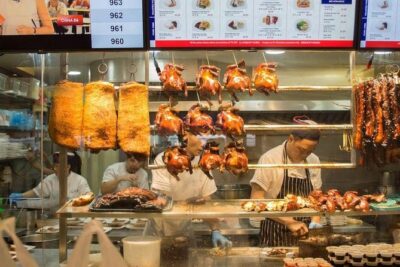
Small Group: Michelin and Local Hawker Food Tour with 9 tastings
Read our review →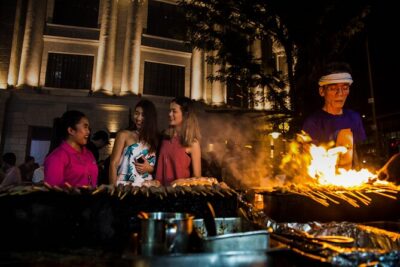
Small Group: Singapore Street Food & Night Tour with 9 tastings
Read our review →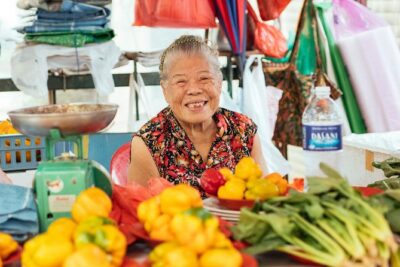
The Award-Winning PRIVATE Food Tour: 10 Tastings of 3 Cultures
Read our review →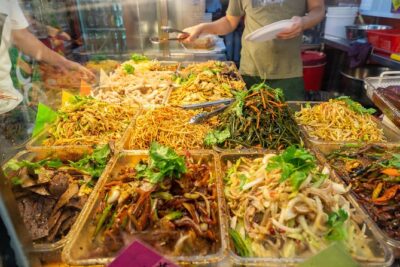
Browse the lists this tour appears in