
REVIEW · ATHENS FOOD TOURS
Acropolis Mythology & Food Tour
Athens rewards early risers. This five-and-a-half-hour tour pairs the Acropolis with food stops and everyday neighborhoods, giving you ancient monuments and modern Athens in one morning. I like the small maximum of 15 people, which should make questions and guide commentary easier, and I like the route from Hadrian’s Arch to Monastiraki because it links major sights with places you might skip on your own. The main catch is cost: $138.55 per person does not include archaeological admission, which can add €30.
The 8:00 am start helps you reach the Acropolis before the strongest midday heat and thickest crowds. You should also plan carefully around the bag rules, the fixed entry time, and the long stretch on foot. One useful point for students: European students may receive a reduced archaeological admission with valid proof, and an ID card or passport is required for anyone under 25 seeking a possible discount.
Key points to know before booking
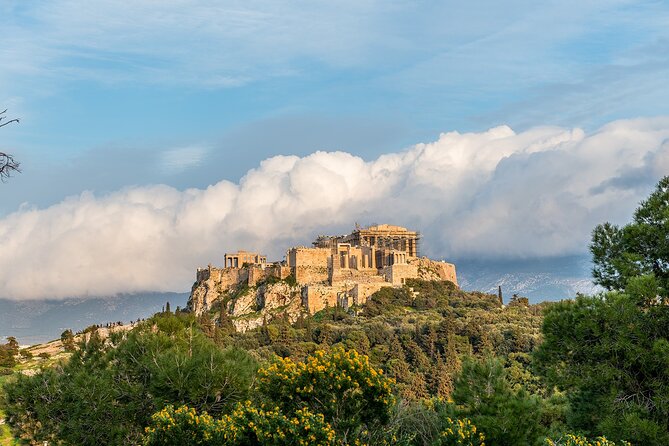
- The Acropolis gets two full hours: You will have time to see the Parthenon, Erechtheion, Temple of Athena Nike, Propylaea, and Theater of Dionysus.
- The route begins at Hadrian’s Arch: The meeting point is Leof. Vasilisis Amalias 50, near the Arch of Hadrian, at 8:00 am.
- Food is part of the outing: Tastings are included, while anything you buy separately is your own expense.
- The group is capped at 15: That is small enough for a more personal walking tour without the price of a private guide.
- The finish is in Monastiraki: You end at Monastiraki Square, well placed for lunch, shopping, or further sightseeing.
- Acropolis tickets cost extra: The operator can pre-purchase the archaeological tickets for €30 per person, but you need to arrange this with them.
Why this Athens route works so well

Athens can feel scattered at first. The Acropolis rises above the center, Syntagma is the political heart, Plaka winds below the ancient rock, and Monastiraki and Psiri pull you toward food, shopping, and nightlife. This tour gives those areas a clear order.
The route also has a sensible rhythm. You begin with a short look at the Temple of Olympian Zeus, spend the longest block at the Acropolis, then move through Syntagma, Plaka, Monastiraki, Psiri, and the central market. The ancient sights come first, when your legs and attention are fresh. The food and neighborhood stops then show you how Athens functions today.
I especially like the contrast. You are not spending five and a half hours hearing only about temples. You get mythology and architecture, but also street art, market life, shopping lanes, and food tastings. That mix gives you a better first look at the city than an Acropolis visit alone.
The tour is offered in English and includes a professional guide, a small group, food tastings, and a fun ancient Athens map. Transfers are not included, so you make your own way to the starting point and away from the finish. Since both ends are in central Athens and near public transportation, this is less of a problem than it would be on a suburban or countryside excursion.
A few more food tours in Athens worth a look
- Greek Food Walking Tour in Athens
★ 5.0 · 4,740 reviews - Athens: Street Food Tasting Tour
★ 4.9 · 3,343 reviews - Athens: Guided Greek Food Walking Tour with Tastings
★ 4.9 · 2,859 reviews
Starting beside the Temple of Olympian Zeus
Meet at the Arch of Hadrian at 8:00 am. The opening stop is the Temple of Olympian Zeus, known in ancient times as the Olympeion. It sits between the Acropolis and the Ilissos River and was once among the largest temples in the ancient world.
The guide discusses the temple and its stories from outside. That matters because the stop is brief, about 15 minutes, and admission is not included. You are getting orientation and context, not a full visit inside the archaeological grounds.
This opening works as a visual introduction to Athens’ scale. The surviving columns give you an immediate sense of how ambitious the ancient city could be. You also begin close to the Acropolis, so the route wastes little time crossing town.
If entering the Temple of Olympian Zeus is important to you, ask the operator about ticket arrangements before the tour. The stated €30 archaeological ticket covers the relevant sites, but the tour description does not promise a separate interior visit at this first stop.
Two hours among the Acropolis monuments
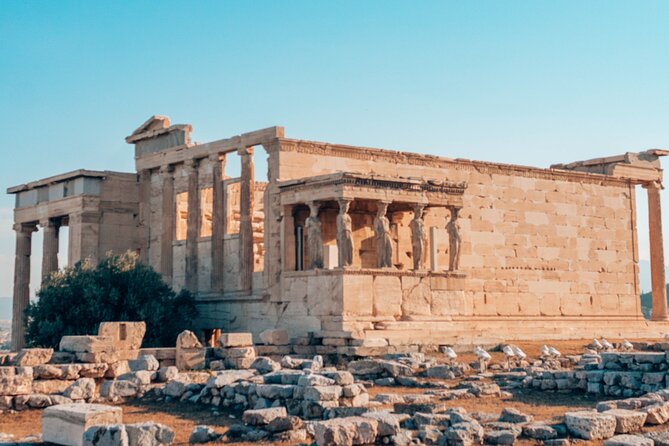
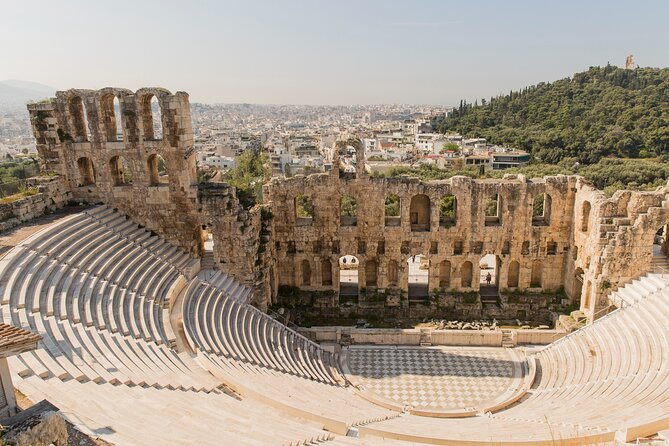
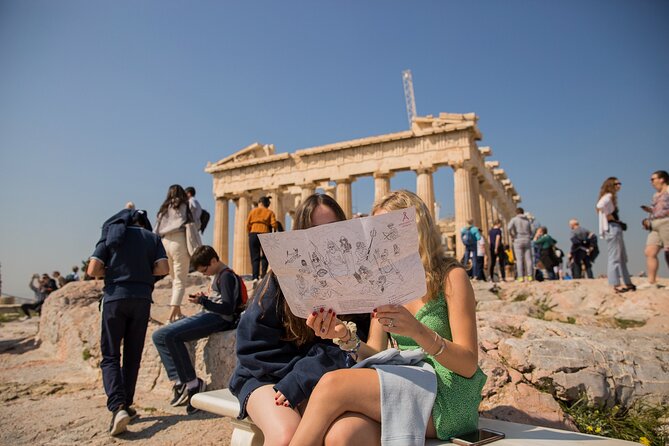
The Acropolis receives the central block of the tour, about two hours. This is the part that makes the early start worthwhile. You climb into Athens’ greatest sanctuary, dedicated mainly to Athena, the city’s patron goddess, with the guide explaining the myths and monuments along the way.
You should expect attention to the Parthenon, Temple of Athena Nike, Erechtheion, Propylaea, and Theater of Dionysus. Each has a different role, so the visit is more useful than simply stopping for a famous photograph.
The Parthenon is the visual star, but the Erechtheion is equally important for understanding how ancient worship worked. The Temple of Athena Nike is small compared with the Parthenon, while the Propylaea gives you the grand entrance. Below the hill, the Theater of Dionysus connects the Acropolis to the origins of classical drama.
Two hours is a solid amount of time for a guided overview. It is long enough to cover the main monuments without turning the whole morning into a slow march through every stone. It is not enough for a detailed archaeological study or a relaxed visit to every corner, so set your expectations correctly.
Wear shoes suited to uneven surfaces and walking. Strollers, backpacks, and big bags are not allowed at the Acropolis and should not be brought on the tour. This is one of those practical rules that can save you a frustrating return to a hotel or storage point.
Admission is separate. The operator can pre-purchase tickets for €30 per person, but you need to request this in advance. If you buy your own ticket, check the date and time carefully before paying. A missed time slot can mean buying another ticket on the spot, and a replacement may not be available.
Syntagma, the political center of modern Athens
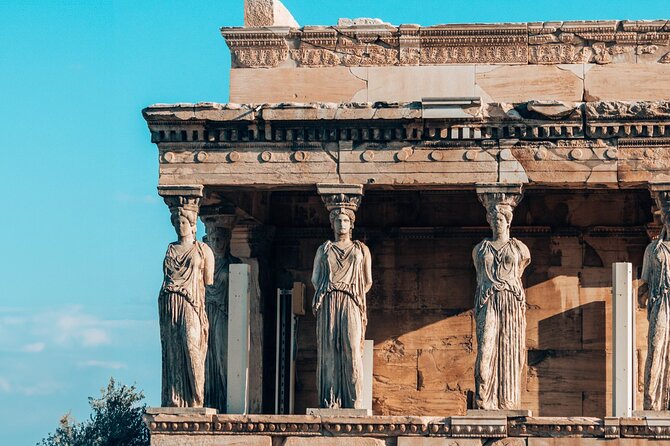
After the Acropolis, the route gives you about 40 minutes around Syntagma Square. This is the city’s main central square, dominated by the Greek Parliament, once the Royal Palace.
Syntagma helps balance the ancient focus of the morning. You see the city as a working capital, not just an open-air museum. The square is a major crossroads, with people moving through it all day, and the guide can place the Parliament and surrounding activity into the larger story of present-day Athens.
The stop is free and does not require an entrance ticket. It is also a useful orientation point if you plan to explore Athens afterward. From here, you can better understand how the city center connects its government district with Plaka, Monastiraki, and the Acropolis.
Same city, a different table:
- Small Group Greek Traditional Food Tour in Athens 20+ Tastings
★ 5.0 · 1,759 reviews - Athens: Food Market Visit and Cooking Class with Wine
★ 4.9 · 1,087 reviews - Athens Authentic Greek Food Walking Tour (Small Group)
★ 5.0 · 809 reviews - Athens Greek Food Tour Small-Group Experience
★ 5.0 · 802 reviews
Plaka, where old Athens meets souvenir shopping
The Plaka segment lasts about 45 minutes. This is the oldest area of Athens, built in narrow lanes below the Acropolis. You pass souvenir shops, ancient remains, and small streets that can feel far removed from the broad traffic routes around Syntagma.
Plaka is attractive, but it is also the most tourist-focused part of the walk. That is not a flaw if you want gifts or an easy introduction to the old center. It does mean you should not expect every lane to feel untouched or purely local.
The guide’s value here is helping you read the area rather than simply wander through it. You can learn where the old city sits beneath the modern one and how the Acropolis shapes the neighborhood around it. Keep an eye on your pace, since narrow streets and shop-lined lanes can make the group stretch out.
Monastiraki and the city beneath your feet
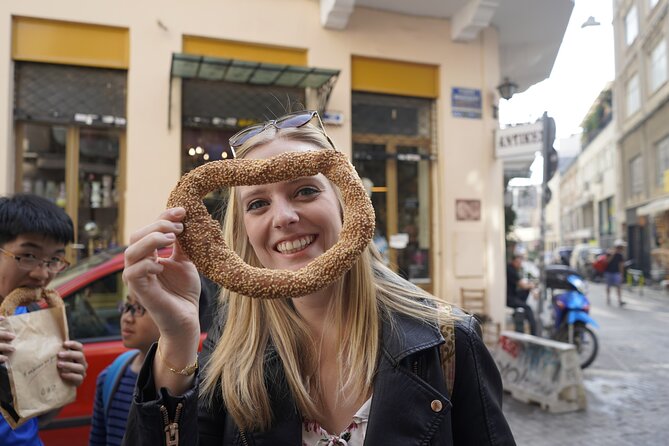
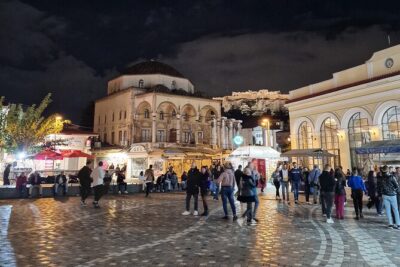
The 40-minute Monastiraki stop brings together several Athens themes: Hadrian’s Library, street food, the flea market area, and an underground river hidden near a metro station. You also get a look at one of the city’s few surviving Ottoman mosques.
This is one of the tour’s more varied sections. Monastiraki can shift from ancient ruins to market stalls within a few minutes. It is a good place to understand why Athens feels layered rather than neatly divided into old and new districts.
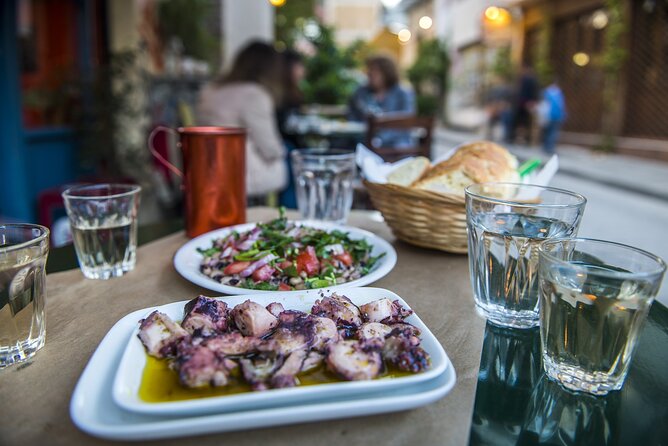
The food element is especially useful here, since the tour includes tastings. The exact foods are not specified, so you should not book expecting a particular dish. Instead, think of the tastings as a guided introduction to Athens’ food culture, with the chance to notice how eating fits into the daily life of the center.
You will also have time to see the area’s shopping side. The tour is not designed as a long shopping session, and anything you purchase beyond the included tastings is not covered. Still, ending nearby later makes Monastiraki a convenient place to return for lunch or browsing.
Psiri for street art, food, and evening culture
Psiri receives about 30 minutes. Once known for small workshops and local craftsmen, it is now one of central Athens’ best-known areas for food and drink after dark. The district is also a good place to look at newer street art.
This stop gives the tour a more current feel. After temples and royal buildings, Psiri shows how older working districts can change into dining and nightlife zones. The brief visit will not cover every lane, but it gives you a reason to return later if you want an evening meal.
I would treat this as an introduction, not a full restaurant crawl. The included tastings are part of the tour, but drinks and extra food are not. If you are hungry after the Acropolis, budget for your own meal later rather than expecting the tour to replace lunch.
Varvakios Market and the everyday food scene
The final stop is Varvakios Central Municipal Market, with about 15 minutes inside Athens’ main food market. Locals come here for produce, meat, and fish, making it one of the clearest places on this route for ordinary city life.
The time is short, but the setting is important. You see the practical side of Greek food culture, not just prepared dishes served to visitors. The market also gives meaning to the tastings earlier in the walk by showing where fresh ingredients and daily shopping fit into the city.
Because the stop is only 15 minutes, you should not expect a leisurely market meal or a full shopping trip. The guide can point out what matters, then you can return independently if you want more time. The tour ends at Monastiraki Square, about a short walk from the market area, at Apollonos 21.
Is $138.55 a fair price?
At $138.55 per person, this is not a budget walking tour. The price becomes easier to justify if you want one morning that combines the Acropolis, several central districts, food tastings, and a guide who connects the pieces.
The important catch is the extra archaeological admission. Add the stated €30 per person if you ask the operator to pre-purchase entry tickets. That puts the real cost above the advertised tour price, although the exact dollar total will depend on exchange rates.
For a first visit, I see the value in the route and time saved. You do not have to work out how Plaka, Monastiraki, Psiri, Syntagma, and the market fit together. You also get an English-speaking professional guide and a group limited to 15, rather than a large procession.
The price is harder to defend if your main goal is only the Acropolis. In that case, a dedicated Acropolis visit could better suit you. This tour earns its cost through variety, not through the monument alone.
The experience is highly rated at 4.9 from 26 reviews, with 100 percent recommending it. That is a small review pool, so I would treat it as encouraging rather than final proof. The strongest practical reasons to book are the route, early start, small group, and combination of food and history.
Who should book this morning tour?
I would recommend it for a first-time visitor who wants a clear introduction to central Athens without spending the whole day on ruins. It also suits people who like food stops but want them tied to neighborhoods and local routines.
It is a good fit for couples, solo visitors, and families whose children can manage several hours of walking. Most people can participate, and public transportation is nearby at both ends.
You may want a different plan if you dislike early starts, have difficulty walking for five and a half hours, or want long independent stops. The Acropolis section is the focus, but the full tour keeps moving through several districts.
Book well ahead if your schedule is fixed. This experience is booked an average of 99 days in advance, and the group limit of 15 can reduce last-minute availability.
Cancellation terms need a careful look. The general policy allows a full refund if you cancel at least 24 hours before the start, while the ticket notes say archaeological tickets are refundable up to 30 days before the tour and nonrefundable after that. Ask the operator which rule applies to your booking, especially if entry tickets are pre-purchased.
Should you book the Acropolis Mythology and Food Tour?
Book it if you want more than a monument visit. The Acropolis gets proper attention, and the follow-up route through Plaka, Monastiraki, Psiri, Varvakios Market, and Syntagma gives you a useful feel for how Athens works today.
Before paying, add the possible €30 admission, confirm the ticket time, bring only what the Acropolis allows, and be ready for a full morning on foot. If that sounds right, the small group and broad route make this a strong first-day choice. If you want a slower, cheaper, or more specialized visit, choose a shorter Acropolis-focused option instead.
FAQ
How long does the Acropolis Mythology and Food Tour last?
The tour lasts approximately 5 hours and 30 minutes.
What time and where does the tour begin?
It begins at 8:00 am at the Arch of Hadrian, Leof. Vasilisis Amalias 50, Athens 105 58, Greece.
Where does the tour end?
The tour ends at Monastiraki Square, Apollonos 21, Athens 105 57, Greece.
Are Acropolis admission tickets included?
No. Archaeological admission is not included. The operator can pre-purchase entry tickets for €30 per person if you request this.
Are food tastings included?
Yes. Food tastings described as part of the tour are included. Food or drinks you buy separately are not included.
How many people can join the tour?
The tour has a maximum of 15 travelers.
Can students receive a reduced archaeological admission price?
European students may receive a reduced price with valid proof. Anyone under 25 should carry an ID card or passport for possible discounts.
Just added in Athens
- Classic Athens Food Tour with Local Drink & Market Visit★ 5.0 · 34 reviews
- Taste of Athens Small-Group Food Tour★ 5.0 · 33 reviews
- The Greek Food Experience (Max 8 persons)★ 5.0 · 181 reviews
- Best Food Tasting Tour of Athens, taste 18+ iconic Greek foods!★ 5.0 · 448 reviews
- Athens: The Classic Food Tasting Tour★ 5.0 · 106 reviews
- Greek Gastronomy & Wine Pairing Cruise with a Sommelier in Athens★ 5.0 · 120 reviews
- Athens Street Food Tour: Explore City’s Iconic Eateries★ 5.0 · 155 reviews
- Private Athens Morning Food Tour (15+ tastings) – Best Seller★ 5.0 · 25 reviews
Athens Food Tours, compared.


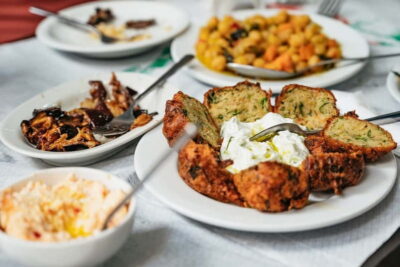
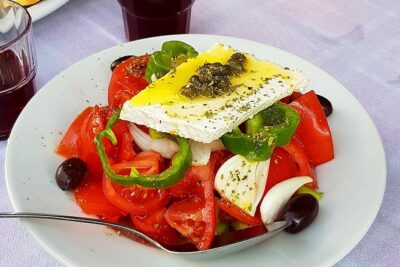
Small Group Greek Traditional Food Tour in Athens 20+ Tastings
Read our review →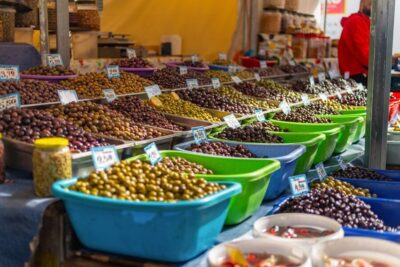
Food Market Visit and Cooking Class with Wine
Read our review →
Athens Authentic Greek Food Walking Tour (Small Group)
Read our review →
Browse the lists this tour appears in