
REVIEW · ATHENS FOOD TOURS
Athens: Food Market Visit and Cooking Class with Wine
Greek food makes more sense when you see where it starts. This four-hour Athens experience combines a shopping walk through Varvakios Agora with a hands-on class at The Greek Kitchen, where you prepare dolmades, spanakopita, imam baildi, portokalopita, and tzatziki before sitting down to eat.
I like the way the class connects market ingredients with the dishes on your plate, and I like the relaxed teaching style of cooks such as Vasia, Despina, and Thanasis. The biggest consideration is the market’s meat and fish section, which some vegetarians may find uncomfortable, and the cooking school’s stools can become tiring during a long session.
Five things to know before you book
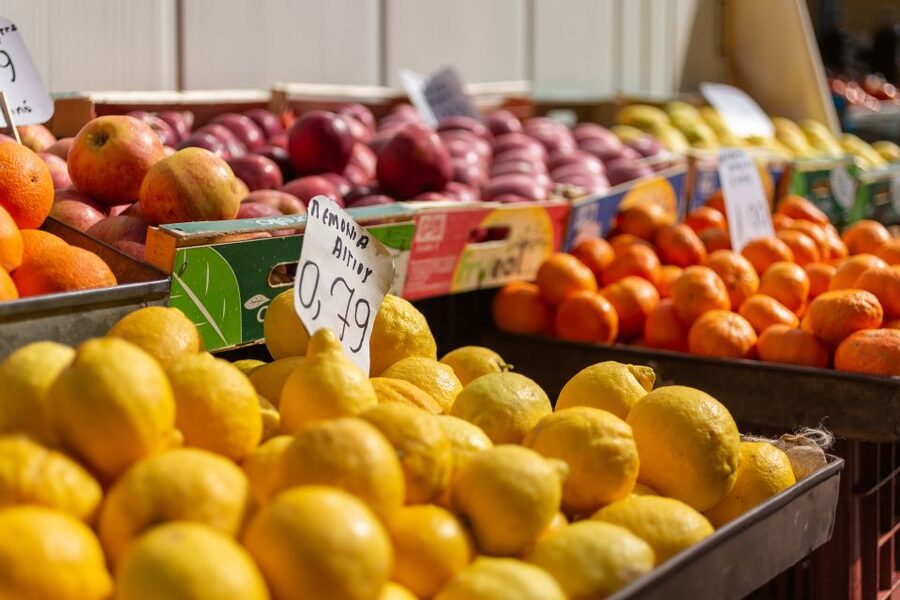
- You shop with the cook at Varvakios Agora: This is a short ingredient-buying walk, not a formal market tour, but it gives the class a useful connection to daily Athens life.
- You prepare five classic dishes: Dolmades, spanakopita, imam baildi, portokalopita, and tzatziki offer a broad sample of Greek home cooking.
- The food is served family-style: You eat what the group prepares, with water, soft drinks, local organic wine, and a Greek digestive liquor.
- The class suits beginners: The recipes are practical and simple enough to repeat at home, with time to ask questions and work together.
- Plan for about 30 minutes of walking: Wear comfortable shoes and weather-appropriate clothes. The cooking school is not suitable for wheelchair users.
Starting at Athinas 36 in central Athens
Your meeting point is The Greek Kitchen at Athinas 36, on the first floor. It is a useful starting place because you can leave behind anything you do not want to carry through the market.
The class runs in either a morning session at 9:30 AM or an afternoon session at 3:00 PM. The morning option gives you a pleasant way to begin the day, while the afternoon class can be a smart break from Athens sightseeing, especially during hot weather. One afternoon group found the kitchen a welcome escape from the heat.
The four-hour length is generous. You are not simply shown a few recipes and sent away. The schedule allows time for the market walk, preparation, explanations, cooking, and a full meal. That said, four hours is a serious block of your day, so this works best when you want a food-centered activity rather than a quick cooking demonstration.
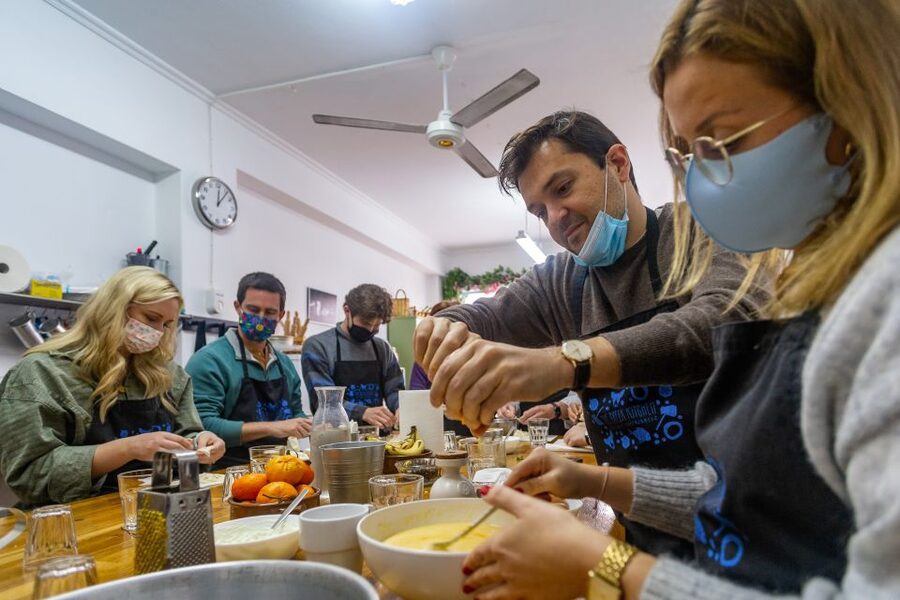
The atmosphere is designed to be social. Groups may include couples, families, solo visitors, and people from several countries. At times, a group of around 13 to 15 people has been split between two tables, which keeps the work manageable. Your exact group size can vary, but expect a shared class rather than a private lesson.
More Cooking Classes in Greece
- Mykonos: Cooking Class with Food and Wine
★ 4.9 · 282 reviews - Rhodes Wine & Food Tour: 10 Meal Course Lunch, Wine Tasting, Cooking Class
★ 5.0 · 109 reviews - Santorini Family Farm Food & Wine Tour with Cooking Class
★ 5.0 · 107 reviews
Walking through Varvakios Agora with your cook
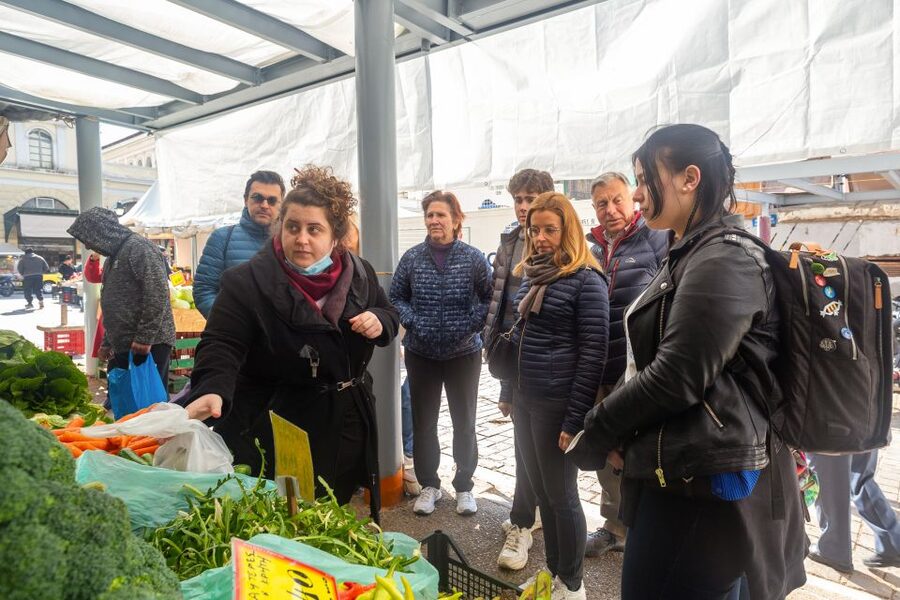
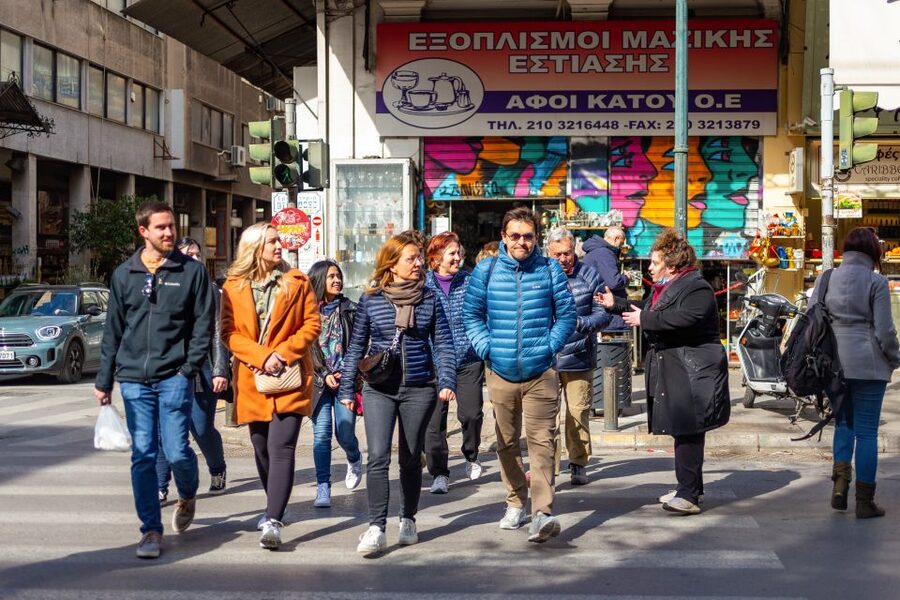
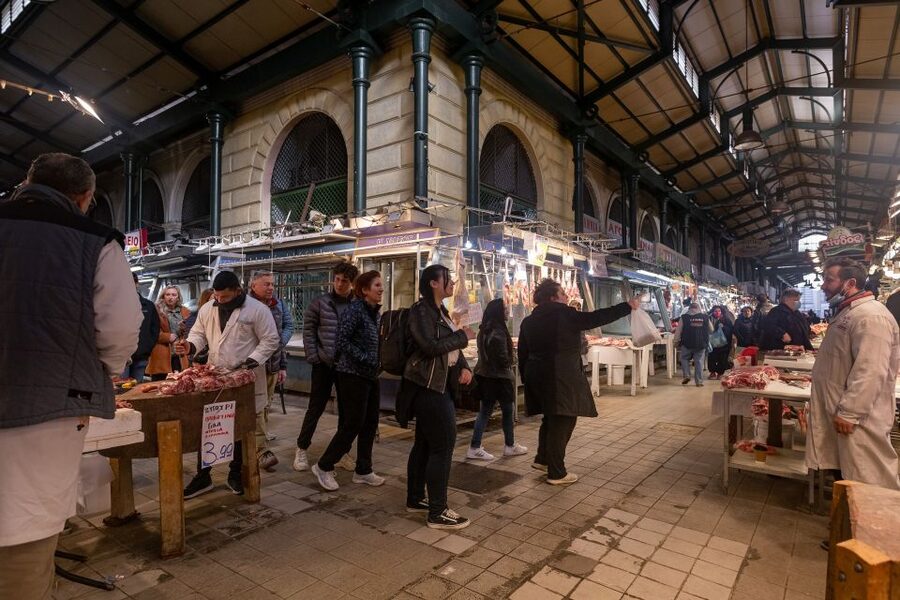
From the school, you head to Varvakios Agora, Athens Central Market. The cook leads a shopping walk to collect ingredients and introduces you to parts of the market you might otherwise pass without noticing.
It is important to set your expectations correctly. This is not a detailed market history tour or a long lecture about every stall. The market visit is part of the cooking class, giving you a look at where ingredients are bought and helping you recognize the food culture behind the recipes.
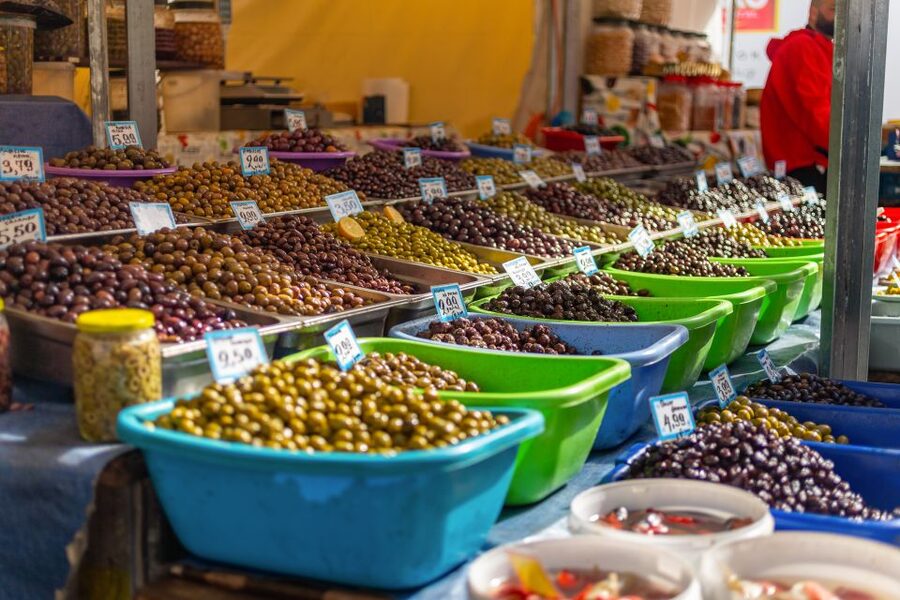
The produce sections, fruit, olives, fish, and meat areas give the visit a distinctly local feel. You are likely to see the working side of food shopping rather than a market arranged mainly for sightseeing. That is the appeal, but it also explains the main drawback. The meat and fish sections may not suit everyone, especially if you are vegetarian or sensitive to that setting.
Vegetarian visitors have still been well supported in the class itself. The menu already includes several meat-free dishes, and beef is optional in the dolmades. If you have a dietary restriction, contact the operator as early as possible. The team can prepare for vegetarian, gluten-free, and other needs in advance, but last-minute changes may not be possible.
The walk takes about 30 minutes in total. Wear shoes you can comfortably use on city streets, and bring a refillable water bottle. You can fill it at the cooking studio.
Preparing five Greek dishes at The Greek Kitchen
Back at the school, the class becomes hands-on. You work with the cook and the other people at your table to prepare the menu. The style is cooperative rather than competitive, so you do not need advanced kitchen skills or a strong interest in cooking technique.
The teaching is one of the best parts of the experience. Cooks such as Vasia have been praised for keeping the pace comfortable, drawing quiet participants into the work, and adding plenty of humor. Another instructor used a large map to explain where ingredients came from and shared a family connection to phyllo pastry through a photograph of her grandmother.
Those details matter. Greek food is not presented as a list of restaurant dishes. You get some cultural context, along with practical instructions you can use later. Several dishes are built from familiar ingredients, and the methods are simple enough to repeat at home.
Dolmades
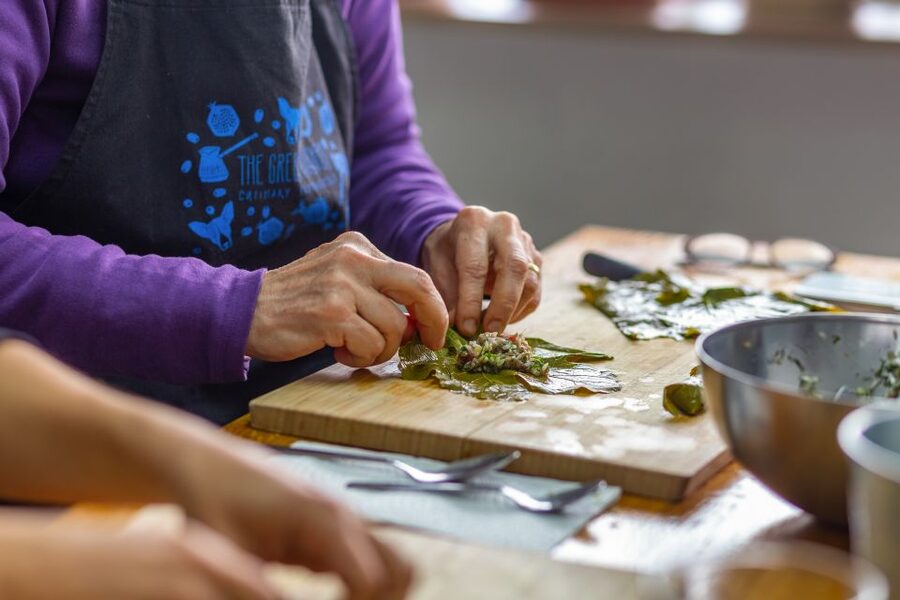
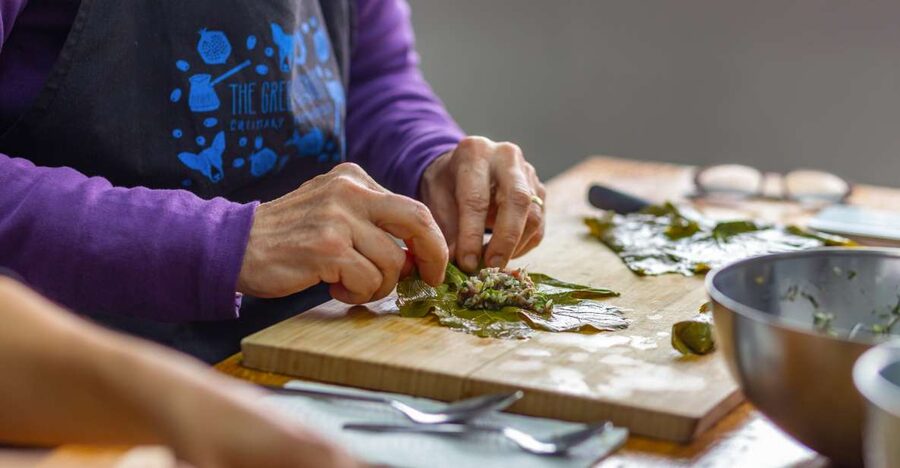
Dolmades are vine leaves wrapped around herb-seasoned rice. You can add beef if you wish, making this an easy dish to adapt for different diets.
The preparation gives you a chance to see how a mixture is portioned and wrapped, rather than only tasting the finished dish. If you have never made dolmades, the rolling may take a little practice. The relaxed group format helps because you can watch how others handle the leaves and ask the cook for help.
More Wine Tours in Greece
- PREMIUM Semi-Private Athens Afternoon Food Tour & Wine Tasting
★ 5.0 · 363 reviews - Athens: Premium Food and Wine Tasting Tour in the evening
★ 4.9 · 212 reviews - Greek Gastronomy & Wine Pairing Cruise with a Sommelier in Athens
★ 5.0 · 120 reviews - Private Athens By Night Food Tour & Wine Tasting of 5 Varieties
★ 5.0 · 90 reviews
Spanakopita
Spanakopita combines spinach, feta, and pastry. It is one of the most useful dishes to learn because it is familiar, portable, and easy to recognize on Greek menus afterward.
Working with phyllo requires a light touch. The class keeps the process approachable, rather than treating it like a pastry examination. If this is the dish you most want to recreate at home, pay close attention to how the layers are handled and filled.
Imam baildi
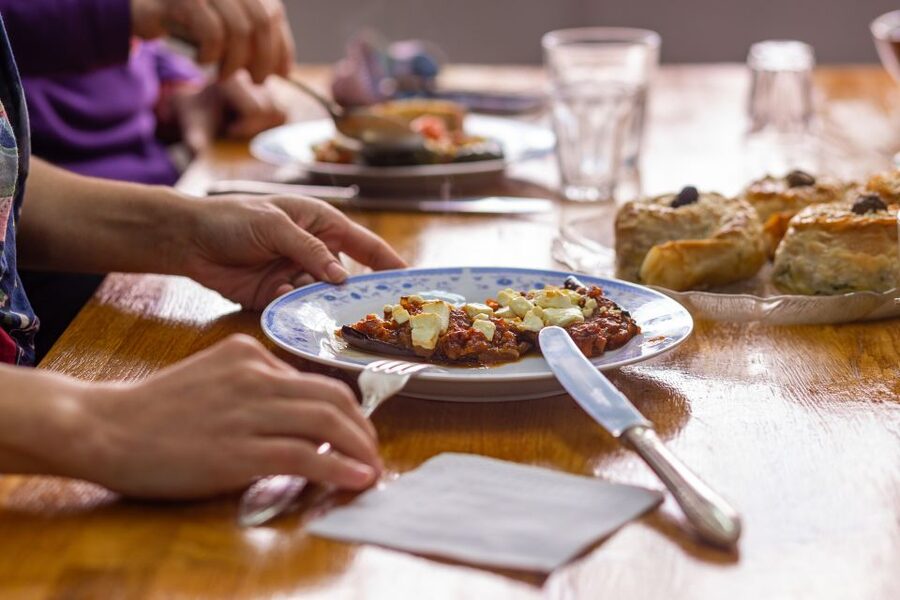
Imam baildi is made with roasted eggplant, a rich sauce, and feta. The dish came to Greece with refugees from Asia Minor, adding a piece of migration history to the menu.
It is also a good reminder that Greek cooking is not limited to grilled meat and salad. Eggplant carries the dish, and one participant who normally disliked eggplant found this preparation surprisingly good. If you are unsure about eggplant, this is a worthwhile introduction.
Portokalopita
Portokalopita is a soft, sticky orange dessert made with phyllo, orange, and cinnamon. It has a strong sweet finish and is one of the class’s most memorable recipes.
This is the kind of dish that works well as a souvenir recipe. It uses recognizable ingredients, and the combination of orange and cinnamon gives it a clear Greek character. You may want to leave room for dessert because the portions across the meal are generous.
Tzatziki
Tzatziki is the simplest dish on the menu: Greek yogurt with cucumber and garlic. Its value is not complexity, but usefulness. You will find it alongside many Greek meals, and learning to make it properly helps you understand how a few fresh ingredients can carry a dish.
The menu may be adjusted for dietary needs, but you should ask in advance rather than assume every item can be changed on the day.
Eating the meal you helped make
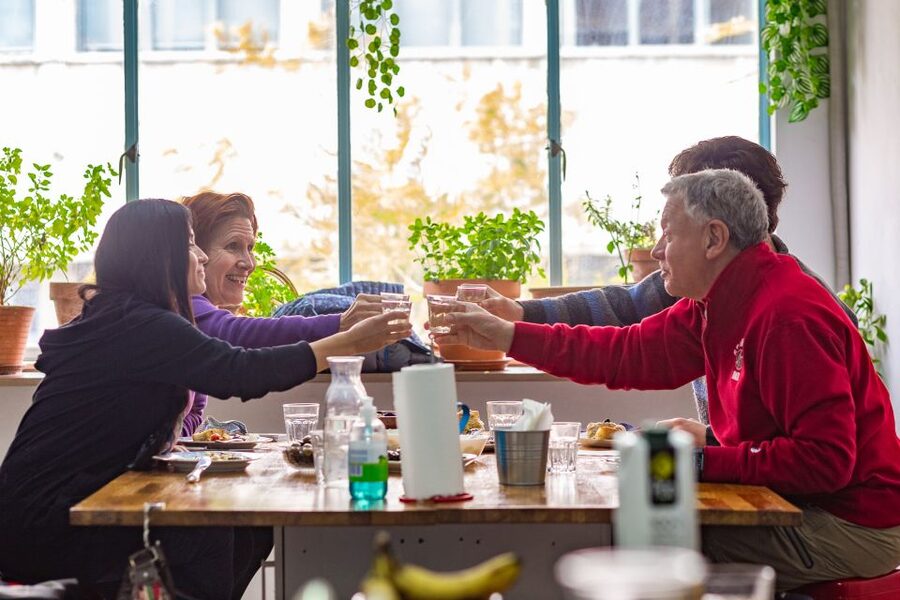
At the end, the cooking stops and the meal begins. You eat the dishes prepared by the group, served with water, soft drinks, local organic wine, and a complimentary shot of Greek digestive liquor.
The meal is more than a tasting. You have helped prepare several dishes, so you understand the work behind them. That makes the final plate feel more satisfying, even if your folded vine leaves are not perfectly uniform.
The food is plentiful. One participant found there was more than could reasonably be finished, which is a useful warning if you prefer small portions or have a light appetite. The class is built around abundance and sharing, not a carefully measured restaurant tasting menu.
The communal setup also gives the class its social character. You may arrive knowing only the people you booked with, then spend the afternoon cooking with a mixed group. Hosts encourage conversation and participation, and birthdays have even been marked with a candle on dessert.
Wine is included, but the class is not presented as a wine-tasting event. The focus stays on cooking and eating. If you do not drink alcohol, soft drinks and water are available.
How the teaching style affects the experience
The cook is the key variable in any class, and here the teaching has received unusually strong praise. Names that come up include Vasia, Despina, Thanasis, and other local cooks who bring their own style to the session.
The most effective teachers keep things moving without rushing. They explain the dishes, answer questions while you work, and make room for beginners. Humor is part of the format, but the better instructors also watch the tables carefully and step in when someone needs help.
The class has a friendly, informal mood. You may learn while standing, sitting, or moving between tasks. One practical warning is that the stools can become uncomfortable after more than an hour. If you have back or leg problems, you may find yourself standing for much of the session.
The group structure is also worth noting. Each table works as a team, so you will not necessarily make every dish entirely on your own. That is good for a social class and helpful for beginners, but less ideal if you want individual, detailed instruction on every recipe.
Dietary needs and comfort
The operator asks you to send dietary information ahead of time. This is especially important for gluten-free visitors, people with allergies, and vegetarians.
Gluten-free arrangements have been handled with care, including attention to cross-contamination. Vegetarian visitors have also been accommodated successfully, with meat-free versions or dishes already suited to their diet. Still, the market walk includes fish and meat areas, so a vegetarian who dislikes those sections may prefer to focus on the produce and olive stalls or ask the cook how the walk will be handled.
The activity includes walking and standing, and it is not suitable for wheelchair users. Comfortable clothing and footwear are essential. Smoking and pets are not allowed.
Is $81 good value for Athens?
At $81 per person, the price includes four hours of activity, the market visit, all ingredients, a full-course meal, recipes, water, soft drinks, wine, and a Greek liquor. I consider that a solid value if you would otherwise pay separately for lunch, drinks, and a guided food activity.
The value is strongest for people who care about learning. You are not only paying for food on the day. You leave with recipes for dishes such as spanakopita, dolmades, tzatziki, imam baildi, and portokalopita, plus a better sense of how Greek ingredients fit together.
The market visit is a smaller part of the value. If you have visited many food markets around the world, it may feel brief or familiar. The class itself carries most of the experience, so book this for the cooking, cultural background, and shared meal rather than for a full market tour.
Free cancellation up to 24 hours before the activity and the option to reserve and pay later add useful flexibility. Check the exact starting time when booking, since both morning and afternoon sessions are offered.
Who should book this Athens cooking class?
I would recommend it to first-time visitors who want an easy introduction to Greek food and to returning visitors looking for an activity beyond museums and monuments. It also suits couples, families, solo visitors, and small groups who enjoy meeting people around a table.
You do not need to be a confident cook. The recipes are straightforward, the instructors are patient, and the class is built around teamwork. It is especially useful if you want to recognize Greek dishes during the rest of your trip and try them at home afterward.
You may want to skip it if you dislike group activities, want a private chef lesson, or have limited mobility. Vegetarians should also decide how comfortable they are with the meat and fish section of the market. If that sounds manageable, the cooking and meal are likely to be the stronger part of your day.
Should you book it?
Book this class if you want to cook, eat generously, and learn how Greek home cooking connects to the city’s market. The instructors bring warmth and humor, the food is practical to recreate, and the shared table makes it easy to meet people without forcing a formal social setting.
I would choose the morning session for a relaxed start to the day, or the 3:00 PM class when you want a break from Athens sightseeing and summer heat. Just wear good shoes, tell the school about dietary needs early, and remember that the market walk is an ingredient-shopping visit, not a full market history tour.
FAQ
Where does the Athens cooking class meet?
It meets at The Greek Kitchen, Athinas 36 in Athens, on the first floor.
How long does the activity last?
The experience lasts four hours and includes the market visit, cooking class, and shared meal.
What time does the class begin?
You can choose between a morning class beginning at 9:30 AM and an afternoon class beginning at 3:00 PM.
Which languages are available?
The instructors speak English and Greek.
What food and drinks are included?
The price includes all cooking ingredients, a full-course meal, water, soft drinks, local organic wine, and a complimentary shot of Greek liquor.
Can dietary needs be accommodated?
Yes, dietary needs can be accommodated when arranged in advance. Contact the operator as soon as possible, since last-minute changes may not be possible.
Is the activity suitable for wheelchair users?
No. The activity includes about 30 minutes of walking and is not suitable for wheelchair users. Wear comfortable shoes and weather-appropriate clothing.
More cooking classes in Athens
- Authentic Pizza Making Class in Naples with Appetizers and Drink
★ 5.0 · 3,178 reviews - Tokyo: Roll and Authentic Sushi Making Class in Asakusa
★ 4.9 · 1,957 reviews - Ramen Cooking Class at Ramen Factory in Kyoto
★ 5.0 · 1,937 reviews - Small Group Cooking Class & Market Food Tour in Florence
★ 5.0 · 1,574 reviews
More wine tours in Athens
- Winner 2025 Undiscovered Lisbon Food & Wine Tour by Eating Europe
★ 5.0 · 6,390 reviews - From Porto: 2 Wine Regions, Farm-to-Table Lunch & Boat
★ 4.9 · 5,724 reviews - Winner 2025 Florence Sunset Food & Wine Tour by Eating Europe
★ 5.0 · 5,015 reviews - Authentic Parisian Gourmet Food Tour with 10 Local Dishes & Wines
★ 5.0 · 4,754 reviews
Just added in Athens
- Classic Athens Food Tour with Local Drink & Market Visit★ 5.0 · 34 reviews
- Taste of Athens Small-Group Food Tour★ 5.0 · 33 reviews
- The Greek Food Experience (Max 8 persons)★ 5.0 · 181 reviews
- Best Food Tasting Tour of Athens, taste 18+ iconic Greek foods!★ 5.0 · 448 reviews
- Greek Gastronomy & Wine Pairing Cruise with a Sommelier in Athens★ 5.0 · 120 reviews
- Athens Street Food Tour: Explore City’s Iconic Eateries★ 5.0 · 155 reviews
- Athens: The Classic Food Tasting Tour★ 5.0 · 106 reviews
- Private Athens Morning Food Tour (15+ tastings) – Best Seller★ 5.0 · 25 reviews
Market Food Tours, compared.

Tokyo Tsukiji Fish Market Food and Culture Walking Tour
Read our review →
London Bridge & Borough Market Food Tour with 7 Authentic Dishes
Read our review →
Small Group Cooking Class & Market Food Tour in Florence
Read our review →
Nishiki Market Brunch Walking Tour (7 Tastings + Brunch)
Read our review →
Bologna Food & Market Tour with 6 Tastings, Pasta, Wines & More
Read our review →
Browse the lists this tour appears in