
REVIEW · BERLIN FOOD TOURS
Classic Bites and Culinary Trends Neighborhood Food Tour in Berlin
Berlin tastes best on foot. This 3.5-hour walk links East Berlin history with coffee, pastries, street food, kebabs, beer, and a seasonal dessert. I like the small groups of up to eight and the way guides such as Tiago, Violeta, Holger, and Jane mix food with stories about Berlin’s changing neighborhoods. The main drawback is price: at $205.67 per person, this is costly if you mainly want inexpensive street food.
I also like that the tastings are meant to cover lunch, with six food stops and more than ten samples in total. Come hungry. You may leave very full, and the walk can cover roughly four miles, so comfortable shoes matter. The route is strongest for curious eaters who want Berlin’s food culture explained, not just served.
Key things to know before booking
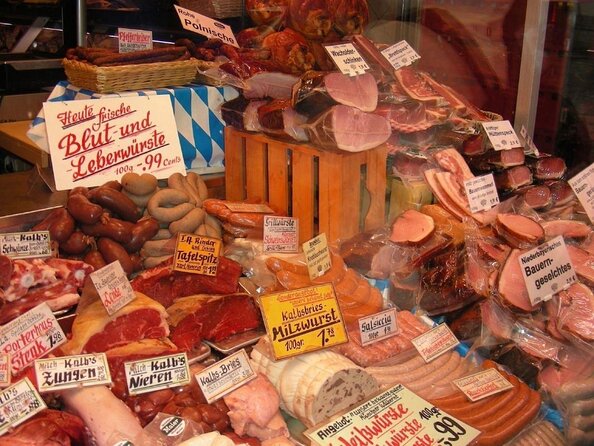
- Six food stops and more than ten tastings: The samples are designed to replace lunch, with sweet and savory food spread across the walk.
- Prenzlauer Berg is the main stage: You pass refurbished side streets, cafés, bars, bakeries, the Kulturbrauerei, and the lively streets around Kastanienallee and Oderberger Straße.
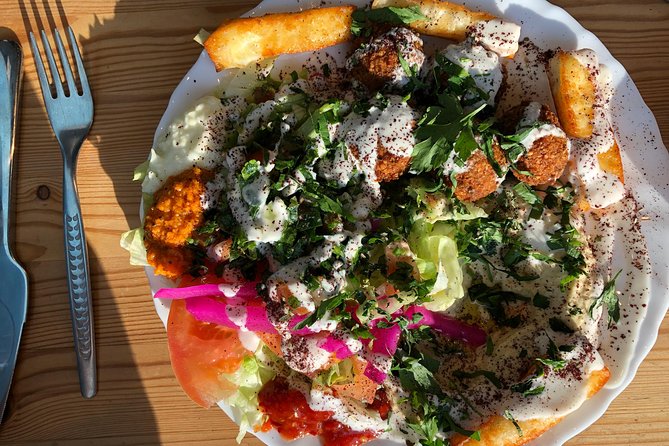
- Berlin’s food story is international: Expect German street food alongside kebab, falafel, pastries, coffee, and other foods shaped by immigrant communities.
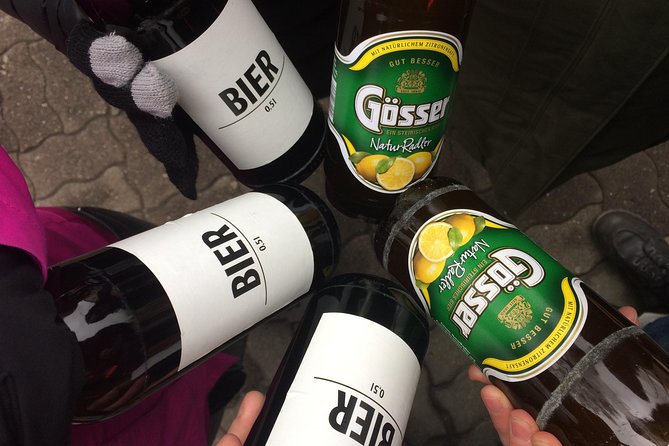
- Beer is part of the lesson: You taste local beers and learn why drinking beer outdoors is accepted in Berlin.
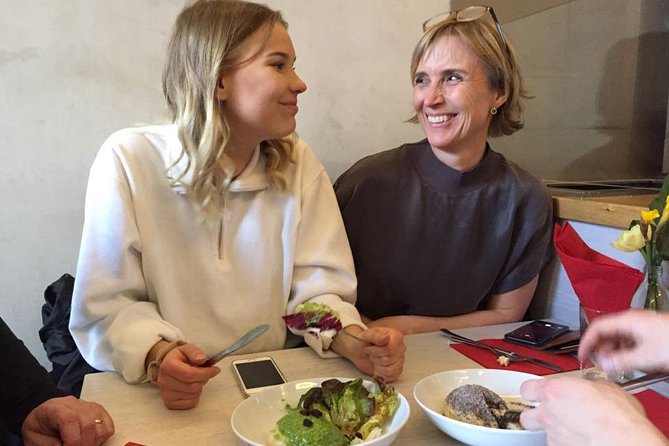
- The small group matters: A maximum of eight people makes it easier to ask questions and speak with the guide.
- It is a full walking outing: Plan on about three and a half hours, with some reports of roughly four miles on foot.
Starting with East Berlin at Schönhauser Allee
The tour begins at Espresso House, at Schönhauser Allee 116. This is more than a place to gather. Your guide uses the opening stop to set the scene for former East Berlin and explain how the area changed after reunification.
That introduction gives the food a useful frame. Berlin is not presented as a city built around one grand national cuisine. Instead, the meal reflects the city itself: local snacks, imported flavors, independent cafés, pastries, beer, and food created by communities from outside Germany.
The first food stop is on Schönhauser Allee. You try a historic Berlin street-food snack described as especially tied to East Berlin. The exact item can vary, but the point is clear: this is a local taste with a political and geographic backstory, not simply something grabbed between train stops.
For you, this early bite helps answer a practical question: what makes Berlin food Berlin food? The answer is often less about formal dining and more about working-class snacks, quick meals, neighborhood shops, and recipes reshaped by migration.
A few more food tours in Berlin worth a look
- Berlin Center Food Tour with 8+ Authentic Local Tastings
★ 5.0 · 1,227 reviews - Kreuzberg: Culinary Food Tour
★ 4.5 · 770 reviews - Berlin: Mitte Culinary Food Tour
★ 4.5 · 447 reviews
Prenzlauer Berg through its side streets
From Schönhauser Allee, the route moves toward Stargarder Straße and Pappelallee. These streets show a more relaxed side of Prenzlauer Berg, with refurbished buildings, cafés, and smaller residential lanes.
Your guide explains what the area was like before the Wall fell and how it developed afterward. The history is not limited to monuments. It comes through changes in housing, street life, cafés, and the people who now use the neighborhood.
At Pappelallee, the focus shifts to specialty coffee. The stop is a small local barista café that roasts its own beans and serves eight kinds of espresso. Coffee fans should pay attention here, since the tasting offers more than a standard cup with lunch.
The format also makes this stop useful for non-experts. You do not need to know your ristretto from your lungo before arriving. The point is to taste several styles and notice how independent coffee culture has become part of modern Berlin.
One practical note: coffee early in a food tour can be a lot if you are sensitive to caffeine. You can ask the guide about the tasting pace, but the experience is built around sampling, not ordering a full drink at every stop.
Handmade pastries on Dunckerstrasse
The next stop is a Berlin patisserie on Dunckerstrasse. Here you try handmade cakes and selected pastries, adding a sweet counterpoint to the savory street food and coffee.
This is one of the tour’s more indulgent moments. It also shows why the experience is better viewed as a moving lunch than as a series of tiny nibbles. The food comes at regular intervals, and the portions can add up quickly.
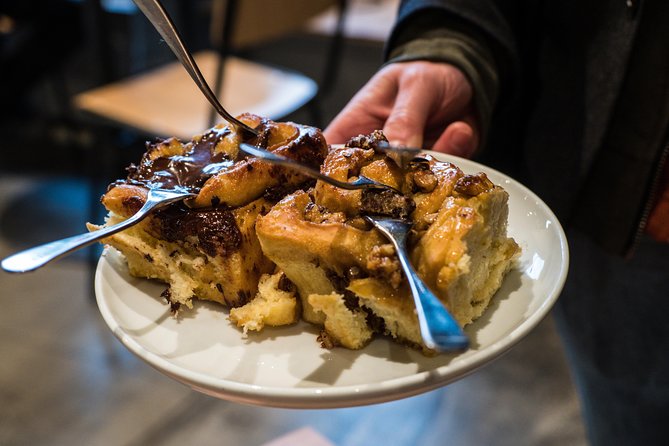
You should arrive with room for dessert, even though dessert comes more than once. Several tasting choices mentioned in the experience include Berliner doughnuts, and one route has featured a donut shop as a favorite stop. If you have a strong sweet tooth, this may be one of the most memorable parts of the afternoon.
The limitation is simple: if you are looking mainly for classic German pork dishes, formal regional cooking, or a long sit-down meal, this stop will not meet that expectation. The tour is about current city eating, with traditional flavors appearing alongside newer food styles.
A savory fusion stop with Berlin beer
In Prenzlauer Berg, the route adds a savory fusion tasting paired with a locally brewed drink. The wording suggests a modern dish rather than a single fixed Berlin classic, and the changing menu is part of the appeal.
You might taste something influenced by several food traditions in one serving. That approach matches the wider theme of the walk: Berlin’s food identity has been shaped by people who arrived from elsewhere, opened businesses, and changed what locals eat.
Past tasting combinations have included kebab, falafel, currywurst, and other street foods. One particularly praised pairing was kebab with a bold, modern presentation, while falafel also earned a place among the favorite bites. The exact stops may depend on the day, season, and local availability, so you should think of the tour as a food route rather than a guaranteed menu.
This is where the lunch promise becomes important. Six locations and more than ten tastings can be enough for a full midday meal. If you are traveling with a companion who eats lightly, sharing later samples may be wise. One participant found the amount of food so generous that the group began splitting dishes toward the end.
Same city, a different table:
- Berlin: Downtown Food Tour with 8 Authentic Local Tastings
★ 4.8 · 342 reviews - Berlin: Guided Street Food Tour with Tastings
★ 4.8 · 310 reviews - East Berlin Food & History Tour with Eating Europe
★ 5.0 · 204 reviews - East Meets West: Berlin Food Culture & Street Art
★ 5.0 · 157 reviews
Beer tasting and Berlin’s open-air drinking culture
The beer stop adds a distinctly Berlin lesson. You taste classic and craft beers while playing a small comparison game, and the guide explains why drinking beer on the street is accepted in the city.
This is not just a beverage break. It connects everyday rules and habits with local culture. Berlin’s relaxed attitude toward public beer drinking is easy to notice once you know what you are seeing, and the tasting gives you a way to compare local styles at the same time.
The included beer is regional, and the route may include a beer garden in spring, summer, or autumn when the weather allows. That seasonal condition matters. If you book during cooler weather or on a rainy day, the beer component may take place in another setting.
Alcohol also changes who should book. This tour is not a good fit if you avoid alcohol completely, since regional beer is part of the included experience. It may also be less suitable for anyone hoping for a very quiet or formal food setting.
Kastanienallee and immigrant influence
On Kastanienallee, the guide turns directly to the role of immigrant communities in Berlin’s food scene. This is one of the strongest parts of the experience because it moves beyond the idea that German food means only sausages, schnitzel, and pork.
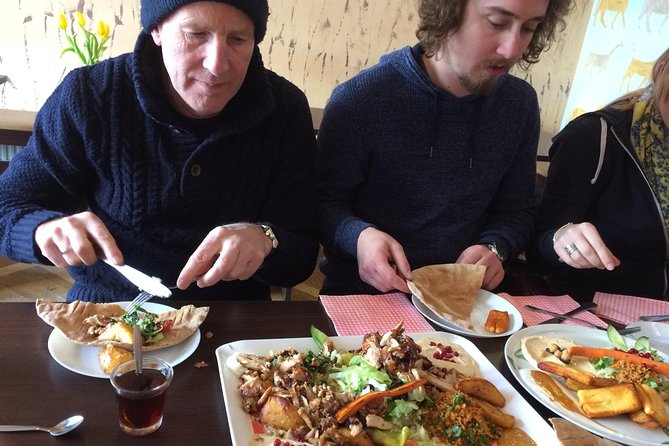
You get both explanation and tasting. The food may include kebab, falafel, or another dish shaped by Berlin’s international population. These are not side notes to the city’s food culture. They are central to what many people actually eat in Berlin today.
I would pay close attention to the guide here. Tiago, Violeta, Holger, and other guides have been praised for explaining the social and political changes behind the dishes, not simply naming ingredients. A strong guide can turn a quick bite into a lesson about migration, neighborhoods, and how Berlin rebuilt its identity after reunification.
This also explains why the tour may feel different from a conventional German food walk. One participant found the food excellent but expected more traditional German dishes. That is a fair concern, so book this experience for a broad Berlin food survey, not a strict tour of old regional recipes.
Kulturbrauerei and the final dessert
Along the way, you pass the brick Kulturbrauerei, a former brewery that was once Germany’s largest beer producer in the mid-1800s. It is a useful photo stop and gives the beer theme a physical landmark.
The building helps connect old brewing Berlin with the city’s current bar and café culture. Your guide can point out how the former industrial site fits into the neighborhood today, while you get a short break from eating and walking.
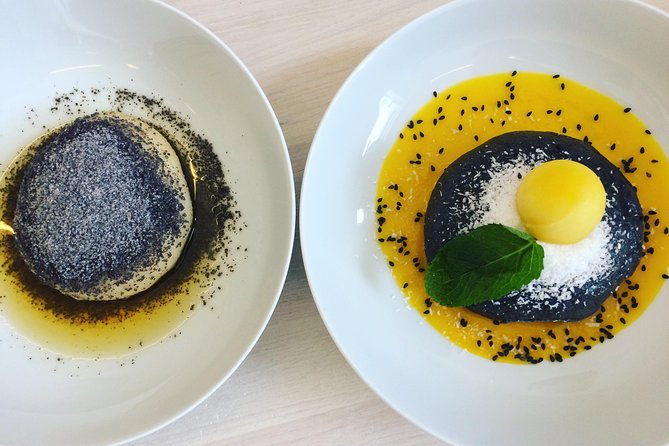
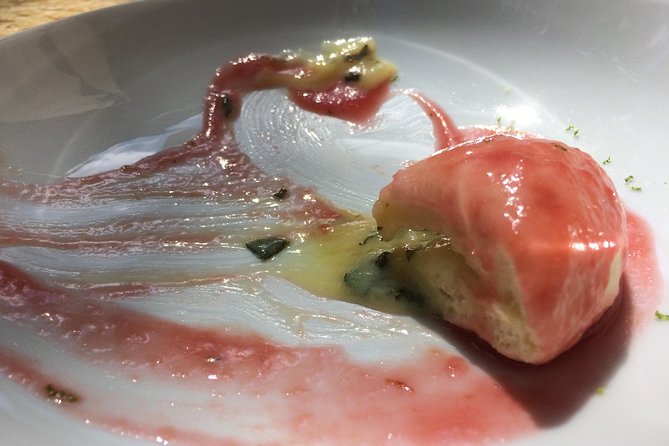
The final stop is on Oderberger Straße, where dessert depends on the season. Possibilities include natural ice cream, a beer garden visit, or a warm, fluffy dessert. That flexibility keeps the route lively, but it also means you should not book with one exact final dish in mind.
The route ends at Eberswalder Straße, close to the U2 underground line and tram lines M10 and M12. That is a convenient finish for continuing your afternoon in northern Prenzlauer Berg.
What the $205.67 price really buys you
At $205.67 per person, this is not a bargain food crawl. The price makes more sense if you value the guide, the neighborhood walk, the history, the number of tastings, and the convenience of having lunch arranged across several stops.
You are not paying only for food portions. You are also paying for a small group, local route planning, explanations at each stop, regional beer, and access to places you might not identify on your own. The food covers lunch for many people, with some extra samples beyond that.
Still, the value depends on your priorities. If you would happily spend an afternoon ordering snacks independently, the cost may feel high. One fair criticism was that the meal leaned toward street food and beer rather than fine cuisine. I agree that this is the key price question.
The experience offers better value at the beginning of a Berlin visit. You receive restaurant suggestions, neighborhood ideas, and a working introduction to the city’s food habits. If you book late in your trip, some of that practical benefit disappears.
Group size, walking, and access
The stated maximum is eight people, a good size for conversation and questions. Small groups also make it easier for the guide to keep everyone together at cafés, bars, and narrow streets.
The walking is substantial. One account estimated about four miles, while the scheduled duration is approximately three hours and thirty minutes. You will want comfortable shoes and enough time afterward to rest or continue at an easy pace.
Most people can take part, and service animals are allowed. The route is marked as wheelchair friendly, with no steps at the stops, but uneven Berlin streets can create real difficulty. If anyone in your party uses a wheelchair or stroller, contact the provider before booking and explain your needs clearly. A private tour may be more suitable than a public group if mobility affects the pace.
Free cancellation is available when you cancel at least 24 hours before the start time. Changes made inside that window are not accepted, and a minimum number of bookings is required for the tour to operate.
Who should book this Berlin food walk?
I would recommend it to you if you want food and city history in the same outing. It works particularly well for first-time visitors, couples, solo eaters who like small groups, and anyone curious about how immigration shaped everyday Berlin cuisine.
It is also a smart choice if you want practical food suggestions for the rest of your stay. Guides such as Jane, Tiago, Violeta, and Holger have been praised for being friendly, clear, and generous with recommendations beyond the official stops.
You may want to skip it if you dislike walking, avoid alcohol, prefer formal dining, or want only classic German dishes. The route is social, active, and food-heavy. Come hungry, but do not plan a large dinner immediately afterward.
Should you book it?
Yes, if you see Berlin as a city of changing neighborhoods, immigrant-run food businesses, cafés, beer, and casual meals. The strongest parts are the friendly guides, the mix of sweet and savory tastings, and the way each bite connects to Berlin’s past and present.
At $205.67, I would book this for the context and variety rather than for cheap food. Choose it early in your stay, wear good shoes, confirm mobility needs in advance, and arrive with an empty stomach. If those conditions suit you, this is a lively way to get your bearings through food.
FAQ
How long does the food tour last?
The experience lasts approximately three hours and thirty minutes.
Where does the tour start?
It starts at Espresso House, Schönhauser Allee 116, 10439 Berlin, Germany.
Where does the tour end?
It ends at Eberswalder Straße, 10437 Berlin, close to the U2 underground line and tram lines M10 and M12.
How much does the tour cost?
The listed price is $205.67 per person.
How many people can join the tour?
The tour has a maximum of eight participants.
Is lunch included?
Yes. The tastings are intended to cover lunch, with snacks from six places and more than ten tastings in total.
Is beer included?
Yes. Regional beer and local alcoholic drinks are included. A beer garden visit may take place in spring, summer, or autumn when weather permits.
Is the tour offered in English?
Yes. The tour is offered in English.
Is the tour wheelchair friendly?
The stops are marked as accessible and have no steps, but some Berlin streets are uneven. Contact the provider ahead of time if someone in your group uses a wheelchair or stroller.
Can I cancel for a full refund?
Yes, if you cancel at least 24 hours before the experience begins. Cancellations or changes made less than 24 hours before the start time are not accepted for a refund.
Just added in Berlin
- Small-Group Berlin Sightseeing and Food Tour of Prenzlauer Berg and Mitte★ 5.0 · 25 reviews
- East Meets West: Berlin Food Culture & Street Art★ 5.0 · 157 reviews
- Berlin Evening Culinary Tour – Award Winning★ 5.0 · 118 reviews
- The Berlin Culinary Experience: A Regional & Cultural Food Tour★ 5.0 · 79 reviews
- Private Tour: Daytime Food Tour Trends & Classics★ 5.0 · 24 reviews
- Private Berlin Street Food Tour by Bike★ 5.0 · 87 reviews
- Food tasting tour in Berlin of HIDDEN GEMS (Small Groups)★ 4.5 · 60 reviews
- The 10 Tastings of Berlin Kreuzberg Private Food Tour With Locals★ 4.5 · 31 reviews
Berlin Food Tours, compared.
Berlin Center Food Tour with 8+ Authentic Local Tastings
Read our review →
Downtown Food Tour with 8 Authentic Local Tastings
Read our review →
East Berlin Food & History Tour with Eating Europe
Read our review →
East Meets West: Berlin Food Culture & Street Art
Read our review →
Berlin Private Walking Food Tour With Locals: the 10 Tastings
Read our review →Browse the lists this tour appears in