
REVIEW · BERLIN FOOD TOURS
East Meets West: Berlin Food Culture & Street Art
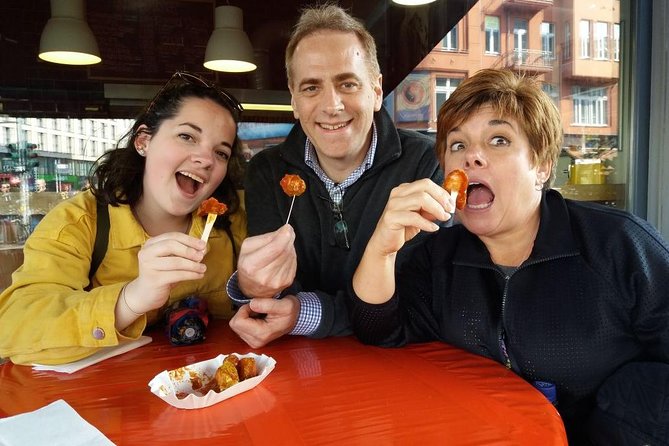
Berlin eats across old borders. This 3.5-hour walking tour links Friedrichshain and Kreuzberg through food, street art, and stories from Nazi Germany and the Communist era. I like the small group of up to eight, which gives you room to ask questions, and I like the wide food mix, from Berliner beer and schnitzel to Turkish, Ukrainian, and vegan specialties.
The main consideration is value. At $169.38 per person, this is not a cheap snack walk, especially since the tastings are served in modest neighborhood spots rather than costly restaurants. You should also expect steady walking, changing weather, and a tour that gives more attention to local life and food culture than to major monuments.
Key points to know before booking
- Eight-person maximum: The small format allows more conversation with guides such as Lee, Elena, Tiago, and Will.
- Six local tastings: Expect food and drinks tied to Berlin’s German, Turkish, Ukrainian, coffee, and vegan scenes.
- East to West route: Begin near Friedrichshain’s former East Berlin streets and finish at Kottbusser Tor in Kreuzberg.
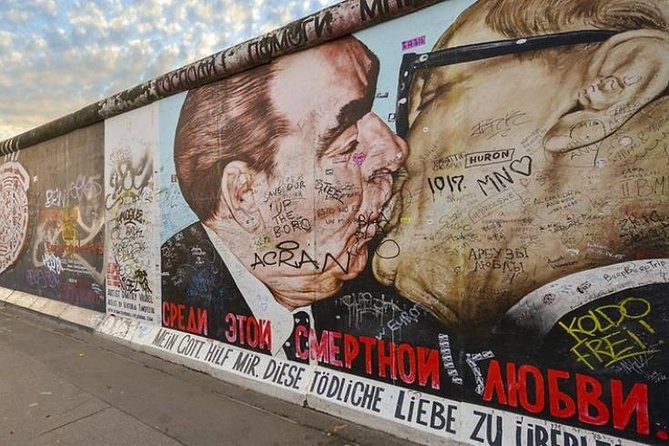
- Street art with political meaning: The East Side Gallery and a major Kreuzberg mural connect art with Berlin’s divided past.
- Come hungry: Several people found the portions generous enough to skip breakfast or dinner.
- Bring a rain layer: The experience lasts about three and a half hours and includes a moderate amount of walking.
A Berlin food walk with a clear point of view
This is not a standard city sightseeing tour with a sausage stop tacked on. Its subject is Berlin as a meeting place: East and West, German and Turkish, old industries and new creative businesses, immigrant cooking and modern vegan food.
You begin at Industriepalast Hostel on Warschauer Strasse at noon. The starting point places you in Friedrichshain, an area linked with former East Berlin and its rebellious local culture. From there, you move toward the East Side Gallery, cross into the former West Berlin, and continue through Kreuzberg.
The route ends at U Kottbusser Tor, served by the U8 and U1 lines. That makes the finish useful if you plan to continue exploring Kreuzberg afterward.
The tour is offered in English and includes a local guide, six tastings, beverages, and Berliner Pilsner beer. A BVG transport ticket is not included, so you may need to buy local transport separately depending on how you reach the start or leave the finish.
A few more food tours in Berlin worth a look
- Naples: Street Art, Wine and Food Tasting Walking Tour
★ 5.0 · 163 reviews - Phnom Penh: Street Art & Food Tour by Tuk-Tuk
★ 4.9 · 69 reviews - Bangkok: Street Art and Street Food Walking Tour
★ 4.1 · 58 reviews
Friedrichshain and the East Side Gallery
The first stop introduces Friedrichshain as a neighborhood shaped by East Berliners who resisted the dull uniformity of Communist rule. The brief 20-minute visit is less about checking off sights and more about setting the scene for the rest of the walk.
You then reach the East Side Gallery, where a surviving section of the Berlin Wall carries political murals. The stop lasts about 20 minutes and gives you a chance to touch an actual remaining part of the Wall while hearing how street art became part of Berlin’s public voice.
This is one of the strongest parts of the route for first-time visitors. The Wall is not presented only as a Cold War relic. It becomes a canvas where ideas about freedom, division, memory, and reunification are painted in public.
Still, keep your expectations in check. You are not spending hours at a museum or visiting a long list of famous landmarks. The attraction here is the link between the physical Wall and the food and art culture that developed around the city’s divided neighborhoods.
Crossing into Kreuzberg
The walk from Friedrichshain toward Kreuzberg includes a bridge crossing into former West Berlin. That physical change helps make the city’s old division easier to picture, even though today the border is invisible.
Kreuzberg is presented as a neighborhood of food businesses, bars, creative spaces, and political memory. The scheduled stop lasts about 30 minutes, but the broader route keeps returning to the area’s changing identity.
Your guide may discuss the Nazi period, including the presence of SS soldiers in local streets, before moving into the Communist era and later migration. These subjects give the food stops more weight. You are not just eating a dish because it tastes good. You are learning how Berlin’s population and political life shaped what appears on its plates.
Guide quality matters here. Elena received especially warm praise for connecting stories about people, culture, and neighborhoods to the streets around you. Lee was also singled out for taking his group to unusual places and answering questions about both cuisine and local life. Tiago and Will were praised for making the historical material clear and approachable.
Schnitzel, street art, and a changing city
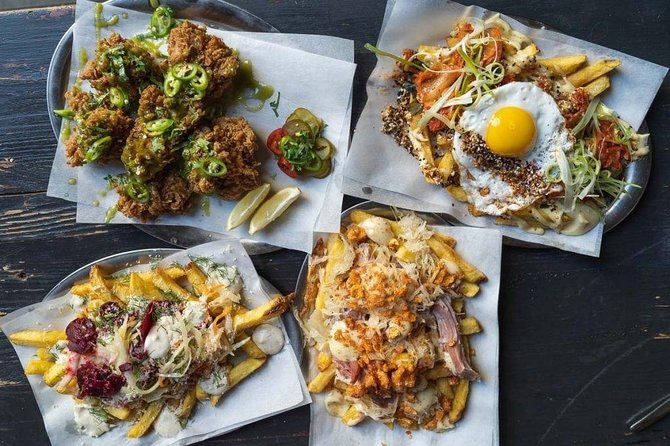
Scheers Schnitzel supplies a Berlin-style schnitzel tasting. The stop is short, about 15 minutes, and works as an introduction to a familiar German dish in a casual local setting.
Do not expect a full sit-down meal here. The tour is built around several tastings, so each stop is meant to give you a sample rather than a long restaurant visit. That approach keeps the route moving, but it also means you should not expect every dish to arrive in a large portion.
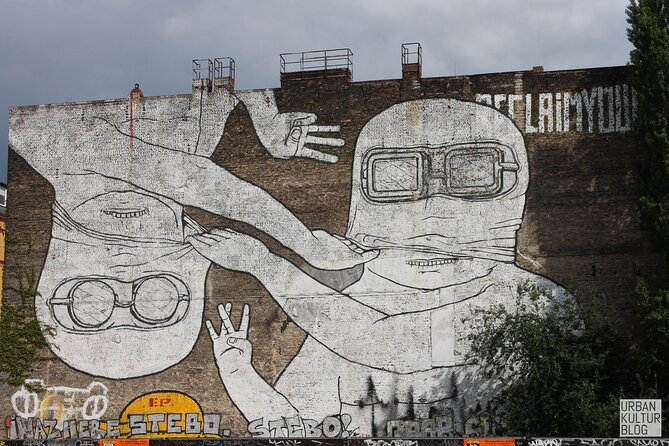
The next street art stop focuses on a well-known mural in Kreuzberg. Berlin’s graffiti is treated as more than decoration. It carries stories about East and West, the past and the future, and the city’s habit of turning neglected walls into public statements.
If you enjoy street art, this part gives the tour a useful edge. If your main goal is traditional sightseeing, you may find the route light on major landmarks. One less enthusiastic assessment found the sightseeing fairly limited after the East Side Gallery and bridge crossing. That is a fair warning: this experience is about neighborhoods and food culture first.
Same city, a different table:
- Berlin Center Food Tour with 8+ Authentic Local Tastings
★ 5.0 · 1,227 reviews - Kreuzberg: Culinary Food Tour
★ 4.5 · 770 reviews - Berlin: Mitte Culinary Food Tour
★ 4.5 · 447 reviews - Berlin: Downtown Food Tour with 8 Authentic Local Tastings
★ 4.8 · 342 reviews
Ukrainian food and Berlin’s immigrant table
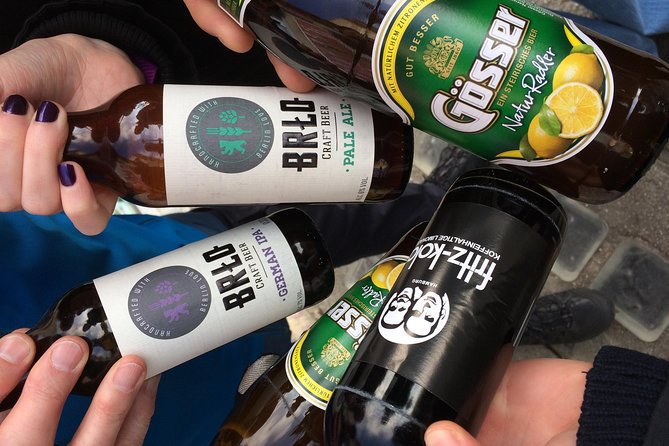
At Slava Berlin, you taste modern Ukrainian soul food and nalivanki, a Ukrainian-style drink. The restaurant is described as being led by immigrant women, which gives the stop a direct connection to the present-day movement of people and cooking across Europe.
This is one of the tour’s more distinctive choices. Many Berlin food walks focus heavily on currywurst, pretzels, and kebabs. Adding Ukrainian food shows how quickly Berlin’s culinary identity keeps changing.
The stop lasts about 20 minutes. You should have time to taste and hear the story behind the food, but the pace remains that of a walking tour. If you have dietary needs, tell the operator at booking. A vegetarian option is available, though the details of each replacement tasting are not specified.
Markthalle Neun and the city’s food engine
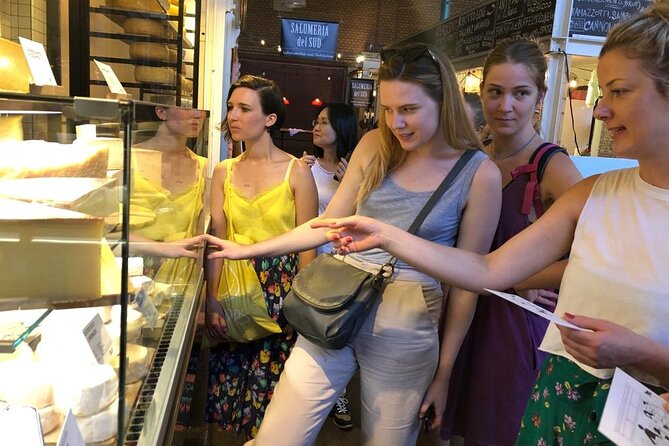
Markthalle Neun occupies a refurbished market hall dating from the 1900s. The building survived the destruction of World War II and later pressure from commercial development, and it now functions as an independent food center.
The 30-minute visit is a useful pause in the route. Instead of tasting one item at a single counter, you get a sense of how Berlin connects small food businesses, producers, drink makers, and public events.
The hall’s event program brings together food and beverage makers from Berlin and nearby producing areas. That makes this stop valuable even if you have already visited a market elsewhere in Europe. You are seeing a working part of the city’s food culture, not just a pretty old building.
Timing may affect what is open or active. The tour information describes the hall and its program, but it does not promise a specific event or a particular selection of vendors on your date.
Turkish Kreuzberg at Leylak
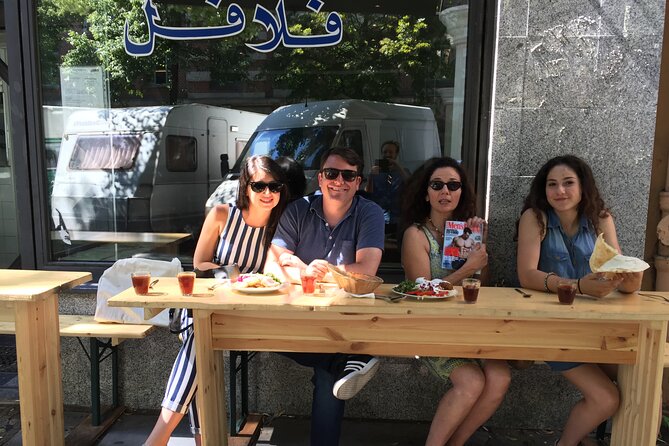
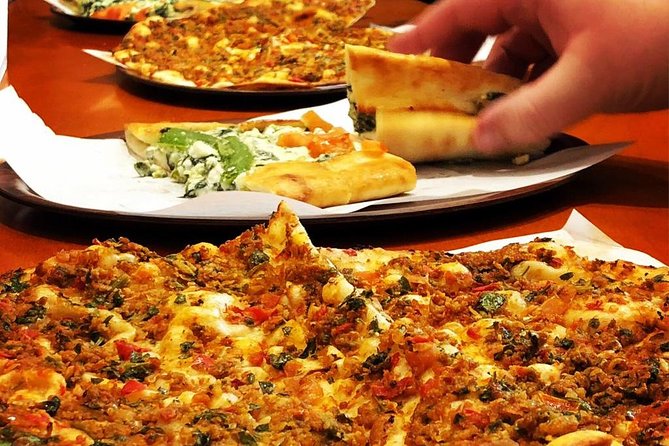
Kreuzberg’s Turkish influence receives a full stop at Leylak. The tour explains how Turkish residents helped rebuild and reshape the neighborhood through the 1980s and 1990s, contributing to the multicultural character you see today.
Berlin is home to the largest Turkish population outside Turkey, and this part of the walk treats that fact as a central part of local food history rather than a side note. At Leylak, you taste street food associated with the Anatolian region.
This stop is especially useful if you want to move beyond the familiar kebab-shop image. The goal is to connect dishes with migration, community, and neighborhood change. Food becomes a way to understand who built Kreuzberg and how its identity developed.
The 20-minute timing keeps the tasting focused. You may find the food more substantial than a tiny sample, but you should still save room for the stops ahead.
Currywurst and a Berlin culinary legend
Ketels Curry tells the story of currywurst, the dish that helped shape Berlin’s modern food identity. The tour presents the origin story as something even many locals do not know, making this more than a quick bite of sausage with sauce.
Currywurst is simple food, but its importance is cultural. It reflects postwar Berlin, quick eating, local pride, and the city’s talent for turning an ordinary dish into a symbol.
This stop may appeal most to first-time visitors who want a classic Berlin taste with context. If you already know the dish well, the story may be more valuable than the food itself.
The tour’s mix works well here: German comfort food is placed beside Turkish street food, Ukrainian cooking, and vegan sweets. You get a broad picture instead of a narrow definition of Berlin cuisine.
Brammibal’s vegan finish
The final food stop is Brammibal’s Donuts at Maybachufer, with vegan donuts and a look at Berlin’s plant-based food scene. The tour frames Berlin as one of Europe’s leading vegan cities, and this sweet finish gives that claim a practical example.
A vegan donut is an easy way to end a long walk. It also shows how far the city’s food culture has moved beyond old German staples. The stop lasts about 20 minutes, giving you time to enjoy the tasting without rushing straight to the end point.
For some people, this will be the most surprising bite of the day. For others, it may feel less connected to traditional Berlin than schnitzel or currywurst. That contrast is intentional: the tour is about Berlin now, not a preserved version of the city.
How much food do you actually get?
The package includes six local tastings, although the route lists more food-related stops than that. In practice, some locations are likely brief neighborhood or cultural visits, while the included tastings make up the main food sequence.
You should arrive hungry. Several participants found the portions generous and said they were glad to have skipped breakfast or had little need for dinner afterward. That makes the price easier to assess, particularly if the tastings replace one full meal.
At $169.38 per person, the tour costs more than buying a currywurst, donut, or kebab on your own. You are paying for the guide, the six tastings, drinks, the small group, and the connections between food, art, migration, and political history.
The value depends on your priorities. If you want the cheapest way to eat in Berlin, this is not it. If you want to find several independent food stops without planning the route yourself, and you place real value on a guide who can explain the city, the cost is easier to justify.
Some food stops are inexpensive by nature. That is part of the appeal, but it can also make the tour feel less valuable if you judge it only by the retail price of each bite. The experience earns its price through the route and commentary, so guide quality is important.
Walking, group size, and practical details
The tour lasts about three hours and 30 minutes and involves a moderate amount of walking. Wear comfortable shoes, and bring a rain jacket or poncho if the forecast looks uncertain. Berlin weather can make an outdoor food walk much less pleasant without a waterproof layer.
The group is capped at eight people. That is a real advantage over a large coach-style outing. You can ask about the Wall, Nazi-era Berlin, Turkish migration, vegan food, or neighborhood changes without having to fight for the guide’s attention.
Most people can take part, and service animals are allowed. Specific dietary needs should be given when booking, and vegetarian requests should be made in advance.
The meeting point and time can change by season. The operator reconfirms those details by email, so check your messages before heading to Warschauer Strasse. The stated start time is noon, and the listed end point is U Kottbusser Tor.
Free cancellation is available if you cancel at least 24 hours before the start time. Last-minute cancellations or changes are not accepted for a refund, and the tour requires a minimum number of participants.
Who should book this Berlin food tour?
I would choose this tour if you want a guided introduction to Friedrichshain and Kreuzberg, especially if you care about how food reflects migration and political change. It suits first-time Berlin visitors who want more than the usual list of landmarks, and it also works for returning visitors who have already seen the Brandenburg Gate and museums.
It is a good match for curious eaters who enjoy trying different cuisines in casual settings. The range is broad, and the food can be filling. The small group also helps if you prefer conversation over a scripted presentation.
I would hesitate if you want a full meal in a refined restaurant, a long museum visit, or a tour packed with famous sights. The route can feel light on traditional sightseeing, and the value may seem weak if you are not interested in the historical and cultural explanation behind each tasting.
Should you book East Meets West?
Book it if you want Berlin explained through its neighborhoods and food, not just photographed from a monument square. The strongest parts are the small group, the range of cuisines, the East Side Gallery, and guides such as Elena, Lee, Tiago, and Will, who were praised for making the city’s stories clear and personal.
Skip it if $169.38 feels too high for casual tastings or if your priority is a long list of major attractions. For the right eater, though, this is a satisfying way to cross Berlin from Friedrichshain to Kreuzberg, with enough food to replace a meal and enough context to make the streets mean more.
FAQ
How long does the Berlin food and street art tour last?
The tour lasts approximately three hours and 30 minutes.
Where does the tour begin?
It begins at Industriepalast Hostel, Warschauer Strasse 43, 10243 Berlin. The stated start time is 12:00 pm.
Where does the tour finish?
The tour ends at U Kottbusser Tor, which is served by the U8 and U1 lines.
How many people can join the tour?
The maximum group size is eight travelers.
Are vegetarian options available?
Yes. A vegetarian option is available, but you should advise the operator when booking. Specific dietary requirements should also be provided in advance.
Is public transportation included?
No. A BVG transport ticket is not included. The tour does include six local tastings, beverages, food tastings, Berliner Pilsner beer, and a local guide.
Just added in Berlin
- Small-Group Berlin Sightseeing and Food Tour of Prenzlauer Berg and Mitte★ 5.0 · 25 reviews
- Berlin Evening Culinary Tour – Award Winning★ 5.0 · 118 reviews
- The Berlin Culinary Experience: A Regional & Cultural Food Tour★ 5.0 · 79 reviews
- Classic Bites and Culinary Trends Neighborhood Food Tour in Berlin★ 5.0 · 191 reviews
- Private Tour: Daytime Food Tour Trends & Classics★ 5.0 · 24 reviews
- Private Berlin Street Food Tour by Bike★ 5.0 · 87 reviews
- Food tasting tour in Berlin of HIDDEN GEMS (Small Groups)★ 4.5 · 60 reviews
- The 10 Tastings of Berlin Kreuzberg Private Food Tour With Locals★ 4.5 · 31 reviews
Street Art, compared.
Cancun Walking Food Tour: Local Food, Markets, and Street Art.
Read our review →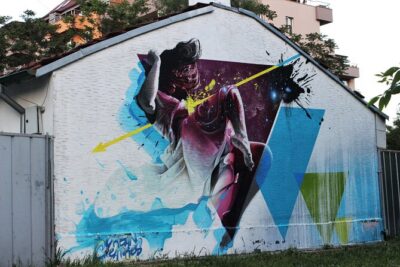
Calgary Street Art & Craft Beer 3 Hour Tasting Tour
Read our review →
Insider’s Atlanta Beltline Food & Street Art Tour
Read our review →Browse the lists this tour appears in