
REVIEW · BERLIN FOOD TOURS
Small-Group Berlin Sightseeing and Food Tour of Prenzlauer Berg and Mitte
Berlin tastes better on foot. This 4.5-hour small-group tour joins six food tastings with a serious look at the Berlin Wall, Nazi persecution, Jewish life, immigration, and modern café culture. I especially like the small maximum of 10 people and the mix of familiar Berlin bites with Middle Eastern, Jewish, Southern German, and dessert stops.
I also like that the route connects places many visitors would pass without noticing, from the Wasserturm area to Hackescher Markt’s courtyards. The main caution is the $301.20 price, which is high for a walking tour, and the route can change if a restaurant closes or staffing problems arise.
Key points before you book
- Six food tastings and four drink stops make this closer to a grazing lunch than a simple city walk.
- Berlin’s difficult past is part of the route, including the Berlin Wall Memorial, a former Nazi camp site, and the New Synagogue.
- Prenzlauer Berg and Mitte provide the main setting, with cobblestone streets, cafés, courtyards, and changing neighborhoods.
- A maximum of 10 people gives the guide room to answer questions and adjust the pace.
- Dietary needs can be arranged, including a vegetarian option, but you must mention them when booking.
- The route can change, as shown when a currywurst stop was replaced or an entire outing shifted to Kreuzberg.
Why this Berlin food walk works
Many Berlin food tours simply move from snack to snack. This one tries to explain why the food is here, who brought it, and how the city’s past shaped its present. That gives the meal stops more meaning, especially when you move from a traditional bakery to a Middle Eastern restaurant, a Jewish quarter tasting, and a modern dessert stop.
The tour begins near Senefelderplatz and finishes at Rosa-Luxemburg-Platz in Mitte. You cover a moderate amount of ground over four and a half hours, so comfortable shoes matter. Bring a rain jacket or poncho if the forecast looks doubtful. Berlin weather has little respect for carefully planned lunch schedules.
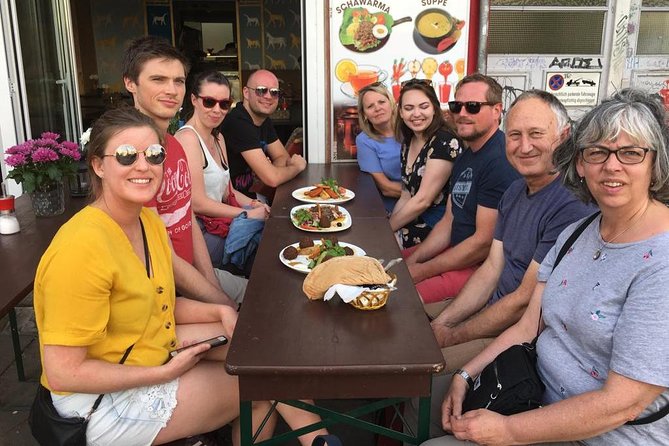
The small group is a real advantage. With no more than 10 people, you are not shouting questions over a crowd or waiting for a large party to squeeze into a café. Guides such as Dov, Tiago, and Emma have been praised for friendly conversation, personal restaurant connections, useful food explanations, and practical suggestions for the rest of a Berlin stay.
The route is offered in English. You do not need to be a serious food expert, but you should arrive hungry. Six tastings, drinks, and walking can add up to a substantial half-day meal.
A few more food tours in Berlin worth a look
- Berlin Center Food Tour with 8+ Authentic Local Tastings
★ 5.0 · 1,227 reviews - Kreuzberg: Culinary Food Tour
★ 4.5 · 770 reviews - Berlin: Mitte Culinary Food Tour
★ 4.5 · 447 reviews
Coffee first at The Barn on Schönhauser Allee
Your day begins with a coffee stop at THE BARN Schönhauser Allee Café. You can choose a morning coffee, cappuccino, or another drink, making this a gentle way to get oriented before the walking starts.
The stop is short, listed at about five minutes, so do not expect a long café session. Its value is more practical: you get a drink in hand, meet the guide, and begin with a look at Berlin’s barista culture. The café also sets the tone for the tour, which treats everyday food and drink as part of the city’s identity.
The stated meeting point is Schankhalle Pfefferberg at Schönhauser Allee 176, near the U2 area and Senefelderplatz. Check your confirmation carefully, since the meeting point and first café stop are presented separately.
The Berlin Wall Memorial gives the walk weight
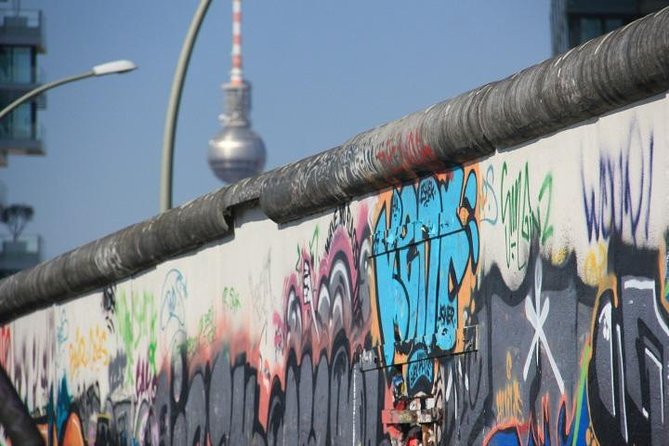
The Berlin Wall Memorial is the most substantial historical stop. You spend about 35 minutes learning how and why the Wall was built, hearing about escape attempts and survival, and considering what the divided city means in post-communist Berlin.
You can touch an original section of the Wall here. That physical contact helps turn an abstract political story into something immediate. The guide also connects the Wall to the former East and West, Soviet occupation, reunification, and the city you see today.
This is a good point in the tour for questions. A private guide can explain details at your pace rather than delivering a fixed speech to a large group. Guides are expected to add historical commentary as you walk, so the route is not just a succession of restaurant doors.
The subject matter is heavy, and the tour does not pretend that Berlin’s past is tidy. That balance is one reason the experience works better than a food walk with a few random historical facts added at the end.
Pastries and a Berlin butcher tasting
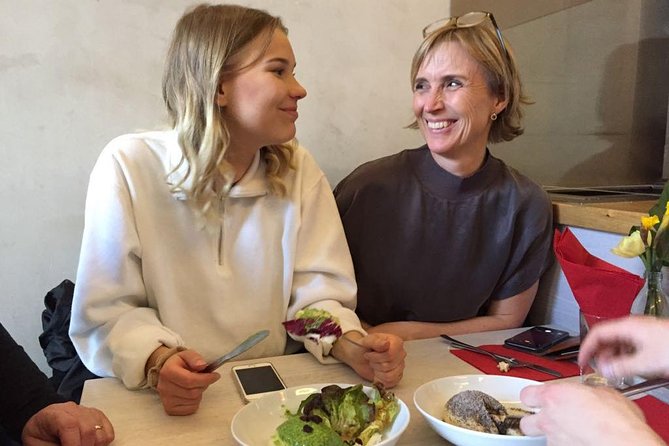
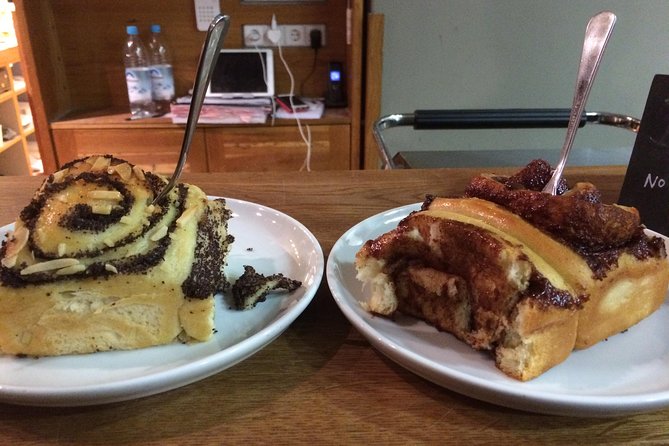
At Wiener Feinbäckerei Heberer, you try local pastries. The stop lasts about 15 minutes and gives you a simple introduction to regional bakery traditions. This is also a useful reminder that Berlin food is not limited to currywurst and beer.
Next comes Fleischerei, a Berlin butcher stop with a tasting described as particularly distinctive. The visit is short, around 10 minutes, so expect a sample rather than a full meal or sit-down lunch. The exact selection may vary, and a later review noted that one planned currywurst stop was closed, requiring a change in the schedule.
That flexibility matters. A food tour depends on independent businesses, and shops close, change menus, or run out of a planned item. The guide’s ability to replace a stop can protect the overall experience, but you should not book expecting every named dish to appear exactly as listed.
Vegetarians should contact the company before booking. A vegetarian option is available, but the tour needs advance notice to make sensible substitutions. Specific allergies and dietary requirements should also be provided at booking.
Same city, a different table:
- Berlin: Downtown Food Tour with 8 Authentic Local Tastings
★ 4.8 · 342 reviews - Berlin: Guided Street Food Tour with Tastings
★ 4.8 · 310 reviews - East Berlin Food & History Tour with Eating Europe
★ 5.0 · 204 reviews - Classic Bites and Culinary Trends Neighborhood Food Tour in Berlin
★ 5.0 · 191 reviews
The Wasserturm area and Berlin’s painful past

The Wasserturm Prenzlauer Berg stop introduces the site described as Germany’s first prisoner or concentration camp under the Nazi regime. The stop itself is brief, about five minutes, but the subject is important.
Because the visit is short, the guide’s explanation does much of the work. You are not spending hours at a formal museum here. Instead, the tour points out how a place in an ordinary neighborhood can carry a troubling past that is easy to miss while walking to lunch.
This is one of the tour’s strongest ideas: Berlin’s history is not locked away in one district or one museum. It appears beside apartment blocks, cafés, markets, and public squares. The contrast can be unsettling, but it gives the city a more honest shape.
The New Synagogue and the former Jewish Quarter
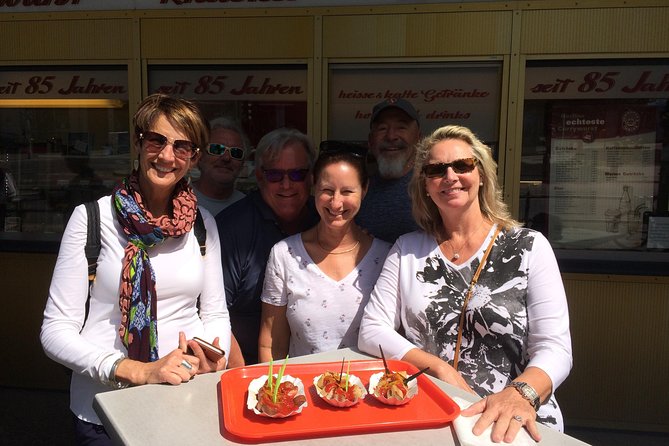
The route continues to the Stiftung Neue Synagoge Berlin, also called the Centrum Judaicum. The tour presents it as the only synagogue in Berlin to survive the Night of Broken Glass, the November 1938 attacks against Jewish people, homes, shops, and synagogues.
The stop lasts around five minutes, so this is an introduction rather than a full museum visit. Still, it connects the later food tastings to Jewish life in Berlin and to the former Jewish Quarter. The route does not treat Jewish culture as a decorative theme. It places the food within a story of persecution, survival, disappearance, and renewal.
At Schlomo’s Bagels, you get a tasting in the former Jewish Quarter. It is another short stop, about five minutes, but it helps link the neighborhood’s past with Berlin’s present-day food scene.
Do not expect a full guided visit inside every landmark. Much of the tour’s appeal comes from the movement between places, with the guide providing the context as you walk.
Yarok shows how immigration changed Berlin food
Yarok is one of the longer stops, at about 30 minutes. Here you learn about immigration in Berlin and its influence on contemporary city life while eating Middle Eastern dishes and drinking homemade cardamom tea.
This is likely to be one of the most satisfying food breaks because it offers time to sit, talk, and try several flavors rather than simply accepting a bite at a counter. The meal also gives the tour a broader view of Berlin. The city’s food culture is not only German, and the guide explains how migration helped shape what people eat today.
The review material describes generous portions at several stops, though you should still think of this as a series of tastings rather than a guaranteed restaurant lunch. One participant specifically praised the balance between eating enough to feel satisfied and walking enough not to feel overly full.
That is useful advice: skip a heavy breakfast. You will want room for pastries, meat or alternatives, Middle Eastern food, bagels, dessert, and drinks.
Dessert at Cuore di Vetro and the way to Mitte
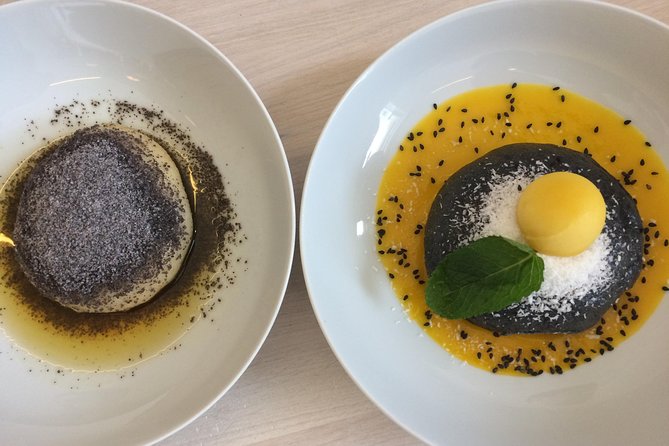
Cuore di Vetro provides a local dessert tasting, listed at about 10 minutes. After savory food and tea, this gives the tour a sweet finish. The route then continues toward Mitte, ending near Rosa-Luxemburg-Platz.
Along the way, you may explore the courtyards around Hackescher Markt. These cobbled passages and connected courtyards offer a change from Berlin’s broad streets and major monuments. They are best appreciated with a guide who can point out how the area has changed and how its shops, restaurants, and architecture fit into central Berlin.
The ending at Rosa-Luxemburg-Platz is practical for continuing your day. The U2 line is nearby, and you are positioned in Mitte rather than being returned to the starting point. That makes the tour easy to combine with an afternoon of sightseeing, provided you allow for possible timing changes.
Food, drinks, and the value of $301.20
At $301.20 per person, this is not a bargain food crawl. The price covers six food tastings, four drink stops, a guide, and a small-group walking experience lasting roughly four and a half hours. It does not cover BVG transport or hotel pickup and drop-off.
The value depends on how much you want from a guide. If you only want to sample Berlin snacks, you can spend far less by visiting bakeries, cafés, and markets on your own. If you want someone to connect the food with the Berlin Wall, Nazi persecution, Jewish history, immigration, and current city life, the price becomes easier to justify.
A private relationship between the guide and local businesses can also improve the experience. Dov was praised for taking a very small group to places that would be easy to overlook, while Tiago was praised for adjusting the schedule and offering recommendations for the rest of a six-day stay. Those personal touches are exactly what can make a costly tour worthwhile.
Still, the experience is not fully fixed. A currywurst venue was closed on one occasion, and one scheduled tour was moved to Kreuzberg because of staffing problems. Kreuzberg added a strong Turkish influence and included the East Side Gallery, but it was no longer the advertised Prenzlauer Berg and Mitte route.
That possibility is worth considering if you have set aside only one day for a particular neighborhood. Ask for an update if the route matters more to you than the general food and history format.
Who should book this experience?
I would choose this tour if you want a guided introduction to Berlin that combines eating with difficult but necessary history. It suits first-time visitors who want orientation, food lovers who enjoy variety, and anyone who prefers a small group to a large bus or crowded walking party.
It is also a good match if you are curious about how immigration shaped Berlin’s restaurants and neighborhoods. The food covers a wide range, including regional pastries, Southern German flavors, Berlin specialties, Middle Eastern dishes, bagels, desserts, coffee, beer, and other drinks.
You may want a different tour if you prefer long sit-down meals, a tightly fixed route, or a specialist historical tour with extended time inside museums and memorials. The food portions can be generous, but the format is still walk, taste, listen, and move on.
The tour is suitable for most people, and service animals are allowed. It involves a moderate amount of walking, so it may be less comfortable for anyone who needs frequent rest or finds cobblestones difficult.
Practical details that matter
The start time is 11:00 a.m., which makes breakfast a strategic decision. Eat lightly or not at all, since the tasting sequence is designed to carry you through the middle of the day.
The tour is mobile-ticketed and offered in English. BVG transport is not included, so bring or buy any public transport ticket you need for reaching the start or continuing after the finish.
Free cancellation is available if you cancel at least 24 hours before the local start time. Changes or cancellations inside that window are not accepted for a refund, and the experience requires a minimum number of participants. If that minimum is not met, you are offered another date or experience, or a full refund.
Should you book it?
Book this tour if you want Berlin food with a story, not just a list of snacks. The small group, flexible guides, wide range of tastings, and serious historical stops give it more substance than a standard eating walk.
At $301.20, I would reserve it only if the guide’s local knowledge and the combination of food and history are important to you. If you are happy exploring on your own, the price is hard to defend. If you have one half-day to understand how Berlin’s past and present meet at the table, it can be a strong use of your time.
FAQ
How long does the Berlin food and sightseeing tour last?
The tour lasts approximately four hours and 30 minutes.
Where does the tour begin?
The stated meeting point is Schankhalle Pfefferberg, Schönhauser Allee 176, 10119 Berlin. The route begins near Senefelderplatz U-Bahn station.
Where does the tour end?
The tour ends at Rosa-Luxemburg-Platz in Mitte, near the U2 train line.
What food is included?
The experience includes six food tastings. These can include regional pastries, Southern German dishes, a Berlin sandwich, Middle Eastern specialties, bagels, and dessert.
Are drinks included?
Yes. The tour includes four drink stops, including a morning coffee or cappuccino and a homemade cardamom tea stop. Craft beer and Berlin’s café culture are also part of the route.
Can vegetarian diets and allergies be accommodated?
Yes. A vegetarian option is available, and specific dietary needs or allergies can be accommodated if you provide the information when booking.
How many people can join the tour?
The tour has a maximum of 10 participants. BVG transport, hotel pickup, and hotel drop-off are not included.
Just added in Berlin
- East Meets West: Berlin Food Culture & Street Art★ 5.0 · 157 reviews
- Berlin Evening Culinary Tour – Award Winning★ 5.0 · 118 reviews
- The Berlin Culinary Experience: A Regional & Cultural Food Tour★ 5.0 · 79 reviews
- Classic Bites and Culinary Trends Neighborhood Food Tour in Berlin★ 5.0 · 191 reviews
- Private Tour: Daytime Food Tour Trends & Classics★ 5.0 · 24 reviews
- The 10 Tastings of Berlin Kreuzberg Private Food Tour With Locals★ 4.5 · 31 reviews
- Private Berlin Street Food Tour by Bike★ 5.0 · 87 reviews
- Food tasting tour in Berlin of HIDDEN GEMS (Small Groups)★ 4.5 · 60 reviews
Berlin Food Tours, compared.
Berlin Center Food Tour with 8+ Authentic Local Tastings
Read our review →
Downtown Food Tour with 8 Authentic Local Tastings
Read our review →
East Berlin Food & History Tour with Eating Europe
Read our review →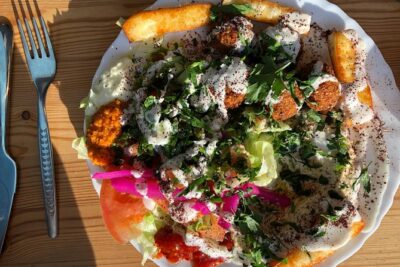
Classic Bites and Culinary Trends Neighborhood Food Tour in Berlin
Read our review →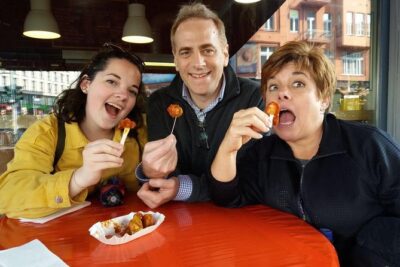
East Meets West: Berlin Food Culture & Street Art
Read our review →Browse the lists this tour appears in