
REVIEW · LISBON FOOD TOURS
Lisbon: Food and Culture 3-Hour Walking Tour
Lisbon tells its story one bite at a time. This three-hour walk links Portuguese food with the city’s past, taking you to up to five local venues for cod, pork liver, pastries, beer, coffee, and more. I like the small-scale contact with local cafés and taverns, and I especially like the stop inside a 17th-century Moorish palace. The main drawback is that the route is not suitable for people with mobility impairments.
You meet at Café A Brasileira in Chiado, close to the Baixa-Chiado metro station, then continue on foot with an English- or German-speaking guide. The $93 price is not cheap, but it includes lunch or dinner and four tastings, so you are paying for a guided meal as well as the food stops. Come hungry. The portions can add up quickly, especially if you skip breakfast.
Key points at a glance

- Five Lisbon food settings: Visit up to five venues, including an old brewery, historic tavern, famous café, and traditional pastry shop.
- Food tied to city history: Learn how Lisbon’s trade, religious buildings, regional customs, and café culture shaped what appears on the table.
- A real meal, not just nibbles: Lunch or dinner is included, along with four food tastings.
- South Portugal gets its own spotlight: Casa do Alentejo introduces the bread-and-herb cooking of the Alentejo region.
- Flexible final stop: Depending on the arrangement, finish with custard tart and coffee at Confeitaria Nacional or ginjinha and live fado at Amigos da Severa.
- Guides make a difference: Claudio, Nina, and Fatima have each been praised for warm storytelling, useful local tips, and an easygoing approach.
Starting at Café A Brasileira in Chiado
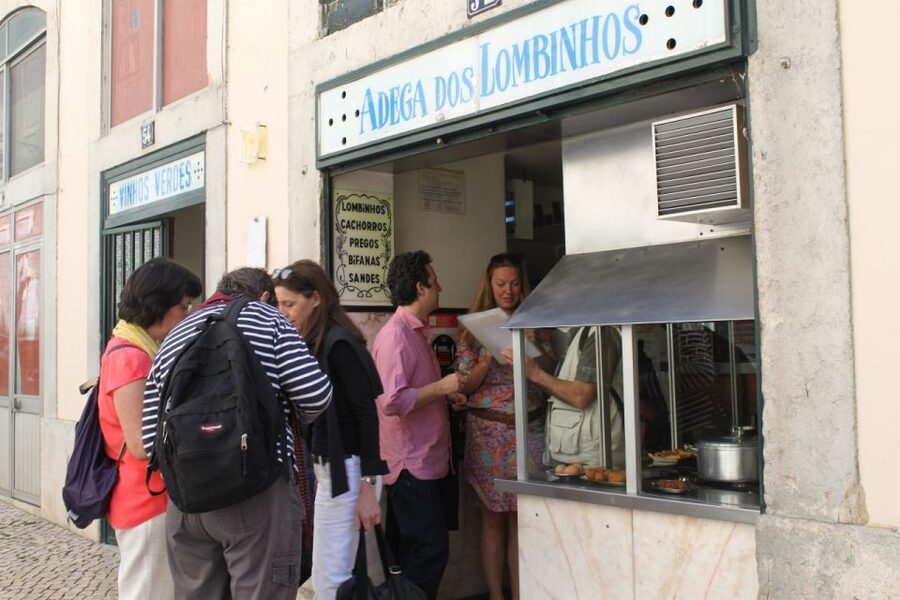
The meeting point is Café A Brasileira, at Rua Garrett 120, near the Baixa-Chiado metro station. That is a useful location because you can reach it easily by public transport, and Chiado gives the walk an immediate sense of place: old cafés, steep streets, elegant façades, and plenty of foot traffic.
The café itself is one of Lisbon’s best-known historic meeting places. The tour does not promise a tasting here at the start, so do not arrive expecting your first coffee and pastry. Instead, use the meeting point to find your guide, settle in, and begin learning how Portuguese food connects to Lisbon’s story.
The route is conducted in English or German. Past guide feedback gives you a sense of the tone to expect. Fatima has been praised for making the walk feel like an outing with a friendly local relative, while Nina has been singled out for clear storytelling and warm explanations. Claudio has also been praised for creating an authentic, relaxed atmosphere.
That personal quality matters on a food walk. You are not only being handed dishes and told their names. You can ask about other cafés, shops, and places to eat, and the guides have offered practical suggestions for the rest of a Lisbon stay.
A few more food tours in Lisbon worth a look
- Award-Winning Geneva Chocolate &Old Town Tour with Boat Ride (3h)
★ 5.0 · 3,721 reviews - Eat Like a Local: Venice 3-Hour Small-Group Food Tasting Tour
★ 5.0 · 3,137 reviews - Porto: 3-Hour Food Tour
★ 4.9 · 807 reviews
Rua das Flores Tavern and the old flavors of Lisbon
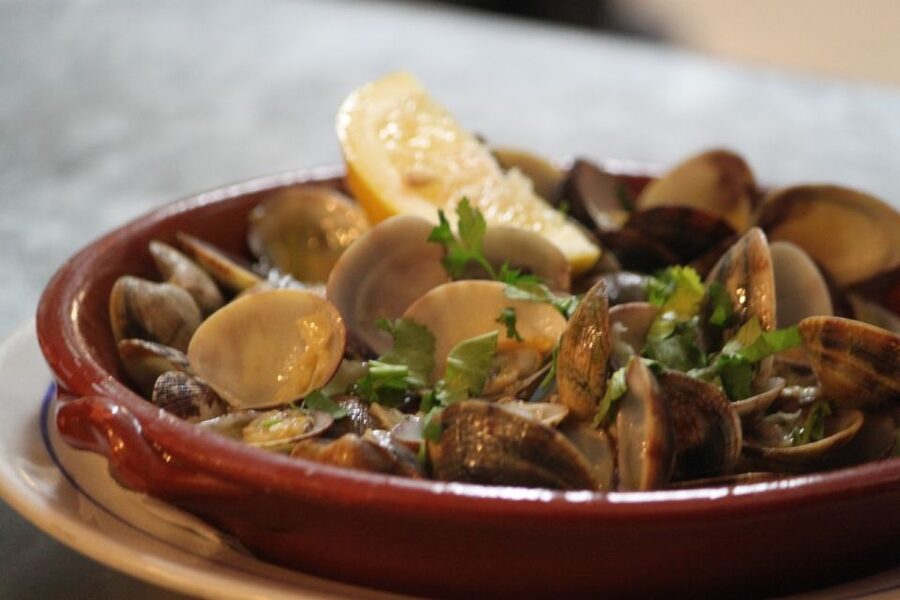
One of the most atmospheric stops is Rua das Flores Tavern. The setting is meant to feel like a step back in time, but the important part is the food: a short seasonal menu built around traditional Portuguese dishes.
The exact plate depends on the day. You might taste cod, tuna, or iscas, a well-known dish made with pork liver. This is one reason the tour feels more like a proper meal than a fixed tasting menu. Seasonal availability affects what appears, and you get a glimpse of what the kitchen is actually serving rather than a carefully isolated sample prepared only for tour groups.
Cod is central to Portuguese cooking, and this stop helps you understand why it appears so often on menus. Here, the lesson comes through a traditional tavern rather than a lecture. You see how a simple, familiar dish can carry a sense of place.
I would be glad to try the iscas, but it is worth knowing what you are getting before the plate arrives. Pork liver has a strong flavor and a softer texture than many visitors expect. If you are cautious with offal, ask your guide what is available that day. The tour includes several different foods, so one dish does not define the whole meal.
Trindade beerhouse in a former monastery
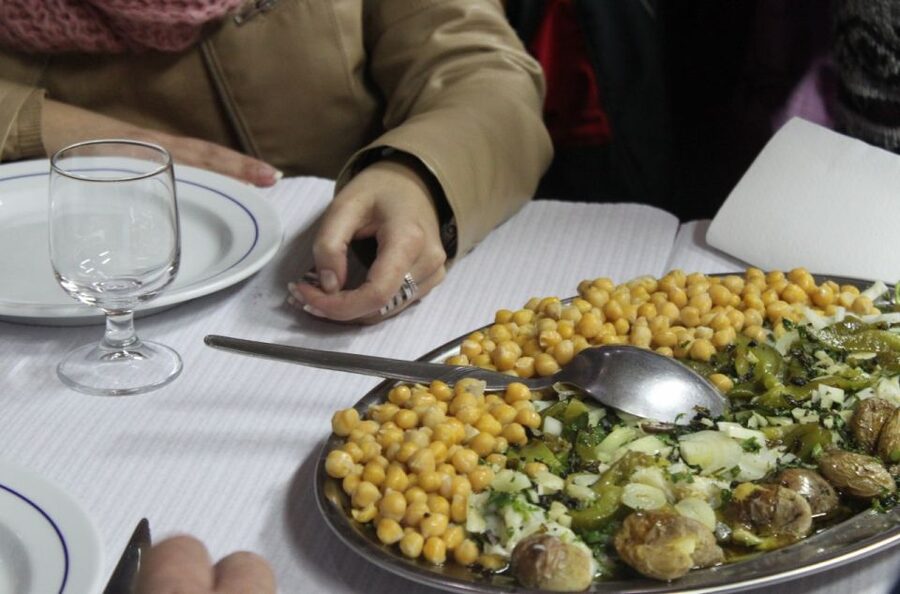
Next comes Trindade, described as the first Portuguese brewery and later converted into a restaurant. Its setting in a former monastery gives this stop more weight than a standard beer break. You are tasting in a building with a religious and brewing past, a pairing that feels very Lisbon.
The food here includes one of the city’s famous snacks: spat, octopus, and cod mixed with chickpeas and served with beer. The wording of the dish may sound unusual at first, but that is part of the fun. Portuguese cooking often combines seafood, legumes, bread, herbs, and preserved ingredients in practical, filling ways.
This stop is useful for understanding the difference between a full restaurant meal and the small plates people eat with a drink. The beer gives you a local pairing, while the cod, octopus, chickpeas, and spat bring several textures and flavors together.
If you are expecting a standard brewery tour, adjust your expectations. The experience is centered on the restaurant and tasting, not on a detailed production visit. Still, the building’s former monastery setting and brewing background provide a strong sense of context.
Pastéis Lisboa at Café Lisboa
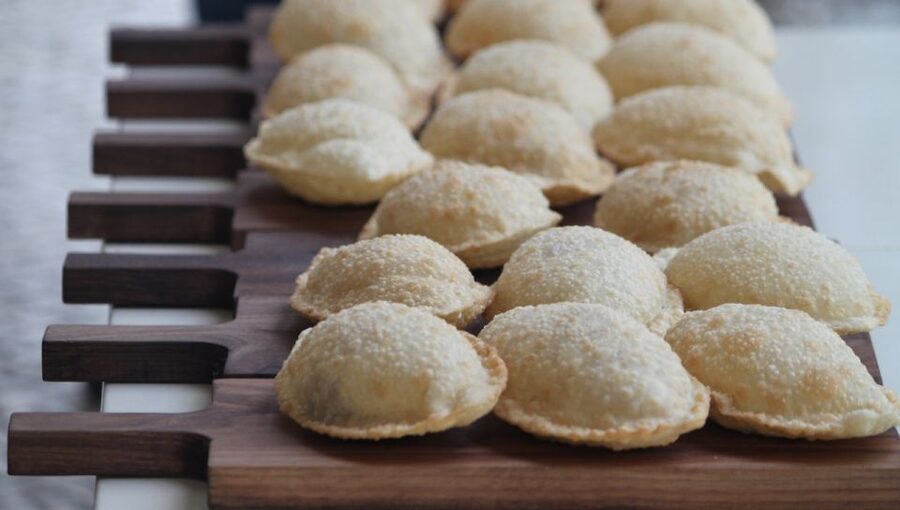
The pastry course arrives at Café Lisboa, where you taste a crumbly Pastel Lisboa. This is a welcome change of pace after savory food and beer. It also shows how Lisbon’s food culture moves easily between hearty dishes and delicate café sweets.
The description emphasizes the pastry’s crumbly texture, so you should expect something that breaks apart as you eat it. Keep a napkin handy. This is exactly the sort of small practical detail that helps on a walking tour, especially when you are trying to eat neatly while listening to a guide.
The stop is also a reminder that a pastry tasting is not just about sugar. Lisbon’s cafés have long been part of daily life, and a short pause over a cake can tell you as much about the city’s habits as a formal restaurant meal.
Because the tour already includes several savory tastings, this pastry may be more filling than it sounds. You do not need to arrive full, but you also do not need to worry about going hungry.
Same city, a different table:
- Winner 2025 Undiscovered Lisbon Food & Wine Tour by Eating Europe
★ 5.0 · 6,390 reviews - Lisbon: Food and Wine Small Group Walking Tour
★ 4.9 · 4,082 reviews - Lisbon Small-Group Portuguese Food and Wine Tour
★ 5.0 · 3,972 reviews - Lisbon: Baixa District Food Tour with Dinner and Drinks
★ 4.9 · 1,997 reviews
Casa do Alentejo and the food of southern Portugal
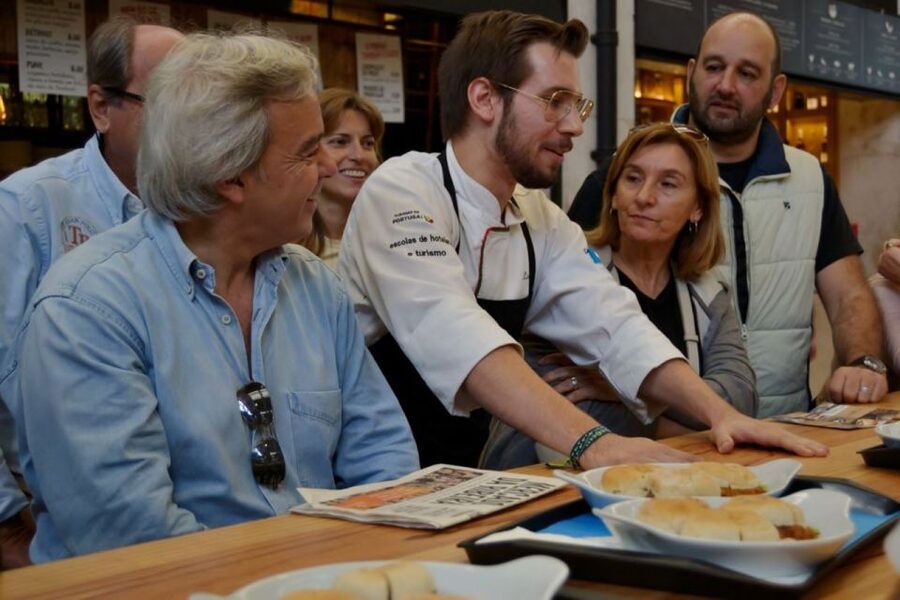
Casa do Alentejo is likely the visual high point of the walk. This 17th-century Moorish palace now houses one of Lisbon’s most elegant restaurants, with extravagant decoration that makes the setting memorable before you even taste anything.
The food here represents southern Portugal, especially the Alentejo. The main building blocks are bread and aromatic herbs. That combination reflects a style of cooking built around straightforward ingredients, strong seasoning, and filling dishes.
I like this stop because it broadens the focus beyond Lisbon itself. You are in the capital, but the plate gives you a window into another part of Portugal. Regional cooking can be easy to miss if you spend your whole visit eating only near the center, so this tasting adds useful context.
The palace setting also gives the meal a sense of occasion. At the same time, do not assume this is a long, formal dinner in a private room. It remains one part of a three-hour walking route, with other stops before and after it. Think of it as a carefully chosen taste of Alentejo in an impressive building.
Confeitaria Nacional or Amigos da Severa
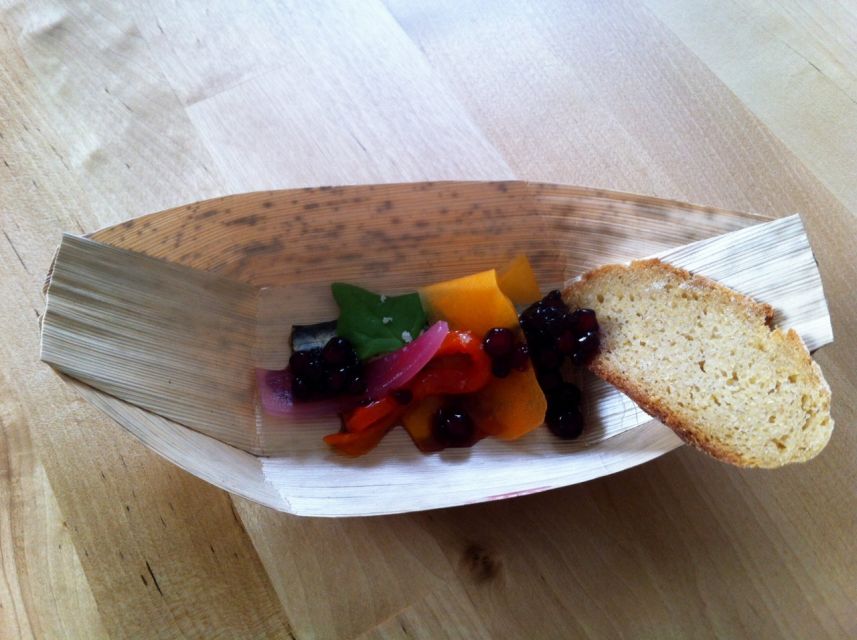
The final part of the experience may take one of two directions.
At Confeitaria Nacional, you visit Lisbon’s oldest establishment of its kind. The shop is known for traditional cakes and pastries, and the tasting includes one of its legendary custard tartlets with coffee.
This is a classic Lisbon finish. The tartlet and coffee combination is simple, familiar, and satisfying after the savory dishes earlier in the walk. Confeitaria Nacional also gives you a chance to see how long-running pastry traditions remain part of everyday city life.
The alternative is Amigos da Severa, an old tavern where you can hear live fado and drink ginjinha, Lisbon’s cherry liquor. This version adds music and a stronger evening feel. Fado is closely tied to Lisbon’s cultural identity, so ending with a song and a small glass of cherry liqueur can make the tour feel more personal than simply finishing with dessert.
You may prefer one option over the other. The pastry stop suits anyone who wants a classic café experience, while Amigos da Severa is the better match if live music and a tavern atmosphere matter more to you. The supplied details present these as alternatives, not guaranteed visits to both, so ask your guide which ending is planned.
How much food do you actually get?
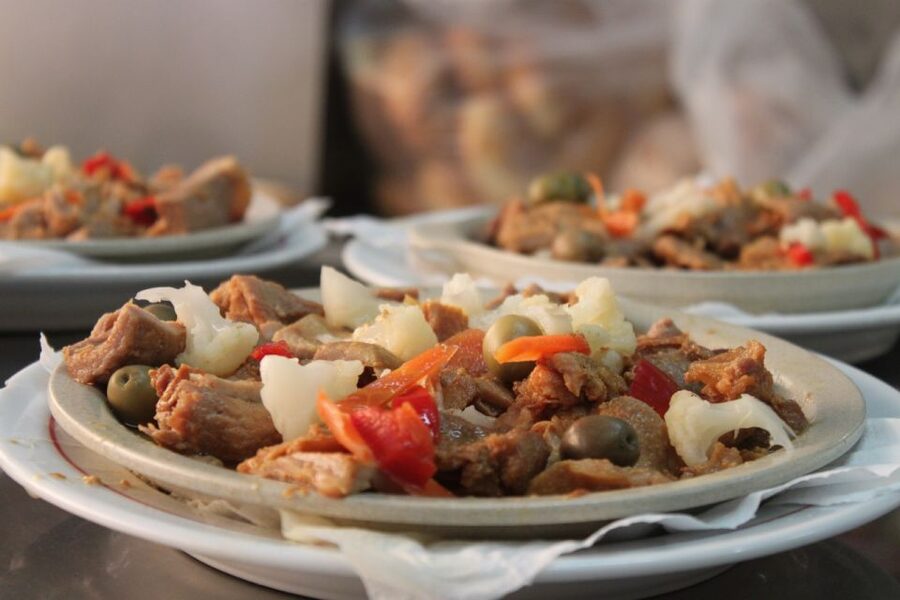
The tour includes lunch or dinner and four food tastings. It can be enough food to replace a meal, and one guide comment specifically noted that a person could feel full even without breakfast.
That does not mean every person will have the same amount or the same dishes. The tavern menu is seasonal, and the final stop may vary. Vegetarian, allergy, and dietary details are not specified, so you should raise any food restrictions before booking rather than assume substitutions are available.
The food is spread across up to five venues, which makes the pacing more comfortable than sitting down to one large meal. You get time to walk between tastings and let each course settle. Still, the combination of cod, octopus, chickpeas, beer, pastry, coffee, and possible ginjinha is substantial.
I would schedule this tour when you want it to serve as a main meal. Avoid booking it directly after a large lunch or dinner. If your appetite is modest, you may find the quantity more than you need, though you can simply taste smaller portions.
What the three-hour pace feels like
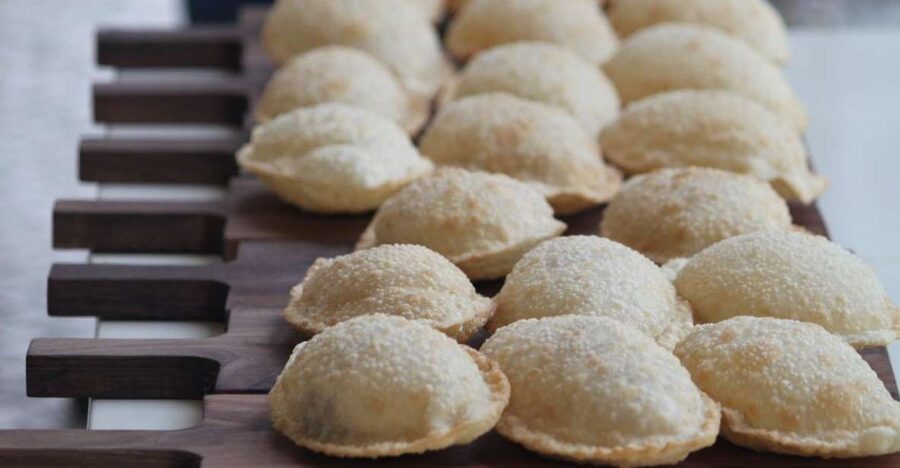
Three hours is long enough to cover several types of food without taking up half your day. It also leaves time for the guide to explain the connection between Lisbon’s history and its cuisine.
The walking is not described in exact distance terms, so comfortable clothing is the one stated requirement. You should also be ready for a city walk that includes several stops and may involve Lisbon’s uneven or sloping streets. The activity is specifically not suitable for people with mobility impairments.
The route stays in central Lisbon, beginning in Chiado and moving through historic food venues. Transfers to and from the meeting point are not included, so you need to make your own way to Café A Brasileira. The nearby Baixa-Chiado metro station makes that straightforward.
Group size is not specified. In practice, the guide’s style may depend on how many people attend. The personal comments about Fatima, Nina, and Claudio suggest that the guides are willing to answer questions and offer tips, but you should not assume every departure will be private. One person had Fatima all to themselves, which was described as especially fortunate, not as the normal format.
Is $93 a fair price?
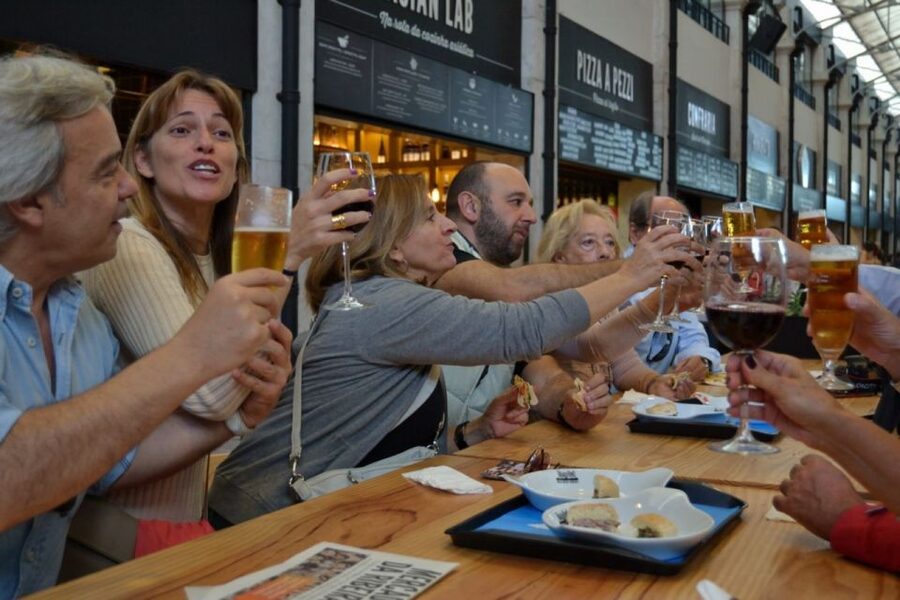
At $93 per person, this is a premium walking tour. You are not paying only for four samples. The fee includes a guide, lunch or dinner, the food tastings, access to several established venues, and the work of connecting those places into a coherent story.
The value is strongest if you would otherwise spend money on a separate meal and want help choosing where to eat. You also get a structured introduction to Portuguese food, rather than ordering unfamiliar dishes without knowing what they are.
The value is weaker if you prefer to eat independently, already know Lisbon’s traditional dishes, or want a budget food crawl. You could spend less by visiting cafés and taverns on your own, though you would lose the explanations, route planning, and local suggestions.
The guide can make or break the price. The strongest feedback focuses on guides who were friendly, informative, and authentic, with Claudio, Nina, and Fatima receiving particularly warm praise. If you enjoy asking questions and learning about places beyond the scheduled stops, you are more likely to feel the fee is justified.
Who should book this Lisbon food walk?
I would recommend it to first-time visitors who want a quick introduction to Portuguese food without spending days researching restaurants. It also suits families, couples, and small groups who like to ask questions while they eat.
It is a good choice if you want both food and cultural background. You will taste cod, octopus, chickpeas, pastry, coffee, and possibly ginjinha, while also visiting a former monastery, a historic brewery, an old tavern, a famous café, and a Moorish palace.
You may want to skip it if you need a fully accessible route, have strict dietary requirements that have not been confirmed, or dislike eating foods such as pork liver. It may also be too much if you prefer a single long restaurant meal over moving between several venues.
The tour is available in English and German. Free cancellation is available up to 24 hours before the start, and you can reserve now and pay later, which helps if your Lisbon plans are still shifting.
Should you book it?
Book this tour if you want Lisbon explained through food, not just sightseeing. The best parts are the variety of settings, the Alentejo tasting inside Casa do Alentejo, and the chance to finish with either a classic tart and coffee or fado with ginjinha.
I would choose it early in your Lisbon stay. The local restaurant and shop suggestions can help shape the rest of your visit, and the three-hour format gives you a useful first taste without taking over your day.
Skip it if you need guaranteed accessibility, a tightly fixed menu, or a low-cost snack tour. For everyone else, $93 buys a substantial meal, four tastings, and a friendly introduction to the food traditions behind central Lisbon.
FAQ
Where does the Lisbon food tour meet?
The meeting point is Café A Brasileira at Rua Garrett 120, Largo do Chiado, Lisbon. It is near the Baixa-Chiado metro station.
How long does the tour last?
The walking tour lasts three hours.
What languages are available?
The tour is offered with a live guide in English or German.
Is lunch or dinner included?
Yes. Lunch or dinner is included, along with four food tastings.
How many places will the tour visit?
The tour visits up to five different venues. These can include an old brewery, a famous café, a historic tavern, a pastry shop, and a traditional restaurant.
Is transportation included?
No. Transfers to and from the meeting point are not included. You need to make your own way to Café A Brasileira.
Is the tour suitable for people with mobility impairments?
No. The activity is listed as unsuitable for people with mobility impairments.
What happens at the final stop?
The final stop may be Confeitaria Nacional for a custard tartlet and coffee, or Amigos da Severa for live fado and ginjinha. The available option can vary.
Just added in Lisbon
- No Diet Club – Unique food tour in Lisbon with many Tastings★ 4.9 · 50 reviews
- Lisbon Small-Group Food & Wine Tour Eat & Drink like a Local★ 4.9 · 77 reviews
- Lisbon: Private Food Tour – 10 Tastings with Locals★ 4.8 · 73 reviews
- Lisbon: Portuguese street food cooking class with Drinks★ 4.9 · 37 reviews
- Lisbon: Private Food & Wine City Tour by Eco Tuk Tuk★ 4.8 · 21 reviews
- Lisbon Private Setúbal Region Wine Tasting Tour★ 4.9 · 149 reviews
- Food Tour: Portuguese wine & Tapas with Ginjinha Tasting★ 3.8 · 67 reviews
- Lisbon Food Tour: 10+ Tastings of Local Delicacies & Wines★ 4.8 · 57 reviews
3-Hour Experiences, compared.

Award-Winning Geneva Chocolate &Old Town Tour with Boat Ride (3h)
Read our review →
Eat Like a Local: Venice 3-Hour Small-Group Food Tasting Tour
Read our review →


Browse the lists this tour appears in