
REVIEW · FOOD WALKING TOURS
Manila: Sightseeing and Food Walking Tour with Tastings
Manila rewards curious eaters. This six-hour outing links Quiapo Market, Binondo Chinatown, and Intramuros, giving you a useful first look at the city through food, transport, and street life. I especially like the generous mix of tastings and the bamboo-bike ride through the old walled city. The main drawback is the pace: you will walk a lot, spend time outdoors, and face the heat and noise of central Manila.
The guides also earn strong praise. Jen, Grace, Eric, Dani, Eddie, and Stephanie are named in past feedback, with Jen receiving repeated approval for her energy, patience, and organization. I would choose this tour if you want a broad introduction to Manila rather than a slow visit to one district, but it is not a good fit for anyone with mobility limitations.
Key points to know before booking
- Quiapo starts the day with real street life: Expect a busy market, local shopping, food stops, and plenty of sights that do not feel staged for visitors.
- Binondo brings Filipino and Chinese flavors together: You taste local snacks, dumplings, hopia, fruits, desserts, and other small bites while walking through Chinatown.
- Transport is part of the sightseeing: The day may include a jeepney, tuk tuk or tricycle, and possibly the Pasig ferry, depending on the day’s arrangements.
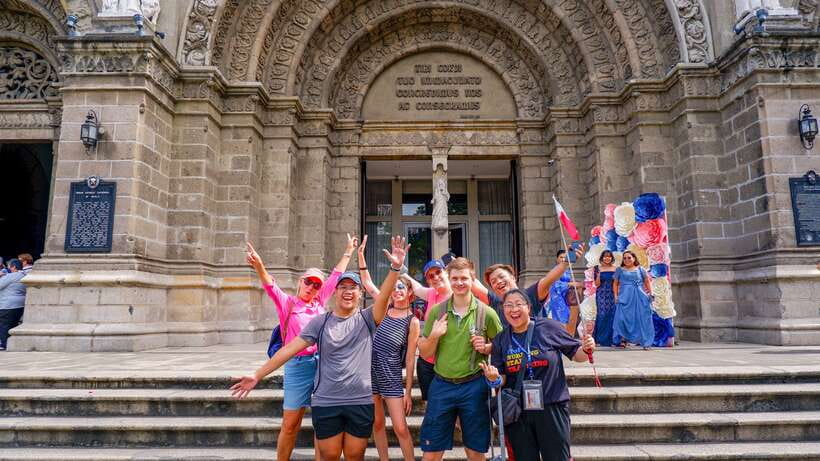
- Intramuros is explored by bamboo bike: This is an easygoing way to see Spanish-era churches, fortifications, viewpoints, and old streets.
- Six hours gives you range, not much downtime: The schedule runs from 9:00 a.m. to about 3:00 p.m., with food, walking, rides, and history packed together.
- The $58 price covers the main costs: Guiding, transport between sites, entrance fees, tastings, and the bicycle are included. Drinks are extra.
Why this tour works as a first day in Manila
Manila can be hard to read at first. It is not one tidy historic center, and the districts have very different moods. Quiapo feels intensely local, Binondo adds centuries of Chinese-Filipino trade and cooking, and Intramuros presents a more preserved colonial face.
This tour connects those pieces in one day. I like that you do not simply sit in a van and point at landmarks. You walk markets, use public transport, taste food in the places where it is sold, and then move into Intramuros on a bicycle. That gives you a practical sense of how the city fits together.
The price is $58 per person. That is fair value if you use the included food stops and transport. Buying several small dishes, paying entrance fees, hiring a guide, and arranging a bicycle separately could easily become awkward, especially on a first visit. You are paying partly for convenience and partly for someone who can explain what you are seeing.
The tradeoff is intensity. This is a full day with little room to drift. If you prefer lingering over lunch or taking long photographs, the schedule may feel brisk. If you have only a short stay in Manila, the range is a major advantage.
More food walking tours in the world:
- Reykjavik Food Walk – Local Foodie Adventure in Iceland
★ 5.0 · 18,952 reviews - New Orleans Food Walking Tour of the French Quarter with Small-Group Option
★ 5.0 · 6,118 reviews - Naples: Street Food Walking Tour with Local Guide
★ 4.9 · 4,976 reviews
Meeting at Quinta Market and entering Quiapo
The day begins at 9:00 a.m. in front of Quinta Market. This is an important detail: the tour does not begin at a hotel, and you need to reach the meeting point yourself. Arriving a little early gives you time to identify the guide and prepare for the first walk.
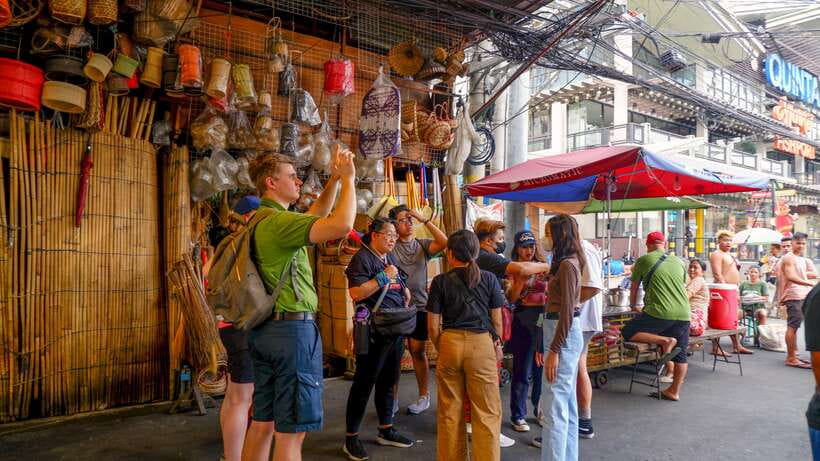
Quiapo Market is the right place to begin if you want an immediate sense of ordinary Manila. Vendors sell fresh noodles, produce, food, herbal remedies, and other everyday goods. The market is loud, crowded, colorful, and sometimes difficult to navigate. That is precisely why a local guide helps.
You can expect about two hours in Quiapo, including guided walking, shopping, and food tastings. The value here is not a checklist of famous buildings. It is the chance to see how people shop, eat, and move through a working market.
Wear comfortable clothing and shoes. Bring a hat and water, and keep your belongings secure in crowded areas. The tour information specifically recommends carrying a passport or identification card, with a copy accepted. You should also expect heat, street noise, uneven walking conditions, and narrow passages.
This section may be the most revealing part of the day, but it can also be the least polished. Do not expect a calm food hall or a neat line of stalls. Quiapo is busy and sensory-heavy. That is a feature for some people and a strain for others.
Binondo Chinatown and the business of small bites
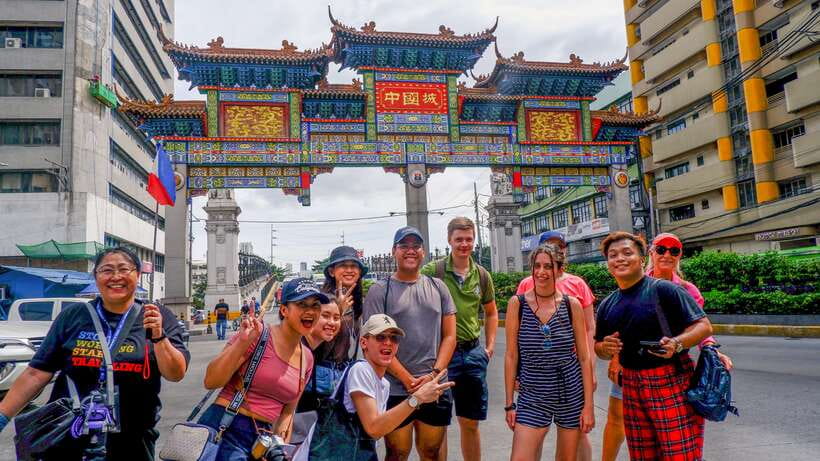
From Quiapo, the route continues toward Binondo, widely recognized as the oldest Chinatown in the world. The walking section is listed at about 30 minutes, though the overall movement through this district can feel longer once stops and tastings are included.
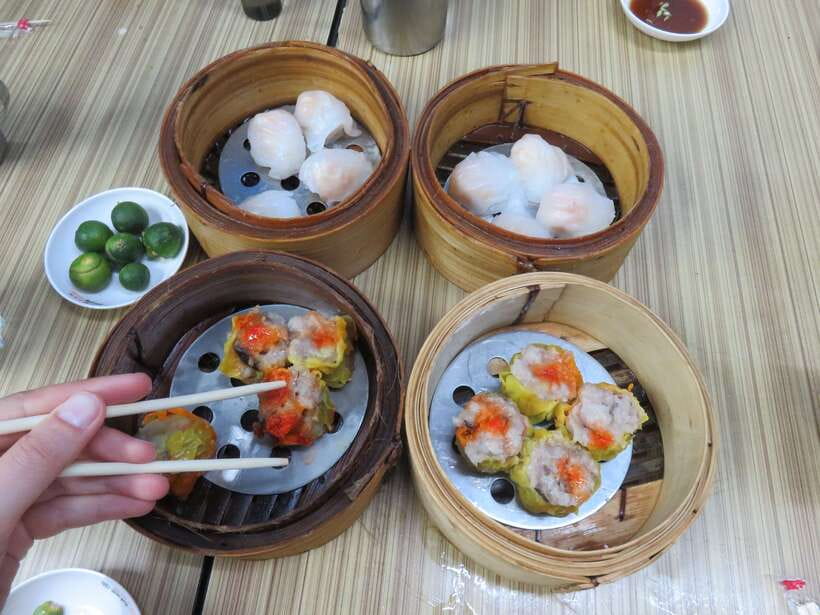
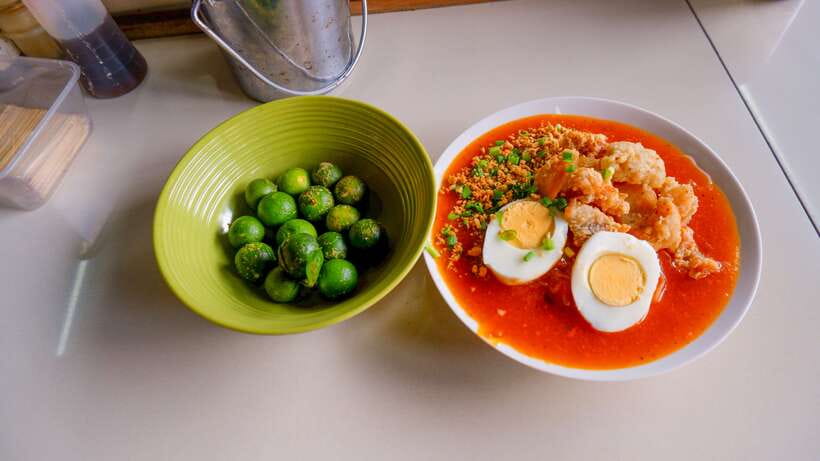
Binondo is valuable because food here tells a story of exchange. Filipino and Chinese traditions meet in snacks, pastries, dumplings, noodles, and sweets. You may taste dumplings, hopia, fruits, desserts, and other local favorites. One particularly memorable item noted in the feedback is cheese ice cream, an unusual flavor for many first-time visitors.
Do not expect one large sit-down meal. This is a grazing-style food walk. You try several smaller portions while continuing through the streets. That gives you more variety, but it also means you should not arrive expecting a long lunch break.
The guide’s role matters here. A food name alone does not tell you how it is eaten, where it comes from, or why it matters in Manila. Guides such as Jen and Grace are praised for explaining both the food and the surrounding culture. They also help you decide what to try and keep the group together in narrow areas.
Some parts of Chinatown may feel cramped and confusing. That is normal for this type of walk. If you want a quiet, polished setting, Binondo may test your patience. If you want to see a working district and sample several foods without planning every stop yourself, it is one of the day’s strongest sections.
Local transport: jeepney, tuk tuk, and possible surprises
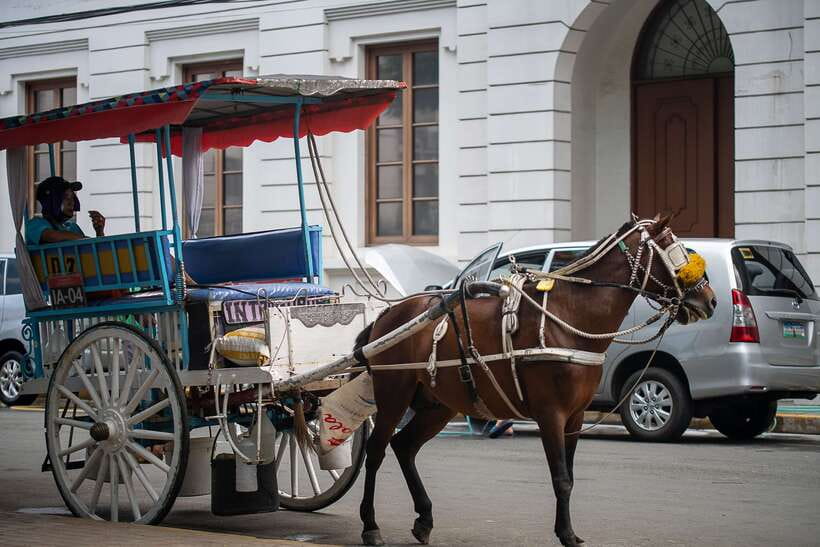
The transfer to Intramuros is part of the attraction. The planned outline names a jeepney ride to Intramuros at about 12:30 p.m., while the detailed schedule also lists a 30-minute tuk tuk segment. Past descriptions include jeepneys, tricycles, and, on some outings, a ride on the Pasig ferry.
That variation is worth noting. You should expect local transport to be part of the day, but you should not assume every departure will use every vehicle. Traffic, route conditions, and the day’s plan can affect the exact combination.
A jeepney ride gives you a short lesson in Manila’s everyday transport system. One past participant specifically appreciated learning how much the ride costs, how to pay, and how to communicate with the driver. That practical instruction is more useful than simply taking a tourist shuttle.
The transport can be crowded and warm. It is not designed for maximum comfort, and it may not suit someone who needs easy boarding or extra space. Still, this is one reason the tour feels connected to daily Manila rather than sealed off from it.
If your departure includes the ferry or a tricycle, treat that as a bonus rather than a guaranteed feature. The core promise is transportation between the sites, with a jeepney highlighted in the main description.
A few more food tours in the world worth a look
- Ho Chi Minh City Street Food Tour & Sightseeing By Motorbike
★ 5.0 · 9,413 reviews - Tokyo: Shinjuku Food Tour (13 Dishes at 4 Local Eateries)
★ 5.0 · 6,603 reviews - Winner 2025 Undiscovered Lisbon Food & Wine Tour by Eating Europe
★ 5.0 · 6,390 reviews - Hanoi: Guided Food Tour with Train Street Visit
★ 4.9 · 6,239 reviews
Cycling through Intramuros on a bamboo bike
The afternoon belongs to Intramuros, Manila’s old walled city. The tour reaches this district around 1:00 p.m. and spends about an hour and a half on a guided bike tour.
The bicycles are traditional bamboo bikes, which make the ride feel distinctive without turning it into a hard athletic activity. You pass Spanish-era churches, fortifications, old streets, viewpoints, and less obvious corners of the district. The pace is designed for sightseeing, not speed.
I like this choice of transport. Intramuros can feel spread out on foot, particularly after a morning of markets and food. A bicycle lets you cover more ground while keeping you close to the streets. You can stop for photographs and hear the guide explain the buildings and the role of the walled city in Philippine history.
The bike section is also where the tour shifts mood. Quiapo and Binondo are crowded, commercial, and immediate. Intramuros is more open and oriented toward historic landmarks. Seeing both sides in one day gives you a better sense of Manila than spending the whole outing in only one type of setting.
You should still be prepared for sun and exertion. The tour is not suitable for people with mobility impairments, and the day includes substantial walking even before the cycling begins. If you are comfortable walking and riding at a relaxed pace, this should be a pleasant finish. If you want a completely passive sightseeing day, choose something else.
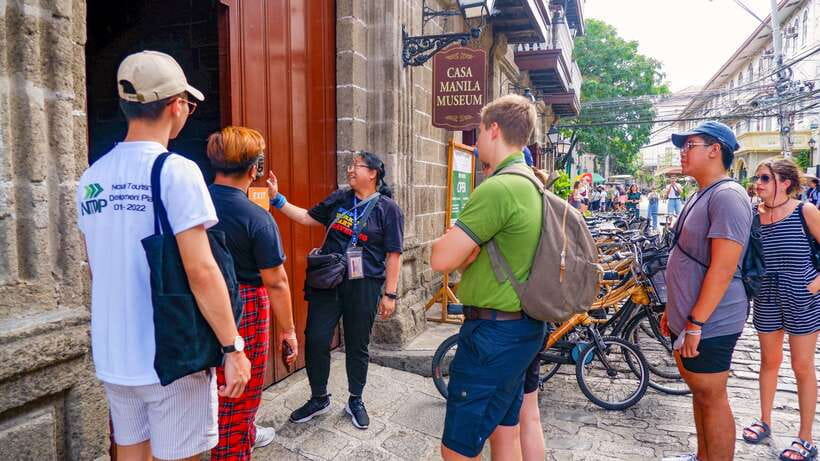
The scheduled end is around 2:30 p.m. at Casa Manila. That gives you a clear endpoint in Intramuros rather than returning you to the original meeting point. Plan your onward transport from there.
The guides make the packed schedule work
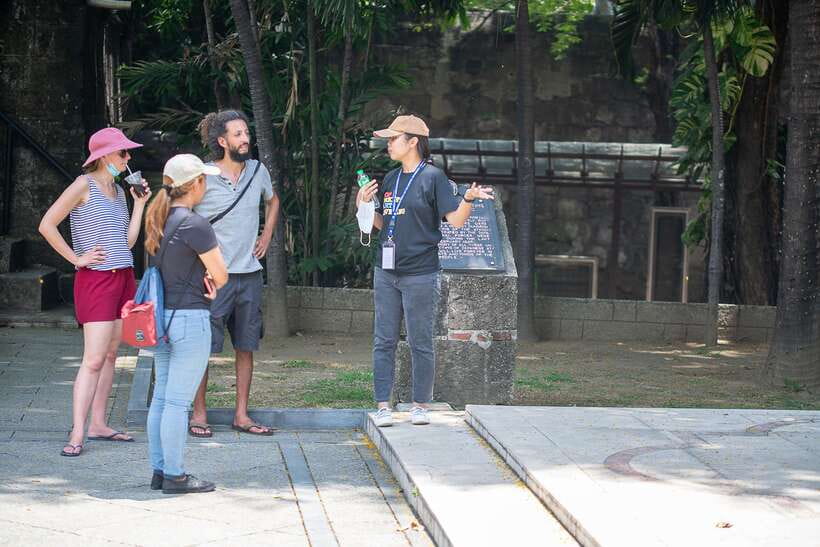
The strongest repeated praise goes to the guides. Jen is especially singled out for being funny, patient, well organized, and full of useful information. Eric is praised for setting out the day clearly and keeping it on time. Grace and assistants Dani, Eddie, and Stephanie also receive strong approval for helping groups through the busy route.
That matters because this tour has many moving parts. You are not only listening to a talk. You are crossing markets, ordering or sampling food, boarding local transport, finding your way through Chinatown, and switching to bicycles in Intramuros.
A good guide keeps the day from becoming a blur. The feedback points to guides making time for water, restrooms, questions, and photographs. That is important in Manila’s heat, especially when you are eating several times and moving through crowded streets.
The experience is offered with an English-speaking guide, and a private group is available. A private departure could be useful for families or groups that want more control over the pace. The standard format is better for meeting other people and keeping the price reasonable.
Food, comfort, and what to bring
Food is included, but drinks are not. Bring water from the start, and plan to buy more during the day if needed. The tour information recommends a hat, comfortable clothes, and identification.
The tastings are one of the best reasons to book this outing. You get more than a single famous dish. The route may include savory snacks, dumplings, noodles, fruits, pastries, desserts, hopia, and cheese ice cream. The exact selection can vary, so think of it as a guided sample of Manila’s food culture rather than a fixed menu.
Food allergies and strong dietary restrictions are not addressed in the supplied details. If this matters to you, ask the operator before booking. Do not assume every tasting can be changed.
The amount of food appears generous enough that you may not need a separate lunch, but it is still made up of small stops rather than one formal meal. The combination of heat, walking, and frequent tastings can be tiring. Take advantage of the breaks instead of trying to keep pace without water.
Who should book this six-hour Manila tour?
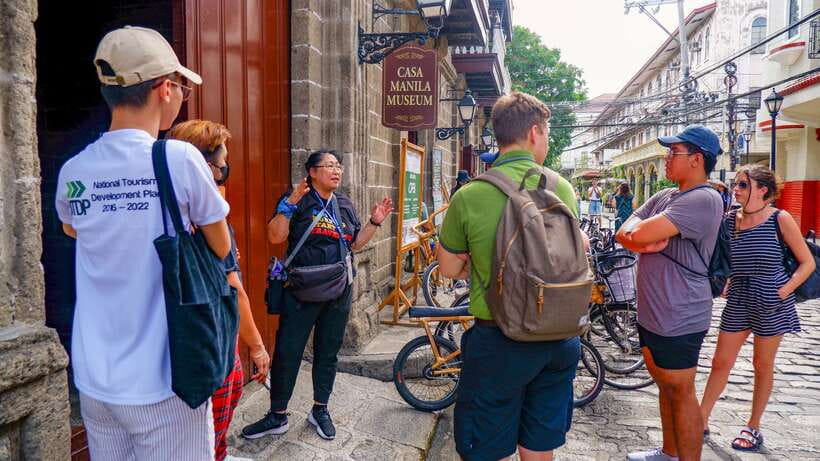
I would recommend it to first-time visitors who want context quickly. It is also a good choice for families with older children, active couples, and anyone who wants food and transport woven into a history tour.
It works especially well for a short Manila stay. In one morning and afternoon, you see Quiapo, Binondo, and Intramuros, while also trying several foods and using local forms of transport. That is a lot of ground without requiring you to plan separate taxis, food stops, and tickets.
I would hesitate if you dislike crowds, walking, heat, or spontaneous street conditions. This is not a quiet museum tour. It is also not suitable for people with mobility impairments, and the busy Chinatown streets may be challenging even for some confident walkers.
The tour has a 4.7 rating from 68 reviews, with repeated praise for the food variety, organization, guide quality, and transport experiences. The most useful pattern is not simply that people enjoyed it, but that the day seems to deliver a wide range of activities without long periods of waiting.
Booking advice and final verdict
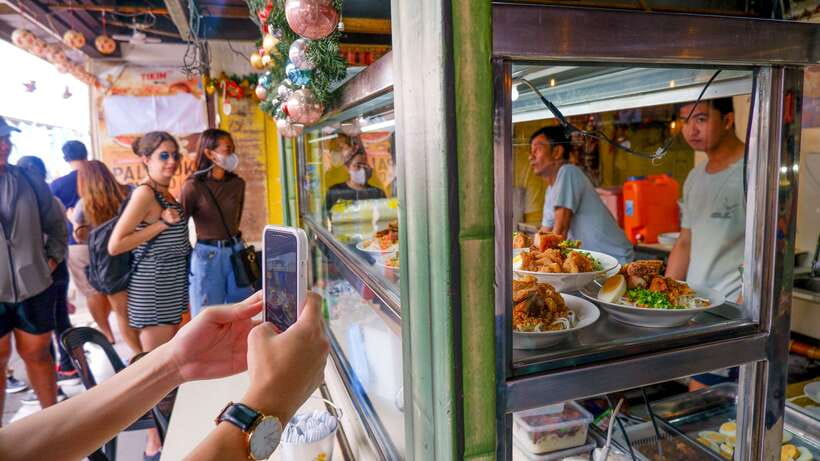
Book this tour if you want Manila explained through its markets, food, streets, and history. The $58 cost is sensible because it includes the guide, transport between sites, entrance fees, food tastings, and the bamboo bike.
Before booking, be honest about your stamina. You will walk a lot, ride local transport, spend time outdoors, and cycle in Intramuros. Bring water, wear practical shoes, and leave room for a full six-hour day.
I would choose this as an early Manila activity, especially if your time is short. It gives you enough background to make later independent exploring easier. Skip it only if you want a slow, private, or highly comfortable day. For an active introduction to the city, this is a well-planned and unusually varied choice.
FAQ
Where does the tour meet?
The meeting point is in front of Quinta Market in Manila. A Google Maps pin is provided for the location.
How long does the tour last?
The experience lasts about six hours. It is scheduled to begin at 9:00 a.m. and end around 3:00 p.m., with the Intramuros portion ending at about 2:30 p.m.
Which areas does the tour visit?
The route includes Quiapo Market, Binondo Chinatown, and Intramuros.
Is food included?
Yes. Food tastings are included, with stops in Quiapo Market and Binondo Chinatown. Drinks are not included.
Is transportation included?
Yes. Transportation between the main sites is included. The tour highlights a jeepney ride, and the detailed schedule also lists a tuk tuk segment. Some outings have included other local transport such as a tricycle or Pasig ferry.
Is the bicycle included?
Yes. A bicycle is included for the Intramuros tour, specifically a traditional bamboo bike.
What language is the tour offered in?
The live guided tour is offered in English.
What should I bring?
Bring a hat, water, comfortable clothes, and a passport or identification card. A copy of your identification is accepted.
Is the tour suitable for people with mobility impairments?
No. The experience is listed as unsuitable for people with mobility impairments because it includes substantial walking, local transport, and cycling.
Just added in the world
- Private Chicago Food Tour with Deep Dish and Beef Sandwich★ 5.0 · 61 reviews
- River North Food Walking Tour★ 4.5 · 88 reviews
- Chicago Food Tour: Taste the City’s Most Iconic Eats★ 5.0 · 111 reviews
- Chicago’s West Side Foodie Ride Bike Tour★ 5.0 · 112 reviews
- Motorbike Food Tour in Chiang Mai★ 5.0 · 54 reviews
- Old Town Chiang Mai Food Tour with 10+ Local Dishes Tastings★ 5.0 · 21 reviews
- Go where the locals go, Eat what the locals eat! Food Tour with Local Foodies★ 5.0 · 138 reviews
- Food Trail Through Sowcarpet Market: A Taste of Chennai★ 5.0 · 38 reviews
Food Walking Tours, compared.
Reykjavik Food Walk – Local Foodie Adventure in Iceland
Read our review →
New Orleans Food Walking Tour of the French Quarter with Small-Group Option
Read our review →

Savannah First Squares Culinary & Cultural Walking Food Tour
Read our review →
Guided Food Walking Tour with Wine in Trastevere
Read our review →
Trastevere & Campo de Fiori Street Food Walking Tour
Read our review →Browse the lists this tour appears in