
REVIEW · ROME FOOD TOURS
Rome Food Tour in the Historic Centre with 8+ Food Tastings
Come hungry, leave happily full. This three-hour walk pairs eight or more Roman tastings with stories about Piazza Navona, the Jewish Ghetto, Campo de’ Fiori, and ancient ruins. I like the generous menu, especially the two pastas, two types of homemade pizza, supplì, cannoli, and artisanal gelato. I also like the small group limit of 12, which gives the guide room to answer questions.
The main drawback is the amount of food and walking packed into a short tour. You may finish very full, and hot weather can make the route tiring. The menu and stops can also change with weather, availability, or other local conditions, so you should treat the published food list as a strong guide rather than a fixed promise.
Key points at a glance
- Eight or more tastings: Expect pizza, supplì, cold cuts, cheeses, two Roman pastas, cannoli, gelato, and a secret dish.
- A walk through central Rome: The route connects Piazza Navona, Campo de’ Fiori, the former Jewish Ghetto, and Largo di Torre Argentina.
- Small-group format: A maximum of 12 people keeps the experience more personal than a large bus-style outing.
- Guides make the difference: Massimiliano, Rocio, Luda, Robbie, Eduardo, Federico, and Manuel have all been praised for humor, food knowledge, and local stories.
- A substantial meal: This is not a few token samples. Several people needed no meal afterward.
- Good first-day choice: The combination of food, orientation, and Roman history helps you get your bearings early in a visit.
Starting at Piazza Navona
The tour begins at Sant’Agnese in Agone, at Piazza Navona. This is a practical meeting place because the square is easy to recognize, central, and packed with visual interest before you even take your first bite.
Piazza Navona follows the shape of an ancient Roman stadium. Today, it is framed by Baroque buildings, fountains, cafés, and restaurants. Your guide uses the square to connect Rome’s past with its eating habits, a useful approach in a city where streets, buildings, and dishes often carry several layers of history.
The square includes the famous Fountain of the Four Rivers, with its obelisk and dove. You should have time to look around, but this is a food walk rather than a formal monument tour. The listed stop allows about 20 minutes, so expect a brief introduction and orientation rather than an extended art lecture.
The food begins here or nearby, depending on the day’s arrangement. Starting with pizza is a smart move. It gives you an early taste of Rome’s casual eating culture before the route moves toward more traditional dishes.
More history tours in Rome:
- Rome: Food Tour of the Historic Center with Rooftop Spritz
★ 4.7 · 43 reviews - Barcelona: Tapas Walking Tour with Food, Wine, and History
★ 4.8 · 4,261 reviews - Sevilla Food Tour: Tapas, Wine, History & Traditions
★ 5.0 · 3,468 reviews
Pizza, supplì, and the Roman way to snack
Two different types of homemade pizza are included. That detail matters because pizza in Rome is not one single thing. The exact styles are not specified, so you should expect variation according to the chosen shop and day. The point is to compare textures and toppings while learning how Roman pizza fits into everyday life.
Supplì is another essential stop. This fried rice croquette usually contains tomato-seasoned rice and mozzarella, though the exact filling can vary. It is classic Roman street food: portable, inexpensive, filling, and best eaten hot.
I like this part of the tour because it gives you foods you might otherwise overlook while rushing between major sights. Pizza and supplì are not merely convenient snacks. They show how Romans eat between errands, work, and social time.
The food is served in several locations rather than at one long restaurant meal. That keeps the walk moving, but it also means you may sometimes eat standing or in a compact shop. If you prefer a quiet, seated lunch, this format may feel busy.
Palazzo Farnese and the route toward the Ghetto
One stop is Palazzo Farnese, a major High Renaissance palace that now houses the French embassy in Italy. You may not enter the building, but its presence gives the guide a chance to explain how Rome’s streets are filled with working institutions as well as ancient monuments.
From here, the tour heads through a part of the city where the food story becomes more closely tied to community and memory. The walking is part of the meal. You are not simply being transported between restaurants. You are seeing how central Rome changes from grand ceremonial squares to smaller streets and neighborhood businesses.
The route also includes remains of an ancient walkway built in the second century BC to connect two Roman temples. These fragments can be easy to miss without someone pointing them out. That is one of the practical strengths of this tour: food gives you a reason to slow down, while the guide helps you notice details that can disappear into the city’s busy streets.
Roman pasta and the former Jewish Ghetto
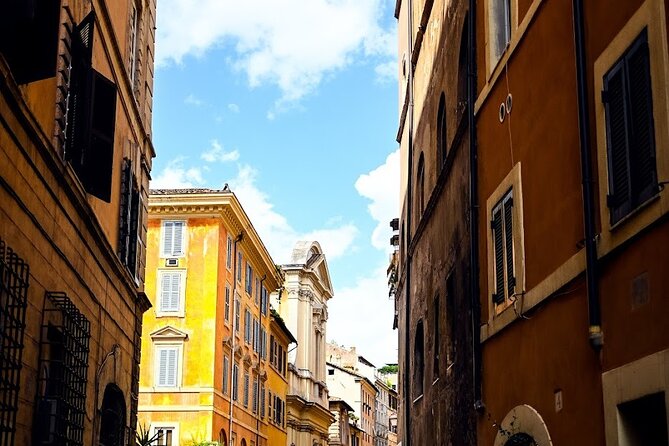
The tour passes through Rome’s former Jewish Ghetto in the Rione Sant’Angelo. Established in 1555, this area has a difficult past and a distinct cultural identity. It is also closely tied to Roman cooking, making it a fitting setting for the pasta portion of the tour.
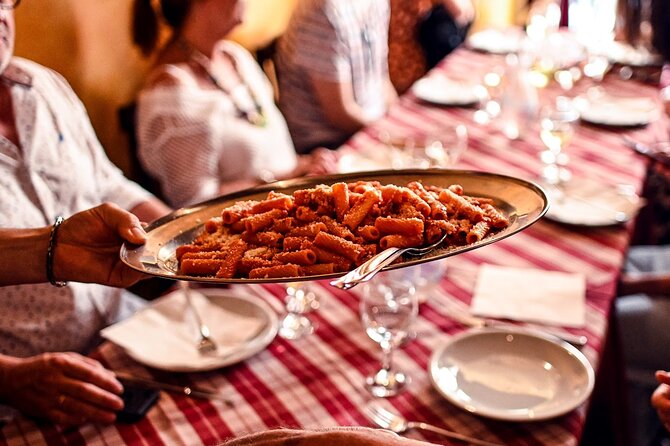
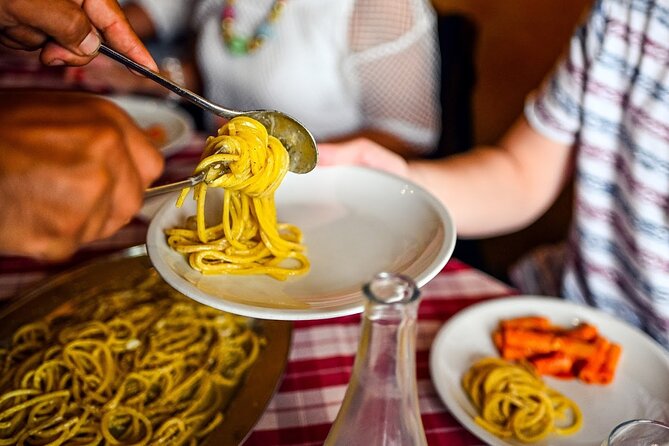
Two Roman pastas are included. The exact choices are not stated, and the menu can change, but the experience is designed to introduce you to the city’s most familiar pasta traditions. You may taste dishes built around combinations such as cheese, pepper, tomato, or cured pork, depending on what is being served that day.
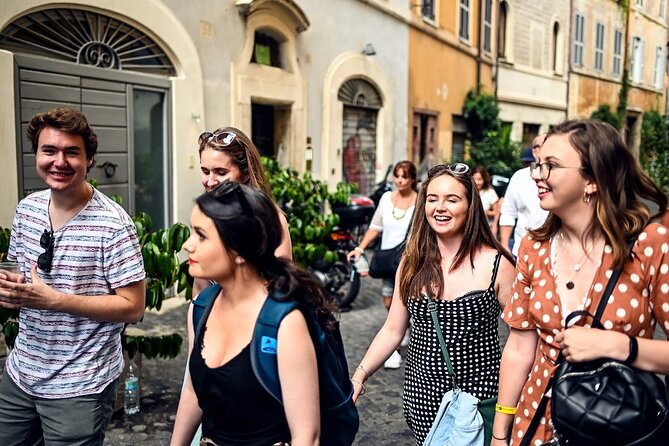
This is where a good guide adds real value. Massimiliano was repeatedly praised for explaining both the dishes and the city around them. Rocio was described as funny and engaging, while Luda was friendly and informative. Other guides named in the experiences include Robbie, Eduardo, Federico, and Manuel. The strongest pattern is not one fixed personality, but a team that uses food to explain Roman culture in clear, entertaining English.
The Ghetto section also makes the tour more than a checklist of famous dishes. You get a sense of how food changes from one neighborhood to another, and why local context matters. I would pay close attention here, especially if you are new to Roman cooking.
A few more food tours in Rome worth a look
- Winner 2025 Rome Twilight Trastevere Food Tour by Eating Europe
★ 5.0 · 5,157 reviews - Rome: Street Food Tour with Local Guide
★ 4.8 · 4,077 reviews - Rome Food Tour: Unlimited Tastings with Fine Wine & Barolo
★ 5.0 · 3,365 reviews - Rome Food Tour: Campo de’ Fiori, Ghetto, Trastevere Winner 2024
★ 5.0 · 3,205 reviews
Cold cuts, cheeses, and the secret dish
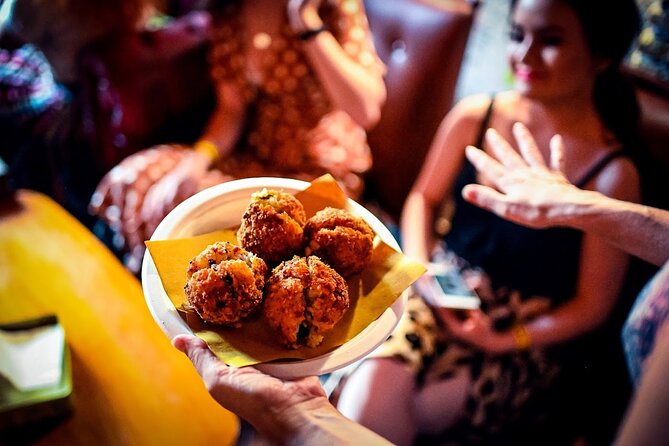
Italian cold cuts and cheeses add a slower, more social part to the route. This tasting gives you a break from fried snacks and pasta while letting you compare several flavors in one sitting.
The exact selection is not listed. That is useful to remember if you have strong preferences or dietary restrictions. The secret dish is also intentionally unspecified. It can be a fun surprise, but anyone who needs to know every ingredient in advance should ask the operator before booking.
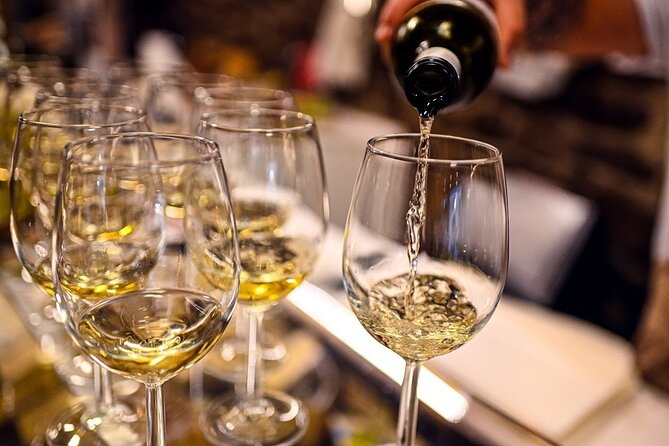
Some sessions have included drinks such as wine, coffee, or other beverages, but the published inclusions do not promise a specific drink menu. The minimum drinking age is 18. Do not book this tour for the drinks alone, but you may find them paired with some tastings.
The portions appear to be generous. Several accounts describe finishing the tour very full, and one person called the quantity of food insane. That is good value if you see the experience as lunch plus a guided walk. It is less ideal if you want only light grazing before a later restaurant reservation.
Campo de’ Fiori and Largo di Torre Argentina
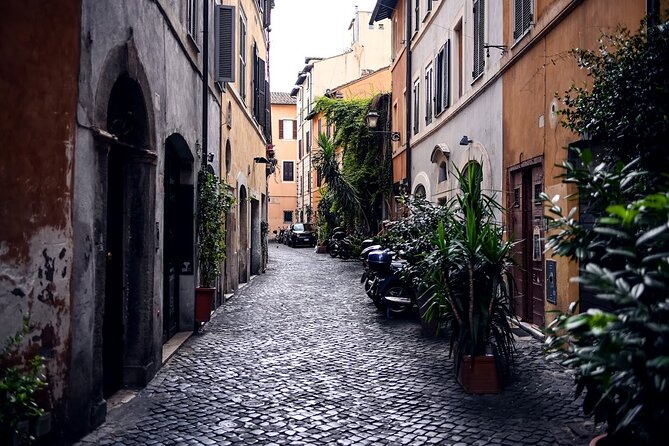
The route includes Campo de’ Fiori, the rectangular square south of Piazza Navona. Its name means field of flowers, a reminder that central Rome has not always looked as built-up as it does today.
The square is a natural place to talk about food shopping, public life, and the difference between a market setting and a sit-down trattoria. The tour does not promise a market visit or a particular vendor, so keep expectations focused on the walking route and tastings.
The final area is Largo di Torre Argentina, where the tour ends. This square contains four Roman Republican temples and the remains of Pompey’s Theatre. It is also a useful endpoint because it places you in the heart of Rome, within reach of other central sights and public transportation.
The end point differs from the start. That is helpful if you are planning to continue sightseeing, but you should check the route before booking a tight appointment near Piazza Navona afterward. You will need to walk back or use public transportation.
How much food do you really get?
The advertised menu is unusually substantial for a three-hour walking tour:
- Two types of homemade pizza
- Supplì
- Italian cold cuts and cheeses
- Two Roman pastas
- Cannoli
- Artisanal gelato
- A secret dish
This is closer to a progressive lunch than a sampling session. The tour also includes coffee or wine in some accounts, but those items are not listed as guaranteed inclusions.
The final gelato is often a highlight. One account specifically praised the gelato even after having tried many versions elsewhere. Cannoli also received strong praise, including from someone who normally does not enjoy cannoli. That suggests the dessert stops are not an afterthought.
You should eat lightly before meeting the guide. A small breakfast or early snack makes sense, but a full lunch beforehand would work against the purpose of the tour.
Walking, weather, and group size

The tour lasts about three hours and involves walking between stops. One family with young children found the walking manageable, while another person noted that a very hot day made the route harder. That gives you the right picture: the route is not extreme, but Rome’s uneven streets, crowds, and summer heat can affect your comfort.
Wear supportive shoes and bring water, especially in warm weather. There is no hotel pickup or drop-off, so you must reach Piazza Navona on your own.
The maximum group size is 12. That is a useful limit for a food tour because you can hear the guide, stay together in narrow streets, and ask questions without competing with a crowd. In one unusual case, only two people booked and the company still ran the tour, creating a private experience. You should not count on that, but it shows that group size can sometimes be smaller than the maximum.
Families can make this work. A nine-year-old was kept engaged during one tour, and adults received coffee and wine while the child had different drink arrangements. Still, the quantity and pacing may be better suited to older children and adults who enjoy trying many foods.
Who will get the most from this tour?
I would recommend it to first-time Rome visitors who want an introduction to both food and the historic centre. You get a practical orientation without spending half a day inside a museum.
It also suits couples, small groups of friends, and solo visitors who enjoy meeting people over a shared meal. The small group encourages conversation, and the walking keeps the experience social without making you sit at one table for three hours.
Vegetarians may be able to participate with adjustments. One vegetarian was served a separate pasta and other alternatives, but this should be requested before booking rather than assumed. The menu is broad, but the operator also warns that dishes can change.
This is not the best choice for anyone who dislikes walking, needs a quiet formal meal, or has serious food allergies that require a fixed menu. The secret dish and changing locations make advance confirmation important.
Is $118.51 a fair price?
At $118.51 per person, this is not a cheap snack crawl. The value depends on how you use it.
If you count the tour as a three-hour guided lunch with eight or more tastings, neighborhood history, dessert, and local orientation, the price is reasonable for central Rome. You are paying for food, guide time, coordination, and access to several stops without having to plan each one yourself.
The portions strengthen the value. You are unlikely to need a full meal immediately afterward. The guide’s advice may also help you choose restaurants for the rest of your stay, a benefit several people appreciated.
I would book it early if your schedule is fixed. The experience is often reserved well ahead, with an average booking lead time of 73 days. Free cancellation is available until 24 hours before the start time, but changes or cancellations inside that window are not accepted. Gratuity is not included, so budget for a tip if the guide gives you a good afternoon.
Should you book the Rome food tour?
Book this tour if you want a filling introduction to Roman food, enjoy walking, and like your history delivered alongside lunch. The combination of pizza, supplì, pasta, cheeses, cannoli, and gelato gives you a broad first taste of the city rather than one narrow specialty.
I would choose it early in your Rome stay, ideally before you make many restaurant decisions. You will leave with a better sense of Roman dishes, central neighborhoods, and the kinds of places you may want to revisit.
Skip it if you want a light tasting menu, a fixed itinerary, or a long seated meal. For most food-loving visitors, though, the generous portions, small group, and strong guides make this a useful and enjoyable way to spend three hours in central Rome.
FAQ
Where does the tour begin?
It begins at Sant’Agnese in Agone, Piazza Navona 14, Rome.
Where does the tour end?
The tour ends at Largo di Torre Argentina in central Rome.
How long does the experience last?
It lasts approximately three hours.
How many people can join the tour?
The maximum group size is 12 people.
What foods are included?
The published food selection includes two types of homemade pizza, supplì, Italian cold cuts and cheeses, two Roman pastas, cannoli, artisanal gelato, and a secret dish.
Are drinks included?
Drinks are not listed as guaranteed inclusions. Some experiences have included wine, coffee, or other beverages. The minimum drinking age is 18.
Is hotel pickup provided?
No. Hotel pickup and drop-off are not included.
Can vegetarians join?
Vegetarian alternatives have been provided on some tours, including a separate pasta dish. You should request accommodation before booking.
Is the tour offered in English?
Yes. The tour is offered in English.
Can I cancel for a full refund?
Yes, you can cancel at least 24 hours before the experience start time for a full refund. Cancellations or changes made less than 24 hours before the start time are not accepted.
Just added in Rome
- Rome: 3-Hour Guided Food Tour with Tastings★ 4.9 · 41 reviews
- Rome: Trionfale and Prati Food and Wine Tasting Tour★ 4.8 · 115 reviews
- Rome: Vegan Street Food Tour with Local Guide★ 5.0 · 37 reviews
- Rome: Trastevere & Tiber Island Street Food Tour at Sunset★ 4.9 · 71 reviews
- Rome Trastevere Walking Food Tour★ 4.8 · 97 reviews
- Rome: Vatican Street Food and Wine Tour with Farmers Market★ 5.0 · 37 reviews
- Rome: Trastevere Food Walking Tour with Beer and Wine★ 4.9 · 71 reviews
- Rome: Trastevere Quarter Street Food Tour with Sightseeing★ 4.9 · 21 reviews
Historical Tours, compared.
Tapas Walking Tour with Food, Wine, and History
Read our review →
Sevilla Food Tour: Tapas, Wine, History & Traditions
Read our review →
Madrid Tapas & Taverns Small Group Food & History Tour
Read our review →
Barcelona Tapas Walking Tour: Food, Wine & History
Read our review →
Boston Food & History: Pizza, North End & Freedom Trail
Read our review →Browse the lists this tour appears in