
REVIEW · BEIJING FOOD TOURS
3-Hour Private Night Tour: Beijing Foodie Experience
Beijing tastes better after dark. This three-hour private food walk through Dongsi Hutong brings you to small restaurants and street stalls for lamb kabobs, sesame cakes, noodles, steamed buns, and other dishes you might not order alone. I like the broad range of food and the chance to walk through old alleyways while your guide explains what you are eating. I also like the private format, which makes it easier to slow down, ask questions, or request vegetarian food.
The main drawback is the amount of food. Portions can be generous, and some stops may feel repetitive if you arrive after a large meal. You should also clarify transportation before booking, since hotel pickup is offered but taxi or public transport costs are generally your responsibility unless you select private transport.
Key Things to Know Before You Go
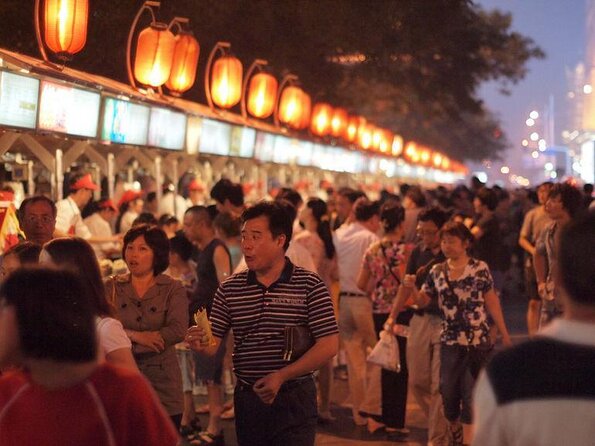
- Dongsi Hutong is the real setting: Most tastings happen around local streets and small eateries rather than polished tourist restaurants.
- Expect a very full evening: Kabobs, pancakes, noodles, cakes, buns, drinks, and snacks can add up quickly.
- The guide shapes the experience: Past guides such as Lucy, Kevin, Miko, Roy, Bella, and Jimmy received praise for food explanations, humor, and personal attention.
- Private means flexible: Your guide can discuss dietary needs, adjust the walking pace, and help decide where to go afterward.
- Transport needs planning: City-center hotel pickup is free, but taxi or public transport to the tasting area may cost about $5 per person unless private transport is selected.
- Adventurous eaters have an extra option: A bamboo worm dish is available at additional cost at the Yunnan restaurant.
Why This Night Tour Works for First-Time Beijing Visitors
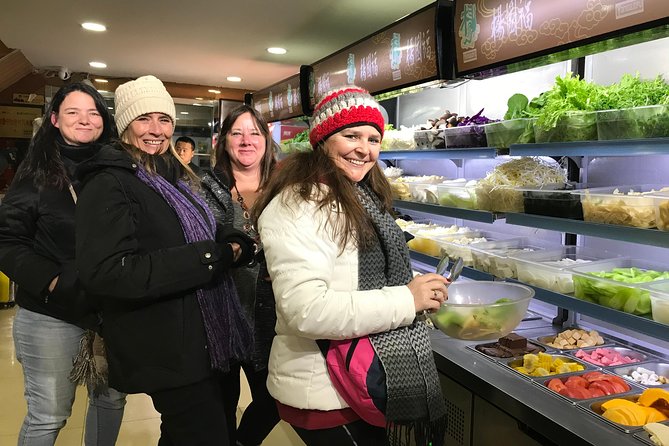
A food tour is a smart first-night activity in Beijing because it gives you several useful things at once. You get a meal, a neighborhood walk, help with ordering, and an introduction to dishes that may be difficult to identify on your own.
This tour focuses on Dongsi Hutong, Zhangzizhong Street, and the LongFuSi Jie area. These streets give you a look at Beijing beyond major imperial sights. The setting is important. You are not simply seated in one restaurant and handed a fixed menu. You move through older neighborhood streets, stopping for food as you go.
I especially like the private setup for people visiting China for the first time. A guide can explain ingredients, show you how a dish is eaten, and handle ordering in places where menus may not be easy to read. Several guides have been praised for combining food information with stories about Beijing life and hutong culture.
The tour is also useful for families and mixed groups. Kevin, for example, was praised for keeping pace with an elderly participant and checking food preferences before ordering. That kind of attention is much harder to guarantee on a large group tour.
More evening food tours in Beijing:
- Winner 2025 Florence Sunset Food & Wine Tour by Eating Europe
★ 5.0 · 5,015 reviews - Saigon By Night and Street Food By Motorbike | Opt: Ao Dai Riders
★ 5.0 · 4,066 reviews - Marrakech: Street Food Tour by Night
★ 4.8 · 2,838 reviews
Meeting at Your Hotel and Reaching Dongsi
The evening begins in your Beijing city-center hotel lobby. Hotel pickup is included when your hotel is inside the city, though the exact transport arrangement matters. You may travel by taxi or public transport at your own expense, or select a private vehicle option if available for your booking.
The stated transport cost is about $5 per person for the trip from the hotel to the hutong area. Ask about this clearly before you go, especially if you are traveling with several people or want door-to-door service. A free guide meeting is not the same as free transportation.
The route to Dongsi is part of the experience, but it can also affect the evening schedule. The tasting portion is only about three hours, so a long transfer leaves less time for food. Roy was praised for taking a group by metro, which can be practical in Beijing, but you should still allow enough time to meet your guide in the lobby.
Once you arrive, your guide gives you some background on the hutong streets and points out details you might otherwise pass without noticing. The walk is not presented as a major sightseeing visit. Think of it as context between meals, with food providing the main focus.
First Stop: Xinjiang Kabobs and Erguotou
The first substantial food stop is Xinjiang Taste Restaurant. Here you sample three to five types of lamb kabobs, along with side dishes such as eggplant, beans, garlic, leeks, and nang, a flatbread associated with northwestern Chinese food.
This is a strong opening because grilled meat is easy to enjoy even if you are cautious about unfamiliar dishes. The range of skewers also gives you a chance to compare flavors and textures rather than eating one large entrée.
You also try erguotou, a traditional Chinese white liquor. It is a potent drink, so take a small taste first and do not feel obliged to finish a serving. If you are avoiding alcohol, tell your guide at the beginning of the tour.
The side dishes matter here. They keep the stop from becoming simply a meat-heavy meal and give your guide more to explain. Garlic and leeks, for instance, help show how simple vegetables and strong seasonings are used alongside grilled foods.
This stop can be filling, but it is only the beginning. Pace yourself. The evening continues with pancakes, sweets, noodles, cakes, and several other snacks.
Zhangzizhong Street and the Pancake Stop
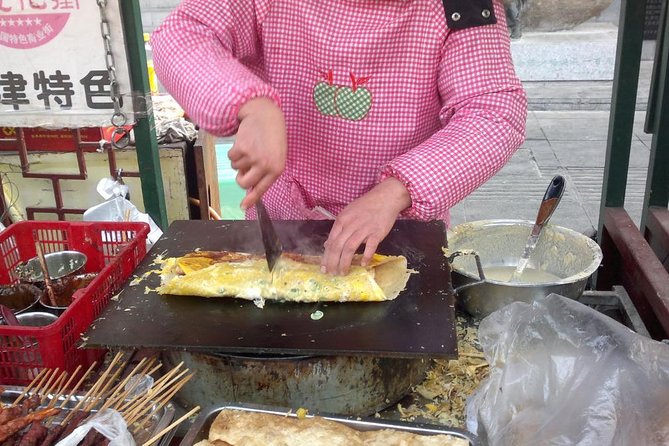
Next comes tanjianbing, a popular savory fried pancake. It is one of the most useful dishes to learn about because it is a common quick meal, not just a special restaurant item. The pancake is prepared hot and eaten as a handheld snack, making it easy to compare with the more formal dishes served later.
Along Zhangzizhong Street, the food list expands quickly. You may taste sweet dough, sesame cakes, mahua, zongzi, baozi, Beijing yogurt, and tanghulu. Tanghulu is a candied snack traditionally made with crabapple, giving the route a sweet note even though the main emphasis is savory food.
You may also try a Beijing snack set with glutinous rice roll covered in sweet bean flour, yellow pea cake, steamed rice cakes with sweet filling, and seasoned millet porridge. These are the kinds of dishes that can be hard to identify from a picture or menu. Having someone explain the ingredients makes the tasting more meaningful.
The variety is impressive, but it is also where the tour can become a food marathon. One person found the meal so generous that the group could hardly eat more by the end. I suggest taking small bites at every stop and telling your guide early if you want tasting portions rather than full servings.
Some food may not suit every palate. A few participants found certain dishes unusual or simply not to their taste. That is normal for a tour built around local specialties, and the private format helps because you can explain what you prefer instead of silently pushing food aside.
More evening experiences in Beijing:
- Private Street Food Evening Walking Tour in Ho Chi Minh City
★ 5.0 · 3,175 reviews - Kyoto Night Foodie Tour in Gion (9+ dishes + 6 Sake tastings)
★ 5.0 · 1,762 reviews - Hanoi Motorbike Tours Led By Women: Hanoi By Night Foodie Motorbike Tours
★ 5.0 · 1,734 reviews - Saigon: Day-Night Sights & Local Food Tour l Female Option
★ 5.0 · 1,638 reviews
Sichuan Skewers, Drinks, and Local Restaurant Flavors
Another stop features five to twelve Sichuan kabobs, with a peanut drink or orange soda. The number of skewers may sound excessive after the first restaurant, but portions and selections can vary. This is another reason to arrive hungry and pace yourself.
Sichuan-style food often brings more seasoning and heat, although the exact level you receive is not specified. If you have a low tolerance for spicy food, tell your guide before ordering. A private guide can ask about your preferences, but you need to provide that information.
The drink choices keep the stop casual. Peanut beverage offers a richer, more filling taste, while orange soda is familiar and refreshing. These small details help you experience the way food is enjoyed locally, with inexpensive drinks and snacks rather than one carefully staged meal.
The walking between stops is valuable here. Lucy was praised for leading a group through the hutongs while sharing details about daily life and local culture. The movement gives your stomach a short break and lets you see how restaurants, food stands, homes, and narrow lanes fit together.
Yunnan Cuisine and the Most Adventurous Bite
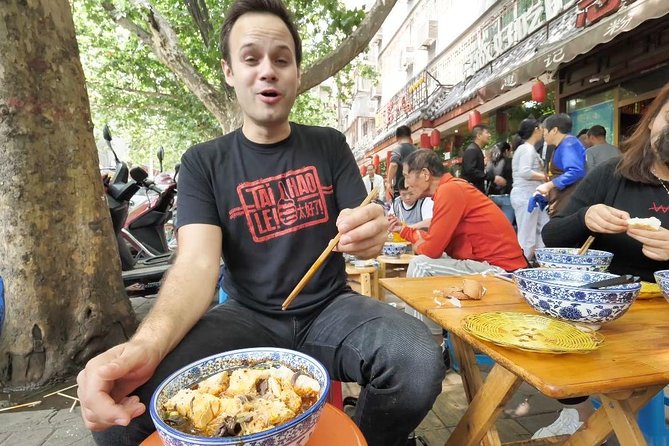
The final restaurant stop introduces food from Yunnan Province. You may try flower cakes, pea-based cold cakes, grilled bread covered with rice flour, rice wine, plum liquor, and Cross Bridge rice noodles.
This part gives the tour a wider national reach. You are still walking in Beijing, but the menu is not limited to northern Chinese food. The rice noodles offer a different style from the pancakes, buns, and kabobs served earlier.
Flower cakes and plum liquor add a fragrant, sweet edge to the meal. The rice noodles provide something warmer and more substantial. As before, ask your guide about portion sizes if you already feel full.
For adventurous eaters, the restaurant may offer a bamboo worm dish at your own expense. This is optional, not a required part of the tour. It makes sense to treat it as a personal choice rather than a measure of how brave you are. You can enjoy a wide range of Chinese food without ordering something that does not appeal to you.
Because the bamboo worm costs extra, carry a little flexibility in your food budget if you want to try it. The advertised $79.20 price per person covers the private tour and food tastings, but optional items and transport are not necessarily included.
What the $79.20 Price Delivers
At $79.20 per person, this is not the cheapest way to eat in Beijing. You could buy individual snacks for much less. The value comes from the combination of food, translation help, neighborhood navigation, and private attention.
You are paying to visit several places efficiently, learn what to order, and avoid spending your evening guessing at unfamiliar menus. If your group includes first-time visitors, older family members, or people with dietary restrictions, that support can be worth more than the price of the food alone.
The price is easier to justify when you use the guide actively. Ask about ingredients, regional food traditions, the hutong streets, and how locals eat each dish. Miko was praised for explaining both the history of Beijing and the proper way to eat each specialty. That turns a sequence of tastings into a more useful introduction to Chinese food.
Group discounts may be available, and the tour is booked an average of 22 days ahead. That advance timing suggests you should not leave it until the last moment if you want a particular evening, though guide availability is not guaranteed.
Private Touring, Dietary Needs, and Walking Pace
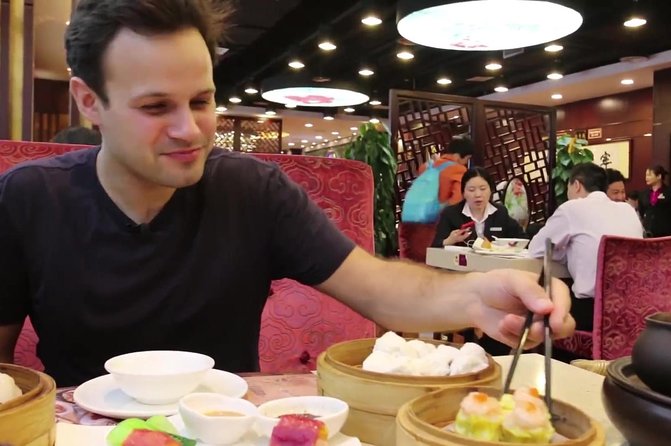
The private format is the tour’s strongest practical feature. Only your group participates, so you do not need to match the pace of strangers or wait while a large group orders.
Vegetarian food is available when requested in advance. You should also report allergies, dietary restrictions, and alcohol preferences at booking. The menu includes meat, dairy-style drinks, possible spicy dishes, and alcohol, so last-minute requests may be harder to handle.
Children under four can join free, and children must be accompanied by an adult. Most people can participate, but you should be comfortable walking between stops and eating several small portions over the evening.
The route is near public transportation, which helps if you decide to stay in the area afterward. Your guide can give directions or help you find a taxi back to your hotel. This is useful because the tour does not require you to return with the guide at the end.
One caution comes from the schedule itself. Food stalls and small restaurants may close, and one past experience missed a couple of places because they were no longer open. A private guide may adjust the route, but you should accept that the exact stops can change.
Who Will Enjoy This Experience Most
I would choose this tour for a first visit to Beijing, especially if you want food to introduce the city. It suits curious eaters who want to try many small portions and ask questions without feeling rushed.
It is also a good match for:
- Couples who want an evening in a historic neighborhood
- Families with older children who enjoy trying snacks
- Small groups with different food preferences
- Vegetarians who notify the operator in advance
- Visitors who are uneasy ordering in unfamiliar restaurants
- People who prefer local eateries to formal dining rooms
I would be more cautious if you have a very restricted diet, dislike walking, or want a focused tour devoted only to one type of food. This experience covers a lot of ground and includes ingredients that may be unfamiliar.
You should also avoid eating a large dinner beforehand. The combination of kabobs, pancakes, buns, cakes, noodles, drinks, and snacks is substantial. Arrive hungry, then pace yourself.
How the Guides Shape the Evening
The guide is the difference between a simple food crawl and a useful cultural outing. Several named guides received praise for warmth, humor, patience, and clear explanations.
Lucy was appreciated for taking people through the hutongs between restaurants. Kevin earned praise for his humor and for adapting the pace to an older participant. Miko was noted for explaining food history and table manners. Roy helped with metro travel and local restaurant stops, while Bella was praised for finding places that would have been difficult to locate or order from alone.
These examples do not guarantee a specific guide. They do show what you should expect from a good evening: help with ordering, explanations of ingredients, flexibility around preferences, and a willingness to share more than a list of dish names.
If the guide asks what you like early in the tour, answer honestly. Say if you want spicy food, if you prefer vegetarian choices, or if you would rather skip alcohol. The more useful information you give, the more personal the tasting can become.
Should You Book the Beijing Foodie Experience?
Book it if you want a social, filling, and practical introduction to Beijing food in a neighborhood setting. The strongest reasons are the private guide, wide selection of dishes, hotel meeting option, and access to small places you might not find or order from on your own.
The $79.20 cost makes sense for visitors who value help with language, ordering, and transport planning. It is less compelling if your only goal is inexpensive street food, since buying snacks independently will cost less.
Choose this tour when you are ready to try both familiar and unusual dishes, walk between stops, and let the guide adjust the evening to your group. Tell the operator about dietary needs in advance, confirm the transport charge, and arrive hungry. For many first-time visitors, that preparation should lead to a memorable and very full night in Beijing.
FAQ
How long does the Beijing foodie tour last?
The experience lasts approximately three hours.
Where does the tour take place?
The tasting takes place in and around Dongsi Hutong, LongFuSi Jie, and Zhangzizhong Street in Beijing.
Is hotel pickup included?
A local city-center hotel lobby pickup is included. Taxi or public transportation costs from the hotel to the tasting area are generally your responsibility, with the stated transport cost listed at about $5 per person. Private transport may be selected as an option.
Is this a private tour?
Yes. Only your group participates in the activity.
Is vegetarian food available?
Yes. Vegetarian options are available, but you must advise the operator of this requirement when booking.
Can children join the tour?
Children can participate when accompanied by an adult. Children under four can join free.
Can I cancel for a full refund?
Yes. You can cancel at least 24 hours before the local start time for a full refund. Cancellations or changes made less than 24 hours before the start time are not refunded or accepted.
More 3-Hour Experiences in Beijing
- Award-Winning Geneva Chocolate &Old Town Tour with Boat Ride (3h)
★ 5.0 · 3,721 reviews - Eat Like a Local: Venice 3-Hour Small-Group Food Tasting Tour
★ 5.0 · 3,137 reviews - Porto: 3-Hour Food Tour
★ 4.9 · 807 reviews - Shanghai: 3-Hour Local Food Tasting Tour
★ 4.9 · 806 reviews
Just added in Beijing
- 4-Hour Private Tour: Lama Temple, Confucius Temple, Guozijian Museum with Dim Sum★ 5.0 · 21 reviews
- Online Cooking Class Beijing Dumplings and Cuisine by Sunflowerli Renowned Chef★ 5.0 · 65 reviews
- Beijing Walking Food Tour with a Local Friend★ 5.0 · 73 reviews
- Beijing Hutong Breakfast Food Tour★ 5.0 · 120 reviews
- Experience Beijing Walking Food Tour Private★ 5.0 · 56 reviews
- Half-Day Private Beijing Hutong Walking Tour with Dim Sum★ 5.0 · 48 reviews
- Authentic Local Food Tour in Center Beijing★ 5.0 · 26 reviews
- Beijing Hutong Food Crawl Delights: Peking duck, Hotpot&More★ 4.9 · 32 reviews
Evening and Night Food Tours, compared.
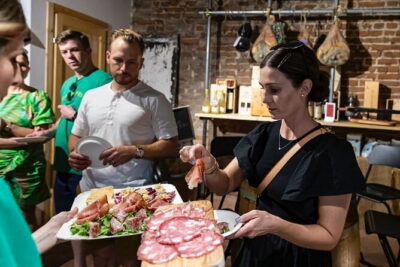
Winner 2025 Florence Sunset Food & Wine Tour by Eating Europe
Read our review →
Saigon By Night and Street Food By Motorbike | Opt: Ao Dai Riders
Read our review →
Hanoi Motorbike Tours Led By Women: Hanoi By Night Foodie Motorbike Tours
Read our review →
Rome by Night – Ebike Small Group Tour – Food and Wine (Option)
Read our review →
Small Group: Singapore Street Food & Night Tour with 9 tastings
Read our review →
Rome by Night: E-bike Small Group Tour -Food & Wine (Option)
Read our review →
Browse the lists this tour appears in