
REVIEW · BEIJING FOOD TOURS
4-Hour Private Tour: Lama Temple, Confucius Temple, Guozijian Museum with Dim Sum
Two temples, one meal, plenty to think about. This private Beijing tour pairs Lama Temple and Confucius Temple with the old Imperial College, then adds dim sum at a local restaurant. I like the personal guide, the flexible morning or afternoon schedule, and the way food fits naturally into the outing. The main catch is transport: hotel pickup is offered, but drop-off is not clearly part of the standard arrangement.
At $97.20 per person, this is not the cheapest way to see a few historic buildings. Still, the price includes admission, a guide, bottled water, and dim sum lunch or dinner. You also get a private experience rather than a large group, which matters when you want explanations instead of a quick walk past the gates.
Key points to know before booking
- Three important sites in one compact outing: Visit Yonghegong, the Temple of Confucius, and the Guozijian Museum in roughly three to four hours, not counting a leisurely meal.
- Dim sum is part of the cultural experience: Choose lunch on a morning tour or dinner after an afternoon departure.
- Private guiding makes the temples easier to understand: Guides such as Lucy, Ana, Jessie, Jack, Roy, and others have been praised for clear English, patience, and lively explanations.
- The Imperial College adds a rare performance: The visit includes a dance performance connected with the former highest school in imperial China.
- Plan transportation carefully: A private-transfer option is available. Without it, you pay your own subway or taxi costs, and the guide may accompany you by public transport.
- Allow more time if you linger over food: The sightseeing portion is about three to four hours, but the meal can extend the outing to five to seven hours.
Why this Beijing temple tour works
Beijing can feel like a city of grand imperial sights, wide avenues, and enormous palace complexes. This tour takes you into a more focused corner of the city, where religious practice, education, architecture, and food connect.
I like the route because it is not simply a parade of old buildings. Lama Temple introduces Tibetan Buddhist worship in Beijing. The Temple of Confucius shifts the subject toward education, ethics, and official life. Guozijian, the Imperial College, links those ideas to the training of scholars and government officials.
That variety gives the four-hour schedule a clear rhythm. You are not looking at three versions of the same monument. Each stop asks a different question about Chinese society.
The experience has a 4.9 out of 5 rating from 21 ratings, with 95 percent recommending it. The strongest praise centers on the guides, especially their English, patience, and ability to explain difficult subjects without making the visit feel like a lecture.
The private format is important here. Temples have symbols, rituals, carved details, and layers of meaning that are easy to miss if you are walking alone. A good guide can explain what you are seeing at the moment you see it, then adjust the pace if you want more detail or a shorter visit.
More private food tours in Beijing:
- Lisbon Exclusive PRIVATE Food Tour with 6 or 10 Tastings
★ 4.5 · 1,113 reviews - The Award-Winning PRIVATE Food Tour: 10 Tastings of 3 Cultures
★ 4.5 · 1,017 reviews - Rome Private Food Tour with 6 or 10 Tastings
★ 4.5 · 902 reviews
Entering Lama Temple, or Yonghegong
Your guide meets you at your Beijing hotel before taking you to Lama Temple. If you choose the option without private transfer, the guide may accompany you by subway or taxi, with that transport cost paid separately by you.
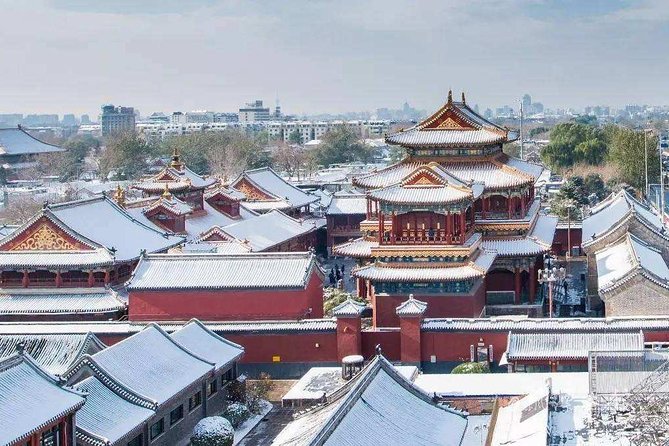
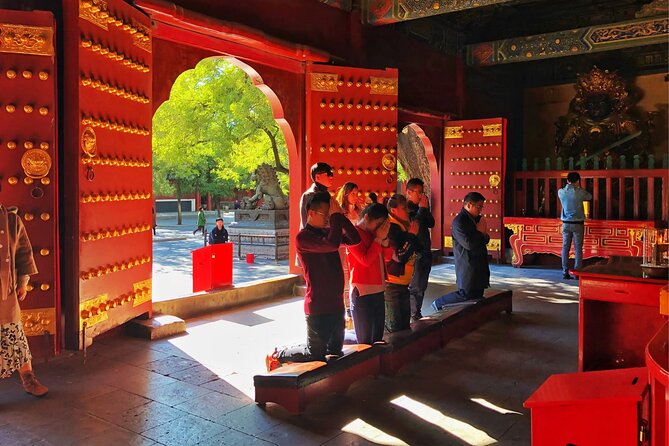
Yonghegong is the first major stop, with about an hour set aside for the visit. The temple is important for its architecture and for its place in Tibetan Buddhist life in Beijing. You can expect your guide to explain the religious setting, the buildings, and the relationship between the temple and Tibetan Buddhism.
This is also where a guide earns the tour price. One of the harder parts of the site is understanding its place in history and its current relationship with Tibetan Buddhism. Lucy, one of the named guides, received particular praise for explaining those complicated subjects in clear terms.
Do not treat this as a quick photo stop. The value lies in learning how the spaces function and why the details matter. You may see worshippers, devotional objects, and architectural features that mean little without context. The supplied schedule allows about one hour, so the visit is focused rather than exhaustive.
That time limit can be a benefit. Beijing has no shortage of attractions, and a short visit keeps the day manageable. If you want a slow, highly detailed study of every hall, however, this tour may feel brisk.
Understanding the Temple of Confucius
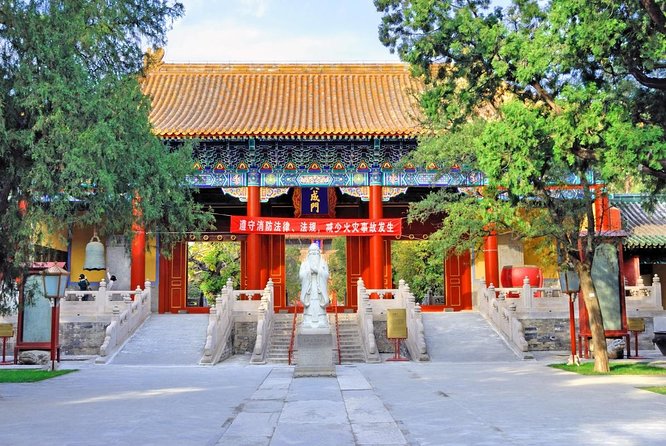
The second stop is the Temple of Confucius, devoted to the philosopher whose ideas shaped Chinese education, government, family life, and social conduct for centuries.
The tour gives you roughly an hour here. Your guide explains the temple as a place connected with traditional Chinese culture and education, not simply as a religious building. That distinction helps you read the site on its own terms.
Confucianism is often introduced through abstract ideas, but this visit gives those ideas a physical setting. The temple reflects the importance placed on learning and proper conduct. The buildings and layout help show how education was linked to public service and the imperial system.
Ana has been praised for telling the stories of the past in clear English. Jack has also been described as friendly and well-informed, with an ability to make the temple visit feel approachable. You will want to ask questions here, especially if you are curious about how Confucian thought differs from Buddhism.
The drawback is that the experience depends heavily on the guide. Without explanation, some visitors may find the temple quieter and less immediately dramatic than Lama Temple. With a strong guide, the contrast becomes the point. You get a better sense of how different traditions shaped Beijing.
The Imperial College and its dance performance
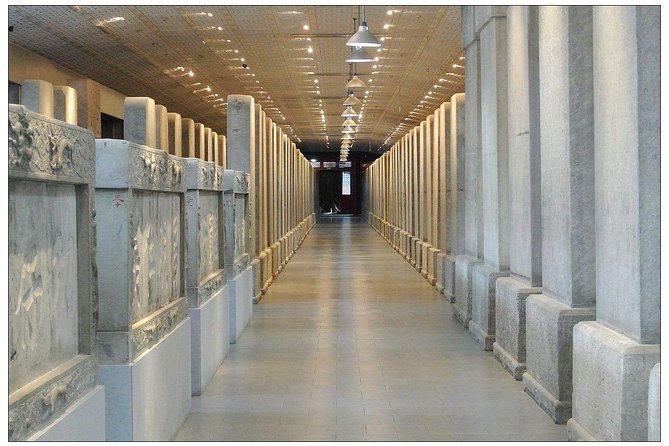
After the Temple of Confucius, the route continues to Guozijian, also called the Imperial College. This was the highest educational institution in ancient China, where the imperial education system reached its highest level.
The Guozijian Museum adds an important civic side to the day. Lama Temple shows religious practice. The Temple of Confucius presents a cultural and philosophical tradition. Guozijian shows how education supported the imperial state.
The architecture is part of the lesson. You can explore the arrangement of the former educational institution while your guide explains its role. The visit is not just about old courtyards or ceremonial spaces. It helps you understand who received advanced education and why learning mattered so much in official life.
A dance performance at the Imperial College is one of the tour’s more unusual features. It gives the visit movement and sound instead of leaving you with only walls and displays. The performance also helps connect the site with ceremony and the formal culture of the imperial period.
Timing can vary, so it is wise to view the dance as an included highlight rather than assuming it will run at a precise minute. Your guide can help you understand what you are watching and how it fits the site.
More museum visits in Beijing:
- Munich: Beer and Food Tour with Dinner & Oktoberfest Museum
★ 4.7 · 1,086 reviews - Dubai.Discover Old town,Markets,street food,Abra &Museums
★ 4.9 · 181 reviews - Takua Pa: Food Market, Tsunami Museum, Temple, & Old Town
★ 4.9 · 165 reviews - Olive Oil Museum: Extravirgin school – Food & wine tasting
★ 5.0 · 39 reviews
Dim sum gives the tour a welcome change of pace
The meal is not an afterthought. A morning tour is followed by dim sum lunch, while an afternoon tour includes dinner. The restaurant is described as local, and the meal has received strong praise for both taste and setting.
I like this part of the plan because Beijing sightseeing can become visually heavy. After several historic sites, sitting down with food gives you time to talk with your guide and process what you have seen.
The meal also adds a practical introduction to local dining. You are not simply being handed a bottle of water and sent on your way. Dim sum lets you try a familiar Chinese meal in a more social setting.
Tell the provider about dietary requirements when you book. Alcohol is not included, though it can be purchased separately. The meal may also make the overall outing longer than the advertised sightseeing window. The route is listed at about three to four hours, but a relaxed lunch or dinner can stretch the full experience to five to seven hours.
That is good news if you enjoy unhurried meals. It is less convenient if you have an evening train, a fixed dinner booking, or another Beijing attraction scheduled soon afterward.
Morning or afternoon: which option suits you?
The morning departure is the better choice if you want dim sum at lunchtime and a clear afternoon afterward. It gives you a traditional sightseeing block before the meal, then leaves the rest of the day open.
The afternoon version may suit you if your morning is occupied or if you prefer a later start. You visit the temples and Imperial College first, then finish with dinner.
Neither schedule is automatically better. Your choice should depend on your hotel plans, energy level, and other reservations. Remember that the meal can extend the tour well beyond the core three to four hours.
The tour is often booked well ahead, with an average booking time of 95 days before departure. That does not guarantee every date will sell out, but it is a useful warning for anyone building a Beijing itinerary months in advance.
Private transport versus public transport
The booking choices matter more than they may first appear. A private-transfer option is available, and the package includes hotel pickup. If you select the option without private transfer, you pay your own transportation fee, and the guide can accompany you by subway or taxi.
Public transport may be a sensible way to avoid road congestion. One past booking included a subway ride because the guide judged it the better way to avoid traffic. That can save time, but you should understand the arrangement before you pay.
The most important point is that hotel pickup does not mean hotel drop-off. The tour includes pickup, but a return transfer is not stated as part of the standard service. Plan your next move from the final stop or restaurant.
This is one area where the tour could communicate more clearly. Ask in advance which transport option you selected, what is included, and where the experience ends. A little planning will prevent an avoidable surprise.
How much value do you get for $97.20?
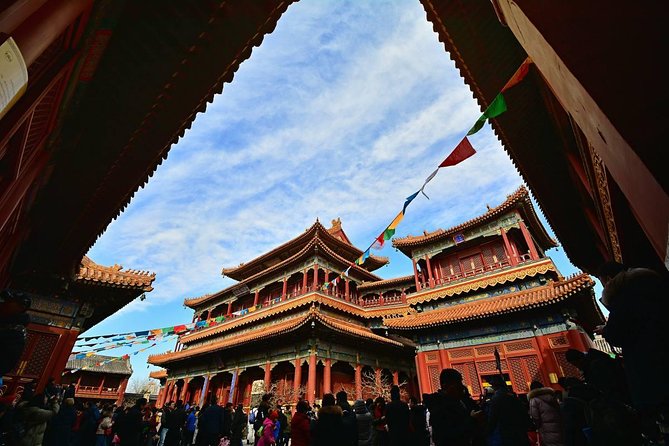
At $97.20 per person, the tour bundles several costs that you would otherwise arrange separately: two temple admissions, access to Guozijian, an English-speaking guide, bottled water, and a dim sum meal.
The strongest value comes from the private guide. If you visited the sites alone, admission would be only part of the experience. You would also need to research the temples, arrange transport, choose a restaurant, and work out how the sites connect.
The price is easier to justify for first-time visitors who want context and a fixed plan. It may be less appealing if you prefer to wander independently, already know the sites well, or mainly want quick exterior photographs.
Group discounts are available, but the supplied details do not specify the discount amount. Since this is a private activity, only your own group participates. That makes it useful for families, couples, and small groups with different interests.
Children can join, but they must be accompanied by an adult. Most people can participate, and the experience is not described as requiring special physical ability. Still, you will be walking through several historic sites and using transport if you choose the non-transfer option, so consider your group’s stamina.
The guides make or break the experience
The guide is the tour’s biggest strength. Lucy has been praised for explaining Lama Temple and the complex subject of Tibetan Buddhism. Ana is noted for strong English and clear stories about Chinese culture. Jessie has been described as animated and experienced, while Roy received praise for patience, kindness, and answering every question.
Those details matter because the tour covers subjects that can be difficult to explain quickly. Buddhism, Confucianism, imperial education, and the modern meaning of historic sites are not simple topics.
A good guide should also help with the practical flow. You may need assistance with public transport, restaurant arrangements, timing, and deciding how much time to spend at each site. The strongest guide experiences described here include exactly that blend of explanation and personal care.
There is one caution: guide quality can vary, and one three-star experience felt short on information. If you want a lecture-style tour with constant detail, tell your guide early. If you prefer a relaxed pace, say so. The private format gives you room to shape the visit.
Who should book this tour?
I would recommend it to a first-time Beijing visitor who wants a compact introduction to religious, philosophical, and educational traditions. It is also a good match for anyone who values a private English-speaking guide and wants a meal built into the day.
Families may appreciate the fixed route and private setting. Couples and small groups can ask questions without worrying about slowing down a larger party. The morning and afternoon choices also help fit the outing around a wider Beijing schedule.
You may want to skip it if you are looking for a full-day historical tour, extensive time at each site, or a guaranteed return to your hotel. You should also think twice if your schedule cannot absorb a meal that may take the experience to five to seven hours.
Cancellation is free up to 24 hours before the start time for a full refund. Changes made less than 24 hours before departure are not accepted, and poor weather may lead to a different date or a full refund.
Should you book it?
Book this tour if you want clear cultural context, private guiding, and a proper meal rather than a rushed checklist of sights. Its best feature is the connection between the three stops: worship at Lama Temple, philosophy at the Temple of Confucius, and imperial education at Guozijian.
Before booking, confirm the transport option and remember that hotel drop-off is not included. If you do that, the $97.20 price offers a sensible way to cover a meaningful slice of Beijing in half a day, with enough flexibility to ask questions and enjoy the food.
FAQ
How long does the tour last?
The sightseeing portion takes about three to four hours. With a relaxed dim sum lunch or dinner, the full outing may take five to seven hours.
Is the tour private?
Yes. Only your group participates in the activity.
Is hotel pickup included?
Hotel pickup is offered. Hotel drop-off is not stated as included.
Is private transportation included?
Private transfer is included only if you choose the related transfer option. If you select the option without transfer, you pay your own transportation costs.
Can the guide accompany me on public transport?
Yes. If you choose public transportation, the English-speaking guide can accompany you by subway or taxi. The transport cost is your responsibility.
Is the meal included?
Yes. The package includes dim sum lunch or dinner, depending on whether you choose the morning or afternoon tour.
Can I choose a morning or afternoon departure?
Yes. You can choose a morning tour followed by lunch or an afternoon tour followed by dinner.
What sites does the tour visit?
The tour visits Lama Temple, the Temple of Confucius, and the Guozijian Museum at the Imperial College.
Is the dance performance included?
A dance performance at the Imperial College is included among the tour highlights.
Can children participate?
Yes, but children must be accompanied by an adult. Most people can participate in the experience.
Can I request special dietary arrangements?
Yes. You should provide any specific dietary requirements when booking.
Can I cancel for a full refund?
Yes, if you cancel at least 24 hours before the experience start time. Cancellations made less than 24 hours before the start time are not refunded.
Just added in Beijing
- Online Cooking Class Beijing Dumplings and Cuisine by Sunflowerli Renowned Chef★ 5.0 · 65 reviews
- Experience Beijing Walking Food Tour Private★ 5.0 · 56 reviews
- Beijing Walking Food Tour with a Local Friend★ 5.0 · 73 reviews
- Beijing Hutong Breakfast Food Tour★ 5.0 · 120 reviews
- 3-Hour Private Night Tour: Beijing Foodie Experience★ 5.0 · 53 reviews
- Half-Day Private Beijing Hutong Walking Tour with Dim Sum★ 5.0 · 48 reviews
- Authentic Local Food Tour in Center Beijing★ 5.0 · 26 reviews
- Beijing: Hutong Breakfast Food Tour★ 5.0 · 22 reviews
Private Food Tours, compared.

Lisbon Exclusive PRIVATE Food Tour with 6 or 10 Tastings
Read our review →
The Award-Winning PRIVATE Food Tour: 10 Tastings of 3 Cultures
Read our review →
Lisbon Private Food Tour – Taste 10+ Local Dishes & Wines
Read our review →
The Award-Winning Private Food Tour of Taipei: The 10 Tastings
Read our review →
Florence Exclusive PRIVATE Food Tour with 6 or 10 Tastings
Read our review →
Porto Private Food and Drink Tasting Tour with Local
Read our review →
Exclusive Naples Private Food Tour: 6 or 10 Tastings
Read our review →Browse the lists this tour appears in