
REVIEW · BEIJING FOOD TOURS
Half-Day Private Beijing Hutong Walking Tour with Dim Sum
Old Beijing rewards slow walking. This private hutong tour takes you through narrow lanes, old courtyards, lakeside bridges, and food stops that are easy to miss from a taxi window. I like the private guide, especially for explaining the small details around courtyard entrances, and I like the mix of major sights and quieter residential lanes. The chance to try bubble tea, red bean dessert, mantou buns, and dim sum gives the walk a tasty local angle.
The main drawback is the price: $148 per person is a serious spend for four hours, especially if you are traveling alone. You are paying for a private vehicle transfer, a dedicated English-speaking guide, entrance fees, and lunch when that option applies, so the value improves for couples or small groups who want flexibility. Wear comfortable shoes, and remember that some stops involve steady walking.
Five things that make this hutong tour useful

- Private walking route: Your guide can answer questions, adjust the pace, and explain details that a large group tour would likely skip.
- The hutong beyond the postcard view: Nanluoguxiang, Yu’er Hutong, Mao’er Hutong, and the Back Lakes show different sides of old Beijing.
- Food built into the walk: You sample bubble tea, red bean dessert, mantou buns, tea, and dim sum rather than stopping only for photographs.
- Bell and Drum Towers included: The tour adds one of Beijing’s best-known traditional landmarks, with a chance to see a drum performance when open.
- Hotel pickup and return: Taxi fare within Beijing’s Fourth Ring Road is included, which removes some of the day’s transport hassle.
Why a private hutong walk works so well
Beijing’s old hutongs are not one single attraction. They are networks of narrow lanes, courtyard homes, shops, cafés, canals, bridges, and busy public spaces. Without context, you may see attractive doors and weathered walls but miss what makes them important.
A private guide changes that. You can ask why an entrance is arranged in a certain way, who once lived in a particular courtyard, or how the lanes fit into Beijing’s older street plan. One especially useful detail from the tour is the attention paid to house entryways, an easy feature to walk past while focusing on the larger sights.
The pace also matters. Four hours is long enough to connect several nearby areas without turning the day into a marathon. It is still a half-day, though, not a complete study of Beijing’s old neighborhoods. If you want lengthy museum visits, long meals, or extensive shopping time, this route may feel tightly scheduled.
You can start at 10:00 a.m. or 2:00 p.m. The morning option leaves more room for the rest of your day. The afternoon tour may be appealing if you have already visited a major palace or museum earlier, and the Back Lakes can take on a different mood as the day moves toward evening.
More half-day tours in Beijing:
- Top Rated Brooklyn Half-Day Food, History & Culture Tour via bus
★ 5.0 · 758 reviews - Adelaide: Half-day McLaren Vale & Glenelg Wine Tasting Tour
★ 4.8 · 417 reviews - Taormina: Half-Day Pizza Making Class
★ 4.8 · 353 reviews
Nanluoguxiang: your first look at old Beijing
The tour begins at your hotel lobby, followed by a transfer to the hutong area. The first walking stop is Nanluoguxiang, one of Beijing’s best-known old lanes.
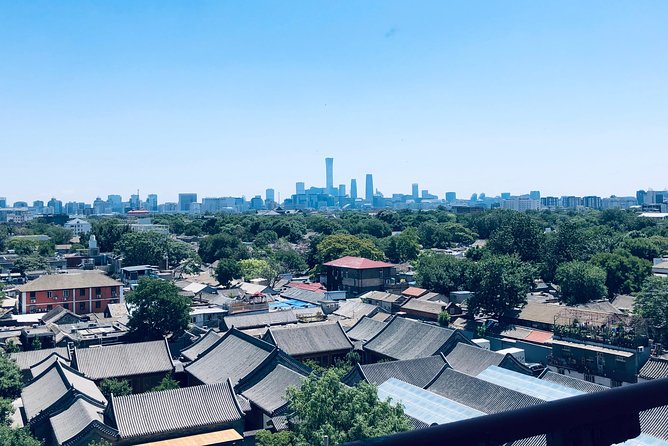
Nanluoguxiang combines traditional narrow streets with shops and food businesses. It is a useful first stop because it helps you get your bearings. You see the scale of the lanes, the close-set courtyards, and the way old residential areas now share space with modern commerce.
The trade-off is that Nanluoguxiang can feel more visitor-focused than the quieter hutongs later in the route. I would treat it as an introduction rather than the most authentic stop of the morning. Your guide is important here, since the lane’s commercial side can otherwise distract from its older layout.
This is also where the food element begins to make sense. Instead of treating snacks as a separate restaurant visit, the tour folds small tastes into your walk. Bubble tea, red bean dessert, and mantou buns give you a quick way to try familiar Beijing flavors without committing to a large meal before lunch.
Yu’er and Mao’er Hutongs: courtyards and local life
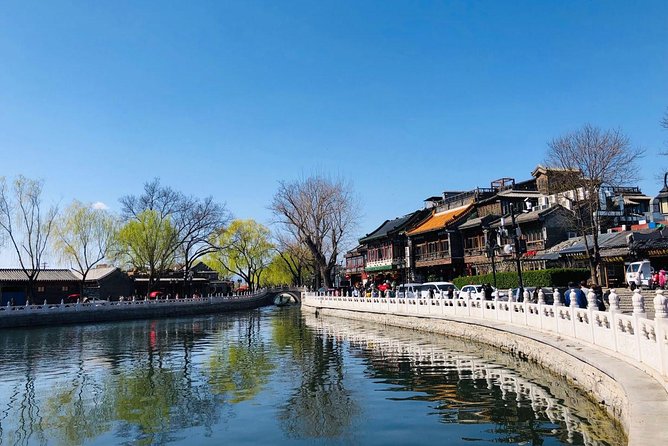
Yu’er Hutong is a shorter stop, but it brings you closer to the residential character of the area. It runs by the Jade River, with canals and bridges near its eastern end. The connection to the old Grand Canal route adds useful context, since these waterways helped link Beijing with places farther south, including Hangzhou and Shanghai.
The canal setting gives this part of the walk a welcome change from shop-lined streets. You get water, bridges, and courtyards in a compact area. Since the visit lasts about 15 minutes, expect an overview rather than a long exploration.
Mao’er Hutong offers another layer of palace-era history. The empress of the last emperor lived here for a time after the royal family left the Forbidden City. The lane is also noted for its courtyards and locust trees.
I like these two stops because they show why hutong tours are worth taking on foot. The most interesting details are often not enormous monuments. They are the relationship between homes and lanes, the shape of a courtyard, the position of a bridge, or the story attached to an ordinary-looking residence.
The short timing is both useful and limiting. You cover more ground, but you will not linger at every courtyard. If you are especially interested in architecture, tell your guide early so the private format can work in your favor.
Bell and Drum Towers: Beijing’s old timekeepers
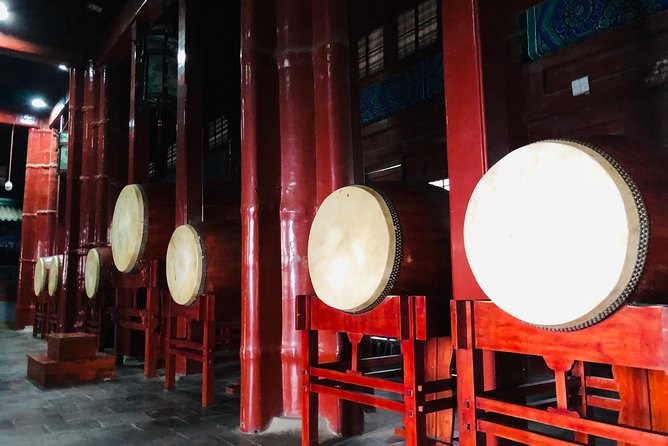
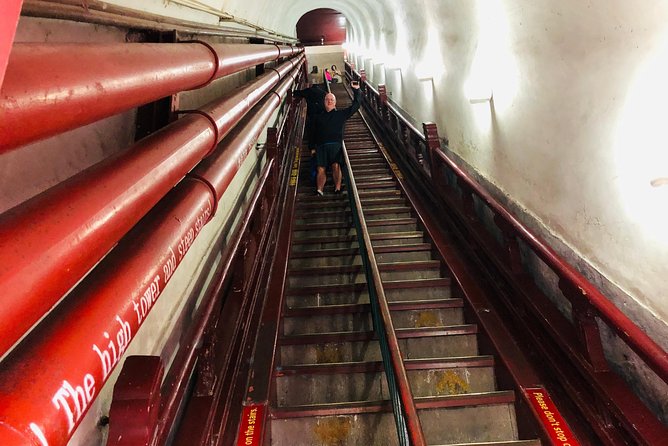
The Bell and Drum Towers are the biggest formal sight on the route. About an hour is set aside here, and admission is included.
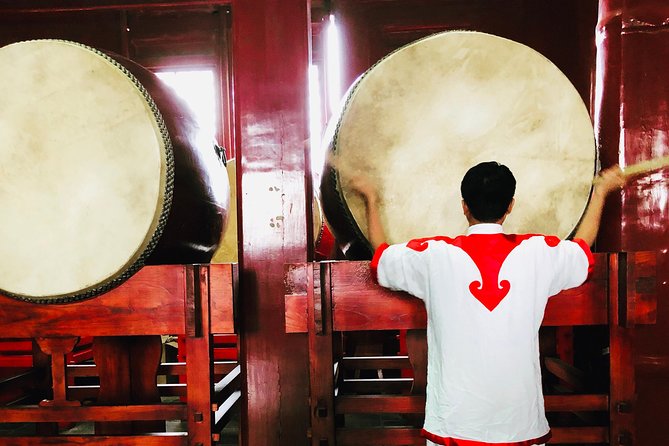
These towers once helped mark the daily rhythm of Beijing. The Drum Tower is also associated with drum performances, and the tour may include one when the site is open. That performance adds sound and movement to a visit that could otherwise feel like a quick architectural stop.
There is one practical warning: the Drum Tower can sometimes be closed. In that case, the guide returns the Drum Tower entrance fee. That policy is helpful, but you should not book the tour assuming the performance is guaranteed.
The towers also provide a break from the narrow lanes. After walking through residential alleys, you get a larger public landmark and a clearer sense of how old Beijing was organized. The hour here gives your guide time to explain the buildings rather than simply pointing them out.
If you are choosing between the morning and afternoon departure, ask about the expected timing of the drum performance when you book. The supplied information does not promise a fixed performance schedule, so the exact experience may vary.
More private experiences in Beijing:
- Beijing Private Hutong Food Walking Tour
★ 5.0 · 299 reviews - Experience Beijing Walking Food Tour Private
★ 5.0 · 56 reviews - 3-Hour Private Night Tour: Beijing Foodie Experience
★ 5.0 · 53 reviews - 4-Hour Private Tour: Lama Temple, Confucius Temple, Guozijian Museum with Dim Sum
★ 5.0 · 21 reviews
Tea, old shops, and Yandai Xie Street
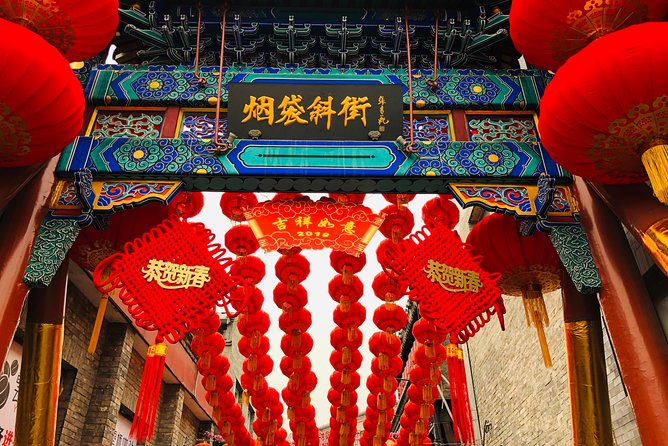
The route includes a brief stop at Wuyutai Tea Shop, a well-known Beijing tea name. You can look at jasmine, chrysanthemum, green, and oolong teas. This is a five-minute stop, so think of it as a quick introduction or shopping opportunity, not a formal tasting session.
For tea drinkers, it is a nice practical touch. You may find a useful souvenir here, and your guide can help explain the choices if you are unfamiliar with Chinese tea styles. If tea is not your interest, the stop is short enough that it should not take much from the main walk.
Yandai Xie Street is described as Beijing’s oldest commercial street. Its traditional-style stone buildings now hold souvenir and handicraft shops, giving the lane a polished old-Beijing look.
I would keep expectations sensible. This is a shopping street, so it is less about quiet residential life and more about browsing. Prices and product quality can vary, as they do in any souvenir area. The value of the stop is seeing how an old street has been adapted for modern commerce, not finding a completely untouched neighborhood.
The combination of Wuyutai and Yandai Xie Street works well for a first-time visit. You get a small taste of tea culture, local shopping, and traditional street design without spending half a day in stores.
Houhai and the bridges around Shichahai
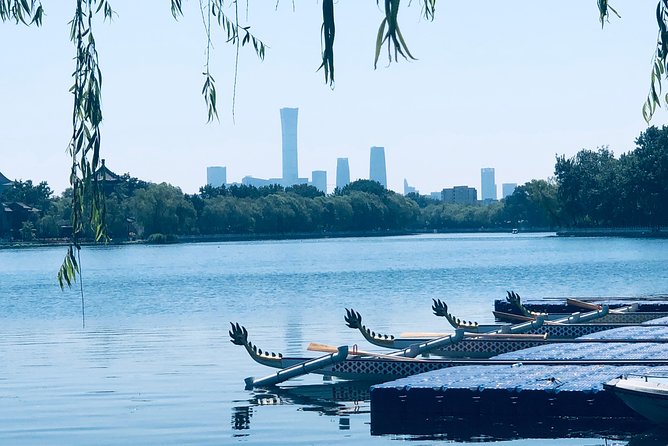
The Back Lakes area, known as Houhai, is one of the most attractive parts of the route. The larger Shichahai area includes Xihai, Houhai, and Qianhai, along with extensive hutong neighborhoods around the water.
Here, the tour shifts from tight lanes to open views across the lakes. You may see restaurants, cafés, bars, and people enjoying the waterfront. The area is known for nightlife, but a daytime visit gives you a calmer look at the relationship between water, old homes, and public streets.
Yinding Bridge is one of the key photo stops. Its name is linked to the shape of an ancient Chinese ingot, and it is a busy crossing in the hutong area. The bridge connects the water views with the lanes and makes a good place to notice how the district changes from day to night.
The final bridge is Jinding Bridge, or Golden Ingot Bridge. It offers another view of Houhai and helps tie the lakeside portion of the walk together. The two bridges may sound similar, but they give you different points from which to see the water and surrounding streets.
Shichahai Scenic Resort adds a short lake view with nearby restaurants, bars, and cafés. Since the stop is only about 10 minutes, you will not have much time to sit down. If you want nightlife or a leisurely drink, you would need to return on your own later.
This part of the tour is a strong reason to choose the route. You are not only walking through old housing lanes. You are also seeing how Beijing’s historic center functions as a social area today.
Food stops and the dim sum lunch
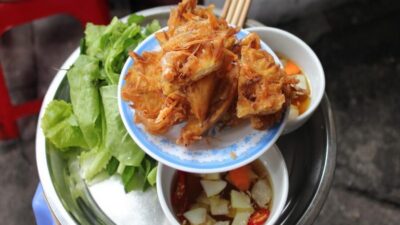
Food is one of the more appealing parts of this experience. Small samples include bubble tea, red bean dessert, and mantou buns, followed by a dim sum lunch when that option is selected.
The snacks break up the walking and give you several flavors without requiring a full meal at each stop. Mantou, a soft steamed bun, is simple but useful for understanding the role of steamed breads in northern Chinese food. Red bean dessert adds sweetness, while bubble tea offers a familiar modern drink with a local setting.
The lunch is the more substantial food element. Since the tour description says lunch is included if the option applies, check the exact booking choice before paying. Liquor and coffee are not included, though they can be purchased separately.
Tell the provider about dietary restrictions and food allergies before booking. The information specifically asks you to give advance notice, so do not wait until the meal begins. The food component may be less flexible if you have strict requirements and fail to mention them.
I would not choose this tour solely as a food tour. The food supports the walking route rather than replacing it. If your main goal is a long restaurant meal or a detailed culinary lesson, a dedicated food tour may fit better. If you want local bites paired with Beijing neighborhoods, this arrangement makes good sense.
What the $148 price really covers
At $148 per person, this is not a budget walking tour. The price makes more sense when you value privacy and transport rather than simply counting the number of attractions.
You receive a private tour, an English-speaking guide, hotel pickup and return, taxi fare within the Fourth Ring Road, entrance fees, and lunch when the selected option includes it. You also avoid building your own route between Nanluoguxiang, the towers, and Shichahai.
For two or more people, the cost may feel more reasonable because the guide and vehicle service support your group rather than a large crowd. Group discounts are available, though the exact reduction is not specified. Solo visitors should think carefully about the premium.
The private format is the clearest benefit. The guides can tailor the walk to your interests, and Maggie has been praised for adapting the experience to a guest’s questions and interests. Kris also helped make the tour accessible for a visitor who found some museums and attractions closed on a Monday.
That Monday detail is worth remembering. If your Beijing schedule falls on a day when museums or other sights are closed, a hutong walk can keep the day useful. It also gives you a more flexible alternative to a fixed museum program.
The tour is highly rated, with a five out of five score from 48 reviews and 100 percent recommending it. Those figures suggest strong satisfaction, particularly with the guides and the personal attention. Still, ratings do not remove the basic trade-off: you pay considerably more than you would for a self-guided walk.
Timing, fitness, and practical planning
The experience lasts about four hours. You need a moderate level of physical fitness and comfortable shoes. The route includes repeated walking through lanes, bridges, public streets, and sightseeing areas, so flimsy footwear could make the afternoon less pleasant.
Hotel pickup and return are offered, but the included taxi fare applies within Beijing’s Fourth Ring Road. If your hotel is outside that area, you may need to pay the additional taxi cost yourself.
Children must be accompanied by an adult. Because this is a private activity, your group is the only group participating, which makes it easier to pause, ask questions, or adjust the pace within reason.
Free cancellation is available up to 24 hours before the start time for a full refund. Changes or cancellations made less than 24 hours before the tour are not accepted for a refund, and the cut-off follows Beijing local time.
Before booking, confirm three things: your pickup location, whether lunch is included in the option you select, and any dietary needs. Those checks prevent the most likely surprises.
Who should book this Beijing walk
I would recommend this tour to first-time Beijing visitors who want a clear introduction to hutongs without handling local transport themselves. It also suits couples, families with older children, and small groups who value a private guide.
It is a good fit if you want both famous sights and ordinary-looking lanes. The Bell and Drum Towers, Yandai Xie Street, and Shichahai give the day recognizable landmarks, while Yu’er and Mao’er Hutongs provide more residential detail.
You may want a different plan if you dislike shopping streets, have limited mobility, or want a slow, food-centered afternoon. The route covers many stops, and several visits are brief. It is also expensive for a solo visitor unless private service is especially important to you.
Should you book this hutong experience?
Book it if you want a well-organized half-day that combines old neighborhoods, local snacks, lakeside views, and a private English-speaking guide. The strongest reasons are the personal explanations, the hotel transport, and the chance to see how hutongs connect with Beijing’s towers, waterways, and nightlife areas.
Skip it if $148 feels too high for four hours or if you prefer to wander independently. For everyone else, this is a practical way to get beyond Beijing’s grand monuments and notice the courtyards, bridges, food, and small street details that give the old city its character.
FAQ
How long does the Beijing hutong tour last?
The tour lasts approximately four hours.
What departure times are available?
You can choose a morning departure at 10:00 a.m. or an afternoon departure at 2:00 p.m.
Is hotel pickup included?
Yes. Pickup and return to your hotel are offered, and taxi fare within Beijing’s Fourth Ring Road is included. Taxi costs outside the Fourth Ring Road are paid separately.
Is lunch included?
Lunch is included if you select the applicable tour option. Liquor and coffee are not included, though they are available to purchase.
What happens if the Drum Tower is closed?
The Drum Tower may sometimes be closed. If that happens, the guide returns the Drum Tower entrance fee.
Can I cancel for a full refund?
Yes. You must cancel at least 24 hours before the experience start time to receive a full refund. Cancellations or changes made less than 24 hours before the start time are not accepted for a refund.
Just added in Beijing
- 4-Hour Private Tour: Lama Temple, Confucius Temple, Guozijian Museum with Dim Sum★ 5.0 · 21 reviews
- Online Cooking Class Beijing Dumplings and Cuisine by Sunflowerli Renowned Chef★ 5.0 · 65 reviews
- Beijing Walking Food Tour with a Local Friend★ 5.0 · 73 reviews
- Beijing Hutong Breakfast Food Tour★ 5.0 · 120 reviews
- Experience Beijing Walking Food Tour Private★ 5.0 · 56 reviews
- 3-Hour Private Night Tour: Beijing Foodie Experience★ 5.0 · 53 reviews
- Authentic Local Food Tour in Center Beijing★ 5.0 · 26 reviews
- Beijing Hutong Food Crawl Delights: Peking duck, Hotpot&More★ 4.9 · 32 reviews
Half-Day, compared.
Top Rated Brooklyn Half-Day Food, History & Culture Tour via bus
Read our review →
Adelaide: Half-day McLaren Vale & Glenelg Wine Tasting Tour
Read our review →

Half-Day Saint Paul de Vence and Wine Tasting Tour
Read our review →
From Manhattan: Half-Day Brooklyn Food and Culture Bus Tour
Read our review →Browse the lists this tour appears in