
REVIEW · BEIJING FOOD TOURS
Beijing Hutong Food Crawl Delights: Peking duck, Hotpot&More
Three Beijing classics, one hungry evening. This three-hour crawl pairs Peking duck, Mongolian hot pot, and Yunnan rice noodles with a walk through the Dongsi hutongs, giving you a tasty introduction to Beijing beyond the usual sights. I like the small groups, usually fewer than 10 people, and the way guides such as Mike, Andy, and Miko turn dinner into an easygoing cultural conversation.
I also like that the food is served at three different stops rather than one large restaurant meal. The main consideration is simple: there is a lot of food, and the pace is brisk. At $80 per person, the value is strongest if you want a guided night out with drinks, several meals, street snacks, and help ordering dishes you might not try alone.
Key points to know before booking
- Three major dishes in one evening: Try Beijing duck, copper-pot Mongolian hot pot, and Yunnan-style cross-bridge rice noodles during a single 3-hour outing.
- Dongsi hutong setting: Walk through narrow lanes and traditional courtyard neighborhoods between food stops.
- Small-group format: Group tours keep capacity below 10 people, while private options add hotel pickup and drop-off.
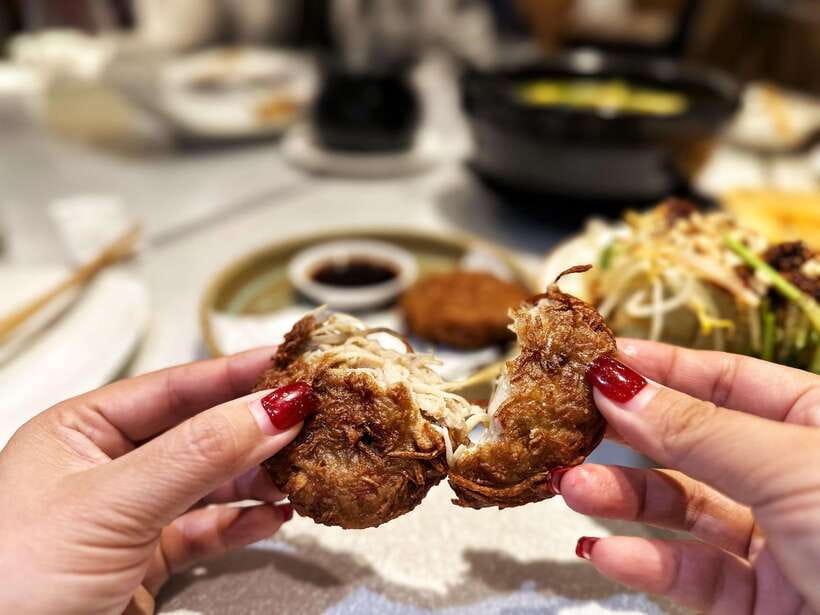
- Food beyond the familiar: Expect roasted tofu, fried lotus root cakes, pickled cabbage with sweet dumplings, local snacks, and other regional dishes.
- Drinks are included: Beer, soda, and featured drinks flow freely during the food stops.
- Best for curious eaters: The tour suits anyone who wants cultural context and ordering help along with dinner.
Starting in Dongsi, where dinner begins in the lanes
The standard meeting point is Dongsi Subway Station Exit B. Dongsi is a useful place to begin because the surrounding hutongs still function as residential neighborhoods, not just photo backdrops. Your guide leads you into the narrow lanes, explaining how the traditional courtyard houses fit into Beijing life and how food traditions connect to the city’s past.
I like this opening walk because it gives the meal a sense of place. You are not simply being driven from one restaurant to another. You get a short look at the older residential fabric of Beijing first, then eat in restaurants tucked into or near those lanes.
The walking portion is not described as a long hike, but you should expect to move between stops on foot. Wear comfortable shoes and check the forecast. Beijing weather can change the feel of an evening quickly, and the tour specifically advises you to prepare for outdoor conditions.
For a private booking, you can choose hotel pickup and return if your hotel is downtown. A driver and guide meet you in the lobby, with the guide holding a sign with your name. If you choose the private option but meet at Dongsi instead, the experience begins at the same general starting point as the small-group tour.
A few more food tours in Beijing worth a look
- Beijing: Hidden Gems Guided Food Tour with Beer and Tastings
★ 4.9 · 306 reviews - Beijing Private Hutong Food Walking Tour
★ 5.0 · 299 reviews - Beijing: Hutong Culinary Walking Tour with 15+ Tastings
★ 5.0 · 162 reviews
Peking duck with a live carving show
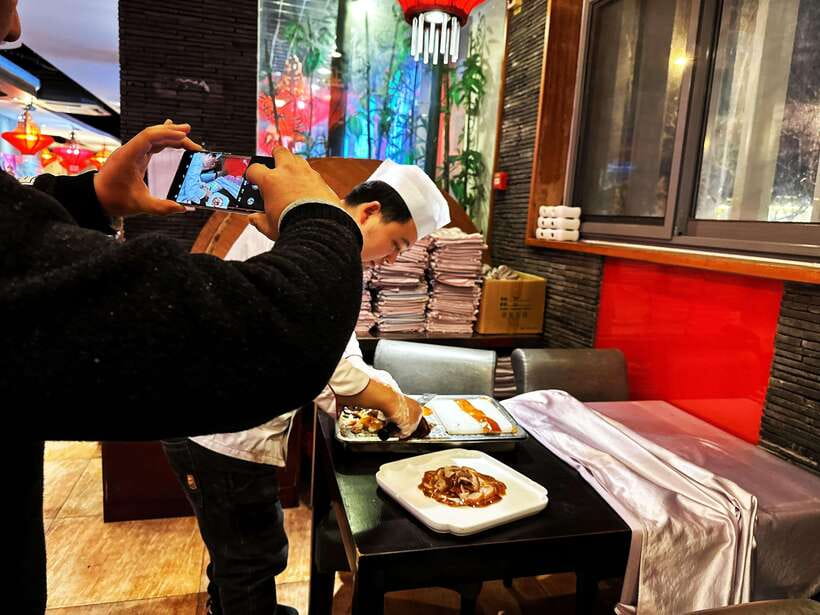
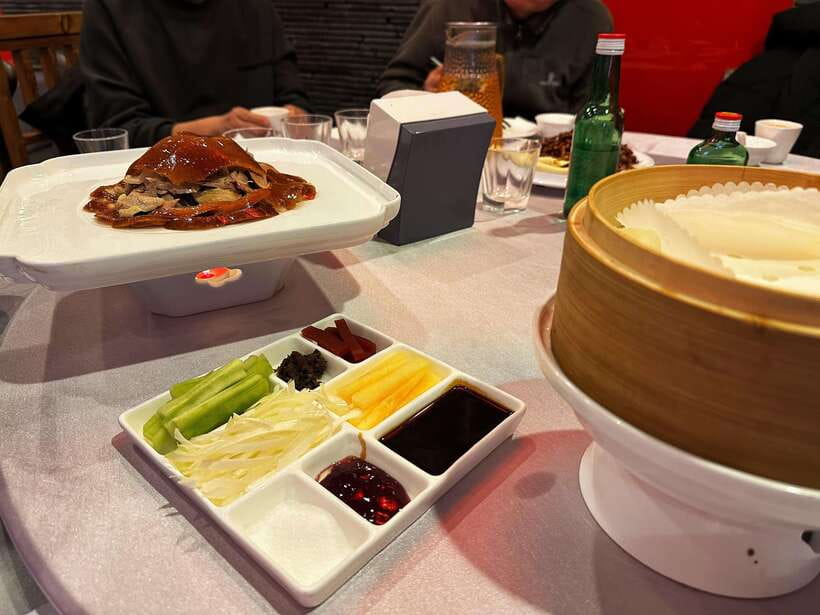
The first major food stop focuses on Beijing’s most famous dish. The duck arrives after roasting, and a chef performs a carving demonstration in front of you. That small bit of theater matters because Peking duck is about more than crispy skin and tender meat. The slicing, serving, and wrapping are part of the meal.
Your guide explains how to eat the duck and helps with the surrounding dishes. For groups larger than three people, the guide also helps select additional Beijing specialties to round out the table. That is useful if you are not sure how much food to order or which dishes belong with the duck.
Peking duck can feel intimidating when you first encounter a full restaurant menu. The guide removes much of that friction. You get help with the local dining customs, rather than trying to point at a menu and hope for the best.
The duck is paired with Erguotou, a well-known Beijing spirit. You do not have to make the spirit the main event, but it adds a distinctly local note to the stop. Unlimited beer, soda, and featured drinks are included, so you can choose something milder if strong spirits are not your preference.
This stop is likely to be the most familiar and polished part of the evening. If you are looking for a quiet, slow dinner, the group format may feel more active. If you want to understand what makes Beijing duck special and sample it without handling the ordering yourself, this is a strong start.
Copper pot hot pot and the social side of dinner
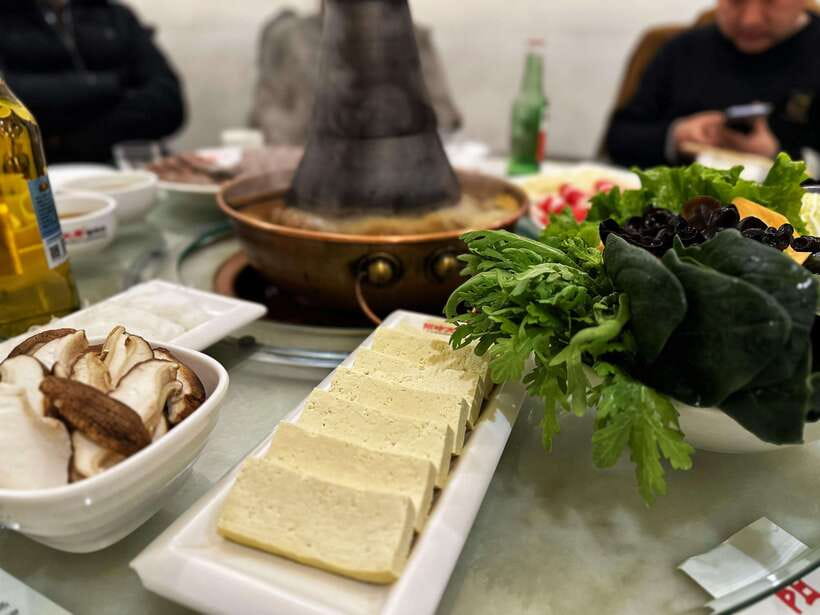
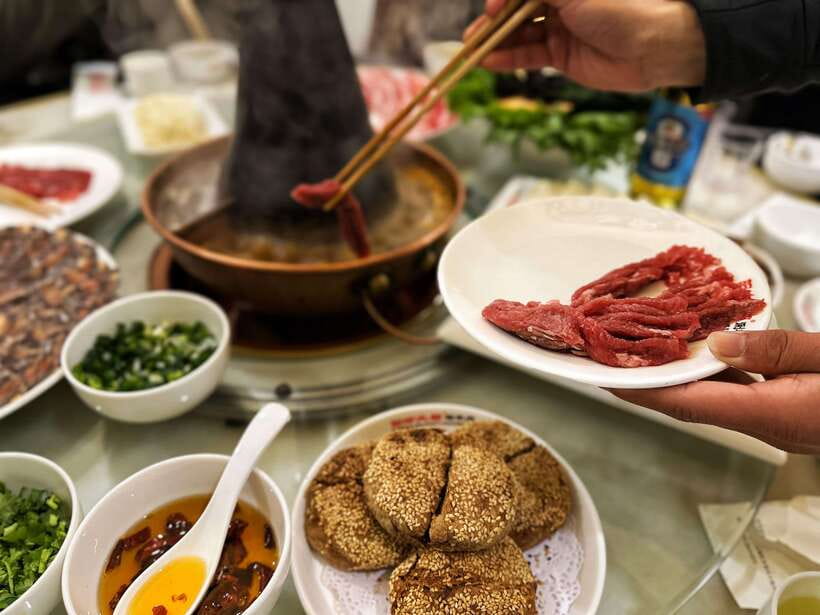
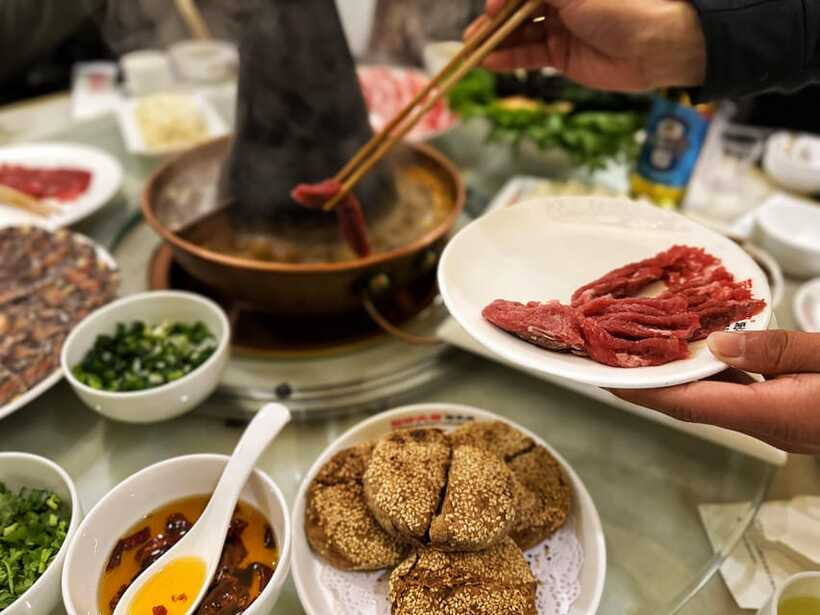
The second stop shifts from roasted meat to Mongolian-style hot pot. A copper pot with a charcoal-fired center keeps the broth simmering at the table. Thinly sliced mutton is the main ingredient, with beef, chicken, vegetables, and mushrooms also available.
Hot pot is a shared meal, so this is where the social nature of the crawl really comes through. You cook ingredients in the broth, then dip them into sauce. The traditional mixture includes fermented bean curd and sesame paste, with chili oil available for extra heat.
The guide’s help is especially useful here. There are several choices to manage, including cooking times, dipping sauce, and the order in which you try ingredients. You can ask questions and adjust the meal to suit your taste rather than simply accepting a plate of unfamiliar food.
Cold beer is the natural match for this stop, and it is included. If you are traveling with friends or family, hot pot is often the most interactive meal of the evening. In a small group, it also gives you an easy way to chat with other diners and your guide.
There is one practical catch: hot pot can be filling even before the final restaurant. The portions across the evening are designed to equal dinner, not a few token samples. Eat a light breakfast and lunch, but do not assume you need to go without food all day. Arriving comfortable and hungry is better than arriving exhausted and starving.
Street snacks between the three restaurants
The tour also includes roadside snacks along the way. The exact snack selection is not fixed in the information provided, so you should expect some variation. That is part of the appeal, since street food depends on what is available and popular in the area that evening.
These brief tastings break up the restaurant meals and show a more casual side of Beijing food culture. You get a sense of how people eat between meals, not only what appears in a formal dining room.
The snack portion also helps connect the hutong walk to the food. You are moving through local lanes, stopping for small bites, then continuing to another restaurant. It is a better fit for curious eaters than for anyone who wants a tightly controlled tasting menu.
Same city, a different table:
- Beijing Hutong Breakfast Food Tour
★ 5.0 · 155 reviews - Beijing Hutong Breakfast Food Tour
★ 5.0 · 120 reviews - Beijing Walking Food Tour with a Local Friend
★ 5.0 · 73 reviews - Beijing: Dumpling Making Workshop with Meal and Tea
★ 4.7 · 69 reviews
Yunnan noodles in a tucked-away restaurant
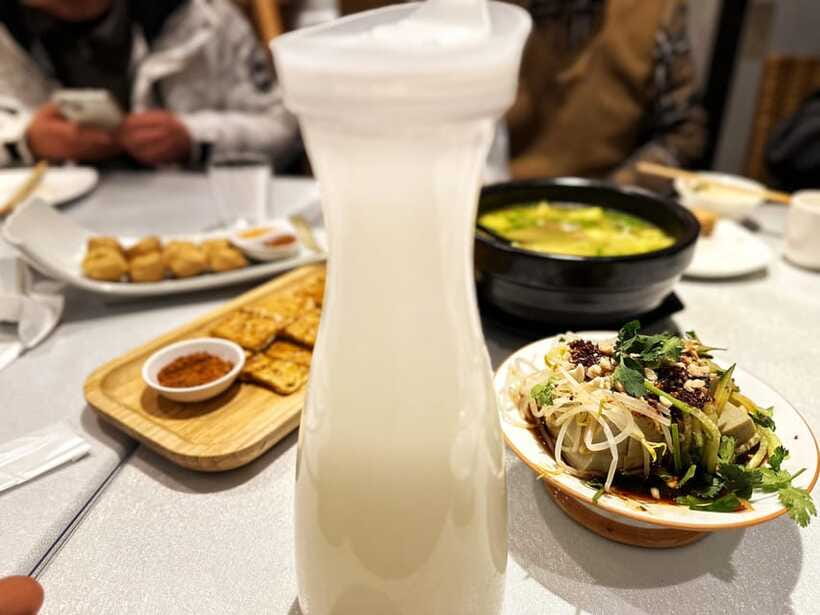
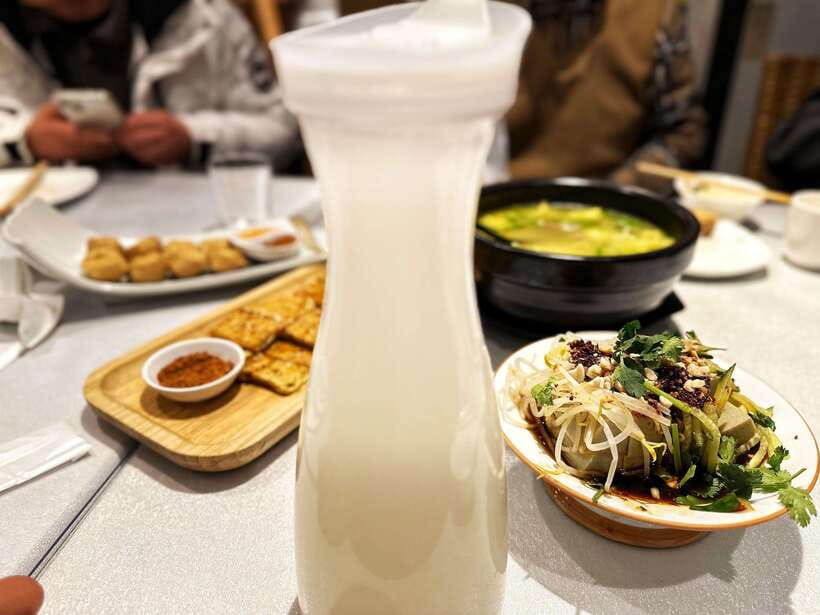
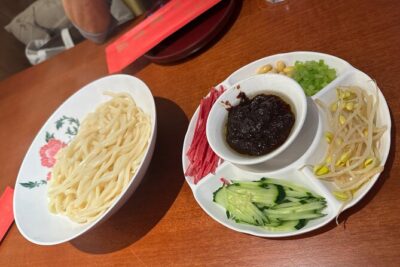
The final dining stop is a Yunnan-style restaurant hidden in the hutongs. The featured dish is cross-bridge rice noodles, served with a full, flavorful broth and a range of fresh ingredients. The format gives you another style of Chinese cooking after the northern flavors of duck and hot pot.
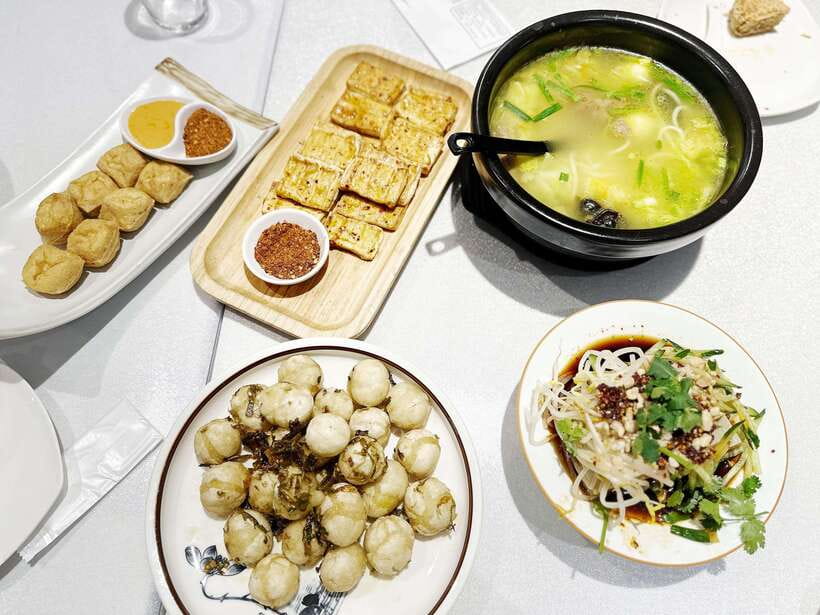
The menu goes beyond noodles. You may also try roasted tofu, fried lotus root cakes, and pickled cabbage stir-fried with sweet dumplings. These dishes bring different textures and flavors to the table, and they give the guide more opportunities to explain regional food customs.
Rice wine finishes the meal. It is described as sweet and mellow, a gentler ending after the heavier duck and hot pot. By this point, you will likely be full, so the final stop works best when you treat it as a chance to taste rather than a demand to finish every dish.
I like the regional range here. In three hours, you move from a Beijing signature dish to a northern hot pot tradition and then to Yunnan cooking. That does not make you an expert in Chinese cuisine, but it gives you a useful first map of how varied the food can be.
What the guides add to the meal
The strongest part of this experience is the guiding. English-speaking guides have included Mike, Andy, Miko, Anson, Allen, and Jack. The feedback is unusually consistent about friendly conversation, clear English, and explanations that connect each dish to Beijing life.
Mike is praised for making the evening feel like dinner with a longtime friend. Andy is noted for his warmth, food knowledge, and stories about local customs. Miko has guided families and first-time visitors through the hutongs while answering questions about daily life in China. Anson is singled out for his passion for Beijing’s culinary past.
The guide is not only there to translate a menu. You can ask why a dish is eaten in a particular way, how a cooking method developed, or what a hutong means in the city today. That turns a series of meals into something more useful for the rest of your Beijing stay.
For families, this personal help can make a big difference. One family found that their daughter still wanted to try a final dish after the adults were full, and the guide helped arrange a suitable place for her to taste it. That kind of flexibility is valuable when people in the same group have different appetites.
The guide quality can vary from person to person, as it does on any guided activity, but the available feedback gives this element particular weight. If conversation, cultural explanation, and friendly hosting matter to you, this tour has a lot going for it.
Is $80 a fair price for three hours?
At $80 per person, this is not the cheapest way to eat in Beijing. You are paying more than the restaurant bill alone. The price also covers a live English-speaking guide, hutong orientation, ordering help, three restaurant stops, street snacks, and unlimited beer and sodas.
The value improves if you are new to Beijing cuisine. Ordering Peking duck, hot pot, and Yunnan dishes independently could take more time and involve some trial and error. You would also miss much of the explanation about how to eat the dishes and why the food matters.
The small group helps justify the cost. With fewer than 10 people, the guide can answer questions and keep an eye on the table. A private group is available if you want more control over the pace, plus hotel pickup and drop-off when that option is selected.
For a solo diner, couple, or small family, I see the price as reasonable if you plan to make this one of your main evening activities. It is less appealing if you only want a quick taste of one dish or prefer to choose every restaurant yourself.
Timing, meeting points, and practical details
The experience lasts three hours, with starting times based on availability. Group participants meet at Dongsi Subway Station Exit B. Private customers can either meet there or choose downtown hotel pickup and return.
Arrive on time. The food stops are linked, and a late arrival could mean missing part of the walk or the first dish. Bring a camera if you want pictures of the hutong lanes, the duck carving, or the copper pot, but keep the focus on eating while the food is fresh.
The activity is offered in English, with free cancellation up to 24 hours before the start time and a reserve-now, pay-later option. Personal expenses are not included, though the advertised meals, street food, and drinks are covered.
Dietary restrictions are not explained in the available details, so contact the provider before booking if you need specific substitutions. The same applies to questions about alcohol, spice levels, or meat choices.
Who will enjoy this Beijing food crawl most?
I would choose this for a first or second visit to Beijing, especially if you want a guided introduction to local food without spending days learning the dining system. It is also a good fit for families, couples, and small groups who enjoy talking while they eat.
It suits adventurous beginners better than seasoned food hunters seeking obscure specialties. The menu is broad and local, but the tour is still built around well-known dishes and comfortable restaurant stops.
You should also like generous portions. The combination of three dining stops, snacks, and free-flow drinks means this is a full evening meal. If you eat lightly or dislike sharing dishes, the amount of food may feel excessive.
The walk through the hutongs adds cultural value, but it is not a major sightseeing tour. Choose this for food with a neighborhood setting, not for a long architectural tour or a list of major monuments.
Should you book this hutong food crawl?
I would book it if you want to taste several classic and regional Chinese dishes in one night, with an English-speaking guide to explain what is on the table. The strongest reasons are the variety, the small group size, the local hutong setting, and the consistently warm guiding style associated with Mike, Andy, Miko, Anson, Allen, and Jack.
Skip it if you prefer to dine slowly at one restaurant, avoid shared meals, or want complete control over the menu. Otherwise, $80 buys more than dinner. It buys a well-organized introduction to Beijing food culture, with enough structure to help you try new dishes and enough local atmosphere to make the night feel like more than a restaurant hop.
FAQ
Where does the group tour meet?
The group tour meets at Dongsi Subway Station Exit B. The exact meeting point can vary by booking option.
Can I get hotel pickup and drop-off?
Yes, private tours can include pickup and return to a downtown hotel. The guide meets you in the lobby with a sign showing your name. Group tours do not include hotel pickup and drop-off.
How long does the food crawl last?
The experience lasts three hours. Starting times depend on availability.
Which foods are included?
The tour includes Peking duck, Mongolian hot pot, Yunnan-style cross-bridge rice noodles, street snacks, and additional dishes such as roasted tofu, fried lotus root cakes, and pickled cabbage with sweet dumplings.
Are drinks included?
Yes. Unlimited beer and sodas are included, along with featured drinks. Erguotou and sweet rice wine are also associated with the evening’s food stops.
Is the tour available in English?
Yes. The tour includes a live English-speaking guide. Private groups are also available.
Just added in Beijing
- 4-Hour Private Tour: Lama Temple, Confucius Temple, Guozijian Museum with Dim Sum★ 5.0 · 21 reviews
- Online Cooking Class Beijing Dumplings and Cuisine by Sunflowerli Renowned Chef★ 5.0 · 65 reviews
- Beijing Walking Food Tour with a Local Friend★ 5.0 · 73 reviews
- Beijing Hutong Breakfast Food Tour★ 5.0 · 120 reviews
- Experience Beijing Walking Food Tour Private★ 5.0 · 56 reviews
- 3-Hour Private Night Tour: Beijing Foodie Experience★ 5.0 · 53 reviews
- Half-Day Private Beijing Hutong Walking Tour with Dim Sum★ 5.0 · 48 reviews
- Authentic Local Food Tour in Center Beijing★ 5.0 · 26 reviews
Beijing Food Tours, compared.
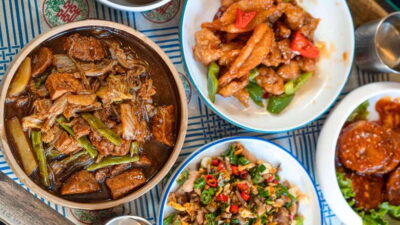
Hidden Gems Guided Food Tour with Beer and Tastings
Read our review →
Online Cooking Class Beijing Dumplings and Cuisine by Sunflowerli Renowned Chef
Read our review →Browse the lists this tour appears in