
REVIEW · BERLIN FOOD TOURS
Kreuzberg: Culinary Food Tour
Kreuzberg tells Berlin’s story one bite at a time. I like the mix of five food stops and street-level history, especially the way the tour connects working-class roots, divided Berlin, protest culture, and present-day neighborhood life. I also like that it visits both famous places and less obvious corners, rather than treating Kreuzberg as one photo stop.
The main consideration is pace. Three hours covers several streets and food tastings, so you will walk, listen, eat, and move on without lingering long at every location. Drinks are not included, and the food may sometimes be served outdoors and eaten standing up. Vegetarian food is available, but there is no vegan option.
Key points at a glance

- Five separate food tastings: Try Berlin specialties, international dishes, crossover cooking, sweets, and vegetarian fare instead of sitting down for one large meal.
- A history lesson on foot: The route links Kottbusser Tor, Oranienstraße, SO36, the former GDR border area, and other places tied to Berlin’s past.
- A look at everyday Kreuzberg: You see how migration, politics, nightlife, art, and working-class life shaped this neighborhood.
- Private group option: The $589 rate covers up to 10 people, which can make sense for a family or small group sharing the cost.
- Strong guide-led experience: English and German tours are available, with guides such as Niclas and Nike receiving special praise for preparation and engaging storytelling.
- A walk that ends near Kreuzberg nightlife: The finish at Grimmstraße puts you in a useful position for continuing your evening.
Why Kreuzberg works so well for a food tour
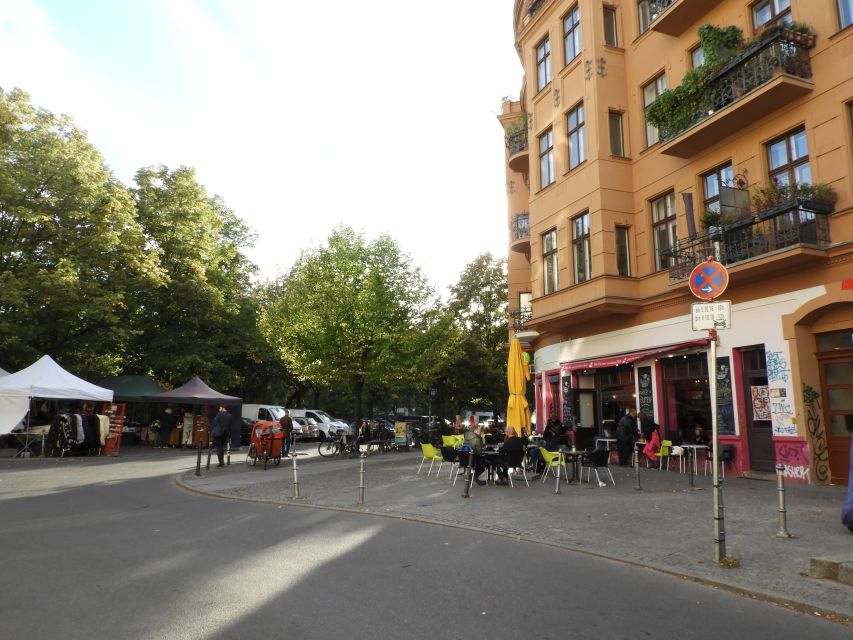
Kreuzberg is not a polished postcard district. Its appeal comes from layers. The neighborhood began as a working-class quarter in the mid-19th century, later became known for overcrowded housing and political activism, and grew into one of Berlin’s most mixed districts.
That mix is exactly what makes food useful here. A snack can point to migration, a street corner can recall protest, and a restaurant can show how Berlin cooking changes when cultures meet. You are not simply stopping for something to eat. You are using food as a way to understand the people and forces that shaped the area.
The tour begins at Kotti, the familiar nickname for Kottbusser Tor. Depending on the option booked, the meeting point may be listed at FightClub Casino. Check the exact meeting details before setting out, because the stated starting location can vary.
After a short introduction, your guide sets the scene. You get an overview of Kreuzberg’s origins, its working-class identity, its left-wing political tradition, and the many communities that now call the district home. The tour is especially useful if you want context before spending an evening in the area.
A few more food tours in Berlin worth a look
- Berlin Center Food Tour with 8+ Authentic Local Tastings
★ 5.0 · 1,227 reviews - Berlin: Mitte Culinary Food Tour
★ 4.5 · 447 reviews - Berlin: Downtown Food Tour with 8 Authentic Local Tastings
★ 4.8 · 342 reviews
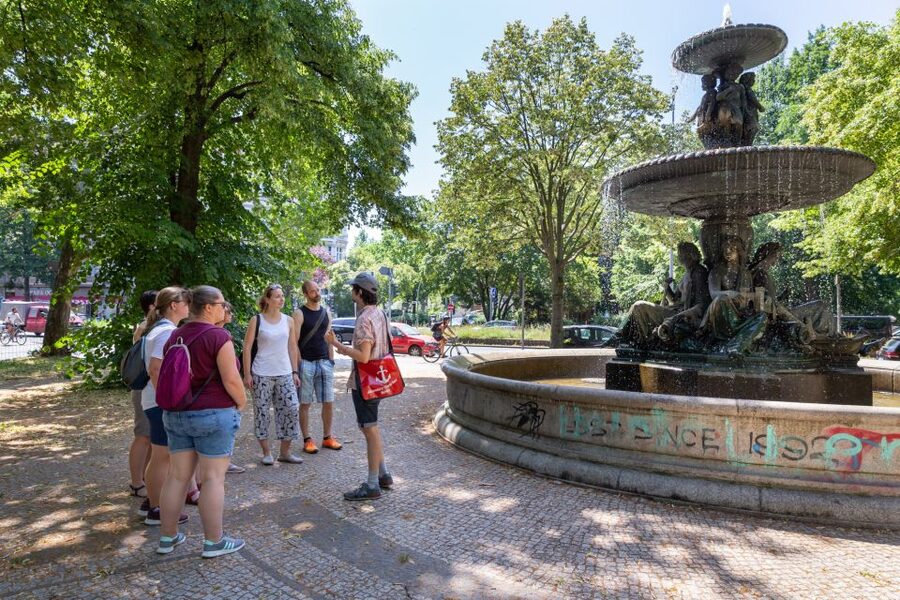
Kottbusser Tor and the Neues Kreuzberger Zentrum
The first substantial stop is the Neues Kreuzberger Zentrum at Kottbusser Tor. You spend about 40 minutes here with guided sightseeing and a food tasting.
Kottbusser Tor is a good place to begin because it quickly shows you the scale and energy of modern Kreuzberg. The tour uses the area to explain how the district developed and how its daily life reflects different origins, beliefs, lifestyles, sexualities, and incomes.
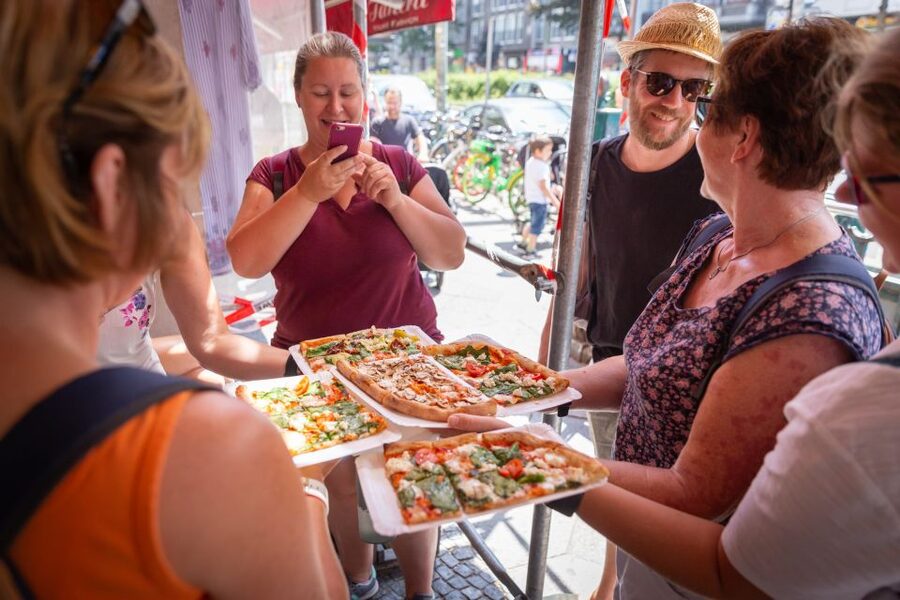
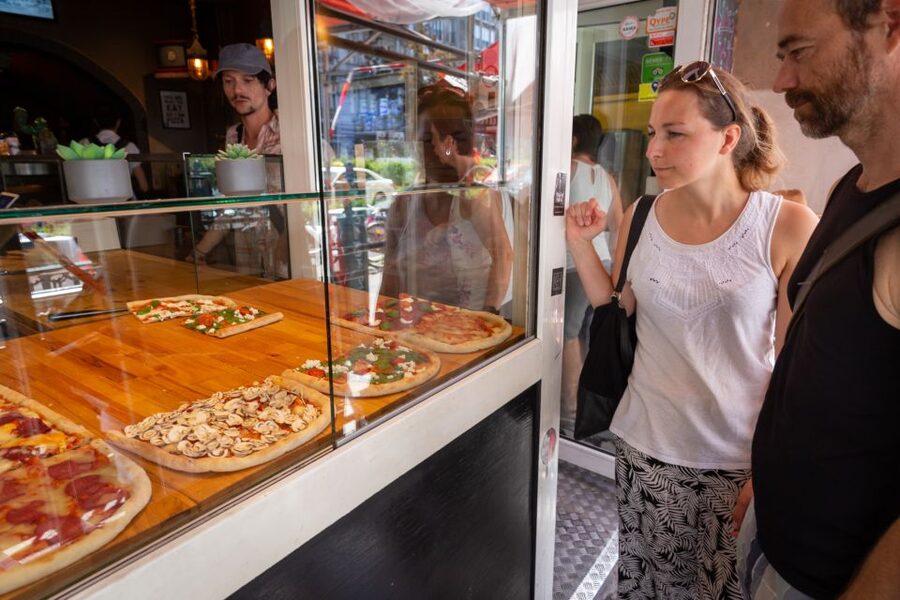
This is also an early chance to try one of the five food selections. The exact dishes can vary, but the food program includes original Berlin recipes, international specialties, and intercultural combinations. You should expect a series of modest tastings rather than a full restaurant meal.
That distinction matters. I like the variety because it lets you sample more of Kreuzberg, but anyone arriving very hungry should keep expectations realistic. Five tastings can add up, yet they are designed as stops along a walking route, not as five full courses.
Oranienstraße and the old working-class Kreuzberg

The tour then moves toward Oranienstraße, with about an hour devoted to walking, sightseeing, storytelling, and food.
This is the longest portion of the route, and it carries much of the historical weight. Your guide explains how people once lived in overcrowded conditions, including a striking detail about workers renting an eight-hour stay on a mattress rather than a whole room or apartment. It is a sharp reminder that housing problems in Berlin are not new.
Oranienstraße also helps explain Kreuzberg’s political character. You hear about demonstrations, the district’s left-wing culture, and the May Day marches connected with SO36. Those stories give the streets more meaning than a simple restaurant crawl can provide.
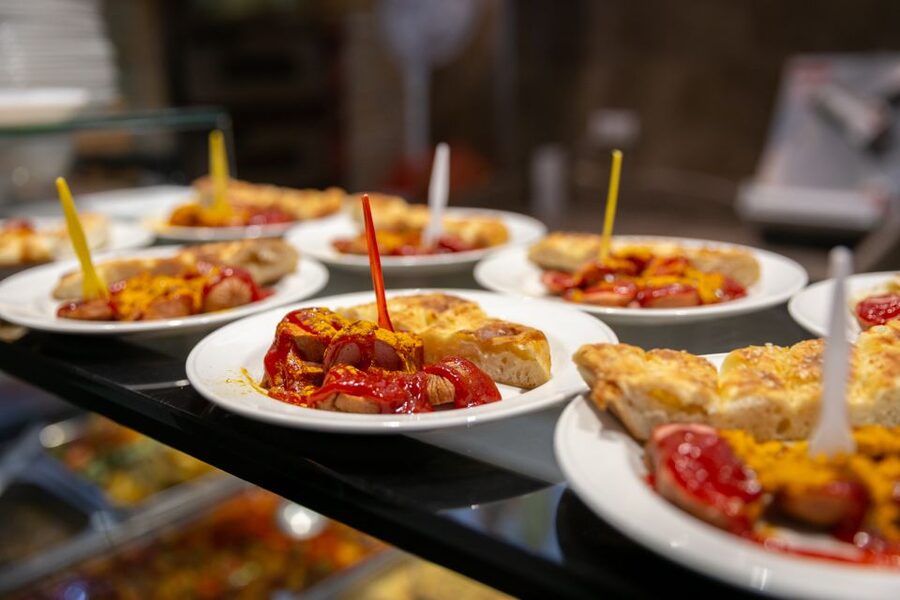
Food stops here may include Berlin staples and international dishes. Past tastings have included items such as döner or dürüm, currywurst, flammkuchen, baklava, vegetarian sushi, and roasted nuts in sweet and savory forms. The selection cited by one participant runs from the best döner or dürüm in the city, in that person’s view, to excellent vegetarian sushi and roasted nuts.
The range is the point. Kreuzberg does not present one fixed cuisine. It offers old Berlin recipes beside food brought from elsewhere, plus new combinations that would have seemed unusual in earlier generations.
Rio-Reiser-Platz and the cultural side of SO36
Rio-Reiser-Platz is a shorter stop, about 15 minutes, but it gives the walk a cultural turn. You pause for photos, hear more about the area, and take another tasting.
The name connects the square with Rio Reiser, a major figure in German rock and political music. The supplied details do not promise a long music lecture, so expect this to be a compact stop rather than a full presentation. Still, it helps show how Kreuzberg’s identity includes music, protest, and alternative culture alongside food and housing.
The reference to SO36 is important. Your guide uses this part of the route to explain the district’s reputation for demonstrations and its May Day marches. You will hear about the political events that made Kreuzberg famous, while also seeing how the neighborhood functions as a normal place to live, eat, and meet friends today.
That balance is one of the tour’s strengths. Kreuzberg is often reduced to nightlife and street art. This route gives you a broader picture.
Same city, a different table:
- Berlin: Guided Street Food Tour with Tastings
★ 4.8 · 310 reviews - East Berlin Food & History Tour with Eating Europe
★ 5.0 · 204 reviews - Classic Bites and Culinary Trends Neighborhood Food Tour in Berlin
★ 5.0 · 191 reviews - East Meets West: Berlin Food Culture & Street Art
★ 5.0 · 157 reviews
Mariannenstraße, Oranienplatz, and divided Berlin
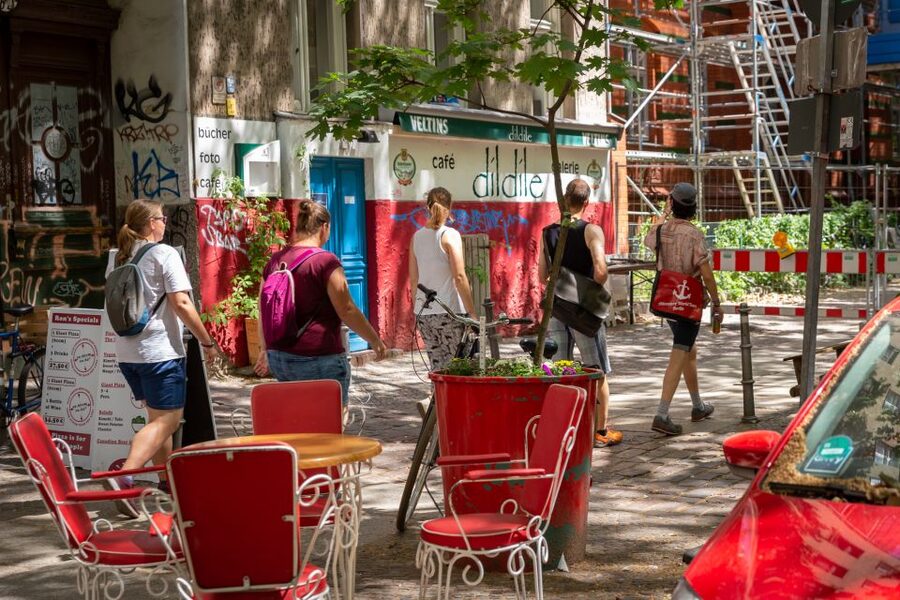
At Mariannenstraße 4, you spend around 20 minutes on guided sightseeing, walking, and another tasting. This section continues the bridge between past and present.
The stories include attempts to escape East Germany, a reminder that Berlin’s division was not just a line on a map. People took real risks to cross it. You also hear about Martin Luther King’s visit to Berlin in 1964, along with other dramatic episodes tied to the city.
The route then makes shorter stops at Oranienplatz and Dresdener Straße. Oranienplatz is listed as a five-minute photo and sightseeing stop, while Dresdener Straße allows roughly 10 minutes for more guided walking.
These brief pauses are best understood as connecting points. You are not getting a full museum visit or a long break at each place. Instead, your guide keeps the story moving through the streets, showing how different sites fit together.
One unusual story promised along the way concerns Berlin’s Jack the Ripper. The information provided does not spell out the full account, so treat it as one of the tour’s colorful historical anecdotes rather than its main theme. The strongest material appears to be the broader story of housing, division, protest, and change.
Admiralstraße and the final stretch
Admiralstraße receives about 40 minutes, including walking, sightseeing, photographs, and a food tasting. It is one of the longer stops and gives the tour room to slow down again after the shorter urban-history points.
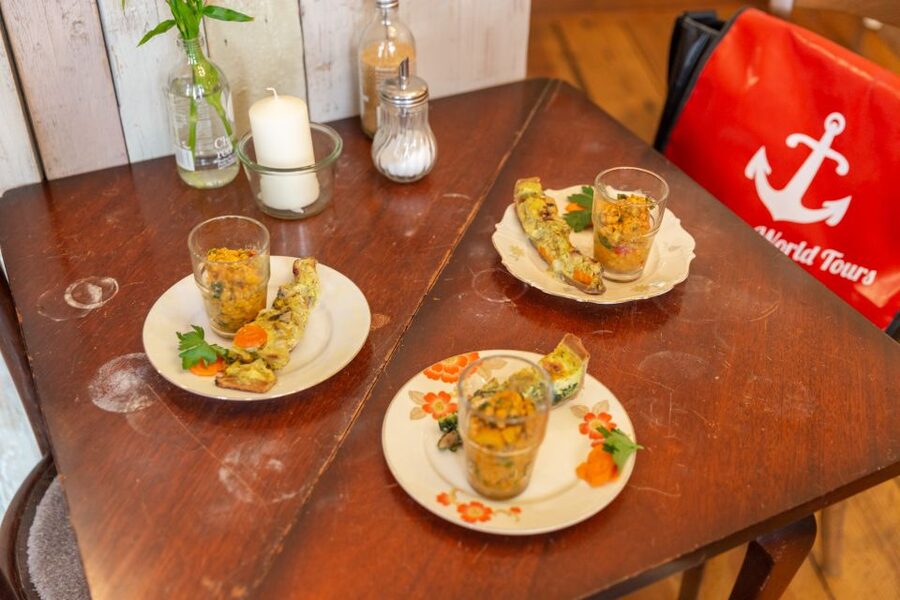
By this stage, the food program should feel like a connected portrait of Kreuzberg. You may have tried a Berlin specialty, a dish shaped by migration, a sweet, and a vegetarian option. The precise order and menu can change, but the stated plan is five tastings at five different restaurants.
Do not expect a formal dining room experience at every stop. In exceptional cases, food may be served outside and eaten while standing. That can suit the walk-and-talk format, though it is worth knowing if you prefer table service or need a seated meal.
The tour finishes at Grimmstraße 23, in the 10967 Berlin area. It does not finish at the same place where the walk begins, so plan your onward route. The finish also works well if you want to continue exploring Kreuzberg at night, which is presented as a natural next step after the tour.
What the food is really worth
The price is $589 for a group of up to 10 people. That sounds high if you compare it with a standard public walking tour, but the calculation changes for a private group.
At the maximum size, the cost works out to about $59 per person before drinks. That includes a private guide, three hours of touring, and five tastings at separate restaurants. For two or three people, the per-person cost becomes much harder to justify. For a family, group of friends, or small work party, it can be reasonable if you value private guiding and shared time.
I would not book this mainly to save money on lunch. Book it for the combination of food, local context, and access to a guide who can explain why the neighborhood looks and feels as it does.
The food itself has earned some of the strongest praise. One account describes a run of döner or dürüm, currywurst, flammkuchen, baklava, vegetarian sushi, and roasted nuts. That is a generous spread of tastes, and it gives vegetarians something more interesting than a token side dish.
Drinks cost extra. Since each stop is relatively short, you may prefer to buy a drink only when you want one rather than at every restaurant. Vegan diners should note that no vegan option is available.
Guide quality can shape the whole afternoon
This tour depends heavily on the guide. The route has plenty of material, but the stories need clear delivery and good judgment to avoid becoming a list of disconnected facts.
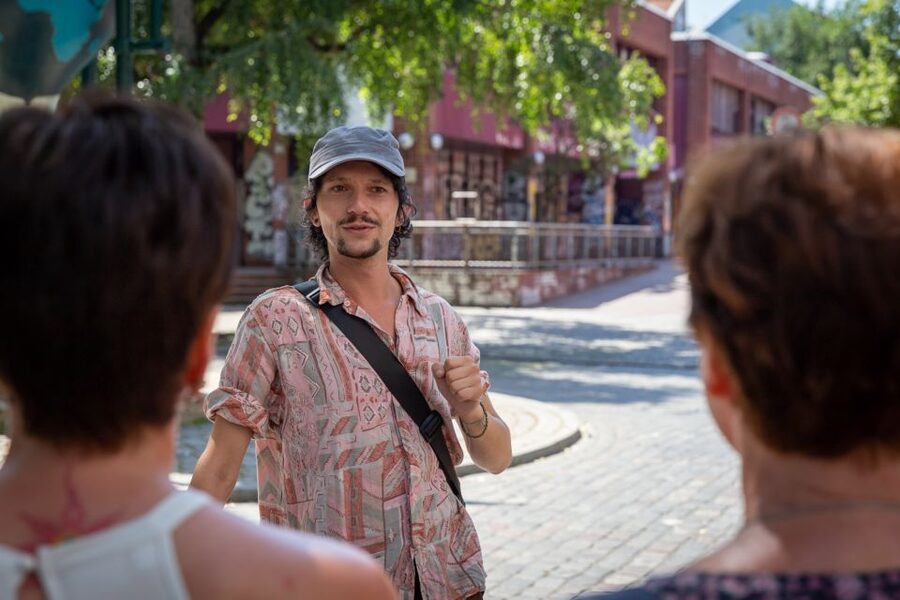
Niclas is praised for presenting varied information about Kreuzberg and for being well prepared. Nike is also singled out for making the tour appealing and interesting. Those details matter because the best part of this experience is not simply reaching the stops. It is the way the guide links them.
The feedback is not entirely uniform. One assessment liked the culinary stations and the general overview but found some information less consistent. That is a fair caution. The tour includes many subjects, from GDR escape attempts to Martin Luther King, political demonstrations, nightlife, and a famous murder story. Some anecdotes may feel more solidly connected to Kreuzberg than others.
You should come ready for an engaging neighborhood walk, not a formal academic lecture. If your guide is energetic and well prepared, the wide range of topics becomes a pleasure. If you want tightly sourced historical detail at every turn, you may find the storytelling uneven.
Practical planning for the three-hour walk
Wear shoes suited to city walking. The route includes several sections on foot, and the food stops are spread across the neighborhood rather than grouped in one building.
Allow the full three hours. The listed segments include 40 minutes at Kottbusser Tor, about an hour around Oranienstraße, shorter stops at Rio-Reiser-Platz, Mariannenstraße, Oranienplatz, and Dresdener Straße, then about 40 minutes around Admiralstraße. The precise timing can shift, but this is not a quick tasting session.
Eat lightly beforehand. The tour includes five food tastings, but not one large meal. Arriving with some appetite gives you room for the full selection without making the walk uncomfortable.
Bring a little flexibility for weather and seating. Food may occasionally be served outside and eaten standing. That is part of the informal street-food character, but it may not suit anyone who needs regular seating.
The tour is offered in English and German. A private group is available, and cancellation is free up to 24 hours before the start. You can also reserve and pay later, which helps if your Berlin schedule is still shifting.
Who should book this Kreuzberg tour?
I would recommend it to first-time Berlin visitors who want more than major sights, food-minded people who enjoy small portions from several places, and anyone curious about how politics and migration shaped a neighborhood.
It also suits groups of friends or families who can share the private-group price. The guide-led format gives you a useful framework before an evening in Kreuzberg, especially if you plan to explore the district’s nightlife afterward.
I would be more cautious if you are vegan, want a seated meal, dislike walking between stops, or expect a precise food itinerary with fixed restaurant names. The tour is flexible and story-led. That is part of its charm, but it also means the experience is less controlled than a restaurant tasting menu.
Should you book it?
Book this tour if you want Kreuzberg explained through streets, political stories, and five varied bites. The strongest reasons are the broad food selection, the attention to the district’s working-class and divided-Berlin past, and the chance to ask a guide questions in a private group.
The $589 price makes the most sense for up to 10 people. For a small party, compare it with a normal walking tour plus your own meals. For a larger group, the cost becomes more practical, especially if Niclas, Nike, or another well-prepared guide brings the history to life.
If you want a relaxed meal, choose a restaurant. If you want a lively introduction to Kreuzberg with food along the way, this tour is a strong choice.
FAQ
How long does the Kreuzberg Culinary Food Tour last?
The tour lasts three hours and includes guided walking, sightseeing, historical stories, and five food tastings.
Where does the tour start?
The meeting point may vary according to the option booked. One listed starting location is FightClub Casino, while the tour description places the meeting near Kotti in central Kreuzberg.
Where does the tour finish?
The tour finishes at Grimmstraße 23, 10967 Berlin, Germany.
How many food tastings are included?
Five different food tastings are included, served at five distinct restaurants.
Are drinks included?
No. Drinks are not included in the tour price.
Is vegetarian food available?
Yes. A vegetarian option is available.
Is there a vegan option?
No. A vegan option is not available.
What languages are offered?
The tour is available with a live guide in English or German. A private group option is also available.
Just added in Berlin
- Small-Group Berlin Sightseeing and Food Tour of Prenzlauer Berg and Mitte★ 5.0 · 25 reviews
- East Meets West: Berlin Food Culture & Street Art★ 5.0 · 157 reviews
- Berlin Evening Culinary Tour – Award Winning★ 5.0 · 118 reviews
- The Berlin Culinary Experience: A Regional & Cultural Food Tour★ 5.0 · 79 reviews
- Classic Bites and Culinary Trends Neighborhood Food Tour in Berlin★ 5.0 · 191 reviews
- Private Tour: Daytime Food Tour Trends & Classics★ 5.0 · 24 reviews
- Private Berlin Street Food Tour by Bike★ 5.0 · 87 reviews
- Food tasting tour in Berlin of HIDDEN GEMS (Small Groups)★ 4.5 · 60 reviews
Berlin Food Tours, compared.

Berlin Center Food Tour with 8+ Authentic Local Tastings
Read our review →
Downtown Food Tour with 8 Authentic Local Tastings
Read our review →
East Berlin Food & History Tour with Eating Europe
Read our review →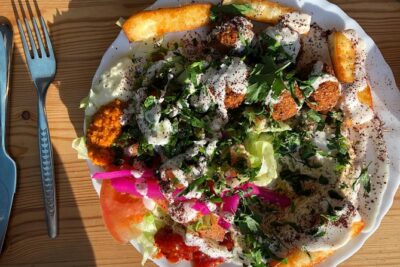
Classic Bites and Culinary Trends Neighborhood Food Tour in Berlin
Read our review →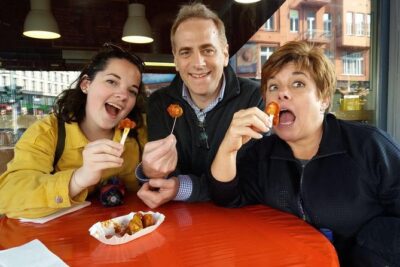
East Meets West: Berlin Food Culture & Street Art
Read our review →
Berlin Private Walking Food Tour With Locals: the 10 Tastings
Read our review →Browse the lists this tour appears in