
REVIEW · MUNICH FOOD TOURS
Munich: 3-Hour Culinary Nightwatch Tour
Old Munich gets darker after supper. This three-hour evening tour pairs a German-speaking night watchman with a hearty tavern meal, a drink, and a walk through the old town’s more unsettling stories. I like the mix of food and storytelling, and I like that the route covers major sights while adding odd details about cemeteries, torture, wine, church scandals, and missing pews. The main consideration is that the tour is conducted in German, and one past booking was canceled for low participation.
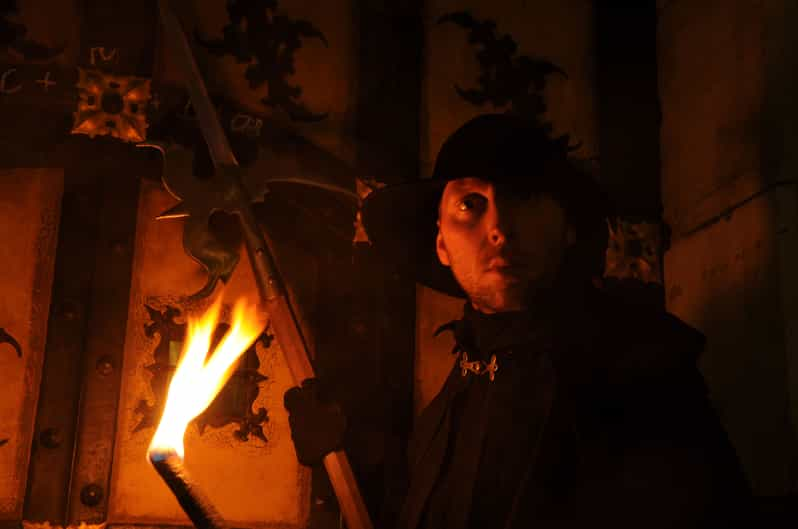
I also like the theatrical touch of meeting a guide in historical costume, marked by a big blue Weis(s)er Stadtvogel bag. The evening ends with dessert and a nightcap, which gives the tour a proper social finish. Food quality may vary, and the tavern can feel cramped when the group is large.
Key points to know before you book
- A meal begins the evening: You start in a Munich tavern with meat, bread, and a drink before walking through the old town.
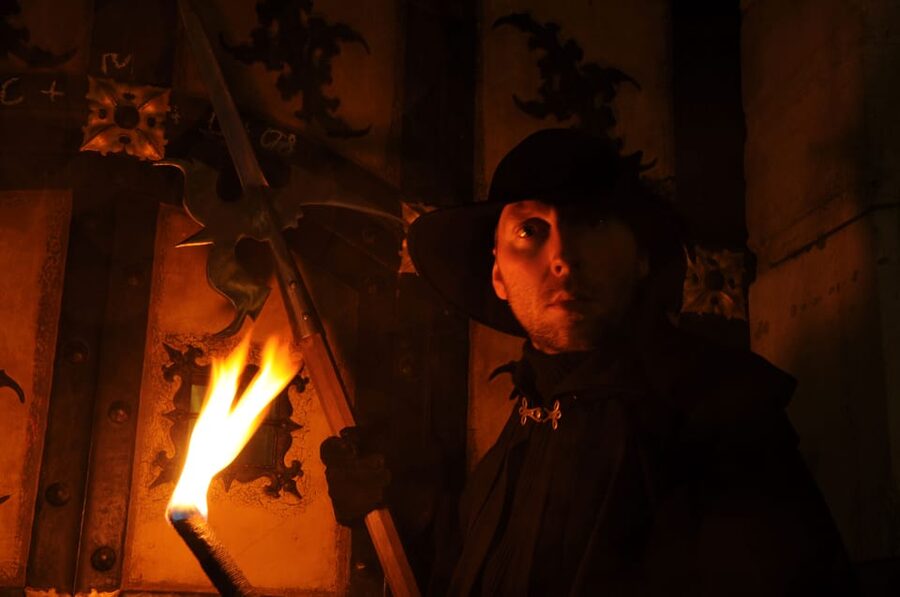
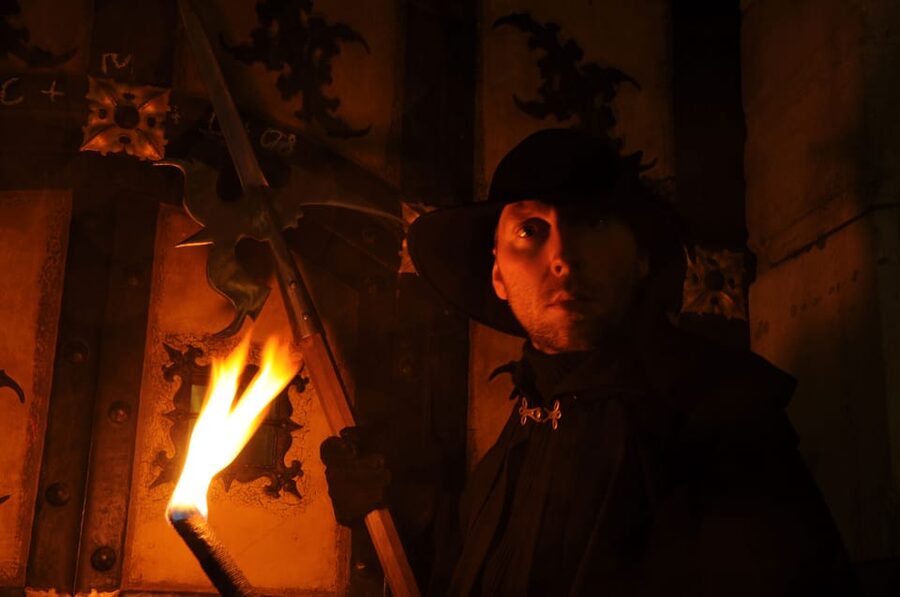
- The guide plays a real character: Your night watchman wears historical costume and tells grisly stories while leading the route.
- The route covers major landmarks: Expect St. Peter’s Church, the Old Town Hall, the Frauenkirche, Promenadeplatz, Salvatorkirche, and the Theatine Church.
- The stories are often macabre: Cemetery customs, foul-smelling corpses, torture, prison life, host desecration, and old city defenses all appear.
- Dessert is part of the package: You return to the tavern for dessert and a nightcap, though one review found returning to the same restaurant less satisfying.
- German is the only listed tour language: This matters more than usual because the experience depends on spoken jokes and historical tales.
Why this Munich night tour works
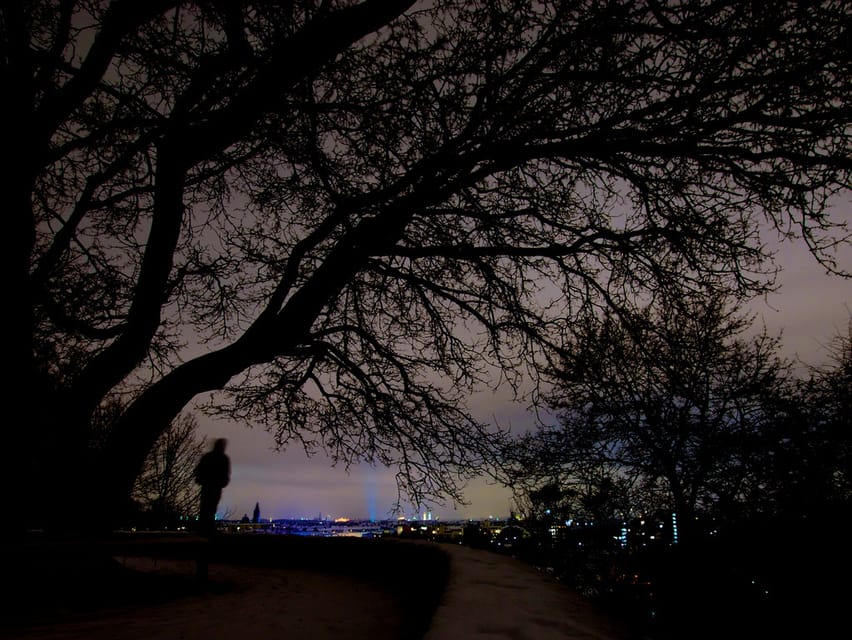
Munich is easy to admire by day. Marienplatz, the Frauenkirche, and the grand palaces are polished and familiar. At night, the same streets can feel more mysterious, especially when a costumed watchman points out the places where medieval law, religion, illness, and punishment once shaped daily life.
That is the appeal here. You are not simply walking past monuments and hearing dates. The guide uses the city as a stage for stories about dead bodies, old gates, missing church furniture, and shocking religious crimes. Some tales are gruesome, some are funny, and some are simply strange.
The meal matters, too. It gives the evening a social rhythm rather than making you stand outside for three straight hours. You eat first, walk through the historic center, then return for dessert and a final drink. That structure suits you if you want an evening activity with food built in, not just a standard sightseeing walk.
The experience has earned a 4.3 rating from 87 reviews, with especially strong praise for the guides’ humor, knowledge, and ability to keep the group entertained. Matthias, one named night watchman, was praised for his humor, strong subject knowledge, singing, and lively delivery. That gives you a useful clue about the tone: this is meant to be performed, not whispered in a dull lecture voice.
A few more food tours in Germany worth a look
- Leipzig: 3-Hour Sightseeing and Food Tour
★ 4.9 · 113 reviews - Munich: 3-Hour Food Tour Through Haidhausen in GERMAN
★ 4.7 · 21 reviews - Award-Winning Geneva Chocolate &Old Town Tour with Boat Ride (3h)
★ 5.0 · 3,721 reviews
Meeting the watchman at Marienplatz
Your meeting point is the Mariensäule at Marienplatz, one of Munich’s easiest central landmarks to find. Look for the guide carrying a large blue bag marked with the white words Weis(s)er Stadtvogel. That detail is practical and important, since Marienplatz can be busy and several tour groups may gather nearby.
The guide wears historical costume and takes on the role of a night watchman. That costume is not just decoration. It helps set the mood before the first story begins and makes the walk feel like a piece of street theater.
You should arrive ready for an evening on foot. The exact starting time depends on availability, so check the schedule when you book. The full experience lasts three hours, and one past group ran slightly longer, so do not schedule a tight dinner reservation immediately afterward.
The pace appears to balance stops for storytelling with movement through the old town. Still, you will spend much of the evening walking and standing. Comfortable shoes are a sensible choice, even though the route remains in central Munich.
The tavern meal: meat, bread, and a drink
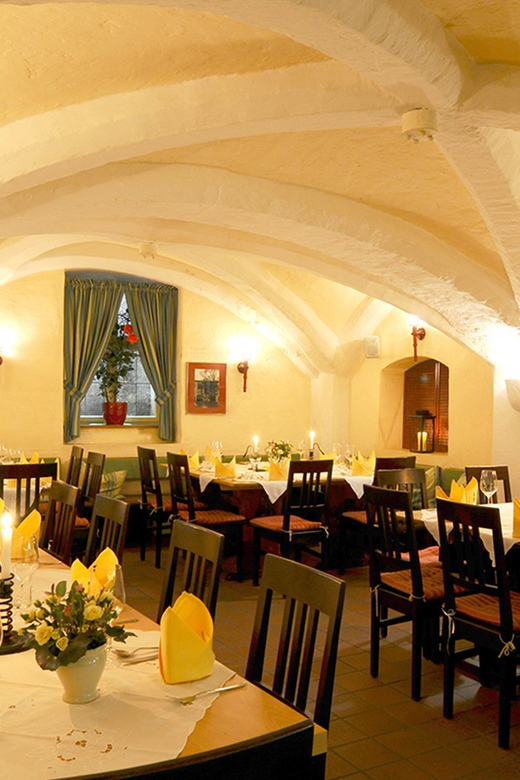
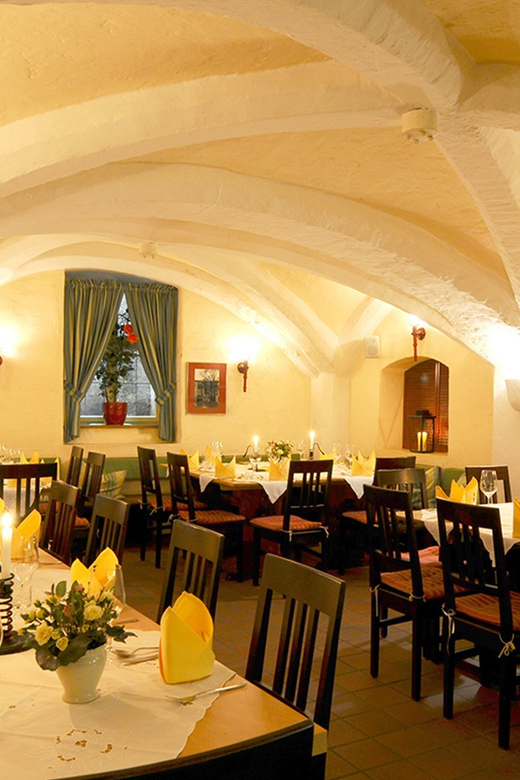
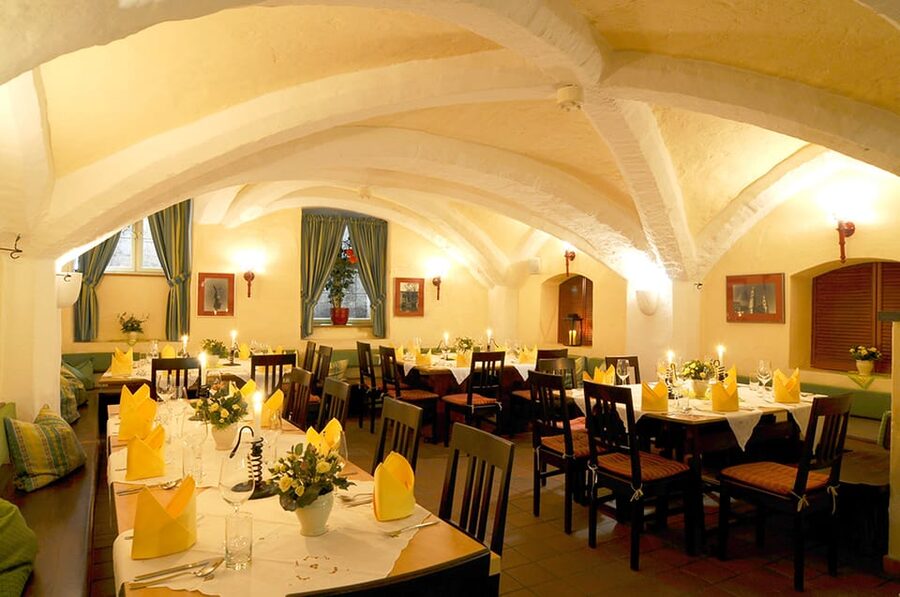
The first stop is a Munich tavern, where you receive a hearty meal of meat and bread along with a drink. This is a useful beginning because it lets you settle in, meet the group, and hear the first stories while seated.
The meal is not presented as a formal food tour. Think of it as a traditional night watchman’s supper, designed to give you strength before patrolling the streets. If you want a broad tasting of Bavarian cuisine, this may feel limited. If you want a filling start to an evening walk, it makes good sense.
Food quality seems to be the least consistent part of the experience. One review called the meal only average, while another praised the food but noted that the group sat quite close together. That is a fair warning. The setting may feel convivial and cheerful, but a large group can make the meal less comfortable.
I like the idea of beginning with something substantial rather than saving all food for the end. You can focus on the stories without wondering when dinner will appear. Just keep your expectations practical: the main attraction is the guide and the city, not a carefully staged tasting menu.
St. Peter’s Church and the uncomfortable side of death
From the tavern, the night watchman leads you toward St. Peter’s Church. Here the stories turn toward the cemetery, funerary customs, epitaphs, foul-smelling corpses, and even missing church pews.
This section gives you a sense of how different public life once was. Death was not kept at a polite distance. Cemeteries, churches, and daily commerce occupied the same compact center, and practical problems such as odors and crowded burial grounds became part of urban life.
The material can be grisly, but it is also useful because it makes the church more than a pretty building. You begin to see it as a working part of old Munich, tied to burial, worship, status, and local gossip.
The guide’s delivery matters especially here. A dry list of funerary customs would quickly become tedious. A good night watchman can turn the unpleasant details into a memorable story, and the strongest feedback for this experience praises the guides for being funny, entertaining, and concise.
Same city, a different table:
- Hamburg: Schanzenviertel Culinary Tour
★ 4.6 · 2,051 reviews - Hamburg: Elbphilharmonie Plaza and HafenCity Food Tour
★ 4.7 · 1,711 reviews - Berlin Center Food Tour with 8+ Authentic Local Tastings
★ 5.0 · 1,227 reviews - Munich: Viktualienmarkt Food Tour
★ 4.5 · 1,127 reviews
Old Town Hall, Salzstraße, and the old city gate
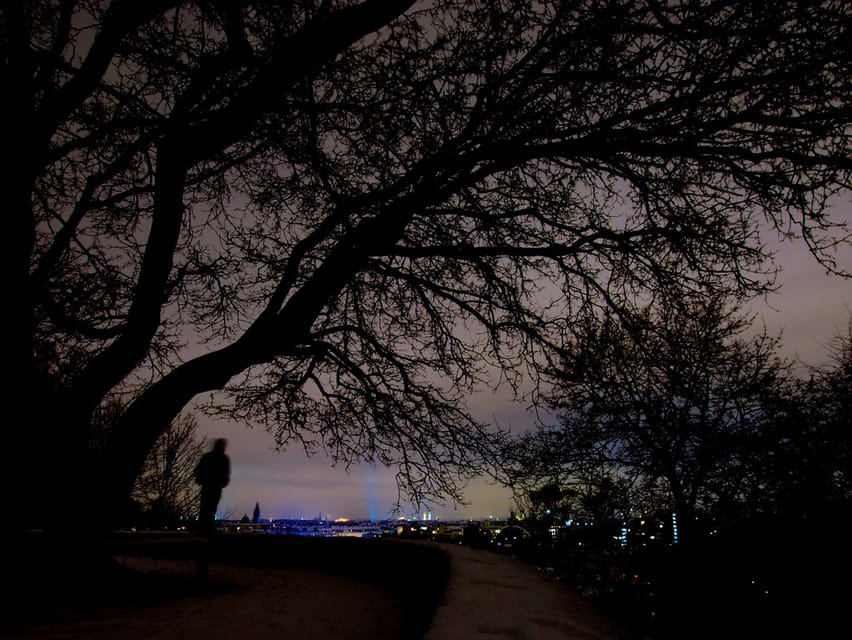
The route continues to the Old Town Hall on Salzstraße. You hear about the old city gate and the reconstruction of the building’s spire in the 1970s.
This stop adds a useful layer to the evening. You are not just hearing medieval legends. The guide also points out how Munich’s buildings changed, disappeared, and were rebuilt over time. The reference to the spire reminds you that the city you see today is partly inherited and partly reconstructed.
Following a night watchman through this area also makes the old street layout easier to picture. Gates controlled movement, walls marked the limits of the town, and a watchman’s job was practical: protect the streets, notice trouble, and keep order after dark.
The stories are likely to appeal to you if you enjoy urban history at street level. They focus on what happened in specific lanes and buildings rather than treating Munich as a collection of grand monuments.
Torture, prison, and the Old Court
The next stretch passes a torture chamber and prison before reaching the Old Court. This is where the tour’s darker tone becomes most pronounced.
The subject matter is not gentle. You hear about punishment and imprisonment in a city where justice was public, physical, and often brutal. The night watchman format suits these stories because the character belongs to the world of patrols, law enforcement, suspicion, and nighttime disorder.
From the Old Court, the route follows the line of Munich’s original 12th-century city wall. You leave the moated castle and head west, tracing defenses that once shaped how people entered, left, and understood the city.
I find this kind of route especially helpful in Munich because modern streets can hide the medieval plan. The wall may no longer function as a wall, but its former line still gives structure to the walk. You are learning to read the city through what is no longer there.
Gruftgasse, Schäfflergasse, and medieval drinking habits
Gruftgasse brings more gruesome tales, while Schäfflergasse supplies one of the evening’s more surprising details: medieval Munich drank wine more often than beer.
That fact can correct a popular modern assumption. Munich is now strongly associated with beer halls and huge steins, but the city’s drinking habits were not always the same. Stories like this are small, memorable, and useful because they connect everyday behavior to a particular period.
The route also benefits from variety. After cemetery customs and torture, you get local drinking history and street lore. The evening is not one long march through horror stories. It shifts between strange, funny, religious, and practical details.
If you enjoy a guide who performs, this part should suit you. The night watchman role gives the stories a clear voice and point of view. If you prefer quiet architectural commentary, the theatrical style may feel too much.
The Frauenkirche and Munich’s grander sights
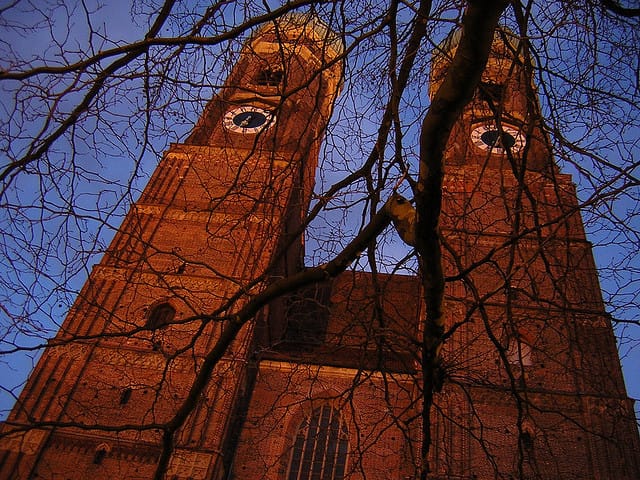
You then see the twin towers of the Frauenkirche, one of Munich’s most recognizable landmarks. The church provides a grand visual pause after the narrower lanes and darker tales.
The route continues past Promenadeplatz, Palais Portia, and Palais Holnstein. These stops broaden the subject beyond medieval punishment. You get glimpses of Munich’s courtly and aristocratic past, with palaces and formal squares replacing alleys, prisons, and old walls.
This is one reason I think the tour works well for a first evening in Munich. You see several major sights without spending the entire night on a standard monument circuit. The guide gives you a story-based introduction to the center, and you can return later for a closer look at the buildings that interest you most.
Do not expect long interior visits. The supplied details describe an evening walk through the streets, with the emphasis on what the guide says along the way. The value is in the route and narration, not in extended time inside each church or palace.
Salvatorkirche and the Theatine Church
At Salvatorkirche, the night watchman tells the disturbing story of a host desecration. This is a sensitive religious subject, but it helps explain the fear, accusations, and punishments that could follow alleged offenses in earlier centuries.
The Theatine Church brings a different kind of story. You hear about Henriette Adelaide and the son who ensured that the Theatine cloister was built. The change of tone is welcome. After the shocking material at Salvatorkirche, the route moves toward court life, family influence, and religious construction.
These stops show the range of the tour. It is not limited to famous names or grand architecture. The guide connects buildings with scandals, family decisions, religious belief, and the consequences of power.
You should also keep in mind that the tour is in German. If you do not understand German well, you may still appreciate the costume and route, but you will miss much of the experience. The stories, jokes, and historical explanations are the main product.
Dessert, a nightcap, and the evening’s final verdict
The route ends back at the tavern, where dessert and a nightcap are included. Kaiserschmarren was served as dessert on at least one occasion, though the format may depend on the evening and the venue.
Returning to the same restaurant has two sides. It is convenient, warm, and gives the group a place to keep talking. One review found the repeat visit disappointing, especially after already eating there. I can understand that reaction if you prefer a fresh setting for dessert, but others may appreciate the easy finish.
The social atmosphere seems to be a real part of the experience. One group laughed, sang, and stayed out for more than three hours, while other praise focused on the guide’s humor and lively delivery. That tells you this is not a solemn historical lecture. The right guide can turn it into a cheerful group evening, even when the subject is a foul-smelling corpse.
Is $88 a fair price?
At $88 per person, the cost is not cheap for a three-hour walking tour. But it includes a meal with meat, bread, and a drink, plus dessert and a nightcap. You are also paying for a costumed live guide, a planned route, and an evening of entertainment.
The value depends on how you would otherwise spend the night. If you would book dinner separately and pay for a standard city tour, the combined price can make sense. If you already have dinner plans or mainly want architectural history, the package may feel less attractive.
Food quality is the biggest unknown. The meal received both positive and lukewarm feedback, and seating can be tight with a large group. I would book it for the storytelling and atmosphere first, with the food treated as a useful extra rather than the central reason to go.
The free cancellation option up to 24 hours before the tour and the reserve-now, pay-later arrangement make planning easier. Still, one booking was canceled two days before departure because of low participation, even though that customer had reserved seven places. If your evening schedule is fixed, keep a backup plan.
Who should book this Munich evening?
I would recommend the tour if you enjoy:
- Costumed guides and theatrical storytelling
- Dark history, old crime, religious scandals, and cemetery lore
- A social evening with food included
- Seeing major Munich sights while walking through smaller historic streets
- Guided activities conducted in German
- A flexible, group-oriented night rather than a private or highly polished dining experience
I would be more cautious if you need an English-language tour, dislike grisly stories, want a serious academic lecture, or expect a refined culinary experience. The food is hearty rather than elaborate, and the group atmosphere can be close and noisy.
Families should consider the subject matter carefully. The supplied details do not give an age recommendation, but stories of corpses, torture, prison, and host desecration may not suit young children.
Should you book it?
Book this tour if you want Munich after dark with a strong dose of character. The best parts are the costumed night watchman, the odd local stories, and the way the meal and nightcap turn sightseeing into a full evening.
I would not choose it as a substitute for an English tour or a serious food experience. But if you understand German and like history with humor, this is a memorable way to connect Marienplatz, the old churches, city walls, palaces, and dark lanes. Before booking, confirm the language, check the starting time, and leave some room in your schedule in case the evening runs long.
FAQ
Where does the Munich Culinary Nightwatch Tour meet?
The meeting point is the Mariensäule at Marienplatz in Munich.
How will I recognize the guide?
The guide wears historical costume and carries a large blue bag with the white words Weis(s)er Stadtvogel.
How long does the tour last?
The scheduled duration is three hours. One past experience lasted slightly more than three hours.
What language is the tour conducted in?
The live tour guide conducts the experience in German.
Is food included?
Yes. The first stop includes a night watchman meal with meat, bread, and a drink.
Is dessert included?
Yes. The evening finishes at the tavern with dessert and a nightcap.
What sights are included on the route?
The route includes St. Peter’s Church, the Old Town Hall, Salzstraße, the Old Court, Gruftgasse, Schäfflergasse, the Frauenkirche, Promenadeplatz, Palais Portia, Palais Holnstein, Salvatorkirche, and the Theatine Church.
Is the tour wheelchair accessible?
Yes, the activity is listed as wheelchair accessible.
Can I cancel for a refund?
You can cancel up to 24 hours in advance for a full refund. The activity also offers reserve now and pay later booking.
Just added in Germany
- Cologne Food and Kolsch Tasting Walking Tour★ 5.0 · 22 reviews
- Small-Group Berlin Sightseeing and Food Tour of Prenzlauer Berg and Mitte★ 5.0 · 25 reviews
- East Meets West: Berlin Food Culture & Street Art★ 5.0 · 157 reviews
- Berlin Evening Culinary Tour – Award Winning★ 5.0 · 118 reviews
- The Berlin Culinary Experience: A Regional & Cultural Food Tour★ 5.0 · 79 reviews
- Classic Bites and Culinary Trends Neighborhood Food Tour in Berlin★ 5.0 · 191 reviews
- Private Tour: Daytime Food Tour Trends & Classics★ 5.0 · 24 reviews
- Private Berlin Street Food Tour by Bike★ 5.0 · 87 reviews
Munich Food Tours, compared.

Beer and Food Tour with Dinner & Oktoberfest Museum
Read our review →

Old Town Food Tour with 10+ Tastings, Beer & Pretzel
Read our review →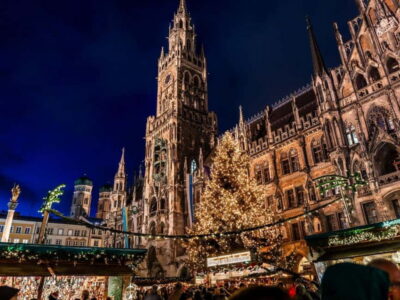
Browse the lists this tour appears in