
REVIEW · MUNICH FOOD TOURS
Munich: Viktualienmarkt & Altstadt Food Tour
Munich tastes best at market level. This two-hour private walk pairs old town landmarks with food from eight market stalls, so you get both a useful orientation and several classic Bavarian bites. I especially like the clear food focus and the route through places such as Marienplatz, the Hofbräuhaus area, and the Viktualienmarkt itself.
I also like that the tasting list includes distinctly local items, including a Leberkässemmel, a pickle from the Sauren Ecke, and a fresh Schmalznudel. The main drawback is the price: at $671 per group of up to five, it makes the most sense for a full small group rather than one or two people.
The guides earn particularly strong praise for being friendly, funny, and well prepared. Recent German-language comments repeatedly describe the tour as entertaining rather than dry, and one simply singles out the food as the highlight. With a 4.7 rating from 481 reviews, this is a polished choice for visitors who want Munich explained through its food.
Key points to know before booking
- Eight market stalls in two hours: You get a compact tasting route rather than a long meal with one vendor.
- A private group up to five: The fixed price becomes much better value when shared by four or five people.
- Local food takes center stage: Expect a pretzel, Leberkässemmel, pickled gherkin, and Schmalznudel among the included tastes.
- The route links major old town sights: Isartor, Platzl, Alte Münze, Alte Hof, Marienplatz, Rindermarkt, and Jakobsplatz all fit into the walk.
- English and German guiding: You can choose the language that suits your group.
- Wheelchair accessible: This is an important practical advantage for visitors who need an accessible tour.
Starting at Isartor with a cosmobiological welcome
The tour begins at the Isartor, one of Munich’s historic city gates. Before the walking and tasting start, you receive a cosmobiological welcome drink. That is an unusual phrase, and the supplied information does not specify the drink’s ingredients, so you should not book this expecting a particular beverage such as beer, wine, or juice.
What matters more is the opening location. Isartor gives the tour a clear starting point at the edge of Munich’s old town, and the guide can move from the city’s medieval framework into its modern food culture. You are not simply dropped at the market and asked to eat. The walk builds a sense of place first.
The meeting point also helps keep the two-hour schedule organized. This is a short tour, so every minute counts. You should arrive ready to walk and taste rather than expecting time to wander freely at each stop.
The tour is private, with space for up to five people. That changes the feel compared with a large group outing. Your party stays together, and the guide’s attention is not spread across a crowd. The trade-off is cost. At $671 for the group, the per-person price is about $134 when five people share it, but the same total feels steep for a couple.
A few more food tours in Germany worth a look
- Hamburg: Schanzenviertel Culinary Tour
★ 4.6 · 2,051 reviews - Hamburg: Elbphilharmonie Plaza and HafenCity Food Tour
★ 4.7 · 1,711 reviews - Berlin Center Food Tour with 8+ Authentic Local Tastings
★ 5.0 · 1,227 reviews
A walking introduction to Munich’s old town
After the welcome drink, the route passes several important points in central Munich. The sights are not background decoration. They give the food its setting and help you understand how the city’s center fits together.
At Platzl, you pass the famous Hofbräuhaus. This is one of Munich’s best-known names, and its presence tells you something about the city’s public beer culture. The tour does not list a meal or drink inside the Hofbräuhaus, so think of this as a historical and visual stop along the route, not a scheduled pub visit.
The walk continues past the Alte Münze and the Alte Hof. These sites add architectural variety to the route, and the guide discusses Munich’s past as you move between them. A good city walk makes transitions useful, and this one uses the streets between food stops to explain why the center looks as it does.
Marienplatz is another major point on the route. It is one of the places most visitors want to see, but a short guided explanation can make the square more meaningful than a quick photograph. The tour gives you context without taking up the entire afternoon.
You also pass the Rindermarkt and the synagogue on Jakobsplatz. These stops widen the story beyond royal buildings and beer halls. The inclusion of Jakobsplatz is especially useful because it brings another part of Munich’s civic and religious life into the walk.
The exact time spent at each sight is not specified. That is worth keeping in mind if you want a detailed architectural tour. The food is the main subject, and the landmarks support that theme rather than replace it.
Reaching Viktualienmarkt, Munich’s food center
The Viktualienmarkt is the heart of the tasting portion. Located in central Munich, it is a permanent market with stalls selling food and drink. Here, the tour shifts from city explanation to direct sampling.
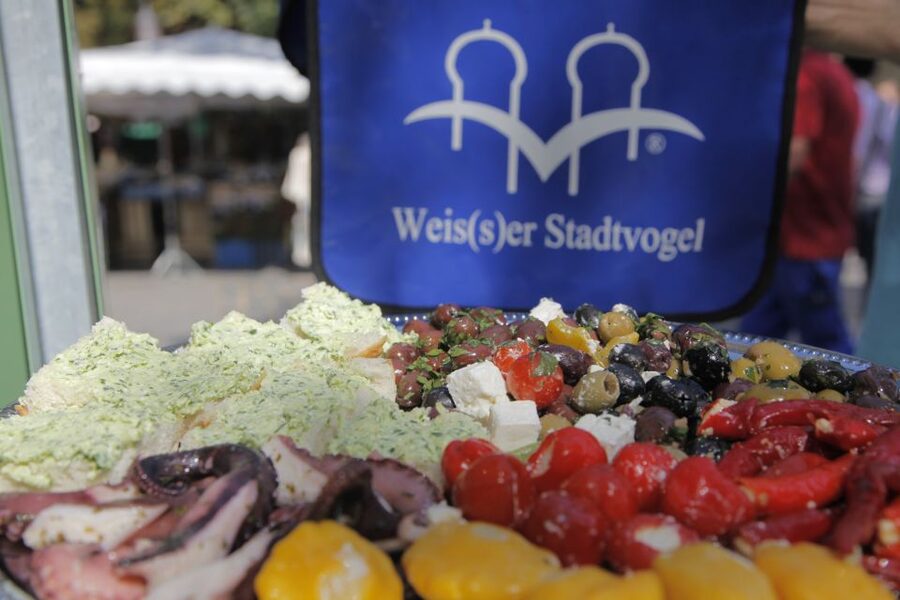
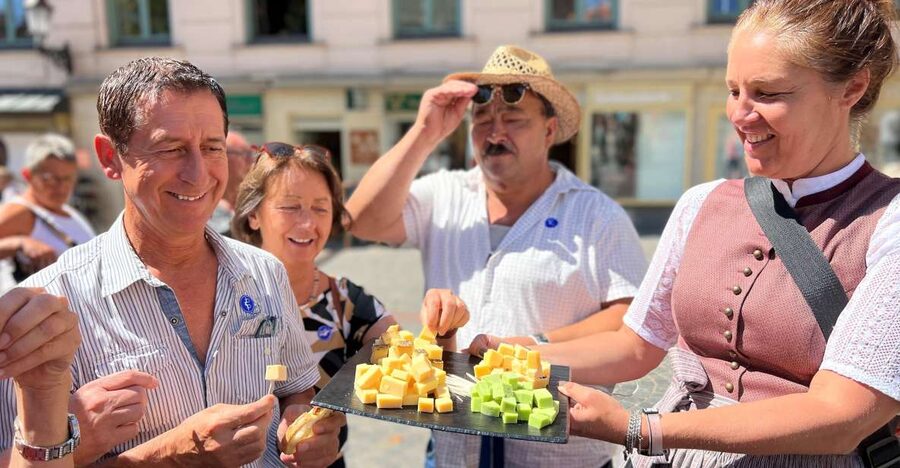
You visit eight market stalls and taste regional and international delicacies. The supplied information does not name every item from all eight stops, so you should treat the listed foods as the core confirmed tastings rather than a complete menu. That is a fair setup for a market tour, where availability can shape what is served.
The market’s current-day role is part of the guide’s explanation. You learn about both the market’s history and its place in Munich now. That balance matters. A market is not useful just because it is old. You want to know how it functions today, what makes it important to local food culture, and why these stalls belong on your route.
The market setting also gives the food a practical context. You see where the products are sold rather than receiving a plate in a restaurant disconnected from the city. The trade-off is that a market can be active and crowded, and the tour’s short length leaves limited time for independent browsing.
The confirmed tasting list, from pretzel to pickle
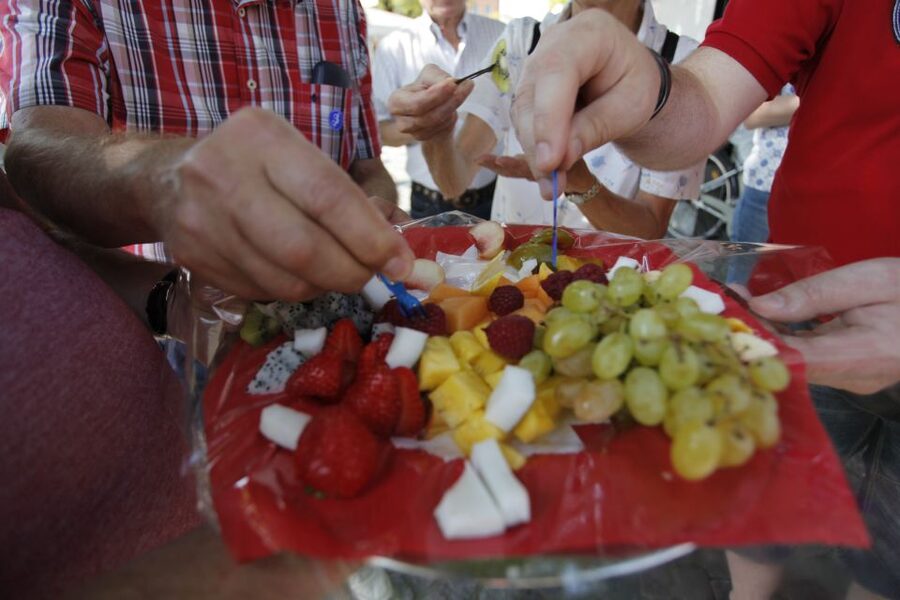
The first bites are classic and easy to understand, even if you know little about Bavarian food.
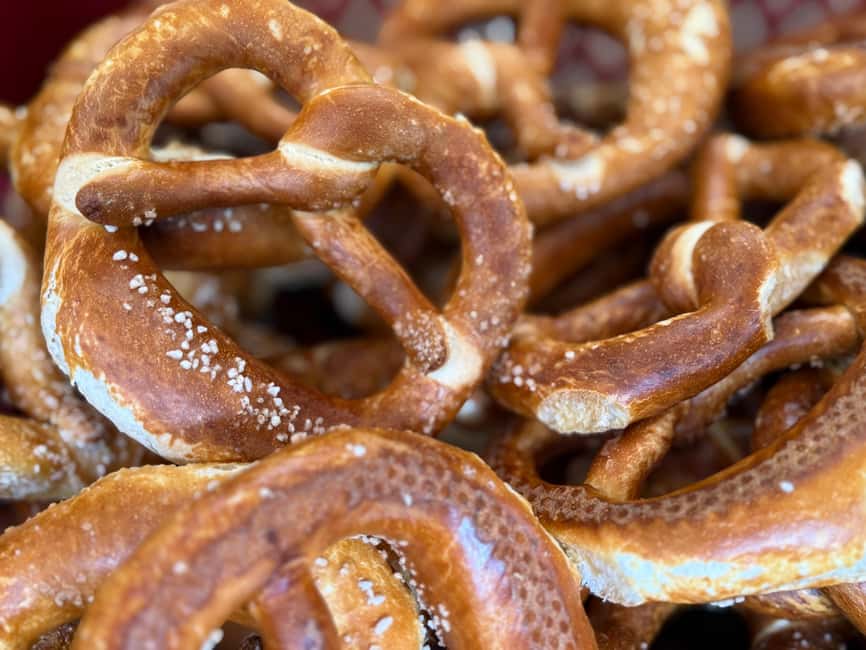
A freshly baked pretzel is included. It is a simple item, but it works well on a walking tour because it is familiar, portable, and unmistakably tied to southern German food culture. If you have already eaten pretzels elsewhere in Germany, this is still a useful chance to compare a market-bought version with what you may find at a bakery or beer hall.
At the market butchers, you receive a Leberkässemmel, a sandwich made with sliced meatloaf in a bread roll. This is one of the more filling samples, and it gives the tour a proper savory center. The description calls it a hearty specialty, so do not arrive expecting only tiny nibbles.
The next tasting is a pickled gherkin from the Sauren Ecke, located at the Maibaum. The pickle offers a sharp, sour break from the heavier meat and bread. It is also a very local-feeling stop, because the experience points you to a named market institution rather than a generic food counter.
You also receive water from the drinking fountains at the Viktualienmarkt. That is a small detail, but a useful one. Salty, fried, and pickled foods are easier to enjoy when you can drink water along the way.
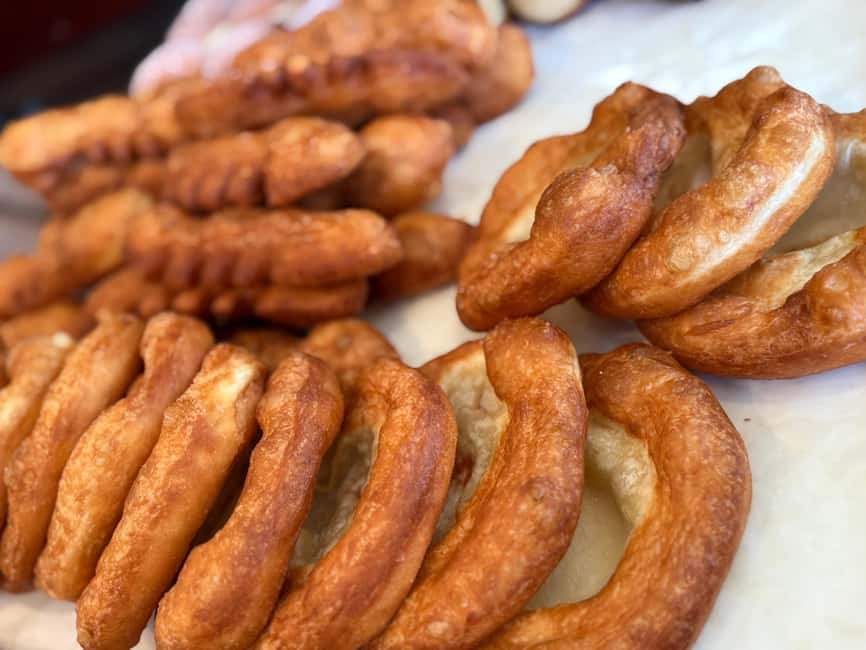
The final named food is a Schmalznudel from Café Frischhut. This is fried dough, and it closes the tour with something sweet and freshly prepared. The stop also includes a look at how Auszog’ne, Strizerl, and Schmalznudeln are made. You taste the pastry on the spot, which gives the finish a little theater without turning the tour into a cooking class.
Additional food and drink are not included. If one tasting catches your eye, you need to pay for it separately. That can be a benefit because you keep control of your appetite and spending, but you should not assume the $671 covers every snack you may want at the market.
Same city, a different table:
- Munich: Viktualienmarkt Food Tour
★ 4.5 · 1,127 reviews - Munich: Beer and Food Tour with Dinner & Oktoberfest Museum
★ 4.7 · 1,086 reviews - Kreuzberg: Culinary Food Tour
★ 4.5 · 770 reviews - Cologne: Südstadt Guided Foodie Walking Tour
★ 4.6 · 624 reviews
Why Café Frischhut makes a strong finish
The Café Frischhut stop gives the itinerary a clear ending. After the savory foods and the market walk, fried dough supplies a warm, sweet final note. Seeing the pastries freshly prepared also makes the stop more memorable than simply receiving a finished item.
The three named preparations, Auszog’ne, Strizerl, and Schmalznudeln, show that Bavarian baking has more range than bread, pretzels, and strudel. The experience does not promise a full lesson on each one, so you should expect a brief demonstration and tasting rather than a technical pastry workshop.
This is also where the tour’s pace may feel quickest. Two hours must cover the welcome drink, several old town sights, eight stalls, and the final bakery stop. If you enjoy lingering over every display, photographing each item, or asking long questions, the schedule may feel tight.
For most people, the compact pace is useful. You get a broad taste of Munich without giving up half a day. I would treat it as a guided introduction, then return to the market later if you want more time to browse.
Guide quality and the tone of the walk
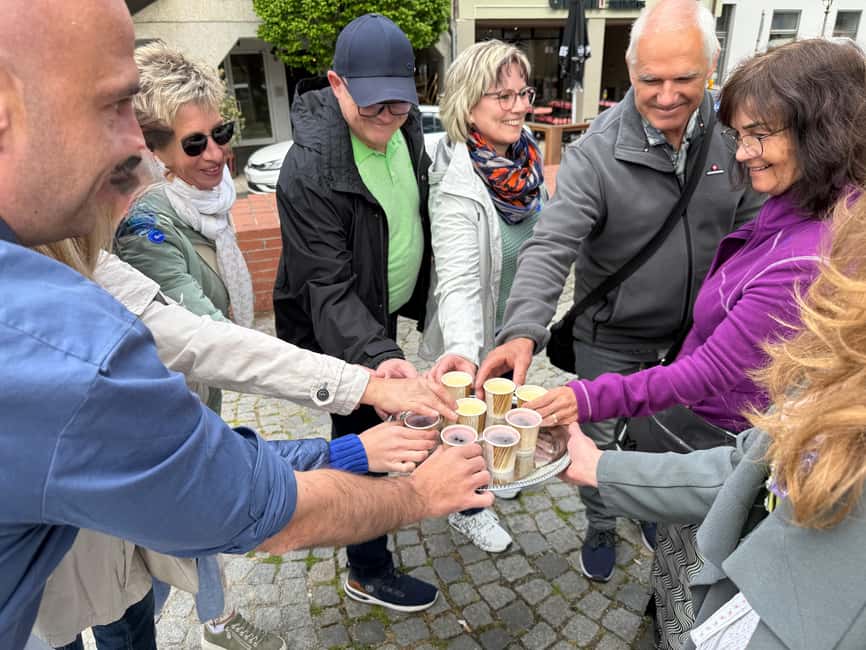
The strongest praise goes to the guides. Several recent German comments describe the guide as very friendly, humorous, committed, and able to explain selected information in an interesting way. One comment specifically says the presentation was not boring or dry, which is high praise for a history-and-food walk.
That matters because the route includes many facts in a short time. A guide who simply recites dates can make even Marienplatz feel like homework. The feedback points instead to a lively delivery, with useful information presented in an approachable way.
No individual guide names are provided, so I cannot tell you to request a particular person. The safest expectation is a professional live guide in either German or English. The provider is Weis(s)er Stadtvogel GmbH, and the experience is operated as a private group.
You should also remember that guide style can vary from one departure to another. The consistently positive comments about warmth and humor are encouraging, but they cannot guarantee that every guide will match your personal taste. Still, this is the part of the experience that appears to receive the most approval, and it is a good reason to choose a guided route over exploring the market alone.
Does the $671 price make sense?
The price is $671 for a private group of up to five people. That is a high total, but the right comparison is not only with the cost of a pretzel and sandwich. You are paying for a private guide, a planned route, historical commentary, a welcome drink, and several included tastings.
For five people, the cost works out to roughly $134 per person. For four, it is about $168 each. For two people, it is roughly $336 each, which makes the tour much harder to recommend on value alone.
I like the fixed private-group structure for a family or small group celebrating a special day. You receive a more personal format, and nobody outside your party affects the pace. The price is less appealing if you are a solo visitor or couple who mainly wants a few market snacks.
The tour includes enough food to function as a substantial tasting session, but not necessarily as a full lunch. The Leberkässemmel is hearty, and the pretzel and Schmalznudel add weight, but you may still want another meal later depending on your appetite.
Timing, access, and cancellation details
The tour lasts two hours, with starting times available according to the date you choose. Since the schedule includes both walking and food stops, it is wise to avoid booking it immediately before another fixed appointment.
The experience is listed as wheelchair accessible. That is a significant plus, though the supplied details do not explain the exact route conditions or any specific stall arrangements. If you need precise accessibility information, confirm the practical details before booking.
Guiding is available in English and German. The private format makes the language choice especially useful because your whole group can follow the commentary together.
You can cancel up to 24 hours in advance for a full refund. You can also reserve now and pay later, which helps if your Munich plans are still changing. These policies make the high upfront price less risky, provided you keep the cancellation deadline in mind.
Who should book this Munich food tour?
I would recommend this experience to first-time visitors who want a quick introduction to Munich’s center without choosing between sightseeing and food. It is also a good fit for families, couples traveling with friends, and small groups who value a private guide.
Food-focused visitors will appreciate the local angle. The Leberkässemmel, Sauren Ecke gherkin, and Schmalznudel are more useful than a generic list of international snacks because they show you recognizable Munich staples.
The tour may not suit you if you want a long, leisurely market visit. Two hours is efficient, not relaxed. It may also disappoint if you expect a detailed tour inside every landmark, a full meal, or unlimited samples. The route has a clear limit, and the listed price does not include extra food or drink.
Final verdict: book it for the private food-and-history mix
Book this tour if you want Munich explained through a short route of real local foods and major old town sights. The guide quality receives the strongest praise, the private format keeps the group small, and the tasting list includes several items you can easily connect with Bavarian food culture.
Skip it if the $671 total cannot be shared among a full group, or if you prefer to browse the Viktualienmarkt at your own pace. For five people who want a polished introduction, the price becomes easier to justify. For one or two people on a tight budget, buying your own market snacks and exploring independently will likely offer better value.
FAQ
How long does the Munich food tour last?
The tour lasts two hours.
How many people can join the private group?
The private group can include up to five people.
Which languages are available?
The live guide is available in German and English.
What food is included?
Included items are a freshly baked pretzel, a Leberkässemmel from the Viktualienmarkt butchers, a pickled gherkin from the Sauren Ecke, and a freshly prepared Schmalznudel from Café Frischhut. A welcome drink and water from the market fountains are also included.
Is the tour wheelchair accessible?
Yes, the experience is listed as wheelchair accessible.
Can I cancel the booking for a refund?
Yes. You can cancel up to 24 hours in advance for a full refund.
Just added in Germany
- Small-Group Berlin Sightseeing and Food Tour of Prenzlauer Berg and Mitte★ 5.0 · 25 reviews
- East Meets West: Berlin Food Culture & Street Art★ 5.0 · 157 reviews
- Berlin Evening Culinary Tour – Award Winning★ 5.0 · 118 reviews
- The Berlin Culinary Experience: A Regional & Cultural Food Tour★ 5.0 · 79 reviews
- Classic Bites and Culinary Trends Neighborhood Food Tour in Berlin★ 5.0 · 191 reviews
- Private Tour: Daytime Food Tour Trends & Classics★ 5.0 · 24 reviews
- Private Berlin Street Food Tour by Bike★ 5.0 · 87 reviews
- Food tasting tour in Berlin of HIDDEN GEMS (Small Groups)★ 4.5 · 60 reviews
Munich Food Tours, compared.
Beer and Food Tour with Dinner & Oktoberfest Museum
Read our review →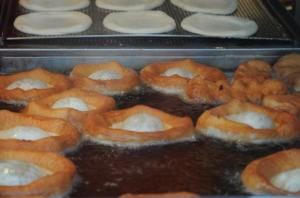
Old Town Food Tour with 10+ Tastings, Beer & Pretzel
Read our review →
Browse the lists this tour appears in