
REVIEW · GERMANY FOOD TOURS
Nuremberg: Christmas City Culinary Tour
Christmas tastes better in Nuremberg. This two-hour walking tour combines the city’s famous Christmas markets with generous food samples, warm drinks, and clear stories about German holiday customs. I especially like the mix of history and tasting and the chance to see the children’s, international, and partner-city markets in one outing. The main drawback is that the central market can be very crowded, making it harder to hear and move between stalls.
Guides such as Martina, Claudia, Justina, and Justine have earned strong praise for their preparation and friendly approach. I also like that the tour ends near the Town Hall, so you can keep exploring afterward. Just take the meeting instructions seriously: the guide may wait on Fleisch Bridge near Starbucks rather than directly in front of the café.
Key things to know before booking
- You taste more than a token sample: Sausage, Lebkugel, hot wine, and other regional Christmas treats are part of the walk.
- The route covers several market areas: You visit the main market, the children’s market, the International Christmas Market, and the Partner Cities market.
- The stories are a major part of the value: The guide explains German Christmas market customs, Nuremberg traditions, and the Christ Child tradition.
- The main market may be difficult to cross: December crowds can slow the group and make conversation harder.
- The tour lasts two hours: That is enough for an introduction and several tastings, but not enough for a slow, independent market visit.
- You need winter-ready clothing: The tour runs rain or shine, and comfortable shoes and warm layers matter.
Why this Nuremberg food walk works
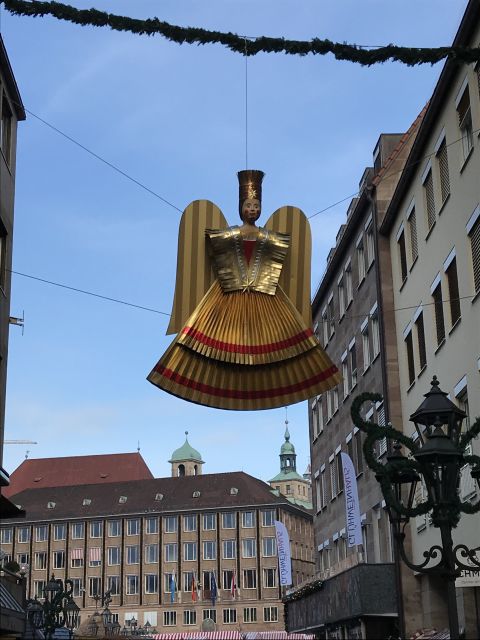
Nuremberg’s Christmas market is not simply a row of stalls selling ornaments and snacks. It is a central part of the city’s seasonal identity, with food, religious tradition, regional customs, and international connections packed into a small historic center.
This tour gives you a way to understand what you are seeing instead of wandering from one food stand to the next without context. The guide explains how German Christmas markets developed, why Nuremberg’s event is so well known, and how the Christ Child tradition fits into the celebration.
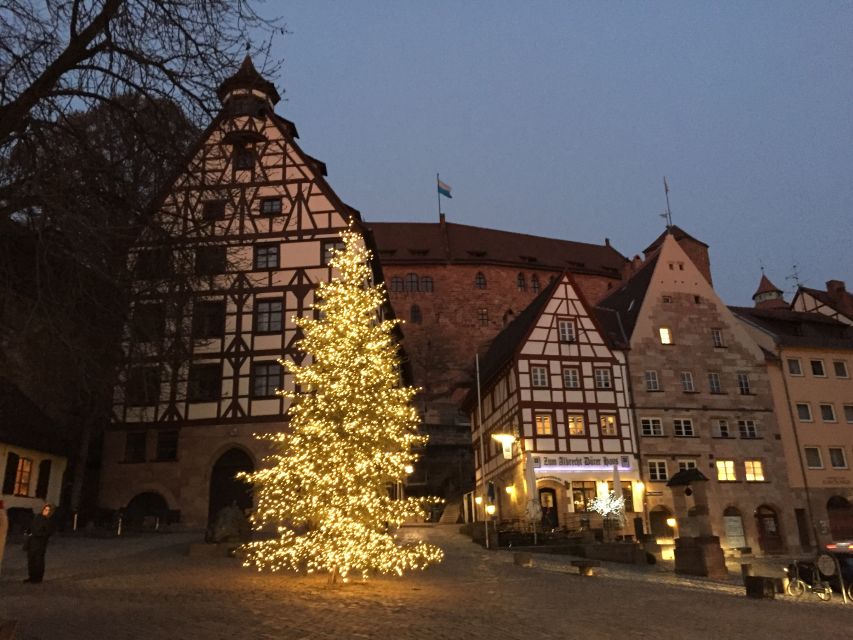
I like that the tour does not stay in one square. You move through several connected market areas, and each has a different feel. You see newer stalls alongside longstanding ones, taste regional specialties, and finish close to St. Sebaldus Church and the Town Hall.
The food is not treated as a minor extra. Sausage, Lebkugel, and hot wine are built into the route. One customer specifically found the portions full-sized and delicious, while another hoped for one additional tasting. That gives you a useful sense of the food value: this is more substantial than a quick bite, but it is not designed to replace lunch or dinner.
A few more food tours in Germany worth a look
- Munich: Christmas Markets Food & Drink Tour
★ 4.6 · 50 reviews - Berlin Christmas Markets with Culinary Tour
★ 4.5 · 28 reviews - NYC: Christmas Eve Gourmet Brunch or Dinner Harbor Cruise
★ 4.6 · 31 reviews
Meeting at Fleisch Bridge near Starbucks
The stated starting point is Fleisch Bridge, with Starbucks used as a nearby reference point. The exact meeting point can vary according to the option you book, so check the final instructions carefully.
This matters because the area can be crowded during the Christmas season. A past group had trouble finding the guide because some people waited directly at Starbucks while the guide was on the bridge. I would arrive early, stay close to the bridge, and look for a clear company sign or guide identification.
The opening guided section on Fleisch Bridge is brief, about five minutes. It serves as a starting point before you enter the market area. Do not expect a long bridge lecture. The purpose is to gather the group, orient you to the route, and begin the walk toward the market.
Because this is a walking tour through active market streets, leave large bags and luggage behind. The activity specifically does not allow luggage or large bags, and narrow, crowded paths are much easier to handle with a small day bag.
Hauptmarkt and the first Christmas flavors
The first major stop is Hauptmarkt, Nuremberg’s central market square and the core of the Christmas market experience. The tour spends about 30 minutes here, including guiding and food tasting.
This is likely the most visually impressive section of the walk, but it is also the place where crowding creates the biggest practical problem. In December, the main market can be busy enough that the group has to move slowly and pause often. You may need to stay close to the guide and listen carefully.
The reward is a broad introduction to the city’s best-known Christmas traditions. You can look at the stalls with a better understanding of what is local, what is seasonal, and what belongs to the wider German market tradition.
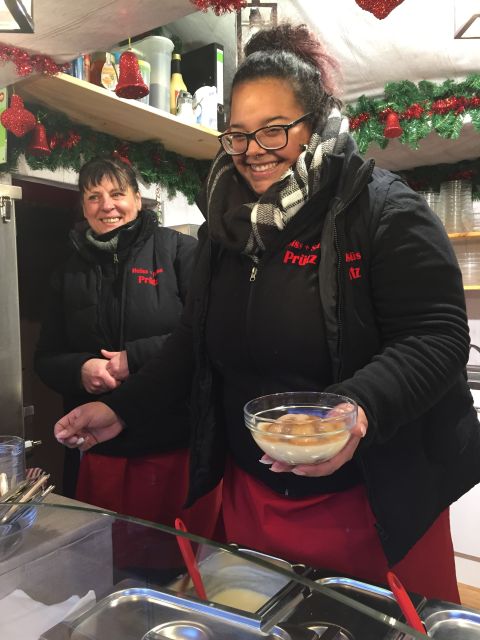
The food stops give you a reason to slow down. You may taste sausage and other regional items while the guide explains their place in Nuremberg’s Christmas customs. Hot wine is especially useful here, not only as a traditional drink but also as a welcome hand warmer on a cold evening.
The tour is conducted in English or German. Past guests have singled out guides for their preparation, city knowledge, and ability to make the information engaging. Claudia was praised for explaining market history while serving warm drinks and signature foods. Martina was also credited with giving practical tips for spending time in Nuremberg beyond the tour.
Hans-Sachs-Platz and a quieter change of pace
The route continues to Hans-Sachs-Platz for about 20 minutes of guiding and tasting. This stop gives you a break from the main square and adds another setting to the market experience.
I see value in this change of pace. The central market is the headline attraction, but smaller or less crowded sections can be easier places to examine goods, hear the guide, and decide what you might want to buy later.
The guide continues to explain the customs behind the stalls and the foods being served. This is where the tour begins to feel less like a single market visit and more like a short lesson in how Christmas markets work across Germany.
One past customer returned to the market the following day and felt better prepared to find their way around and choose what to buy. That is one of the tour’s practical benefits. You are not only eating on the day. You are learning how to read the market for the rest of your stay.
Same city, a different table:
- Hamburg: Schanzenviertel Culinary Tour
★ 4.6 · 2,051 reviews - Hamburg: Elbphilharmonie Plaza and HafenCity Food Tour
★ 4.7 · 1,711 reviews - Berlin Center Food Tour with 8+ Authentic Local Tastings
★ 5.0 · 1,227 reviews - Munich: Viktualienmarkt Food Tour
★ 4.5 · 1,127 reviews
Returning to Hauptmarkt for tradition and tasting
The itinerary returns to Hauptmarkt for another 25-minute section. Repeating the square may sound unnecessary, but it allows the guide to cover more of the main market without forcing every explanation into one crowded stop.
You may see stalls that were easy to miss during the first pass. The guide can point out traditional items, newer offerings, and details connected to Nuremberg’s Christmas customs. The route description refers to both new and historical stalls, including stalls described as having been present since the third century. Because that wording is unusual, treat it as part of the tour’s historical presentation rather than a precise claim about individual market stalls.
This second visit also gives you time to compare the central market with the other areas on the route. The main square is the grandest and busiest, while the later sections may feel easier to explore.
Food remains part of the stop. If you are hoping for a full meal, keep your expectations in check. The tastings are substantial enough to make the tour worthwhile, but the experience is still a guided market walk rather than a restaurant crawl.
The children’s market and the Christ Child tradition
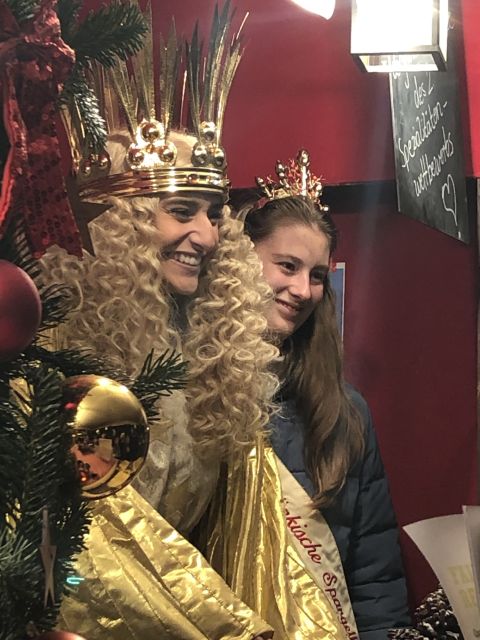
A key part of the tour is the children’s Christmas market, referred to locally as the Christkindlesmarkt in the tour description. Here, the guide explains German Christmas traditions and the famous Christ Child tradition associated with Nuremberg.
This section adds cultural meaning to the decorations and festive displays. You get more than a photo stop. The guide connects the market to the way Christmas is presented in German-speaking regions, with special attention to Nuremberg’s own customs.
For families, this may be one of the most appealing parts of the route. For adults without children, it still helps explain why the Christmas market is not only about shopping and food. It is also a public seasonal celebration with its own characters, rituals, and local identity.
The guide’s storytelling seems to be one of the strongest parts of the experience. Justina was praised for making the itinerary engaging and helping the group learn its way around the market. Martina was described as friendly and well prepared, with a talent for explaining how older customs continue today.
The International Christmas Market
The tour then moves to the International Christmas Market. This stop broadens the focus beyond Nuremberg and Bavaria.
You can expect the guide to explain how German Christmas markets relate to other cultures and cities. The international section gives the walk a useful contrast. Instead of seeing every stall as part of one local tradition, you begin to notice the difference between regional specialties and products connected with partner countries.
This is also a good reason to book the guided route rather than simply visit the main square alone. A casual visit may show you attractive stalls, but it may not explain why several market sections exist or how they fit together.
The tour description promises further food and drink here. Exact products may vary, so you should not book expecting one fixed tasting menu. The confirmed examples include sausage, Lebkugel, hot wine, and other Christmas-time culinary treats.
St. Sebaldus Church and the final market section
The last major guided section takes place around St. Sebaldus Church, with about 20 minutes devoted to guiding and tasting. The route finishes at the Market of the Partner Cities, between St. Sebaldus Church and the Town Hall.
This ending works well because it combines another market area with a clear central location. You finish near two useful drop-off points: Hauptmarkt or Rathaus Nürnberg. From there, you can continue shopping, return to your accommodation, or use the area as a base for more sightseeing.
The partner-city market is a fitting final stop. After hearing about local traditions and visiting the international section, you see how Nuremberg presents its connections with other places.
The tour does not promise a grand finale or a sit-down meal. Its strength is the steady rhythm of walking, explanation, tasting, and moving on. If you prefer a long meal with plenty of time at each table, choose a restaurant-based food tour instead.
Food, portions, and what you actually receive
The listed price is $57 per person. For two hours, that is not a bargain if you judge the experience only by the amount of food. You can buy sausage, Lebkugel, and hot wine on your own for less.
The value improves if you want history, orientation, and guided access to several market areas in one compact outing. You are paying for the guide’s time, the planned route, the cultural explanation, and the included food and drinks.
The food portions appear to be more than tiny samples. One customer specifically described them as full size, while another suggested adding one more tasting. I would think of the included food as a hearty introduction, not a guaranteed full dinner.
The exact selection can depend on what is available at the stalls and how the route operates that day. A vendor coordination issue once caused a brief problem with payment, but the guide handled it. That sounds like an operational hiccup rather than a normal feature of the tour.
The guides make the difference
The tour is only as good as the person leading it, and the feedback points to strong guide performance. Claudia, Martina, Justina, and Justine were all praised for preparation, friendliness, and clear explanations.
I would especially value a guide who can handle the crowded main market without losing the group. Martina was praised for combining market history with practical advice about Nuremberg. Justina was described as engaging and helpful for learning the layout of the market.
The tour is available in English and German. If you need a particular language, confirm that the departure you choose offers it.
The group size is not stated, so I would not assume an intimate private experience. In a crowded market, a larger group can make movement and hearing more difficult. Stay close, listen for meeting instructions, and avoid wandering ahead to photograph a stall.
Practical details for a cold, crowded market
Wear warm clothing and comfortable shoes. The tour runs rain or shine, and two hours on winter streets can feel long if your footwear is poor or your coat is too light.
Do not bring luggage or a large bag. A small, manageable bag is the sensible choice, especially in packed market lanes.
The tour is wheelchair accessible, but crowd conditions can still affect how easily the group moves between stalls. If you use a wheelchair, confirm the meeting point and route details when booking, since the starting location may vary.
You can cancel up to 24 hours before the activity for a full refund. The reserve-now, pay-later option also gives you some flexibility when your December plans are still changing.
Who should book this two-hour tour?
I would recommend it to a first-time visitor who wants a clear introduction to Nuremberg’s Christmas markets without spending hours trying to work out what matters. It also suits anyone who enjoys tasting local food but wants cultural background along with it.
Families may appreciate the children’s market and the festive stories. Couples and solo visitors can use the tour to get oriented before returning independently for shopping or photographs.
It is less suitable if you dislike crowds, want a quiet food experience, or prefer to browse at your own pace. The main market can be hard to cross, and the group schedule means you will not linger wherever you like.
Should you book the Nuremberg Christmas City Culinary Tour?
Book it if you want guided market orientation, local stories, and several substantial tastings in two hours. The strong guide feedback, practical route, and mix of market areas make the $57 price reasonable for a first visit.
Skip it if your priority is simply eating as cheaply as possible or wandering without a schedule. Also think twice if crowded markets make you uncomfortable.
My advice is to take the tour early in your Nuremberg stay. You can learn the layout, sample the signature foods, hear the Christmas traditions, and then return later with a better idea of where to shop and what to try. Arrive early at Fleisch Bridge, dress for bad weather, and treat the experience as a cultural walk with food rather than a full evening meal.
FAQ
How long does the Nuremberg Christmas City Culinary Tour last?
The tour lasts two hours. Starting times vary, so check availability for the date you want.
What food and drinks are included?
Included tastings feature Christmas-time culinary treats such as sausage, Lebkugel, and hot wine. The tour also includes other regional food and drinks.
Which markets does the tour visit?
The route includes the main market at Hauptmarkt, the children’s Christmas market, the International Christmas Market, and the Market of the Partner Cities near St. Sebaldus Church and the Town Hall.
Where does the tour start?
There are two possible starting options, including Fleisch Bridge and Starbucks. The exact meeting point may vary depending on the option booked.
Where does the tour finish?
The tour has two possible drop-off locations: Hauptmarkt Nürnberg and Rathaus Nürnberg.
Is the tour offered in English?
Yes. The live guide option is available in English and German.
Is the tour wheelchair accessible?
Yes, the activity is listed as wheelchair accessible.
What should I bring?
Bring comfortable shoes and warm clothing. The tour takes place rain or shine, and luggage or large bags are not allowed.
Just added in Germany
- Cologne Food and Kolsch Tasting Walking Tour★ 5.0 · 22 reviews
- Small-Group Berlin Sightseeing and Food Tour of Prenzlauer Berg and Mitte★ 5.0 · 25 reviews
- East Meets West: Berlin Food Culture & Street Art★ 5.0 · 157 reviews
- Berlin Evening Culinary Tour – Award Winning★ 5.0 · 118 reviews
- The Berlin Culinary Experience: A Regional & Cultural Food Tour★ 5.0 · 79 reviews
- Classic Bites and Culinary Trends Neighborhood Food Tour in Berlin★ 5.0 · 191 reviews
- Private Tour: Daytime Food Tour Trends & Classics★ 5.0 · 24 reviews
- Private Berlin Street Food Tour by Bike★ 5.0 · 87 reviews
City Tours, compared.
Ho Chi Minh City Street Food Tour & Sightseeing By Motorbike
Read our review →
Private Street Food Evening Walking Tour in Ho Chi Minh City
Read our review →
Top Notch Street Food Motorbike Tour In Ho Chi Minh City
Read our review →
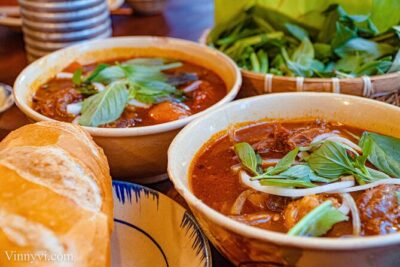
Private Street Food Motorbike Tour in Ho Chi Minh City
Read our review →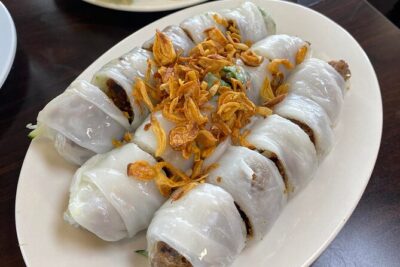
Super Niche Walking Street Food Tour in Ho Chi Minh City
Read our review →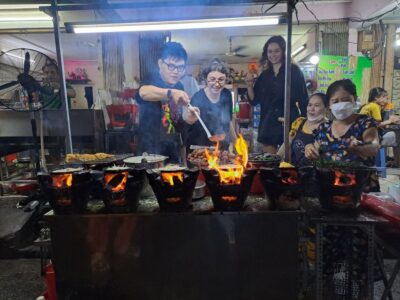
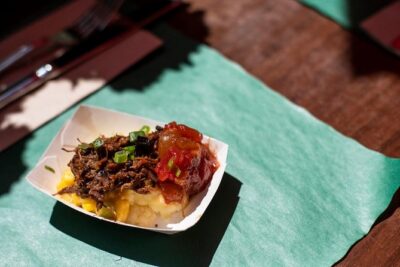
Old Quebec City Food Tour with 10+ Autentic Local Tastings
Read our review →Browse the lists this tour appears in