
REVIEW · MOROCCO FOOD TOURS
Rabat: Walking Food Tour
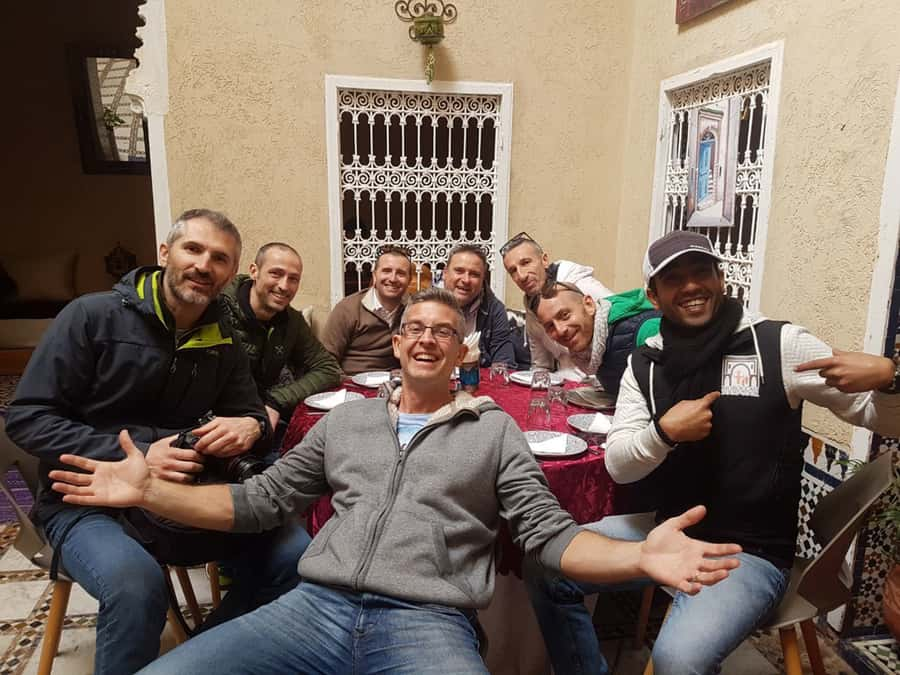
Rabat tastes best one bite at a time. This three-hour walk pairs six tasting stops with a full Moroccan meal, taking you from Gare Rabat Ville through the Medina and on to the Kasbah des Oudayas. I like the mix of street snacks and sit-down food, and I like that the guide adds stories about Rabat, religion, architecture, and daily life. The main catch is simple: at $72 per person, it is not a cheap lunch, and the generous portions can leave you painfully full.
The meeting point is easy to find at the main entrance of Gare Rabat Ville on Avenue Mohammed V. Guides such as Mohammed, Sarra, and Imane have been praised for being warm, clear, and easy to talk with. Come hungry, but not reckless. This is a lot of food in three hours.
What makes this Rabat food walk worth considering
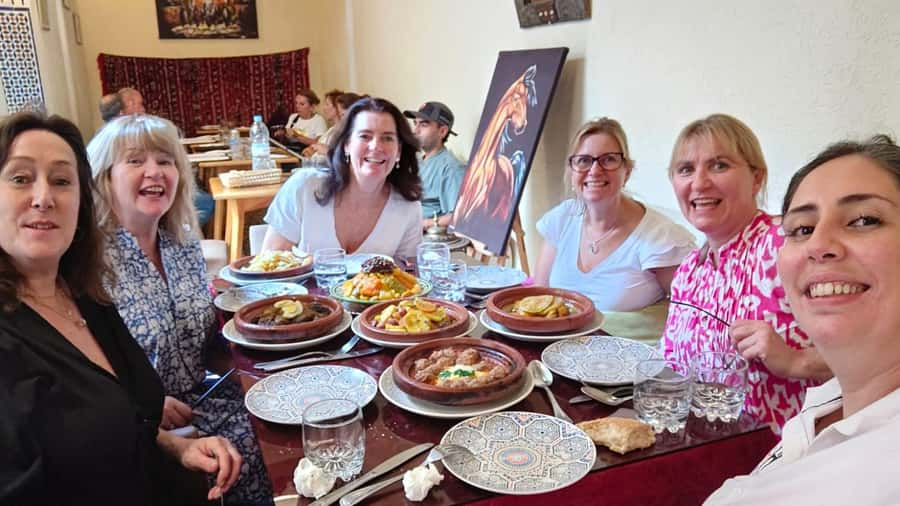
- Six tasting stops plus a full meal: You get more than a few samples. Expect a broad meal, with dishes that can include tagine, couscous, salads, pastries, dates, and street snacks.
- A real walk through the Medina: The route takes you through narrow lanes, market stalls, food shops, artisan areas, and ordinary neighborhood life.
- Guides who explain the food: Mohammed, Sarra, and Imane have all been praised for explaining Moroccan cooking and local customs in an engaging way.
- A finish near the Kasbah des Oudayas: The walk ends at one of Rabat’s best-known historic areas, giving you a useful place to continue exploring.
- Good options for dietary needs: Vegetarian, gluten-free, and lactose-free requests can be accommodated if you share them ahead of time.
- A practical first-day activity: The tour helps you learn what to order later, how local foods fit together, and where Rabat’s Medina sits in the city.
Starting at Gare Rabat Ville
The tour begins in front of the main door of Gare Rabat Ville on Avenue Mohammed V. That is a useful meeting point if you arrive in Rabat by train, and it gives you a clear landmark in the modern part of the city before you move toward the old quarter.
From there, the walk heads into the Medina. You are not simply being driven between restaurants. The point is to move through Rabat on foot, stopping as the food and neighborhood demand. Wear comfortable shoes, since the experience involves narrow lanes and several food stops rather than one fixed dining room.
The three-hour length is well judged for seeing part of the city without turning the day into a marathon. Still, the food makes the outing more demanding than an ordinary walking tour. You will want a light breakfast, loose clothing, and room in your evening schedule for a very small dinner.
More food walking tours in Morocco:
- Marrakech: Authentic Moroccan Food Walking Tour & Dinner
★ 4.8 · 261 reviews - Tangier: Food Walking Tour
★ 4.9 · 43 reviews - Reykjavik Food Walk – Local Foodie Adventure in Iceland
★ 5.0 · 18,952 reviews
Entering Rabat’s Medina by way of its food
The Medina is where the tour earns much of its appeal. Its traditional buildings, narrow passageways, small shops, fresh produce sellers, and working neighborhood businesses give you a look at Rabat beyond its main sights.
A guide matters here because the best food is not always marked for an English-speaking visitor. You might pass a stall selling something familiar, such as dates or pastries, without knowing which variety to choose or how locals eat it. You might also walk past a community oven or an ordinary food shop without realizing why it matters.
That local explanation is one of the strongest parts of the experience. The guide talks about the food, but also about Moroccan traditions, religion, architecture, and everyday routines. You can ask questions as you go, and the conversation helps connect a small snack with the wider culture that produced it.
The walk also gives you photo opportunities without turning the Medina into a stage set. You see vendors, artisans, and residents carrying on with daily business. Be respectful when taking pictures, especially around people working at stalls.
What you may taste at the street stops
The exact food sequence can vary, but the tour promises six tasting stops and a full meal. The examples provided include sardines, stuffed dates, chebakia, Moroccan pastries, smoothies, traditional salads, and other handmade local products.
Sardines are an especially useful taste of the city’s coastal food culture. They are not a fancy restaurant dish. They are the sort of local food that can be hard to choose or order on your own when you do not speak the language or know which stall has a good reputation.
Stuffed dates and chebakia show another side of Moroccan eating. Dates bring soft sweetness and a chewy texture, while chebakia is a honeyed, sesame-covered pastry often associated with Moroccan sweets and festive tables. The tour may also include almond cookies and other pastries, so pace yourself early.
One stop may involve a smoothie or juice, which gives you a break from fried or heavily seasoned food. That variety is important. A good food walk should not serve six versions of the same thing, and this one appears designed to move between sweet, savory, fresh, and cooked foods.
A few details from past outings show how broad the tastings can be. One meal included a taste of cow’s head, which is traditional in some Moroccan settings but may surprise visitors who prefer familiar cuts. You should treat this as an opportunity to ask questions, not as an obligation to eat anything you dislike.
If you are vegetarian, the tour has a useful track record of providing alternatives. Vegetarian food is not an afterthought here, and the operator also asks about gluten-free and lactose-free needs. Tell the provider in advance. The information says the team will do its best, which is helpful but not the same as a guarantee that every stop will suit every medical allergy.
The full meal is more than a final snack
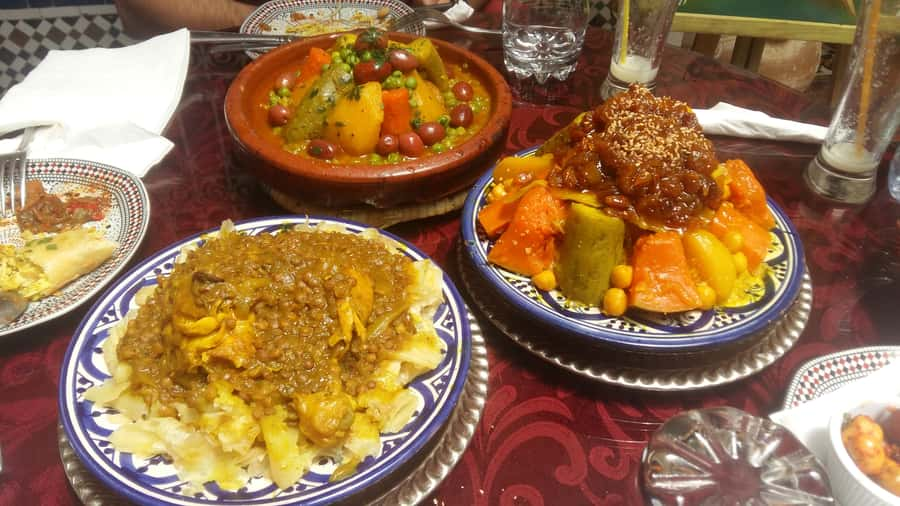
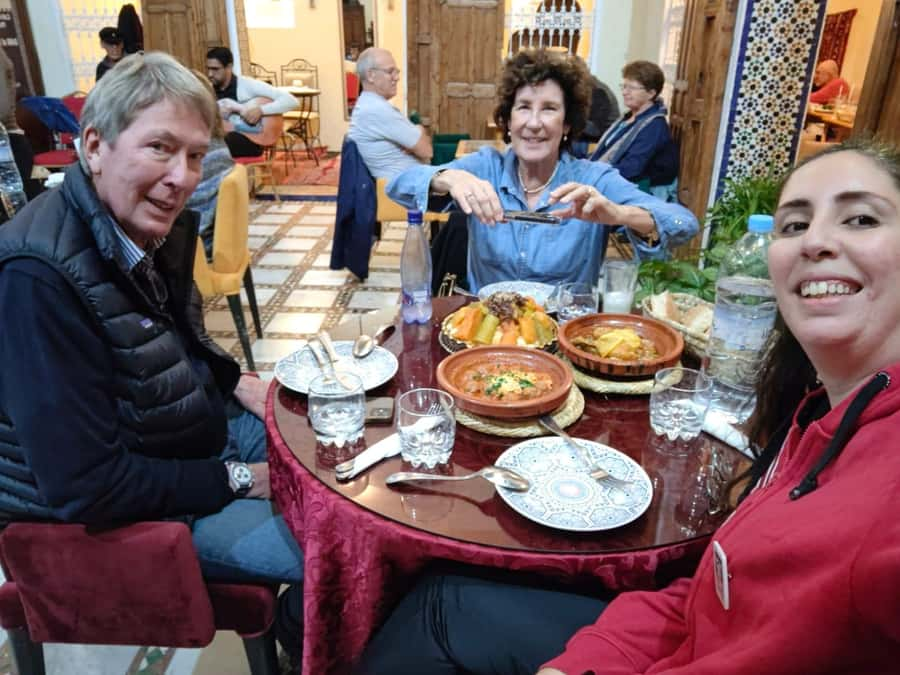
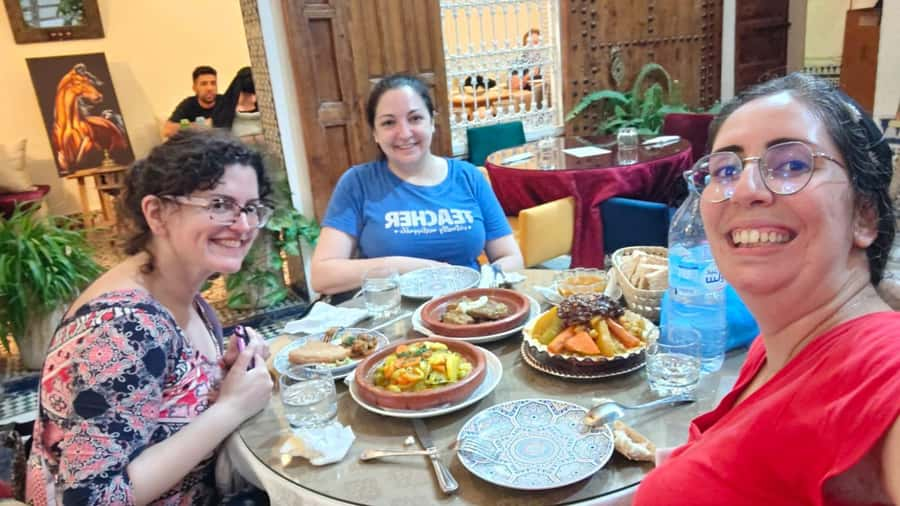
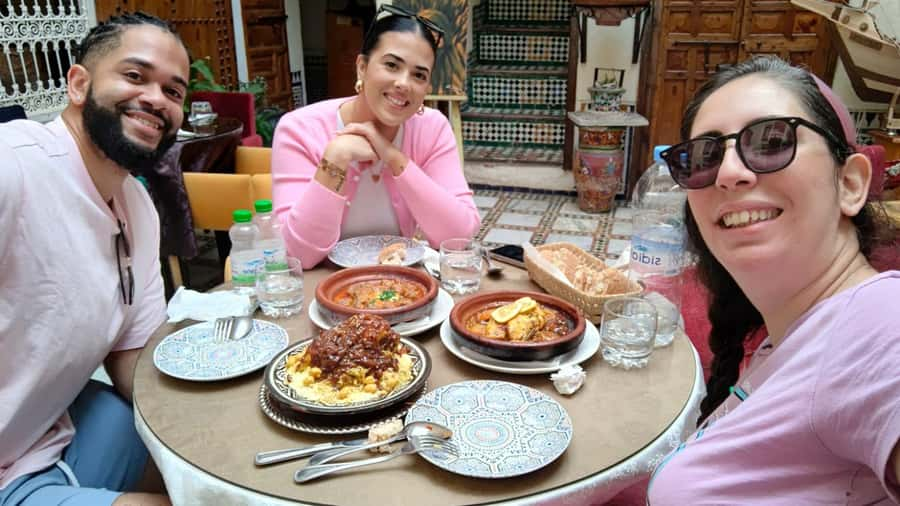
The tour includes a full meal, and this is where the amount of food becomes serious. Depending on the day, the meal may include traditional salads and spreads, two tagine dishes, couscous, and Moroccan bread or accompaniments.
Tagine is one of Morocco’s best-known dishes, but eating it in a local setting gives you more context than ordering it from a hotel menu. The dish is slow-cooked and served in the familiar cone-shaped vessel, though the exact ingredients can change. Couscous adds a different texture and is often served as a central shared dish.
The meal may be held at a local restaurant in the Medina. Dar Medina was praised as a particularly good ending, and another meal included generous salads, two tagines, and excellent couscous. The setting gives the food a proper finish after the small street tastings.
This is also where the $72 price becomes easier to assess. You are paying for a guide, six tasting stops, a full meal, cultural interpretation, and three hours of walking. If you planned to eat lunch and dinner separately, the total food value is respectable. If your main goal is simply the cheapest way to eat in Rabat, this will feel expensive.
The most honest warning is portion size. One outing was described as too generous, with enough food to risk waste and overeating. Another ended with the group so full that walking became difficult. I would rather see smaller portions and more room for conversation, but many people will appreciate getting a proper meal rather than a string of tiny samples.
A few more food tours in Morocco worth a look
- Marrakech: Street Food Tour with a Local Guide
★ 4.9 · 3,119 reviews - Marrakech: Street Food Tour by Night
★ 4.8 · 2,838 reviews - Authentic Moroccan Food Tour in Marrakech with Dinner
★ 5.0 · 1,423 reviews - Marrakech: Jemma El Fnaa Food Tour with Dinner
★ 4.7 · 394 reviews
Mint tea, pastries, and the walk toward the Kasbah
The experience finishes at the Kasbah des Oudayas, a strong endpoint for a Rabat walk. The route gives you a chance to keep exploring after the food portion ends, with the kasbah providing historic streets and attractive views.
A riverside cafe may be part of the final stop, with coffee or mint tea and Moroccan pastries. Almond cookies have been part of this closing moment, and mint tea is exactly the kind of simple ritual that helps bring the meal to a relaxed finish.
Do not think of this as just dessert. Moroccan mint tea carries social meaning, and the guide can explain how it fits into hospitality and daily life. By the end, you have tasted food in markets, eaten a full meal, and watched how people use public spaces around the Medina.
The finish also has practical value. You are not returned to the train station, so you should plan your next move from the Kasbah des Oudayas. That is convenient if you want to continue sightseeing there. It is less convenient if you have a train to catch immediately afterward.
The guides shape the experience
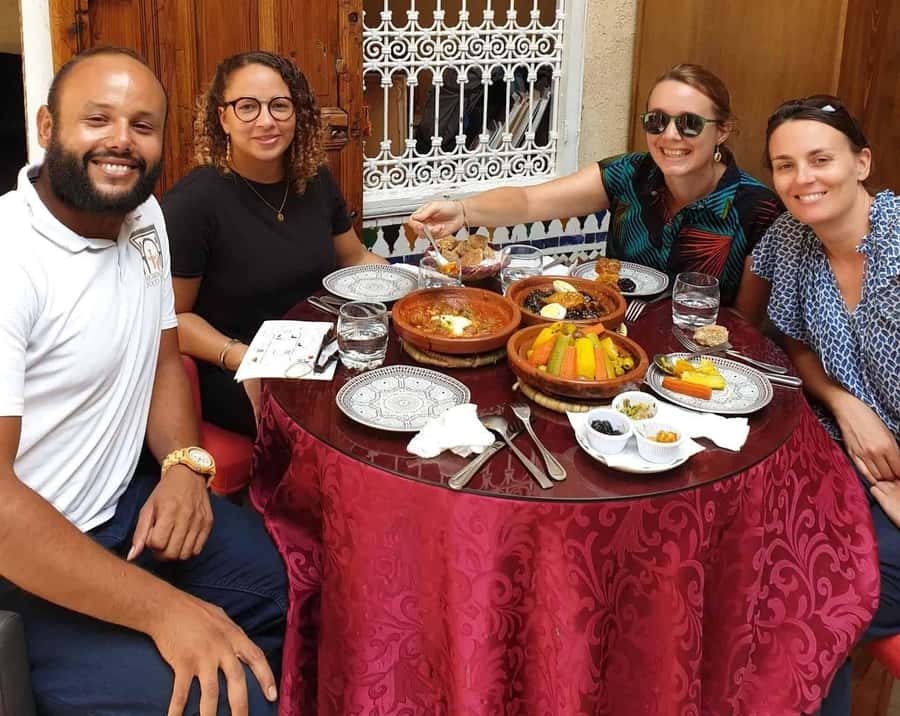
The guide is the difference between a pleasant meal and a useful food tour. Mohammed has been praised repeatedly for his warmth, humor, clear explanations, and strong grasp of Rabat. Sarra has been singled out for explaining the cultural background of Moroccan food, while Imane has been praised for showing enthusiasm and finding foods that visitors would not locate alone.
You should expect an English-speaking live guide. The guide’s role is not only to point out dishes. You can ask about ingredients, etiquette, family meals, religious customs, local history, and places to visit in other Moroccan cities.
One reason this works well for families is the flexible conversation. A six-year-old and a thirteen-year-old both enjoyed one outing, while a solo participant once received very personal attention. Group size can vary, so you should not assume you will have either a private tour or a large crowd.
The best way to get value from the guide is to ask questions. Ask how a dish is normally eaten, when a pastry is served, what a community oven does, or where locals buy a particular ingredient. The more specific your questions, the less the tour feels like a sequence of tastings and the more it becomes a lesson in Rabat life.
Who will enjoy this tour most
I would recommend this walk to you if you want food and culture together. It suits first-time visitors who feel unsure about ordering from Medina stalls, as well as returning visitors who want a closer look at ordinary Moroccan eating.
It is also a good choice for:
- People arriving by train who want a clear first activity in Rabat
- Families who enjoy tasting several foods rather than sitting through one long meal
- Vegetarians who arrange their needs ahead of time
- Visitors who want history and architecture explained while walking
- Anyone who prefers a guided introduction before eating independently
You may want to skip it if you dislike large meals, have strict allergies that require guaranteed separation, or mainly want a low-cost lunch. The tour is also less suitable if you need to stay near Gare Rabat Ville at the end, since the walk finishes at the Kasbah des Oudayas and transportation is not included.
How to get the best value from $72
At $72 per person, this is a paid experience rather than a casual market snack. The value comes from the combination of food, access, interpretation, and confidence. You do not have to guess which stalls to trust, wonder what an unfamiliar pastry contains, or lose time trying to find the Medina’s better food stops.
The price makes the most sense if you count the full meal as lunch, not as an extra on top of lunch. You also receive enough food to cover much of the day, though you should not plan a major dinner afterward.
I would book it early in your Rabat stay. That way, the guide can help you understand Moroccan dishes before you make later restaurant choices. It also gives you a chance to ask for recommendations in nearby cities, something one outing’s guide was happy to discuss.
The tour offers free cancellation up to 24 hours before the start, and you can reserve now and pay later. Those terms help if your Morocco plans are still shifting. Transportation is not included, so allow for your own arrival at Gare Rabat Ville and your onward journey from the Kasbah.
Should you book the Rabat Walking Food Tour?
Book it if you want a generous, social introduction to Rabat’s food and Medina. The strongest reasons are the range of dishes, the full restaurant meal, the walk through ordinary market streets, and the guides’ ability to explain culture as they go.
I would be cautious if $72 feels high for a meal or if you prefer small portions. This is not a light tasting stroll. It is a full eating session with enough food to fill you completely.
For most visitors, the best plan is to schedule it near the start of a Rabat stay, arrive very hungry, tell the operator about dietary needs, and leave your afternoon open after the final tea. If you want more than a list of dishes, this tour gives you a useful way to understand why Rabat eats the way it does.
FAQ
Where does the Rabat Walking Food Tour begin?
It begins at Gare Rabat Ville, on Avenue Mohammed V, in front of the main door of the station.
Where does the tour finish?
The tour finishes at the Kasbah des Oudayas.
How long does the experience last?
The walking food tour lasts three hours.
How many tasting stops are included?
Six tasting stops are included, along with a full meal.
Is transportation included?
No. Transportation is not included, so you are responsible for reaching the meeting point and continuing from the Kasbah des Oudayas afterward.
What language is the tour conducted in?
The live tour guide speaks English.
Can the tour accommodate dietary restrictions?
Vegetarian, gluten-free, and lactose-free requests can be accommodated when you share your preferences in advance. The provider says it will do its best to meet those needs.
How much does the tour cost?
The listed price is $72 per person.
Can I cancel for a full refund?
Yes. You can cancel up to 24 hours in advance for a full refund.
Should I eat before the tour?
Come on an empty stomach. The experience includes many tastings and a full meal, and the portions can be generous.
Just added in Morocco
- Casablanca Food Tour★ 5.0 · 60 reviews
- Casablanca Food Tour – Moroccan Street Food Tour★ 5.0 · 86 reviews
- Discovery of Moroccan Culinary Heritage, History and Secrets★ 4.5 · 48 reviews
- Authentic Food Tour in Agadir – Eat Like A Local★ 5.0 · 117 reviews
- Tangier: Food Walking Tour★ 4.9 · 43 reviews
- Marrakech Night Street Food Tour / Taste The Real Marrakech★ 4.9 · 200 reviews
- Marrakech: Medina Stories Food Tour with 15+ Tastings★ 5.0 · 141 reviews
- Marrakesh: Guided Street Food Tasting by Locals★ 4.6 · 47 reviews
Food Walking Tours, compared.
Reykjavik Food Walk – Local Foodie Adventure in Iceland
Read our review →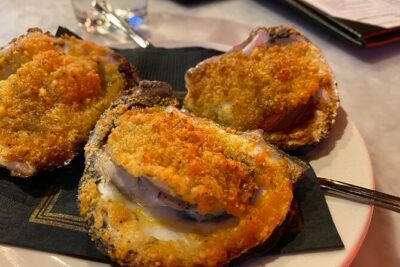
New Orleans Food Walking Tour of the French Quarter with Small-Group Option
Read our review →


Savannah First Squares Culinary & Cultural Walking Food Tour
Read our review →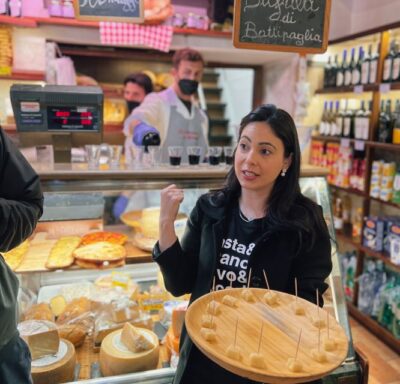
Guided Food Walking Tour with Wine in Trastevere
Read our review →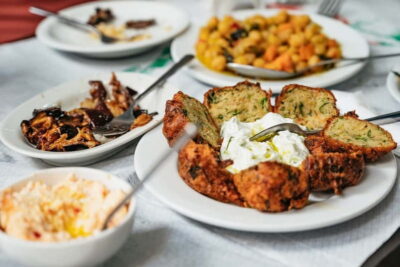

Trastevere & Campo de Fiori Street Food Walking Tour
Read our review →Browse the lists this tour appears in