
REVIEW · GERMANY FOOD TOURS
Cologne Food and Kolsch Tasting Walking Tour
Cologne tastes better with a local guide. This 3.5-hour walking tour mixes the cathedral, Roman ruins, Kölsch halls, street food, and cheesecake in a group capped at eight people. I like the wide food range, from Rhineland potato pancakes to Berlin-style döner, and I like the way guide Falke connects each bite to Cologne’s past. The small group also makes it easier to ask questions and keep the pace relaxed.
The main caution is price. At $216.04 per person, this is a premium food walk, and the portions may feel more like generous tastings than a full meal. You will also want to confirm how the tram segment works, since it can depend on the situation and may not operate as a fixed part of every outing.
Key points to know before you book
- Eight-person maximum: The small group keeps the tour personal and makes conversation with the guide easier.
- A broad Cologne menu: Expect Kölsch, traditional German food, Hungarian-influenced comfort food, döner, cheesecake, and coffee.
- History between bites: The route covers the cathedral, Roman sewer remains, the former Jewish quarter, and Cologne’s old center.
- Falke receives especially strong praise: He is described as friendly, well organized, and excellent at explaining both food and city history.
- Not a vegan tour: The included food is built around meat, dairy, beer, and other non-vegan items.
- Check the tram details: The ride to the Belgian Quarter may be optional or situation-dependent, despite the itinerary referring to an included admission ticket.
Cologne Cathedral is the right place to begin
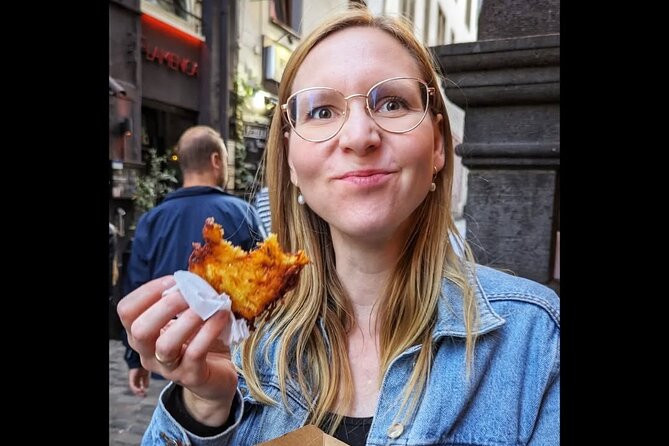
The tour starts at Kreuzblume on Kardinal-Höffner-Platz, beside Cologne Cathedral. This is an excellent meeting point because you begin under the city’s most recognizable landmark, not in a generic restaurant or a hard-to-find side street.
You get about 10 minutes around the cathedral before the food stops begin. That is not enough time for a full cathedral visit, but it gives your guide room to point out key features and set the scene for Cologne. If you have not already entered, the tour may include a look through lesser-used doorway entrances. Treat this as a brief orientation, not a complete cathedral tour.
The cathedral is also a useful practical marker. If you arrive early, you can find the meeting point without rushing. The city center has a steady flow of people, bicycles, and public transport, so a few extra minutes will help you locate the group.
A few more food tours in Germany worth a look
- Hamburg: Schanzenviertel Culinary Tour
★ 4.6 · 2,051 reviews - Hamburg: Elbphilharmonie Plaza and HafenCity Food Tour
★ 4.7 · 1,711 reviews - Berlin Center Food Tour with 8+ Authentic Local Tastings
★ 5.0 · 1,227 reviews
Kölsch culture at Gaffel am Dom
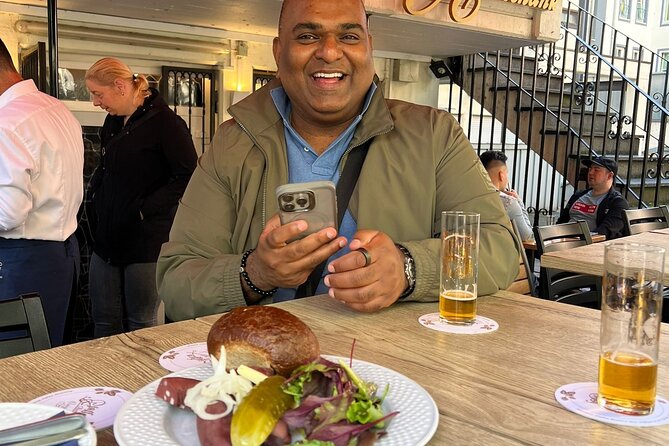
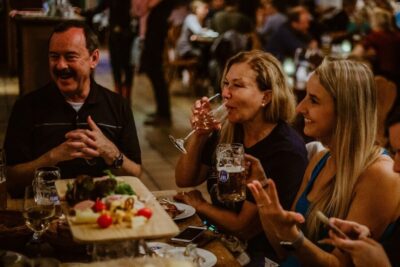
Your first substantial food stop is Gaffel am Dom, a traditional Brauhaus near the cathedral. Here, you try two local dishes along with Kölsch, the light beer served in Cologne’s distinctive small glasses.
The value here is not just the beer. Your guide explains Brauhaus etiquette, which matters because Cologne’s beer halls have their own customs. Kölsch is served in narrow glasses, and the experience is tied closely to local social life. A guide can explain the rhythm of ordering, serving, and paying far more clearly than a quick internet search.
This is also where the tour shifts from sightseeing to food. You are not simply handed a sample and sent on your way. The stop gives you a short introduction to one of Cologne’s most important eating and drinking traditions.
The timing is about 25 minutes. That keeps the tour moving, though it does not leave room for a long, leisurely meal. I would approach this stop as a tasting with context, not as a restaurant reservation.
Potato pancakes and Rhineland comfort food
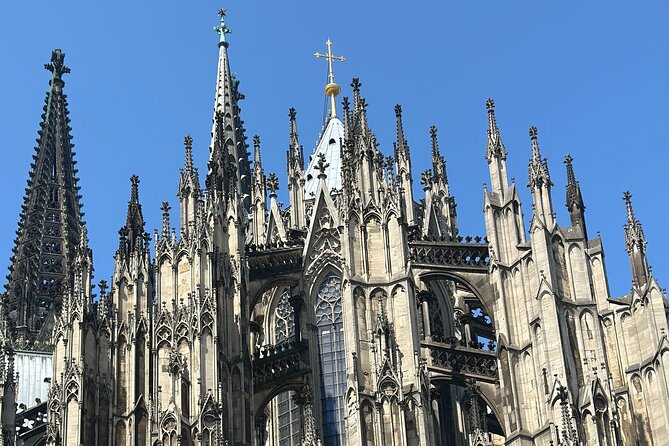
At Rievkoochebud, you try crispy potato pancakes and other comfort foods associated with Rhineland traditions and local festivals. The German name for potato pancakes is Rievkooche, and these are the sort of simple foods that tell you more about everyday regional cooking than a polished restaurant dish might.
The stop lasts about 15 minutes. That is enough for a taste, but probably not enough to linger over a full plate. If you enjoy fried foods, potatoes, and traditional snacks, this should be one of the more satisfying bites on the route.
I like this stop because it gives the tour a clear local identity. The meal is not built only around famous German exports such as sausages and pretzels. Instead, you get a food tied to Cologne and the Rhineland, often served at festivals and informal gatherings.
Roman Cologne beneath the modern city
Between food stops, the route moves through Cologne’s historic center. You pass cobbled streets, medieval traces, Roman remains, and stories about local legends. This part helps explain why the food stops are spread across different parts of the city rather than clustered around one square.
A particularly useful stop is the visible section of a Roman sewer. Cologne was founded as a Roman colony in 50 AD, and the remains beneath the modern streets show how much of the ancient city still sits below your feet.
You spend about 10 minutes at the Roman sewer section. The visit is brief, so do not expect a full archaeological site tour. Its value is in the connection it makes between the city you see now and the infrastructure of Roman Cologne.
The walk also passes through the area of Europe’s oldest documented Jewish community, now undergoing preservation and interpretation. The stop adds an important layer to the city’s story. It is not just another pretty old-town passage, and your guide can give context that you would likely miss while walking alone.
Same city, a different table:
- Munich: Viktualienmarkt Food Tour
★ 4.5 · 1,127 reviews - Munich: Beer and Food Tour with Dinner & Oktoberfest Museum
★ 4.7 · 1,086 reviews - Kreuzberg: Culinary Food Tour
★ 4.5 · 770 reviews - Cologne: Südstadt Guided Foodie Walking Tour
★ 4.6 · 624 reviews
A second Brauhaus at Pfaffen
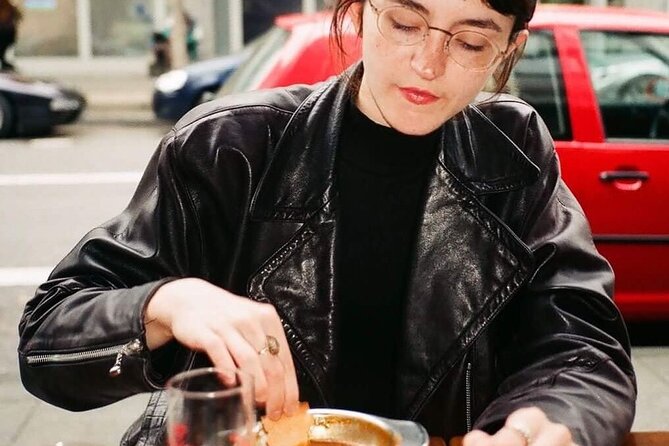
Brauerei Pfaffen brings you back to Cologne’s beer culture. This family-run Brauhaus serves more Kölsch and a local delicacy in a setting tied to the city’s long beer-drinking tradition.
The stop lasts around 20 minutes, so you have time to understand how this place differs from the earlier Brauhaus. Having two beer halls on the same tour lets you compare atmospheres rather than treating Kölsch as a single, uniform experience.
The two beer stops also explain why the tour works best for someone who wants food and culture together. You are not spending three and a half hours only on monuments, and you are not spending the whole afternoon seated at tables. The route alternates between walking, eating, drinking, and short historical explanations.
Keep in mind that alcohol is part of the tour’s identity. If you do not drink beer, the food and city stories still provide value, but you will miss one of the central themes.
Hungarian influence at Puszta-Hütte
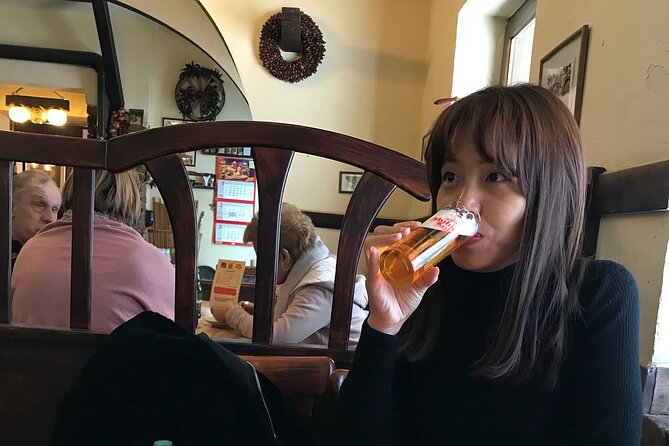
At Puszta-Hütte, the menu shifts away from classic Rhineland food. You try Hungarian-inspired comfort food, a reminder of Cologne’s post-war immigrant influences.
This is a smart addition to the route. It shows that Cologne food is not limited to dishes with old regional roots. The city’s modern food culture also reflects the people who arrived, worked, opened businesses, and shaped local eating habits over time.
The tasting lasts about 15 minutes. As with the potato pancakes, the portion is designed as part of a sequence. I would not count on this stop alone to satisfy a large appetite.
The changing food styles are one of the tour’s strongest features. You move from traditional German cooking to immigrant-influenced food and later to German-Turkish street food. That range gives you a more useful picture of Cologne than a tour focused only on old recipes.
The Belgian Quarter and its creative side
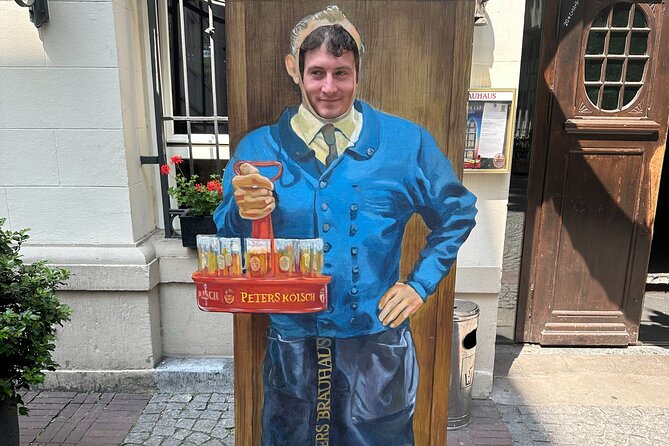
The route then heads toward the Belgian Quarter, one of Cologne’s most fashionable areas. The neighborhood is known for indie shops, creative spaces, multicultural influences, murals, and street art.
The planned tram ride is worth clarifying before you book. The experience may include a tram trip, but the exact use of public transport can depend on the situation. One description of the route suggests that the tram ticket is included, while direct feedback indicates that the ride may be optional and not always confirmed. Ask the operator about this point if the tram is important to you.
The Belgian Quarter changes the feel of the tour. Earlier stops focus on cathedral squares, old streets, Roman remains, and traditional beer halls. Here, you see a more current side of Cologne, with creative corners and street art shaping the walk.
The listed time in the neighborhood is about 15 minutes, followed by the food stop at Oruç Kebap. That is enough for an introduction, but not a full neighborhood exploration. If you want to shop or spend more time looking at murals, plan to return on your own.
Berlin-style döner at Oruç Kebap
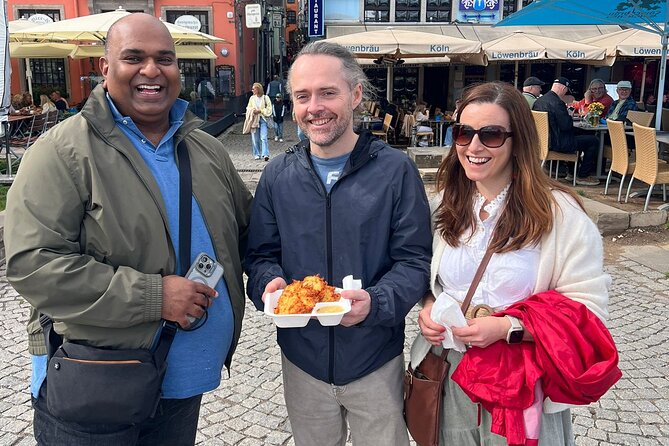
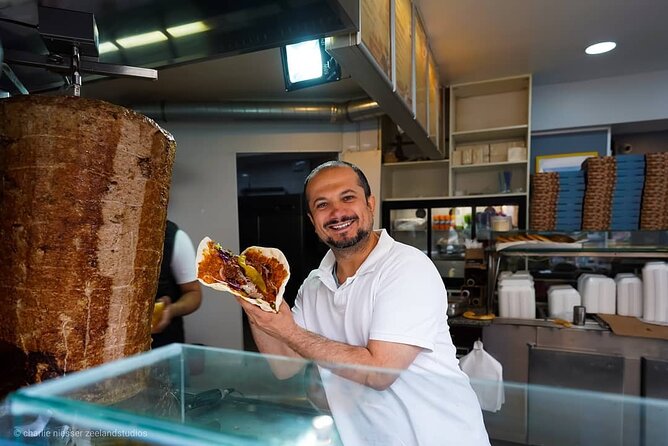
At Oruç Kebap Das Original seit 1988, you try a Berlin-style döner sandwich. This is an important Cologne food stop because döner has become one of Germany’s defining casual foods, shaped by German-Turkish communities and widely eaten across the country.
The sandwich gives the tour a modern, street-food edge. It also balances the earlier traditional dishes. After potato pancakes, beer-hall food, and Hungarian-inspired comfort food, the döner feels familiar, quick, and urban.
You spend about 20 minutes here. The stop is more than a grab-and-go snack because the guide can explain how this kind of food fits into contemporary German city life.
Portion expectations matter. One direct account described the total food as roughly two appetizers, a bowl of soup, half a sandwich, and dessert. Other feedback described the meals as excellent and substantial enough. The practical takeaway is simple: this tour offers many tastings, but portion sizes can vary by person and expectation. If you normally eat a large lunch, you may want a snack later.
Cheesecake and coffee at Jim & June
The final stop is Jim & June, a modern bar and kitchen where you finish with artisan cheesecake and specialty coffee. This is one of the most praised parts of the experience, and it is easy to understand why. A good dessert gives the tour a clear finish, while the coffee adds a look at Cologne’s third-wave café culture.
The stop lasts about 20 minutes. After several savory foods and beer tastings, the cheesecake provides a sweet change of pace. The coffee also gives you a short pause before the tour ends.
The end point is near Köln Dasselstr./Süd Bf in the city center. Your guide can suggest what to do next or how to continue your evening in the area. That is useful because the tour does not return you to the cathedral. You finish in a different part of Cologne, so check your plans before setting off.
How much food do you really get?
This is the most important value question. The tour includes enough different tastings to replace a light lunch or dinner for many people, but it is not designed as a single large meal.
You can expect food across several stops:
- Two traditional dishes and Kölsch at Gaffel am Dom
- Rhineland potato pancakes at Rievkoochebud
- A local delicacy and more Kölsch at Brauerei Pfaffen
- Hungarian-inspired comfort food at Puszta-Hütte
- A Berlin-style döner sandwich at Oruç Kebap
- Cheesecake and specialty coffee at Jim & June
That sounds like a full meal when counted by stops. In practice, the portions are tasting-sized and may be shared. One participant specifically disliked sharing a bowl of goulash with a stranger and felt each person should have an individual plate. That is a fair concern, especially for health preferences or anyone who dislikes communal serving.
At $216.04, you are paying for more than ingredients. The price includes a small group, several food venues, guiding, city context, and the convenience of moving between places without planning the route yourself. Still, you should book this for the guided experience, not because it is the cheapest way to eat in Cologne.
I see the value most clearly if you have limited time and want a fast introduction to the city. If your only goal is to eat as much as possible, the price may disappoint.
Group size, guide quality, and pace
The maximum group size of eight is a real advantage. A small group makes it easier to hear explanations in busy places, ask about food, and keep the walking pace comfortable.
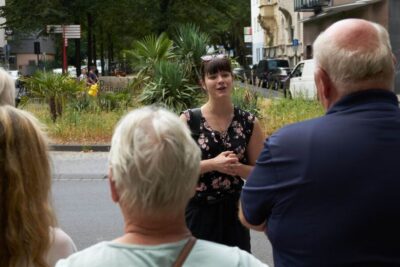
Falke receives especially strong praise for being friendly, organized, and clear about Cologne’s food and past. Several comments single out the balance between food and history, which is important here. The tour is not a lecture with a few snacks attached, but it is also not a silent march between restaurants.
The pace is active but manageable for most people who can participate in a walking tour. You visit several venues over three and a half hours, and there is also city walking plus a possible tram ride. Wear comfortable shoes and avoid scheduling something immediately afterward if you want flexibility.
The tour is offered in English and accepts mobile tickets. It is near public transportation, starts beside the cathedral, and ends near Köln Dasselstr./Süd Bf. Most people can participate, but the route’s food and walking format may not suit every physical or dietary need.
Who should book this Cologne food tour?
I would recommend it to you if you want a compact introduction to Cologne that combines local food with city history. It suits first-time visitors, people with only a short stay, and anyone who prefers eating at several casual places instead of sitting in one restaurant.
It is also a good fit if you enjoy trying foods that are not always highlighted in standard sightseeing guides. The route includes old Rhineland traditions, Cologne beer culture, immigrant influences, Turkish-German street food, and modern café fare.
I would be more cautious if you are vegan, since the tour is specifically not suitable for vegan diets. If you need large portions, private seating, or a carefully controlled meal, the shared tastings may not be ideal.
The tour is recommended by 95 percent of participants and has a 4.9 rating from 22 reviews, but the smaller number of ratings means I would still focus on the practical details rather than treat the score as a guarantee. The strongest praise goes to the variety, the city stories, the small group, and Falke’s guiding. The clearest criticism concerns portion size and the premium price.
Should you book it?
Book this tour if you want a guided taste of Cologne’s past and present, and you are happy to pay for organization, context, and access to several different food stops. The range is excellent, and the route gives you more than the usual beer-and-sausage version of the city.
Skip it if your main aim is the largest meal for your money. You may finish satisfied, but you could also want more food afterward. For most people, the best approach is to think of this as a small-group city tour with a substantial food theme, not an all-you-can-eat afternoon.
Free cancellation is available up to 24 hours before the start time. Because the tour is often booked well ahead, checking dates early is sensible, especially if you want a particular day in Cologne.
FAQ
How long does the Cologne food and Kölsch tour last?
The tour lasts approximately 3 hours and 30 minutes.
How many people can join the tour?
The group is capped at eight participants.
Is the tour offered in English?
Yes. The tour is offered in English.
Is the tour suitable for vegans?
No. The tour is not suitable for vegan guests.
Where does the tour start and end?
It starts at Kreuzblume, Kardinal-Höffner-Platz 1, 50667 Köln, beside Cologne Cathedral. It ends near Köln Dasselstr./Süd Bf in central Cologne.
Can I cancel for a full refund?
Yes. You can cancel at least 24 hours before the experience start time for a full refund. Cancellations or changes made less than 24 hours before the start time are not accepted for a refund.
Just added in Germany
- Small-Group Berlin Sightseeing and Food Tour of Prenzlauer Berg and Mitte★ 5.0 · 25 reviews
- East Meets West: Berlin Food Culture & Street Art★ 5.0 · 157 reviews
- Berlin Evening Culinary Tour – Award Winning★ 5.0 · 118 reviews
- The Berlin Culinary Experience: A Regional & Cultural Food Tour★ 5.0 · 79 reviews
- Classic Bites and Culinary Trends Neighborhood Food Tour in Berlin★ 5.0 · 191 reviews
- Private Tour: Daytime Food Tour Trends & Classics★ 5.0 · 24 reviews
- Private Berlin Street Food Tour by Bike★ 5.0 · 87 reviews
- Food tasting tour in Berlin of HIDDEN GEMS (Small Groups)★ 4.5 · 60 reviews
Germany Food Tours, compared.
Elbphilharmonie Plaza and HafenCity Food Tour
Read our review →
Berlin Center Food Tour with 8+ Authentic Local Tastings
Read our review →
Beer and Food Tour with Dinner & Oktoberfest Museum
Read our review →
Browse the lists this tour appears in