
REVIEW · CRETE FOOD TOURS
Chania: Sightseeing & Tastings Tour
Taste Chania one bite at a time. This four-hour walking tour pairs Cretan food with the city’s long story, moving from the Municipal Market through Venetian, Ottoman, and Jewish neighborhoods before ending with mezedes and raki. I like the personal scale of the experience and the way it brings you to family-run shops, local artisans, and tucked-away streets that are easy to miss on your own. The main consideration is simple: come hungry and wear comfortable shoes, because the food is generous and the walking is central to the day.
The guides are a major part of the appeal. Manos, Adonis, Yannis, Yiorgos, George, and others have been praised for their warmth, storytelling, and practical advice about restaurants and beaches. The meeting point in front of Kydon, The Heart City Hotel, can be confusing, though, so arrive early and look for the guide holding a Crete Local Adventures sign.
Key points at a glance
- Start at Chania’s 1913 Municipal Market: Taste olives, honey, olive oil, sweets, and other Cretan products among more than 70 family-owned businesses.
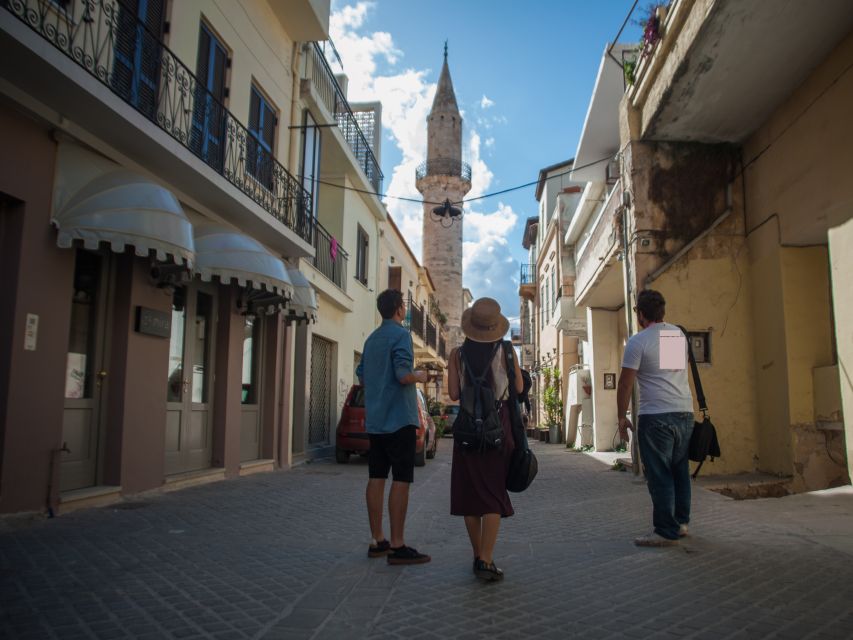
- Walk beyond the postcard harbor: See Venetian monuments, Ottoman buildings, old Jewish streets, secret gardens, and narrow back lanes.
- Meet a traditional knife maker: Visit one of the last remaining workshops producing handmade Cretan knives and perhaps try the craft yourself.
- Expect far more than a snack crawl: Greek coffee, local sweets, pastries, cheese, wine, raki, and a meze meal make breakfast a poor idea.
- Finish beside the harbor with local tapas: The final shared table is a chance to eat, talk, ask questions, and collect restaurant tips.
- Best for curious walkers: The tour suits anyone who wants food, history, and local conversation in one compact introduction to Chania.
Why this Chania food tour works so well
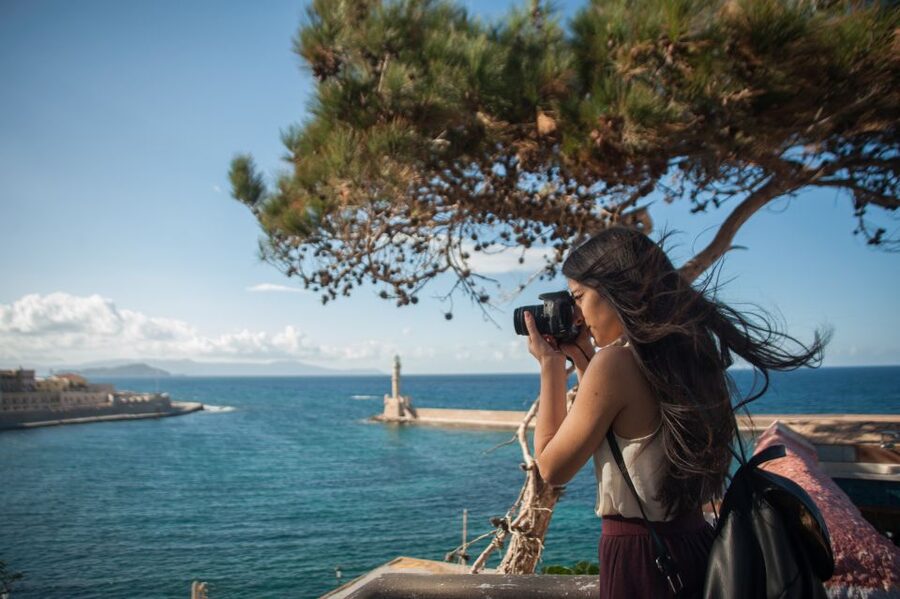
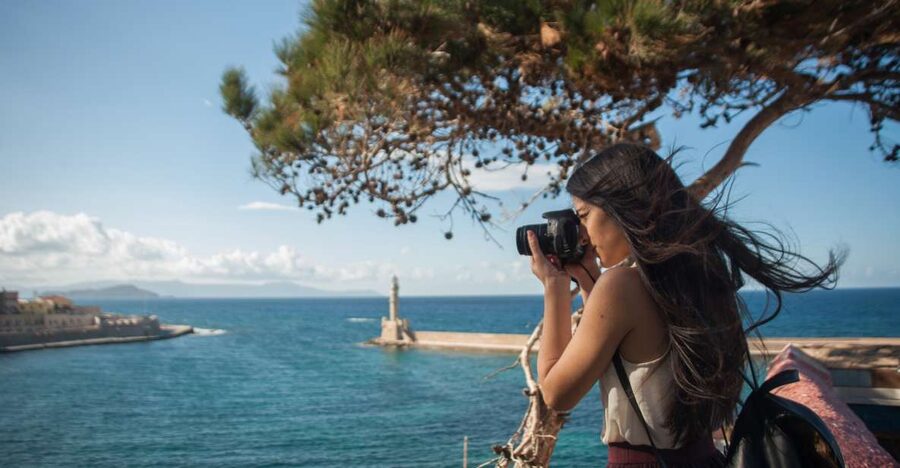
Chania is easy to admire from the waterfront. The old Venetian harbor, lighthouse, arcaded buildings, and polished restaurant fronts do much of the work. But the city makes more sense once you step a few streets inland and see how different powers left their mark.
Chania was first settled in the Neolithic period. Romans, Byzantines, Arabs, Venetians, Ottomans, and Germans all shaped the city. That history is not presented as a list of dates here. It appears in the street plan, religious buildings, old workshops, cooking traditions, and the way eastern and western influences sit beside one another.
I like this approach because food gives the history a practical anchor. You are not only hearing that Crete was a meeting point between cultures. You are tasting products from village farmers, stock-breeders, and small food businesses while walking through neighborhoods shaped by that exchange.
The tour lasts four hours and costs $114 per person. That is not a bargain-priced stroll, but the price includes a guide, multiple tastings, Greek coffee, local sweets, olives, honey, olive oil, mezedes, and raki. You are also paying for a guide who knows where to stop and how to connect the food with the city.
The value is strongest if this is your first day in Chania. You get an orientation to the Old Town, a substantial introduction to Cretan food, and suggestions for restaurants and other places to visit later. If you already know Chania well and prefer a quiet, self-guided walk, the price may feel less attractive.
A few more food tours in Greece worth a look
- Greek Food Walking Tour in Athens
★ 5.0 · 4,740 reviews - Athens: Street Food Tasting Tour
★ 4.9 · 3,343 reviews - Athens: Guided Greek Food Walking Tour with Tastings
★ 4.9 · 2,859 reviews
Meeting the guide at Kydon Hotel
The tour begins in front of Kydon, The Heart City Hotel, at the entrance. The instructions are specific for a reason: make sure you are at the Kydon Hotel, not simply somewhere near the old market or central Chania.
One person reported difficulty finding the guide, so I would arrive 10 to 15 minutes early. Look for the Crete Local Adventures sign. The guide may be Manos, Adonis, Yannis, Yiorgos, George, or another member of the local team, depending on the date.
The guides are consistently described as friendly, lively, and easy to talk with. Manos is especially praised for his English, local knowledge, and small details about current and historic Chania. Adonis is known for his enthusiasm and restaurant suggestions. Yannis has been singled out for his energy and warm way of connecting with people.
That personal contact matters. This is not a headset-and-checklist tour. You can ask questions, explain your food interests, and request suggestions for the rest of your stay. Some departures may be very small, and one booking even became a private tour when other participants did not appear. Do not count on that, but a small group can make the experience feel more like a walk with a well-informed local.
The Municipal Market and a generous Cretan introduction
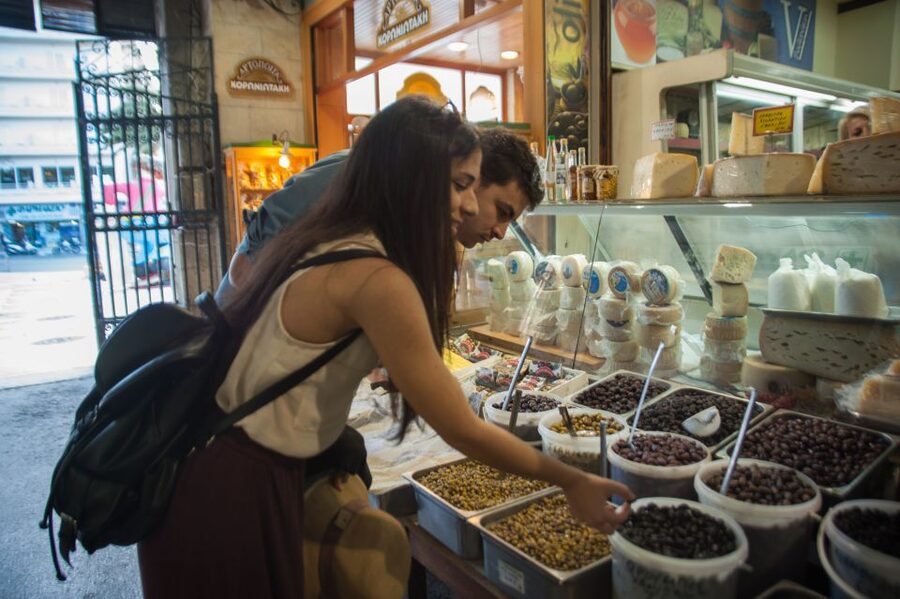
The first major stop is the Dimotiki Agora, or Municipal Market. Built in 1913, the year Crete united with Greece, it marks the boundary between the old and new parts of town.
The market has more than 70 family-owned businesses selling groceries and local products. This is a useful place to begin because it gives you a quick lesson in what Cretans cook and value. Instead of simply looking at shelves, you taste items and hear how they fit into daily life.
Expect samples such as:
- Olives
- Honey
- Olive oil
- Local sweets
- Cretan cheeses
- Pastries and pies
- Other regional products
The food is not limited to tiny decorative bites. Several people specifically advise skipping breakfast. That is practical advice, not polite exaggeration. The tastings are spread through the tour, and the final meze table can function as a full lunch.
The market can also help you shop intelligently later. You learn which products are made in Crete and which are simply marketed to visitors as Greek souvenirs. The tour focuses on Cretan-only products and family-owned businesses, which gives your spending a more direct connection to local producers.
The drawback is that a food market is a working place, not a quiet museum. You may want to stop and examine every stall, but the group needs to keep moving. Bring questions and a small amount of room in your bag if you plan to return later for purchases.
Greek coffee and the rhythm of the Old Town
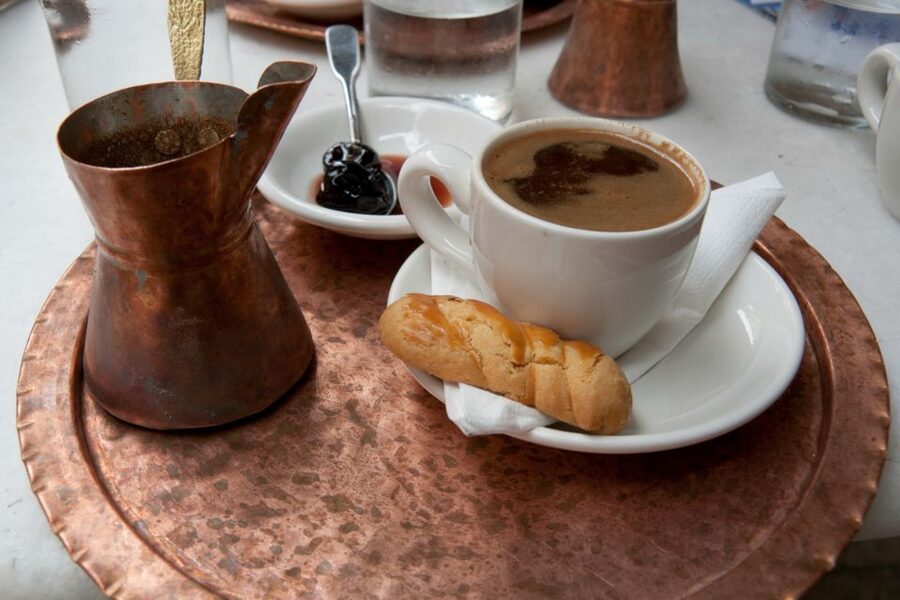
After the market, the walking portion takes you into Chania’s Old Town. A 30-minute coffee break is built into the route, with Greek coffee included.
This pause gives the day a good rhythm. You taste at the market, walk and listen for a while, then sit down before continuing. Greek coffee is more than a caffeine stop. It is a chance to talk with your guide about what you have already seen, ask about food customs, and slow down in the middle of a busy morning or afternoon.
The Old Town section covers well-known sights as well as narrow lanes and less obvious corners. You hear stories about kings, sailors, merchants, heroes, lovers, and artists. The tone is meant to be relaxed rather than academic, which suits Chania’s streets. A guide who can connect a building to a human story makes the walk easier to remember.
You should expect plenty of standing and walking. Comfortable shoes are essential. The activity is listed as wheelchair accessible, but because this is a walking route through old neighborhoods, it is sensible to confirm the precise route and any access needs with the local provider before booking.
Same city, a different table:
- Small Group Greek Traditional Food Tour in Athens 20+ Tastings
★ 5.0 · 1,759 reviews - Rhodes Exclusive Swim Cruise Cocktail Open bar & Gourmet Buffet
★ 5.0 · 1,230 reviews - Athens: Food Market Visit and Cooking Class with Wine
★ 4.9 · 1,087 reviews - Athens Authentic Greek Food Walking Tour (Small Group)
★ 5.0 · 809 reviews
Ottoman and Jewish neighborhoods beyond the harbor
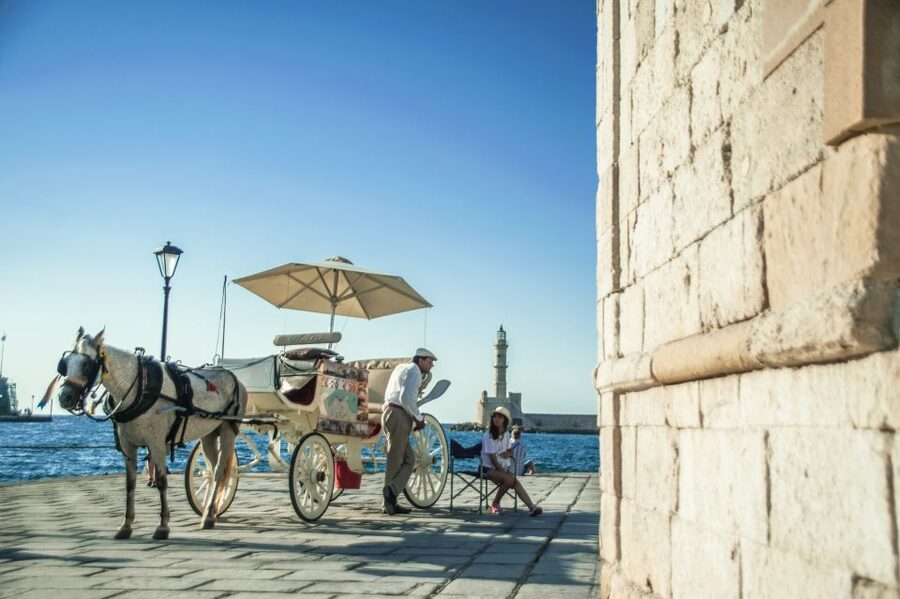
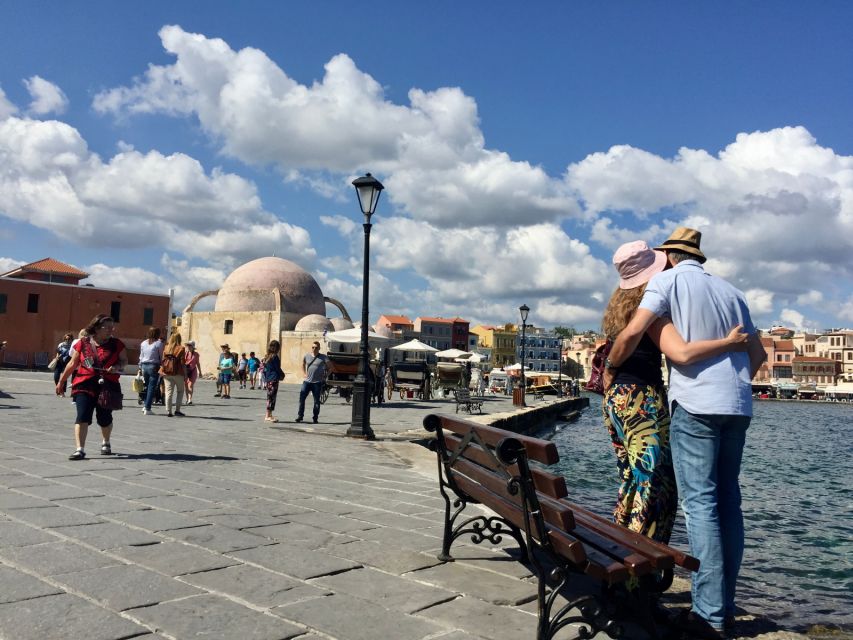
One of the best reasons to choose this tour is its attention to the old Ottoman and Jewish quarters. Many short visits to Chania stay close to the Venetian harbor. This route pushes farther into the city’s layered past.
The Ottoman quarter shows how Chania changed after the Venetian period. You will see monuments and streets linked to Ottoman life, then move through areas that reflect the city’s former Jewish community. The point is not to pretend these periods were simple or peaceful. Chania’s position made it valuable to successive powers, and its history includes both exchange and conflict.
The Jewish quarter is especially important because it adds a community story that can be missed when the city is reduced to Venetian façades and harbor photographs. Your guide explains how different groups shaped local life over the centuries.
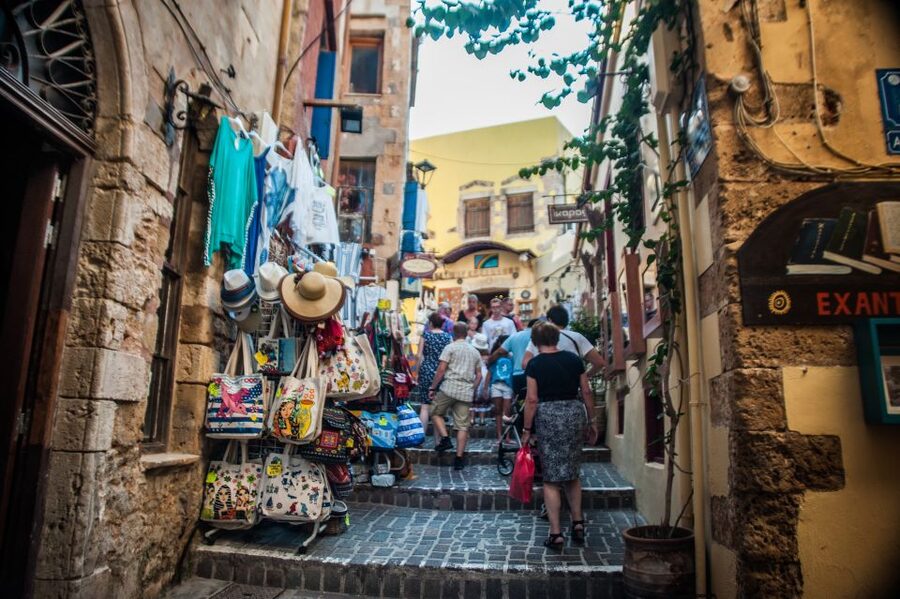
The route also includes old lanes, small gardens, and places that are easy to overlook without local direction. These are not grand attractions with signs and ticket booths. Their value comes from seeing how the city fits together away from the main pedestrian flow.
I would choose this section over another hour of standard sightseeing. You get a clearer picture of Chania as a crossroads between East and West, not just a pretty port.
Meeting artisans and seeing Cretan craft up close
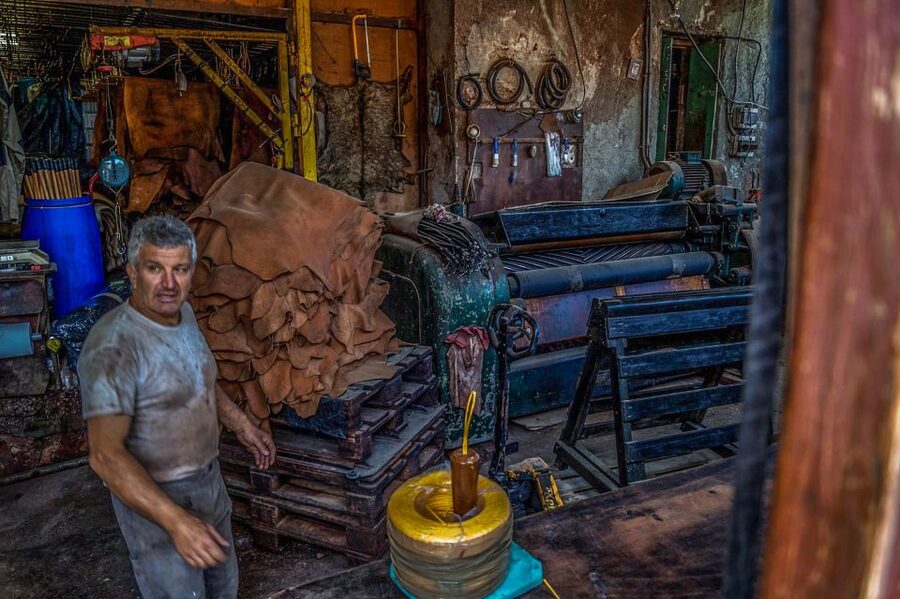
The tour includes a visit to local craftsmen, including one of the last remaining workshops making traditional handmade Cretan knives. You hear from the knife maker and may have a chance to test your own skills.
This stop gives the tour a welcome change of pace. Food tours can become a sequence of eating stops, but watching a traditional craft adds texture to the day. A handmade knife also connects directly to Cretan food culture, from preparing ingredients to serving meals.
The encounter is valuable because you meet the person behind the object. You are not only browsing a finished souvenir in a shop window. You learn about the work, the skill involved, and the effort required to keep an old trade alive.
The exact level of participation may vary, so think of the activity as a chance to observe and possibly try your hand at the craft, not a guaranteed workshop lesson. If you enjoy buying useful souvenirs, this is also a good point to ask how to identify a genuinely handmade product.
Wine, raki, and the final meze table
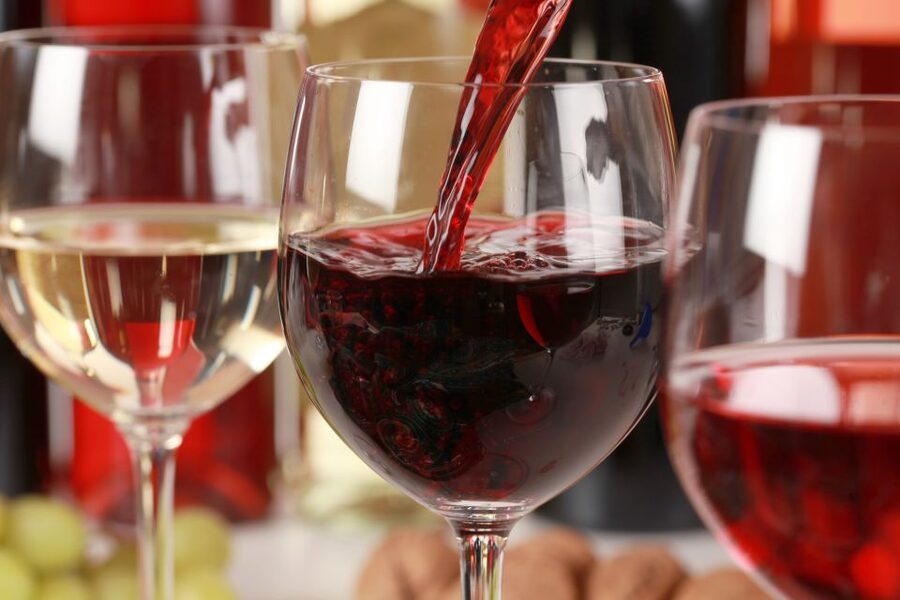
The food portion continues with a wine tasting and ends at a local favorite for Cretan mezedes. Meze means small shared dishes, but do not assume small means insufficient. The final table is repeatedly described as plentiful, and it may remove the need for dinner.
The included drinks specifically mention raki, and the schedule also lists wine and wine tasting. Greek coffee is included as well. Participants must be at least 18 to receive alcoholic drinks. Younger participants receive non-alcoholic beverages.
Raki is part of the social character of Crete, but it is strong. You do not need to drink much to understand its place in local hospitality. Sip slowly, eat along the way, and tell your guide if you prefer non-alcoholic options.
The mezedes work best as a shared meal. You may taste a mix of local dishes, cheeses, pies, olives, and other Cretan specialties, depending on the day and the food businesses used. The menu is not presented as a fixed restaurant order, so people who want one specific dish should keep expectations flexible.
Vegetarian diets and other dietary restrictions can be accommodated if you notify the local partner in advance. That advance notice matters, especially on a tour built around several small food stops.
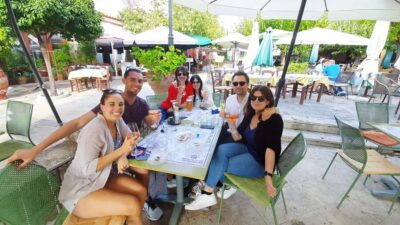
The final meal is also the most social part of the experience. You sit, eat, compare favorites, and ask for advice. The tour can finish there, or the guide can escort you back to the starting point. I would use the ending to ask about restaurants, beaches, and places to visit next. Several guides are praised for offering useful recommendations after the formal sightseeing has finished.
What the $114 price really includes
At $114 per person, this is a mid-range food and culture experience rather than a simple walking tour. You are not paying only for four hours of guiding. The cost also covers the food and drink listed as included, along with access to small businesses and an organized route through several historic areas.
The value is good if you plan to use the tour as your Chania orientation. A meal, market tastings, coffee, drinks, craft stops, and sightseeing would cost money separately, and finding the right family businesses on your own would take time.
Still, the price will not suit every budget. Additional food and drink, personal purchases, and hotel pickup are not included. You must reach the Kydon Hotel yourself, and the tour ends in town rather than providing a transfer to your accommodation.
I would also avoid booking this immediately after a large meal. You risk paying for tastings you cannot enjoy. The best value comes when you treat it as your main food experience for the day.
Who should book this Chania experience?
I would recommend it most strongly to first-time visitors who want several parts of Chania explained at once. You get food, architecture, neighborhoods, craft, and practical tips without having to plan a complicated route.
It suits you if you enjoy:
- Walking through old streets rather than viewing the city from a bus
- Trying unfamiliar foods
- Asking questions and talking with a local guide
- Learning how history affects daily life
- Eating a substantial shared meal
- Finding restaurants and shops to revisit later
It is also a strong option for a short stay. In four hours, you see enough of the Old Town and nearby quarters to decide where to return on your own.
You may want another type of activity if you dislike long tastings, alcohol, shared food, or walking through historic streets. It is not designed for someone who wants a fast list of major monuments with no pauses. The tour is deliberately social and unhurried.
Final verdict: book it if food helps you understand a place
I would book the Chania Sightseeing and Tastings Tour early in a stay, especially if you want help finding your bearings and deciding where to eat later. The strongest features are the family-run market stops, the visit to the traditional knife workshop, the Ottoman and Jewish quarters, and the guides’ clear affection for Chania.
Manos, Adonis, Yannis, Yiorgos, and the other guides are praised for making the experience warm, informative, and personal. The food is plentiful, the route goes beyond the harbor, and the final meze meal gives the day a satisfying finish.
Bring comfortable shoes, skip breakfast, arrive early at Kydon Hotel, and tell the company about dietary needs in advance. If that sounds like your kind of morning or afternoon, $114 buys a useful and tasty introduction to Chania rather than just another walk past the same old sights.
FAQ
How long does the Chania Sightseeing and Tastings Tour last?
The tour lasts four hours. Starting times vary, so you need to check availability when booking.
Where does the tour begin?
Meet your guide in front of the entrance to Kydon, The Heart City Hotel. The guide will be holding a Crete Local Adventures sign.
What food and drinks are included?
The experience includes Greek coffee, local sweets, olives, honey, olive oil, mezedes, and raki. The schedule also includes wine and wine tasting.
Is breakfast recommended before the tour?
No. The tastings are plentiful, and the final meze meal can be substantial. Arriving hungry is the better plan.
Can dietary restrictions be accommodated?
Vegetarians and people with other dietary restrictions can be accommodated. Notify the local partner in advance with your requests.
Are alcoholic drinks available to everyone?
Alcoholic drinks are available to participants aged 18 or older. Participants under 18 receive non-alcoholic beverages.
Just added in Greece
- Walking “Food tasting tour” in the town of Chania★ 5.0 · 297 reviews
- Cruise Ship Guest Beer & Food Tour – Chania Old Port★ 5.0 · 26 reviews
- The Delicious Chania Street Food Tour★ 5.0 · 138 reviews
- Sunset Craft Beer & Food Tour – Chania Old Port★ 5.0 · 86 reviews
- Chania Walking Food And Wine Night Tour★ 4.5 · 31 reviews
- Chania Walking Food Tours Crete with a local!★ 4.5 · 61 reviews
- Eat & Crete Food Tour [non-touristy] Chania Villages★ 5.0 · 25 reviews
- Gastronomy tour and wine tasting in traditional villages★ 5.0 · 32 reviews
Crete Food Tours, compared.


Old Town Highlights Guided Tour with Street Food
Read our review →
Crete: Full-Day Cretan Wines, Olive Oil, Raki and Food Tour
Read our review →
Heraklion: Cretan Wine Tasting Tour & Gourmet Lunch
Read our review →
Rethymno: Private Winery & Olive Oil Tasting Tour with Lunch
Read our review →Browse the lists this tour appears in