
REVIEW · TOKYO FOOD TOURS
Tokyo After 5: Authentic Japanese Food & Drink Night Tour
Tokyo tastes better after dark. This 3.5-hour evening tour links Ginza, Tsukishima, and Yurakucho through local food, short subway rides, and small neighborhood eateries. I like the chance to try monjayaki at the table and finish with yakitori and sake in a casual alley that can be hard to find alone.
I also like the small group size, capped at eight, and the help of an English-speaking guide who can explain menus and local customs. The main caution is that the food stops may feel lighter and less varied than the price suggests, especially if you expect a full dinner or a guaranteed three-restaurant crawl.
Key points to know before booking
- Monjayaki is the main hands-on experience: You cook Tokyo’s soft, savory pancake on a hot griddle at your table.
- The evening covers three distinct food tastes: Wagashi, monjayaki, and yakitori, plus two drinks such as beer, sake, or a soft drink.
- The route uses two subway rides: Your guide handles the route, with subway tickets included.
- The group is limited to eight people: That makes menu help and conversation easier, though guide quality can shape the evening.
- The food is not suited to every diet: Vegetarian, vegan, and gluten-free options are not available.
- Allow for brisk walking and stairs: Comfortable shoes matter, and the pace may not suit anyone who prefers a slow stroll.
Starting under the Ginza Lion at 5 pm
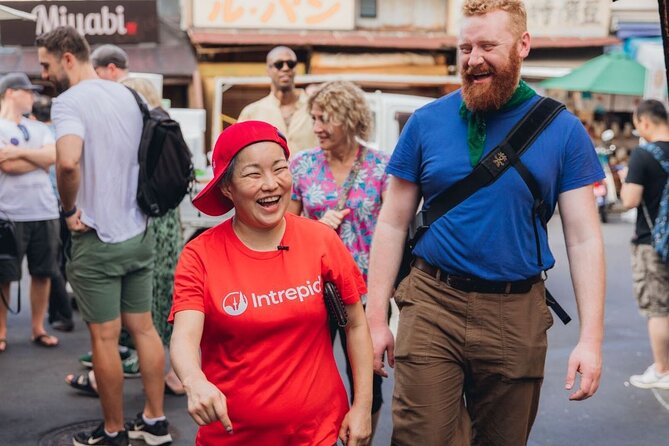
The meeting point is the famous Lion statue outside Mitsukoshi Ginza, at 4-6-16 Ginza. This is a clear central landmark, but arrive early. The tour starts on time, and the guide may not be able to wait for late arrivals.
The opening minutes take place around Mitsukoshi and Ginza. Ginza is Tokyo’s polished shopping district, with department stores, bright signs, and upscale storefronts. This is not yet the food-heavy part of the evening, so set your expectations correctly. You begin with a look at the district as it shifts from shopping hours toward night.
There may be a stop at Itoya, the famous stationery store. For some people, this is a charming Tokyo detail. For others, it may feel like an unnecessary detour when dinner is still ahead. One especially unusual stop described during the experience involves a department-store food area and a small display of lettuce grown under artificial light. That will interest anyone curious about modern Japanese food production, but it is not a major sightseeing stop.
You also receive wagashi, a traditional Japanese sweet. It may be served as a tasting or given as a small take-away item. Wagashi offers a gentle introduction to Japanese sweets, but it is not a substantial first course. If you arrive hungry, eat a modest snack beforehand.
More evening food tours in Tokyo:
- Winner 2025 Florence Sunset Food & Wine Tour by Eating Europe
★ 5.0 · 5,015 reviews - Saigon By Night and Street Food By Motorbike | Opt: Ao Dai Riders
★ 5.0 · 4,066 reviews - Marrakech: Street Food Tour by Night
★ 4.8 · 2,838 reviews
Tsukishima Monja Street and the sizzle of monjayaki
The tour then takes the subway to Tsukishima, a downtown area known for Monja Street. Two subway tickets are included, which saves you the trouble of sorting out fares during a timed group outing. Your guide also helps you move through the system, a useful service if Tokyo’s stations still feel like an underground puzzle.
Monjayaki is the evening’s most distinctive food. It resembles a pancake in broad outline, but the mixture is much softer and wetter than the fluffy pancakes many people expect. Cabbage forms part of the base, with seafood or other ingredients depending on the order. It cooks directly on a griddle at the table.
This is not just a plate placed in front of you. You watch the mixture cook, listen to it sizzle, and use the small spatula provided to portion it out. The cooking process is part of the fun, and guides such as Yuko have been praised for explaining both the food and the local custom around it.
The taste can be a surprise. Monjayaki is savory, soft, and cabbage-forward. If you prefer crisp food or large portions of meat, it may not satisfy you on its own. One useful point to remember is that the dish is a Tokyo specialty, not simply a lesser version of okonomiyaki. Its loose texture and table cooking are exactly what make it distinctive.
The portion may also feel modest. Some evenings include small extra tastes alongside the monjayaki, but you should not expect a large restaurant meal here. The tour works best if you see this stop as a local food lesson and shared tasting rather than a full dinner course.
Yurakucho’s Yakitori Alley after dark
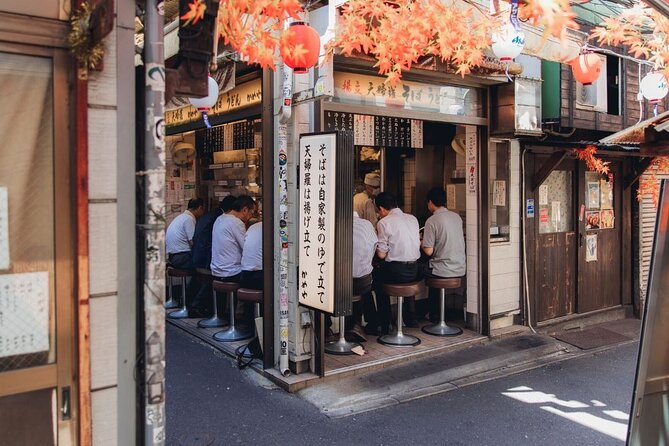
The final food stop is Yurakucho Sanchoku Inshokugai, often called Yakitori Alley or Yurakucho Farm to Table Dining Alley. This is the most atmospheric part of the route. Small eateries sit close together, and the setting feels more informal than Ginza’s department stores.
Yakitori means grilled skewers, usually associated with chicken and other parts of the bird. The skewers are served with tare, a savory-sweet sauce that differs from one shop to another. You may receive familiar cuts, but you might also encounter less common choices such as cartilage. If you are particular about texture, ask your guide what each skewer is before eating it.
This stop is where the evening shifts from food tasting to after-work social life. Local office workers often use small bars and izakaya to unwind, and the compact setting gives you a look at a side of Tokyo that can be difficult to enter without a local companion.
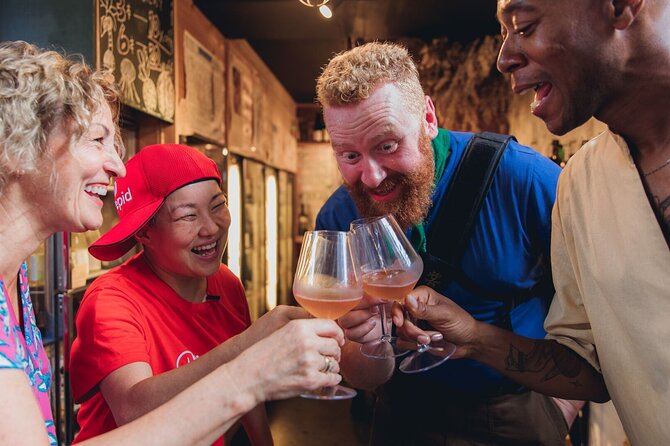
Two drinks are included across the tour. Depending on your age and preference, these may be sake, beer, or a soft drink. The traditional sake pour can be a memorable little ritual: sake fills a glass set inside a wooden box, then spills over into the box. Additional drinks cost extra.
The quality of this final stop can depend on the exact dishes served. Some people have enjoyed the yakitori and small side dishes, while others found a skewer undercooked for their taste or expected more food. Tell the guide promptly if something does not suit you. The included meal is designed as a tasting, not an unlimited dinner.
Three dishes, but possibly only two restaurants
The wording around the food stops needs careful attention. The experience includes three local dishes on sticks or in tasting form: wagashi, monjayaki, and yakitori. The route has three food-related stages if you count the sweet at Ginza.
Yet the evening may involve only two proper eateries: the monjayaki restaurant and the Yurakucho yakitori venue. That distinction matters. If you picture three separate restaurants with a dish and drink at each one, you may feel shortchanged.
Some descriptions also refer to three eateries, which creates an expectation the actual evening may not meet. The safer way to understand the tour is this: you visit Ginza, eat wagashi, cook monjayaki at Tsukishima, then eat yakitori and drink in Yurakucho.
That is still a useful introduction to Tokyo food, but it is not a long restaurant-hopping crawl. You are paying for the guide, route planning, interpretation, local access, included transport, food, and drinks as much as for the amount on your plate.
More evening experiences in Tokyo:
- Tokyo Night Foodie Tour in Shinjuku – Seasonal Sushi, Wagyu Beef
★ 5.0 · 1,161 reviews - Tokyo: 3-Hour Food Tour of Shinbashi at Night
★ 4.9 · 45 reviews - Private Street Food Evening Walking Tour in Ho Chi Minh City
★ 5.0 · 3,175 reviews - Kyoto Night Foodie Tour in Gion (9+ dishes + 6 Sake tastings)
★ 5.0 · 1,762 reviews
Why the small group matters
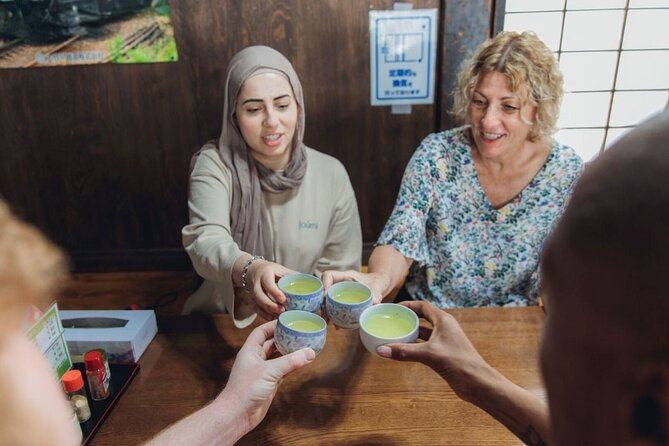
With a maximum of eight people, this should feel more personal than a large bus-style food outing. A good guide can translate a menu, explain unfamiliar ingredients, keep the group together, and help you use the subway without stress.
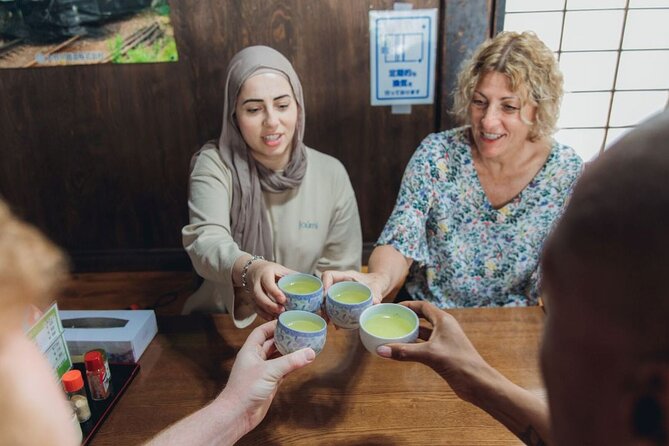
Guide quality matters a great deal here. Yuko has been praised for making the subway transfers smooth, explaining the food clearly, and adding extra cultural context. Mizuki has also been singled out for being courteous, friendly, and well informed about the dishes. Other evenings have been less successful, with limited English explanation or a guide who walked too quickly for the group.
That variation is worth considering because this tour depends on interpretation. Without clear explanations, you are left with a sweet, a cabbage-based griddle dish, and skewers. With a warm and capable guide, those same foods become a useful lesson in Tokyo eating habits.
Stay close during the Ginza walk and subway transfers. Several stretches involve stairs, station corridors, and brisk walking. The group itself may help keep everyone together, but you should not treat this as a slow, step-free outing.
Is $122.33 a fair price?
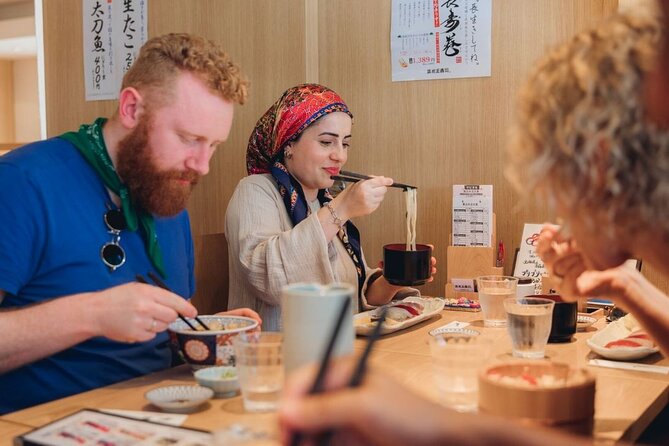
At $122.33 per person, this is not a bargain food crawl. The included items are three food tastings, two drinks, and two subway tickets. Those items alone do not explain the full cost.
The added value comes from access and guidance. You get a planned route through three different parts of Tokyo, an English-speaking guide, help with menus, and entry into small local places you might hesitate to approach on your own. You also avoid spending your first evening guessing which alley or restaurant is suitable.
I think the price makes the most sense for a first night in Tokyo, especially if you want an easy introduction to local food and do not speak Japanese. It is harder to justify if you already know Tokyo’s restaurant districts, want a large dinner, or mainly care about the amount of food.
The average booking time is about 52 days ahead, so popular dates can fill well before arrival. Book early if your schedule is fixed, but check the food details before paying. This is not the right choice for a strict vegetarian, vegan, or gluten-free diet, since suitable alternatives are not available.
Who will enjoy this Tokyo evening?
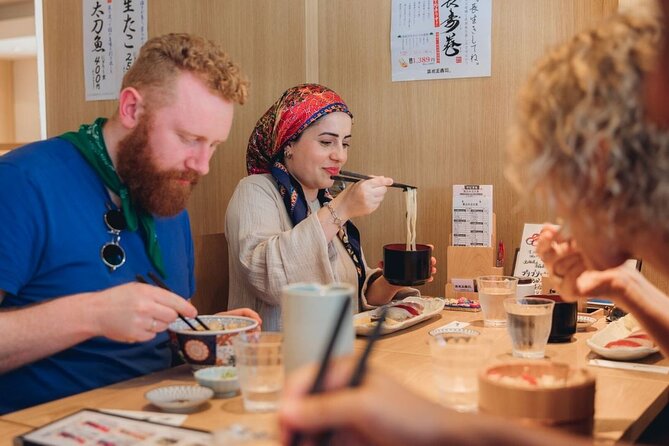
I would suggest this experience to you if you:
- Want a guided introduction to Japanese food customs
- Like trying unfamiliar dishes in a relaxed group
- Feel uncertain about Tokyo’s subway system
- Want to see Ginza, Tsukishima, and Yurakucho in one evening
- Enjoy casual bars more than formal restaurants
- Are comfortable with light portions and shared tasting
It is less suitable if you need a guaranteed full dinner, dislike cabbage or unfamiliar chicken cuts, or expect extensive sightseeing in Ginza. Families can join from age 12, but only people aged 20 and over may receive alcoholic drinks. Younger participants receive non-alcoholic options.
The tour requires a moderate amount of walking. Wear comfortable shoes, and be ready for stairs. It is also weather dependent. If poor weather forces cancellation, you can choose another date or receive a full refund. Otherwise, cancellation at least 24 hours before the start time is required for a full refund.
My call: book it for access, not quantity
I would book Tokyo After 5 if your goal is to get oriented, taste a few local specialties, and let someone else handle the route. The monjayaki cooking, the overflowing sake pour, and the small Yurakucho bars give the evening genuine character.
I would not book it expecting three full restaurant visits or a generous dinner. The strongest version of the experience depends on a guide who explains the food well, keeps a steady pace, and sets clear expectations. If you accept it as a guided tasting with transport and local context, it can be a fun first-night choice. If your priority is value measured only by food quantity, spend the $122.33 on several casual meals of your own.
FAQ
Where does the Tokyo After 5 tour begin?
It begins outside the Lion statue in front of Mitsukoshi Ginza, at 4-6-16 Ginza, Chuo City, Tokyo.
Where does the tour finish?
The tour ends at Ginza Station, at 4-1-2 Ginza, Chuo City, Tokyo.
How long does the experience last?
The tour lasts approximately 3 hours and 30 minutes.
How many people can join the tour?
The maximum group size is eight people.
What food is included?
The included food consists of wagashi, monjayaki, and yakitori.
Are drinks included?
Two drinks are included. They may be sake, beer, or a soft drink. Additional drinks are available for purchase.
Can children join the tour?
The minimum age is 12. Alcohol is served only to people aged 20 and over. Participants under 20 receive non-alcoholic drinks.
Just added in Tokyo
- Tokyo: Allstar Food Tour★ 4.7 · 29 reviews
- Tokyo: West-Side Cycling and Food Tour with Guide★ 5.0 · 37 reviews
- Tokyo Tsukiji Food & Culture Private Tour Licensed Guide★ 4.9 · 28 reviews
- Tokyo: Wagyu and Sushi Gastronomic Journey★ 4.3 · 24 reviews
- Tokyo: Togoshi Ginza Street Food Tour★ 5.0 · 34 reviews
- Tokyo: Sushi and Ramen Cooking Class with Sake Pairing Set★ 5.0 · 81 reviews
- Tokyo: Sushi Making Class★ 4.9 · 390 reviews
- Tokyo: Ramen Tasting Tour with 6 Mini Bowls of Ramen★ 4.9 · 432 reviews
Evening and Night Food Tours, compared.
Winner 2025 Florence Sunset Food & Wine Tour by Eating Europe
Read our review →
Saigon By Night and Street Food By Motorbike | Opt: Ao Dai Riders
Read our review →
Hanoi Motorbike Tours Led By Women: Hanoi By Night Foodie Motorbike Tours
Read our review →
Rome by Night – Ebike Small Group Tour – Food and Wine (Option)
Read our review →
Small Group: Singapore Street Food & Night Tour with 9 tastings
Read our review →
Rome by Night: E-bike Small Group Tour -Food & Wine (Option)
Read our review →
Browse the lists this tour appears in